A CISO at a Series B SaaS company in Brisbane pulled up her annual penetration test report during a board meeting. The test had been completed four months earlier. The board was satisfied. The compliance checkbox was ticked. The folder was filed.
Three weeks later, a misconfigured cloud storage environment, provisioned two months after the test was completed, exposed customer data to an external party. The configuration had drifted silently from the intended secure state. Nobody had noticed because the test that was supposed to demonstrate security posture had never seen this environment. It did not exist when the test was conducted.
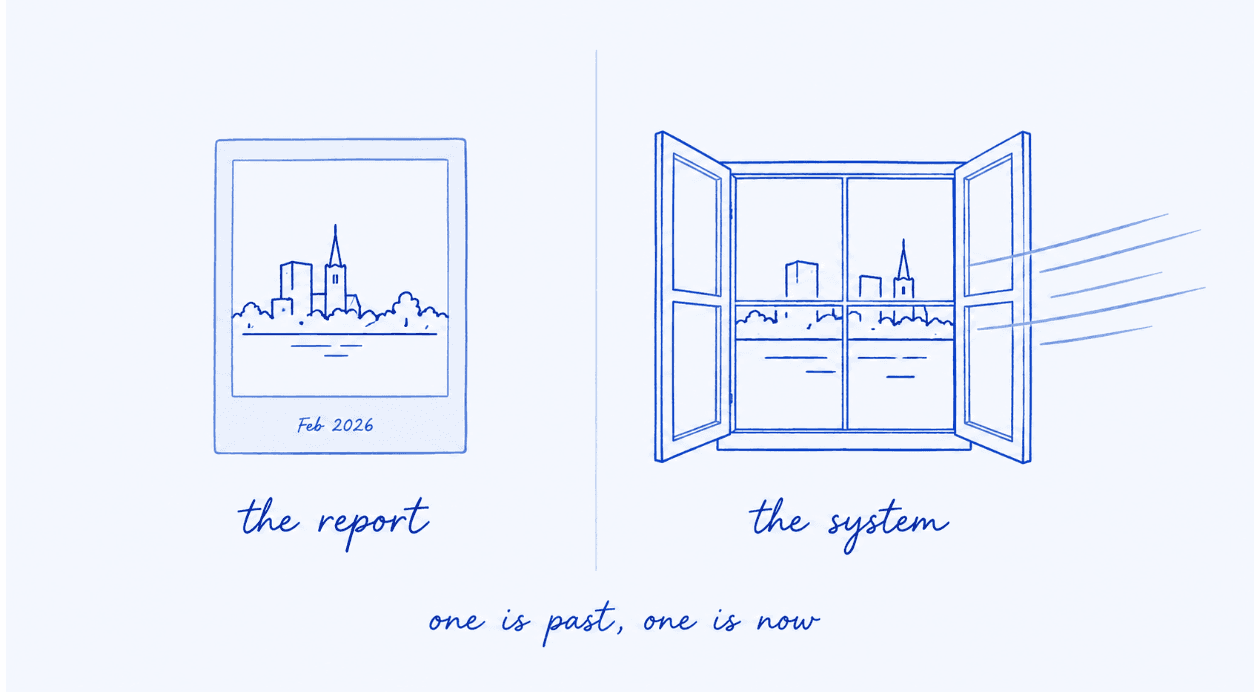
The report was accurate. It was just not current.
This is the gap that most organisations in New Zealand, Australia, Fiji, and the Pacific are carrying right now. Not a gap in intention, and not a gap in investment. A gap in the model. A static report in a fast-moving environment is not evidence of current security posture. It is evidence of what the posture looked like, at one point in time, in a product and infrastructure landscape that has been changing every day since.
What the Research Says About the Live System Problem
The data on this gap is specific and recent enough to be uncomfortable.
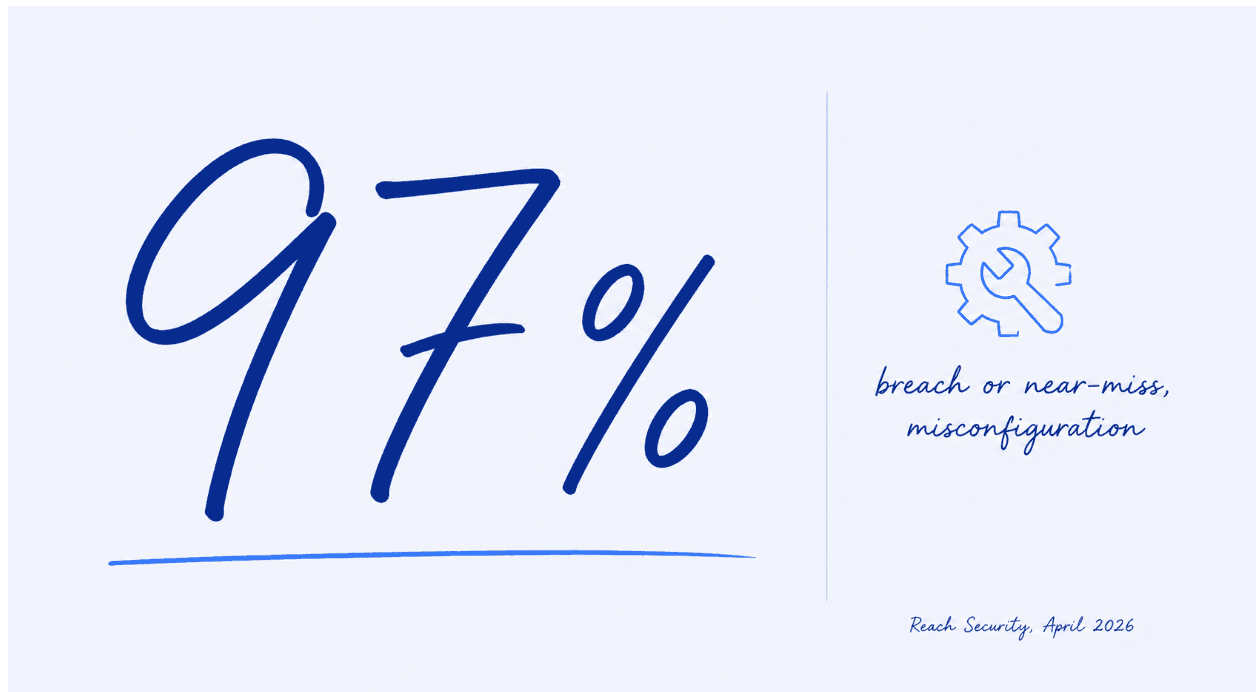
Reach Security published its Configuration Drift Research Report in April 2026. The finding that received the most attention was stark: 97 percent of security professionals surveyed had experienced a confirmed breach or near-miss in the past year because of a misconfigured security tool. Not because of a novel attack. Not because of a sophisticated intrusion. Because a configuration had drifted from its intended state and nobody had caught it before an attacker did.
The operational picture behind that number is equally telling. On average, organisations review their configurations just 6.5 times per month, and it takes more than eight days to remediate identified issues after they are found. These delays create long exposure windows during which attackers can exploit misaligned settings or outdated controls. (Reach Security Configuration Drift Research, April 2026.)
The average detection time for a configuration issue is over 180 days, according to cloud misconfiguration statistics compiled from global cloud security studies and breach investigations through 2025 and 2026. Separately, SentinelOne's 2026 cloud security statistics put the average time to detect a cloud breach at 277 days. That is not a detection failure in a single organisation. It is a structural outcome of treating security as something that is assessed periodically rather than monitored continuously.
SecurityScorecard's security posture analysis, updated in April 2026, stated the implication plainly: security posture is not static or something that can be measured annually. It is dynamic and must be measured in real time.
These numbers are not describing a capability gap. They are describing a model gap. The organisations in those statistics are not ignoring security. They are running a model that produces a static snapshot and then operating in a live environment for the rest of the year with no equivalent visibility.
What "Live System" Actually Means in Practice
The shift from treating security as a report to treating it as a live system is not a philosophical reframing. It changes specific, measurable operational outcomes.
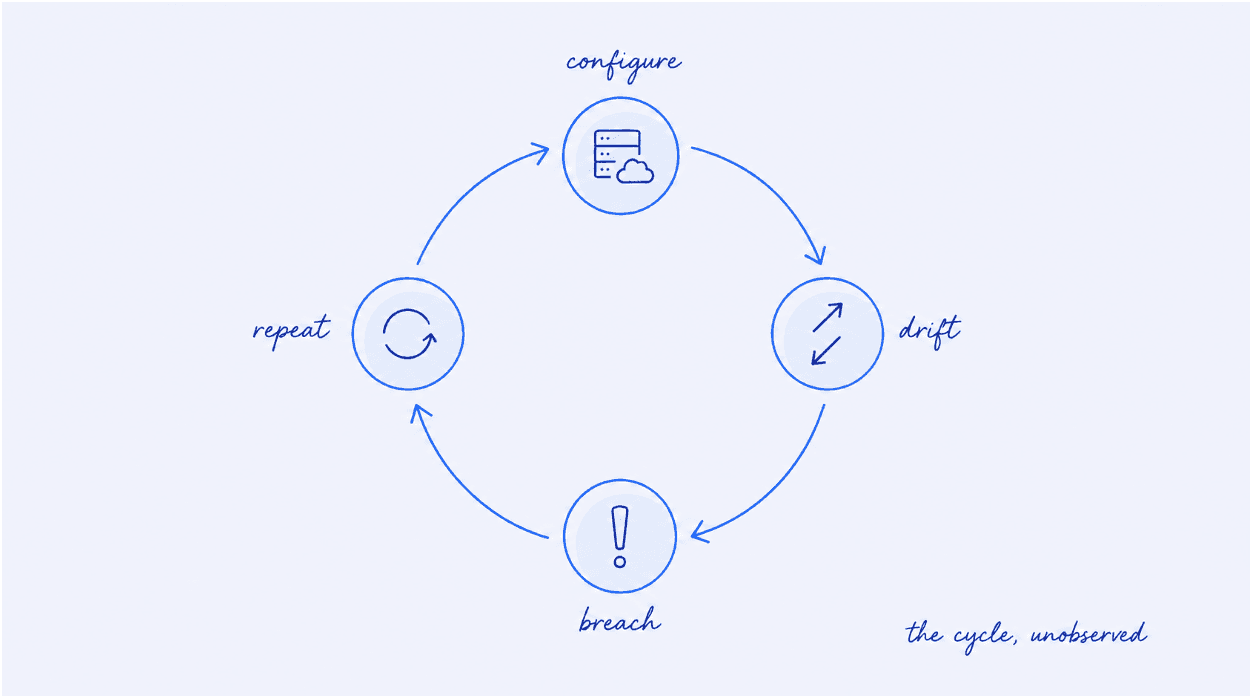
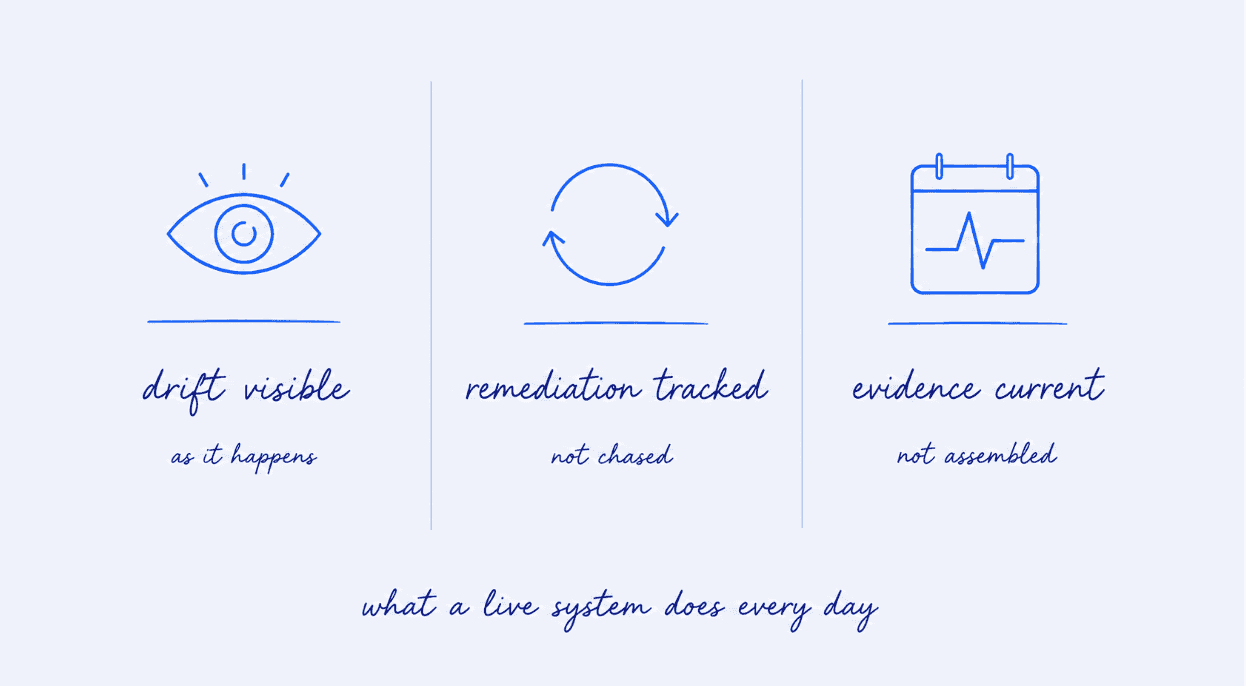
The first is configuration drift visibility. Every live environment drifts. Cloud environments change because engineers provision new resources. Infrastructure changes because a deployment updates a service. Access policies change because a new team member is onboarded incorrectly or a legacy permission is not cleaned up. The Reach Security research found that 55 percent of cloud breaches in 2025 traced back to configuration drift. In a static report model, that drift is invisible until the next assessment cycle. In a live system model, it is visible as it occurs.
The second is remediation accountability. A static report produces a list of findings and closes the engagement. What happens next is entirely up to the receiving team. There is no built-in mechanism to track whether findings are resolved, whether the resolution was effective, or whether a patched vulnerability remained closed after the next infrastructure change. In a live system, remediation tracking is part of the programme. The status of every finding is visible to both the testing team and the internal team, in the same platform, without coordination overhead.
The third is evidence currency. A static report is most accurate on the day it is produced and begins losing relevance immediately. A live system produces evidence that is current on the day it is reviewed, not the day it was generated. For teams managing SOC 2 Type II, ISO 27001, or PCI DSS requirements, this distinction is not academic. Auditors evaluating evidence across a twelve-month observation period are not looking for a single accurate document. They are looking for a continuous record of security activity. Capture The Bug's penetration testing services are built around the live system model: CREST-certified testing that runs continuously, findings visible in real time, remediation tracked in the same platform, and evidence current on any day an auditor or enterprise customer asks for it.
Why the Static Report Model Persists Despite Its Limitations
If the static report model has these structural limitations, the natural question is why it remains the dominant approach across the ANZ and Pacific region.
The honest answer is inertia and familiarity. The annual penetration test is what compliance frameworks have historically referenced. It is what auditors have historically accepted. It is what procurement teams have historically asked for. The model is embedded in how security budgets are planned, how vendor relationships are structured, and how security evidence is presented to boards.
The Reach Security 2026 posture assessment analysis described the pattern directly: most security posture assessments are stuck in an outdated pattern that no longer works in a fast-paced and evolving environment. Static snapshots are outdated by the time they are shared. Assessments tend to focus on compliance rather than actual risk, and their recommendations are often too vague or broadly scoped to translate into operational action. The pattern persists because changing it requires more than a tool swap. It requires changing the operating model, and that change has organisational surface area. Teams need to understand what they are moving toward, not just what they are moving away from.
Your Last Pentest Is Already Out of Date
Every week you ship without continuous testing is a week a vulnerability goes unseen. See what Capture The Bug finds in your first engagement.
How the Operating Model Changes
In a live system model, the security testing programme changes its relationship to the rest of the business in three specific ways.
It connects to the product roadmap. Significant releases, new integrations, and infrastructure changes become testing triggers rather than events that are retrospectively assessed at the next annual window. The testing programme is aware of what is changing in the environment and responds to those changes rather than waiting for the next scheduled engagement.
It produces a shared evidence trail. Instead of a PDF that lives in a folder, findings and remediation status are visible to both the security testing team and the internal team in the same platform at all times. When an enterprise customer asks for a security evidence package, the package exists and is current. When a SOC 2 assessor asks for evidence of security activity across the observation period, the record is already built.
It makes security posture a live metric rather than a historical claim. The question "what is our current security posture" should have a current answer. In the static report model, the answer is always qualified by "as of the last test." In a live system model, the answer reflects today. For companies across New Zealand, Australia, Fiji, and the Pacific that are managing enterprise sales pipelines, compliance programmes, and investor due diligence simultaneously, the difference between a historical claim and a current answer is the difference between a frictionless security conversation and one that requires explanations and caveats. Capture The Bug's penetration testing services give ANZ and Pacific teams that current answer, built from CREST-certified expert testing running as a programme rather than an event, with findings and remediation visible in real time and compliance evidence that is always current rather than always dated.
The Question That Changes the Conversation
The framing of security as a live system rather than a report changes the question that leadership teams ask. It is no longer "when is our next penetration test?" It is "what is our security posture right now, and what changed since yesterday?"
The first question has an annual answer. The second question has a continuous one.
For any team in New Zealand, Australia, Fiji, or the Pacific that wants to be able to answer the second question with confidence rather than qualification, the conversation with Capture The Bug starts with exactly that: understanding what the current posture actually is, where it is live and where it is static, and what it would take to close the gap between the report in the folder and the system that is running today.
Plan Your Annual Pentesting Strategy the Right Way
Learn how modern SaaS companies structure pentesting across the year to reduce risk, stay compliant, and avoid last-minute panic before audits.

FAQ
1. What does it mean for security to be a live system rather than a report?
A security report is a static document produced at a point in time. A live security system means that testing activity, findings, remediation status, and compliance evidence are maintained and visible on an ongoing basis. In practice it means security posture reflects the current state of the environment rather than its state on the day the last test was completed.
2. How common is configuration drift in ANZ organisations?
Reach Security's April 2026 research found that 97 percent of security professionals surveyed had experienced a confirmed breach or near-miss in the past year because of a misconfigured security tool. The average detection time for a configuration issue is over 180 days, meaning drift goes undetected for months in most environments.
3. Why does the static report model persist if it has these limitations?
The annual penetration test is embedded in how compliance frameworks have historically been applied, how security budgets are planned, and how evidence is presented to boards. Changing the model requires changing the operating approach, which has organisational surface area beyond simply choosing a different provider.
4. How does a live security system support SOC 2 and ISO 27001 compliance?
SOC 2 Type II auditors evaluate evidence across an observation period and expect security activity to be distributed across that period. A live system produces a continuous evidence trail automatically. By the time an audit is scheduled, the evidence exists and is current rather than requiring manual assembly from historical documents.
5. What is configuration drift and why does it matter for penetration testing?
Configuration drift is the gradual deviation of security controls from their intended state as environments change through updates, deployments, new provisioning, and human intervention. According to DataStackHub's 2025 to 2026 cloud misconfiguration statistics, 55 percent of cloud breaches trace back to configuration drift. A static annual test that does not assess infrastructure changes made after the test window cannot detect drift that occurs between engagements.
6. Does Capture The Bug work with companies in Fiji and the Pacific region?
Yes. Capture The Bug provides CREST-certified continuous penetration testing across New Zealand, Australia, Fiji, and the broader Pacific, with live evidence trails and compliance documentation suited to SOC 2, ISO 27001, and PCI DSS requirements across all target markets.