How Many Cyber Attacks Per Day: The Latest Stats and Impacts in 2026
As businesses move through 2026, one reality is impossible to ignore. Cyber attacks are happening all the time, across every region and every sector. This is not only a concern for large enterprises or technology companies. Small firms, fast growing startups, and regulated organizations are all exposed in different ways.
Capture The Bug works with companies across ANZ, the USA, and global markets, and one pattern appears again and again. Leaders do not ask if attacks are happening. They ask how often, how severe, and what the real impact looks like when something goes wrong. This article breaks down the latest numbers, explains what they mean in practical terms, and shows why frequency matters more than headlines.
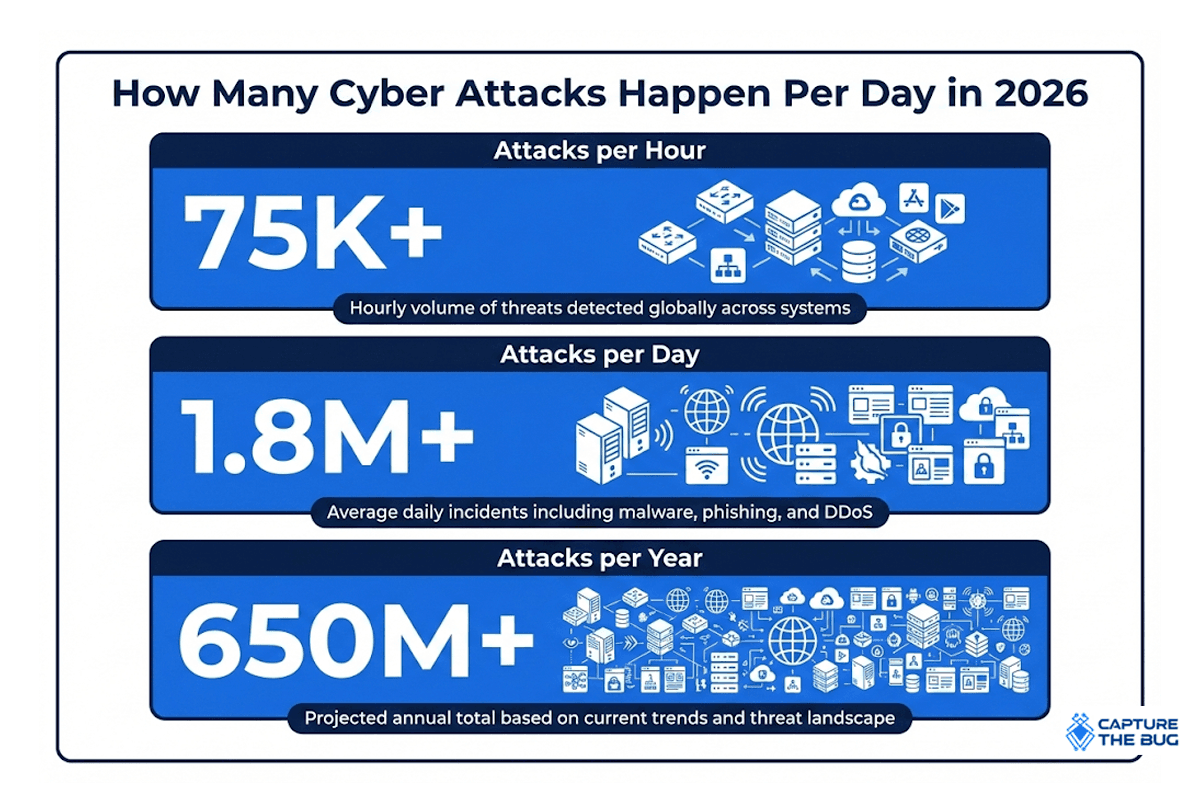
How Many Cyber Attacks Happen Per Day in 2026
In 2026, cyber attacks are not measured in dozens or hundreds. They are measured in the thousands. Based on aggregated industry data from incident reports, breach disclosures, and real world security testing activity, organizations worldwide face several thousand attempted attacks every single day. These include intrusion attempts, credential abuse, service disruption efforts, and data exposure events.
Many of these attacks never reach public attention. They fail quietly, are blocked early, or go unnoticed because no visible damage occurs. That does not make them harmless. From the perspective of Capture The Bug, the most important question is not how many attempts occur but how many of those attempts could succeed if a single weakness is left unaddressed.
Why Attack Frequency Matters More Than Ever
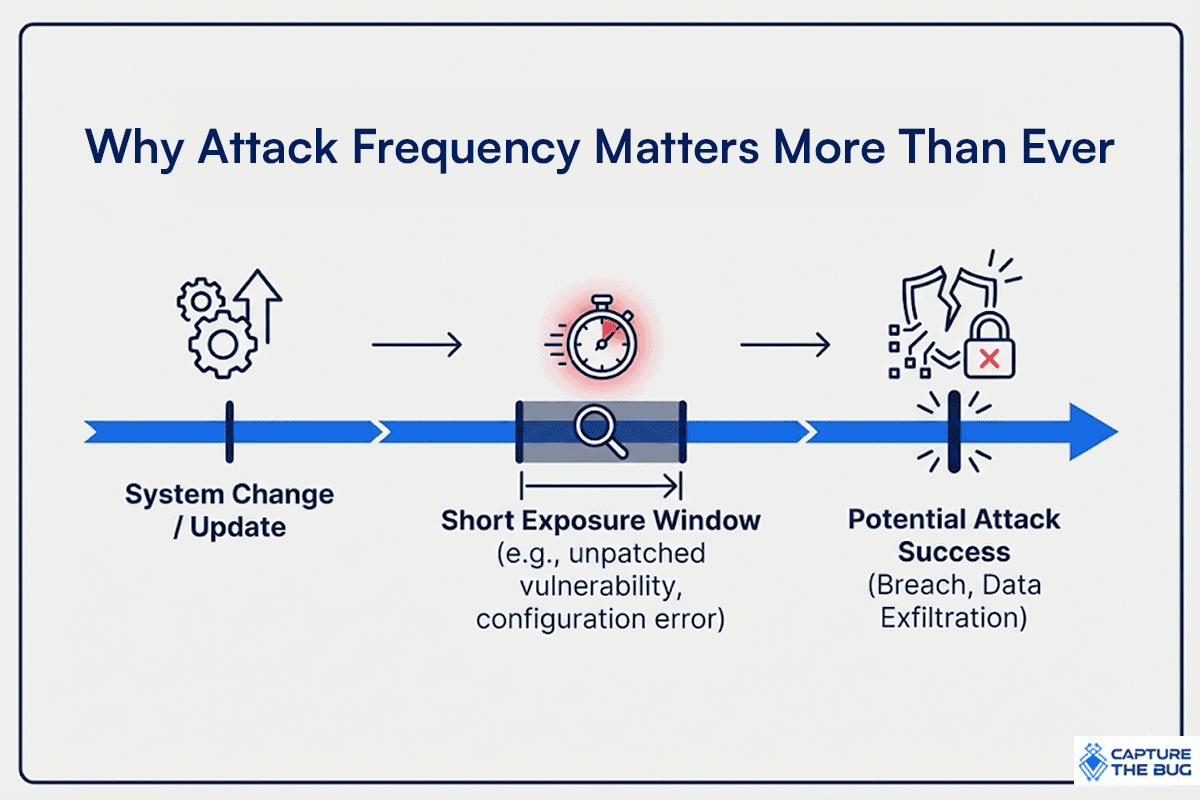
Cyber attacks used to feel periodic. In 2026, they are continuous. Modern systems change frequently. New features, integrations, and third party connections introduce fresh risk on an almost daily basis. Attackers take advantage of this movement. They do not wait for annual reviews or scheduled checks.
High attack frequency means that even a short window of exposure can be enough. A configuration mistake that exists for only a few hours may still allow unauthorized access or data loss. For leadership teams, this changes how risk should be viewed. Security is no longer about passing an audit once a year. It is about staying resilient every day.
Common Types of Cyber Attacks Occurring Daily
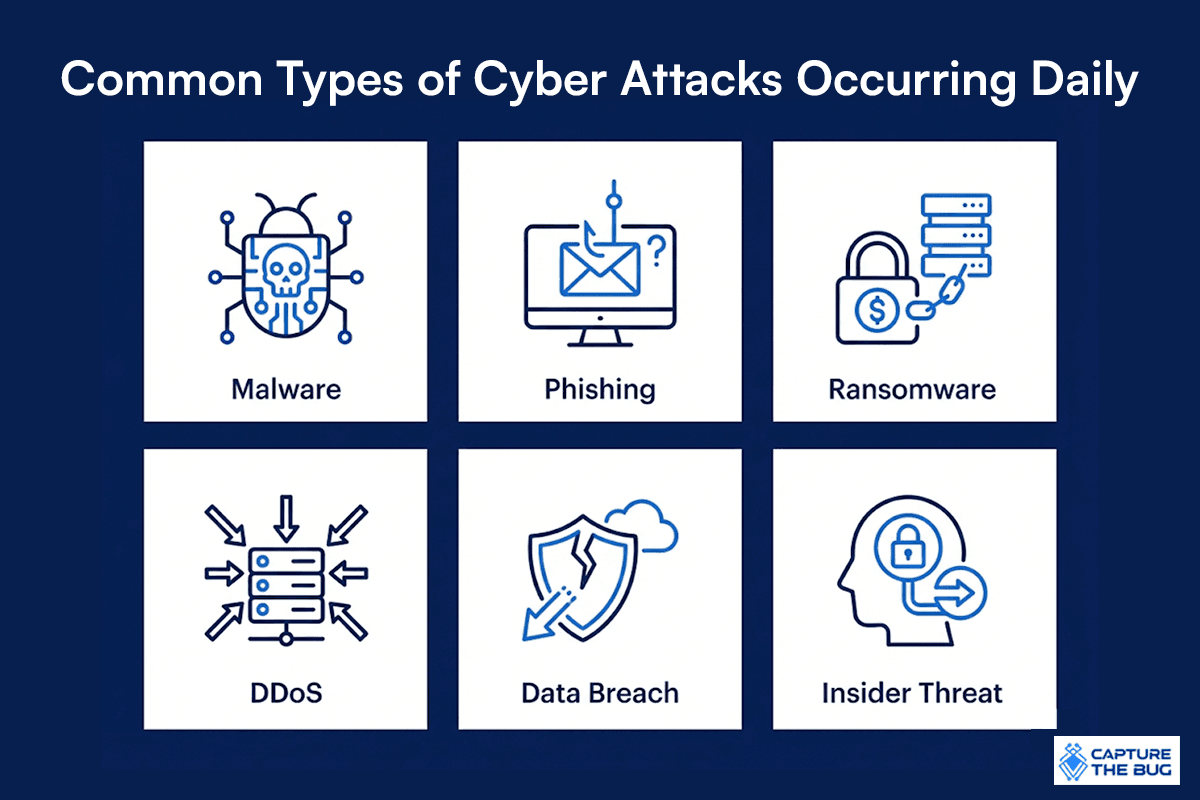
While tactics evolve, several attack types dominate daily activity across industries.
Credential abuse and account takeovers
Stolen or reused credentials remain the most common entry point. Attackers target login systems because one successful attempt often opens the door to far more sensitive systems and data.
Ransom and data locking events
Ransom based attacks continue to rise, especially against organizations that depend on constant availability. Even short outages can create operational disruption and reputational damage.
Service disruption attacks
Attempts to overwhelm online services are no longer limited to the largest targets. Smaller platforms are increasingly affected because they often lack the capacity to absorb sustained traffic spikes.
Injection and input manipulation
Older attack methods remain effective when basic safeguards are missing. Injection style attacks and related input manipulation are fast to execute and require little effort from attackers.
Man in the middle interception
Interception of communications remains a quiet but effective method for stealing sensitive information, especially when encryption or verification steps are weak.
Each of these attack types occurs daily, often through automated campaigns rather than targeted operations. In many cases, simple exposure is enough to attract attention.
Industry Impact: Who Is Hit the Hardest
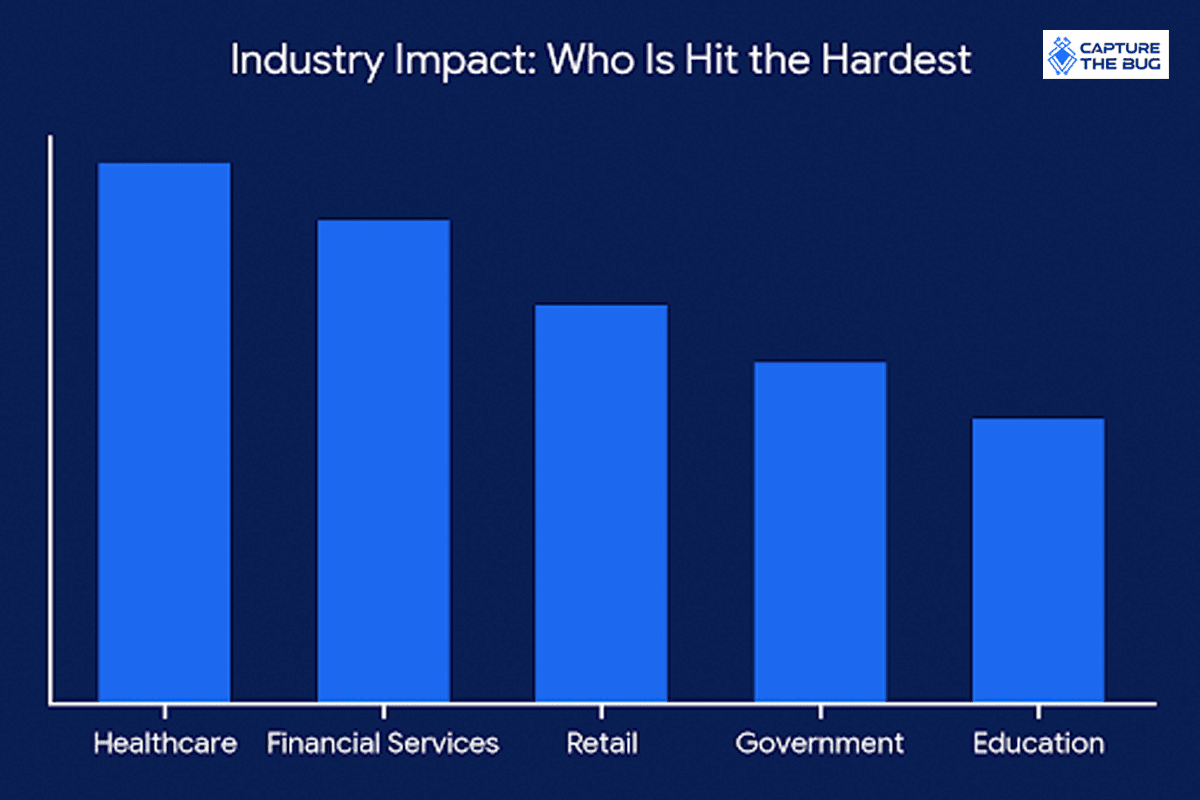
Different sectors experience cyber attacks in different ways, but the impact is universal.
Healthcare
Healthcare organizations often face some of the highest costs per incident. Downtime affects patient care directly, and data exposure carries serious legal and ethical consequences.
Financial services
Financial institutions remain prime targets due to the value of data and transactions. Even failed attempts can generate regulatory scrutiny and internal disruption.
Retail and commerce
Retail systems are targeted for payment data and customer information. Attacks often peak during high traffic seasons, when disruption has the greatest commercial impact.
Government and public services
Public sector systems face constant probing. Disruption affects essential services and public trust, which makes even small incidents highly visible.
Education
Educational institutions experience frequent attacks due to open networks and large user bases. These environments often combine sensitive data with limited security resources.
Across all industries, the pattern is similar. Attack frequency keeps rising while tolerance for disruption keeps shrinking.
The Real Cost of Daily Cyber Attacks
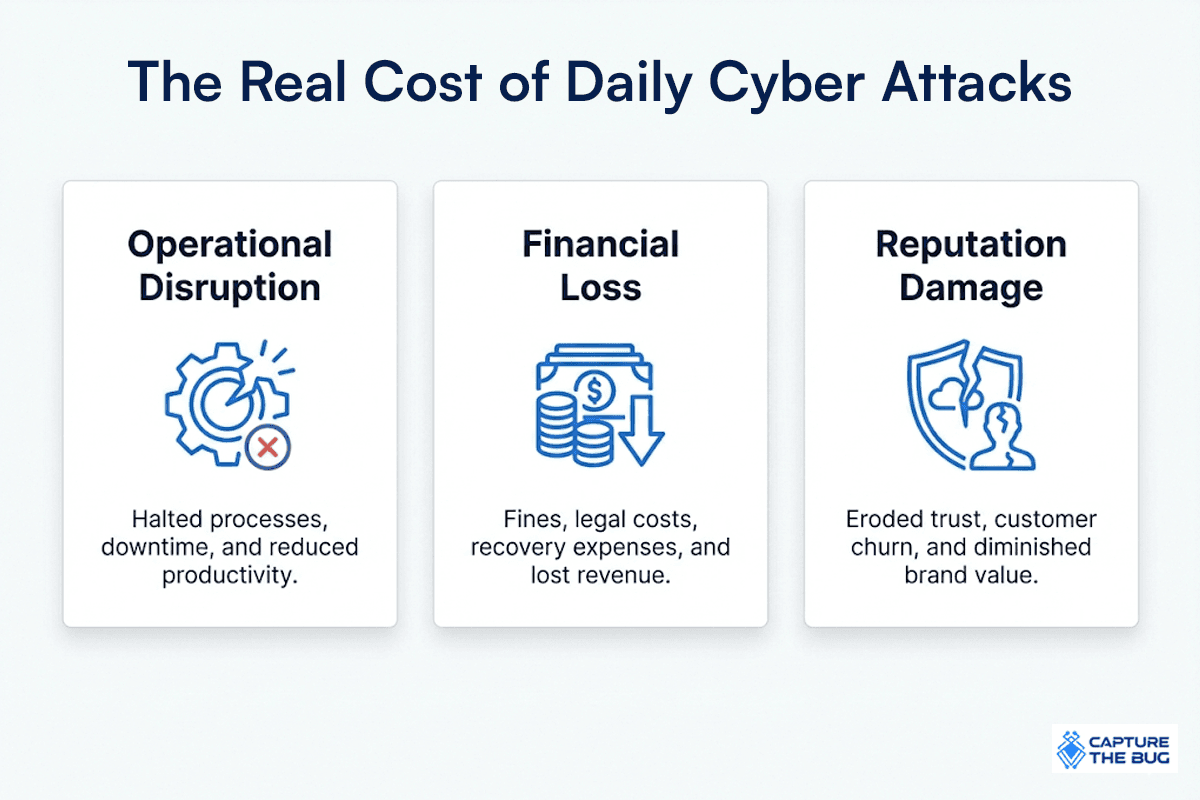
The financial impact of cyber attacks in 2026 goes far beyond recovery expenses. There is downtime that halts operations. There is reputational damage that affects customer confidence. There are compliance penalties and legal obligations that continue long after systems are restored.
For growing companies, a single incident can delay partnerships, funding, or expansion plans. For established organizations, repeated incidents slowly erode trust, both internally and externally. This is why more modern security conversations focus less on isolated events and more on ongoing exposure and resilience.
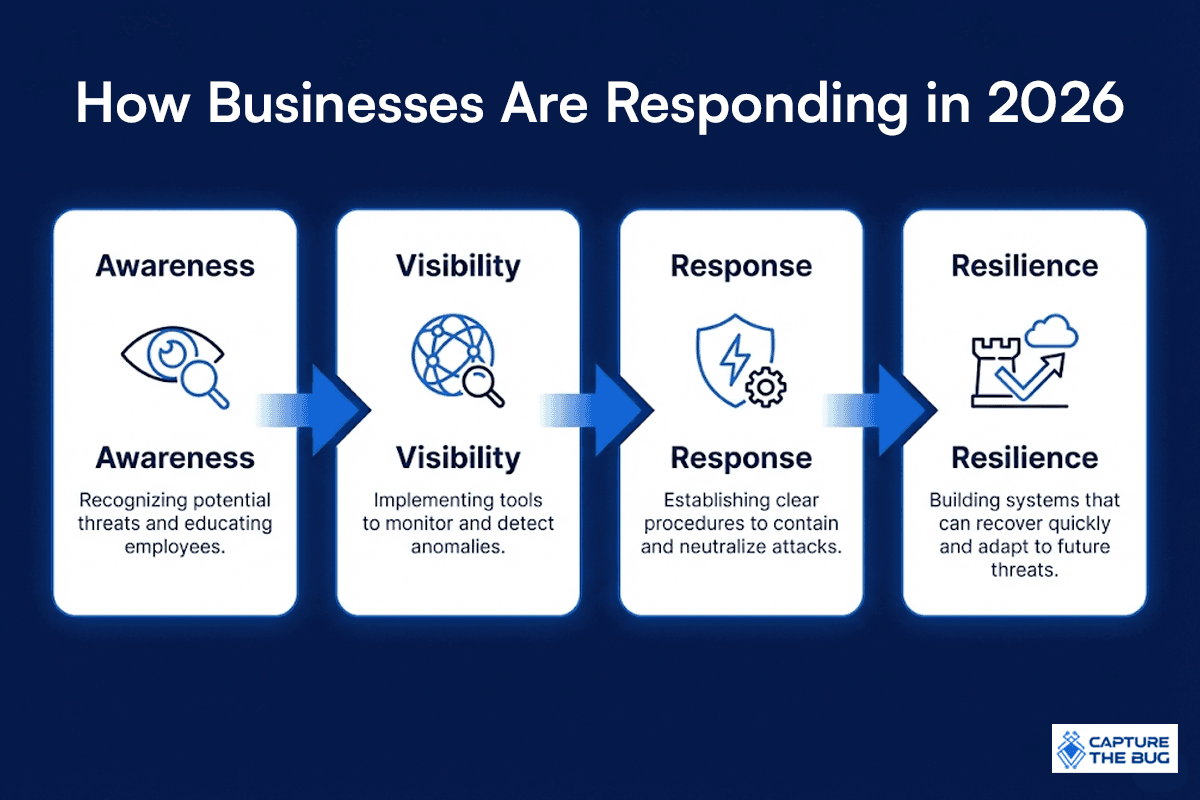
How Businesses Are Responding in 2026
Organizations are adapting, but not all at the same pace. Some are increasing security budgets and expanding internal teams. Others are shifting toward continuous validation models that prioritize visibility and speed over static reports.
Training and awareness programs are becoming more practical and more scenario based, helping teams recognize risk early instead of reacting late. There is also a clear move toward transparency. Leaders want visibility into what is happening now, not what was true weeks or months ago.
This shift aligns closely with how Capture The Bug works with clients, emphasizing clarity, real time insight, and practical remediation rather than fear driven messaging.

Why Knowing the Numbers Helps Leaders Make Better Decisions
Understanding how many cyber attacks occur each day reframes security discussions at the executive level. It moves the conversation away from asking whether the company is under attack and toward a better question: how well it handles constant pressure.
Daily attack volume highlights why point in time assessments are no longer enough on their own. Risk exists between reviews, not only during them. For founders, CTOs, and CISOs, this perspective supports smarter investment decisions and more realistic expectations about what strong security looks like in practice.
Final Thoughts
In 2026, cyber attacks are not exceptional events. They are part of the digital environment every organization now operates in. The question is not whether attacks happen each day. They do. The real question is whether systems are prepared to withstand that reality without disruption or surprise.
Companies that treat security as an ongoing discipline rather than a periodic task are better positioned to grow with confidence. That is the mindset Capture The Bug brings to every engagement, helping organizations stay resilient in a world where cyber attacks never take a day off.
FAQ
How many cyber attacks happen per day globally in 2026?
Thousands of attack attempts occur daily across industries, ranging from credential abuse to service disruption efforts.
Why are cyber attacks increasing every year?
Systems change more frequently, exposure windows are shorter, and attackers reuse proven techniques at scale.
Which industries face the most cyber attacks?
Healthcare, finance, retail, government, and education consistently report high attack volumes.
Do small businesses get targeted daily?
Yes. Smaller organizations are often targeted because they are perceived as easier to compromise.
What is the biggest risk from daily cyber attacks?
Unnoticed exposure. Many attacks succeed because weaknesses exist briefly and are not detected in time.