What Does a Penetration Test Cost in 2026? Understanding Security Investment vs Business Risk
Every year, security budgets come under scrutiny. Boards ask CISOs to justify spending. Founders want to know if a penetration test is truly necessary. Finance teams ask a simple question.
How much does it actually cost?
The challenge is that penetration testing does not behave like a typical software purchase. There is no universal price tag. The cost depends on scope, complexity, regulatory requirements, and the depth of testing required.
In 2026, the real discussion is no longer just about price. It is about the balance between security investment and business risk.
Organizations that treat pentesting as a checkbox often underestimate both sides of that equation.
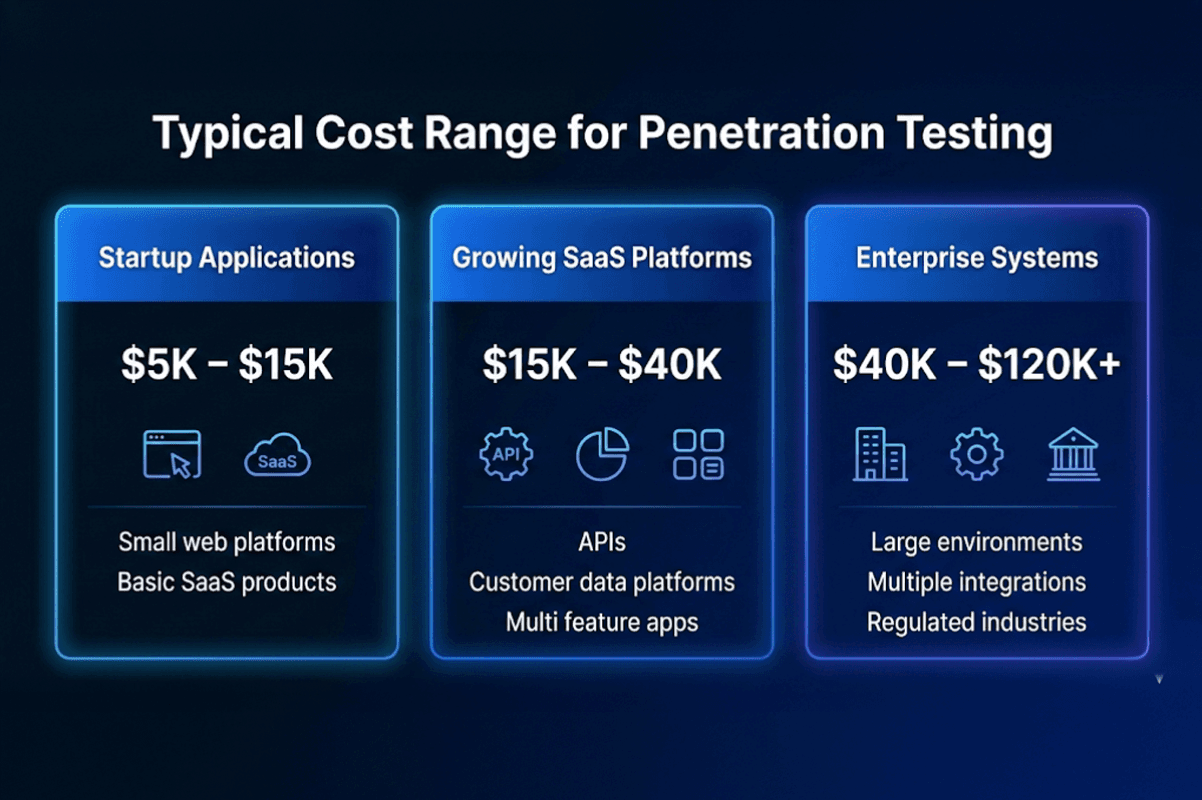
The Typical Cost Range for Penetration Testing
Penetration testing prices vary widely depending on the size of the environment being assessed. A small startup platform and a large enterprise infrastructure are completely different engagements.
Typical global ranges in 2026 look like this:
- Small web applications or startup platforms: $5,000 to $15,000 per engagement
- Mid size SaaS platforms or fintech applications: $15,000 to $40,000 depending on scope
- Enterprise environments or multi system testing: $40,000 to $120,000 or more
These numbers often surprise leadership teams, especially when they compare them with automated scanning tools that promise security checks for a fraction of the price.
But those comparisons miss a critical point. Penetration testing is about validating real business risk, not generating alerts.
The value lies in understanding what can actually be exploited.
Why Pricing Varies So Much
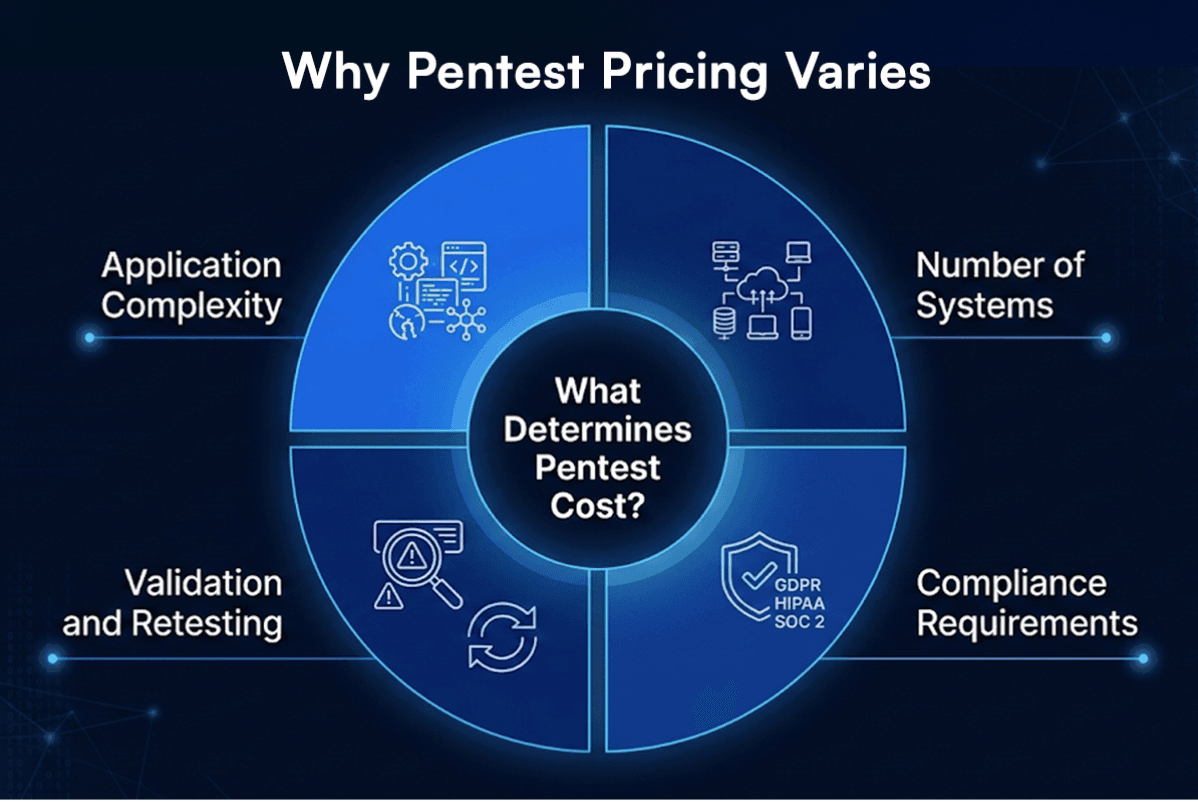
Security testing cost depends on several factors that influence the depth and duration of the engagement.
1. Application Complexity
A simple marketing website might contain only a few pages and a login form. A SaaS platform could include APIs, integrations, authentication systems, and customer data pipelines.
More components mean more potential attack paths.
Testing time increases accordingly.
2. Number of Assets
Security testing can include web applications, APIs, cloud infrastructure, authentication flows, and integrations.
Each additional asset increases the scope of testing.
For example, an application with multiple API endpoints and third party integrations requires significantly more evaluation than a standalone platform.
3. Compliance Requirements
Organizations pursuing frameworks such as ISO 27001, SOC 2, or PCI DSS often require documented testing evidence.
That means detailed validation, structured reporting, and verified remediation.
Compliance readiness often adds time and rigor to the process.
4. Retesting and Validation
Many traditional testing models charge separately for retesting after vulnerabilities are fixed.
In fast moving development environments, this creates delays and unexpected costs.
Companies often underestimate how frequently systems change after the initial assessment.
The Hidden Cost of Cheap Pentests
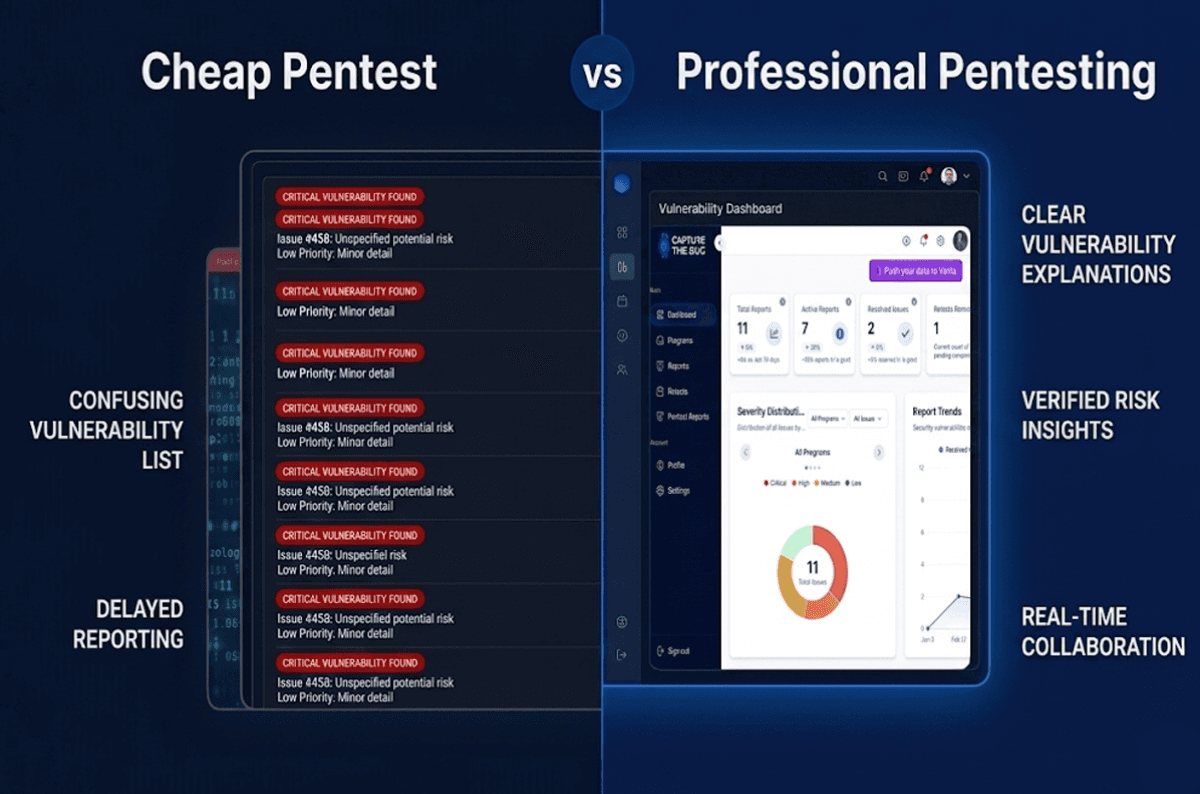
Low priced security testing may appear attractive during budget planning. However, inexpensive engagements often sacrifice depth, context, and clarity.
Common problems with extremely low cost pentests include:
- Superficial vulnerability lists with little explanation
- Minimal validation of real exploit paths
- Delayed reporting that arrives weeks after testing
- Limited collaboration between testers and engineering teams
The result is a report that satisfies a procurement requirement but provides little actionable insight.
Engineering teams then spend weeks interpreting the findings instead of fixing them.
Security leaders often discover that the cheapest test ends up costing more in time and confusion.
The Risk Side of the Equation
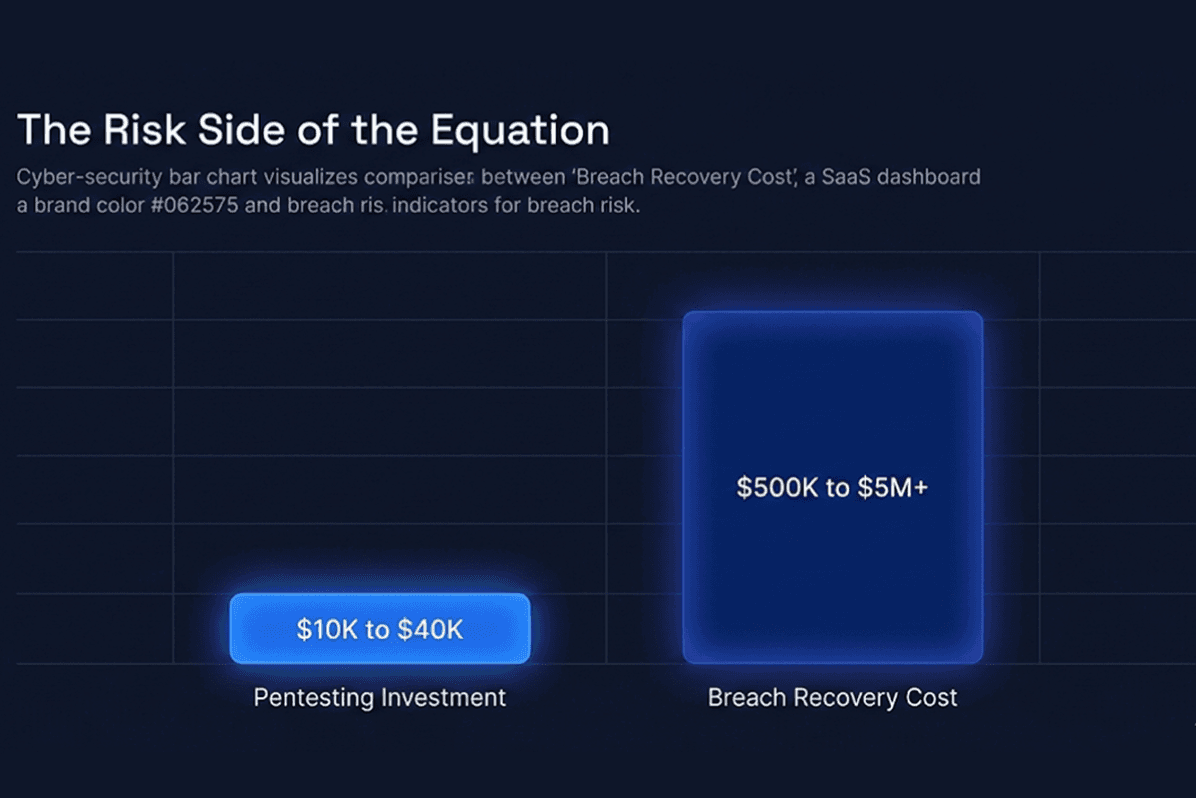
Budget discussions often focus entirely on testing costs while ignoring the financial impact of security failures.
The cost of a breach in 2026 is no longer hypothetical.
For SaaS companies, the consequences can include:
- Customer contract loss
- Regulatory penalties
- Investor confidence damage
- Operational downtime
- Emergency response costs
Even a moderate security incident can cost hundreds of thousands of dollars in recovery efforts and reputation repair.
Compared to those risks, penetration testing becomes a strategic investment rather than a technical expense.
Security leaders increasingly frame pentesting as insurance against operational disruption.
Why Modern Software Requires Ongoing Testing
Traditional testing approaches often involve a single engagement each year. This worked when infrastructure changed slowly.
That reality no longer exists.
Applications evolve constantly. New features appear weekly. Integrations expand the attack surface.
Testing once per year creates long gaps where vulnerabilities may remain undiscovered.
Organizations are now shifting toward ongoing security validation rather than periodic audits.
This approach helps teams detect issues closer to the moment they appear, reducing the time between discovery and resolution.
The focus moves from reacting to problems toward preventing them.
The Business Case for Continuous Visibility
Security leaders increasingly need to demonstrate measurable outcomes from their security investments.
One of the biggest challenges with traditional pentesting is visibility.
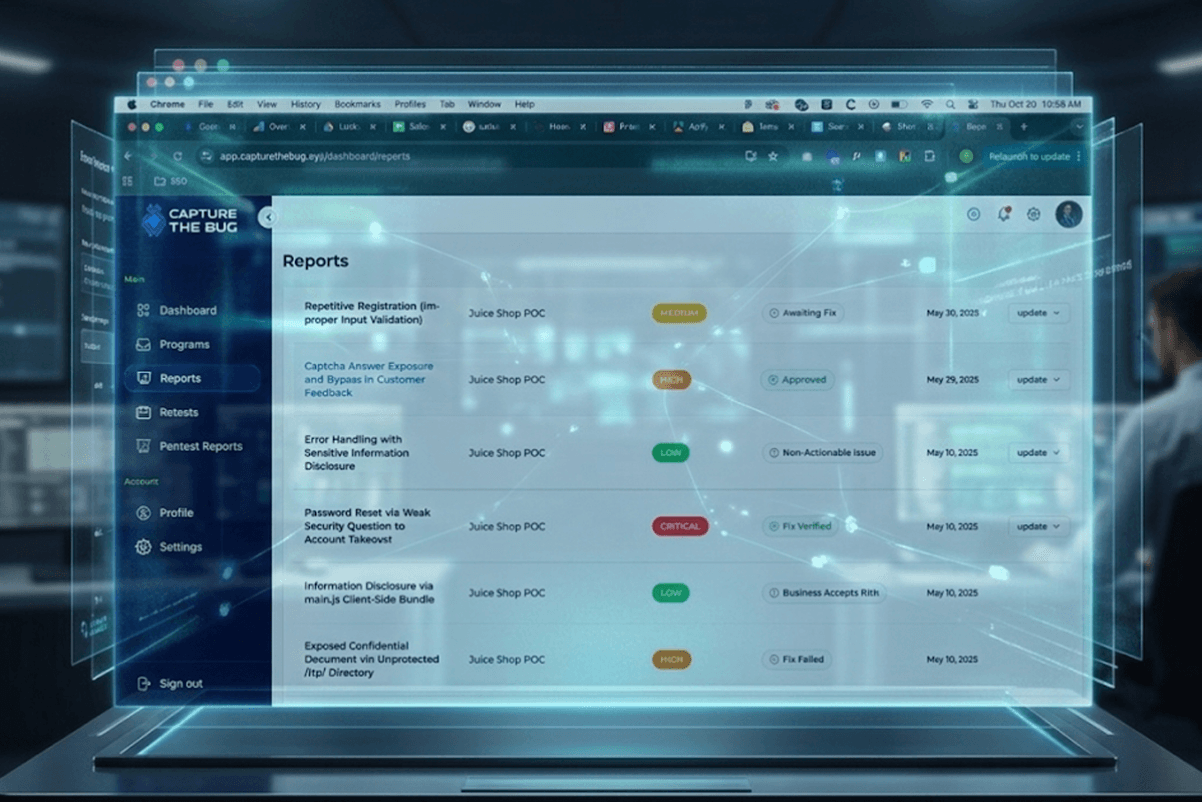
A static report provides a snapshot of vulnerabilities at a specific moment. It does not show remediation progress or long term security trends.
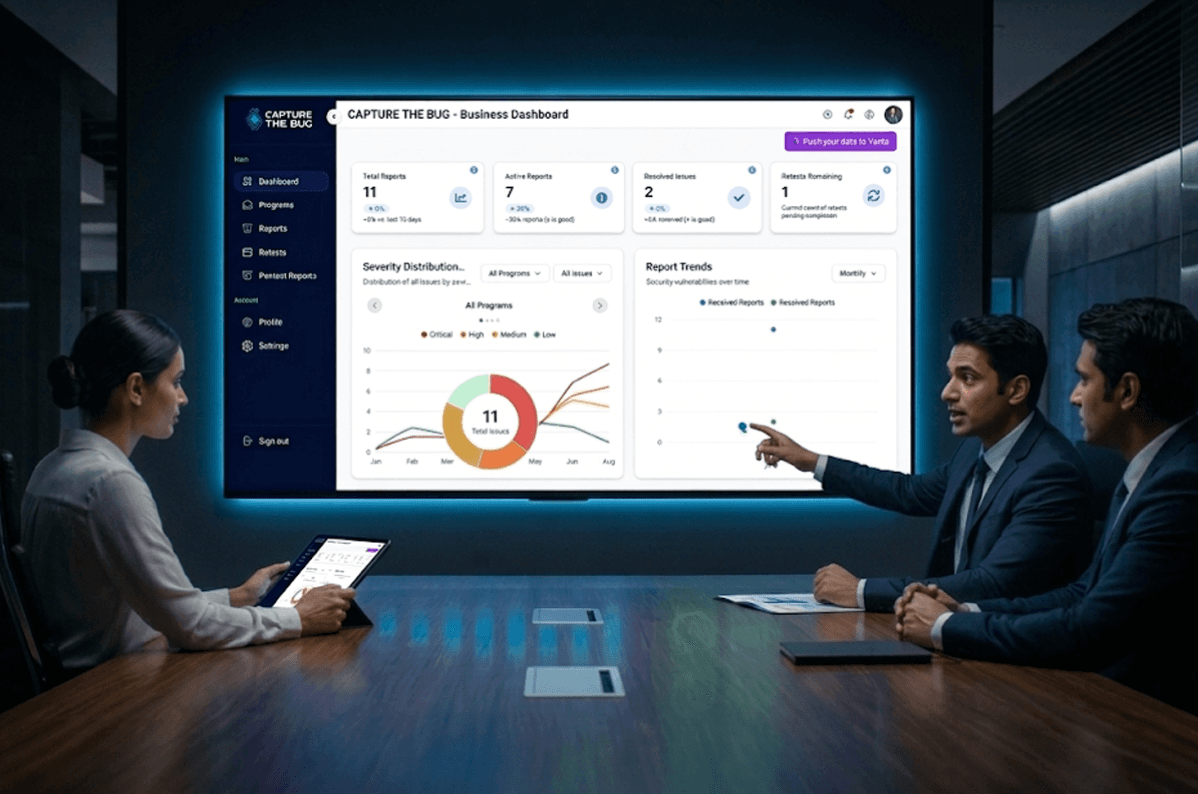
Modern platforms such as Capture The Bug address this challenge by providing real time visibility into discovered vulnerabilities and remediation progress.
This model allows organizations to see which issues have been fixed, which remain open, and how risk evolves over time.
For executive teams, this transparency turns security into a measurable business function rather than a hidden technical process.
What Security Leaders Should Evaluate Before Budgeting
When evaluating penetration testing services, decision makers should consider more than price alone.
Important questions include:
- How clearly are vulnerabilities explained to engineering teams
- How quickly can results be reviewed and acted upon
- Whether remediation validation is included
- How easily the results can support compliance audits
The goal is not simply to find vulnerabilities. It is to fix them quickly and demonstrate progress.
A testing provider should support that entire process.
A Practical Example of Security ROI
Consider a fast growing SaaS company preparing for enterprise customer contracts.
Before adopting a structured testing approach, their security process involved one annual engagement.
The report identified several critical issues, but remediation took months due to limited clarity and delayed retesting.
After adopting a continuous testing model through Capture The Bug, the company saw significant improvements.
High severity vulnerabilities were identified earlier. Engineering teams received clearer explanations. Remediation cycles shortened dramatically.
Most importantly, the company gained real time visibility into its security posture.
During customer security reviews, leadership could demonstrate exactly what had been tested and what had been resolved.
Security became a sales advantage rather than a compliance obstacle.
The Real Question Is Not Cost
The discussion about pentesting budgets often begins with a price comparison.
But the real question is not how much a penetration test costs.
The real question is what it costs to operate without reliable visibility into your vulnerabilities.
Organizations that invest in structured, ongoing security testing gain clarity, faster remediation, and stronger customer trust.
Those that rely on minimal testing often discover their risks only after an incident occurs.
By that point, the price difference between testing options becomes irrelevant.
Final Thoughts
In 2026, penetration testing is no longer just a technical service. It is part of how modern companies protect revenue, maintain compliance, and build customer confidence.
Pricing will always vary depending on scope and complexity.
What matters more is the value delivered.
Clear insights, validated vulnerabilities, and continuous visibility turn security testing into a strategic advantage.
For companies scaling globally, that advantage can be the difference between reacting to risk and staying ahead of it.
Capture The Bug helps organizations achieve that clarity through a transparent testing platform designed for modern software environments.
Security leaders gain real time understanding of their vulnerabilities and the progress made to resolve them.
That visibility is what turns pentesting from an annual cost into a long term investment in trust.
FAQ
What does a penetration test typically cost in 2026?
Penetration testing costs typically range from $5,000 for small applications to over $100,000 for complex enterprise environments depending on scope and system complexity.
Why do penetration testing prices vary so much?
Pricing depends on factors such as application size, number of systems tested, regulatory requirements, and the level of validation needed for vulnerabilities.
Is a cheap pentest worth it?
Low cost pentests often provide limited insight and shallow vulnerability validation. Many organizations find they must repeat testing to obtain meaningful results.
How often should companies perform penetration testing?
Modern applications change frequently, so many organizations now perform security testing multiple times per year or maintain ongoing testing visibility.
How does Capture The Bug support modern pentesting needs?
Capture The Bug provides continuous visibility into vulnerabilities and remediation progress, helping organizations detect and resolve risks faster while maintaining compliance readiness.