How CISOs in Australia Choose the Right Pentesting Partner
Choosing a pentesting partner is not about ticking compliance. It is about choosing who you trust to see your business at its weakest.
Introduction: The Decision That Defines Your Security Posture
For most security leaders in Australia, the challenge is not whether to run penetration testing. That decision is already made.
The real challenge is choosing the right partner.
Every vendor claims expertise. Every proposal promises coverage. Every report looks detailed.
But when a real incident happens, only one thing matters.
Did the testing actually reflect how your systems behave in the real world?
This is where most decisions fail. Not because CISOs lack knowledge, but because the buying process is still driven by checklists instead of outcomes.
Capture The Bug works with organisations across ANZ and the US that have already experienced this gap. The goal is not more testing. The goal is better decisions.

The Reality: Most Pentesting Vendors Look the Same on Paper
If you compare vendors side by side, everything appears identical:
- CREST certification
- Compliance alignment
- Detailed reporting
- Fixed timelines
But the experience after onboarding tells a different story.
Traditional engagements often follow a predictable pattern:
- Weeks of scoping discussions
- A fixed testing window
- A delayed report
- Limited follow-up clarity
By the time the report is delivered, parts of your environment have already changed. This creates a gap between what was tested and what is actually running in production.
This is not a vendor problem. It is a model problem.
What CISOs Should Actually Evaluate
The strongest security leaders do not evaluate vendors based on what they promise. They evaluate based on how the engagement will work day to day.
1. Visibility Over Time, Not Just One Report
A single report shows what was true at one point.
But your environment does not stay static.
Applications evolve. APIs change. Integrations expand.
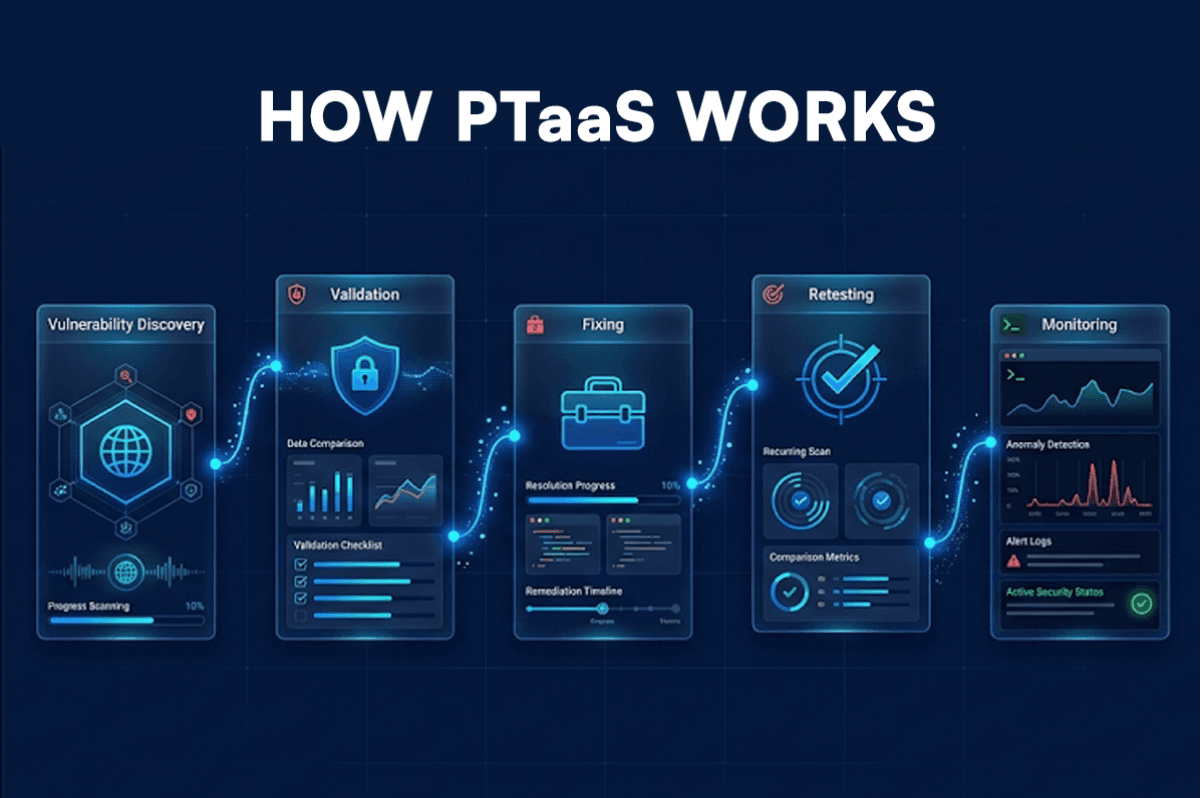
A strong pentesting partner provides continuous visibility into risk, not just a snapshot.
Capture The Bug approaches this through a continuous testing model where vulnerabilities are identified and tracked as systems evolve, not months later.
This changes the role of pentesting from an audit activity to an ongoing decision layer.
2. Direct Access to Real Testers
One of the most overlooked factors is communication.
In many engagements, findings are filtered through account managers. This creates delays and removes technical clarity.
CISOs should ask a simple question:
"Can our engineers speak directly with the testers?"
When developers can interact with testers:
- Issues are understood faster
- Fixes are implemented correctly
- Retesting happens without friction
Capture The Bug prioritises this direct collaboration model because it removes ambiguity and accelerates resolution.
3. Clarity of Findings, Not Volume
More vulnerabilities do not mean better testing.
What matters is:
- Which issues are actually exploitable
- What impact they create
- How quickly they can be fixed
Many reports overwhelm teams with long lists but limited prioritisation.
A strong partner focuses on:
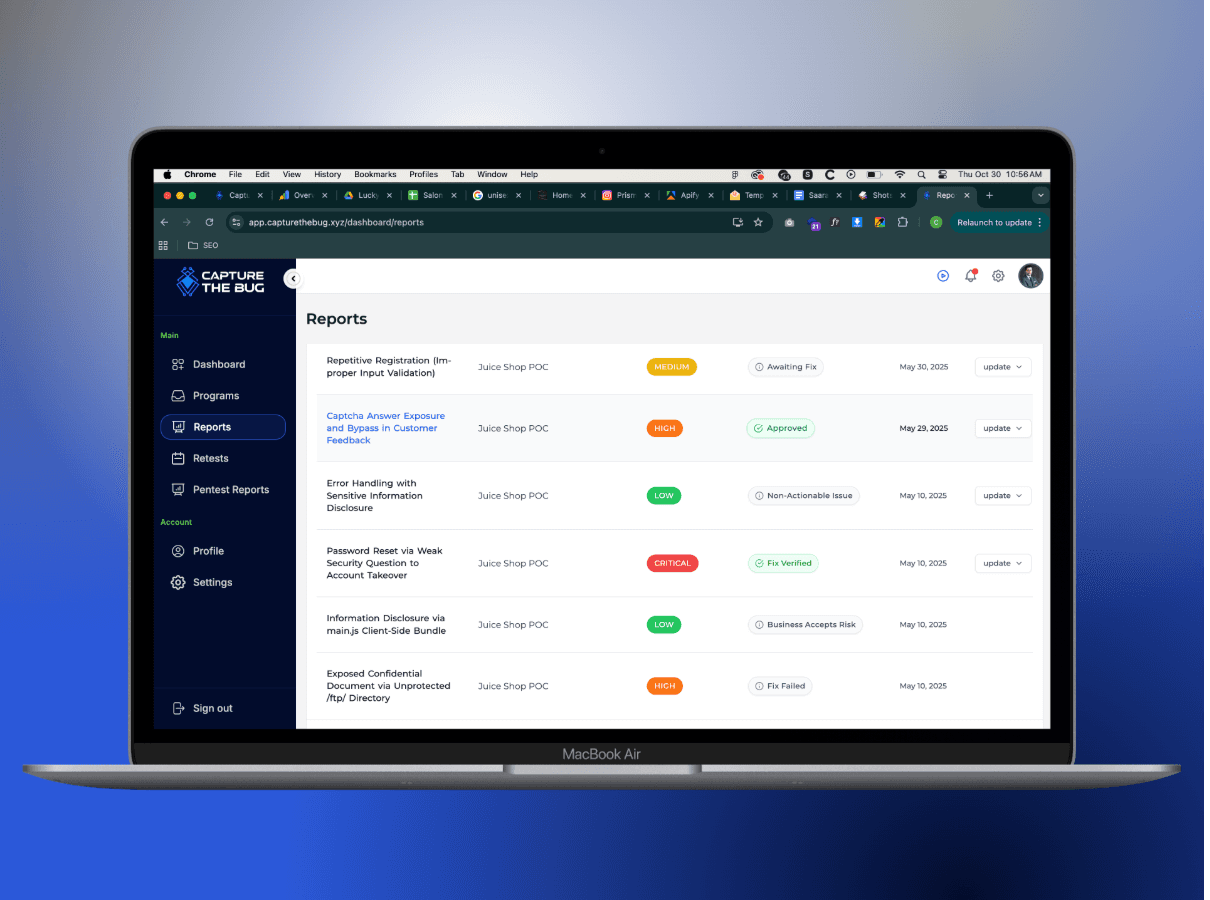
- Clear risk explanation
- Business impact context
- Actionable remediation steps
This reduces noise and helps teams focus on what actually matters.
4. Speed of Feedback and Retesting
Traditional pentesting introduces delays at every stage:
- Waiting for testing to begin
- Waiting for results
- Waiting for retesting
This creates long windows where vulnerabilities remain unresolved.
Modern security teams need:
- Immediate feedback after testing starts
- Fast validation after fixes
- No additional friction for retesting
Capture The Bug removes these delays by allowing teams to test when needed and validate fixes quickly, keeping remediation cycles tight.
5. Alignment With How Your Team Works
Security should not disrupt engineering workflows.
If your team releases frequently, your testing model should support that pace.
The right partner adapts to your workflow, not the other way around.
This includes:
- Testing new features before release
- Validating integrations
- Tracking fixes continuously
Capture The Bug is designed around how modern teams operate, ensuring security keeps pace with development rather than slowing it down.
6. Compliance Without Last-Minute Stress
Many organisations approach pentesting as a compliance requirement.
The problem is timing.
Reports are often generated just before audits, creating pressure and uncertainty.
A better approach is staying continuously audit-ready.
This means:
- Having up-to-date testing records
- Tracking remediation progress
- Generating reports instantly when needed
Capture The Bug supports this by maintaining real-time visibility and compliance-ready outputs, reducing audit friction significantly.
The Hidden Risk: Choosing Based on Price Alone
Budget is always part of the decision.
But choosing the lowest-cost vendor often leads to higher long-term risk.
Why?
Because delayed detection and slow remediation increase exposure.
The real cost of pentesting is not the engagement fee.
It is the cost of:
- Missed vulnerabilities
- Delayed fixes
- Lack of visibility
Security leaders who understand this focus on value, not just pricing.

A Better Model: Continuous, Collaborative Testing
The industry is moving away from static engagements toward continuous testing.
Instead of treating pentesting as a one-time event, it becomes an ongoing process.
This model delivers:
- Faster detection of vulnerabilities
- Shorter remediation cycles
- Continuous visibility into risk
Capture The Bug follows this approach by combining certified expertise with a real-time platform experience.
The result is not just better testing, but better decision-making.

How Capture The Bug Supports Modern CISOs
Capture The Bug is built for organisations that need clarity, speed, and consistency.
Their approach focuses on three principles:
- Continuous visibility instead of point-in-time reports
- Direct collaboration between testers and developers
- Clear, actionable insights that reduce noise
With CREST-certified expertise and a platform designed for real-world workflows, organisations gain a practical way to manage security without slowing down operations.
Final Thoughts: Choose a Partner, Not a Vendor
The decision is not about selecting a service provider.
It is about choosing a partner who understands how your business operates.
A good pentesting company finds vulnerabilities.
A great one helps you fix them faster and stay ahead of risk continuously.
For CISOs in Australia, the shift is clear.
- From static testing to continuous assurance
- From delayed reports to real-time visibility
- From vendor relationships to true security partnerships
That is where the real value lies.
FAQ
1. What should CISOs look for in a pentesting company in Australia?
They should focus on visibility, collaboration, speed of feedback, and real-world impact rather than just compliance or certifications.
2. Why is traditional pentesting not enough anymore?
Because it provides a snapshot in time, while modern systems change continuously, creating gaps in security coverage.
3. How does continuous pentesting improve security?
It reduces the time between vulnerability discovery and remediation, ensuring risks are addressed faster.
4. What makes Capture The Bug different?
It provides continuous testing, direct collaboration with testers, and real-time visibility instead of static reports.
5. Is CREST certification important when choosing a vendor?
Yes, it ensures a recognised level of expertise and professionalism, but it should be combined with practical delivery capability.