Penetration Testing Tips Every CEO and CTO Should Know
Introduction: Security Is No Longer a Technical Problem
Most CEOs and CTOs do not ignore security. They misunderstand it.
They believe security is something you “do” once a year. A project. A checklist. A report that proves everything is fine.
But the reality is different.
Your product changes every week. Your infrastructure evolves constantly. Your attack surface grows silently. And yet, many companies still rely on outdated testing cycles.
Capture The Bug has seen this pattern across SaaS, fintech, and enterprise teams globally. The companies that scale securely are not the ones that test more. They are the ones that think differently about testing.
1. Security Is a Revenue Problem, Not Just a Risk Problem
Most leadership teams view security as cost control. That mindset is expensive.
A single vulnerability can delay enterprise deals, fail compliance audits, or damage customer trust. In many cases, security becomes the hidden reason deals do not close. Modern buyers ask questions like:
- When was your last security test?
- How quickly do you fix vulnerabilities?
- Can you prove continuous assurance?
If your answers rely on outdated reports, you are already behind. Security today is directly tied to revenue velocity. Faster validation means faster trust.

2. Annual Testing Creates Invisible Risk Windows
Traditional penetration testing works like an annual health check. It tells you what was wrong at a specific moment.
But what about everything that happens after? New features, new integrations, new APIs, and new configurations. Each change introduces potential exposure.
Between tests, your business operates in a blind spot. This is where most breaches happen. As explained in modern PTaaS models, the biggest weakness is not the test quality. It is the gap between tests.
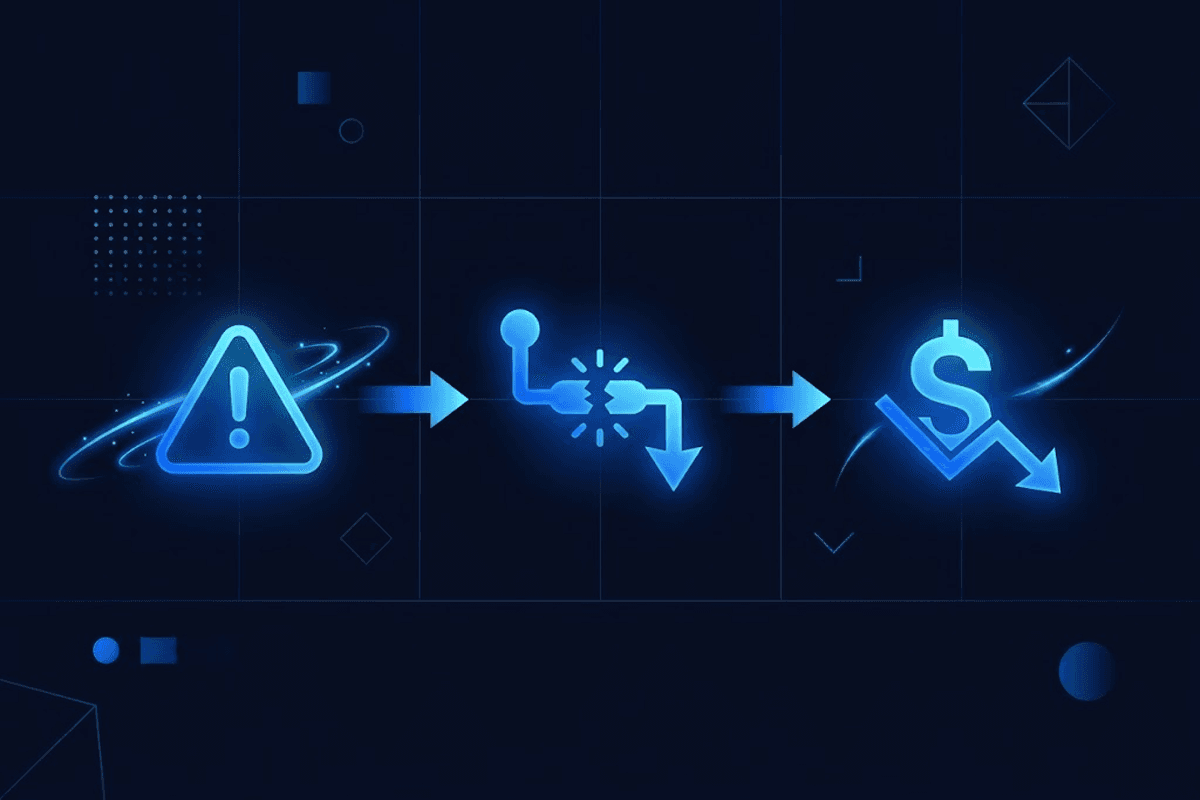
3. Speed of Fix Matters More Than Number of Findings
Many companies focus on how many vulnerabilities are found. That is the wrong metric. What matters is:
- How fast you detect issues
- How fast you fix them
- How quickly they are verified
A company that finds 10 issues and fixes them in hours is far more secure than one that finds 50 issues and fixes them over months. Capture The Bug emphasizes this shift. The goal is not more findings. The goal is faster closure.

4. Developers and Security Must Work Together
One of the biggest hidden problems in organizations is communication. Security teams work separately. Developers move fast. Reports arrive late. Context is lost.
Modern testing models solve this by bringing developers and testers into the same workflow. Instead of long reports, issues are explained clearly, context is shared instantly, and fixes are validated quickly. This collaboration reduces delays and improves accuracy.

5. Real-Time Visibility Changes Decision-Making
Executives often lack real visibility into security posture. They rely on reports, summaries, and audit documents—but these are static views.
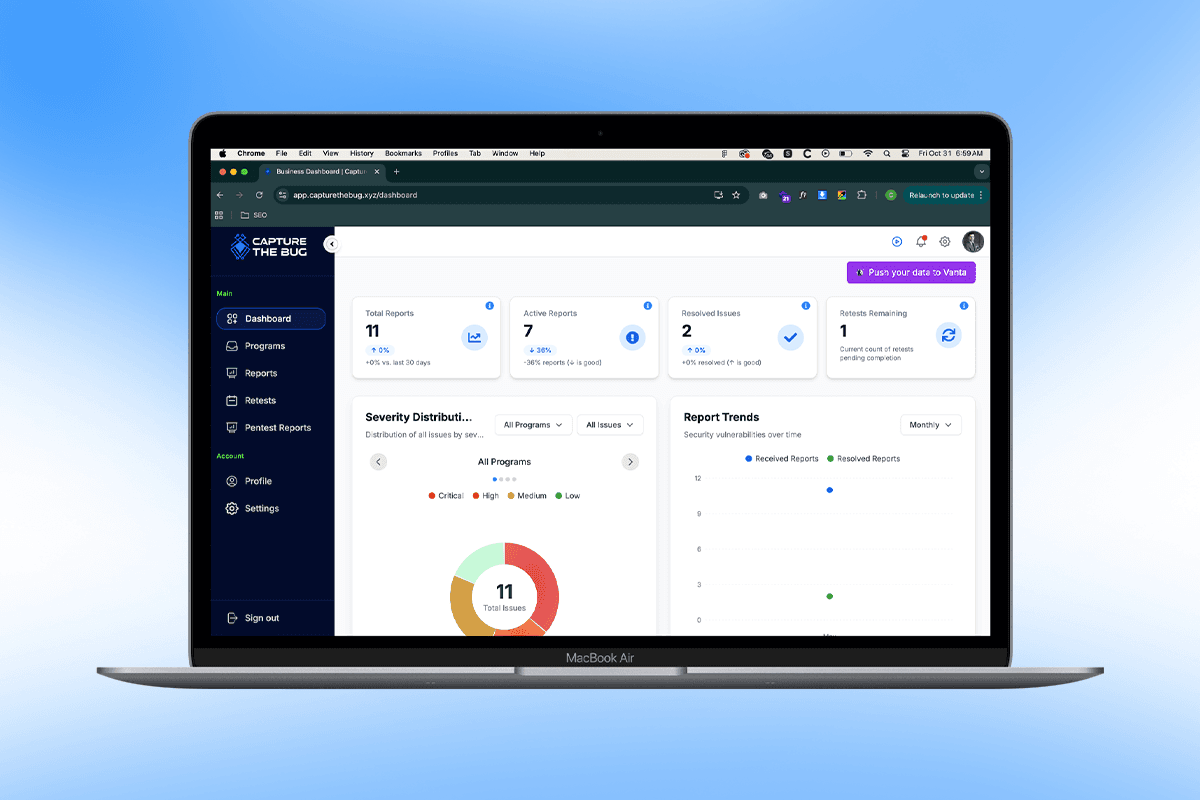
What leaders actually need is live insight: what is currently vulnerable, what is being fixed, and what is already resolved. This allows leadership to prioritize resources better, communicate confidently with stakeholders, and track progress as a business metric.

6. Compliance Alone Does Not Mean You Are Secure
Many companies pass audits and still get breached. Why? Because compliance is periodic. Risk is continuous.
Frameworks like ISO or SOC 2 require evidence at a point in time. But attackers do not follow audit schedules. Compliance proves you met a standard; it does not prove you are currently secure.
7. Continuous Testing Aligns With How Modern Companies Build
Teams release updates frequently. Infrastructure scales dynamically. Integrations expand constantly. Security needs to match this pace.
Continuous penetration testing solves this by testing new changes as they happen, providing ongoing visibility, and allowing instant validation of fixes.

Understand the Difference That Impacts Your Risk
Compare traditional penetration testing vs continuous testing and see which model actually protects your business in real time.
8. Cost Is Not About Testing Price, It Is About Risk Exposure
Many leaders evaluate security vendors based on cost per test. This is short-sighted. The real cost is time spent waiting, risk exposure between tests, and lost opportunities due to weak security posture.
Continuous testing models often reduce overall cost because retesting is faster, issues are resolved earlier, and teams spend less time coordinating.

9. Human Expertise Still Matters More Than Tools
Tools can find patterns. But real-world vulnerabilities often involve logic, context, and creativity. That is why expert validation is critical.
Capture The Bug combines continuous testing with certified experts who validate real risks, remove false positives, and explain impact clearly. Without human validation, teams waste time fixing issues that are not exploitable.

10. The Best Security Strategy Is Proactive, Not Reactive
Reactive security waits for problems. Proactive security prevents them. The difference is timing.
A proactive approach means testing continuously, fixing immediately, and validating in real time. This reduces exposure dramatically and builds confidence across teams, customers, and stakeholders.
How Capture The Bug Helps Leadership Stay Ahead
Capture The Bug operates as a CREST-certified penetration testing partner built for modern companies. Instead of static reports, it delivers:
- Continuous testing aligned with real development cycles
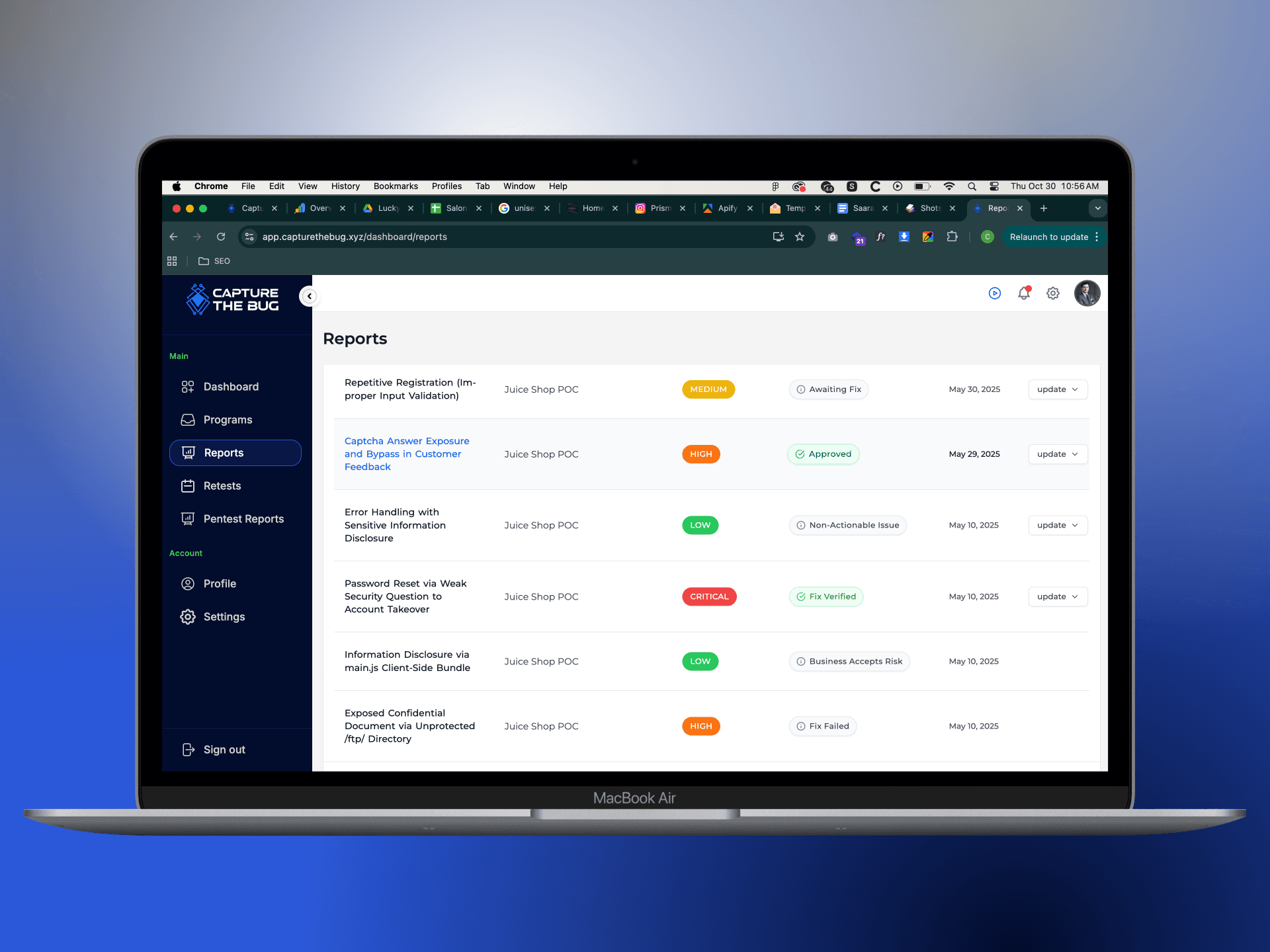
- Real-time visibility into vulnerabilities and fixes
- Direct collaboration between testers and engineering teams
- Compliance-ready reporting without delays
This model helps CEOs and CTOs move from uncertainty to clarity. They see risk, act on it, and resolve it continuously.
Final Thoughts: Security Is a Leadership Decision
Technology does not define your security posture. Decisions do.
The companies that stay secure are not the ones with the biggest budgets. They are the ones with the clearest visibility and fastest response.
Stop treating security as a report. Start treating it as a continuous business system. Because in today’s environment, trust is not built annually. It is built every single day.
FAQ
1. What should CEOs understand about penetration testing?
CEOs should understand that penetration testing is not a one-time activity. It should provide continuous visibility into risks and support faster business decisions.
2. Why is traditional penetration testing not enough today?
Because it creates gaps between tests where vulnerabilities can appear and remain undetected as systems change frequently.
3. How does continuous testing help CTOs?
It allows CTOs to identify, fix, and validate vulnerabilities in real time, aligning security with development speed.
4. What is the biggest mistake companies make in security testing?
Focusing on reports instead of response time. Speed of fixing vulnerabilities matters more than the number of findings.
5. How does Capture The Bug improve security outcomes?
By providing continuous testing, expert validation, real-time visibility, and faster remediation cycles for modern teams.