A Complete Guide to Web Application Security (2026 Edition)
Web applications power modern businesses from SaaS platforms and fintech dashboards to healthcare portals and enterprise systems. But as digital dependency increases, so does the attack surface.
For organizations operating in regulated and high-risk environments, web application security is not optional. It is foundational to business continuity, compliance, and brand trust.
This guide explains what web application security is, why it matters, the most common vulnerabilities, and how organizations can build a resilient, secure application environment.
What Is Web Application Security?
Web application security refers to the strategies, controls, and testing processes used to protect web-based applications from cyber threats.
It ensures the confidentiality, integrity, and availability (CIA) of applications that handle:
- Customer data
- Financial transactions
- Authentication credentials
- Proprietary business information
Security spans multiple layers:
- Secure coding practices
- Authentication and access control mechanisms
- Infrastructure hardening
- Network security controls
- Continuous security testing
In cloud environments, the shared responsibility model applies. Cloud providers secure the infrastructure. Application owners remain responsible for:
- Code security
- User authentication
- Data protection
- Configuration management
- Access control policies
Clear ownership prevents dangerous security gaps.
Why Web Application Security Matters
Security incidents are not just technical failures, they are business risks.
1. Financial Impact
A breach can trigger:
- Incident response costs
- Forensic investigations
- Legal fees
- Regulatory fines
- Customer notification expenses
- Revenue loss due to downtime
Even short-term disruption can impact long-term profitability.
2. Regulatory & Compliance Requirements
Modern businesses must comply with standards such as:
- General Data Protection Regulation (GDPR)
- California Consumer Privacy Act (CCPA)
- Payment Card Industry Data Security Standard (PCI DSS)
Failure to comply can result in heavy penalties and legal exposure.
3. Reputational Damage
Trust is fragile. Once customer data is exposed, rebuilding confidence is expensive and slow. Social media and press amplification can permanently damage brand perception.
4. Legal Liability
Organizations can face:
- Class-action lawsuits
- Contractual penalties
- Regulatory enforcement actions
Security negligence is increasingly treated as governance failure.
5. Business Continuity Risks
Attacks such as:
- Ransomware
- Distributed Denial-of-Service (DDoS) attack
can halt operations, disrupt services, and impact revenue streams.

Common Web Application Vulnerabilities
Many breaches stem from a small group of recurring weaknesses identified by the OWASP.
1. Injection Attacks
Injection vulnerabilities occur when untrusted input is executed as code or commands.
- SQL injection
- NoSQL injection
- LDAP injection
Improper input validation remains one of the most exploited weaknesses.
2. Broken Authentication
Occurs when attackers bypass login mechanisms through:
- Weak password policies
- Brute-force attacks
- Exposed session tokens
- Improper logout invalidation
3. Sensitive Data Exposure
Data transmitted without encryption or stored with weak hashing algorithms becomes vulnerable to interception and misuse.
4. Broken Access Control
Privilege escalation allows users to:
- Access other users’ data (horizontal escalation)
- Gain administrative rights (vertical escalation)
5. Security Misconfiguration
Default credentials, exposed admin panels, unpatched software, and verbose error messages create easy entry points.
6. Insecure Deserialization
Applications that deserialize untrusted objects may allow attackers to execute arbitrary code remotely.

Web Application Security Testing Tools
Effective security requires a combination of automated scanning and manual testing.
OWASP Zed Attack Proxy
An open-source dynamic security testing tool that identifies vulnerabilities such as XSS, injection flaws, and authentication weaknesses.
Burp Suite Community Edition
Provides manual testing tools for intercepting, modifying, and analyzing HTTP requests.
Metasploit Framework
Used by security professionals to simulate real-world exploits and validate vulnerabilities.

Best Practices for Web Application Security
Security is not a one-time activity. It is an ongoing discipline.
1. Implement Strong Authentication
- Multi-factor authentication (MFA)
- Strong password enforcement
- Secure session token generation
- Proper session invalidation
2. Input Validation & Output Encoding
- Whitelist validation
- Parameterized queries
- Prepared statements
- Proper HTML encoding
These reduce injection risks significantly.
3. Integrate Security into CI/CD
Use:
- Static Application Security Testing (SAST)
- Dynamic Application Security Testing (DAST)
- Dependency scanning
Security must be embedded in development workflows not treated as a final step.
4. Secure APIs
- Token-based authentication (OAuth, API keys)
- Rate limiting
- Least privilege access
- API versioning
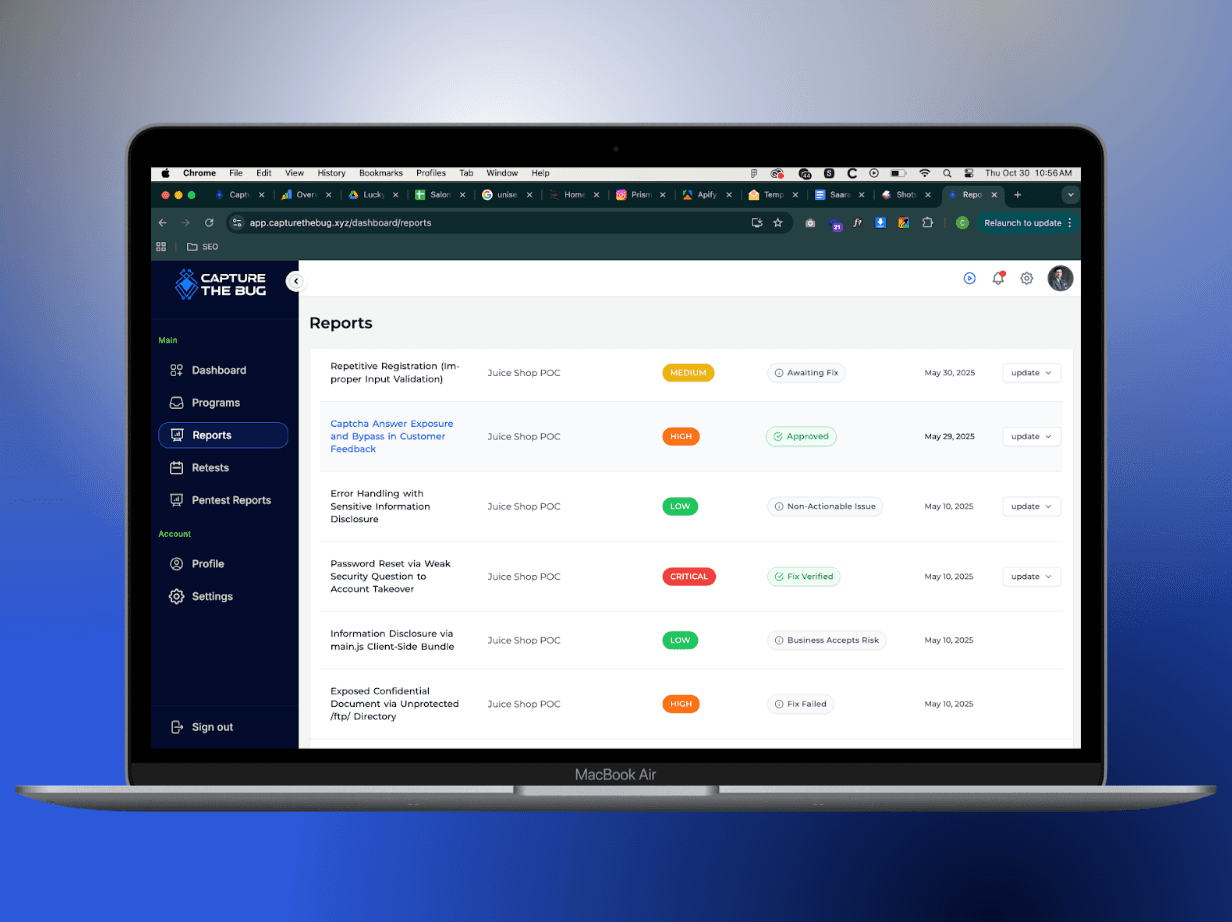
5. Continuous Vulnerability Management
- Regular scanning
- Severity-based prioritization
- Timely patch deployment
- Formal remediation tracking
Security programs must be structured, measurable, and repeatable.
Final Thoughts
Web application security is not just about preventing hacks it is about protecting business continuity, maintaining regulatory compliance, and preserving customer trust.
Modern threat actors exploit simple weaknesses at scale. Organizations that rely on periodic security reviews or static reports often miss evolving risks.
A resilient security posture requires:
- Secure coding standards
- Continuous testing
- Active vulnerability management
- Leadership-level accountability
When security becomes embedded in development and operations, organizations shift from reactive defense to proactive risk management.
That shift is what separates vulnerable applications from resilient digital platforms.