Why Security Leaders Are Investing in Continuous Pentesting (Not More Tools)
Introduction: The Shift No One Is Talking About
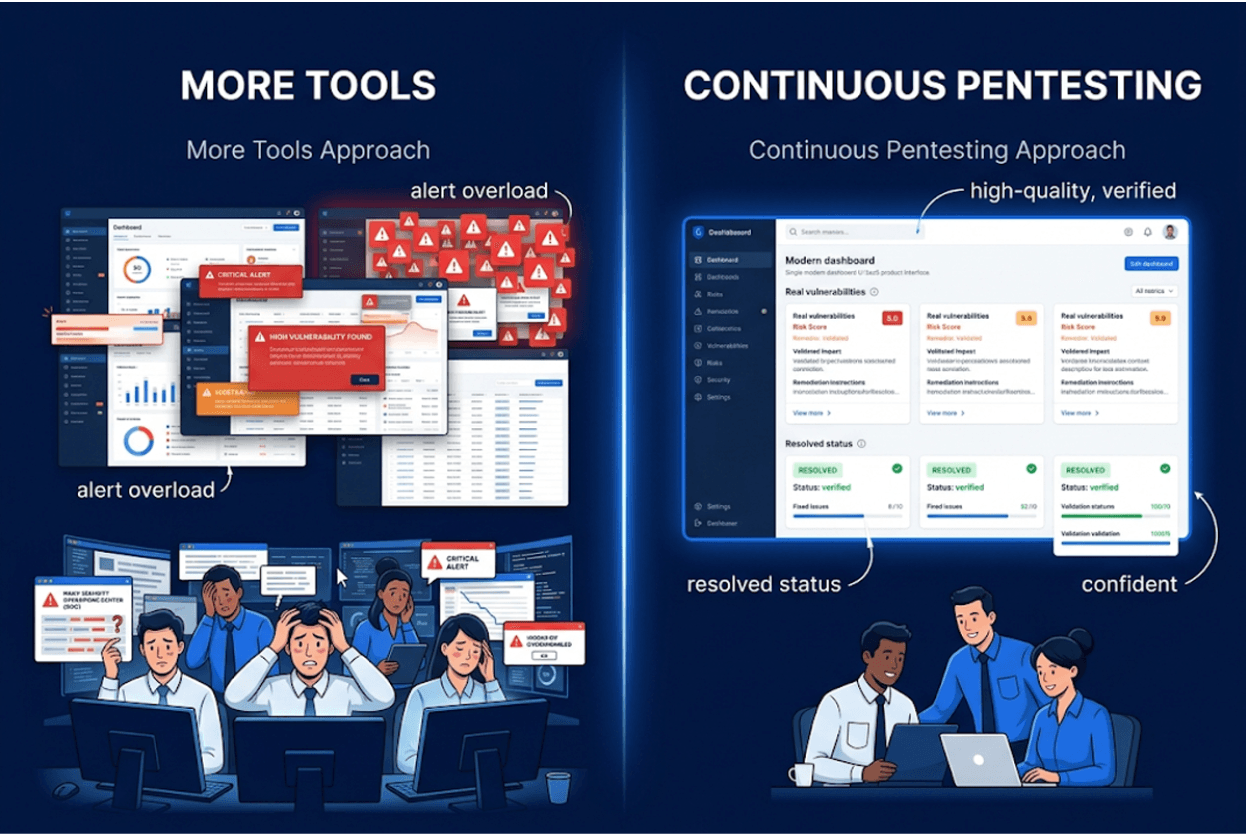
For years, security leaders followed a predictable pattern. When risk increased, they bought another tool. Another dashboard. Another alert system. Another layer of visibility.
But something changed. Despite growing stacks of security tools, breaches didn’t slow down. Engineering teams still struggled with unclear priorities. Reports arrived too late to act on. And leadership still lacked real-time confidence in their security posture.
Today, a different mindset is emerging. Security leaders are no longer asking, “What tool should we add next?” They are asking, “How do we continuously validate what we already have?”
That shift is why continuous pentesting is becoming a priority investment across SaaS, fintech, and enterprise environments. Not because tools don’t matter. But because tools alone don’t prove security.
The Problem with Tool-Centric Security
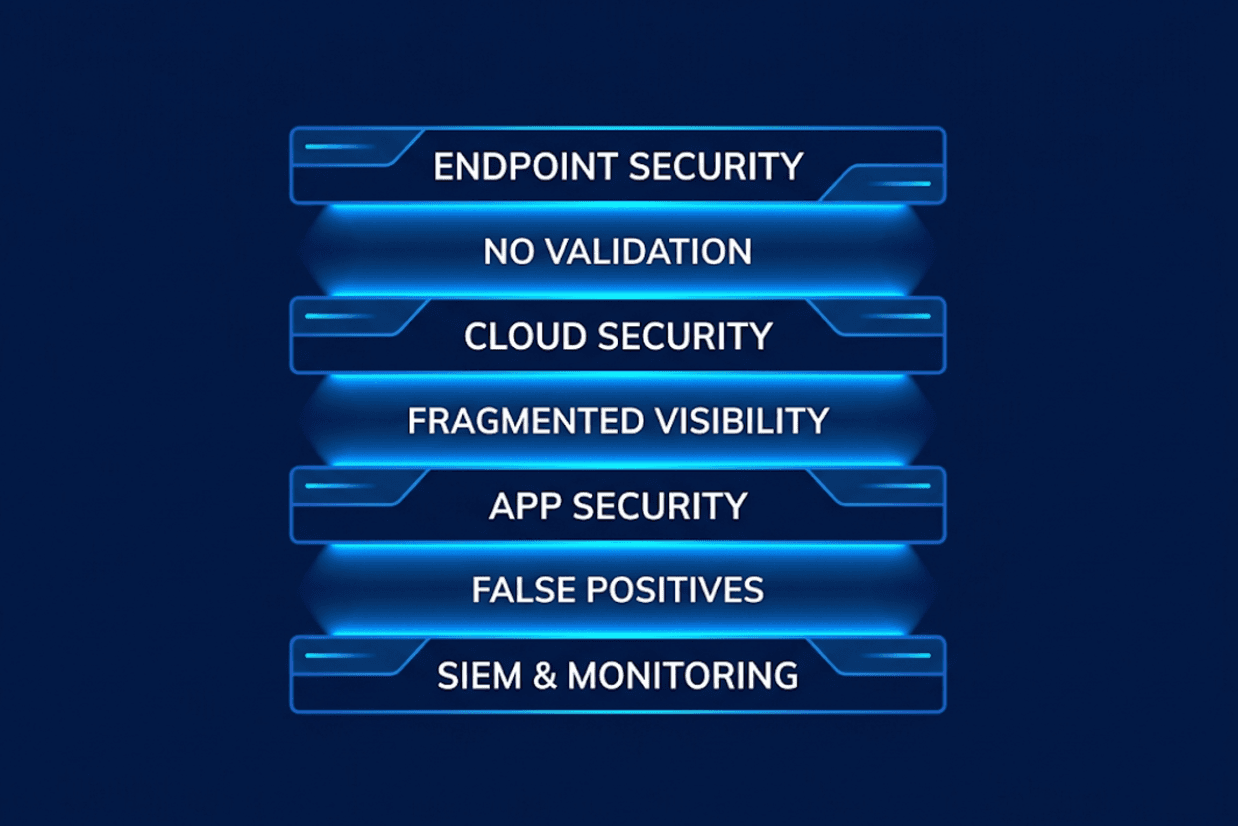
Most organizations today operate with dozens of security products. Each promises visibility. Each generates alerts. Each claims to reduce risk.
But in practice, three problems consistently show up:
- Too Much Noise, Not Enough Clarity: Alerts don’t equal risk. Teams spend hours reviewing findings that may never be exploitable, while real vulnerabilities remain hidden in plain sight.
- Fragmented Visibility: Different tools operate in isolation. One monitors infrastructure, another tracks endpoints, another flags application issues. No single view shows what is actually exploitable.
- No Real-World Validation: Tools identify potential weaknesses. They don’t confirm whether those weaknesses can be used to break your system.
This is where most security strategies fall short. They measure activity, not exposure.
Understand the Difference That Impacts Your Risk
Compare traditional penetration testing vs continuous testing and see which model actually protects your business in real time.
Why Continuous Pentesting Changes the Game
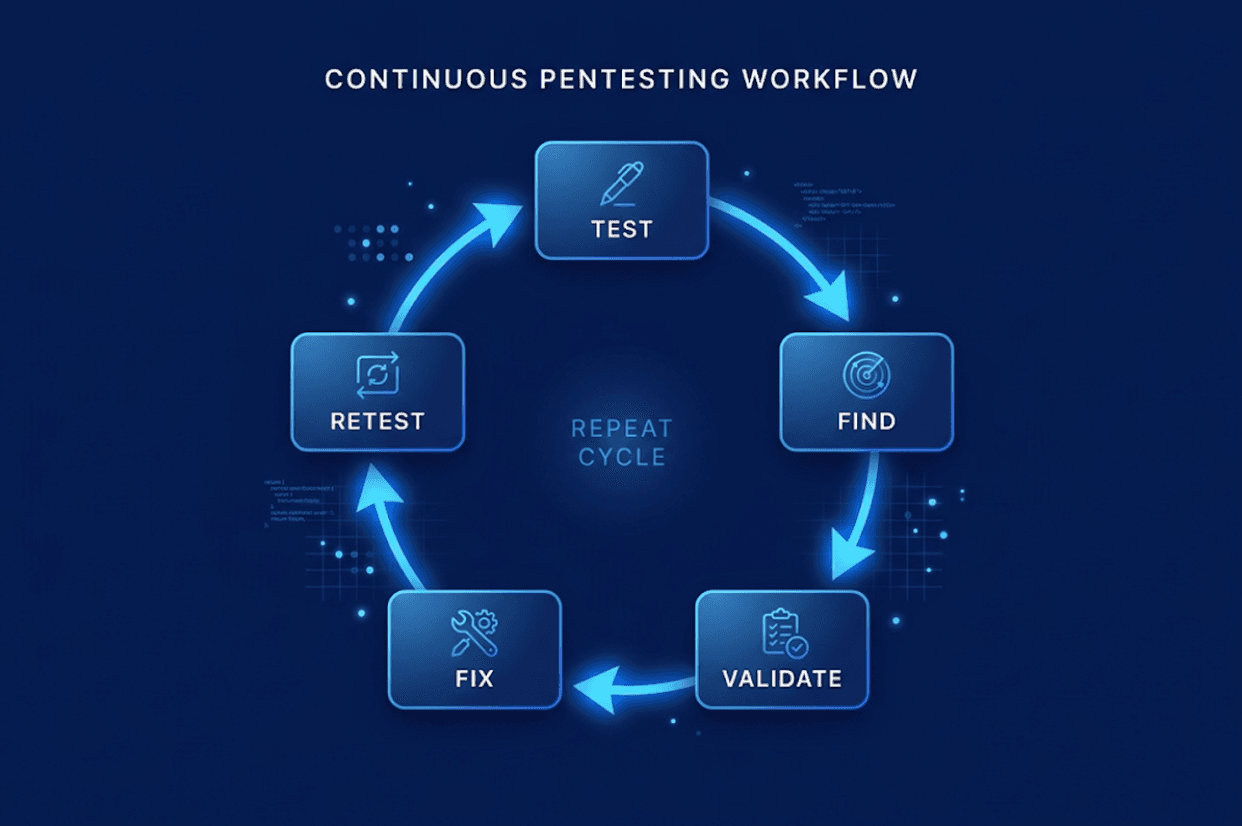
Continuous pentesting shifts security from assumption to validation. Instead of relying on tools to suggest risks, it continuously tests systems the way an attacker would, confirming what is actually exploitable and what is not.
This is not a one-time exercise. It is an ongoing process that runs alongside your product evolution. As highlighted in modern PTaaS models, security must move from periodic checks to continuous visibility.
That difference is critical. Because in modern environments, systems change daily. New features, APIs, integrations, and configurations expand the attack surface constantly.
Point-in-time testing cannot keep up with that pace. Continuous pentesting can.
The Real Reason CISOs Are Shifting Budgets
Security leaders are not investing in continuous pentesting because it is new. They are investing because it solves problems tools cannot. Here is what is driving the shift.
1. From Alerts to Exploitable Risk
Most tools answer the question: “What could be wrong?” Continuous pentesting answers: “What can actually be exploited right now?”
This distinction changes everything. When security teams focus only on validated vulnerabilities, they: Reduce time wasted on false positives, prioritize fixes that matter, and improve real risk reduction, not just metrics.
2. Real-Time Visibility, Not Delayed Reports
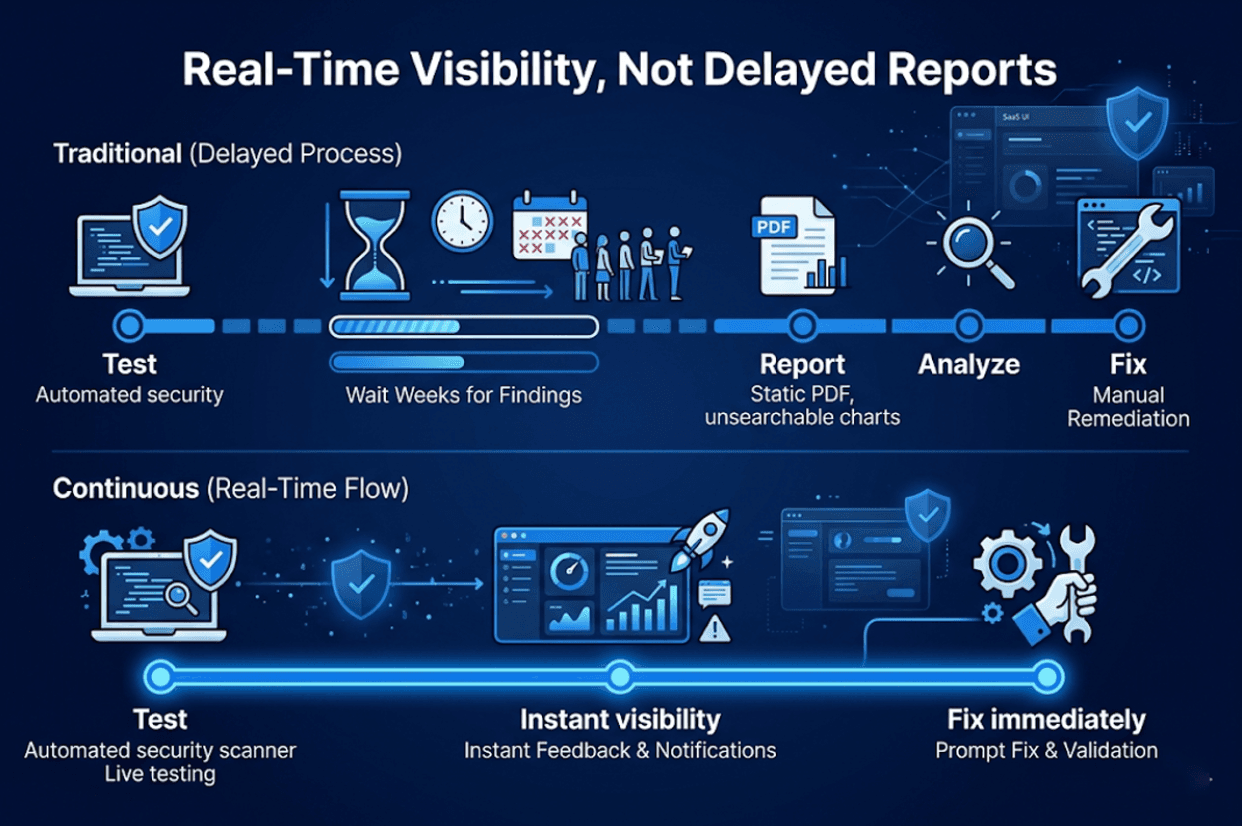
Traditional testing models create delays. Weeks pass between testing and reporting. By the time findings arrive, systems have already changed.
Continuous pentesting removes that gap. Security leaders gain live visibility into vulnerabilities, immediate insight into remediation progress, and ongoing understanding of security posture.
3. Faster Remediation Cycles
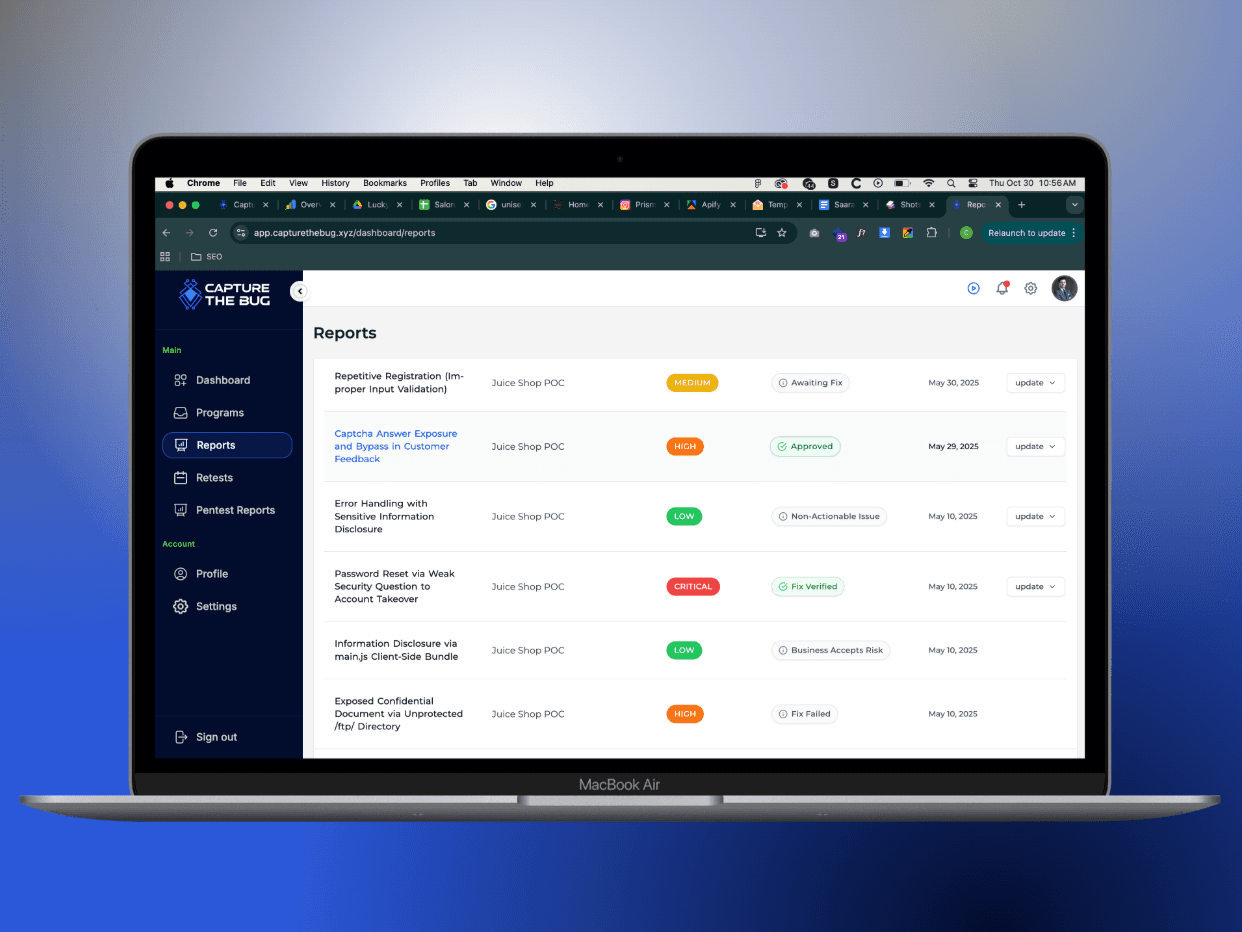
One of the biggest hidden costs in security is time-to-fix. The longer a vulnerability exists, the higher the risk.
Continuous pentesting shortens that cycle by identifying issues early, enabling direct collaboration between testers and developers, and validating fixes immediately.
4. Continuous Compliance, Without the Stress
Compliance frameworks still rely on periodic audits. But businesses operate continuously. This creates friction.
Continuous pentesting changes that dynamic. It creates a live record of what has been tested, what vulnerabilities were found, and how quickly they were fixed. This makes organizations audit-ready at any time.
5. Better ROI Than Expanding Tool Stacks
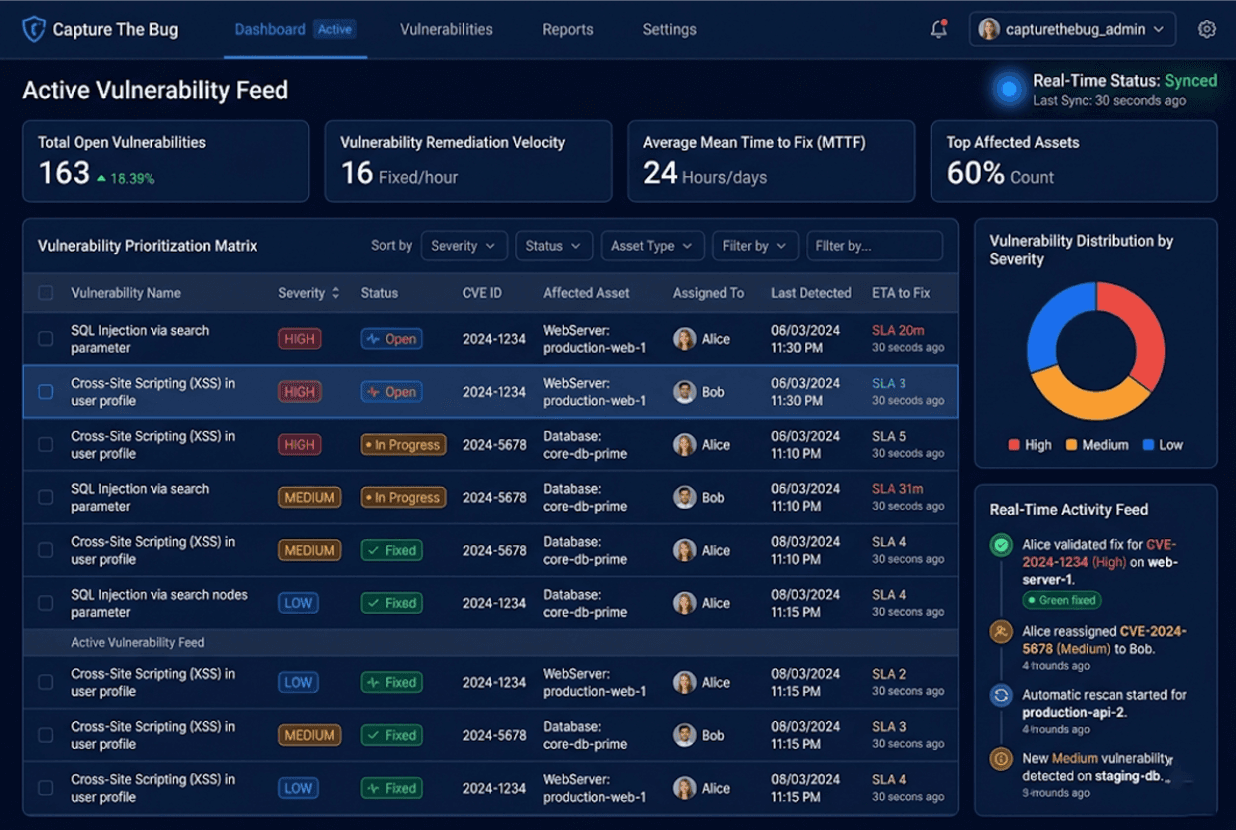
Adding more tools increases complexity. More dashboards. More alerts. More maintenance. Continuous pentesting simplifies the model. Instead of adding layers, it validates outcomes.
Security leaders see ROI through reduced duplication of effort, faster remediation cycles, and clear, measurable security improvement.
The Capture The Bug Approach
Capture The Bug was built around this exact shift. Rather than adding another layer of complexity, the focus is on continuous validation.
Through a PTaaS model, Capture The Bug provides:
- CREST-certified testing expertise
- Ongoing vulnerability discovery and validation
- Real-time visibility into risk and remediation
- Compliance-ready reporting aligned with global standards
A Practical Example
Consider a SaaS company releasing updates weekly.
Traditional Model
- Testing happens once or twice a year
- Vulnerabilities remain undetected between cycles
- Fixes are delayed due to lack of clarity
Continuous Model
- Every change is validated as it happens
- Vulnerabilities are identified early
- Developers fix issues within same cycle
The difference is not just speed. It is confidence. Security becomes part of how the product evolves, not something checked after the fact.
Why This Is a Leadership Decision, Not a Technical One
This shift is not driven by engineers alone. It is driven by leadership priorities. Security leaders today are accountable for business risk, customer trust, and compliance readiness.
They need answers, not alerts. Continuous pentesting provides those answers, connecting technical findings to business impact.
The Bigger Trend: From Reactive to Continuous Security
What is happening with pentesting is part of a broader shift. Security is moving from periodic to continuous, reactive to proactive, Fragments to unified, and tool-driven to outcome-driven.
Continuous pentesting sits at the center of this transformation. It acts as the validation layer that ensures everything else is working as expected.

Final Thoughts
Security leaders are not abandoning tools. They are moving beyond relying on them. Because tools can show activity. Only continuous pentesting shows exposure.
That is why budgets are shifting. Not toward more dashboards, but toward continuous validation. Capture The Bug represents this new model. One where security is not a one-time event, but an ongoing, measurable process that evolves with the business.
FAQ
1. What is continuous pentesting?
Continuous pentesting is an ongoing security testing approach that continuously identifies, validates, and tracks vulnerabilities instead of relying on periodic assessments.
2. Why are security leaders moving away from adding more tools?
Because tools create alerts, not validation. Continuous pentesting confirms real exploitable risks, improving efficiency and clarity.
3. How does continuous pentesting improve ROI?
It reduces false positives, accelerates remediation, lowers operational overhead, and provides measurable security outcomes.
4. Is continuous pentesting suitable for SaaS companies?
Yes. It aligns with frequent release cycles, ensuring every update is tested and validated in real time.
5. How does Capture The Bug support continuous pentesting?
Capture The Bug delivers CREST-certified, real-time pentesting with continuous validation, collaboration, and compliance-ready reporting.