Understanding Cloud Based Application Security Testing
Cloud based application security testing helps teams protect fast changing applications with clarity, consistency, and real insight.
Introduction
Cloud platforms changed how companies build software. What once took months now happens in weeks or even days. Features ship faster. Infrastructure scales instantly. Teams depend on distributed systems and API communication more than ever before.
With this speed came a new question that every founder, security leader, and engineering head must answer. How do you protect an application that never stands still?
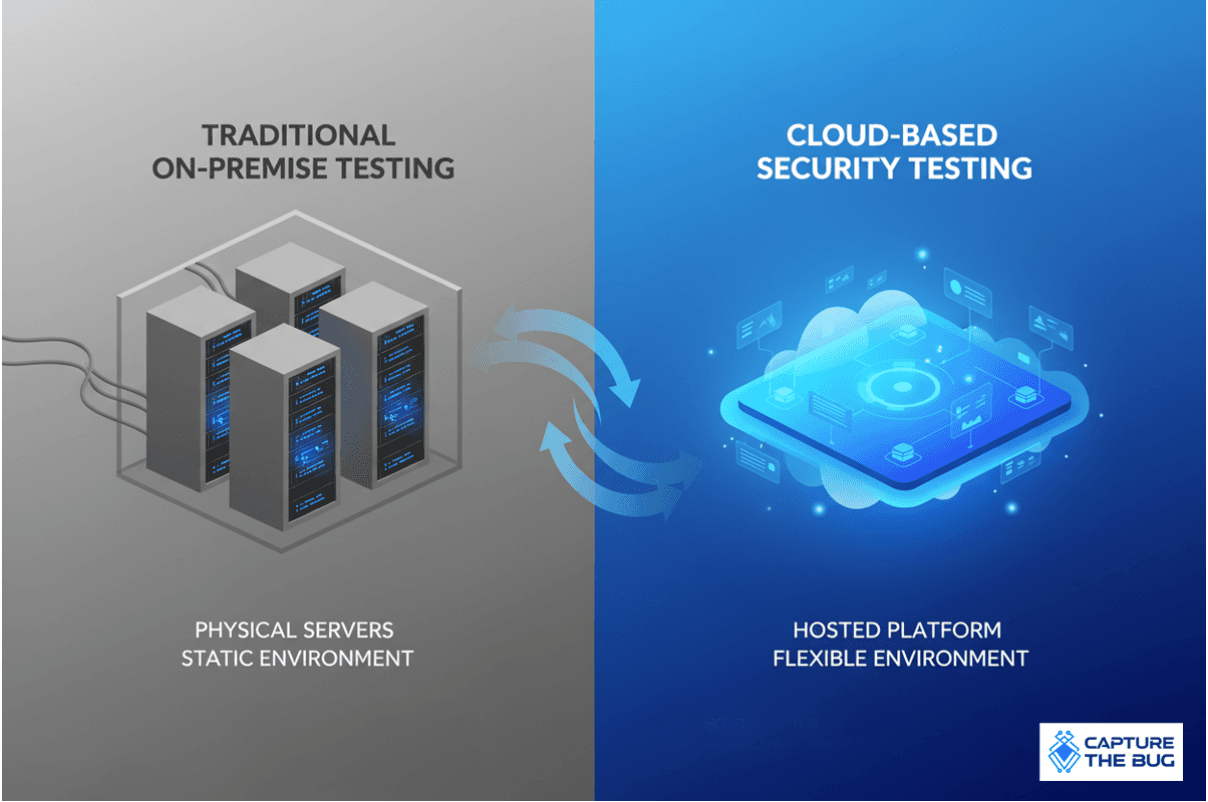
Traditional testing methods were built for slower development cycles. They relied on scheduled reviews, on premise tooling, and long turnaround times. They gave teams a point in time snapshot but not ongoing confidence.
Cloud based application security testing emerged to solve this problem. It aligns testing with the realities of modern product development. Applications evolve constantly, and security insight must evolve with them.
Capture The Bug supports organisations across ANZ, the United States, and global markets that face this challenge every day. Their teams want reliable testing, clear reporting, and human verified results without the delays that once held them back.
This guide explains how cloud based application security testing works, the main testing types, the benefits of each, and how companies can build a security program that grows with their product.
What is Cloud Based Application Security Testing
Cloud based application security testing refers to security assessments delivered through hosted platforms rather than on premise tools. The testing happens where the application lives. Findings are accessible from anywhere. Updates to the application can be tested again quickly and without heavy setup.
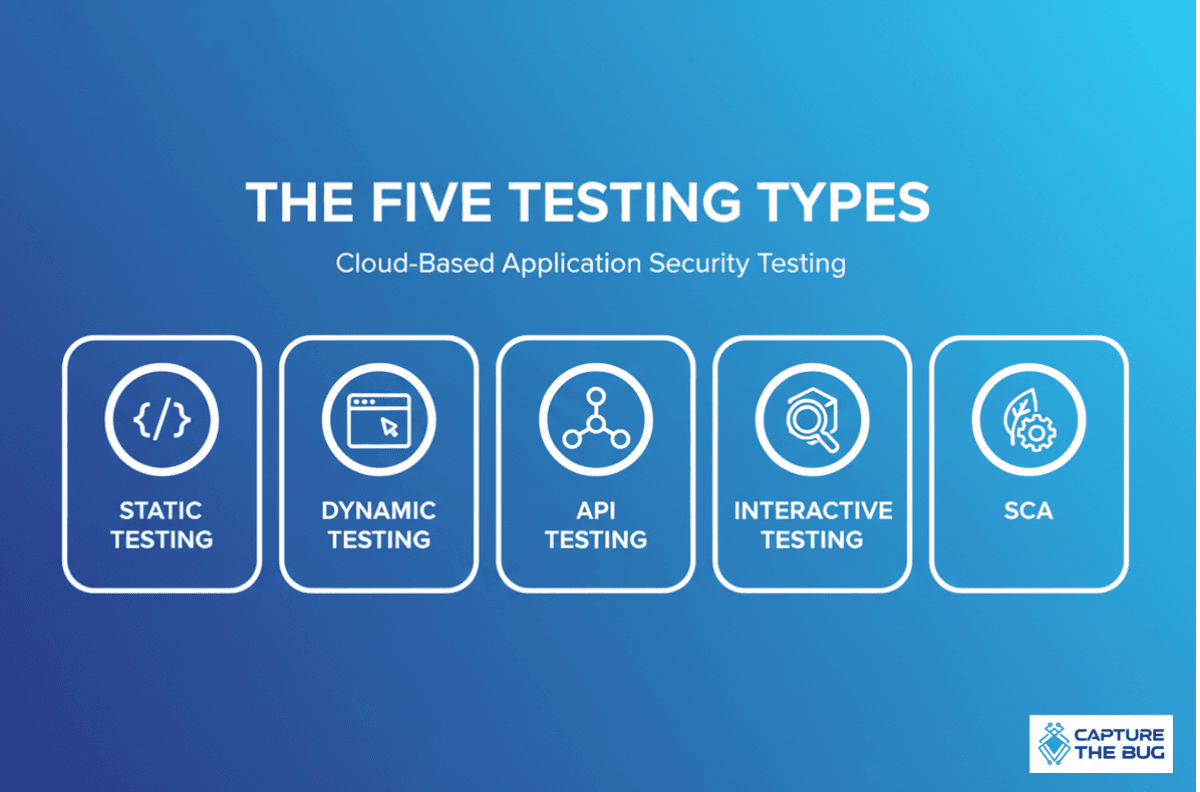
The strength of cloud based testing is not the delivery method alone. It is the ability to combine several testing approaches to create a complete picture of risk. Each method reveals something different. Together, they help teams understand not only what is vulnerable but why it matters.
The Main Types of Cloud Based Application Security Testing
Dynamic Application Security Testing
Dynamic testing evaluates an application as it runs. It behaves like an external user and observes how the system responds. This reveals weaknesses that appear only during real activity such as broken authentication flows, session management issues, and misconfigurations that influence user journeys.
Because dynamic testing is cloud based, teams can test different environments such as staging or pre production versions without maintaining separate infrastructure. It offers a real world perspective that helps organisations understand how attackers might interact with their application.
Dynamic testing is most helpful for:
- Identifying weaknesses that appear only during real use
- Understanding behaviour across different environments
- Modern applications that change frequently
Static Application Security Testing
Static testing focuses on source code itself. It identifies unsafe programming patterns, secret exposures, flawed logic, and other issues that can lead to vulnerabilities later.
Cloud based static testing connects directly to code repositories and reviews changes as they occur. This supports the philosophy that security should begin early. When teams catch issues early, rework decreases and code quality increases.
Static testing is most helpful for:
- Developer led security practices
- Strengthening code standards
- Finding problems long before deployment
API Security Testing
APIs sit at the centre of most cloud applications. They exchange data, connect services, and often carry the most sensitive business logic. Because APIs are frequently targeted, they require dedicated testing.
Cloud based API testing imports specification files and evaluates endpoints directly. This uncovers weaknesses such as broken access control, improper schema exposure, weak authentication patterns, and data handling problems.
API testing is most helpful for:
- API first or microservice designs
- Applications with complex integrations
- Teams that need visibility into backend logic
Interactive Application Security Testing
Interactive testing operates inside the application while it runs. It observes code execution and user interaction at the same time. This dual view helps uncover issues that are difficult to diagnose with external or static testing alone.
Cloud based IAST platforms collect telemetry from running applications and present it through clear dashboards. This offers detailed insight into which parts of the code are responsible for each security issue.
Interactive testing is most helpful for:
- Complex and distributed applications
- Teams who want deeper understanding of behaviour
- Reducing false positives through context
Software Composition Analysis
Modern software relies heavily on open source libraries and external packages. While these components accelerate development, they introduce supply chain risk. Older versions may contain vulnerabilities. Licensing rules may be unclear. Dependencies may be outdated.
Cloud based SCA tools monitor package versions and highlight known vulnerabilities as soon as they are disclosed. This allows teams to strengthen their applications by keeping third party components safe and current.
SCA is most helpful for:
- Reducing open source and supply chain risk
- Tracking package updates and exposures
- Maintaining dependency hygiene at scale
Summary Table
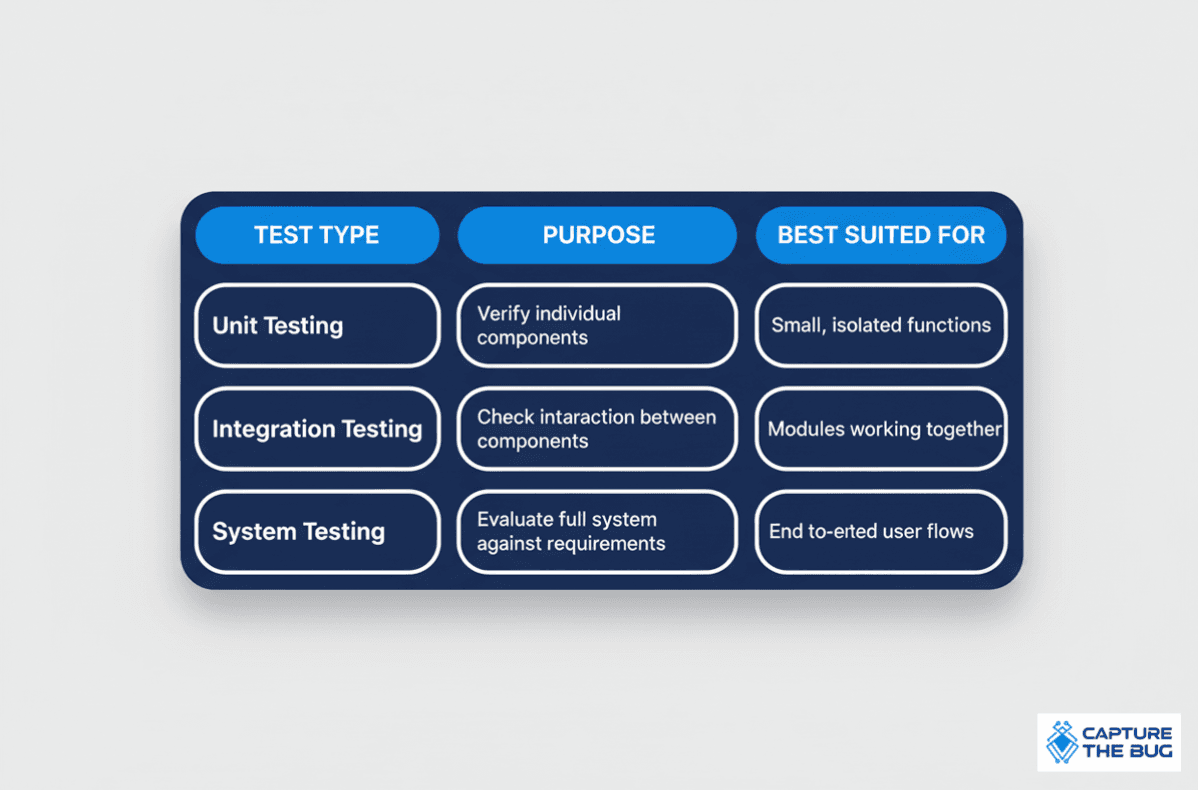
| Type | Purpose | Best suited for |
|---|---|---|
| Dynamic testing | Find weaknesses during real use | Active applications |
| Static testing | Identify unsafe code patterns | Early development |
| API testing | Protect API surfaces | Backend communication |
| Interactive testing | Observe internal behaviour | Complex systems |
| SCA | Track dependency risks | Open source components |
Best Practices for Cloud Based Application Security Testing
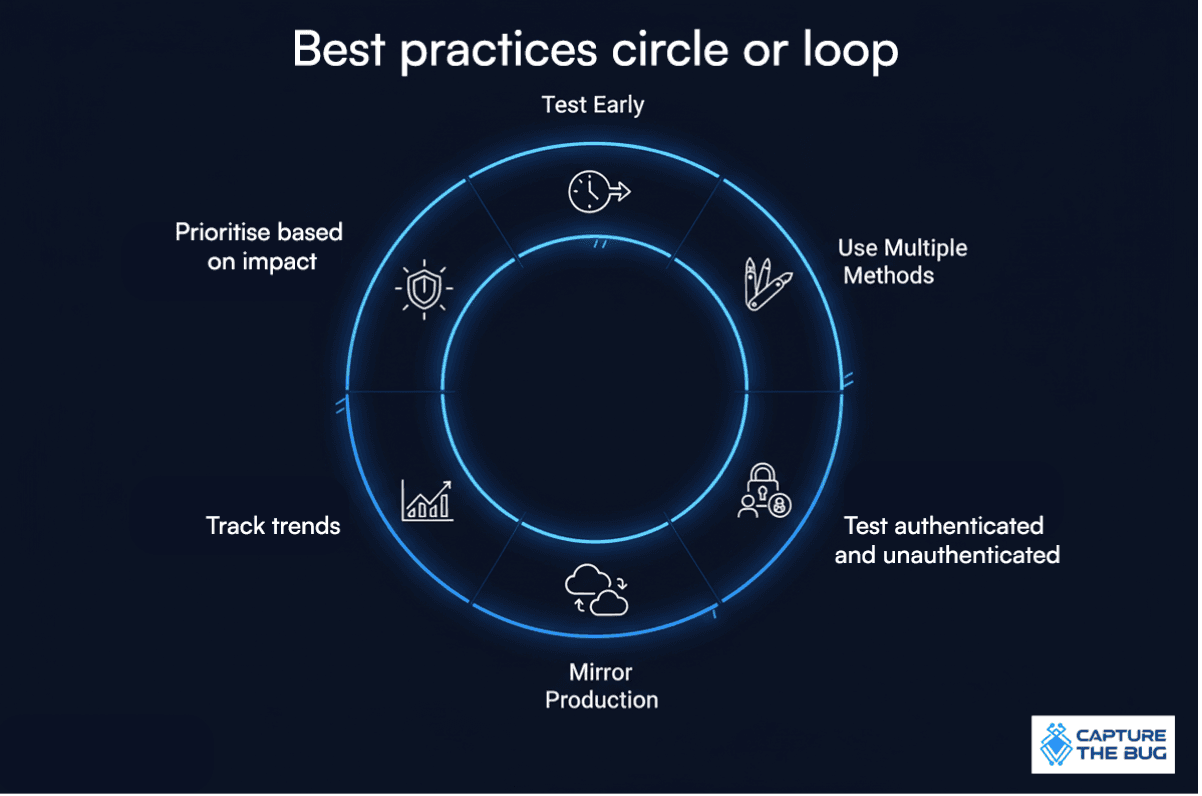
Organisations get the most value from cloud based testing when it becomes an ongoing part of their security approach rather than a one time event. Capture The Bug works with many teams across industries, and the most successful follow a few consistent principles.
Test Early and Test Often
Security works best when it is consistent. Waiting until the final stages of development makes weaknesses harder and more expensive to fix.
Use Multiple Methods
Each testing type reveals different insights. When dynamic, static, API, interactive, and dependency reviews work together, the result is far more complete than any single method.
Test Authenticated and Public Views
A user with privileges interacts with an application differently from a public visitor. Both perspectives are essential.
Keep Environments Realistic
Results depend on accuracy. Testing in environments that closely reflect production produces the most reliable findings.
Track Trends Not Just Individual Findings
A security dashboard helps teams see patterns. Improving the system requires recognising recurring issues as much as resolving individual vulnerabilities.
Prioritise Based on Impact
Not all findings are equal. Teams should focus first on issues that affect data, customer trust, or core business operations.
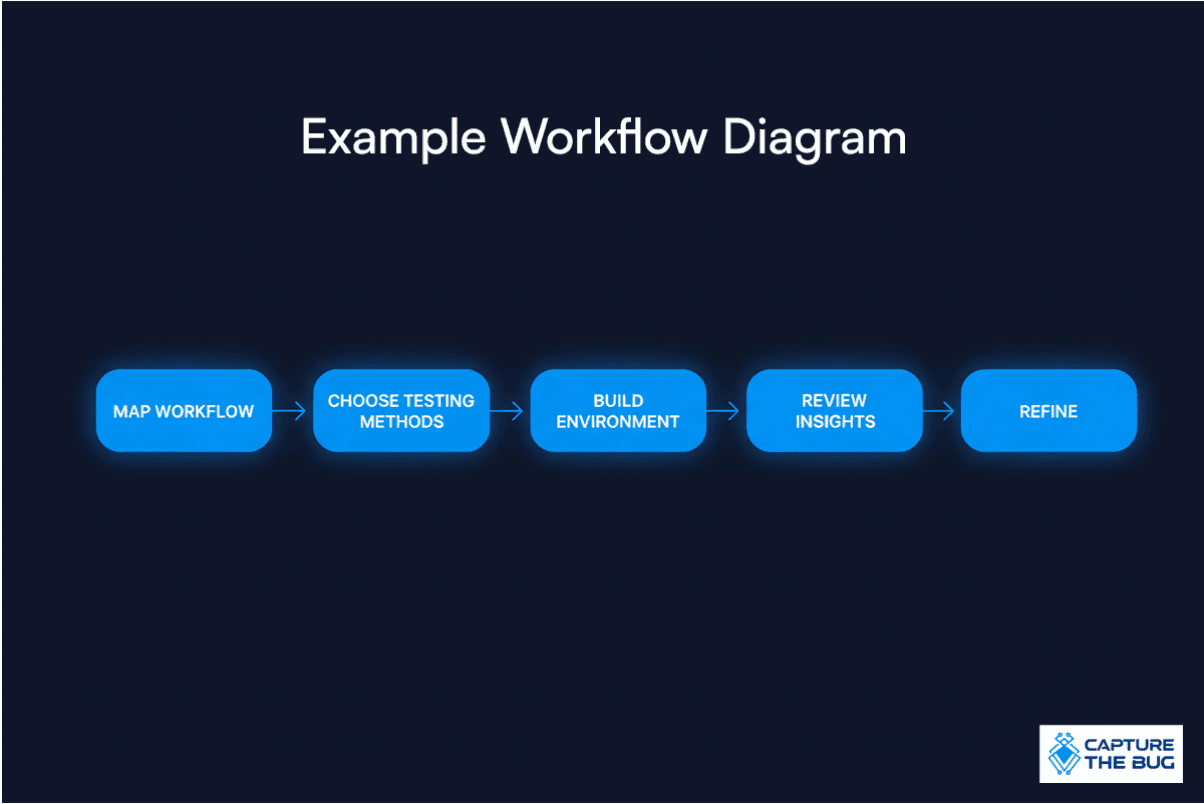
Example Workflow for Cloud Based Application Security Testing
Every company has its own development rhythm, but most can follow a similar workflow to introduce cloud based testing effectively.
One
Outline how ideas become releases. This helps identify natural points where testing should occur.
Two
Select the right blend of testing for each stage. Static and SCA support the earliest phases. Dynamic and API testing support later stages. Interactive testing assists when behaviour needs deeper clarity.
Three
Build a dependable testing environment that mirrors real configurations and routes.
Four
Use a shared dashboard to review findings. This centralises communication, makes progress easier to measure, and helps both engineering and security teams work with clarity.
Five
Adapt the workflow as the application grows. New features, new integrations, and new architectures require regular review of testing strategy.
Final Thoughts
Cloud based application security testing is not simply an update to traditional methods. It is a shift in how companies maintain trust in fast changing systems. The cloud created new opportunities for speed and scale. It also created more moving parts, more data paths, and more areas that require thoughtful protection.
By combining dynamic testing, static review, API analysis, interactive insight, and dependency intelligence, organisations gain a clearer understanding of how their application behaves, how it fails, and how it can be strengthened.
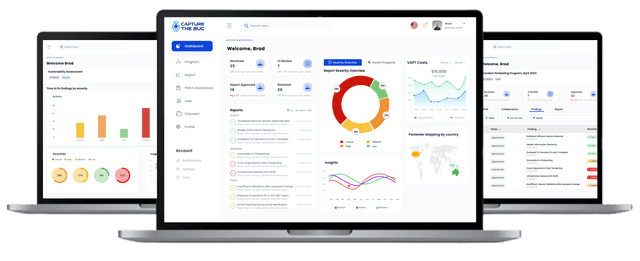
Capture The Bug supports this approach through its PTaaS platform which provides real time reporting, human verified findings, and a trusted CREST certified perspective. Instead of long waiting periods and static reports, teams gain ongoing clarity that matches the pace of their product.
Cloud based testing helps companies stay ahead of risk, maintain strong customer confidence, and build secure software without slowing innovation. In a world where applications evolve constantly, this continuous visibility becomes one of the most valuable advantages an organisation can have.
FAQ
What is cloud based application security testing?
It is the process of assessing applications through hosted platforms that run tests directly from the cloud.
Why do modern teams prefer this approach?
It aligns with how cloud applications evolve, offering flexible access and frequent testing without heavy setup.
Which testing types matter most?
Dynamic testing, static review, API analysis, interactive testing, and SCA each provide unique insight and work best together.
Does cloud based testing replace traditional pentesting?
It complements it by offering ongoing visibility rather than point in time results.
Why choose Capture The Bug for cloud based testing?
Capture The Bug provides CREST certified expertise, clear reporting, and a PTaaS approach that helps teams strengthen security with confidence.