Why security expectations for intelligent systems vary across the UK, France, Germany, and Australia
Global adoption of intelligent systems has moved from experimentation to daily operations. Product teams use them to make decisions, handle customer interactions, and optimize internal workflows. Yet when we speak with founders, CTOs, and security leaders across regions, one thing becomes clear very quickly.
Security does not look the same everywhere.
At Capture The Bug, we work with clients across ANZ, Europe, and North America. What we see on the ground is not just technical differences, but cultural ones. Each country brings its own history, regulatory instincts, and risk tolerance to how these systems are built, governed, and protected.
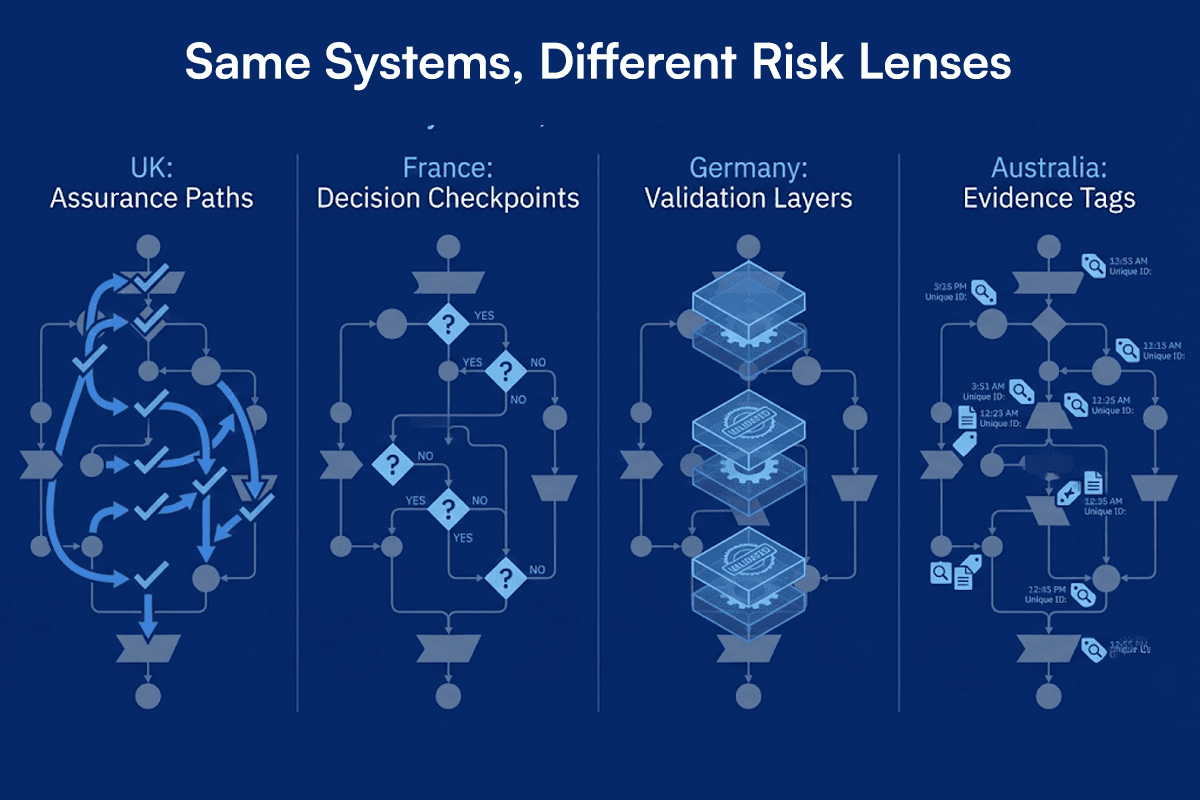
This article looks at four regions that often get grouped together, but behave very differently in practice: the United Kingdom, France, Germany, and Australia. The goal is not to rank maturity. It is to explain why security choices differ, and what founders and security leaders should learn from each approach.
A shared technology, four very different starting points
On paper, many organizations are using similar models, platforms, and vendors. In reality, how they think about risk, assurance, and accountability varies widely.
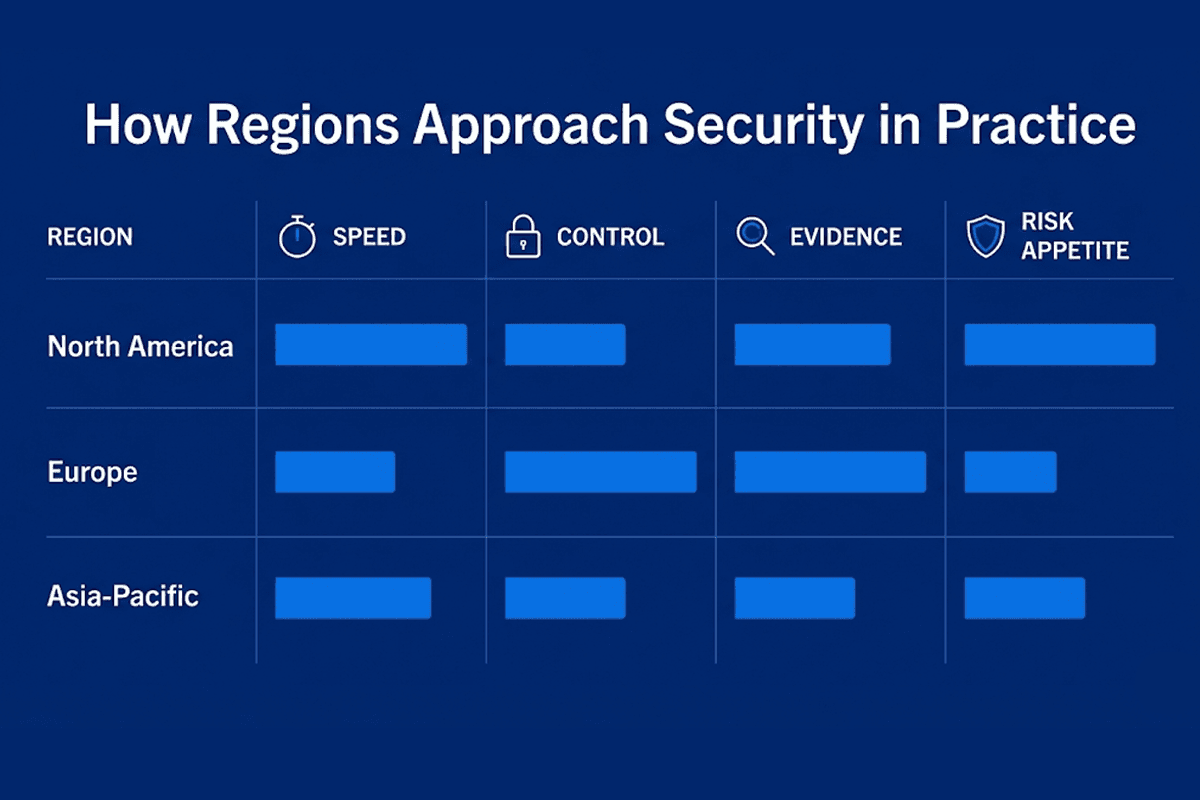
Some regions prioritize speed and innovation. Others focus on control, proof, and oversight. These differences show up clearly in how companies test systems, document decisions, and prepare for audits. Understanding these patterns matters, especially for companies operating across borders. A security approach that satisfies customers in one market may raise concerns in another.
The United Kingdom: confidence through assurance
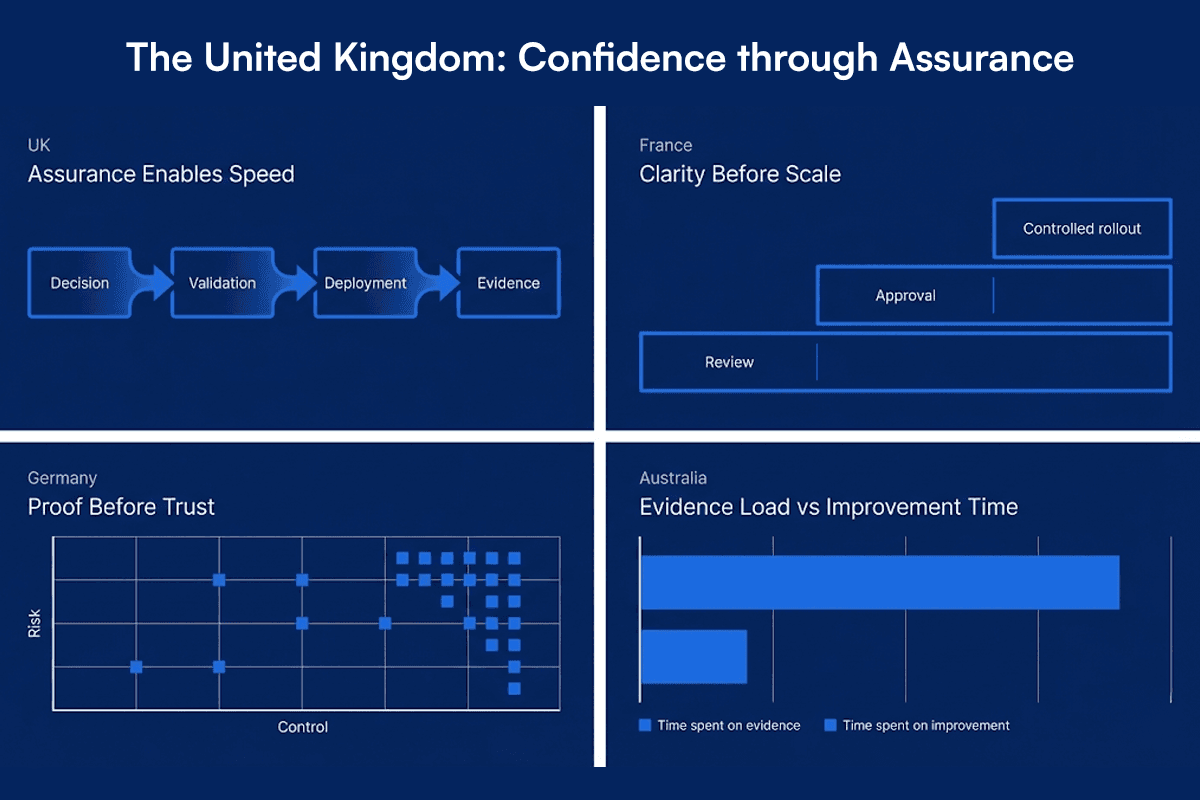
In the UK, we consistently see a strong belief that progress and control can move together. British companies tend to adopt new capabilities quickly, but they also place heavy emphasis on formal assurance. This comes from a long-standing regulatory culture shaped by financial services, government procurement, and data protection frameworks.
Most UK security teams we work with are comfortable deploying intelligent systems, provided they can demonstrate oversight. They want answers to questions like:
- Who approved this system
- How decisions are reviewed
- What evidence exists if something goes wrong
Rather than waiting for perfect rules, UK organizations often rely on existing governance structures and adapt them. This creates momentum. Security teams feel empowered to move forward as long as there is traceability and accountability.
France: innovation with deliberate restraint
France presents a different picture. There is significant national investment in advanced technology, but adoption inside companies tends to be more measured. Many French organizations take a cautious approach, especially when governance frameworks are still evolving.
What we often observe is not resistance, but hesitation. Leadership teams want to understand the implications fully before scaling usage. Questions around responsibility, explainability, and long-term impact come up early.
Security leaders in France often tell us they prefer clarity over speed. They are less comfortable relying on internal interpretation when external guidance feels incomplete. As a result, testing and validation cycles may be slower, but they are often more conservative in scope.
Germany: engineering-led risk realism
Germany’s approach is shaped by deep engineering discipline and a strong tradition of risk management. German organizations were among the earliest to define national strategies for intelligent systems. Yet early planning has not always translated into fast operational adoption.
Why? Because German companies tend to demand a very high bar for proof. In our experience, German security teams focus heavily on:
- Third-party exposure
- Data lineage and ownership
- Failure scenarios and recovery paths
There is less appetite for assumptions. If a system cannot be fully understood, documented, and tested under realistic conditions, it is unlikely to move forward. This leads to robust designs, but it also exposes gaps in suppliers and external dependencies.
Australia: proving security before improving it
Australia stands out for a different reason. Australian companies are often enthusiastic adopters of new technology, especially in SaaS and digital services. However, many security teams are heavily burdened by compliance evidence and reporting requirements.
Too much time is spent proving security, not strengthening it.
The absence of detailed, system-specific regulation has led many organizations to overcompensate. They collect large volumes of screenshots, reports, and documents to satisfy auditors and customers. This has two side effects: security teams become stretched thin, and real improvements move slower than they should.
The most mature Australian organizations are now shifting focus. They are investing in approaches that generate evidence naturally, as a byproduct of ongoing testing and review.
What these differences really tell us
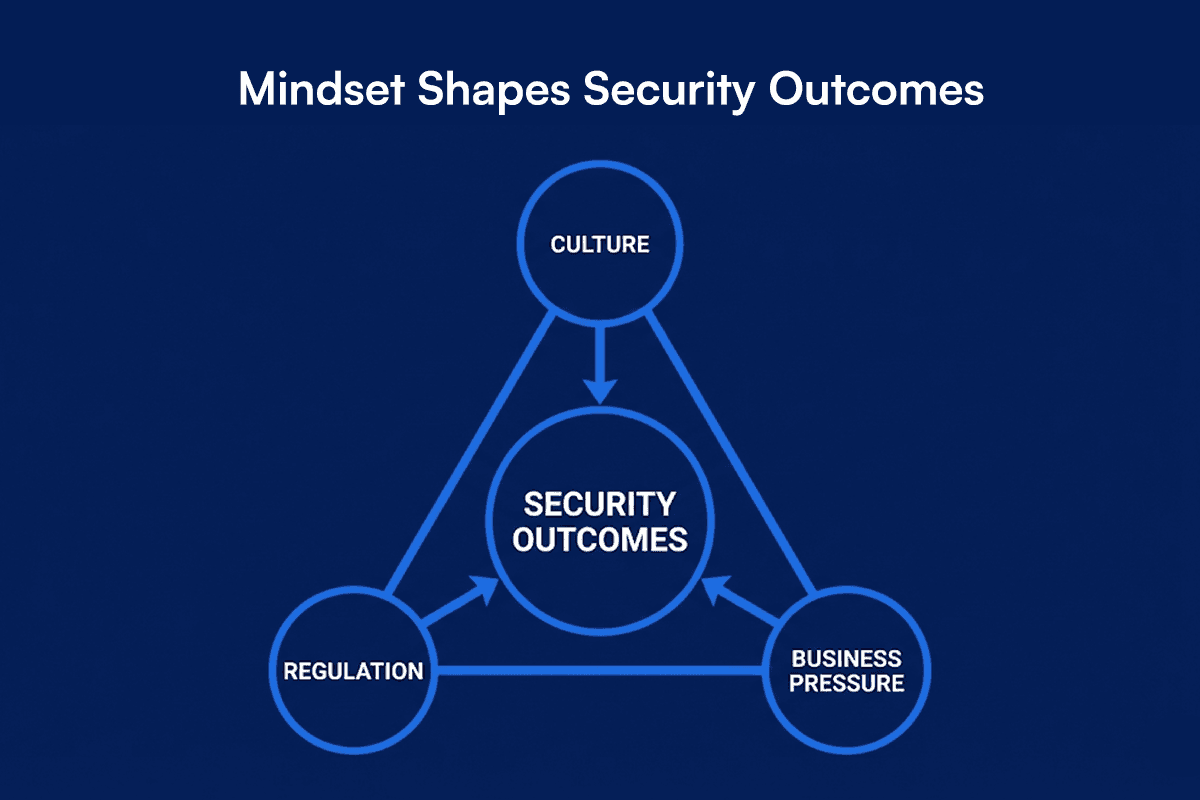
None of these regions are right or wrong. Each reflects local history, regulation, and market expectations. But there is a common lesson: technology does not determine security maturity. Mindset does.
The strongest programs share three traits:
- Clear ownership of system decisions
- Ongoing validation, not one-off reviews
- Evidence that is usable, not just auditable
This is where modern testing approaches matter. Continuous, human-led validation helps teams understand real risk, not theoretical risk.
Building trust across borders
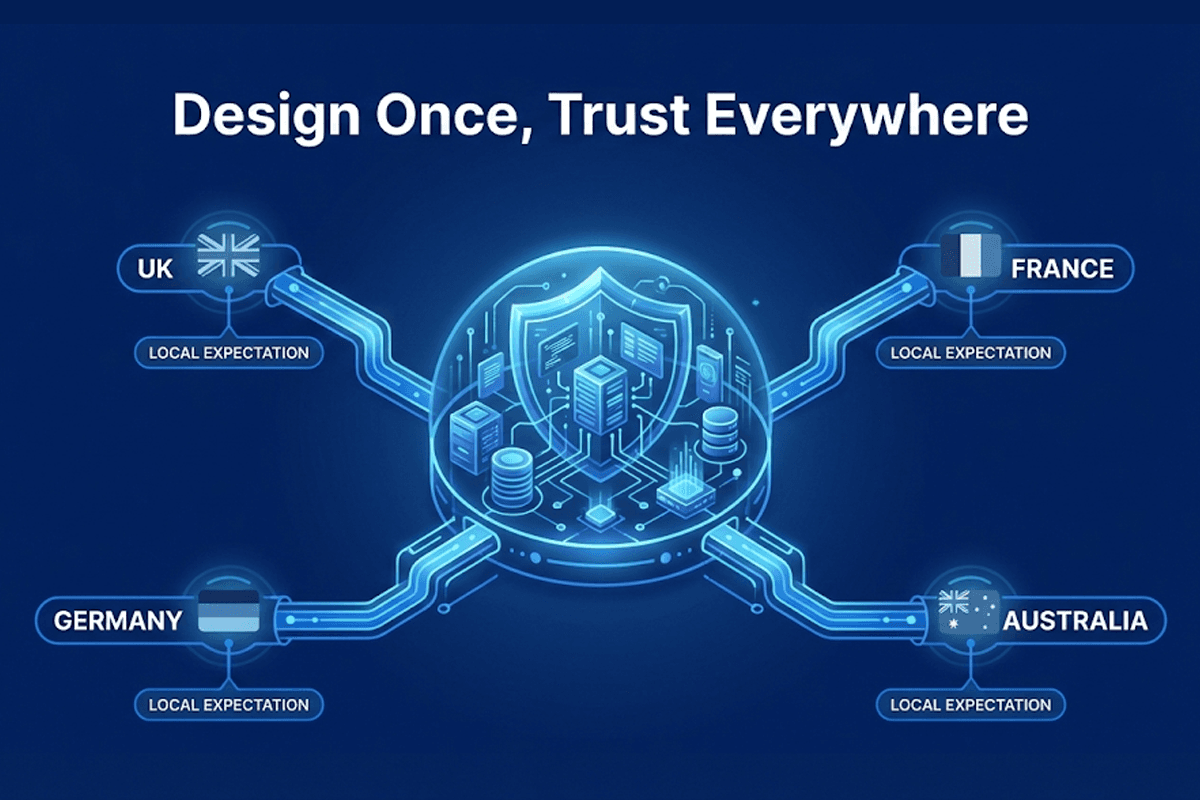
For companies operating internationally, the challenge is alignment. A security approach that satisfies customers in one market may raise concerns in another. Security leaders who succeed are those who design for the highest expectation, without slowing everyone else down.
Design for explainability: Make decisions transparent and logical.
Test continuously: Move beyond annual reviews to ongoing insight.
Universal evidence: Produce results that speak to multiple regulatory audiences.
Conclusion
Intelligent systems are becoming infrastructure. As that happens, security expectations will continue to diverge across regions before they converge. Understanding why these differences exist is a practical advantage for founders, CTOs, and CISOs building products for global markets.
The companies that win will be the ones that build trust, adapt to local expectations, and back every decision with real evidence. That is where strong security foundations make all the difference.
Capture The Bug helps organizations across these markets navigate regional complexity through structured, expert-led security testing.
FAQ
Why do security expectations differ by country
Because regulation, culture, and historical risk tolerance vary widely across regions.
Is one region more mature than others
Maturity looks different everywhere. Some prioritize speed, others prioritize control.
What is the biggest risk for global companies
Assuming one security model will satisfy all markets.
How can companies prepare for cross-border expectations
By building systems with strong governance, continuous testing, and clear evidence.
Where should security teams focus first
On ownership, visibility, and ongoing validation rather than paperwork.