Most SaaS startups get to a point where a prospect, investor, or enterprise customer asks the same question: “Can you show us your last security test?” That moment tends to arrive without warning. And the founders who scramble to answer it are usually the ones who treated security as something to sort out later.
This blog breaks down what penetration testing actually means for a growing SaaS company, what needs testing and when, and what it realistically costs.
Ready to stop guessing about your security posture? Talk to the team at Capture The Bug and get a clear, scoped assessment built for your stage of growth. Book a Security Consultation today: capturethebug.xyz/Services/penetration-testing.
Why SaaS Startups Cannot Afford to Delay Security Testing
A SaaS product sits on one of the most exposed surfaces in modern software. It handles customer data. It has APIs connecting to third-party tools. It ships new features weekly. Each of those updates is a potential entry point if no one is looking carefully.
The uncomfortable reality is that most startups delay security testing not because they don't care, but because they don't know where to start. A full enterprise pentest feels expensive and overbuilt for a 20-person team. But doing nothing is how a business ends up on the wrong side of a breach notification.
Penetration testing for startups is not about being paranoid. It's about having an honest picture of where the real risks are before someone else finds them.
What SaaS Startups Should Actually Test
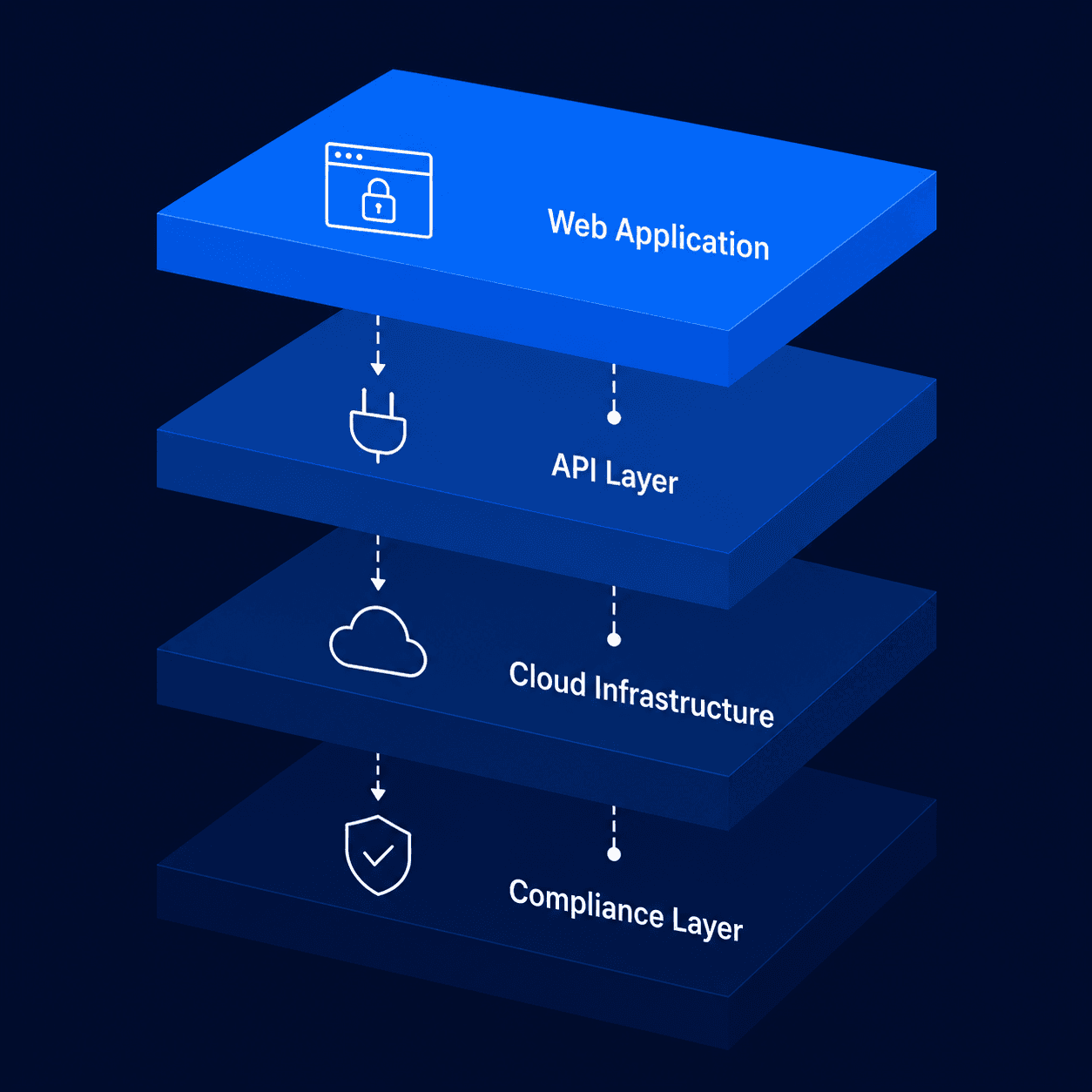
Not every system needs the same level of scrutiny. For a typical SaaS startup, the testing priority list looks like this:
- Web application testing covers the product itself. This means login flows, session management, data access controls, and how the application handles unexpected inputs. For most SaaS companies, this is where the highest-value vulnerabilities sit.
- API security testing has become critical as SaaS products increasingly rely on REST or GraphQL APIs to connect with customers and partners. Weak authentication, excessive data exposure, and broken object-level authorization are among the most common findings at this layer.
- Network and infrastructure testing matters once a startup is running cloud infrastructure. Misconfigured storage buckets, exposed admin panels, and overly permissive network rules are the kinds of issues that don't show up in development but create real exposure in production.
- Cloud configuration review is distinct from traditional infrastructure testing. This covers AWS, GCP, or Azure setups specifically: identity and access management policies, logging configurations, and whether sensitive data is stored or transmitted in a way that creates compliance risk.
For SaaS businesses handling payments or healthcare data, the scope will expand to meet PCI DSS or HIPAA requirements. For companies on the path to SOC 2 or ISO 27001, the pentest is not optional. It's required evidence.
Capture The Bug's penetration testing services cover all of these layers, with CREST-certified methodology and real-time findings delivered through a live dashboard rather than a PDF that takes three weeks to arrive.
When to Get Tested: The Timing That Actually Matters
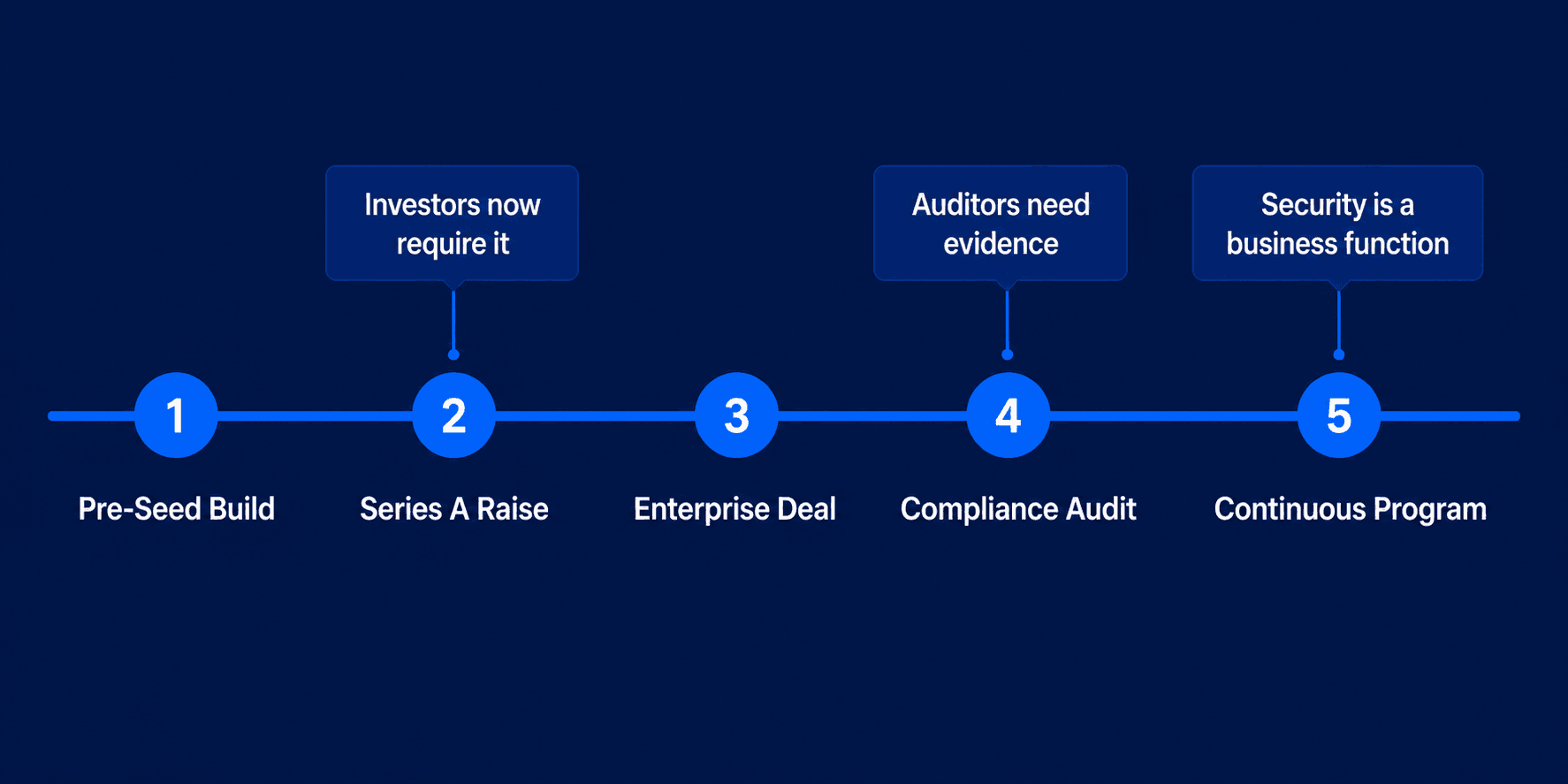
There is no single right answer, but there are clear trigger points that most experienced security teams agree on:
- Before a Series A or B raise: Security due diligence has become standard. Sophisticated investors, especially those with enterprise portfolio companies, now expect to see evidence of security controls. A clean pentest report or an active continuous testing program changes how those conversations go.
- Before a major enterprise contract: Large customers in regulated industries will often include security assessments as part of vendor qualification. Walking into that negotiation without current test results is a disadvantage.
- After significant product changes: Any time the engineering team ships a major new feature, adds a new integration, or migrates infrastructure, the attack surface changes. A targeted retest ensures nothing was introduced in the process.
- Before compliance certification: SOC 2, ISO 27001, and PCI DSS all require evidence of security testing. Getting tested before the audit rather than scrambling during it keeps the process clean.
- Annually at minimum: Even without the triggers above, a once-a-year full-scope pentest is the baseline standard for any company storing customer data. The threat landscape changes. The product changes. A test from two years ago tells you very little about today.
The more sustainable model for fast-moving SaaS teams is continuous penetration testing, which is what platforms like Capture The Bug are built to deliver. Rather than a yearly snapshot, the company gets ongoing visibility into vulnerabilities as they emerge, with direct access to testers and real-time remediation tracking.
How Much Does Penetration Testing Cost for a Startup?
This is the question most founders are working up to. The honest answer is: it varies, but not as wildly as most people assume.
A basic web application pentest for a startup-scale product typically runs anywhere from $3,000 to $10,000 for a single engagement. Scope matters significantly here. A simple single-application test with a defined scope comes in at the lower end. A complex multi-service environment with APIs, third-party integrations, and cloud infrastructure will sit at the higher end or beyond.
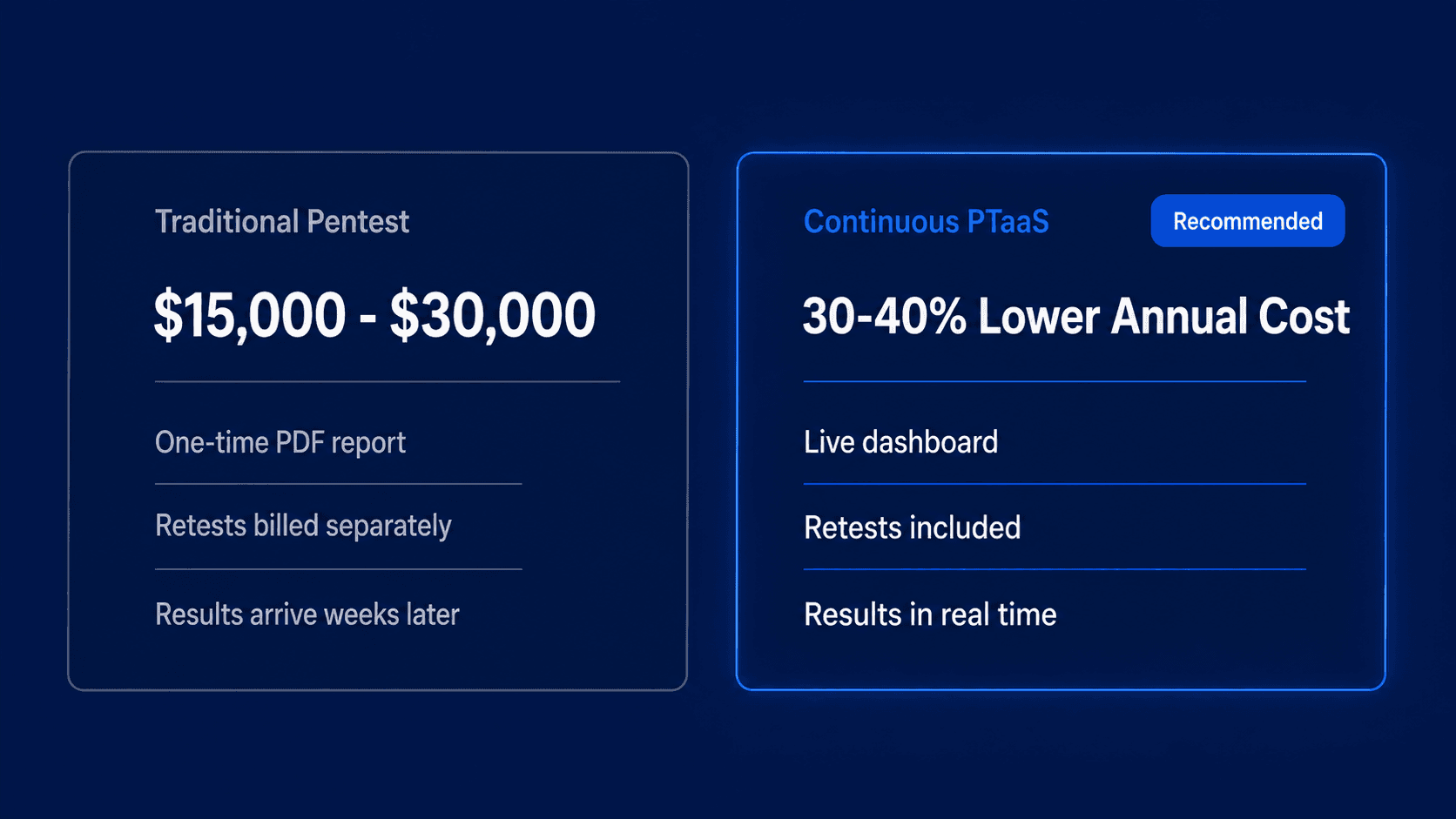
For context, traditional penetration testing firms often charge $15,000 to $30,000 for a thorough enterprise engagement. That price point is out of reach for most early-stage startups and often produces a static report that is outdated within weeks of delivery.
The subscription-based PTaaS model changes this equation. Instead of one large upfront cost per engagement, companies pay a predictable monthly or annual fee for continuous testing access, retests included, and live results. Over a 12-month period, this model typically costs 30 to 40 percent less than running multiple traditional engagements while providing significantly better coverage.
What startups actually pay for when they choose a provider like Capture The Bug is not just the test. It's the time their engineers save by not managing a vendor relationship over email. It's the compliance exports that are ready on demand instead of assembled under pressure before an audit. It's the institutional knowledge of testers who understand the stack and communicate directly with the development team.
Your Last Pentest Is Already Out of Date
Every week you ship without continuous testing is a week a vulnerability goes unseen. See what Capture The Bug finds in your first engagement.
The Hidden Cost of Not Testing
The average cost of a data breach has climbed steadily over the past five years. For small and mid-sized businesses, a breach is not just a technical incident. It can mean customer churn, regulatory fines, reputational damage that takes years to recover from, and in serious cases, failed fundraising rounds.
An enterprise prospect pulling out of a deal because a vendor cannot demonstrate security maturity is also a cost, and it rarely shows up in any calculation. Penetration testing, done at the right stage and with the right provider, is considerably cheaper than any of those outcomes.
Not sure what scope makes sense for your product? Capture The Bug offers a free security consultation to help startups understand their risk surface before committing to a full engagement. Book a consultation and get started: capturethebug.xyz/request-demo.
Choosing the Right Provider
The penetration testing market has a lot of vendors. The differentiation comes down to a few things that matter more than price:
- CREST certification is the global benchmark for penetration testing quality. It means the testers are vetted professionals working to a recognized methodology, not running generic scans and writing up the output. For any company targeting enterprise customers or pursuing compliance certification, working with a CREST-certified provider is not optional.
- Real human access to testers matters. A provider that delivers a report with no mechanism for the engineering team to ask questions is not a security partner. It's a vendor. The best engagements happen when the people finding vulnerabilities can talk directly to the people fixing them.
- Retesting should be included. Identifying a vulnerability and fixing it is only half the process. Verifying that the fix holds is the other half. Any model that charges extra for retests creates a financial disincentive to do the work properly.
Capture The Bug operates at the intersection of these requirements. CREST-certified, real-time, collaborative, and built for the pace at which SaaS companies actually ship.
A Practical Starting Point
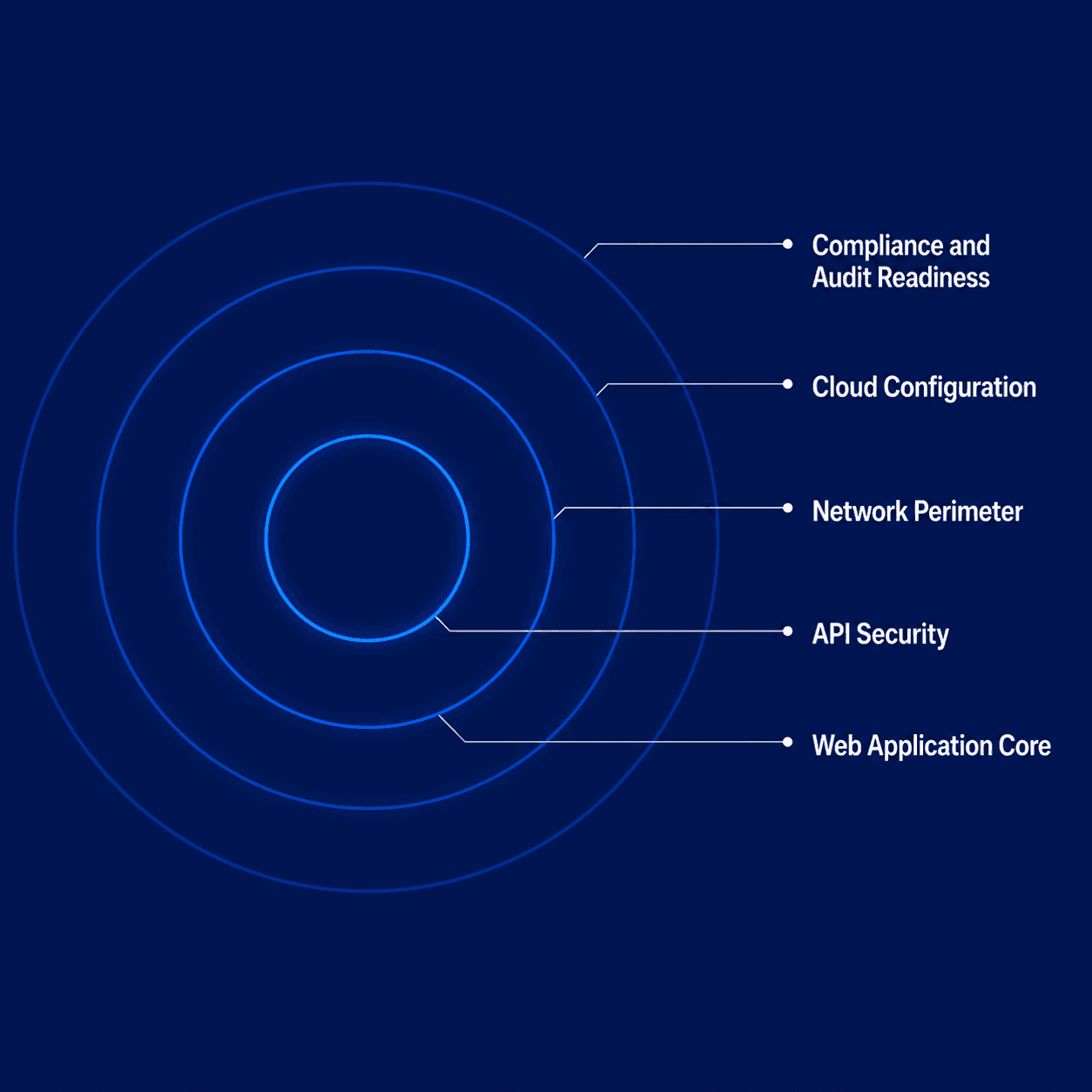
For a SaaS startup at the Series A stage or approaching it, a reasonable starting scope covers the core web application, primary APIs, and the cloud configuration that hosts them. That scope should take two to three weeks for a thorough manual engagement and produce findings that are immediately actionable.
From there, the decision becomes whether a point-in-time engagement meets the need or whether the product roadmap and compliance requirements justify moving to a continuous testing model. For most SaaS companies growing past 50 employees or entering regulated verticals, the continuous model is the one that scales without creating recurring coordination overhead.
Security isn't a report. It's a live system. The companies that understand that early are the ones that close enterprise deals faster, pass audits without chaos, and build the kind of trust that turns customers into long-term partners.
Plan Your Annual Pentesting Strategy the Right Way
Learn how modern SaaS companies structure pentesting across the year to reduce risk, stay compliant, and avoid last-minute panic before audits.
Frequently Asked Questions
What is penetration testing for startups?
Penetration testing for startups is a security assessment process where trained professionals attempt to find and exploit vulnerabilities in a company's web applications, APIs, or infrastructure before attackers can. For startups, it's typically scoped to the core product and cloud environment.
How much does a startup pentest cost?
A basic web application pentest starts around $3,000 to $10,000 for a single engagement. Continuous testing models through platforms like Capture The Bug offer subscription pricing that reduces annual security testing costs by 30 to 40 percent compared to repeated point-in-time engagements.
When should a SaaS startup get a penetration test?
The most important trigger points are before a funding round, before closing an enterprise customer, before a compliance audit such as SOC 2 or ISO 27001, and after any major product or infrastructure change.
What does a penetration test cover for a SaaS product?
For most SaaS startups, a pentest covers the web application, REST or GraphQL APIs, cloud infrastructure configuration, and any third-party integrations that touch customer data.
Is CREST certification important when choosing a pentest provider?
Yes. CREST certification verifies that a provider's testers meet a recognized global standard of skill, ethics, and methodology. It's particularly important for companies pursuing SOC 2, ISO 27001, or PCI DSS compliance, as auditors accept CREST reports as valid evidence.
What is the difference between a traditional pentest and PTaaS?
A traditional pentest is a one-time engagement that produces a static report. PTaaS, or Penetration Testing as a Service, provides continuous testing with real-time vulnerability visibility, direct tester access, and included retests, all through a live platform rather than a PDF delivered weeks after the engagement ends.