
Zero Trust Security vs Penetration Testing: What Actually Protects You in 2026
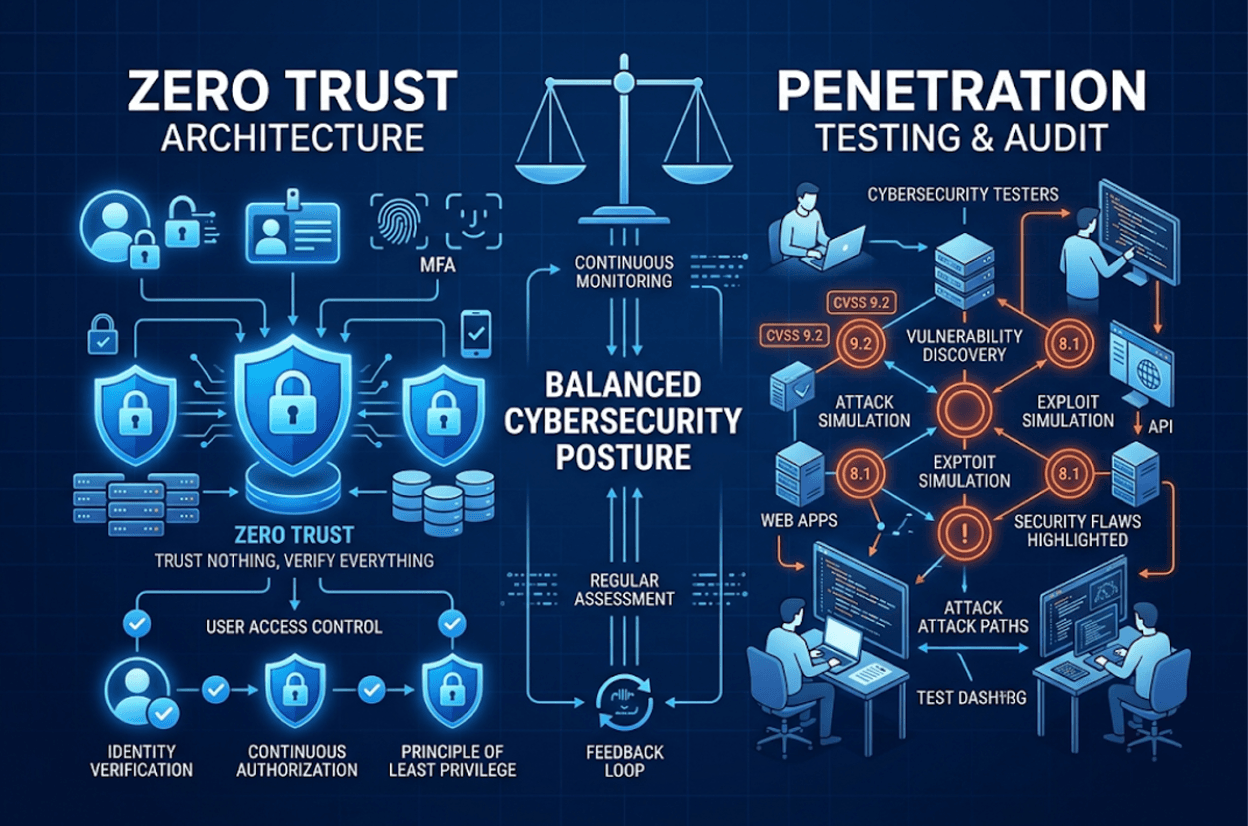
The Reality in 2026
Security conversations have changed. A few years ago, most companies focused on firewalls and endpoint tools. Today, the discussion has shifted toward identity, access, and continuous validation.
Zero Trust has become a popular strategy. It sounds strong and forward thinking. At the same time, penetration testing is often seen as a requirement for compliance rather than a daily necessity.
But here is the real question business leaders are asking in 2026:
Which one actually protects your business?
The honest answer is not one or the other. It is understanding what each does and where each one fails on its own.
What Zero Trust Really Means
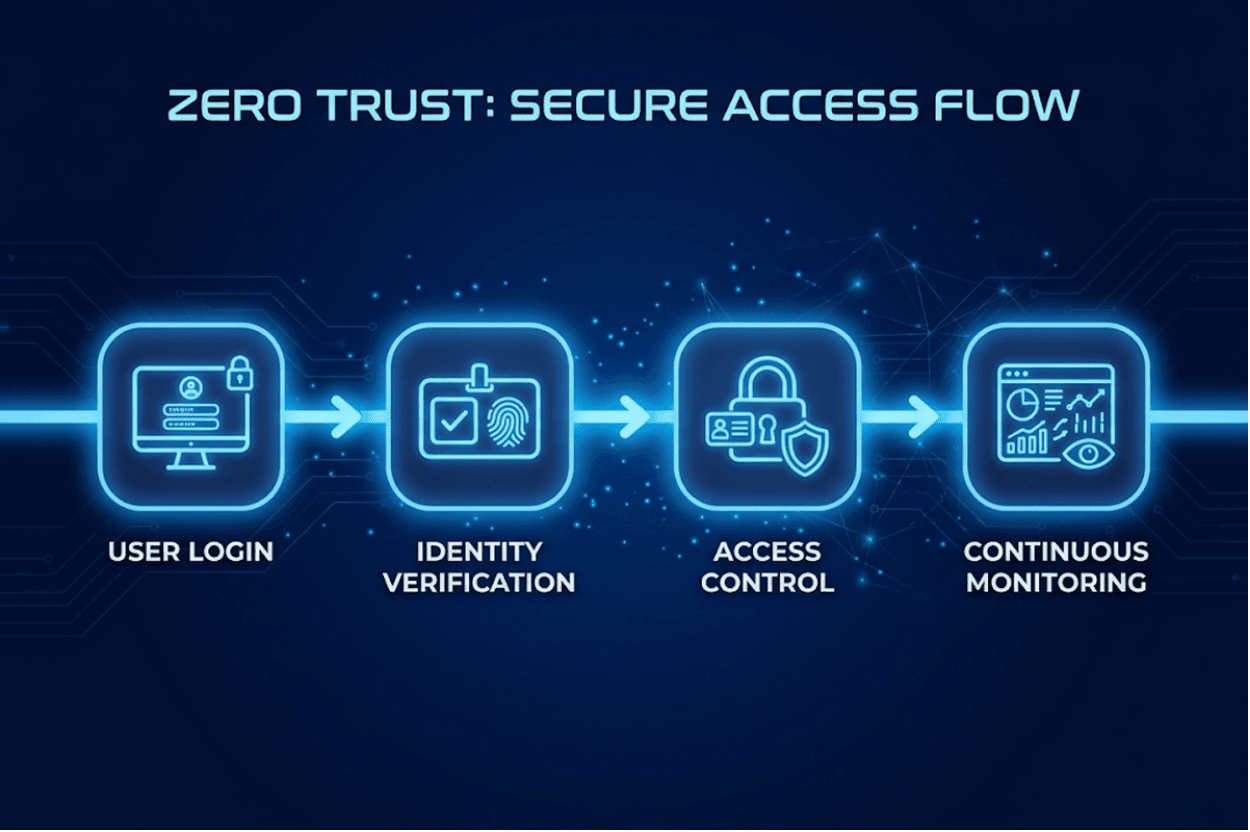
Zero Trust is based on a simple idea. Never trust, always verify.
In practice, it focuses on:
- Verifying user identity at every step
- Limiting access based on roles
- Monitoring behavior continuously
- Reducing unnecessary permissions
This approach is important because most systems today are no longer inside a single network. Teams work remotely. Applications are cloud based. Data moves constantly.
Zero Trust helps control who can access what. It reduces the chance of unauthorized access. It creates structure around identity and permissions.
But there is one limitation that many companies overlook.
Zero Trust assumes your system is already secure.
It does not test whether your application, APIs, or infrastructure have vulnerabilities.
Where Zero Trust Falls Short

Zero Trust is a policy and architecture approach. It controls access. It does not validate security.
Here are the gaps:
1. It Does Not Find Vulnerabilities
Zero Trust does not identify flaws in your code, APIs, or configurations. If a vulnerability exists, Zero Trust does not detect it.
2. It Cannot Simulate Real Attacks
Attackers do not follow access rules. They exploit weaknesses. Zero Trust does not simulate how an attacker would break your system.
3. It Does Not Validate Changes
Every update you release can introduce new risks. Zero Trust does not test those changes in real conditions.
4. It Creates a False Sense of Safety
Many teams believe that once Zero Trust is implemented, they are protected. In reality, they are only controlling access, not testing exposure.
This is where penetration testing becomes critical.
What Penetration Testing Actually Does
Penetration testing answers a very different question.
Instead of asking who can access the system, it asks: What can be broken inside the system?
It focuses on:
- Identifying vulnerabilities in applications and APIs
- Testing real world attack scenarios
- Validating how systems behave under pressure
- Confirming whether fixes actually work
Unlike policy driven security, penetration testing is practical and evidence based.
It shows you exactly where your risk is.
Capture The Bug approaches this through a continuous model, where testing is not a one time event but an ongoing process that aligns with how modern systems evolve.
Learn more about this approach through their penetration testing service: capturethebug.xyz/services/penetration-testing
The Difference in Simple Terms
Zero Trust controls access.
Penetration testing validates security.
One defines rules.
The other tests reality.
Both are important. But they solve different problems.
Why Businesses Are Getting This Wrong
Many companies invest heavily in Zero Trust frameworks. They implement identity tools, access controls, and monitoring systems.
Then they stop.
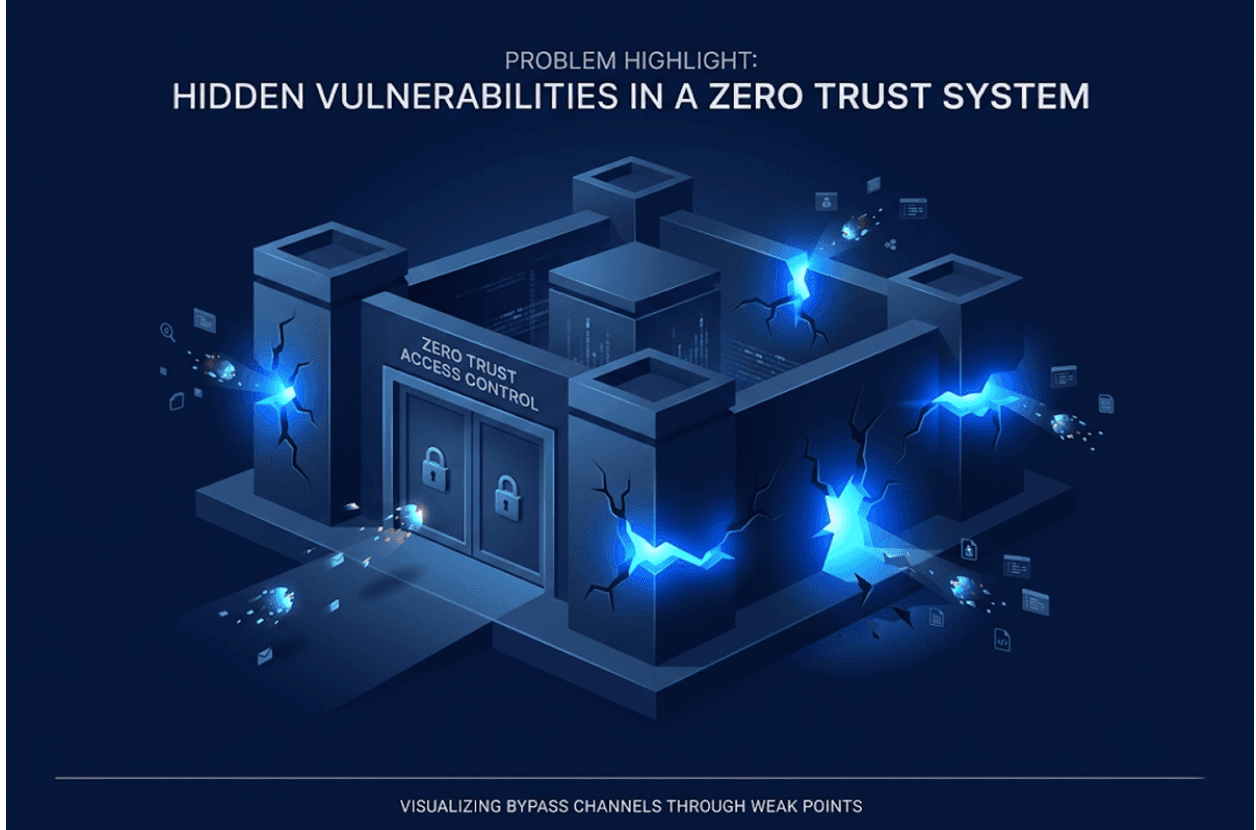
What they miss is that attackers do not target identity systems first. They target weaknesses in applications, APIs, and integrations.
A misconfigured endpoint or a vulnerable API can bypass access controls entirely.
Without testing, these gaps remain hidden.
This is why many breaches today happen in companies that already have strong access policies.
The issue is not lack of control. It is lack of validation.
A Real World Example
Consider a SaaS company handling customer data.
They implement Zero Trust:
- Role based access
- Multi factor authentication
- Session monitoring
Everything looks secure.
But during a penetration test, a vulnerability is discovered in an API endpoint that exposes sensitive data.
This endpoint does not require authentication due to a configuration mistake.
Zero Trust did not catch it.
Penetration testing did.
This is the difference between theoretical security and tested security.
Why 2026 Demands Continuous Validation
Modern systems change constantly.
New features are released. Integrations are added. Code is updated frequently.
Every change introduces potential risk.
Testing once a year is no longer enough.
This is why continuous penetration testing has become essential.
Instead of waiting for a report, businesses need ongoing visibility into their security posture.
Capture The Bug focuses on this model, helping companies test continuously and validate changes as they happen.
Explore how continuous testing works in practice: capturethebug.xyz/services/penetration-testing
How Zero Trust and Penetration Testing Work Together
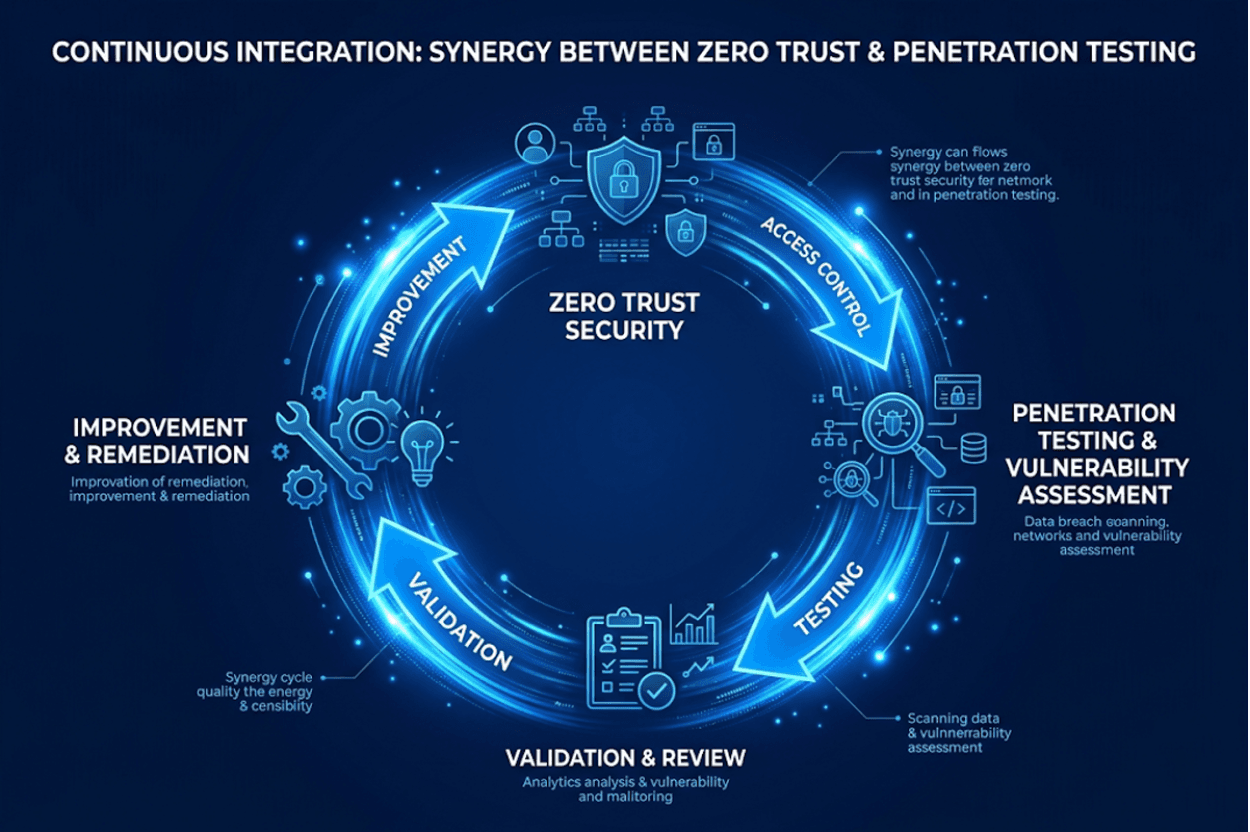
The smartest companies do not choose between Zero Trust and penetration testing.
They combine them.
Here is how they complement each other:
Zero Trust: Controls access, Limits exposure, Reduces unauthorized entry
Penetration Testing: Finds vulnerabilities, Simulates attacks, Validates defenses
Together, they create a complete security approach.
Zero Trust reduces the chances of unauthorized access.
Penetration testing ensures that even if access is controlled, the system itself is not vulnerable.
What Leaders Should Focus On
In 2026, security is no longer about tools. It is about visibility and confidence.
Business leaders should ask:
- Do we know where our vulnerabilities are?
- Are we testing changes as they happen?
- Can we prove our security posture to customers and auditors?
If the answer is no, then Zero Trust alone is not enough.
Security needs to be measurable and continuously validated.
This is where modern penetration testing platforms like Capture The Bug provide real value by turning testing into an ongoing process instead of a periodic activity.
Understand how this approach supports real business needs: capturethebug.xyz/services/penetration-testing
The Shift From Assumption to Proof
The biggest change in cybersecurity is this:
Companies are moving from assuming they are secure to proving they are secure.
Zero Trust helps define the rules.
Penetration testing proves whether those rules hold under real conditions.
Without proof, security remains a belief.
With testing, it becomes a measurable reality.
Understand the Difference That Impacts Your Risk
Compare traditional penetration testing vs continuous testing and see which model actually protects your business in real time.
Final Thoughts
Zero Trust is important. It builds a strong foundation for access control and identity management.
But it is not a complete solution.
Penetration testing provides the missing layer. It shows how your system behaves when challenged.
In 2026, protection does not come from policies alone. It comes from continuous validation.
The companies that stay secure are not the ones with the most tools. They are the ones that test, learn, and adapt constantly.
FAQ
1. What is the main difference between Zero Trust and penetration testing?
Zero Trust controls who can access systems, while penetration testing identifies vulnerabilities and tests how systems can be exploited.
2. Is Zero Trust enough for cybersecurity in 2026?
No. Zero Trust improves access control but does not detect or validate vulnerabilities within applications or infrastructure.
3. Why is penetration testing important even with Zero Trust?
Because it reveals real security weaknesses that access control systems cannot detect, ensuring that systems are actually secure.
4. How often should penetration testing be done?
In modern environments, continuous testing is recommended to keep up with frequent changes and evolving threats.
5. What industries benefit most from penetration testing?
SaaS, fintech, healthcare, and any business handling sensitive data benefit significantly from regular and continuous testing.