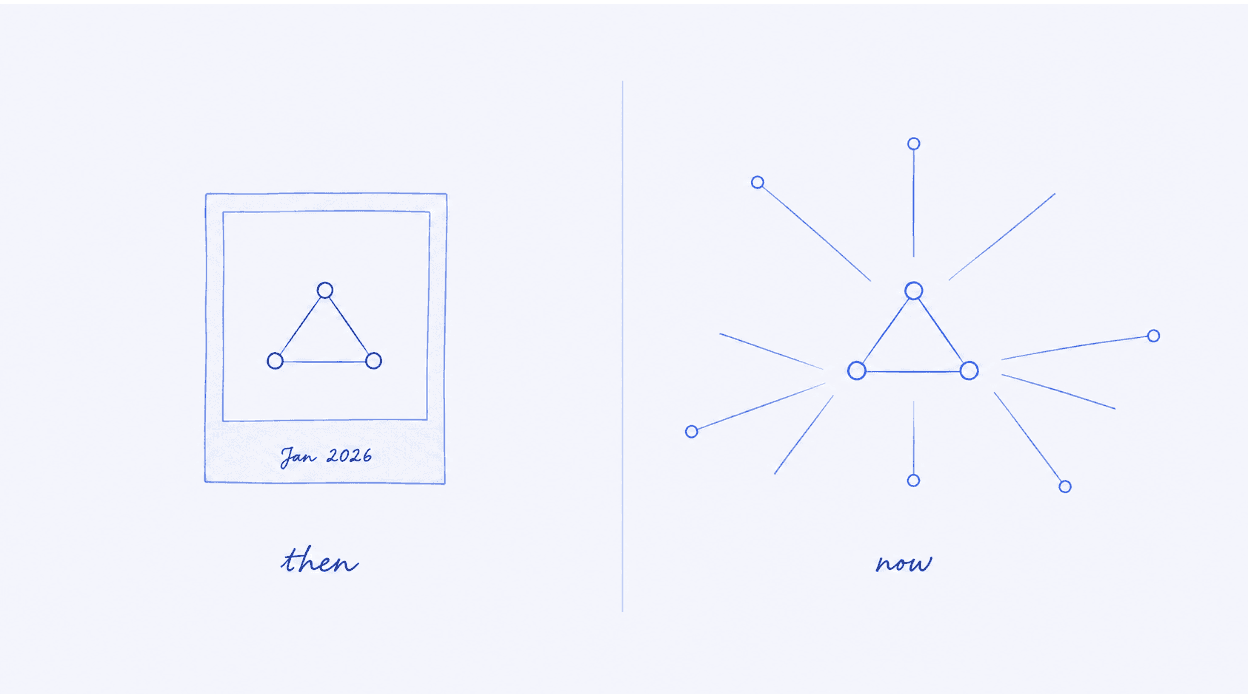
There is a moment that most security-conscious founders and CISOs in New Zealand and Australia recognise immediately. It is the moment they receive the annual penetration test report, work through the findings over the following weeks, close the critical items, and then quietly realise that the product has already shipped three new features, onboarded two enterprise customers with new data handling requirements, and expanded its cloud footprint by thirty percent since the testing window closed.
The report is accurate. It is just no longer about the product that exists today.
This is not a failure of the testing provider. It is not a failure of the internal team. It is the structural limitation of treating security as an event rather than a programme. Events end. Programmes continue. The difference between those two approaches is the difference between knowing your security posture on the day of the test and knowing it on any given day of the year.
Building a continuous offensive security programme is what closes that gap. It is also one of the most commercially valuable operational decisions a growing ANZ or Pacific company can make in 2026.
Why the Annual Test Alone Is No Longer Sufficient
The argument for the annual penetration test made sense when it was designed. Infrastructure was more static. Releases were less frequent. The attack surface that existed in January was broadly representative of the attack surface that existed in December.
That environment no longer exists for most companies in the region.
A SaaS company in Auckland shipping weekly features, onboarding enterprise customers in Singapore and San Francisco, and running infrastructure across multiple cloud providers has a fundamentally different attack surface in December than it had in January. New APIs are live. New third-party integrations are active. New user roles have been added. Each of those changes is a potential entry point that the annual test never touched.
The same is true for a fintech in Sydney managing payment data across multiple jurisdictions, or a healthtech in Wellington handling sensitive clinical information for New Zealand and Australian providers. The product evolves continuously. The security testing programme that validates it should evolve at the same pace. The annual test still has value. It is a rigorous, deep assessment at a specific point in time and it produces compliance-grade documentation that auditors and enterprise customers expect. The issue is not that it should be replaced. The issue is that it is not sufficient alone.
What a Continuous Offensive Security Programme Actually Looks Like
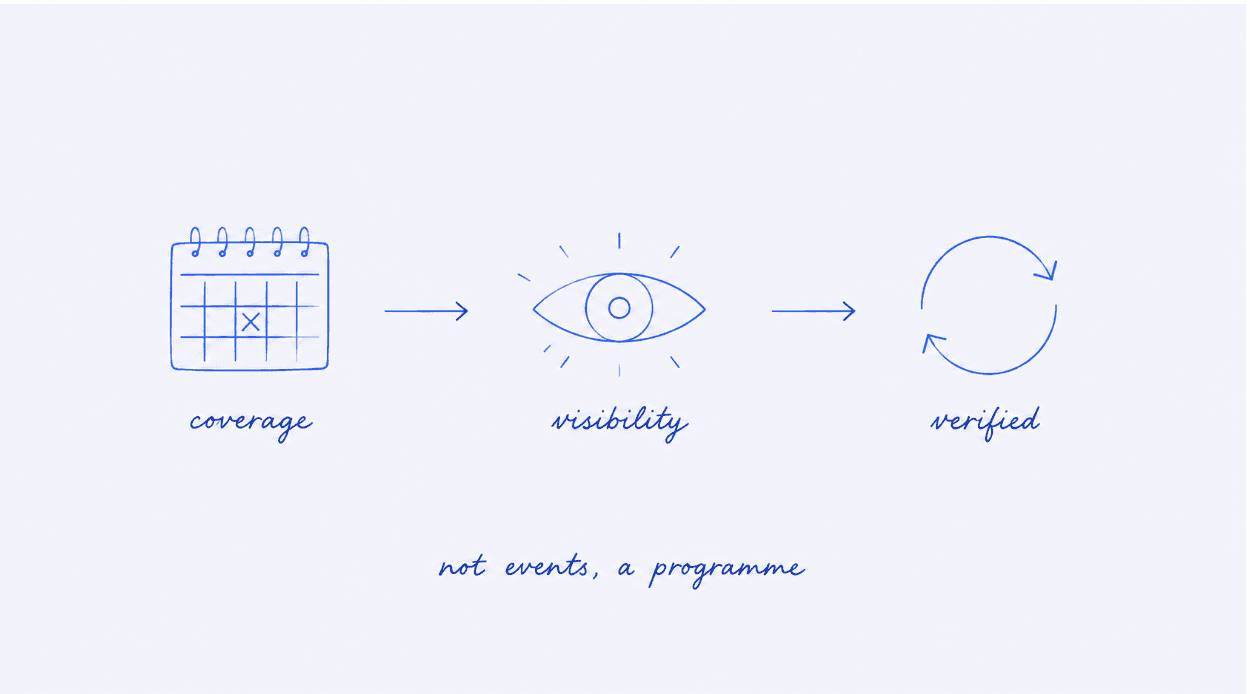
A continuous programme is not simply more frequent versions of the same annual test. It is a different operating model with a different relationship between testing, remediation, and organisational security maturity.
The first element is ongoing coverage. Rather than a single concentrated testing window once per year, testing activity is distributed across the full year and tied to the product roadmap. Significant releases, infrastructure changes, new integrations, and changes to the scope of data handling all trigger focused testing activity rather than waiting for the next scheduled annual window.
The second element is a live evidence trail. Instead of a single PDF report produced once a year, findings are tracked in a shared platform where the team can see what has been identified, what has been fixed, what has been verified as closed, and what remains open. This evidence trail is not just operationally useful. It is what satisfies a SOC 2 Type II assessor who wants to see security testing activity distributed across their observation period, not concentrated in a single week.
The third element is the integration of retesting into the programme rather than treating it as an optional extra. A finding that is patched but never retested is a finding that may or may not be closed. A continuous programme treats verified closure as the standard, not the exception. Capture The Bug's penetration testing services are built around this programme model, with CREST-certified testing distributed across the year, shared visibility into the findings and remediation pipeline, and retesting included as a core part of the engagement rather than a separately invoiced service.
How to Build the Programme: The Practical Starting Points
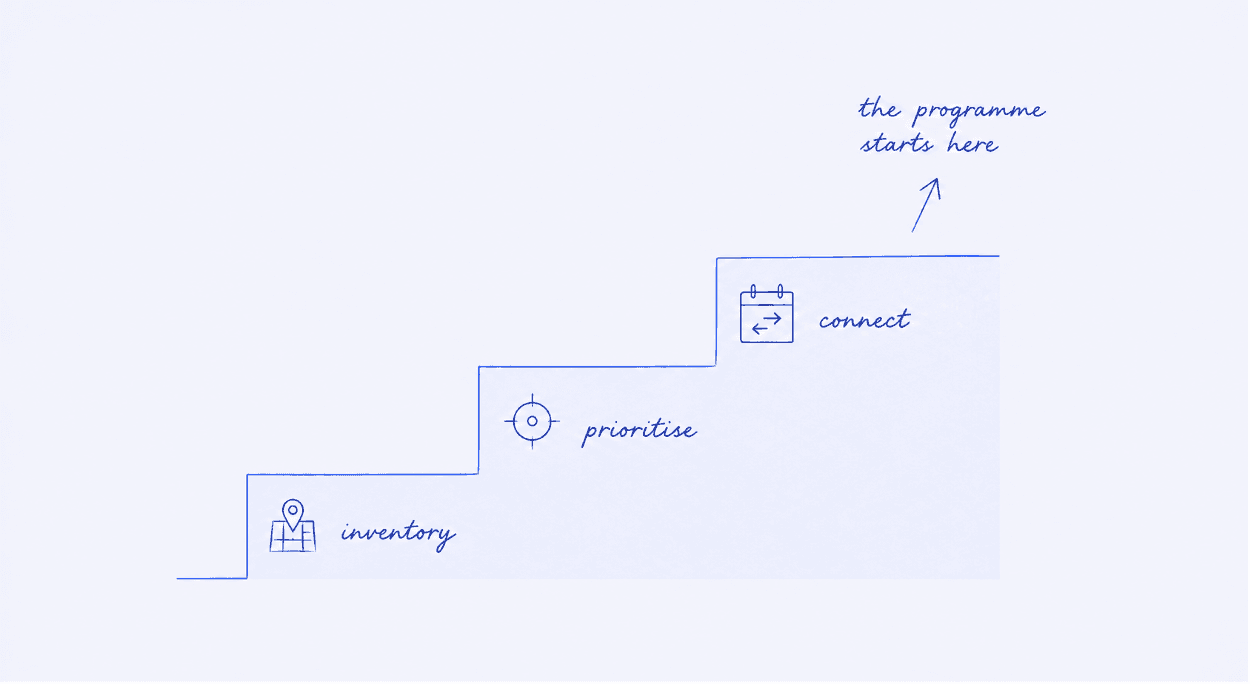
Most organisations that want to move to a continuous programme get stuck at the beginning because the transition feels too large to start. It is not. The practical starting points are straightforward.
Start with the asset inventory. The single most important prerequisite for a continuous offensive security programme is knowing what needs to be covered. That means a current, accurate inventory of every internet-facing application, API, infrastructure component, and cloud environment that is in scope. Not the inventory from last year's test scope definition. The current one, updated to reflect what is actually running in production today.
Then prioritise by risk and criticality. Not everything needs continuous testing at the same frequency. The systems that hold the most sensitive data, process the highest-value transactions, or face the most external exposure warrant the highest testing intensity. Systems with lower risk profiles warrant less frequent attention. A well-designed programme allocates testing resource proportionally rather than treating all assets as equally urgent.
Then connect the programme to the product roadmap. The most valuable continuous security programmes are those where the security testing calendar is aware of the engineering release calendar. A major new feature launching in six weeks is a testing trigger. A cloud infrastructure migration planned for next quarter is a testing trigger. Building that awareness into the programme turns security testing from a retrospective review into a prospective control. For teams across New Zealand, Australia, Fiji, and the Pacific who are mapping this for the first time, the Capture The Bug team's opening conversation typically starts with the current asset inventory and the upcoming product roadmap, because those two inputs shape everything else about what a programme should look like for that specific business.
Your Last Pentest Is Already Out of Date
Every week you ship without continuous testing is a week a vulnerability goes unseen. See what Capture The Bug finds in your first engagement.
The Compliance and Commercial Case for Doing This Now
The compliance argument for continuous testing is concrete and growing stronger. SOC 2 Type II assessors evaluate evidence across an observation period that typically runs six to twelve months. A single annual test concentrated in one week of that period is a weak signal compared to documented testing activity distributed across the entire observation window. The auditor's question is not whether a test was run. It is whether security testing was an ongoing organisational practice.
ISO 27001 control A.8.8 makes the same point for vulnerability management. The standard expects a recurring cadence, not an annual event. PCI DSS Requirement 11.4 expects testing after any significant change to the cardholder data environment, which in a fast-moving product can mean multiple tests per year regardless of the annual cycle.
Beyond compliance, the commercial case is equally strong. Enterprise customers in the US, UK, Singapore, and Australia are now asking vendors for security evidence that demonstrates current posture rather than historical posture. A report dated fourteen months ago is not the answer to that question. A live security programme with documented continuous activity is. Capture The Bug's penetration testing services are specifically designed to produce the continuous evidence trail that both compliance frameworks and enterprise procurement teams now expect, with documentation that travels directly into audit and due diligence processes without requiring the team to manually reconstruct a compliance narrative from scattered historical reports.
The Maturity Model: Where Most ANZ Companies Actually Are
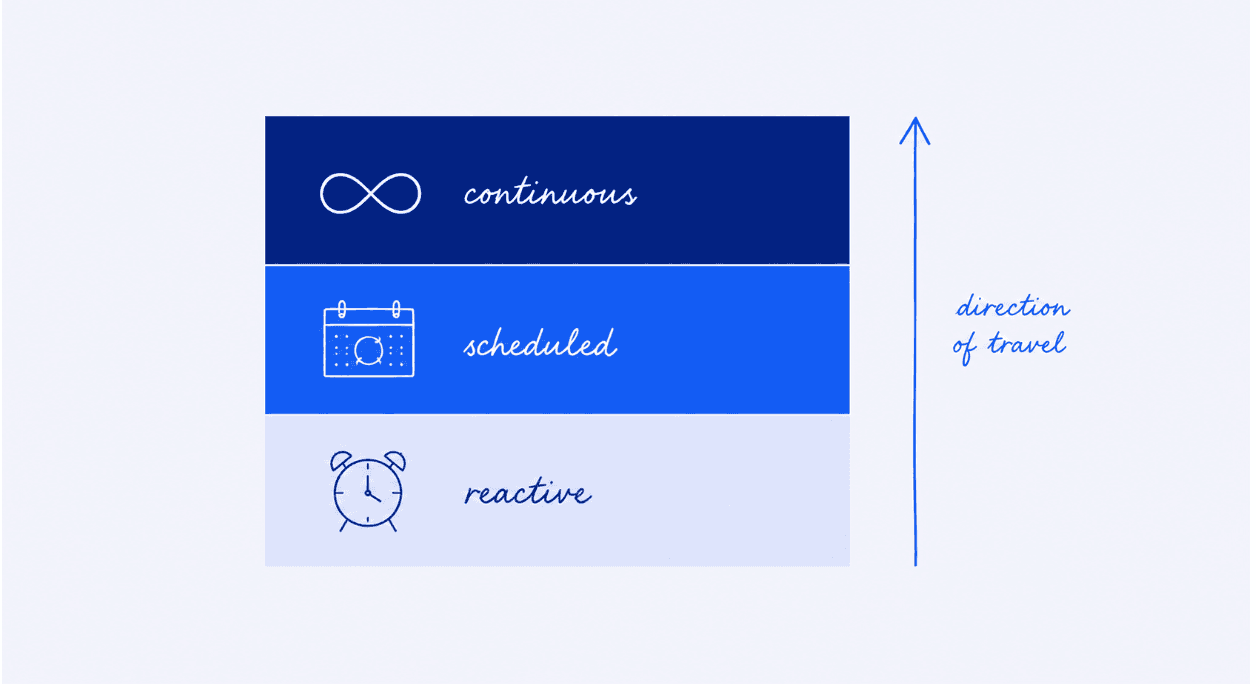
Most companies in New Zealand, Australia, Fiji, and the Pacific are operating at one of three maturity levels when it comes to offensive security.
The first level is reactive. Testing happens when something goes wrong or when a compliance deadline forces the issue. There is no programme. There is a periodic response to external pressure.
The second level is scheduled. Annual or biannual testing is in place. The team treats it as a compliance input and manages findings through the usual remediation cycle. This is where the majority of growing companies in the region currently sit.
The third level is continuous. Testing is an ongoing programme tied to the product roadmap, evidence is maintained in real time, retesting is standard, and security posture is a live measurement rather than a historical one. The move from the second level to the third does not require rebuilding everything. It requires changing the model from event-based to programme-based and choosing a testing partner that operates in a way that supports that model rather than one that delivers a PDF and closes the engagement. For any team in the ANZ and Pacific region currently at the second maturity level and ready to move to the third, a direct conversation with the Capture The Bug team about what that transition looks like for their specific product and team is the most useful first step. There is no generic answer, but there is always a clear starting point. Visit Capture The Bug's penetration testing services to start that conversation.
Plan Your Annual Pentesting Strategy the Right Way
Learn how modern SaaS companies structure pentesting across the year to reduce risk, stay compliant, and avoid last-minute panic before audits.
FAQ
1. What is a continuous offensive security programme?
A continuous offensive security programme is an ongoing security testing model where penetration testing and vulnerability assessment activity is distributed across the full year rather than concentrated in a single annual engagement. It ties testing cadence to the product roadmap, maintains a live evidence trail, and treats retesting as a standard part of the programme rather than an optional extra.
2. Does a continuous programme replace the annual penetration test?
No. The annual test remains a valuable deep assessment that produces compliance-grade documentation at a point in time. A continuous programme builds on top of it by extending coverage across the full year, ensuring that changes made after the annual test window are also tested rather than left uncovered until the next scheduled engagement.
3. What compliance frameworks require or benefit from continuous security testing?
SOC 2 Type II evaluates security evidence across an observation period of six to twelve months, making distributed testing significantly stronger evidence than a single annual test. ISO 27001 expects a recurring vulnerability management cadence. PCI DSS Requirement 11.4 requires testing after any significant change to the cardholder data environment. All three frameworks reward continuous programmes over annual events.
4. How does a company move from annual testing to a continuous programme?
The practical starting points are a current asset inventory, a prioritisation of assets by risk and criticality, and connecting the security testing calendar to the product roadmap. The transition does not require rebuilding the entire security programme. It requires changing the model from event-based to programme-based and choosing a testing partner that supports ongoing coverage.
5. What does a continuous security programme cost compared to annual testing?
When compared on a full-year basis, including the cost of retesting, compliance documentation, and the risk cost of uncovered gaps between annual tests, a continuous programme typically costs 30 to 40 percent less than running multiple point-in-time engagements to achieve comparable coverage. The saving comes from eliminating redundant scoping, removing separate retest fees, and reducing the time teams spend managing the back-and-forth between engagements.
6. Does Capture The Bug work with companies in Fiji and the Pacific region?
Yes. Capture The Bug works with security-conscious companies across New Zealand, Australia, Fiji, and the broader Pacific, providing CREST-certified continuous penetration testing with compliance documentation suited to SOC 2, ISO 27001, PCI DSS, and enterprise due diligence requirements across the region.