AI Pentesting Tools vs Human Hackers: What Actually Works?
The Big Question Every Security Leader Is Asking
AI is everywhere in cybersecurity right now.
Every vendor claims faster detection, smarter insights, and better protection. On the other side, experienced human testers still uncover the most critical vulnerabilities that actually lead to breaches.
So what actually works?
At Capture The Bug, the answer is simple. It is not AI vs humans. It is how both are used together in a way that fits modern software and real-world risk.
Because speed without context is noise. And expertise without speed cannot keep up anymore.
The Rise of AI in Pentesting
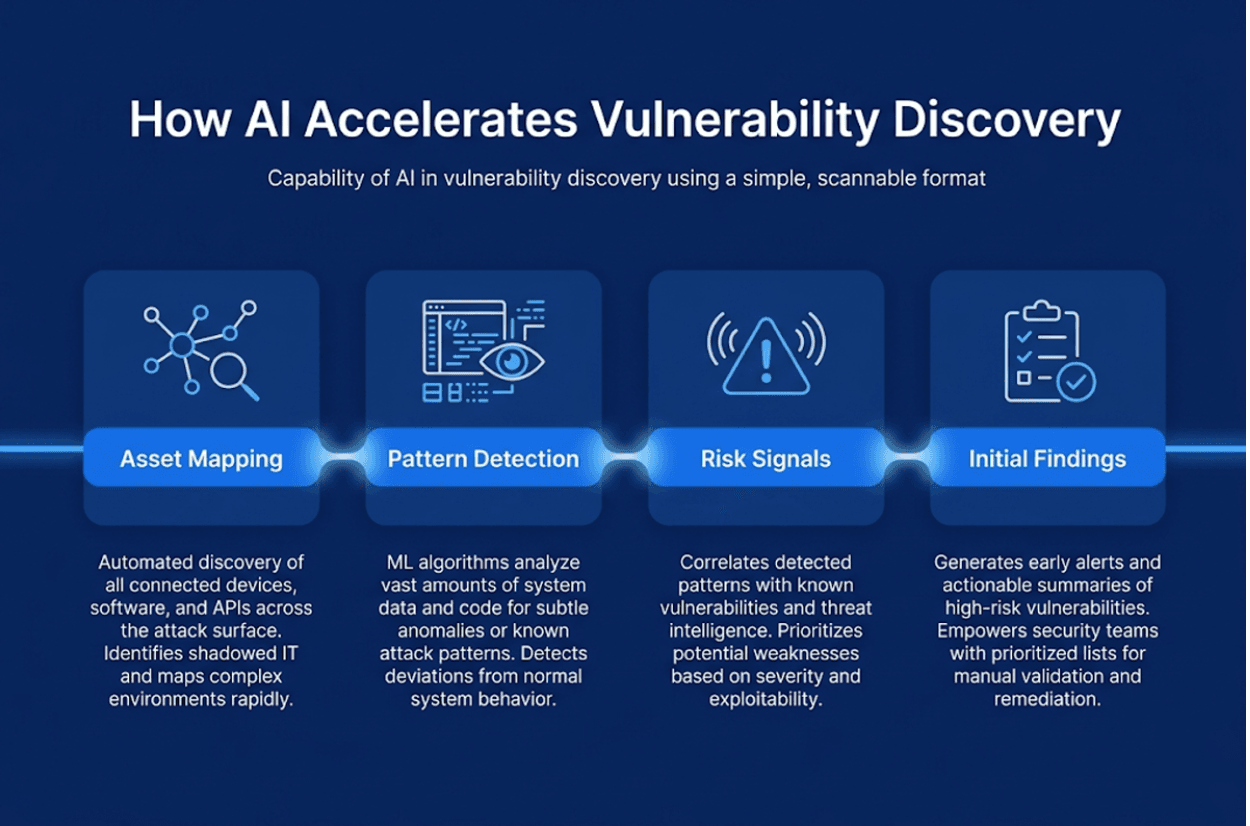
AI has changed how security testing starts.
Instead of spending hours mapping assets or identifying patterns, AI can now analyze large environments in minutes. It helps teams:
- Identify exposed endpoints quickly
- Highlight patterns across systems
- Surface potential weaknesses early
- Reduce repetitive manual effort
This is useful. In fact, it is necessary today.
Modern applications are too complex for manual discovery alone. APIs, integrations, cloud services, and constant updates create a moving attack surface.
AI helps teams keep up with that scale. But here is where most companies get it wrong: They assume discovery equals security. It does not.
Where AI Tools Fall Short
AI tools are fast. But they are not decisive.
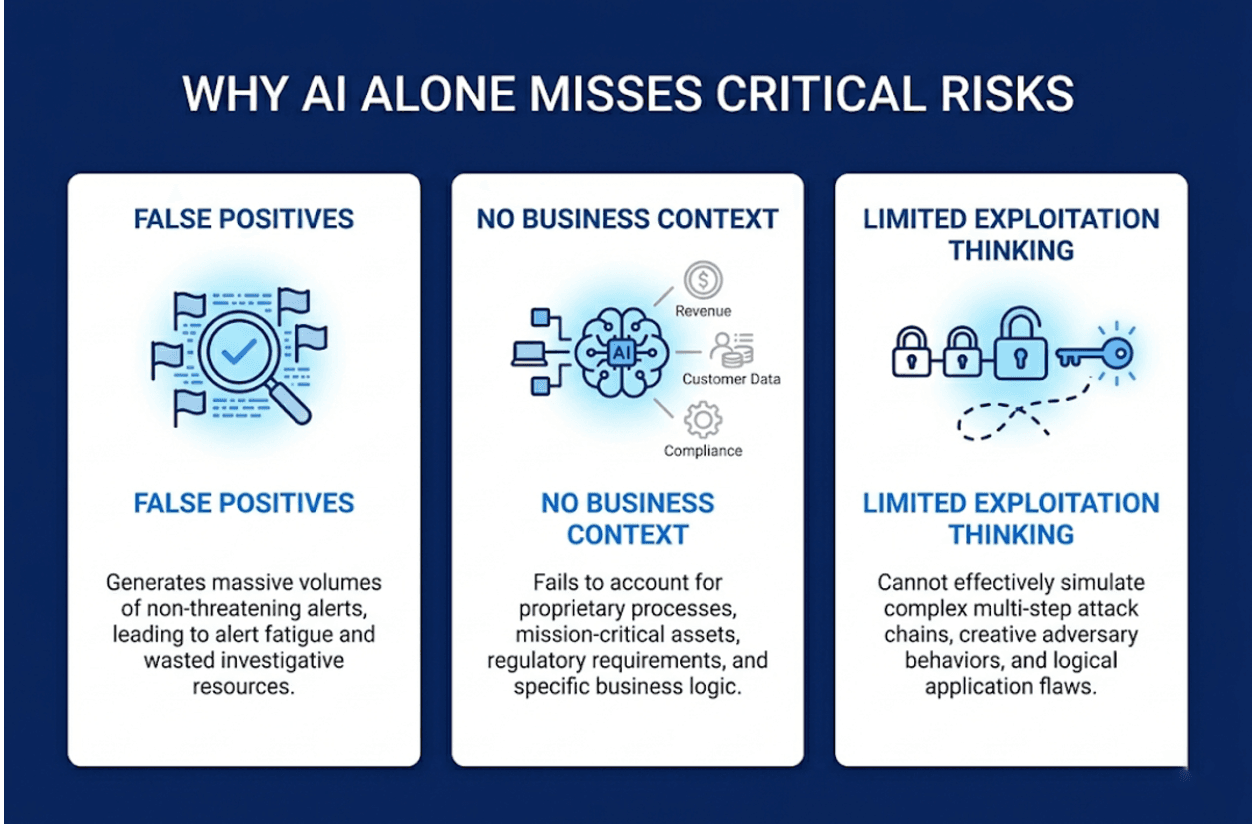
They generate possibilities, not conclusions. In real environments, this creates three problems:
1. Too Many False Positives: AI often flags issues that are not actually exploitable. Teams waste time chasing noise instead of fixing real risks.
2. No Business Context: AI cannot fully understand how your application works from a business perspective. It does not know what matters most to your customers or your revenue.
3. Limited Exploitation Thinking: Real attackers do not follow patterns. They combine small weaknesses into bigger attack paths. AI struggles to think creatively in those scenarios.
And in security, proof is everything.
What Human Hackers Actually Do Differently
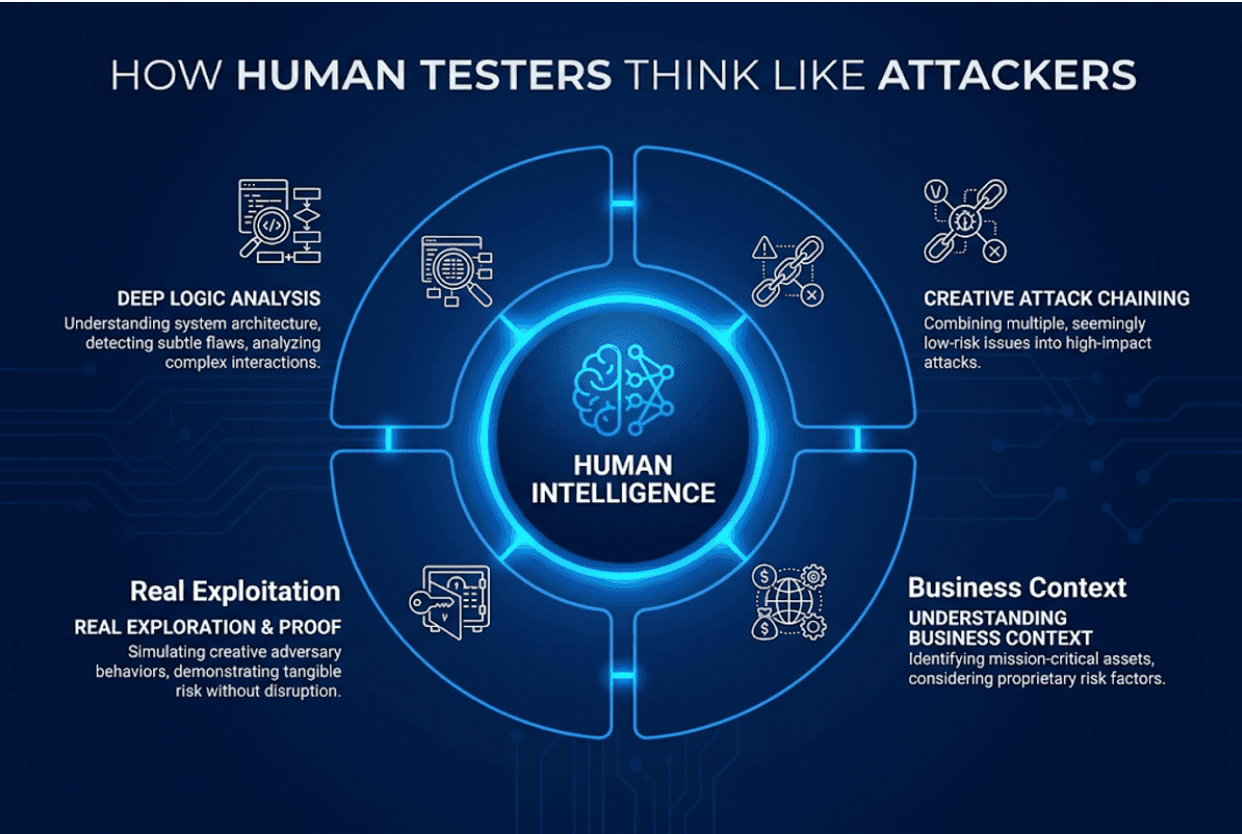
Experienced testers do not just find vulnerabilities. They think like attackers.
They ask:
- If I chain these two small issues together, what happens?
- If I bypass this logic, what breaks?
- If I were targeting this company, where would I focus first?
That mindset changes everything. Human testers bring context awareness, creative attack paths, real-world validation, and clear prioritization of risk.
They do not just list problems. They show what actually matters. This is why most serious breaches are still discovered by humans, not tools.
The Real Problem: Time
If human testing is so effective, why do companies look at AI tools?
Because of speed.
Traditional penetration testing is slow. Reports arrive weeks later. By then, systems have already changed. This gap is exactly where most companies struggle. They are forced to choose between fast but shallow insights, or slow but deep insights.
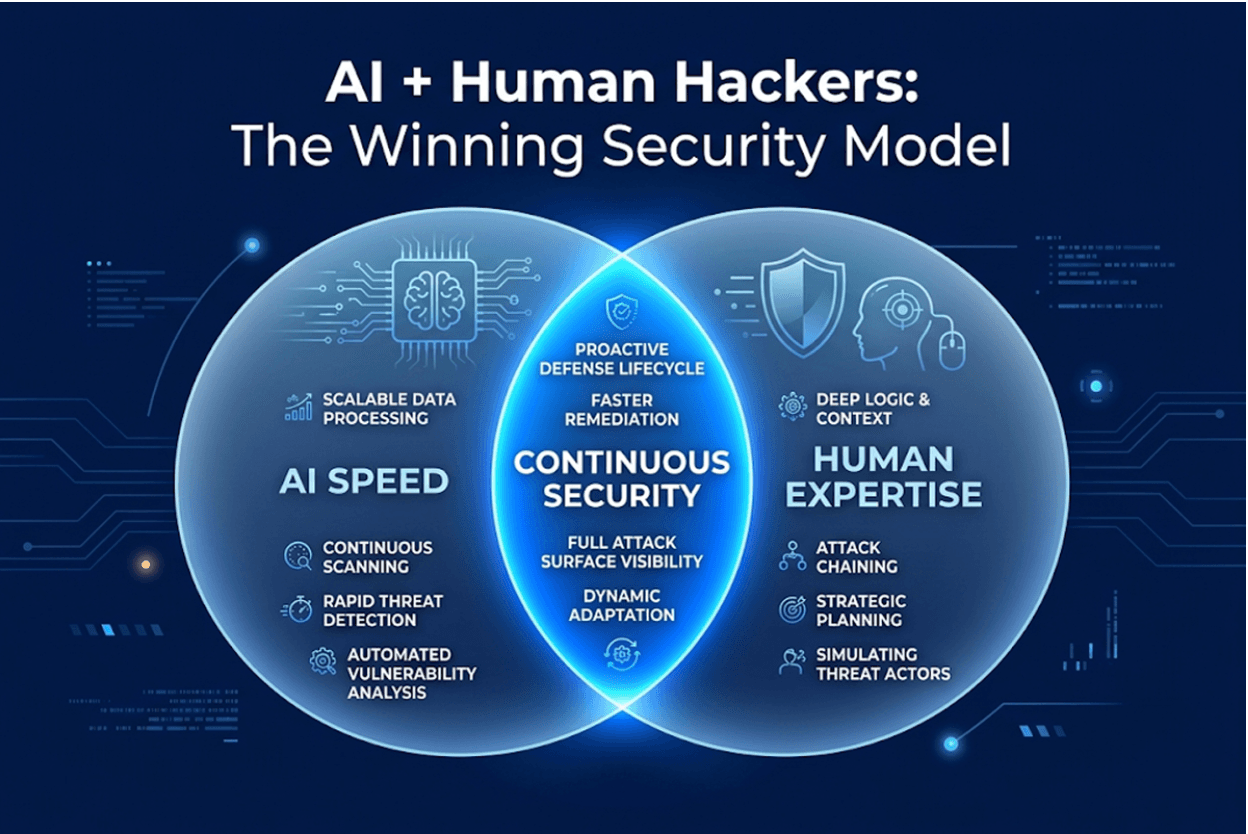
What Actually Works: A Combined Model
The most effective approach today is not choosing one over the other. It is combining both in a continuous model. This is exactly how modern PTaaS works.
Instead of one-time testing, you get:
- Fast discovery from AI-supported systems
- Human validation of real vulnerabilities
- Continuous testing as your system evolves
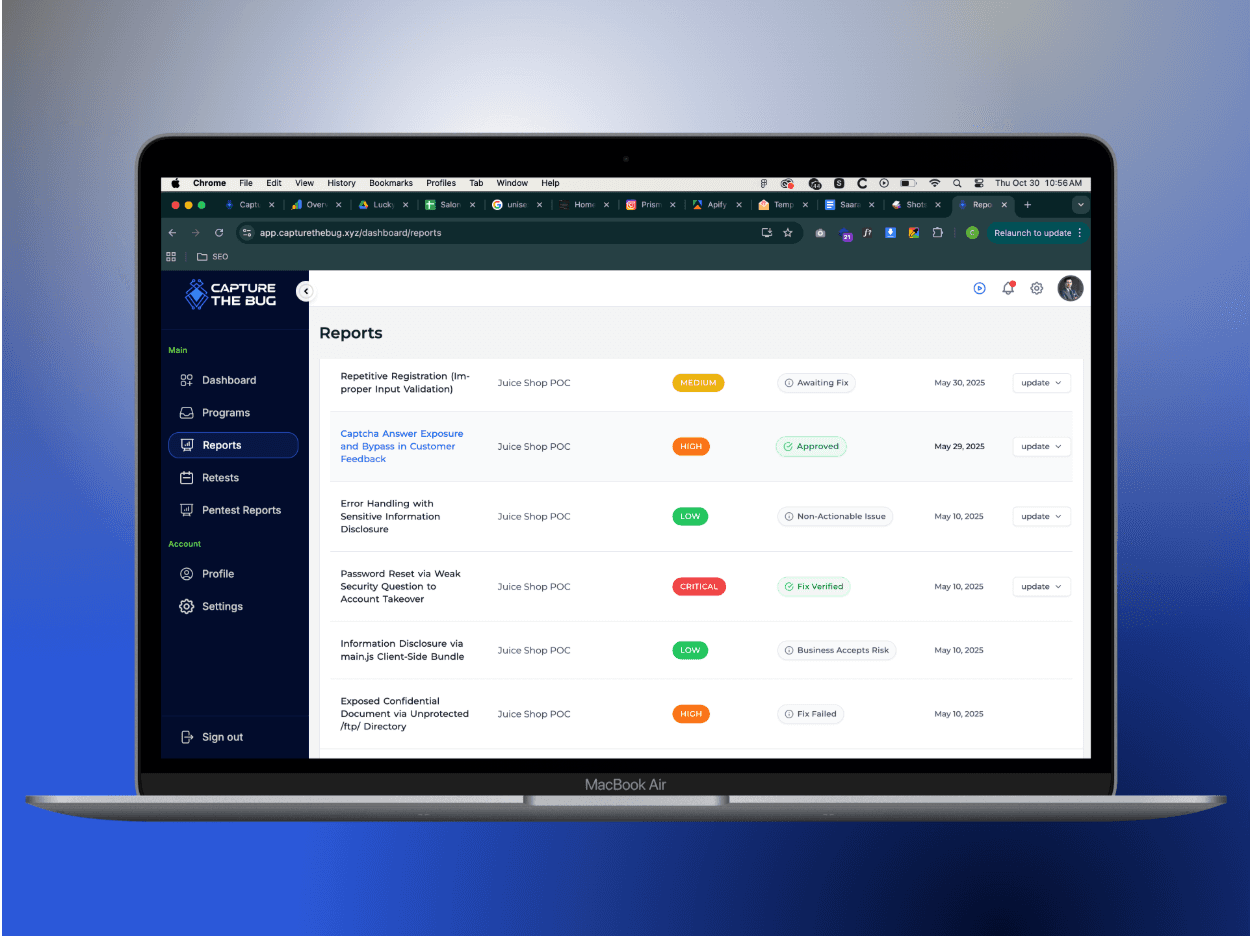
- Real-time visibility into risk and fixes
As explained in the PTaaS model, security today needs to be continuous, not periodic.
How Capture The Bug Approaches This
Capture The Bug does not treat AI as a replacement. It treats it as an accelerator.
Here is how the model works in practice:
- AI helps identify potential exposure quickly
- Human testers validate and exploit real risks
- Results are shared in real time, not weeks later
- Fixes are verified immediately
If a new feature is released, it can be tested immediately. If a vulnerability is fixed, it is validated right away. No delays. No guesswork.
AI vs Human Hackers: A Simple Comparison
| AI Tools | Human Testers | Combined Approach |
|---|---|---|
| Fast discovery | Strong at exploitation | Fast discovery + real validation |
| Pattern detection | Understand logic | Continuous visibility |
| Scales easily | Prioritize real risk | Faster remediation |
| Limited in real-world judgment | Slower without support | Better security outcomes |
Why This Matters for SaaS and Growing Companies
If your product changes weekly, your security cannot stay static. Every release introduces new risk. If testing happens only once or twice a year, there is always a gap.
That gap is where breaches happen. This is why companies are shifting toward continuous testing models like capturethebug.xyz/services/penetration-testing.
Not because AI is better. But because the combination is faster, clearer, and more practical.
The Hidden Advantage: Better Decision Making
Security is not just about finding vulnerabilities. It is about deciding what to fix first. AI gives volume. Humans give clarity.
When both work together:
- Teams focus on high-impact issues
- Developers fix faster
- Leadership gets real visibility into risk
A Real-World Perspective
Companies that rely only on AI tools often feel secure because they see a lot of data. But data is not assurance.
On the other hand, companies that rely only on traditional testing often feel blind between assessments. Neither approach gives full confidence.
The companies that move fastest and stay most secure are the ones that adopt continuous testing through capturethebug.xyz/services/penetration-testing. They do not wait for reports. They work with live insight.
Understand the Difference That Impacts Your Risk
Compare traditional penetration testing vs continuous testing and see which model actually protects your business in real time.
Final Thoughts
AI pentesting tools are powerful. Human testers are essential. But neither works fully on its own anymore.
The real answer is not choosing between them. It is building a system where AI handles speed, humans handle depth, and testing never stops.
That is what actually works.
FAQ
1. Are AI pentesting tools better than human hackers?
No. AI tools are faster at discovery, but human testers are better at validating real vulnerabilities and understanding business impact.
2. Can AI replace penetration testers?
No. AI supports testing but cannot replace human judgment, creativity, and real-world exploitation skills.
3. What is the best approach for modern security testing?
A combined model where AI accelerates discovery and human testers validate results continuously.
4. Why is continuous pentesting important?
Because modern applications change frequently. Continuous testing ensures vulnerabilities are identified and fixed in real time.
5. How does Capture The Bug approach pentesting?
Capture The Bug combines fast discovery with CREST-certified human validation, delivering continuous, real-time security testing.