6 Best Mobile App Security Companies in 2025
Mobile apps run modern business — from customer onboarding to payments to core product experiences. And in 2025, the one thing every founder and security leader agrees on is simple: one overlooked vulnerability in a mobile app can break customer trust overnight.
The threat landscape has expanded far beyond outdated attack patterns. Today's attackers pull apart mobile binaries, bypass client-side controls, reverse-engineer business logic, and exploit overlooked integrations buried deep inside complex stacks.
Companies need partners who don't just tick boxes — they need specialists who understand how real-world mobile risks unfold.
This guide highlights six mobile app security companies leading the industry in 2025. Each brings a unique strength, whether you're a scaling startup, a compliance-driven enterprise, or an engineering team pushing new releases fast.

1. Capture The Bug — Continuous, Collaborative Mobile App Testing
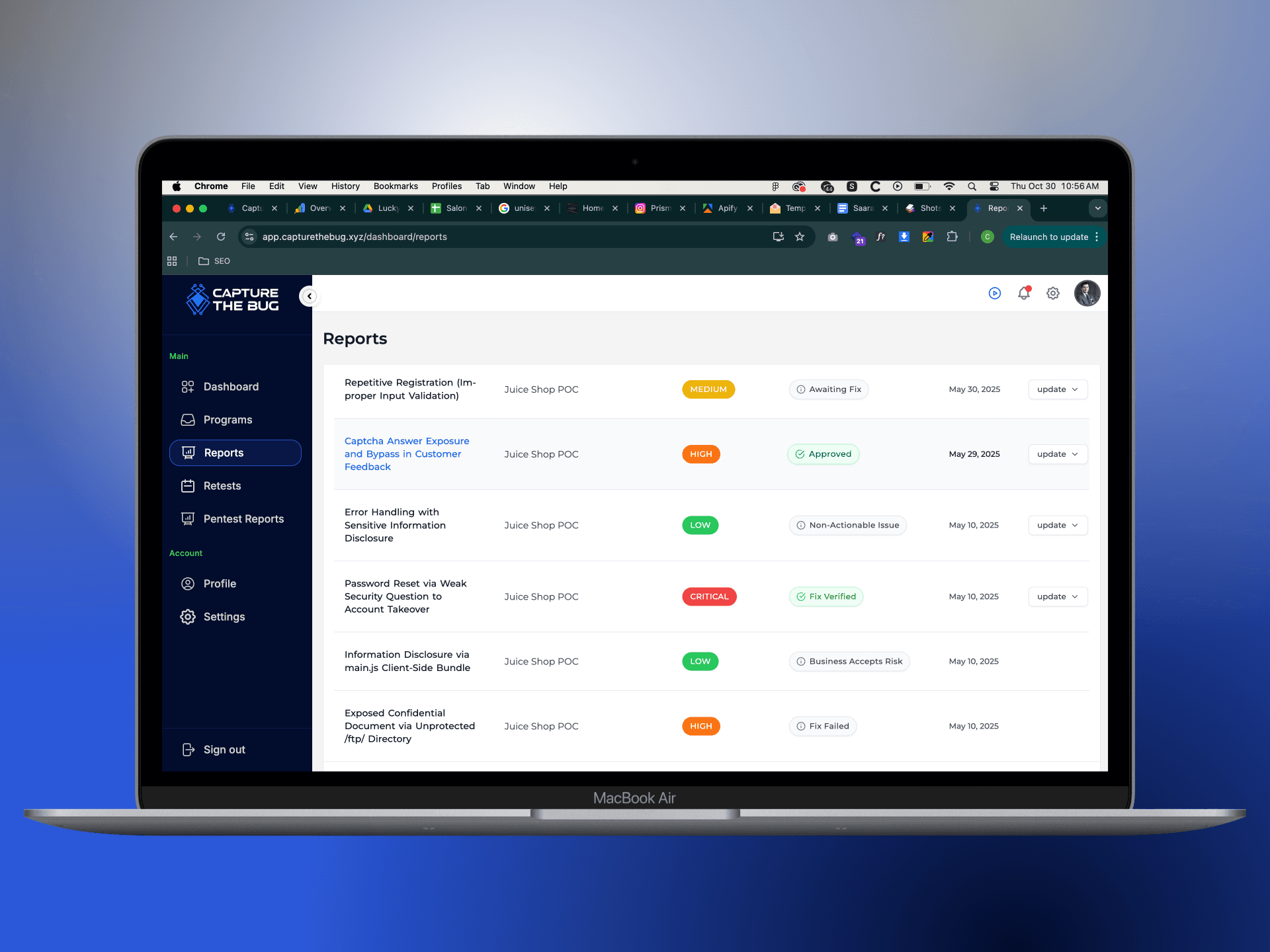
Capture The Bug has grown into a preferred choice for SaaS and enterprise teams across ANZ, the U.S., and Asia because it takes a modern, founder-friendly approach to mobile app security. Rather than treating pentesting as a once-a-year activity, Capture The Bug delivers security as an ongoing service.
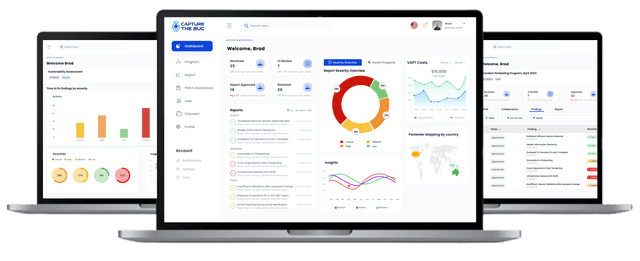
Its strength comes from combining CREST-certified expertise with a real-time security dashboard, allowing teams to see issues as they emerge. Instead of waiting for a report weeks later, engineering and security leaders gain live visibility into where risks appear and how quickly they're being fixed.
Why Companies Choose Capture The Bug
- Real-time results instead of static documents
- Direct collaboration between testers and developers
- On-demand and scheduled testing for both Android and iOS
- Compliance-ready exports for ISO 27001, SOC 2, PCI-DSS
- Clear, human-written explanations for every finding
- A testing model that keeps pace with constant product changes
For companies that want depth, speed, and clarity in one platform, Capture The Bug stands out as a practical and transparent partner — especially for teams scaling globally.
2. NowSecure — Deep Mobile Expertise for High-Growth Teams
NowSecure has built its reputation on deep specialization in mobile application security. Its team focuses on helping organizations uncover both known and emerging risks across Android and iOS environments.
The company's strength lies in its structured approach to mobile testing, supported by experienced security analysts who understand native frameworks, mobile architecture, and real-world exploitation paths.
Why Companies Choose NowSecure
- Expertise rooted entirely in mobile ecosystems
- Strong coverage of both Android and iOS vulnerabilities
- Clear reporting with practical guidance
- Validation aligned with global standards like NIST and GDPR
Companies with complex mobile environments often choose NowSecure for its focused, reliable methodology.

3. Synopsys — Enterprise-Grade Mobile Risk Management
Synopsys remains one of the most recognized names in application security. While known for its broad software assurance portfolio, the company's mobile app security services continue to attract large enterprises with strict compliance needs.
Its testing approach blends automated techniques with deep manual assessment, ensuring vulnerabilities are verified and contextualized before they reach engineering teams.
Why Companies Choose Synopsys
- Strong reputation with global enterprises
- Comprehensive coverage across languages and mobile frameworks
- Focus on secure architecture and code-level insights
- High accuracy with minimal noise
For organizations with mature engineering teams and complex governance structures, Synopsys provides trusted, scalable testing at depth.

4. Checkmarx — Mobile Code and Dependency Security
Checkmarx is widely known for helping development teams secure source code early. In the mobile world, this becomes especially important, as modern apps depend on hundreds of libraries, SDKs, and third-party integrations.
Checkmarx helps companies identify weaknesses inside their codebases and strengthens the components that mobile apps rely on most — from authentication flows to internal APIs.
Why Companies Choose Checkmarx
- Strong coverage of mobile languages and frameworks
- High accuracy in identifying code-level weaknesses
- Insightful guidance that helps developers ship safer updates
- Strong fit for teams building mobile apps in-house
Engineering-heavy organizations often include Checkmarx in their security stack to reduce mobile vulnerabilities at the source.

5. HCL AppScan — Comprehensive Application Testing With Strong Governance
HCL AppScan supports security teams that require broad coverage across their application portfolio — mobile included. The platform provides structured testing capabilities and detailed reporting that aligns well with formal security programs.
Its value lies in helping organizations detect issues consistently across large, distributed teams.
Why Companies Choose HCL AppScan
- Coverage across multiple application types
- Structured risk assessment suited for enterprises
- Reporting aligned with compliance and governance requirements
- Strong reputation across regulated industries
For organizations with strict oversight frameworks, AppScan offers stability and predictability.
6. Appknox — Fast and Accessible Mobile Testing for Growing Businesses
Appknox has gained traction among startups and mid-sized companies looking for accessible, clear, and efficient mobile security testing. The platform runs a broad set of assessments on both Android and iOS apps, paired with human validation.
Its straightforward workflow makes mobile testing easier for teams that need actionable insights without unnecessary complexity.
Why Companies Choose Appknox
- Fast turnaround and intuitive workflows
- Coverage across SAST, DAST, and integration assessments
- Helpful reporting with guided remediation steps
- Solid fit for scaling product teams
Appknox is often chosen by companies needing quick, reliable coverage for compliance or customer trust.

What to Look for in a Mobile App Security Partner
Choosing the right partner isn't about choosing the biggest name — it's about alignment. Mobile security should match the speed, structure, and risk profile of your business.
Here are the factors the industry's strongest security leaders evaluate:
- Experience with Modern Mobile Architectures: Risk patterns have changed. Choose a team that understands real mobile behavior, reverse engineering, API dependencies, and complex business logic.
- Clarity and Transparency: Reports shouldn't feel like puzzles. Look for partners who explain issues clearly and help your team fix them faster.
- Real-Time Collaboration: Security shouldn't slow development. The best partners integrate into your workflow and support instant communication.
- Compliance-Ready Outputs: Whether you need ISO 27001, SOC 2, PCI-DSS, or industry-specific frameworks, your partner should help you stay audit-ready.
- Scalability and Flexibility: Your mobile app will evolve. Your security partner should evolve with it.
Final Thoughts
Mobile app security in 2025 requires more than annual testing. Companies need partners who understand the urgency of protecting customer data while supporting fast product growth.
From continuous assurance (Capture The Bug) to enterprise-scale testing (Synopsys, HCL) to mobile-first specialists (NowSecure, Appknox), each company in this list brings real value to teams building secure digital experiences.
If your organization depends on its mobile app — whether for customer onboarding, payments, or core product delivery — the right security partner will help you build trust as you scale.
Experience Capture The Bug Platform
Streamline your security testing with our PTaaS platform. Collaborate with expert testers, track vulnerabilities, and secure your applications effortlessly.
Frequently Asked Questions
1. Why is mobile app security critical in 2025?
Because modern mobile apps store sensitive data, connect to critical APIs, and run complex logic that attackers increasingly target. Strong security protects customers, reputation, and revenue.
2. How often should a mobile app be tested?
Teams with frequent releases should test continuously or at least after each major update to ensure new vulnerabilities aren't introduced.
3. What makes Capture The Bug different from traditional mobile security vendors?
Capture The Bug provides real-time insight through a transparent dashboard, CREST-certified expertise, and continuous testing — helping companies fix faster and stay audit-ready.
4. Which industries rely most on mobile app security?
Fintech, SaaS, healthcare, retail, logistics, marketplaces, and any business where customer experience runs through a mobile app.
5. Do mobile apps require both manual and automated testing?
Yes. Automated tools find common issues, but manual testing uncovers logic flaws and real-world vulnerabilities that automation often misses.
One platform to manage, track, and secure all your penetration tests.
Simplify your vulnerability management with Capture The Bug’s PTaaS platform where businesses and security experts collaborate seamlessly.