Why APIs Will Be the Biggest Security Challenge for SaaS Platforms in 2026
Most SaaS companies believe their greatest security risks live in web applications or cloud infrastructure. In reality, the most exposed and fastest growing attack surface today is the API layer.
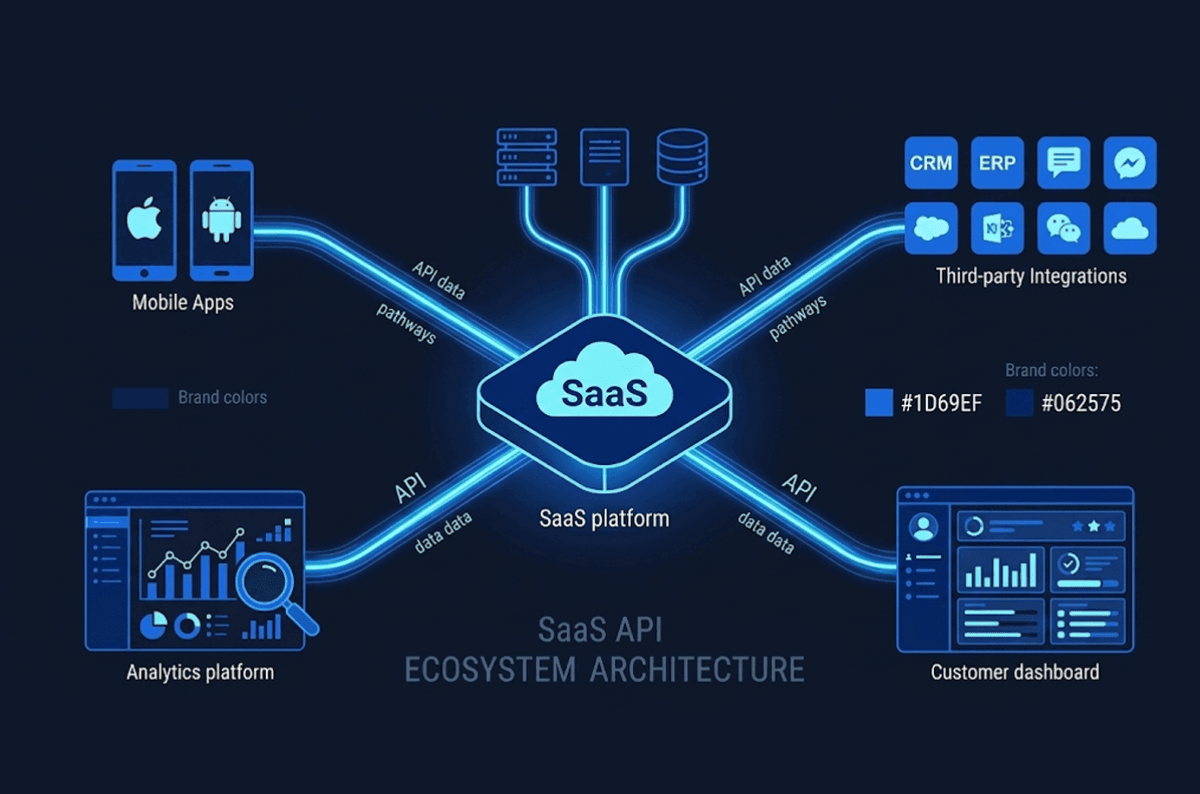
APIs power nearly every modern product experience. They connect mobile apps, third party integrations, payment systems, and internal services. When a customer logs in, updates a profile, connects an integration, or retrieves data, it is usually an API handling that request.
This connectivity creates incredible flexibility. It also creates an expanding surface that attackers are eager to explore. Security leaders across SaaS companies are starting to recognize a clear pattern. The more APIs a platform exposes, the more opportunities exist for mistakes in authentication, data access, and business logic.
In 2026, the biggest security concern for SaaS will not be traditional application vulnerabilities. It will be poorly protected APIs.
Why APIs Are Now the Core Infrastructure of SaaS
Ten years ago, SaaS applications were mostly monolithic systems with a single interface. Today the architecture looks very different.
Most platforms operate as distributed ecosystems made up of services communicating through APIs. Customer dashboards, partner integrations, mobile apps, analytics tools, and internal admin systems all rely on these endpoints.
This approach accelerates product development and enables rapid innovation. It also introduces complexity that security teams must manage carefully. Each new endpoint becomes a potential entry point.
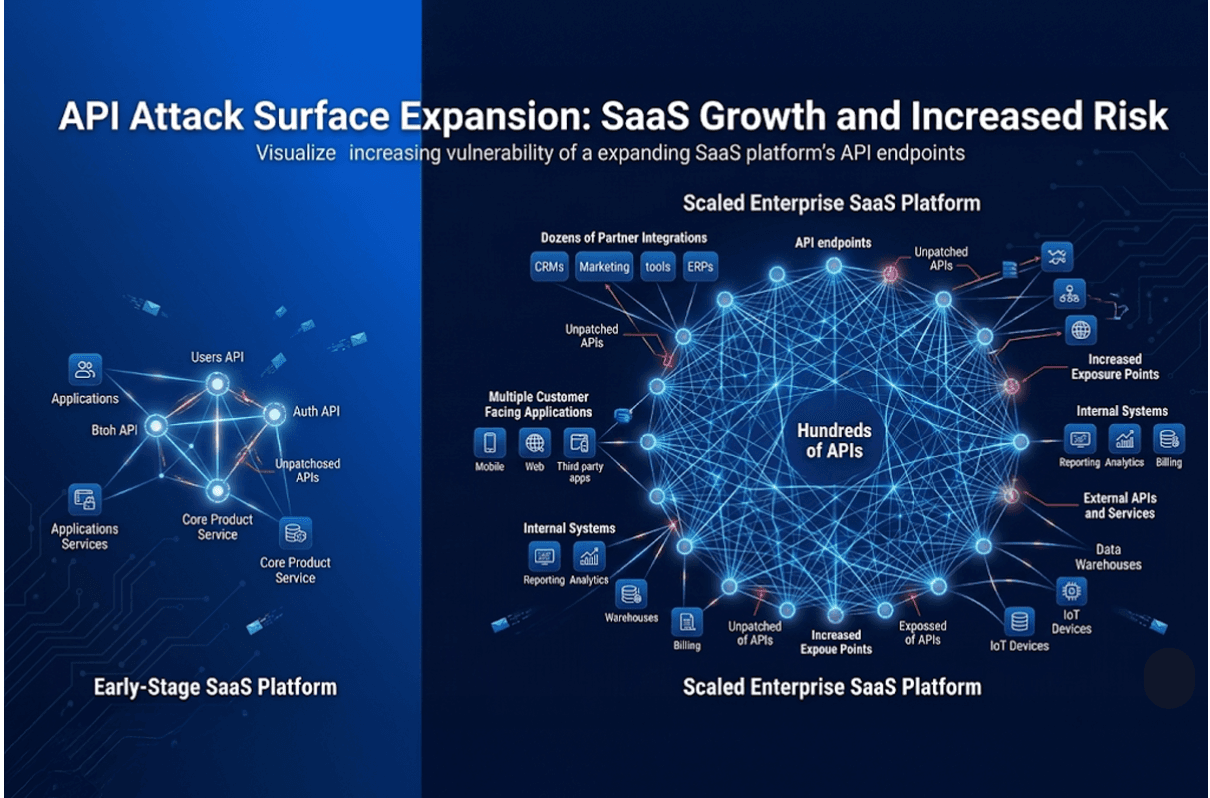
A single SaaS platform can expose hundreds or even thousands of API routes. Some are public, some are internal, and many exist purely to support integrations with external partners. The challenge is that these interfaces evolve constantly. New features introduce new endpoints. Legacy endpoints may remain active long after they should have been retired.
Without careful testing, these forgotten or poorly protected routes can expose sensitive data or critical functions.
The Real Problem: Business Logic Vulnerabilities
When most companies think about security testing, they imagine technical flaws such as injection attacks or misconfigured servers. API vulnerabilities often look very different.
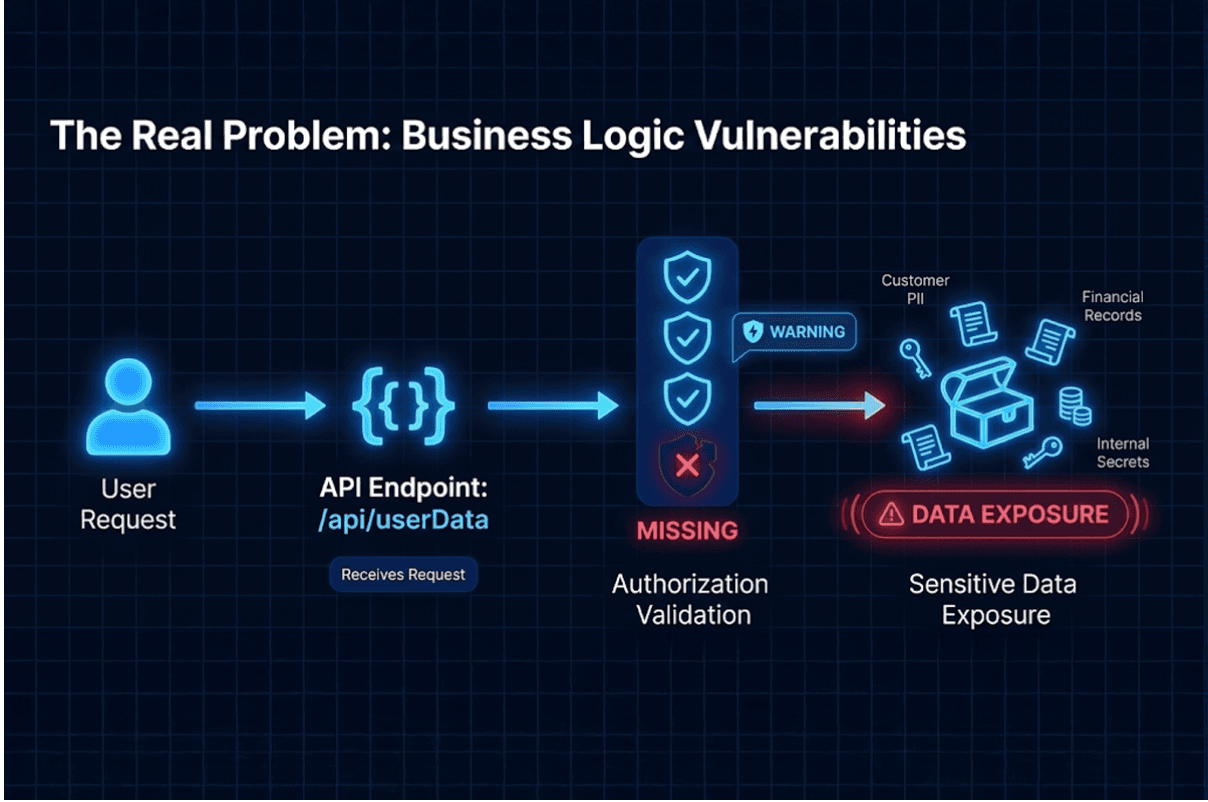
Many of the most serious API breaches come from business logic issues rather than traditional technical flaws. Consider a simple example: An API endpoint allows users to retrieve order information. The endpoint works correctly when a user requests their own order.
But what happens if the request is modified to retrieve another customer's order ID?
If the API does not properly validate ownership, sensitive data could be exposed instantly. This type of vulnerability is common because it is tied to application logic rather than infrastructure. The endpoint works exactly as designed. The problem is that the design did not fully account for malicious behavior.
These subtle weaknesses are difficult to detect without thorough penetration testing performed by experienced professionals who understand how attackers think.
Why SaaS Companies Are Especially Exposed
SaaS companies operate under constant pressure to ship new features quickly. Every new capability often introduces additional API endpoints that support integrations, dashboards, and data flows.
Over time the number of exposed interfaces grows significantly. Several factors make SaaS platforms particularly vulnerable.
First, APIs frequently expose sensitive customer data. That data may include personal information, billing details, or proprietary business records. Second, many APIs interact with authentication systems. If those controls are misconfigured, attackers may bypass authorization checks entirely.
Third, integrations with external services increase complexity. A partner integration might unintentionally introduce new access paths that were never intended to be public. Finally, legacy endpoints often remain active long after their original purpose disappears. Attackers actively search for these forgotten routes because they tend to have weaker controls.
What Attackers Are Looking For
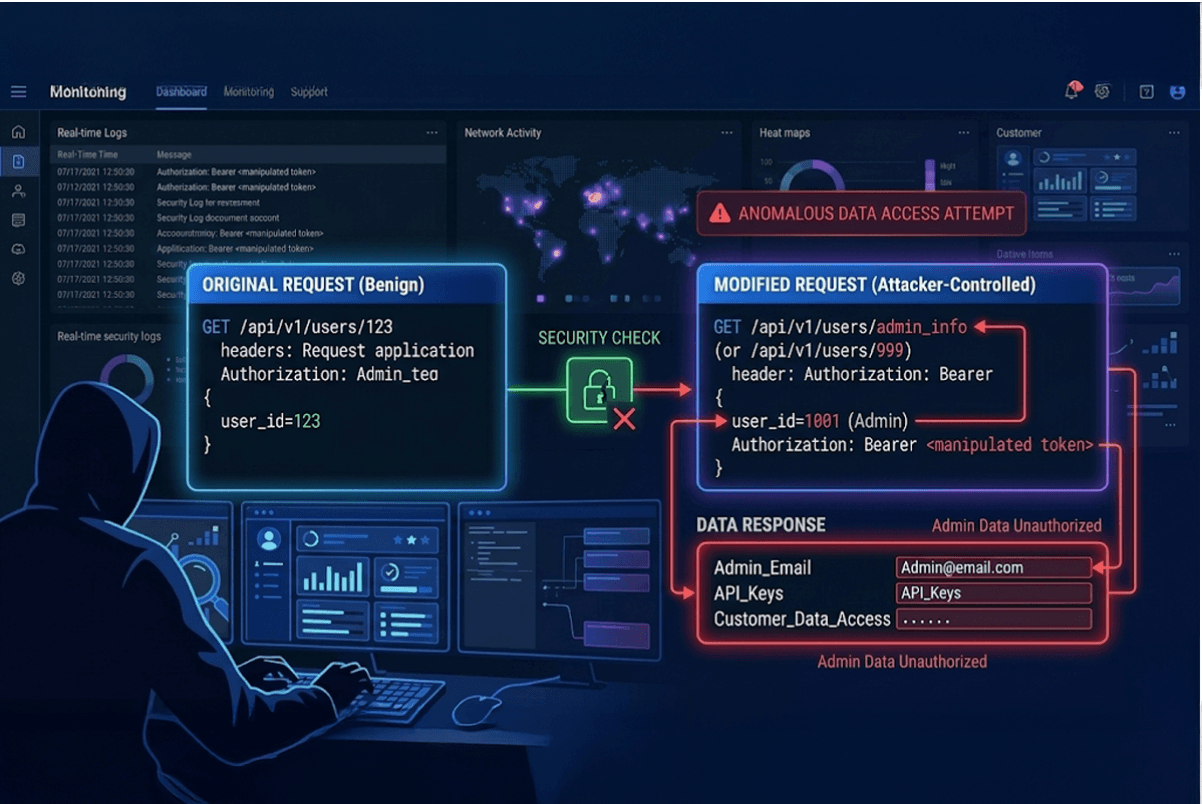
Attackers rarely target systems randomly. They focus on areas where complexity and oversight intersect. APIs provide exactly that environment. Some of the most common API exploitation techniques include unauthorized data access, privilege escalation, and manipulation of business workflows.
Unauthorized data access occurs when an endpoint returns data without properly verifying the requesting user. Privilege escalation occurs when an attacker gains access to functions intended only for administrators.
Business workflow manipulation occurs when attackers alter the sequence of requests in order to bypass normal safeguards. For example, a billing API might assume that payment verification occurs before account upgrades. If the order of requests can be manipulated, an attacker may gain premium access without completing payment.
These scenarios are rarely detected through simple vulnerability scanning. They require deeper exploration of how systems behave under unexpected conditions.
Why Traditional Security Testing Often Misses API Risks
Many security programs were designed around web applications and network infrastructure. APIs require a different approach. A web interface may expose only a limited set of actions visible through the user interface.
An API can expose hundreds of hidden capabilities that never appear in the user interface at all.
Testing these interfaces requires understanding how requests are structured, how authentication tokens are handled, and how data flows between services. Without dedicated API penetration testing, organizations may overlook entire sections of their attack surface.
This is one reason why many high profile breaches involve APIs even when companies believe they have strong security programs in place.
How Continuous API Testing Improves Security
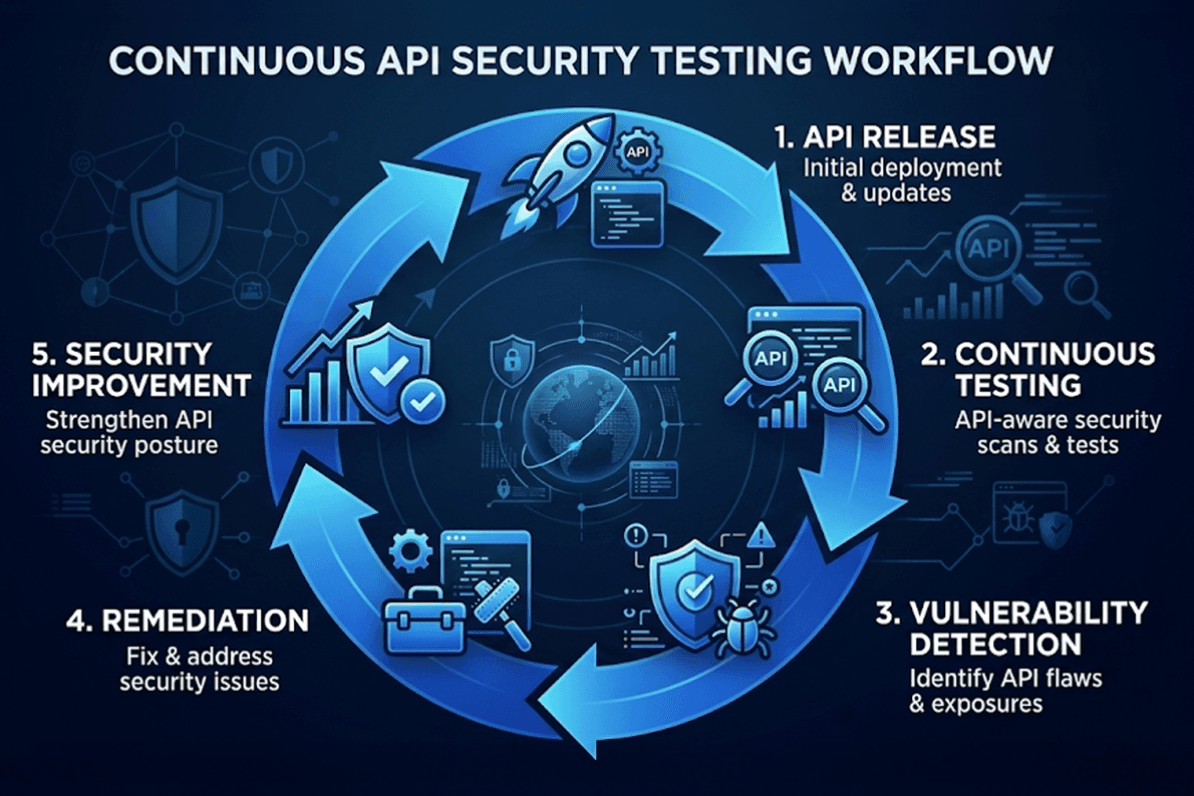
Protecting APIs requires more than occasional security reviews. Because SaaS platforms evolve constantly, security testing must evolve alongside them.
Continuous penetration testing allows organizations to validate new endpoints as they appear and ensure that existing endpoints remain protected. Instead of waiting months for a single testing cycle, security teams gain ongoing visibility into how their systems behave as new features are introduced.
This approach helps organizations detect logic flaws, authorization weaknesses, and unintended data exposure early. It also reduces the risk window between vulnerability discovery and remediation. Security becomes part of the product lifecycle rather than a periodic audit.
The Capture The Bug Approach to API Security
Capture The Bug works with SaaS companies across New Zealand, Australia, and the United States to help identify real vulnerabilities before attackers do.
The company focuses on understanding how applications behave in real environments rather than relying on static analysis or automated reports. Experienced testers explore APIs in the same way attackers would. They examine how authentication works, how permissions are enforced, and how workflows can be manipulated.
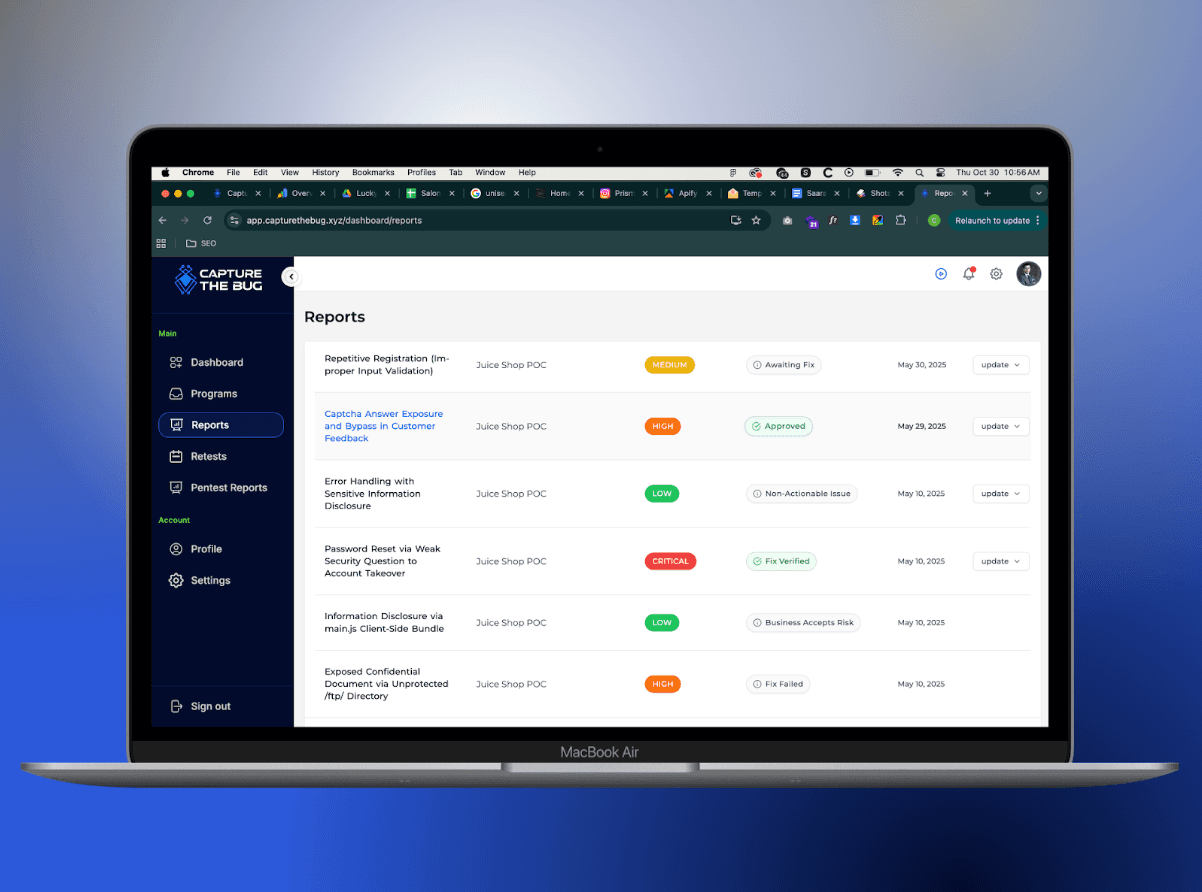
This human led approach helps uncover the types of issues that automated systems often miss. Organizations also gain real time visibility into discovered vulnerabilities and remediation progress.
Instead of waiting for a final report, engineering teams can collaborate directly with security experts to understand risks and resolve them quickly. For SaaS companies preparing for regulatory audits or enterprise customer security reviews, this transparency becomes a major advantage.
Preparing SaaS Platforms for the API Security Era
The rapid expansion of APIs is not slowing down. If anything, the number of exposed interfaces will continue to grow as SaaS platforms add new integrations and services. Security leaders should consider several key practices moving forward:
- Maintain a clear inventory of all active APIs. Unknown endpoints represent unknown risks.
- Ensure strong authentication and authorization checks exist for every request.
- Review business logic carefully. Many vulnerabilities emerge not from technical errors but from assumptions about how users behave.
- Implement ongoing penetration testing that reflects the pace of modern software development.
Security must evolve alongside product innovation. Organizations that treat API security as a continuous process will be far better positioned to defend their platforms.
Final Thoughts
APIs have become the backbone of modern SaaS architecture. They power integrations, automate workflows, and enable platforms to scale rapidly. At the same time, they represent one of the most attractive targets for attackers.
The companies that succeed in 2026 will be those that recognize this reality early and invest in strong API security practices. Understanding how APIs behave, how they can be manipulated, and how vulnerabilities emerge is no longer optional.
It is a core responsibility for any organization building software at scale.
By prioritizing rigorous penetration testing and ongoing visibility, SaaS companies can protect their customers, their data, and their reputation in an increasingly connected world.
FAQ
What is API penetration testing?
API penetration testing evaluates application programming interfaces to identify vulnerabilities such as broken authorization, data exposure, and business logic flaws.
Why are APIs a major risk for SaaS platforms?
APIs handle critical data exchanges between services and integrations. If authentication or access controls are weak, attackers may access sensitive information or manipulate system behavior.
How often should APIs be tested?
Because SaaS platforms evolve frequently, API testing should occur regularly and ideally as part of an ongoing security program rather than a once a year review.
Can API vulnerabilities lead to data breaches?
Yes. Many large data breaches occur when attackers exploit poorly secured APIs that expose customer data or internal system functionality.
How does Capture The Bug help secure APIs?
Capture The Bug identifies real vulnerabilities in APIs through expert led penetration testing and provides organizations with clear visibility into risks and remediation progress.