Ransomware 3.0: The Next Generation of Extortion Powered by AI and Deepfakes
Ransomware is no longer just about encrypted files and ransom notes. It’s evolving into a hybrid threat that blends AI-powered deception, deepfake manipulation, and targeted extortion. Here’s what business leaders need to know about Ransomware 3.0 and how to prepare for it.
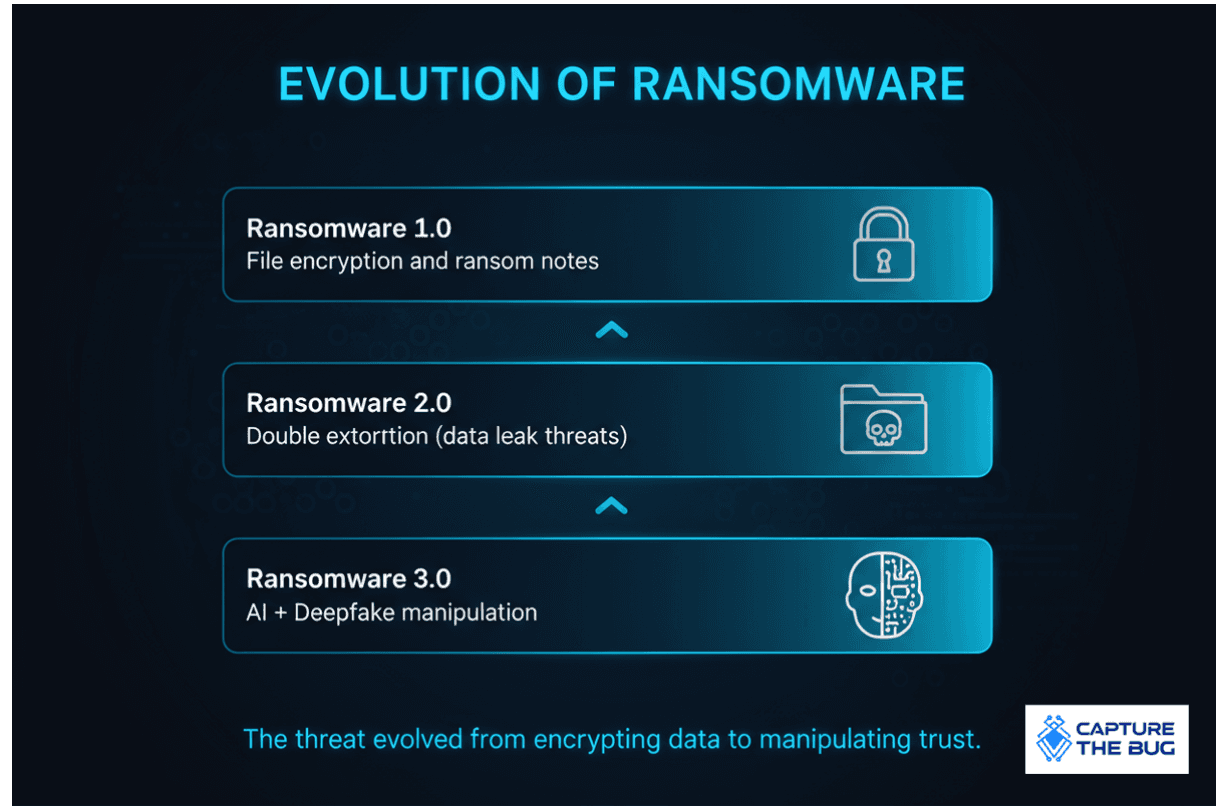
The Shift: From Encryption to Extortion
In the early days, ransomware was simple.
Attackers encrypted your data and demanded payment.
Then came Ransomware 2.0, the double-extortion era, where hackers not only locked systems but also threatened to leak stolen data if victims refused to pay.
Now we are entering Ransomware 3.0, a phase where attackers use credibility instead of code. They weaponize AI-generated deepfakes, cloned voices, and fabricated evidence to pressure companies into silence or payment.
The threat is no longer technical alone. It’s psychological, reputational, and deeply personal.
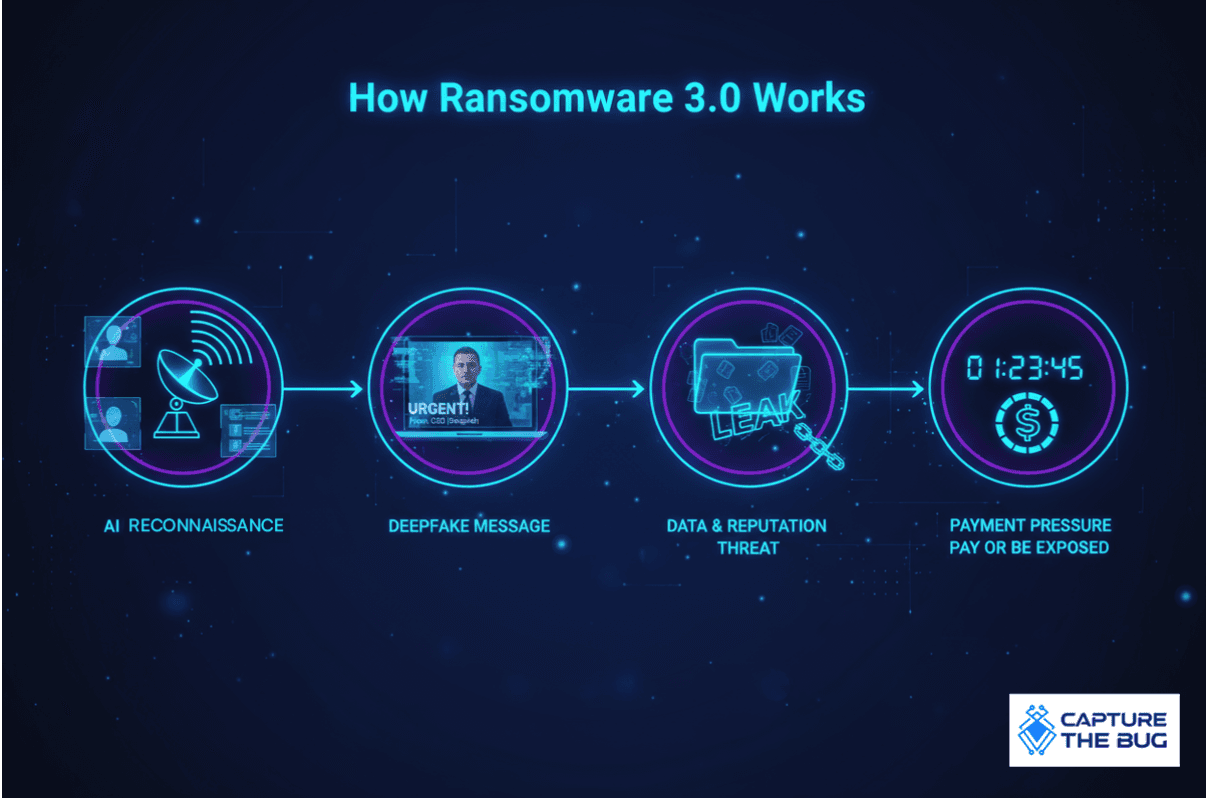
How Ransomware 3.0 Works
A modern ransomware campaign looks less like a hack and more like a corporate hostage operation.
- AI-Generated Reconnaissance. Attackers train AI models on public company data such as press releases, social media, and LinkedIn profiles to understand internal hierarchies and tone. They craft highly personalized phishing messages that sound exactly like your CEO or compliance officer.
- Initial Compromise. The intrusion may begin with a realistic email or even a deepfake video message from a trusted executive. Once a single credential is captured, lateral movement begins within minutes.
- Deepfake Extortion. Instead of threatening to leak real data, attackers threaten to release fabricated but believable content such as fake videos of executives or edited financial documents designed to trigger panic among investors and customers.
- Layered Leverage. Attackers combine encryption, data theft, and social manipulation. Even if backups exist, the reputational risk forces organizations into negotiation.
This is no longer just a technology problem. It’s a trust problem.
Real Incidents That Signal the Shift
2024 - Asia-Pacific Finance Firm
Hackers cloned an executive’s voice and convinced a subordinate to transfer 25 million dollars to a fake vendor account. The audio was flawless, generated from publicly available conference videos.
2025 - Healthcare Provider (US)
Attackers used deepfake patient data to blackmail the firm, threatening to publish fake records that never existed. Even though the data was synthetic, the reputational fallout was real.
2025 - European Retail Chain
The ransom note included a fake video of the CEO admitting to negligence, forcing the board to pay to prevent public chaos.
Each case proves one truth: ransomware no longer needs real evidence to cause real damage.

Why Traditional Defenses Aren’t Enough
Most cybersecurity controls such as backups or endpoint protection were built to counter encryption-based ransomware.
They cannot stop synthetic deception.
Attackers now bypass defenses not through code exploits but through credibility exploits. A cloned voice can trick your finance team faster than a zero-day vulnerability ever could.
Legacy incident-response playbooks fail because they assume "proof" equals truth. In Ransomware 3.0, proof can be fabricated in seconds.
The New Playbook for Security Leaders
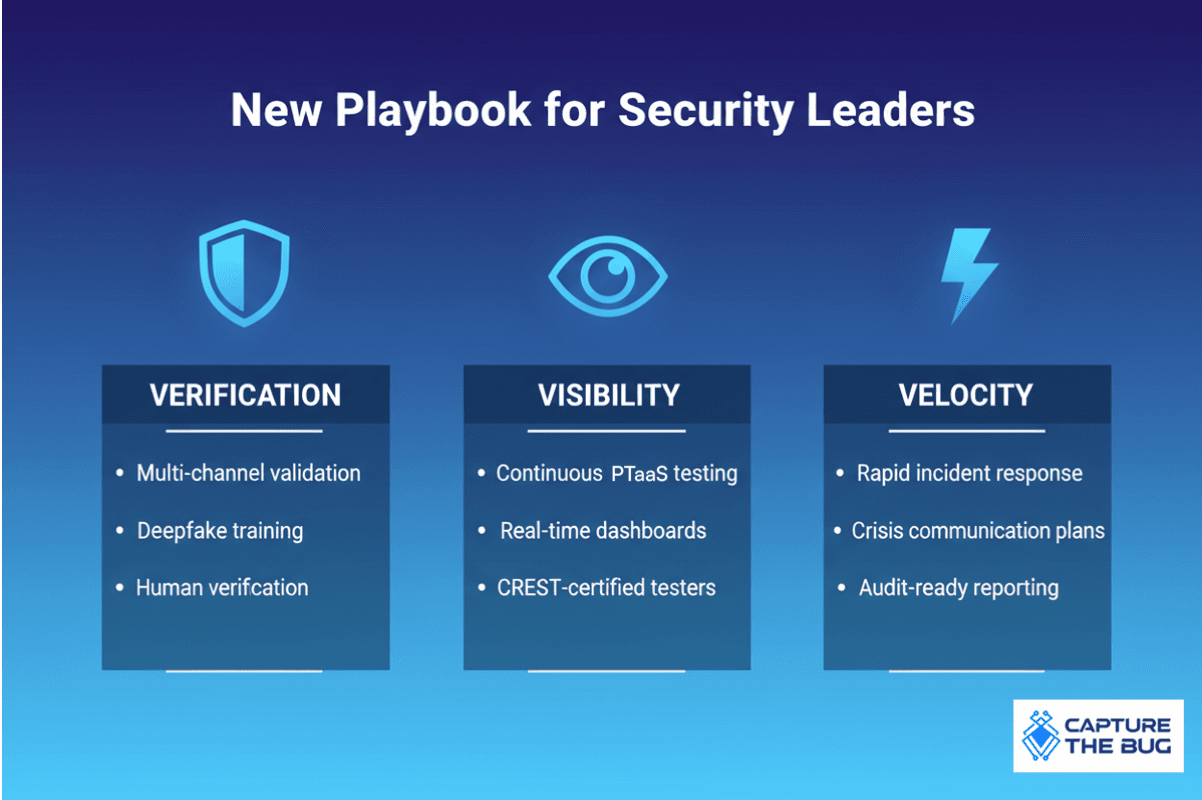
To fight a threat that blends data theft with digital forgery, companies must evolve their defense playbook around three pillars: verification, visibility, and velocity.
- Adopt multi-channel verification for all sensitive communications.
- Introduce internal code phrases for financial approvals.
- Train staff to question even "trusted" digital identities.
- Move from annual penetration testing to continuous PTaaS (Pentesting as a Service). Capture The Bug’s CREST-certified testers simulate deepfake-enabled phishing and social engineering to find weak links before attackers do.
- Map your human attack surface and track impersonation risks continuously.
- Build communication playbooks for fake-media events.
- Assign clear ownership for verifying and communicating authenticity quickly.
- Treat reputation as an asset class to be protected and measured.

The Role of PTaaS in Defending Against Ransomware 3.0
Penetration Testing as a Service isn’t just about network exploits anymore. It’s about testing trust workflows.
Capture The Bug enables companies to:
- Detect weaknesses in identity verification and communication channels.
- Simulate social-engineering attacks using voice, video, and chat vectors.
- Provide real-time dashboards showing where human and procedural vulnerabilities exist.
- Deliver compliance-ready reports aligned with ISO 27001, SOC 2, and regional data-privacy laws.
Ransomware 3.0 thrives on uncertainty. PTaaS restores clarity by continuously testing both systems and people.
What CISOs Should Expect Next
Over the next year, ransomware groups will behave more like marketing agencies than hackers.
They’ll invest in AI-driven PR warfare - leaking fake evidence, staging false narratives, and coercing through public embarrassment rather than encryption.
Expect:
- Deepfake press releases announcing false data leaks.
- Fake journalist outreach pushing fabricated evidence.
- AI-generated whistleblower personas spreading disinformation online.
Your defense must extend beyond firewalls to include narrative control and rapid authenticity verification.
Building Organizational Resilience
Every leadership team should prepare for one question: What happens if tomorrow a fake video of our CEO surfaces?
Preparation isn’t paranoia. It’s prudence.
Forward-thinking organizations are:
- Protecting executive digital identities and watermarking official media.
- Running continuous PTaaS testing to harden communication channels.
- Training teams to detect manipulated audio or video.
- Implementing blockchain or signature-based authenticity tagging for official communications.
Ransomware 3.0 marks the shift from cybersecurity to trust security.
Final Thoughts: Trust Is the New Target
In the past, attackers encrypted your data.
Now they encrypt your credibility.
Ransomware 3.0 proves that the next frontier of cybersecurity is psychological warfare, where attackers use AI and deepfakes to make lies look like evidence.
The companies that win will be those that test continuously, verify relentlessly, and respond transparently.
That is what Capture The Bug delivers - visibility before attackers take it away.
Ready to Defend Trust?
Experience how Capture The Bug’s CREST-certified PTaaS platform continuously tests both systems and people, giving you narrative control before attackers weaponize AI and deepfakes.
FAQ
1. What is Ransomware 3.0?
It’s the new phase of ransomware attacks that mix traditional data encryption with AI-driven deception, deepfakes, and reputational extortion.
2. How do deepfakes enhance ransomware campaigns?
Attackers use deepfake voices or videos to impersonate executives, spread misinformation, and pressure victims into payment through fabricated evidence.
3. Can backups stop Ransomware 3.0?
No. Backups restore data but can’t repair reputational damage from synthetic leaks or fake media.
4. How can businesses prepare?
By training teams to verify communications, monitoring for synthetic content, and adopting continuous PTaaS to test human and technical defenses.
5. How does Capture The Bug help?
Capture The Bug’s CREST-certified PTaaS platform continuously tests your defenses against digital and human vulnerabilities, giving you real-time assurance and visibility.