What Is SaaS Penetration Testing? A Complete Guide
Summary: SaaS penetration testing reveals the hidden vulnerabilities behind cloud platforms helping founders protect customer trust, meet compliance, and ship with confidence.
1. The Reality Behind Modern SaaS Security
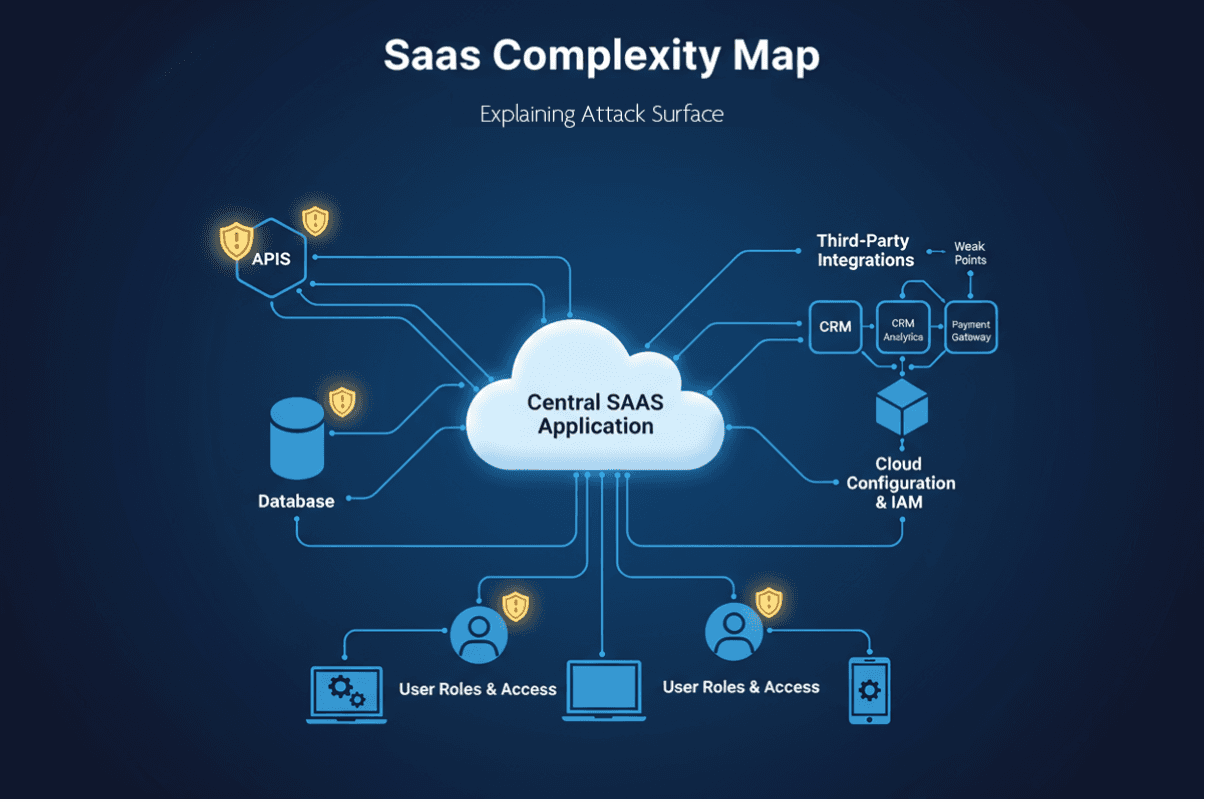
SaaS companies move fast. New features roll out daily. Integrations multiply. Customer data flows between APIs, cloud environments, and third-party systems at scale.
That speed is both the beauty and the blind spot of SaaS. Each release opens a new potential entry point for attackers and a single exposed API or misconfigured permission can lead to major consequences.
Traditional security audits weren't built for this world. They look backward, not forward. By the time a report lands on your desk, your product has already changed.
That's where SaaS penetration testing comes in.
It's not just about ticking compliance boxes. It's about understanding how real-world attackers would approach your platform and fixing those gaps before they find them.
2. What Exactly Is SaaS Penetration Testing?
SaaS penetration testing is a structured, human-led evaluation of a cloud application's security posture. It simulates real-world attack techniques to identify vulnerabilities across your software stack from authentication flows to API logic and user permissions.
Unlike general web app testing, SaaS pentesting focuses on the unique complexity of multi-tenant, cloud-native systems. It tests not only your application but the ecosystem that supports it.
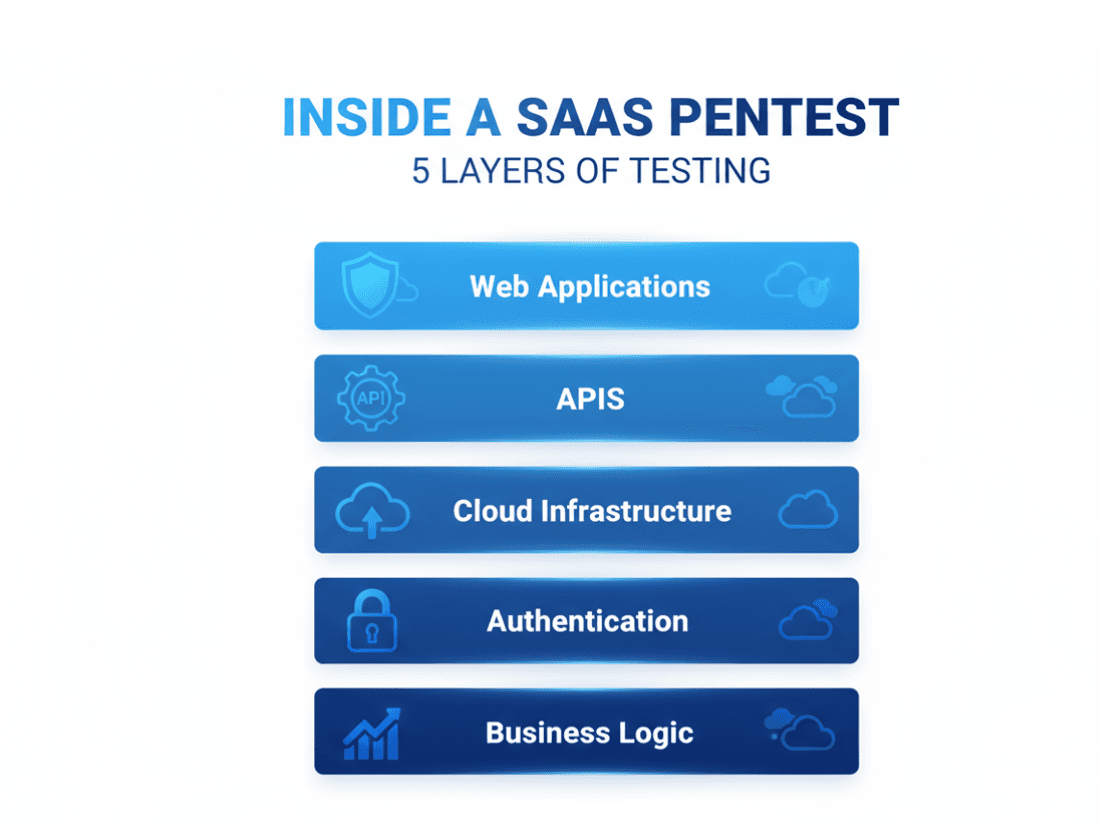
A complete SaaS pentest typically covers:
- Web applications and APIs: Checking for injection flaws, broken access controls, and insecure integrations.
- Cloud infrastructure: Reviewing configuration of storage buckets, IAM roles, and network access.
- Authentication and session management: Ensuring users can't escalate privileges or hijack accounts.
- Third-party integrations: Validating the security of connected CRMs, analytics, and payment systems.
- Business logic: Identifying misuse cases where an attacker manipulates workflows or payment flows.
The goal isn't to break your product it's to strengthen it.
3. Why SaaS Companies Can't Skip It
In the SaaS model, your customers aren't just buying software they're trusting you with their data.
That trust depends on three things: security, transparency, and proof.
Here's why penetration testing is now essential for every SaaS provider:
1. Continuous Change Creates Constant Risk
Every code update, integration, or plugin can introduce new vulnerabilities. SaaS penetration testing keeps pace with your releases, ensuring nothing slips through the cracks.
2. Compliance Is Non-Negotiable
Frameworks like SOC 2, ISO 27001, HIPAA, and GDPR all require regular third-party testing. Without evidence of a valid pentest, your compliance certification and sales pipeline can stall.
3. Customer Confidence Builds Revenue
Buyers now ask, "When was your last pentest?" during procurement. Having a valid, CREST-certified report builds credibility instantly.
4. Early Detection Saves Time and Cost
Fixing a vulnerability in production can cost 10x more than addressing it during development. Pentesting identifies issues early, before they impact users or compliance deadlines.
4. What a SaaS Penetration Test Looks Like in Practice
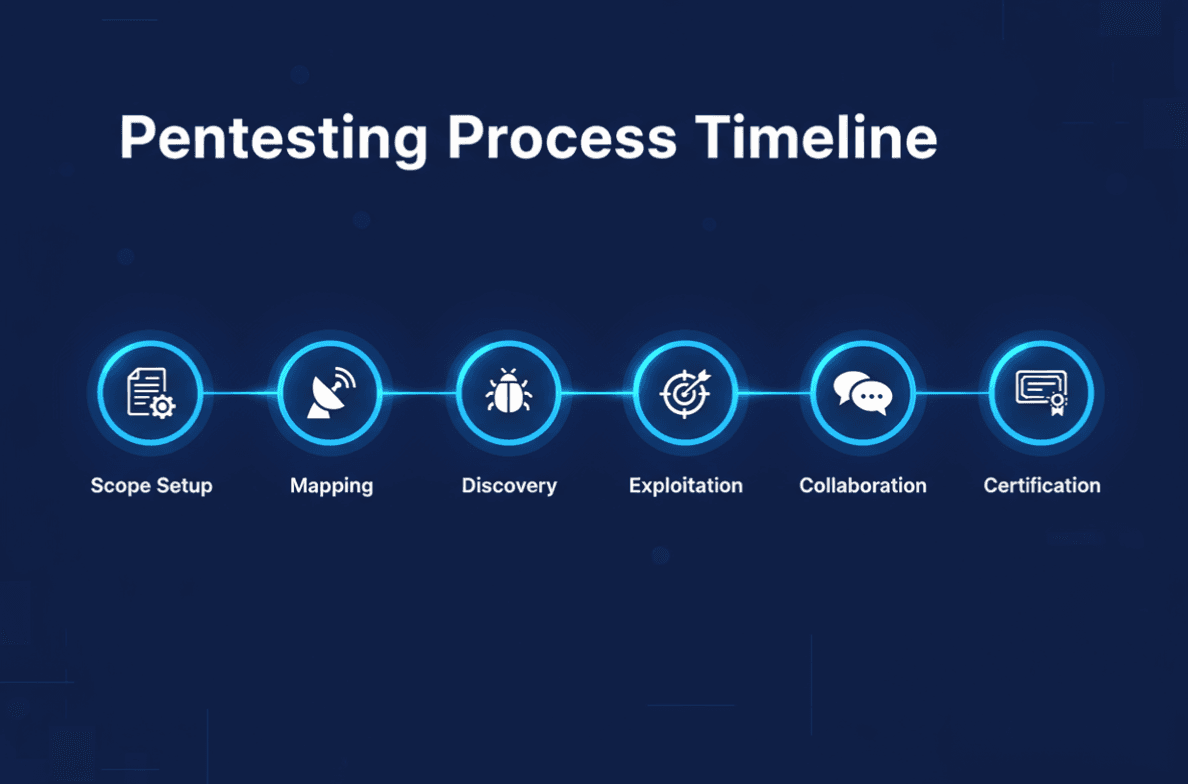
Every credible SaaS pentest follows a defined process focused on accuracy, collaboration, and evidence.
Here's how it unfolds:
- Step 1: Scoping and Pre-Engagement - The process begins with defining the assets, environments, and compliance goals in scope. This ensures testers know exactly what to target and what success looks like.
- Step 2: Mapping and Reconnaissance - Testers analyze your application architecture, API endpoints, and exposed assets. This phase uncovers forgotten subdomains, open ports, or misconfigured S3 buckets the low-hanging fruit attackers love.
- Step 3: Vulnerability Discovery - Here, testers look for exploitable flaws from broken authentication to logic errors unique to your workflows. This phase combines automated discovery with manual testing to ensure depth and accuracy.
- Step 4: Exploitation and Validation - Ethical testers attempt to exploit the discovered issues safely, proving their real-world impact. For SaaS, this often includes testing user role boundaries, cross-tenant data access, and privilege escalation.
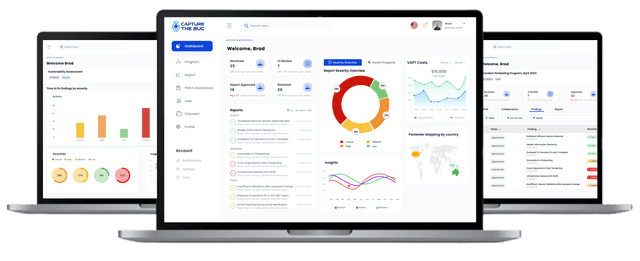
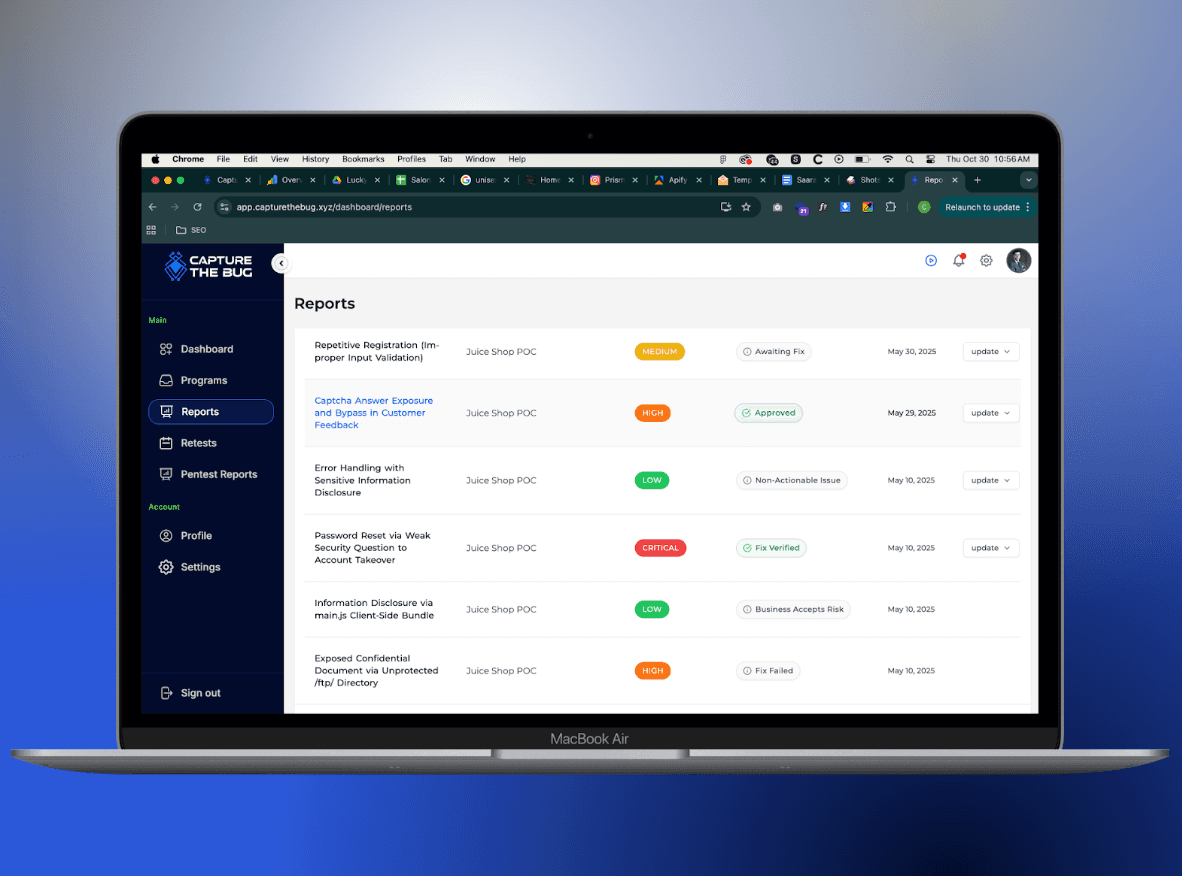
- Step 5: Reporting and Collaboration - Instead of a static PDF, modern teams use live dashboards (like Capture The Bug's PTaaS platform) where vulnerabilities appear as they're found. Developers can chat directly with testers, request retests, and track remediation progress in real time.
- Step 6: Retesting and Certification - After fixes are applied, testers validate them and issue a remediation certificate confirming the environment is secure. This document supports compliance audits and customer assurance.
5. What to Look for in a SaaS Pentesting Partner
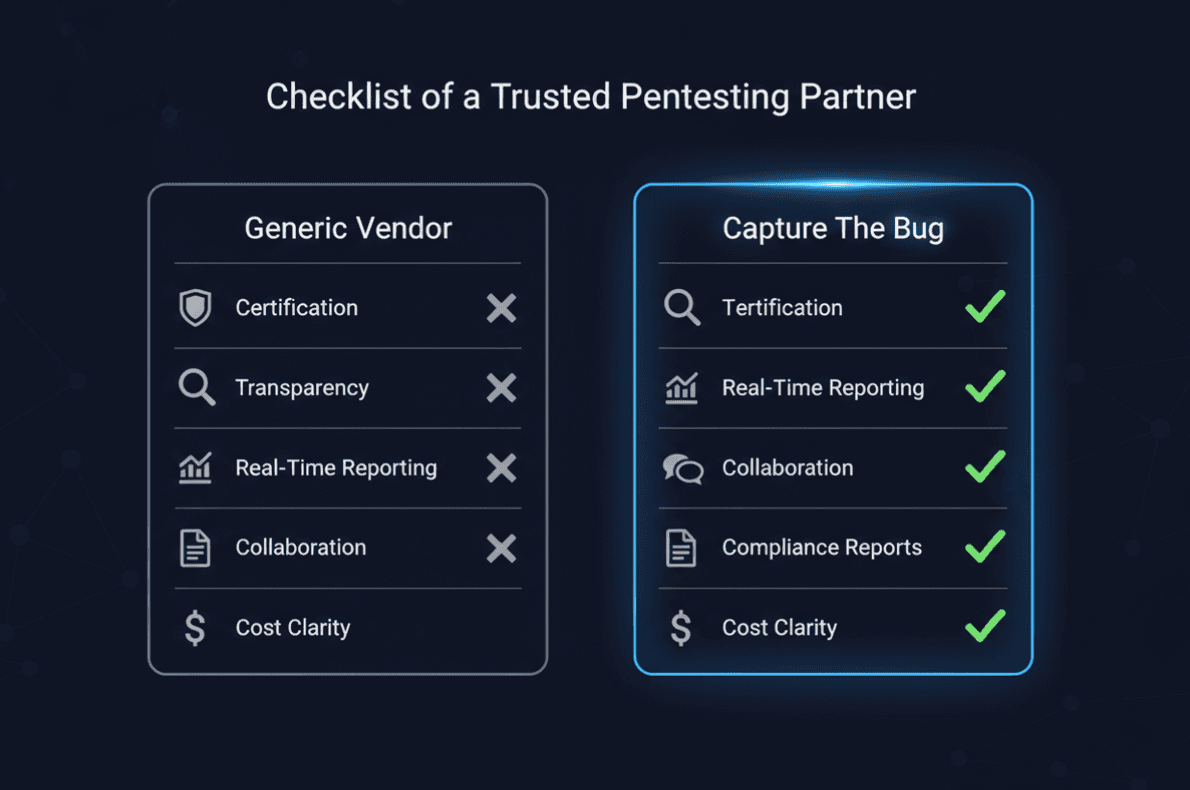
Not all pentests are equal. The right provider should act like a partner, not a vendor.
When evaluating SaaS penetration testing providers, look for:
- CREST or equivalent certification: Verifies technical competence and ethical standards.
- Experience with SaaS architectures: Multi-tenancy, cloud-native, and API-heavy environments require specialist knowledge.
- Real-time collaboration: Live dashboards cut down remediation cycles by weeks.
- Detailed remediation guidance: Reports should explain business impact, not just list CVEs.
- Transparent pricing: Predictable, subscription-based models prevent hidden costs.
- Compliance-ready reports: Exportable SOC 2, ISO 27001, or PCI-DSS evidence saves audit time.
In short, your pentest provider should make security feel like part of your product lifecycle not an interruption to it.
6. The Business Value: More Than Just Compliance
For modern SaaS teams, penetration testing is no longer an expense it's a growth enabler.
Security-as-a-value-driver is becoming a defining factor for investors, customers, and regulators alike.
Companies that embed continuous pentesting into their development cycles report:
- 50-70% faster vulnerability remediation times
- 30% lower testing costs annually
- 2-3x faster audit readiness
- Measurable improvement in customer trust metrics
At Capture The Bug, this is the philosophy behind our PTaaS (Pentesting as a Service) platform combining CREST-certified human expertise with live, on-demand dashboards.
It's not about running one test a year. It's about giving SaaS teams the visibility, collaboration, and confidence they need to build securely every day.
7. Final Thoughts
SaaS penetration testing isn't just technical hygiene it's a statement of trust.
Every new feature, every integration, every customer login depends on security that scales with your business.
The companies that invest early don't just avoid breaches they win faster deals, stronger compliance records, and customer loyalty that lasts.
Security, in the SaaS world, is no longer a checkbox. It's your competitive edge.
Ready to Elevate Your SaaS Security?
Discover how Capture The Bug's CREST-certified PTaaS platform delivers continuous SaaS penetration testing with real-time collaboration, evidence-based reporting, and on-demand retesting.
FAQ
1. What is SaaS penetration testing?
SaaS penetration testing is a deep assessment of a software-as-a-service application to uncover and fix vulnerabilities across web apps, APIs, and cloud infrastructure.
2. How is it different from regular pentesting?
It focuses on SaaS-specific elements like multi-tenancy, API integrations, and cloud configurations: not just a single app or server.
3. How often should SaaS companies conduct penetration tests?
At least once every major release cycle, or continuously through a PTaaS model that tests whenever your environment changes.
4. What certifications are needed for SaaS pentesting?
CREST, OSCP, or equivalent credentials ensure your testers follow recognized standards and ethics.
5. Can SaaS pentesting help with compliance?
Yes: it supports SOC 2, ISO 27001, HIPAA, and GDPR by providing third-party validation of your security posture.