The Role of Bug Tracking in Ensuring Your Web Application’s Security
Why strong bug tracking is the invisible engine behind real security, fast remediation, and a resilient web application.
Introduction: The Quiet Gap Weakening Modern Security
Across SaaS companies, fast-growing startups, and global enterprises, one theme keeps repeating. Teams are investing heavily in pentesting, infrastructure, and compliance, yet small vulnerabilities continue to slip past the cracks. Not because the issues were never discovered but because they were never tracked with discipline.
Capture The Bug has spent years working with organisations across New Zealand, Australia, and the United States. Their observations are consistent. Most security failures do not happen when an attacker outsmarts a system. They happen when an internal issue is found but not recorded, understood, assigned, or followed through. Bug tracking is often treated as administrative work when it is actually a core security practice. Without it, even the strongest security program loses its structure.
Why Missed Bugs Become Breach Headlines
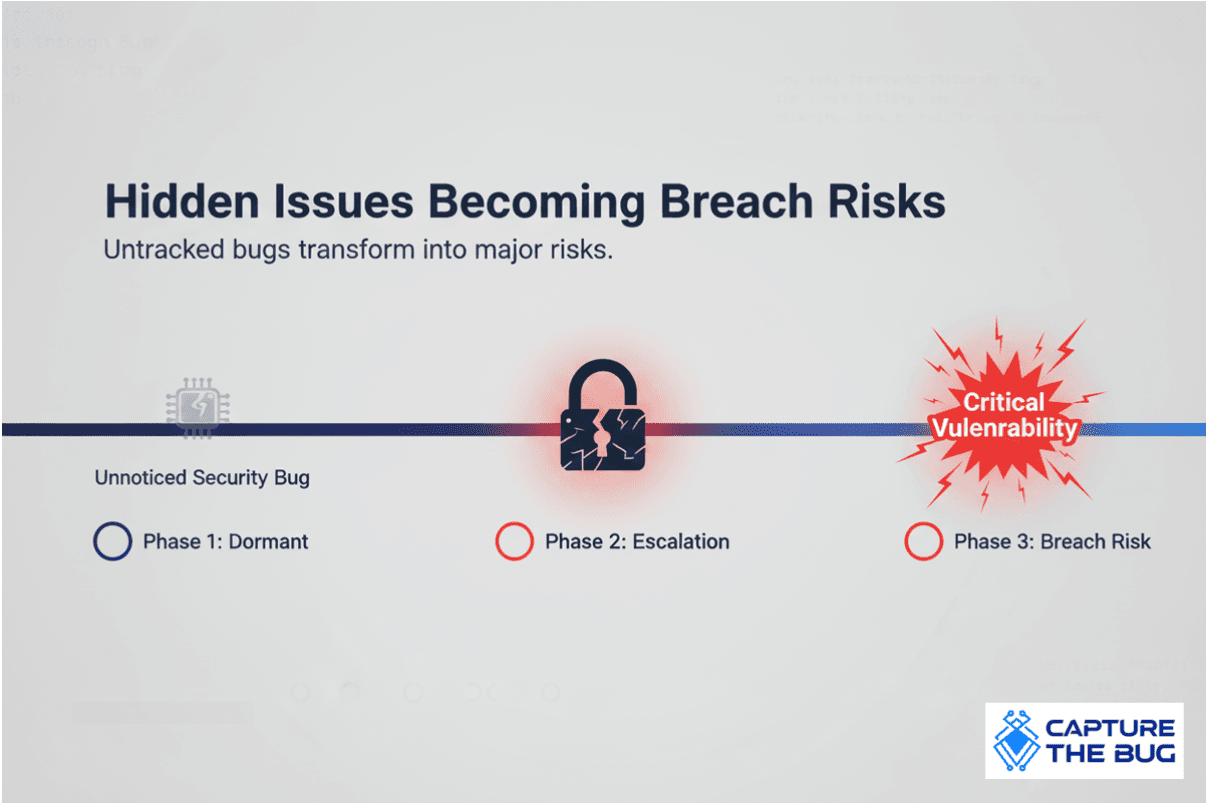
A surprising number of real-world breaches originate from vulnerabilities the organisation already knew about. Someone noticed a misconfiguration or a suspicious endpoint. Someone found a weak access control or an exposed API. But the details remained inside a chat thread or a PDF report that nobody revisited.
When an issue is not tracked, it slowly disappears from visibility. Engineers assume it is handled. Testers assume ownership has been assigned. Leaders assume remediation is already in progress. In reality, the vulnerability waits silently until it is exploited.
The most expensive breaches are often not new discoveries. They are unresolved tasks.
Bug Tracking as a Core Security Layer
Strong bug tracking transforms how teams handle vulnerabilities. It gives security findings a place to live, a person responsible, and a timeline to move forward. When a vulnerability is recorded with clear context, engineering teams understand exactly what went wrong and how to reproduce the issue. When ownership is assigned, the issue no longer sits in a vague “someone will address it” category. When teams collaborate directly inside a structured system, information no longer gets lost in conversations or private channels. Developers understand the problem. Testers understand the environment. Security leads understand the risk.
Bug tracking is the operational backbone that turns findings into improvements. Without it, even the best pentest becomes a static file instead of an action plan.
The Hidden Cost of Poor Tracking
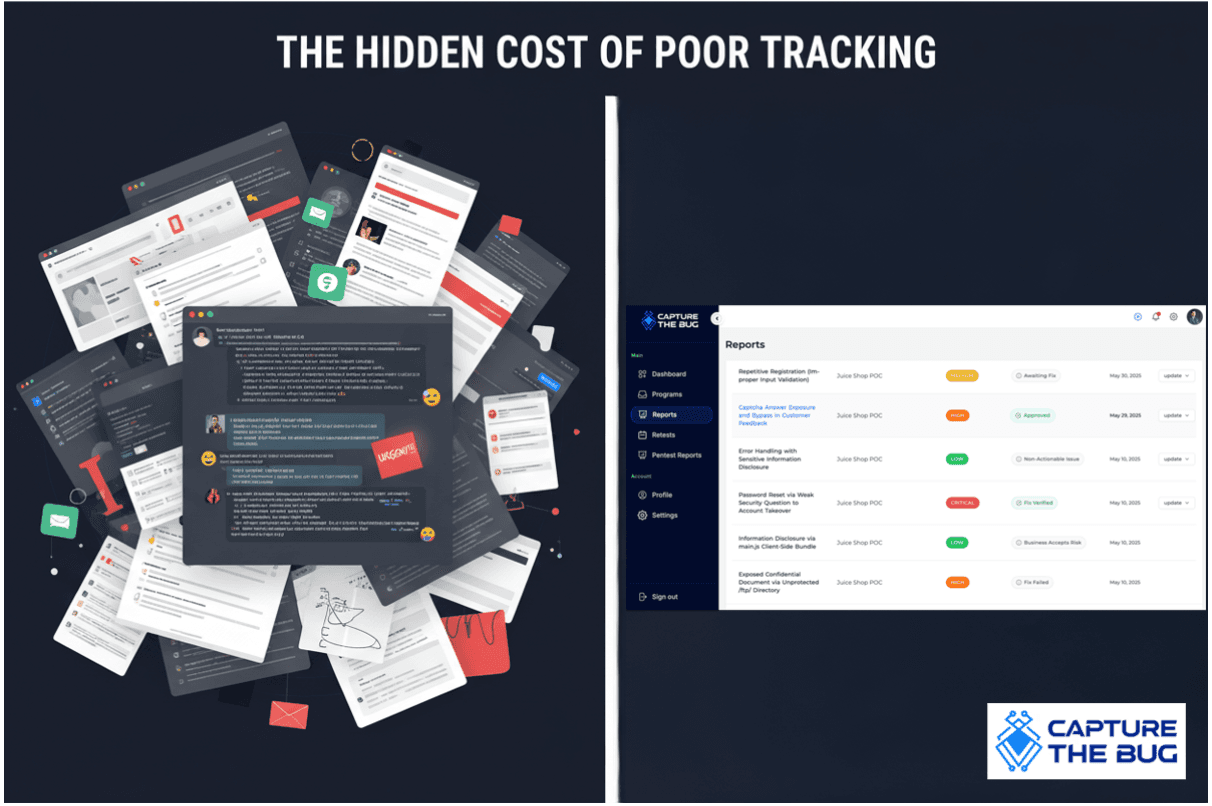
When Capture The Bug reviews repeated pentest cycles for clients, a clear pattern shows up. Organisations lose a significant amount of time rediscovering the same vulnerabilities. Engineers spend long hours searching for missing details. Compliance teams struggle to prove what was fixed and when. Development teams argue about priorities because nobody has a central reference. Everything takes longer than it should.
The financial cost of this inefficiency is significant, but the operational cost is even greater. It creates slow remediation, recurring issues, and long gaps between vulnerability discovery and closure. Those gaps become risk windows where attackers thrive.
The problem is rarely capability. It is the absence of a reliable process.
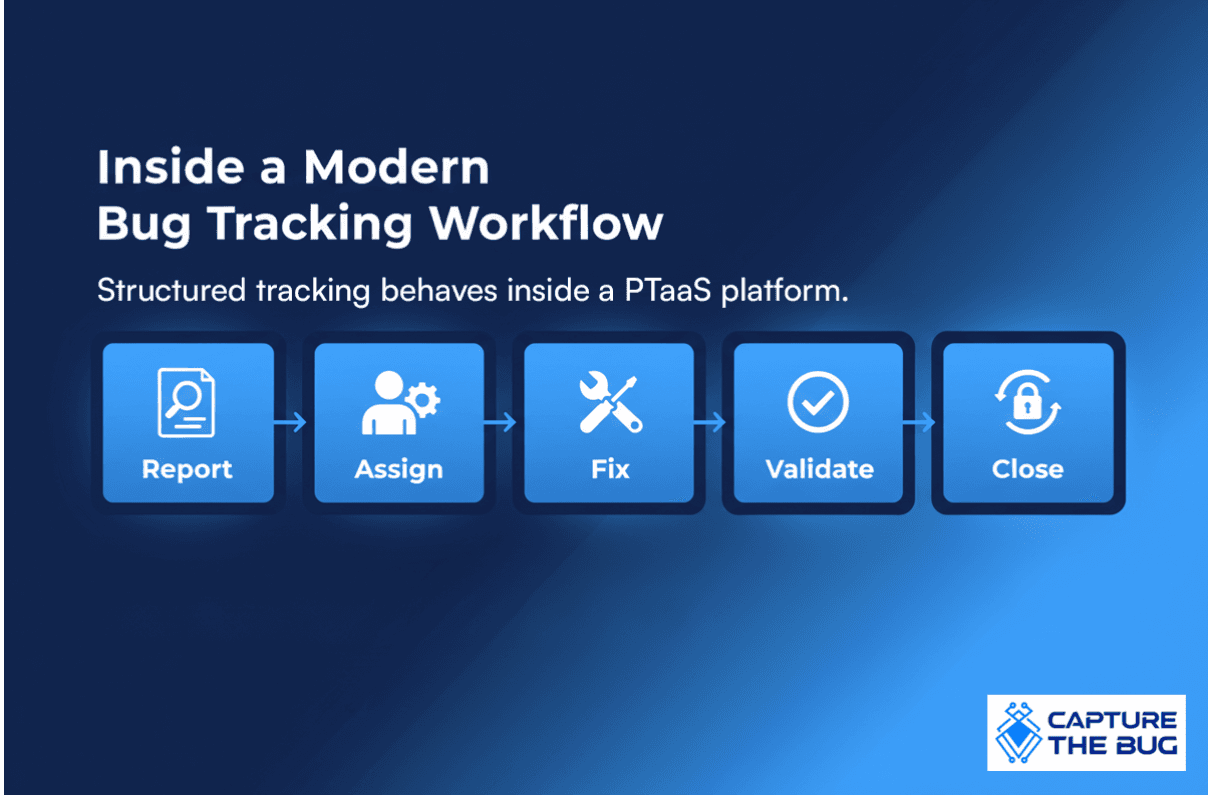
What Modern Bug Tracking Looks Like
Modern bug tracking is not complicated. It simply mirrors how today’s development and security teams work.
The report needs to carry enough detail that any developer can understand the issue within seconds. It needs clear reproduction steps, expected behaviour, actual behaviour, and the impact on the system. The evidence must be attached in one place. The system should give every issue a single owner, not a shared group, because shared ownership dilutes accountability.
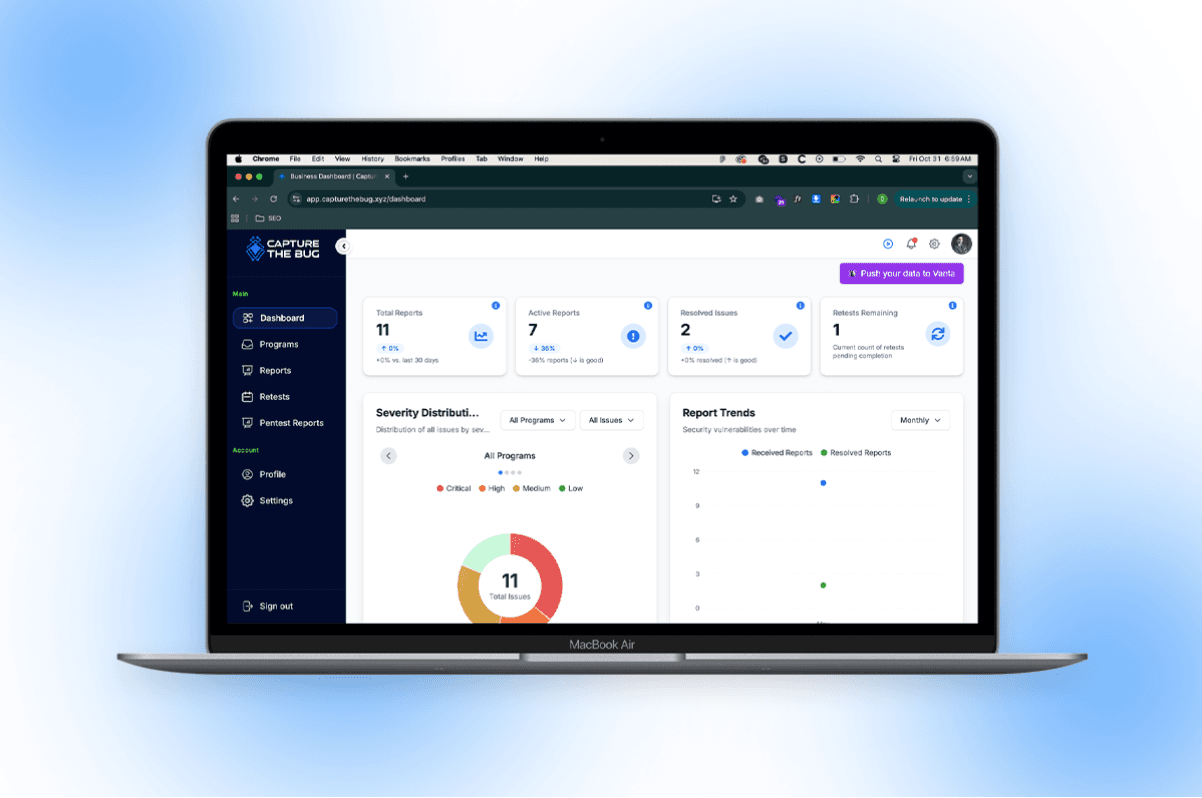
Teams need a space where developers and testers can communicate directly, share clarifications, and maintain context. Every interaction stays inside the record, so the story of the vulnerability is never lost. Retesting should be fast because unvalidated fixes slow down releases and increase the chance of regression. And finally, reporting must reflect reality. If leadership opens a dashboard today, it should show what is open, what is fixed, what is in progress, and what risks remain.
This is the standard modern applications require. Anything less slows down security.
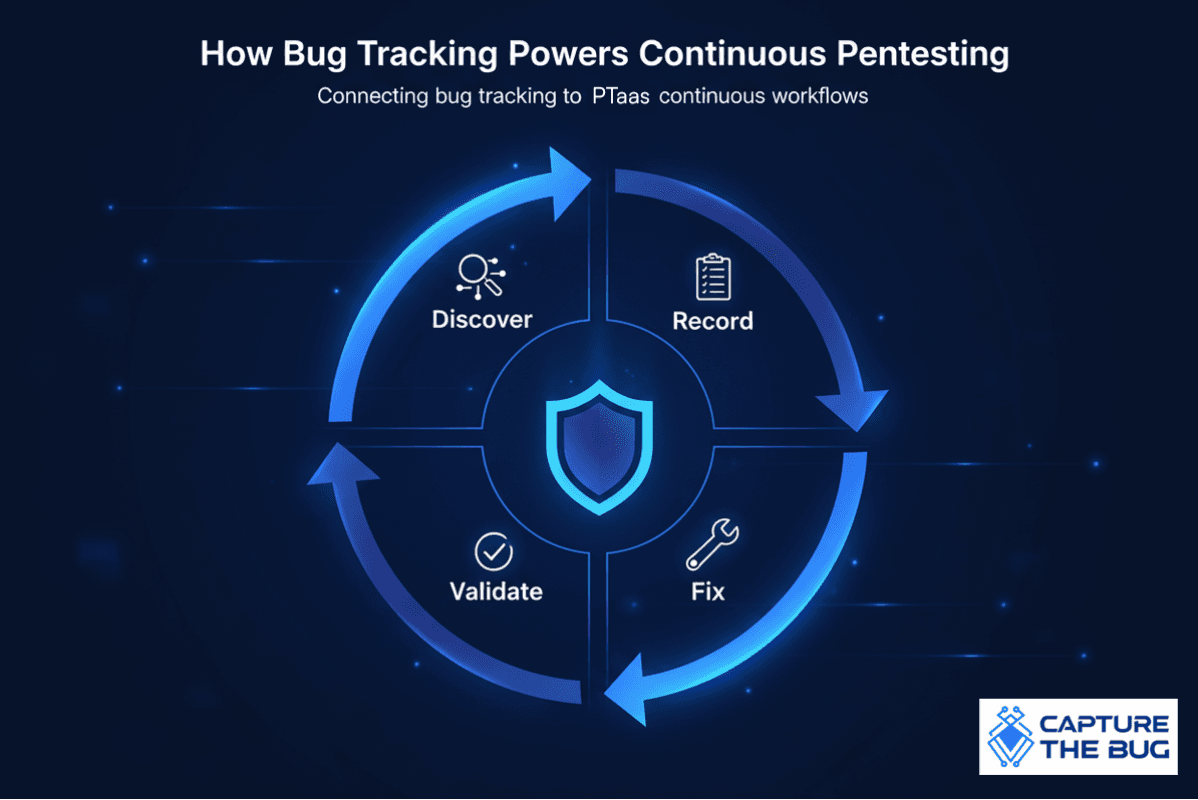
How Bug Tracking Supports a Continuous Pentesting Model
Pentesting as a Service creates a continuous cycle. Findings appear as soon as testers identify them. Developers begin remediation immediately. Testers validate fixes the same day. This cycle only works if bug tracking is strong and centralised.
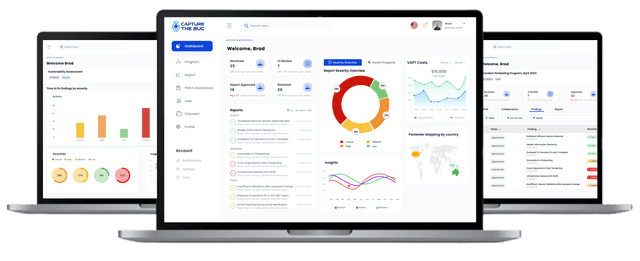
Capture The Bug’s PTaaS platform integrates bug tracking directly into the testing workflow. Every vulnerability discovered appears instantly in the dashboard with full context. Every fix can be validated without scheduling delays. Every conversation between testers and developers happens in one place. Every action becomes part of the audit trail.
When the tracking is continuous, the security becomes continuous.
How Better Tracking Reduces Risk
When organisations strengthen their tracking process, they see three immediate improvements.
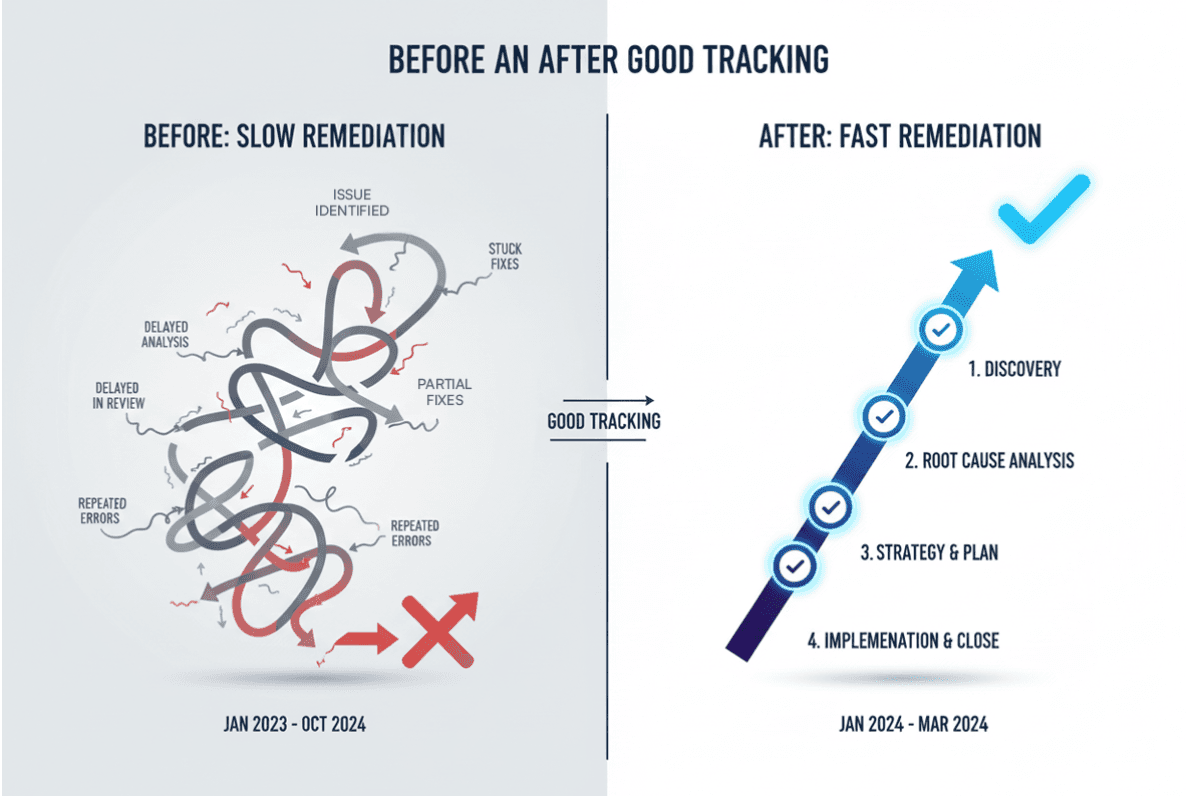
The first is speed. Issues are fixed faster because information is clear, owners are assigned, and communication is direct. The second is reduction of recurring vulnerabilities. When evidence and conversation stay documented, the team understands the root cause and prevents the same issue from returning in the next release. The third is audit readiness. Compliance becomes easier because the proof of discovery, remediation, and validation already exists.
Security improves not because the technology changes but because the process becomes reliable.
A Real Example from the Field
A SaaS company in New Zealand approached Capture The Bug after experiencing multiple audit delays. Their application had strong architecture and a skilled engineering team, but vulnerabilities from previous years kept resurfacing.
The issue was not lack of testing. It was lack of tracking.
Once they adopted structured bug tracking through Capture The Bug’s PTaaS dashboard, the transformation was immediate. Issues no longer disappeared inside chat threads. Developers received clear, actionable context. Testers validated fixes within hours instead of weeks. Leadership finally had visibility into which risks were resolved and which remained.
Within six months, their high severity issues closed sixty percent faster. Their next audit cycle required half the preparation time. The technology stayed the same. The operational discipline did not.
Conclusion
Bug tracking is not an administrative task. It is a fundamental security control. It ensures that every vulnerability moves from discovery to action. It closes gaps that attackers rely on. It strengthens collaboration between teams that must work together. And it transforms pentesting from a once-a-year event into a continuous improvement cycle.
For modern organisations, strong bug tracking is no longer optional. It is the difference between knowing about a vulnerability and actually fixing it. It is the silent system that keeps your application secure long after the tests are complete.
When teams track better, they secure better. And the companies that understand this early are the ones that build resilient, trustworthy products in the long run.
FAQ
What is the role of bug tracking in security
Bug tracking creates structure around vulnerability management. It ensures issues are documented, assigned, and resolved before they become incidents.
Why do vulnerabilities resurface in applications
They reappear when the root cause, evidence, and conversation are not stored in a single system. Without historical context, teams often repeat old mistakes.
Does bug tracking reduce compliance effort
Yes, because it provides time stamped proof of discovery, remediation, and retesting. Auditors can verify progress instantly.
How does bug tracking support PTaaS
It connects continuous testing with continuous fixing. Every vulnerability becomes part of an organised workflow instead of a static document.
Is bug tracking necessary for small teams
Small teams benefit the most because they cannot afford to lose time rediscovering known issues or repeating fixes across versions.