What Is the Ideal Penetration Testing Frequency for Your Organization?
Security testing has not fallen behind. In many cases, it is operating on the wrong timeline.
While product teams deploy weekly and sometimes daily, many organizations still schedule penetration tests once a year. That approach worked when infrastructure was stable and releases were infrequent. It does not work anymore.
Risk does not operate on an annual calendar. It increases with every deployment, new API integration, cloud configuration change, or feature rollout.
The real question is no longer “Do we need a pentest?”
It is “How often should we test to match how fast we change?”
The Risk of Annual Penetration Testing
Annual testing is still common, largely because compliance frameworks require it.
Standards such as SOC 2, ISO 27001, and PCI DSS mandate periodic testing. However, compliance is backward-looking. It confirms whether controls existed at a point in time. It does not guarantee that they are effective today.
Between two annual tests, a company may:
- Deploy dozens of new features
- Integrate third-party tools
- Migrate infrastructure
- Introduce new APIs
- Change access controls
Each change alters the attack surface.
An annual penetration test provides a snapshot. Modern environments require live visibility.
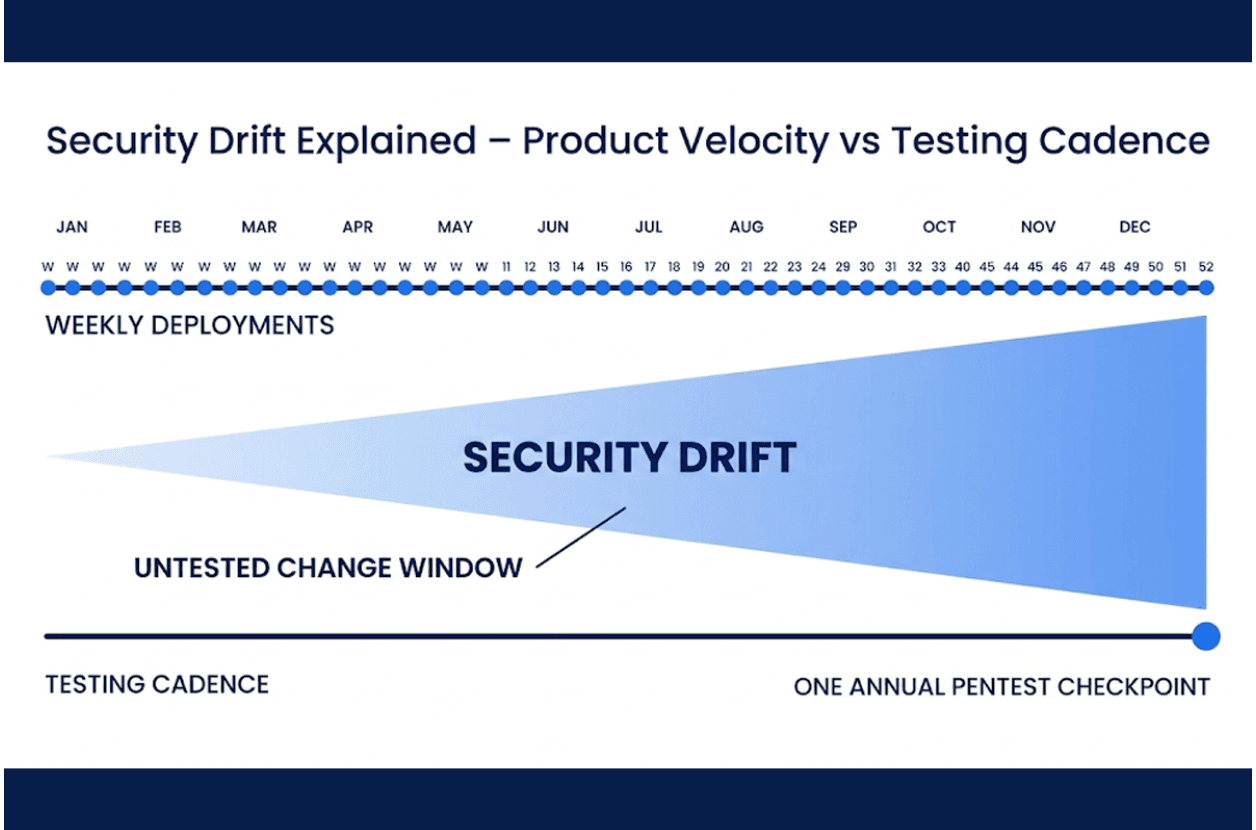
Product Velocity vs. Testing Cadence
Engineering teams now operate with CI/CD pipelines, feature flags, and infrastructure as code. Production environments evolve constantly.
When testing frequency does not align with deployment frequency, organizations experience security drift. This is the gap between what was tested and what is currently live.
Security drift typically appears in the following ways:
- Misconfigured cloud resources introduced through infrastructure templates
- Feature flags exposing untested functionality
- Third-party integrations adding new vulnerabilities
- Legacy endpoints remaining accessible after updates
If deployments are weekly but testing is annual, the organization is effectively blind for most of the year.
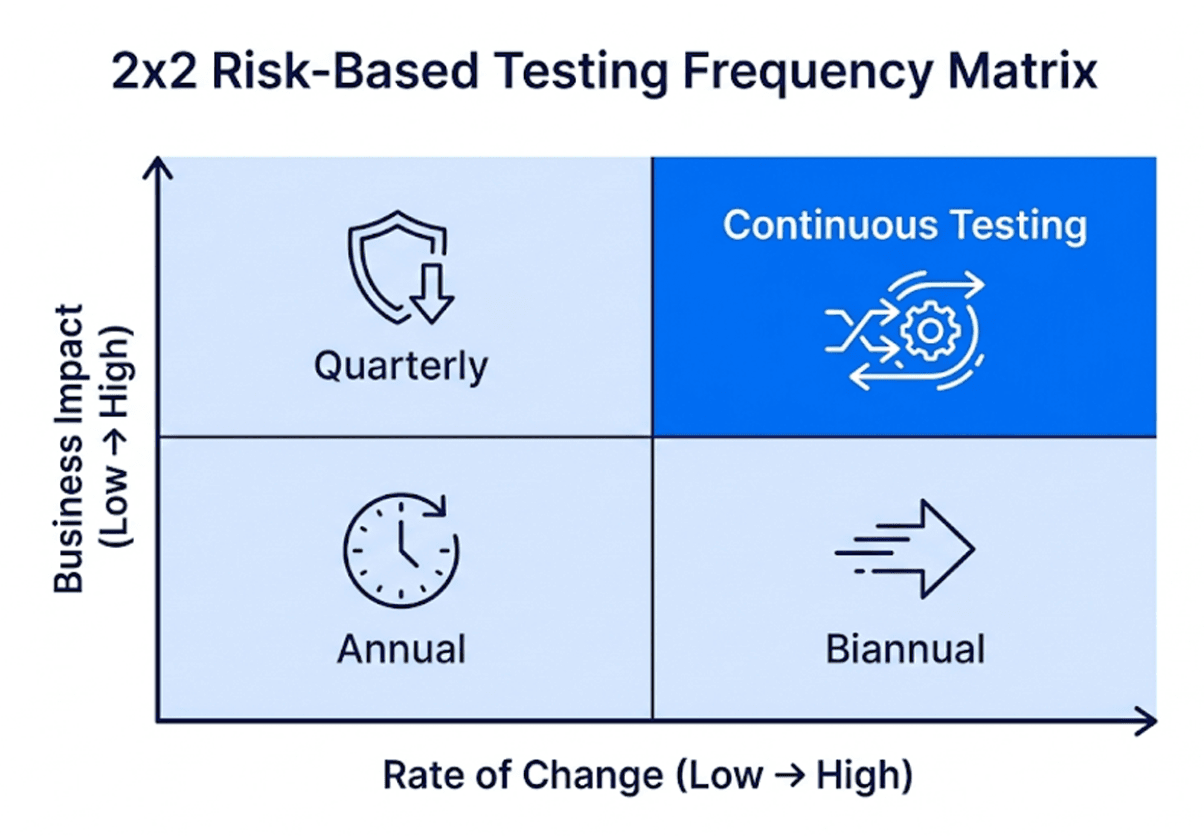
Stop Scheduling Security Uniformly
Not every system requires the same testing frequency.
An effective strategy aligns testing cadence with:
- Exposure level
- Business impact
- Rate of change
- Regulatory requirements
High Frequency Testing Required For
- Customer-facing applications
- Authentication systems
- Payment flows
- APIs handling sensitive data
- Rapidly changing SaaS platforms
These systems often require quarterly or continuous validation.
Moderate Frequency Testing May Work For
- Internal tools
- Reporting dashboards
- Back-office systems
- Low-change environments
Compliance-Driven Systems
Industries subject to regulatory frameworks often require at least annual testing and sometimes more frequently after significant changes.
Meeting the minimum standard should not be mistaken for achieving optimal security.
Aligning Pentest Frequency with Risk Appetite
Testing frequency is not purely a technical decision. It is a business decision.
Organizations handling:
- Financial transactions
- Healthcare records
- Personally identifiable information
- Critical infrastructure
typically have a low risk tolerance. In these environments, quarterly or continuous testing is increasingly becoming the standard.
Early-stage startups or internal-only platforms may accept slightly longer intervals. However, they must understand the trade-off. Slower detection leads to longer exposure windows.
Testing cadence should reflect both risk tolerance and business objectives.
Pentest Cadence as a Sales Enabler
Security posture directly impacts revenue.
Enterprise buyers frequently ask:
- When was the last penetration test conducted?
- Was remediation verified?
- Is testing ongoing or point in time?
Providing a recent, comprehensive report accelerates procurement. Providing continuous validation reduces friction even further.
Frequent testing:
- Demonstrates maturity
- Shortens enterprise sales cycles
- Reduces objections during security reviews
- Builds long-term customer trust
In competitive markets, security cadence becomes a differentiator.
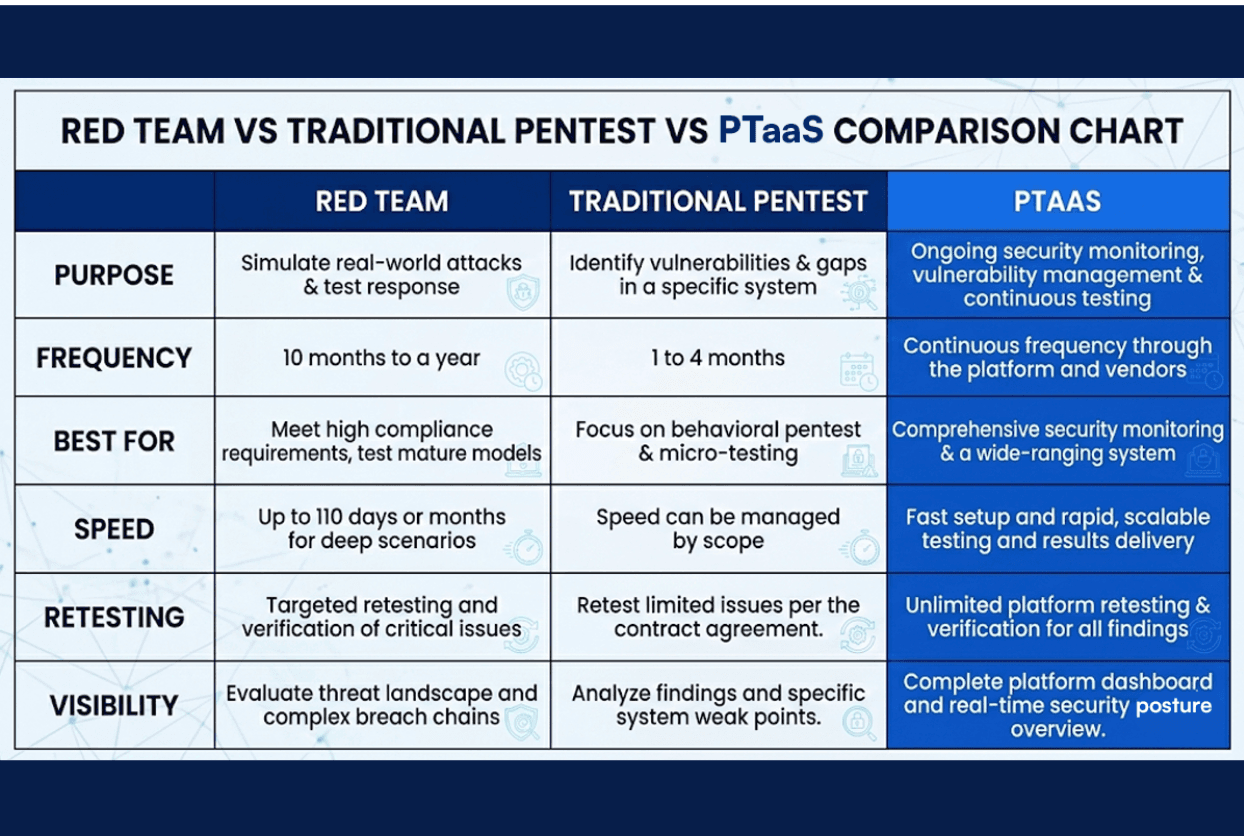
Red Team vs Traditional Pentest vs PTaaS
Organizations often confuse testing type with testing frequency. They are not the same.
Red Team Engagements
Typically conducted once or twice per year. Focused on simulating real-world attackers and testing detection and response capabilities.
Traditional Penetration Testing
Often quarterly or annual. Focused on identifying vulnerabilities across defined scope.
Penetration Testing as a Service (PTaaS)
Ongoing or release-based. Focused on continuous validation, fast retesting, and integration into development workflows.
Red teaming weekly would be excessive. Annual pentesting in a fast-moving SaaS environment is insufficient.
Frequency should match operational reality.
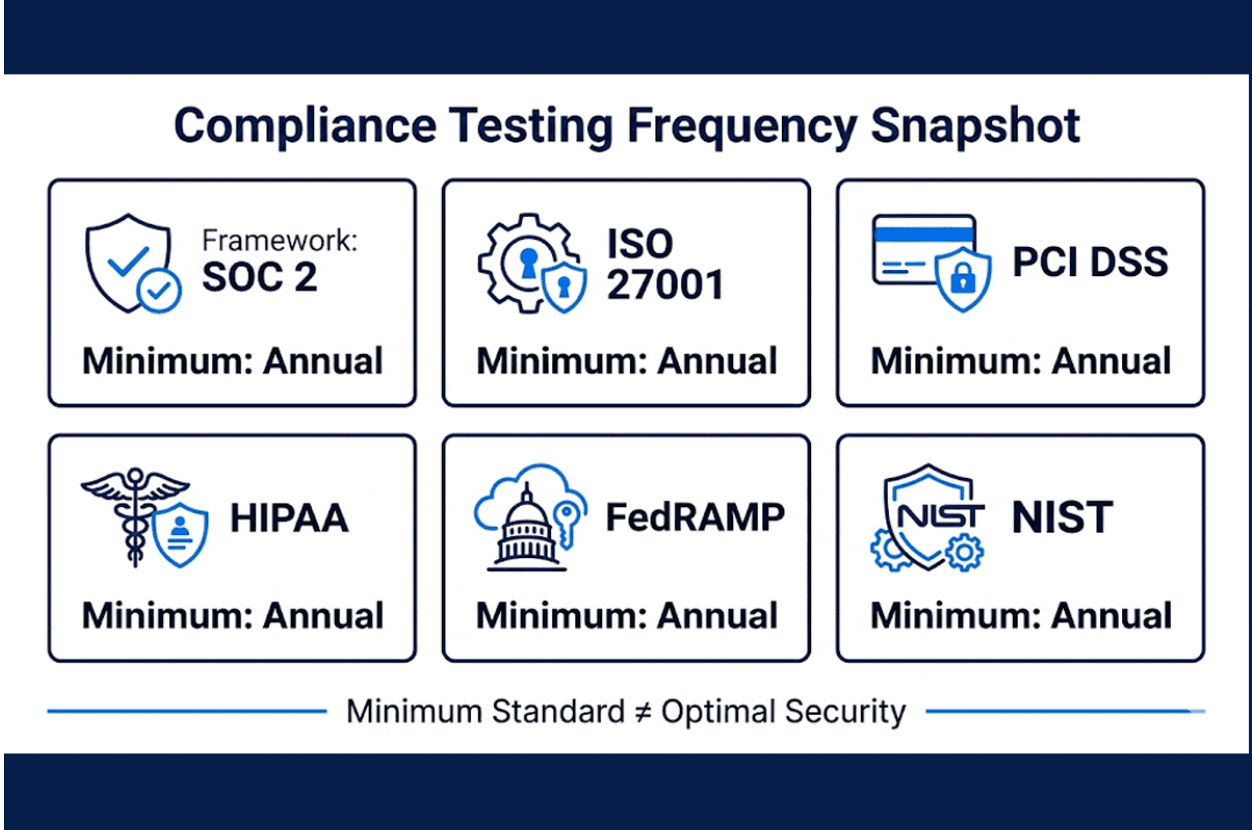
Compliance-Based Frequency Benchmarks
Here is how common frameworks typically approach testing frequency:
| Framework | Typical Requirement |
|---|---|
| SOC 2 | Annual or after major changes |
| ISO 27001 | Annual and during audits |
| PCI DSS | Annual and after significant changes |
| HIPAA | Risk-based, typically annual |
| FedRAMP | Annual plus continuous scanning |
| NIST CSF | Recommended annually |
These define minimum expectations. Many organizations exceed them due to operational risk.
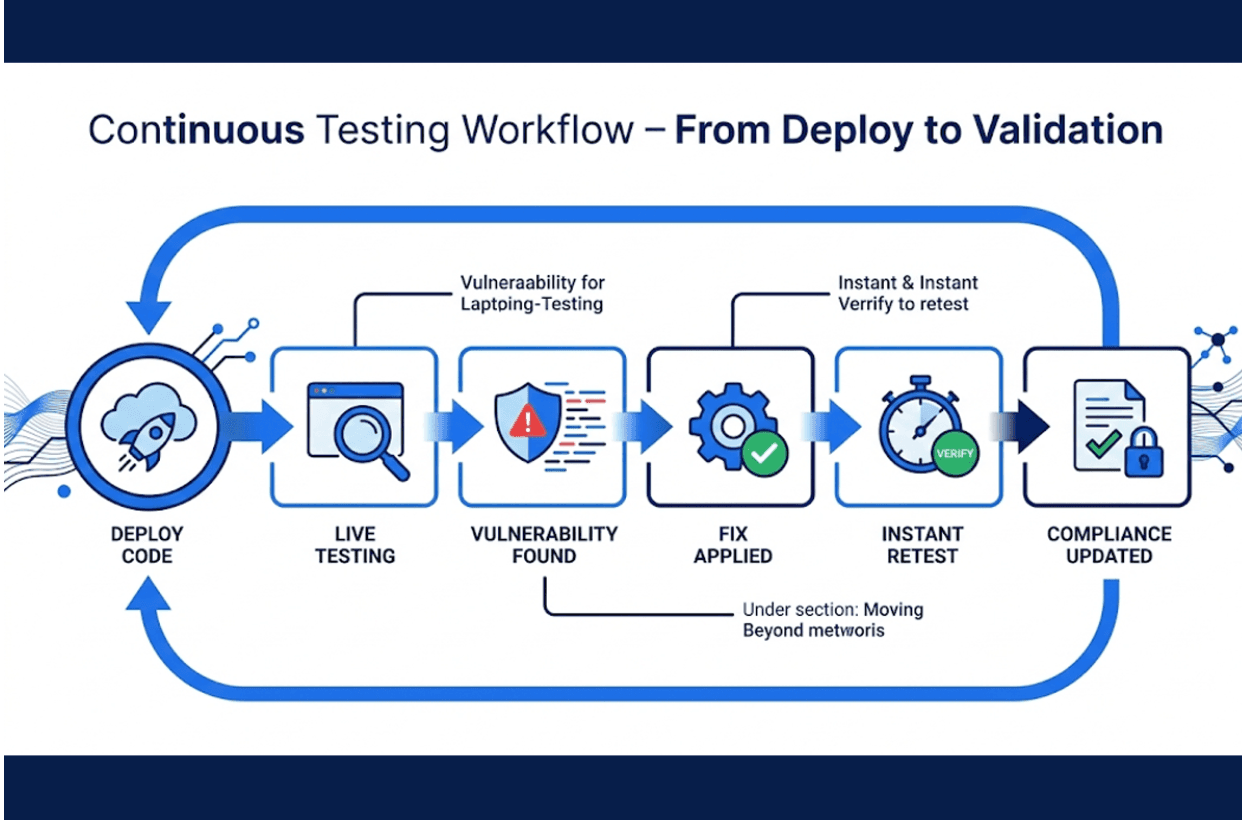
Moving Beyond Point in Time Testing
Traditional pentesting follows a familiar pattern:
- Scope
- Test
- Receive report
- Fix
- Retest months later
The problem is delay. By the time the report arrives, the codebase may already have changed.
Capture The Bug approaches frequency differently through PTaaS by embedding testing into development cycles instead of isolating it as a yearly event.
This allows organizations to:
- Launch tests on demand
- Retest immediately after fixes
- Maintain live visibility into vulnerabilities
- Stay continuously audit-ready
Testing becomes adaptive rather than scheduled.
How Often Should Your Organization Test?
There is no universal number. There are patterns.
Annual testing may be enough if:
- Infrastructure rarely changes
- Systems are internal only
- Risk tolerance is moderate
- Compliance is the primary driver
Quarterly testing is recommended if:
- You operate a SaaS platform
- You handle financial or personal data
- You deploy features regularly
- Enterprise clients demand evidence
Continuous testing is ideal if:
- You deploy weekly or daily
- APIs change frequently
- You operate in regulated industries
- Security posture directly impacts revenue
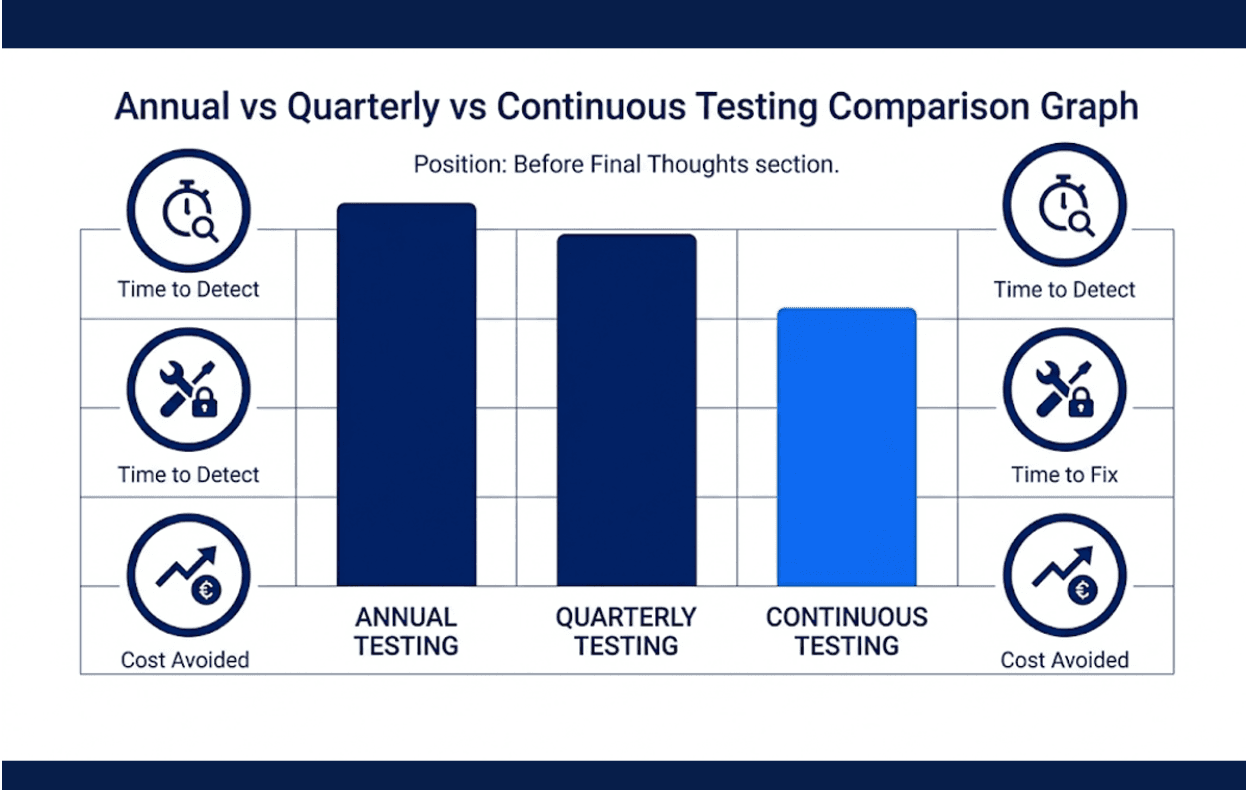
Testing frequency should mirror deployment frequency.
Final Thoughts
Penetration testing frequency is not a checkbox.
It signals how seriously an organization treats change, risk, and trust.
Annual models were designed for slower systems and stable infrastructure. Modern environments demand flexibility.
Organizations that align testing cadence with deployment velocity:
- Detect faster
- Remediate quicker
- Close sales sooner
- Reduce exposure windows
- Build stronger trust
The ideal penetration testing frequency is not about doing more testing.
It is about testing at the speed your business moves.