The Hidden Cost of Delay: Why Financial Services is Accruing a Dangerous Security Debt
A clear-eyed look at how slow remediation, legacy systems, and fractured workflows are turning known security gaps into high-cost liabilities.
Every CFO understands amortization and accrued liabilities. Few put security debt on the balance sheet. And yet it is real: every postponed patch, every unresolved finding, and every vendor whose fixes are late quietly accumulates risk. In financial services that risk becomes a liability that compounds fast in operational disruption, regulatory fines, lost customers, and the hard cost of emergency incident response.
This is not a theory. In 2025 the data and field experience point to a recurring pattern: banks, insurers, and fintechs find fewer critical issues in controlled tests, but take longer to fix them. That gap creates a backlog of known weaknesses that attackers can exploit while the business treats them as routine work items. Below is a practical breakdown of how that debt forms, what it costs, and how security leaders can stop it from growing.
What security debt looks like in finance
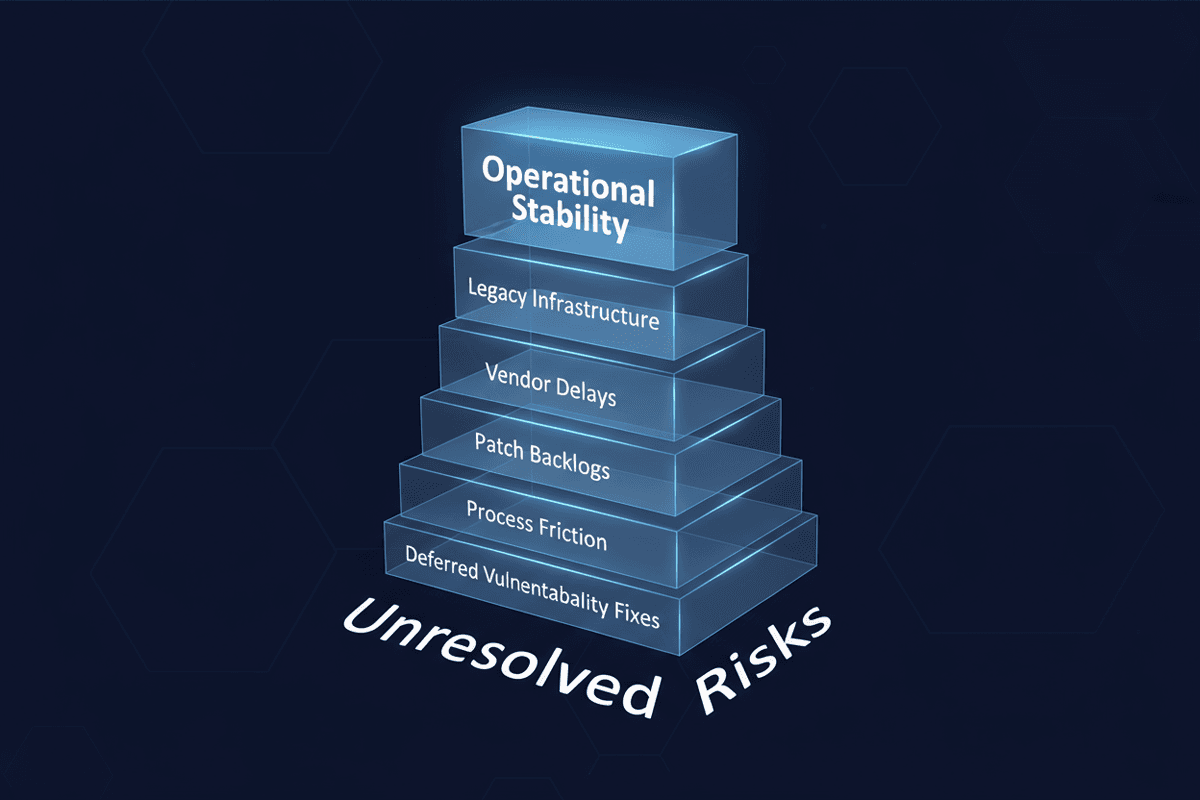
Security debt is any accepted risk you intend to repay later. In finance it commonly appears as:
- Legacy systems that cannot be patched without careful orchestration.
- Long vendor remediation cycles where you depend on third parties for fixes.
- High volumes of findings from periodic pentests that never make it into development sprints.
- Siloed processes between security, engineering, and change control that slow validation and deployment.
Left unchecked, these items are not benign bookkeeping. They are attack surface left exposed and time that attackers can use to craft reliable exploits.
Why financial services accumulates so much debt
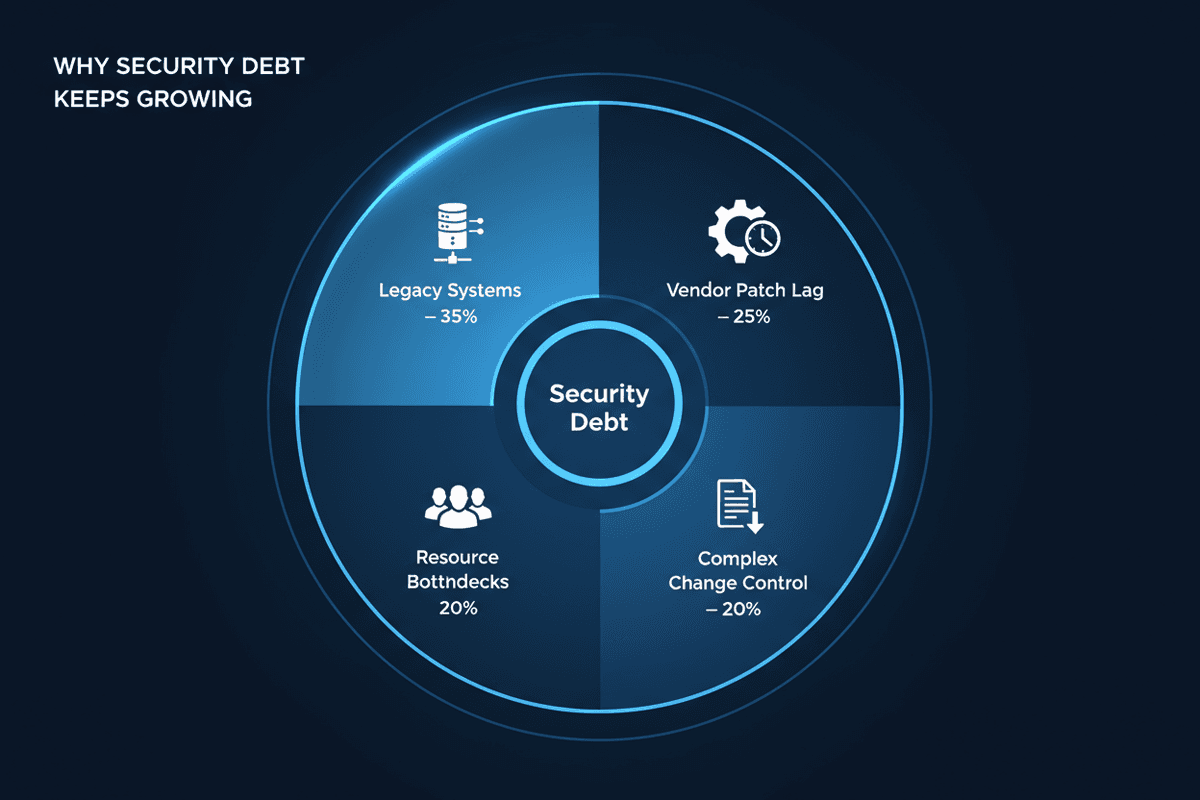
Financial firms invest heavily in security, but they also operate extremely complex environments. That complexity creates three structural frictions:
Legacy lock-in
Core banking and settlement systems are often brittle. Patching without causing downtime or functional regressions requires painstaking change control. The path of least resistance becomes postponement.
Vendor dependency
Many critical functions run on third-party platforms. Delays in vendor patch releases or opaque remediations push problems back to you.
Process overhead
Strong governance and rigorous change management are necessary in finance, yet they lengthen remediation cycles. What keeps the ledger accurate can also keep vulnerabilities open.
Those frictions are defensible individually. Together they let security debt compound quietly until the first incident forces payment at emergency rates.
The measurable cost
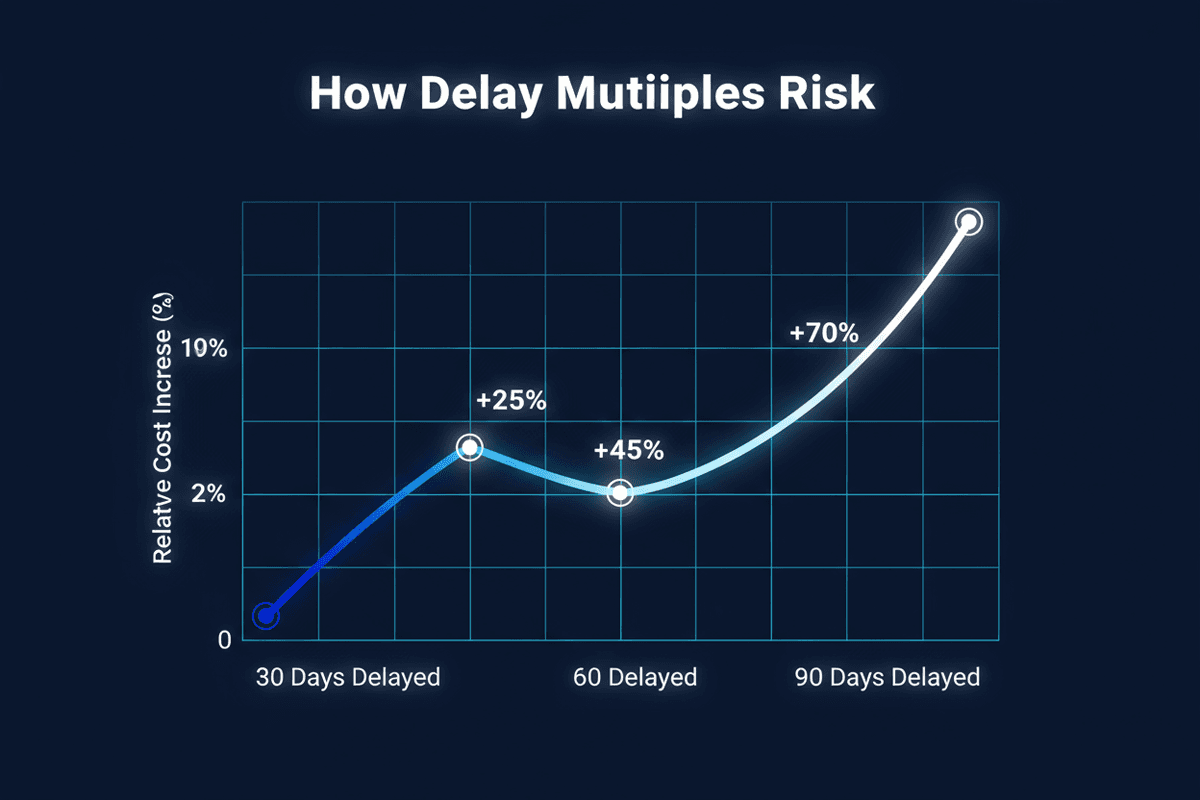
Security debt compounds like financial interest. The longer a vulnerability remains, the higher the probability of exploitation and the higher the downstream cost of response and recovery.
Concrete indicators seen across financial customers include:
- Over half of firms report critical vulnerabilities more than 90 days old.
- Backlogs of unresolved findings commonly exceed hundreds or thousands of items.
- Median time to validate fixes is measured in weeks, not days.
- Incident response under crisis costs several times more than planned remediation.
Beyond direct costs, the intangible damage is severe. Regulatory bodies are tightening breach reporting and enforcement. Customer trust is fragile. A single high-visibility failure can reverse years of relationship building.
Where automated checks fall short
Automated tools are useful at scale, but they miss the problems that matter most in finance: business logic flaws and sensitive data exposure. These are issues that require human context to find and exploit.
Business logic flaws allow an attacker to abuse legitimate flows bypassing controls, manipulating settlements, or escalating privileges through expected application behavior. Sensitive data exposure appears when complex integrations or data flows are not properly guarded. Both types of risk are often invisible to purely automated scans and therefore remain chronic contributors to security debt.
Human-led testing finds those flaws, but only if the organizational machinery exists to act on the findings quickly.
How to start paying down the debt
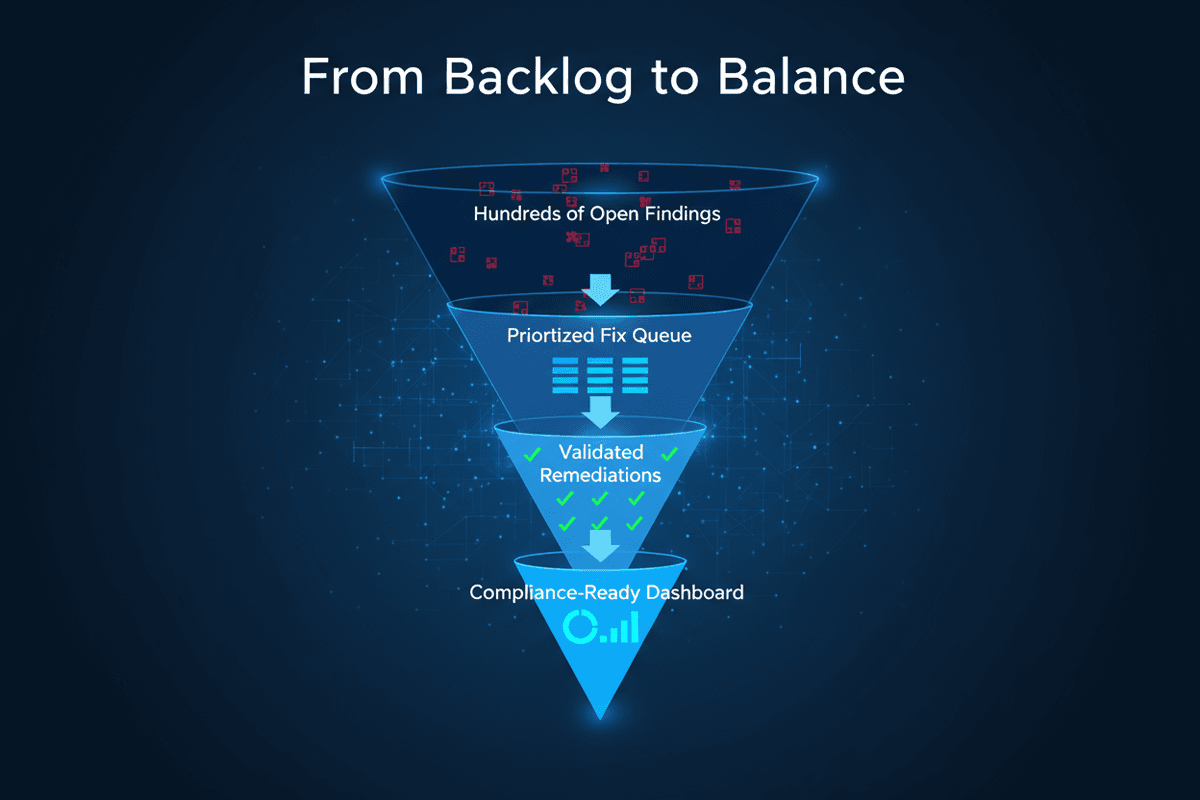
The answer is not more one-off tests. It is a change in how testing, remediation, and validation work together.
Prioritize for impact
Move beyond raw severity scores. Use business context to rank findings by real-world impact. Fixing the vulnerability that enables fraud on a high-value product reduces risk faster than ticking off lower-impact technical issues.
Make testing continuous and on-demand
Point-in-time testing exposes risk snapshots that are stale by the time fixes are scheduled. A programmatic approach to testing gives you live visibility of high-risk areas and shortens the window between discovery and remediation.
Integrate testing with validation workflows
Make retesting and validation part of the same workflow as remediation. When engineers can request immediate validation and see results quickly, the incentive to close items increases.
Treat third parties as partners in remediation
Hold vendors to measurable SLAs for patching and remediation. Make shared visibility a contract requirement so delays are visible, measurable, and auditable.
Measure closure and time-to-fix as KPIs
Track the rate at which findings are closed and how long critical items remain open. Turn those metrics into board-level reports. If security debt is not visible to business leaders, it is not being managed.
Why modern PTaaS matters here
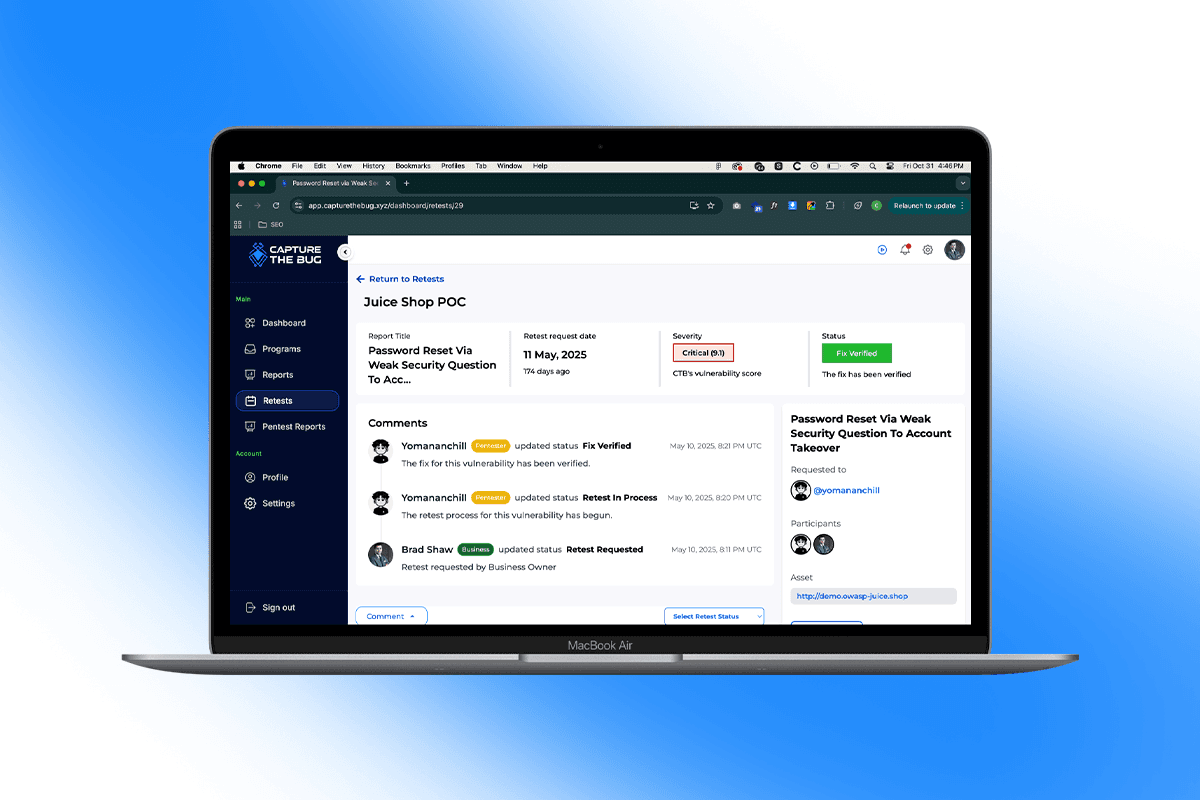
Penetration Testing as a Service provides continuous, human-validated security testing without the overhead of scheduling and procurement for each engagement. For financial services, a programmatic pentesting model delivers three practical advantages:
- Live visibility into exploitable issues that automated tools miss.
- Fast retesting after fixes so teams can validate and close findings quickly.
- Audit-ready evidence to support regulatory reporting and vendor governance.
This is not magic. It is a predictable operational model that treats remediation like a business ledger item discovered, prioritized, fixed, validated, and recorded.
Learn more: capturethebug.xyz
The leverage of time
Time is the most expensive currency in cybersecurity. Reducing mean time to remediation has outsized effects on risk exposure. Firms that shorten their fix and validation cycles materially reduce the window attackers can exploit. The math is simple: fewer open critical items means lower probability of a material breach.
Final thoughts
Security debt will not appear on the balance sheet until it is too late. The firms that treat it like debt measure it, prioritize repayment, and enforce accountability will be the ones that preserve customer trust and avoid catastrophic loss. Financial services is not short on budgets for security. What it needs now is discipline: continuous testing, prioritized remediation, vendor accountability, and metrics that make risk visible to leaders.
Pay the debt down now. The cost of delay is already growing into a liability no business wants to write off.

Frequently Asked Questions
What is security debt?
Security debt is the accumulation of unresolved vulnerabilities, deferred patches, and process delays that increase an organization's long-term cyber risk.
Why is security debt a particular problem for financial services?
Complex legacy systems, heavy vendor dependence, and rigorous change controls make remediation slower in finance, which causes vulnerabilities to persist longer.
How can banks reduce security debt quickly?
Adopt continuous, human-led testing programs, prioritize fixes by business impact, enforce vendor remediation SLAs, and measure closure rates as KPIs.
Does continuous pentesting replace internal security teams?
No. It augments them by providing live, expert validation and fast retesting, which helps internal teams close findings faster and with higher confidence.
What is a realistic remediation target?
High-severity items should be remediated and validated within 30 days when possible. Anything longer significantly increases breach probability and compliance risk.