6 Practical Cyber Security Tips for Startups on a Budget
Introduction
Most startups do not fail because of bad ideas. They fail because something small breaks at the wrong time.
A missed access control.
A leaked credential.
A forgotten test environment.
Security incidents rarely arrive as dramatic movie moments. They show up quietly, during growth, fundraising, or customer onboarding. And for startups with limited budgets, the impact hits harder and faster.
At Capture The Bug, the teams we work with are not asking for perfect security. They want sensible protection that fits how startups actually operate. Lean teams. Tight timelines. Real pressure to ship.
This guide shares six practical cyber security tips for startups on a budget. No theory. No hype. Just actions that reduce risk early and compound over time.
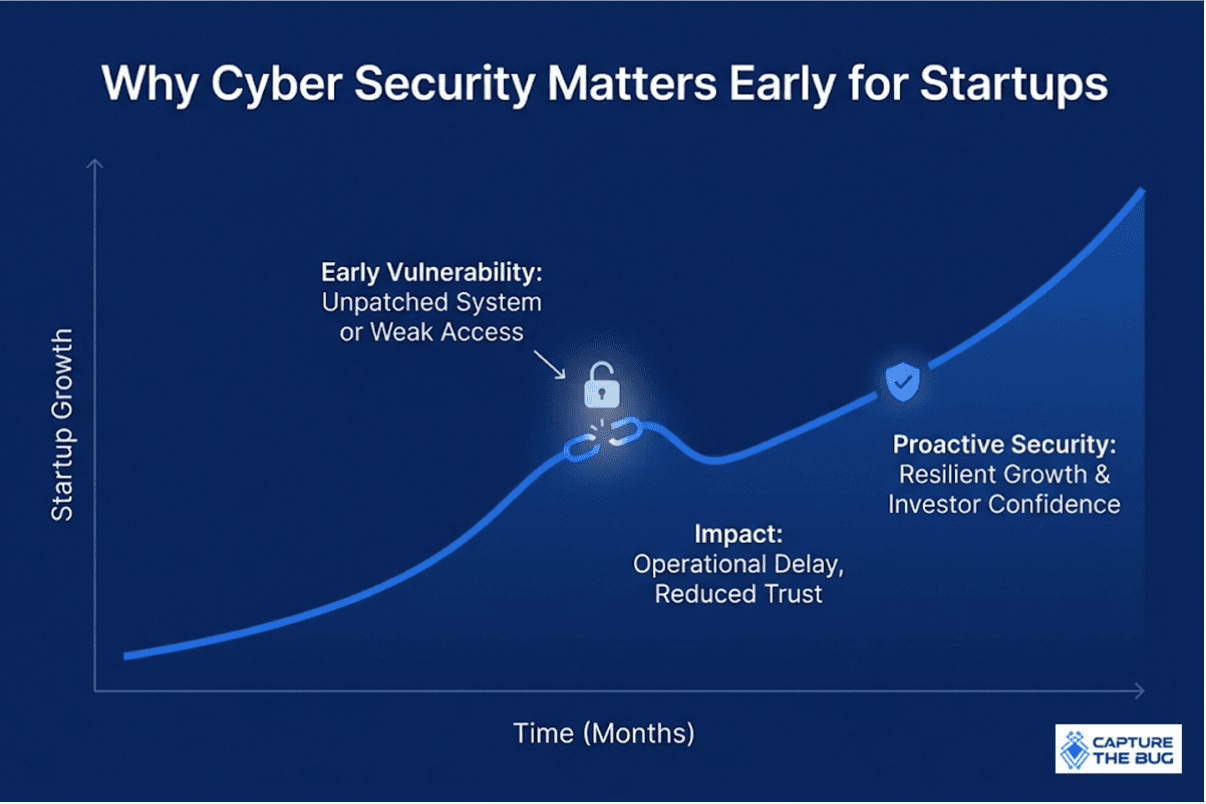
Why Cyber Security Matters Early for Startups
Many founders believe security can wait until later. After revenue. After funding. After scale.
That assumption is risky.
Startups are often easier targets than large enterprises. Not because they are careless, but because they are busy building. Attackers know this. They look for companies moving fast, with changing systems and limited oversight.
A single incident can trigger serious consequences:
- Loss of customer trust
- Delayed funding rounds
- Compliance setbacks
- Engineering time diverted to cleanup instead of growth
Strong security at an early stage is not about fear. It is about stability. It protects momentum.
The good news is that you do not need an enterprise-sized budget to get the basics right.
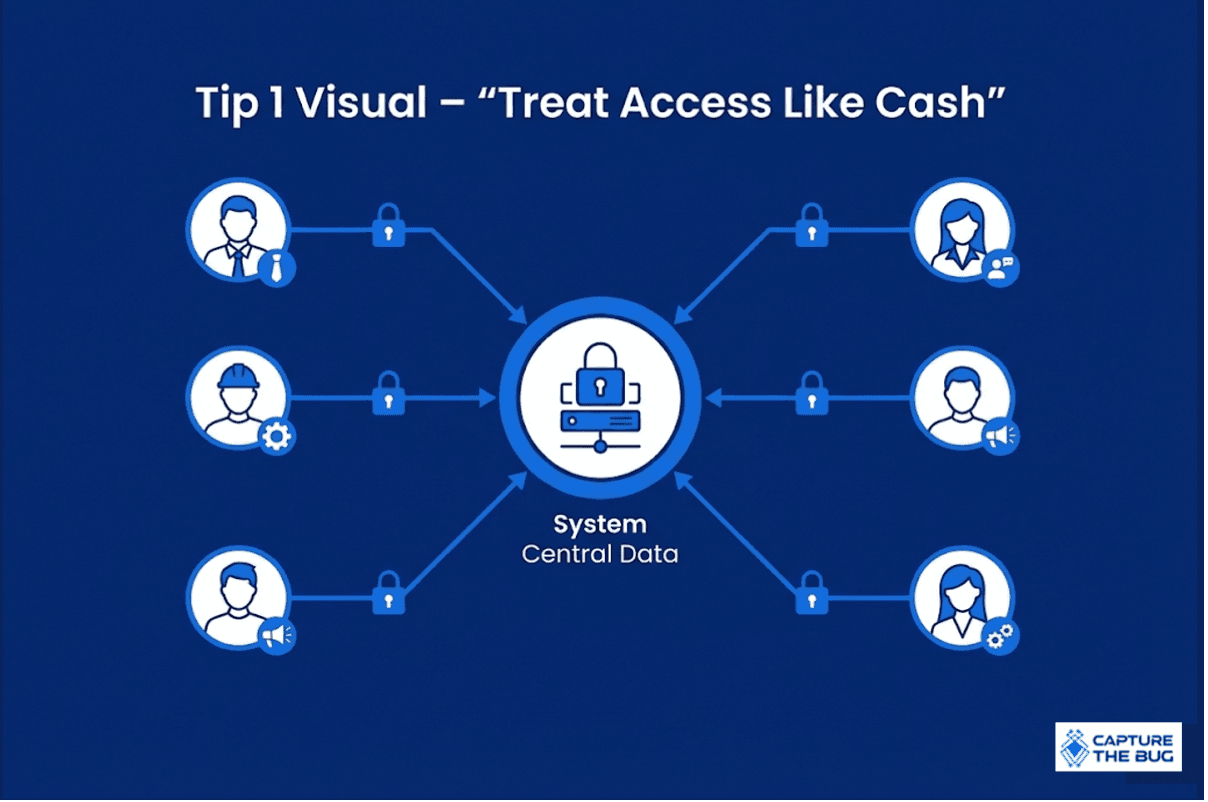
Tip 1: Treat Access Like Cash, Not Convenience
Access control is one of the most common startup blind spots.
Founders share credentials to save time.
Developers keep access long after roles change.
Temporary permissions become permanent by accident.
Every access decision should answer one question:
Who genuinely needs this, and for how long?
Practical steps that cost almost nothing:
- Give each team member their own login. No shared accounts.
- Remove access immediately when roles change or people leave.
- Limit admin rights to those who truly need them.
- Review access quarterly, even if the team is small.
This is not about distrust. It is about clarity. Clear access boundaries reduce both internal mistakes and external damage.
Tip 2: Make Password Discipline Non-Negotiable
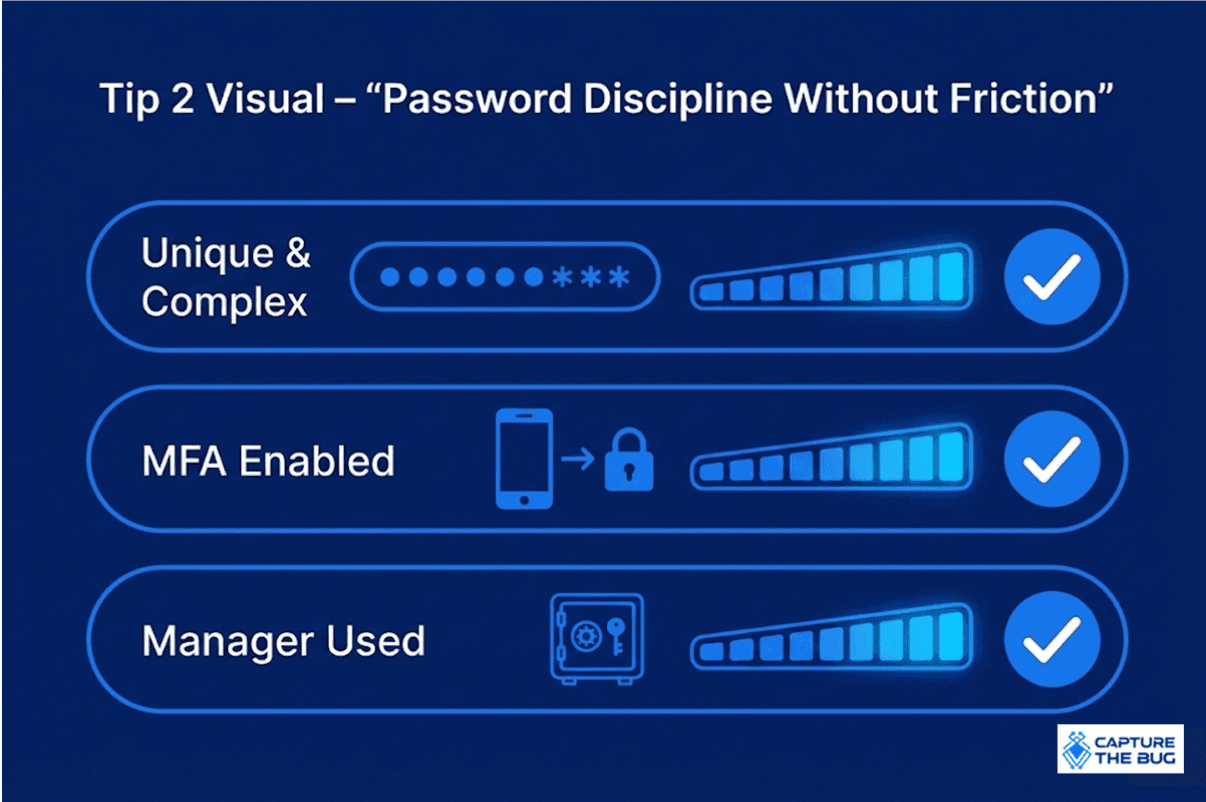
Weak passwords are still one of the easiest entry points for attackers. Startups often underestimate how often credentials are reused or stored insecurely.
A strong password culture does not require complex tools.
Start with these rules:
- Minimum length over complexity
- Unique passwords for critical systems
- No sharing credentials over chat or email
- Mandatory password changes after any suspected exposure
Encourage the use of reputable password managers. This removes friction instead of adding it. When done right, security actually saves time.
Good password habits are boring. That is exactly why they work.
Tip 3: Lock Down Non-Production Environments
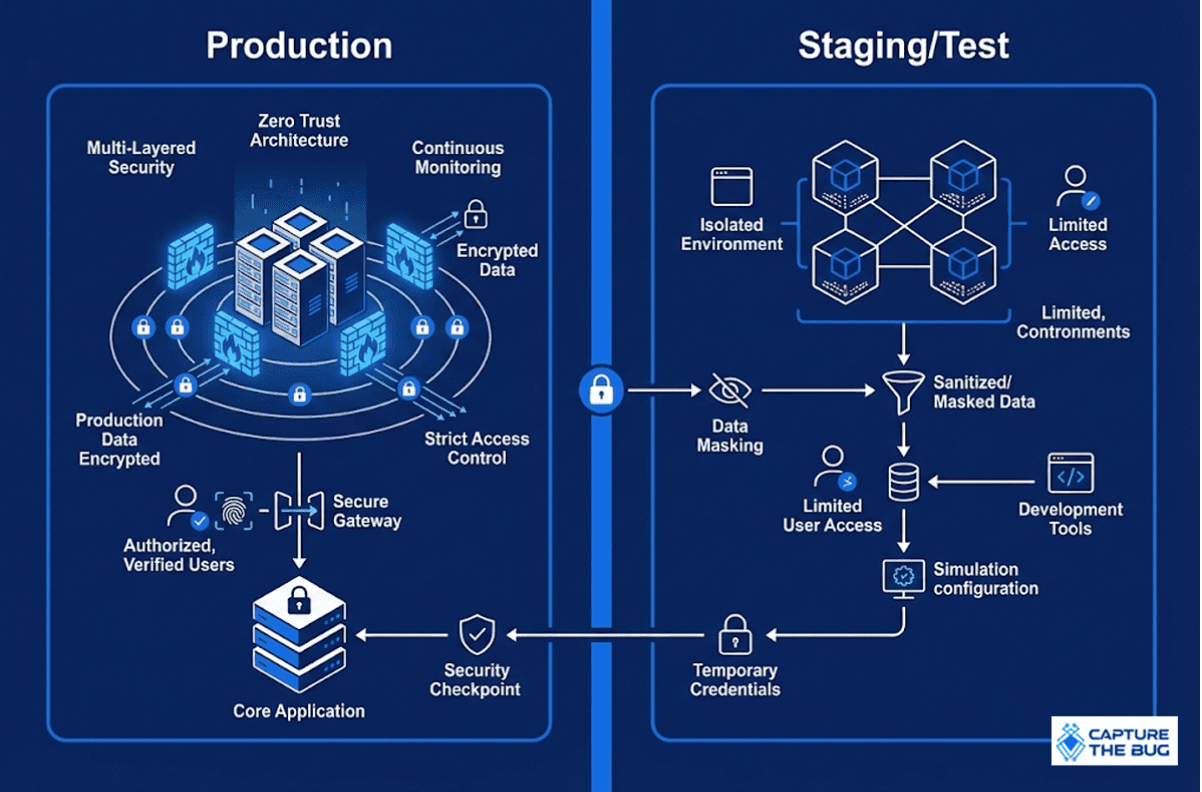
Test environments are a favorite target. They often contain real data, weaker protections, and fewer eyes watching.
Many breaches do not start in production. They start where teams feel relaxed.
To reduce risk:
- Restrict access to test and staging environments
- Never expose them publicly unless absolutely required
- Avoid using real customer data for testing
- Monitor changes and access regularly
Treat every environment as part of your real system. Because from an attacker's perspective, it is.
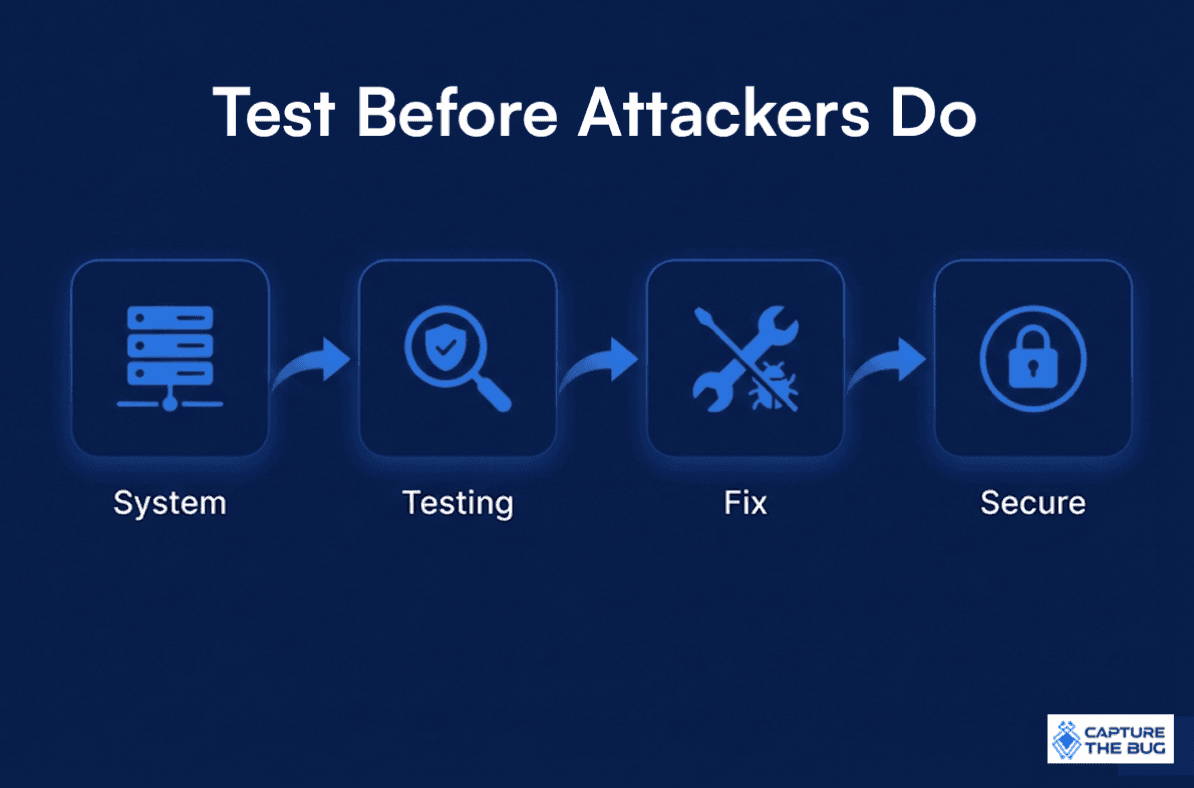
Tip 4: Test Before Attackers Do
No startup plans to ship vulnerabilities. They appear through growth, iteration, and change.
Security testing is not about blaming developers. It is about visibility.
Startups on a budget often assume testing is expensive. In reality, targeted testing at the right moments delivers strong value.
Smart moments to test include:
- Before major releases
- Before compliance or customer audits
- After significant architectural changes
- When preparing for fundraising or enterprise deals
Testing helps you fix issues on your timeline, not under pressure.
At Capture The Bug, we see startups gain confidence simply by knowing where they stand. Visibility reduces stress and prevents surprises.
Tip 5: Keep Systems Updated, Always
Outdated systems remain one of the most common causes of breaches.
Updates are rarely exciting. They also rarely get prioritized. That makes them dangerous.
Practical habits:
- Assign clear ownership for updates
- Schedule monthly update reviews
- Track what is critical versus optional
- Avoid delaying security patches without reason
Updating systems is not glamorous work. But it prevents known weaknesses from becoming real incidents.
Think of updates as routine maintenance. Small effort. Large protection.
Tip 6: Build Security Into Culture, Not Fear
Security fails when it lives only in policies and documents.
It succeeds when it becomes part of daily thinking.
This does not require training sessions or heavy processes. It requires conversation.
Encourage your team to:
- Ask questions when something feels wrong
- Report mistakes without fear
- Share lessons learned from incidents or near-misses
- Treat security as a shared responsibility
A healthy security culture reduces risk more effectively than any single tool.
Founders set the tone. When leadership treats security as practical and supportive, teams follow naturally.
Why Startups Are Targeted More Than They Realize
Attackers are not always looking for the biggest company. They are looking for the easiest entry.
Startups often fit that profile:
- Rapid changes
- Limited oversight
- Incomplete documentation
- Growing attack surfaces
Security maturity does not mean being perfect. It means knowing your risks and managing them intentionally.
The startups that survive long-term are not the fastest. They are the ones that stay stable while they grow.
Final Thoughts
Cyber security does not need to be expensive to be effective.
The six steps above focus on habits, discipline, and timing. They are designed to protect startups without slowing innovation or draining budgets.
Start small. Stay consistent. Improve gradually.
Security is not a one-time project. It is a growth companion.
Capture The Bug works with startups across ANZ, the USA, and globally to help them understand real risk early and avoid costly surprises later. Practical security, delivered in a way that respects how startups actually operate.
FAQ
Why should early-stage startups focus on cyber security?
Because security incidents can derail growth, funding, and customer trust long before scale. Early protection reduces long-term risk.
Can startups afford proper cyber security on a budget?
Yes. Most high-impact security improvements are process-driven, not tool-driven, and cost very little to implement.
What is the biggest security mistake startups make?
Ignoring access control and test environments while focusing only on production systems.
How often should startups review their security posture?
At least quarterly, and before major releases, audits, or funding rounds.
Is security testing only for large companies?
No. Targeted testing is especially valuable for startups because it prevents expensive fixes later.