AWS Global Outage: The October 20, 2025 Internet Breakdown That Exposed Cloud Dependency Risks
On October 20, 2025, Amazon Web Services experienced one of the most significant cloud infrastructure outages in recent history, bringing down over 1,000 websites and applications worldwide for more than 15 hours. The massive disruption exposed critical vulnerabilities in our interconnected digital infrastructure and highlighted the cybersecurity implications of over-reliance on centralized cloud services.
The Scale of the Disaster
The AWS outage began at approximately 7:55 UTC (12:30 PM IST) and affected the company's US-EAST-1 region in Northern Virginia, the world's largest and oldest AWS data center. Downdetector recorded over 6.5 million user reports globally, making this one of the most widespread internet disruptions ever documented.
Major Services Affected:
- Social platforms: Snapchat, Reddit, WhatsApp, Signal
- Gaming services: Fortnite, Roblox, Clash of Clans, Pokemon Go
- Financial services: Coinbase, Robinhood, Lloyds Bank, Halifax
- Streaming platforms: Amazon Prime Video, Disney+, Tidal
- Business tools: Slack, Zoom, Microsoft 365, Atlassian
- Government services: UK's HMRC, Gov.uk websites
- Airlines: United Airlines, Delta (experienced flight delays)
The outage demonstrated how a single point of failure in cloud infrastructure can cascade across seemingly unrelated services, creating a domino effect that paralyzed digital operations worldwide.
Root Cause Analysis: When DNS Becomes the Achilles' Heel
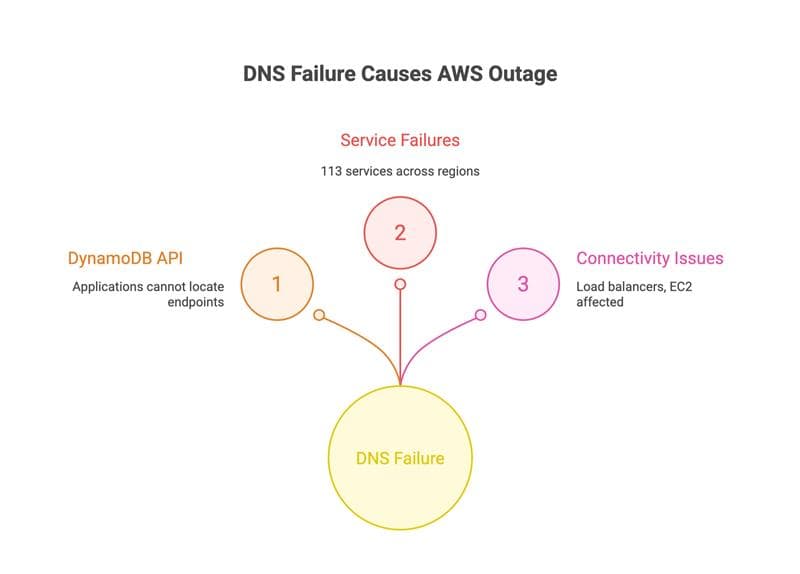
AWS attributed the outage to a Domain Name System (DNS) resolution issue affecting DynamoDB, a critical database service that supports numerous AWS applications. The failure originated from a routine API update to DynamoDB that contained a configuration error affecting DNS resolution.
Technical Breakdown:
- DNS functions as the internet's phone book, translating website names into IP addresses
- The faulty update prevented applications from locating DynamoDB's API endpoints
- Without database connectivity, dependent services couldn't access stored data
- Cascading failures affected 113 AWS services across multiple regions
- Network load balancers and EC2 instances experienced connectivity issues
The incident exemplifies how "it's always DNS" has become a running joke among engineers—until DNS failures bring down significant portions of the internet infrastructure.
Cybersecurity Implications of Cloud Concentration
The AWS outage revealed critical cybersecurity vulnerabilities that extend beyond simple service availability. The concentration of internet infrastructure in few providers creates attractive targets for nation-state actors and cybercriminals seeking maximum impact from their attacks.
Strategic Risks:
- Single points of failure affecting thousands of organizations simultaneously
- Reduced resilience against targeted infrastructure attacks
- Limited alternatives during major cloud provider incidents
- Dependency on US-based infrastructure for global services
Organizations worldwide discovered their business continuity plans were inadequate when faced with prolonged cloud provider outages. Many had disaster recovery strategies focused on localized failures rather than comprehensive regional infrastructure collapse.
Business Impact and Financial Consequences
The 15-hour outage generated massive financial losses across affected organizations. E-commerce platforms lost sales during peak business hours, streaming services couldn't serve subscribers, and financial institutions faced regulatory scrutiny for service unavailability.
Economic Damage Assessment:
- Lost revenue from unavailable e-commerce platforms
- Productivity losses from inaccessible business applications
- Customer compensation and service credits
- Emergency response and recovery costs
- Potential regulatory fines for service availability failures
Airlines experienced particular challenges with flight delays and rebooking systems offline. Delta Airlines, still pursuing legal action against CrowdStrike for previous outages, now faces similar disruptions from cloud provider failures.
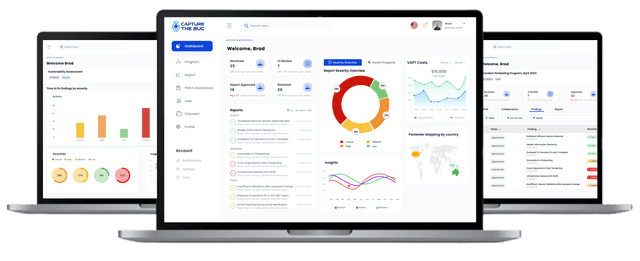
One platform to manage, track, and secure all your penetration tests.
Simplify your vulnerability management with Capture The Bug’s PTaaS platform where businesses and security experts collaborate seamlessly.
Government and Critical Infrastructure Vulnerabilities
The outage significantly impacted government services, with UK tax authority HMRC, government gateway services, and multiple agency websites becoming inaccessible. This exposure of critical infrastructure dependencies raises serious national security concerns.
Critical Infrastructure Risks:
- Government services relying on foreign cloud providers
- Essential services becoming unavailable during emergencies
- Limited sovereignty over critical digital infrastructure
- Potential for coordinated attacks targeting cloud dependencies
The UK government acknowledged the incident and confirmed contact with AWS while services were restored. However, the episode highlighted how modern governments have become dependent on private sector cloud infrastructure for delivering essential services.
Lessons for Enterprise Risk Management
The AWS outage provided stark lessons for enterprise risk management strategies. Organizations that invested in multi-cloud architectures and geographic redundancy experienced less severe impacts than those fully dependent on single-region AWS services.
Risk Management Failures:
- Over-reliance on single cloud provider regions
- Inadequate testing of disaster recovery procedures
- Limited visibility into cloud provider dependencies
- Insufficient backup systems for critical operations
Many organizations discovered their applications had hidden dependencies on US-EAST-1 services even when deployed in other regions. AWS global services like IAM, CloudFront, and S3 often rely on US-EAST-1 infrastructure, creating unexpected single points of failure.
Security Testing and Resilience Validation
The outage demonstrates why organizations need comprehensive security testing that includes business continuity scenarios. Traditional penetration testing focuses on unauthorized access, but modern assessments must evaluate resilience against infrastructure failures.
Essential Testing Areas:
- Multi-cloud failover capabilities
- Dependency mapping for critical services
- Recovery time objectives during prolonged outages
- Communication systems during service disruptions
- Alternative authentication and access methods
Professional security assessments should include disaster recovery testing that simulates prolonged cloud provider outages. Organizations need to validate whether their incident response procedures remain effective when primary cloud services become unavailable.
Regulatory and Compliance Implications
The outage raises questions about regulatory compliance when critical services become unavailable due to cloud provider failures. Financial institutions, healthcare organizations, and government agencies face regulatory requirements for service availability that cloud outages can jeopardize.
Compliance Challenges:
- Service level agreement violations with customers
- Regulatory reporting requirements during outages
- Data protection obligations when systems are inaccessible
- Business continuity requirements for essential services
Organizations in regulated industries must reassess their cloud strategies to ensure compliance obligations can be met even during major provider outages. This may require additional investment in redundant systems and alternative service providers.
Experience Capture The Bug Platform
Streamline your security testing with our PTaaS platform. Collaborate with expert testers, track vulnerabilities, and secure your applications effortlessly.
Building Resilient Cloud Strategies
The AWS outage highlighted the importance of diversified cloud strategies that reduce dependence on single providers or regions. Organizations need architectural approaches that maintain service availability during major infrastructure failures.
Resilience Best Practices:
- Multi-cloud deployments across different providers
- Geographic distribution beyond single regions
- Automated failover systems with regular testing
- Offline backup systems for critical functions
- Clear communication plans for service disruptions
Professional security testing should evaluate these resilience measures through realistic scenario exercises that simulate prolonged cloud provider outages.
Frequently Asked Questions
FAQ 1: How can organizations protect themselves from future AWS outages?
Organizations should implement multi-cloud strategies with automated failover capabilities, regularly test disaster recovery procedures, maintain offline backup systems for critical functions, and conduct comprehensive dependency mapping to identify single points of failure. Professional security assessments should include business continuity testing scenarios.
FAQ 2: What security risks does cloud provider concentration create?
Cloud provider concentration creates attractive targets for nation-state attacks, reduces overall internet resilience, creates dependencies on foreign infrastructure for critical services, and enables single points of failure affecting thousands of organizations simultaneously. Organizations need diversified strategies to mitigate these strategic risks.
About Capture The Bug
Capture The Bug is New Zealand's home-grown PTaaS platform, combining CREST-certified expertise with continuous vulnerability management. Built for modern engineering teams, it delivers live dashboards, instant retests, and measurable assurance — replacing static reports with real-time visibility.
Learn more: capturethebug.xyz