.png&w=828&q=75)
Why Choosing the Right Penetration Testing Partner Matters
Choosing a penetration testing partner is more than a technical task - it's a strategic business decision. The right provider helps prove real exploitability, supports engineering teams in fixing what matters, and delivers evidence trusted by boards, auditors, and customers alike. Below is a curated shortlist of 14 vetted penetration testing firms, including the evaluation criteria used and key questions to consider before signing a statement of work.
How the Evaluation Was Conducted
Capture The Bug's research team reviewed over 50 global penetration testing vendors to identify the 14 that demonstrate consistent, measurable impact. Each was assessed against a practical rubric designed around real-world engagements - not marketing claims.
The Evaluation Checklist
- Tester Quality and Accreditations - Preference was given to vendors holding CREST, OSCP, or other industry-recognized certifications that validate tester competency and ethical standards.
- Depth of Manual Testing and Proof-of-Concept Evidence - Top-tier firms provide verifiable exploit demonstrations - not just scanner outputs - to confirm real-world impact.
- Reporting Quality and Remediation Support - Effective providers go beyond listing vulnerabilities; they deliver clear risk context, actionable remediation guidance, and audit-ready reports suitable for ISO 27001, SOC 2, and PCI-DSS compliance.
- Delivery Model and Fix Validation Speed - In modern continuous testing, rapid fix validation and certifiable evidence delivery are essential. Vendors were assessed on their ability to re-test quickly and issue official validation artifacts.
Why This Checklist Matters
In 2025, cybersecurity buyers are prioritizing transparency, repeatability, and measurable outcomes. Capture The Bug recommends using the above checklist as a buying rubric when evaluating pentesting providers - rather than relying solely on website claims or sales presentations. The right partner won't just test your systems; they'll strengthen your overall security posture through collaboration, clear communication, and verifiable proof of improvement.
The 14 Best Penetration Testing Companies for 2025
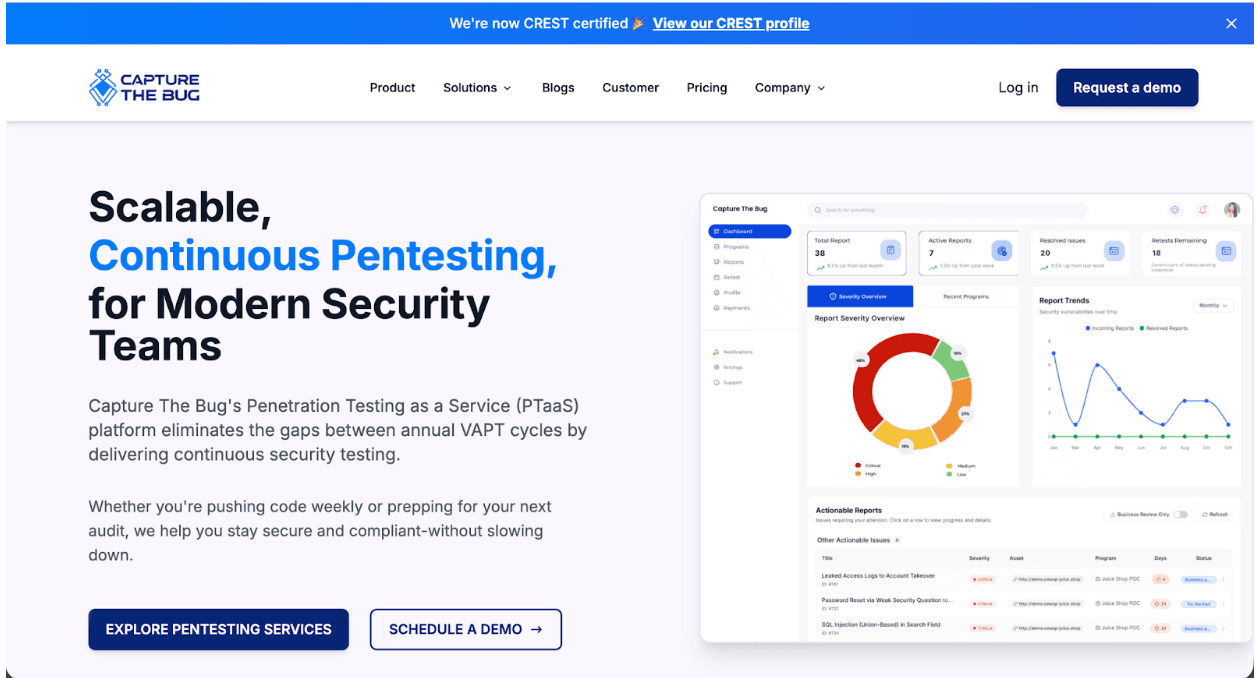
1. Capture The Bug
Best for SaaS and startups that want continuous testing tied to compliance outputs. CREST-certified testers and a live collaboration workflow designed to reduce time to fix.
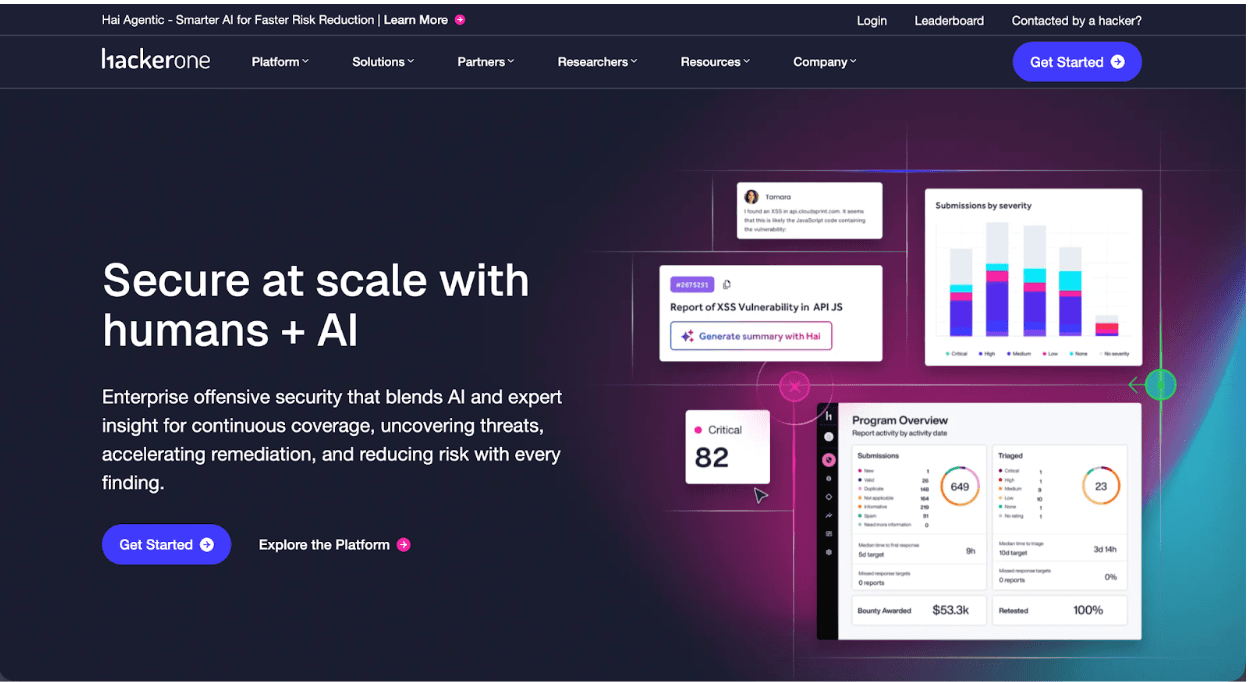
2. HackerOne
Best for hybrid bug-bounty and managed testing programs, with broad global researcher reach for unusual edge cases.
3. Synack
Best for regulated and high-assurance environments, with a tightly vetted researcher model and strong reporting for audits.
4. Cobalt
Best for teams that want a developer-friendly experience and clear, prioritized findings.
5. Bugcrowd
Best for large programs mixing managed tests and crowd-sourced discovery at scale.
6. Tesserent (Thales Cyber Services ANZ)
A full-service cybersecurity and cloud services provider partnering with clients across industries and government. Cyber 360 coverage makes it ideal for enterprise-scale programs.
7. Astra Security
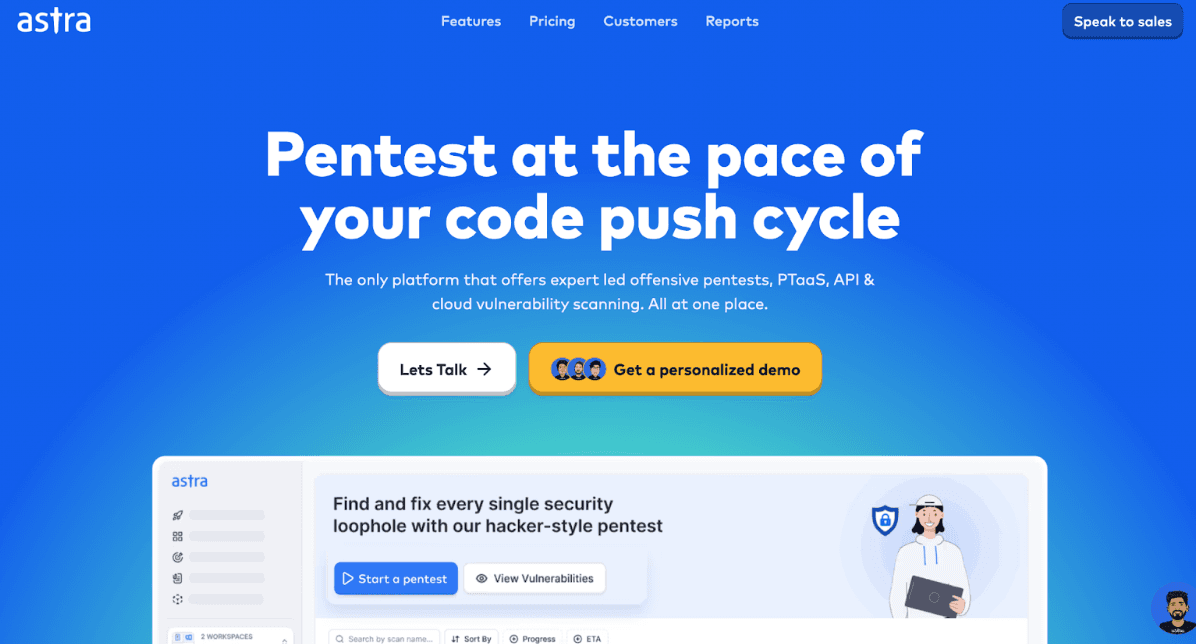
Delivers continuous, manual-validated penetration testing with developer-friendly reports, compliance-ready evidence, and real-time dashboards trusted by growth-focused SaaS and enterprise teams.
8. CyberCX
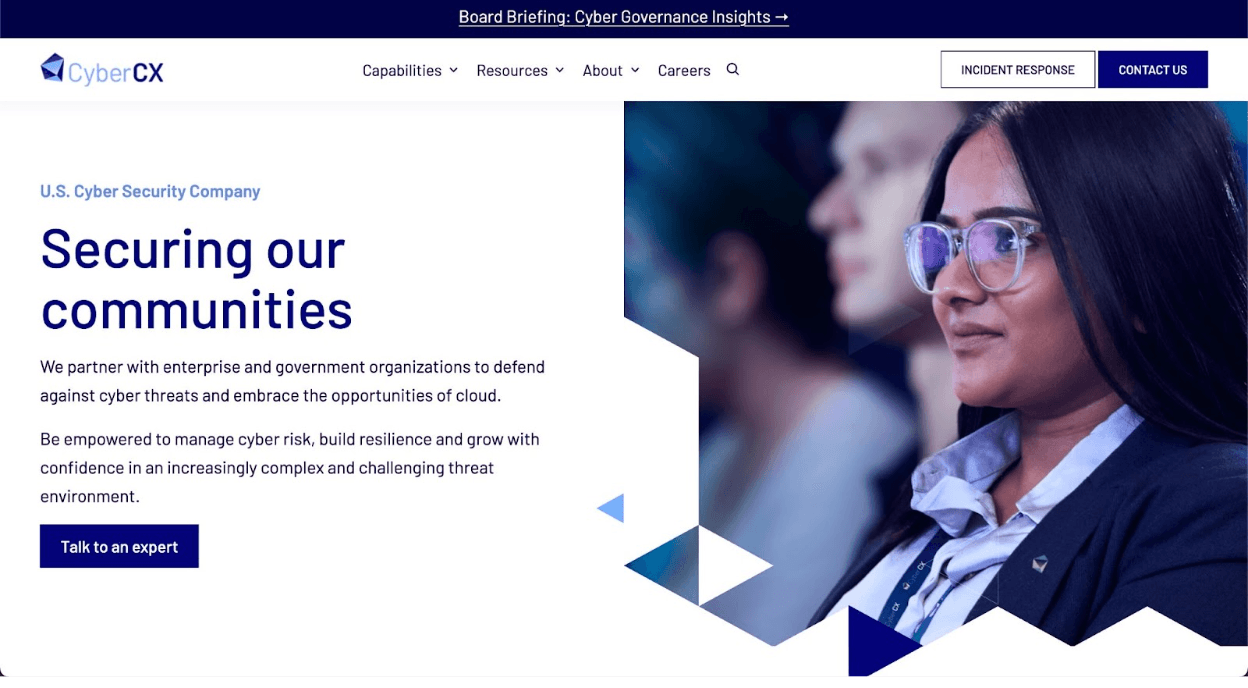
A leading cybersecurity services provider delivering end-to-end protection, incident response, and digital resilience for enterprises across Australia and New Zealand.
9. Offensive Security
Best for bespoke, research-led engagements and deep manual exploit work. Expect technical depth and detailed exploit narratives in reporting.

10. PacketLabs
Best for privacy-sensitive and North-America-only engagements where certified testers and manual testing matter.

11. UnderDefense
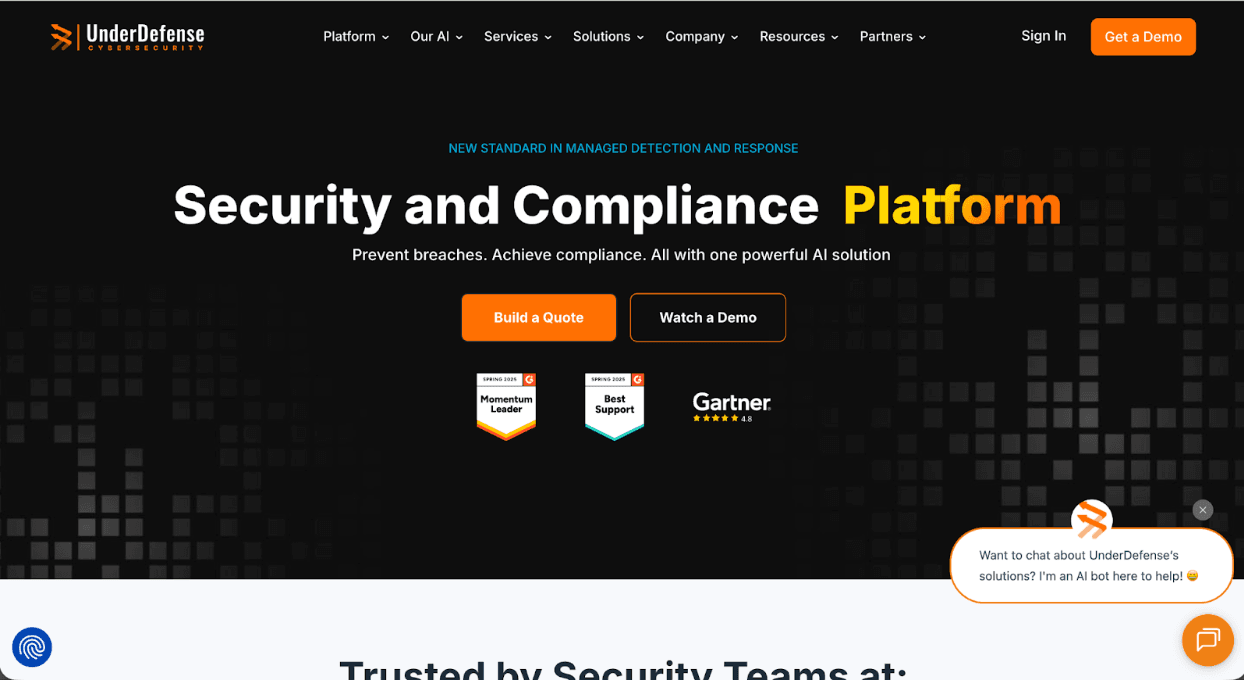
Best for audit-focused work where evidence and retesting until closure are priorities.
12. Redbot Security
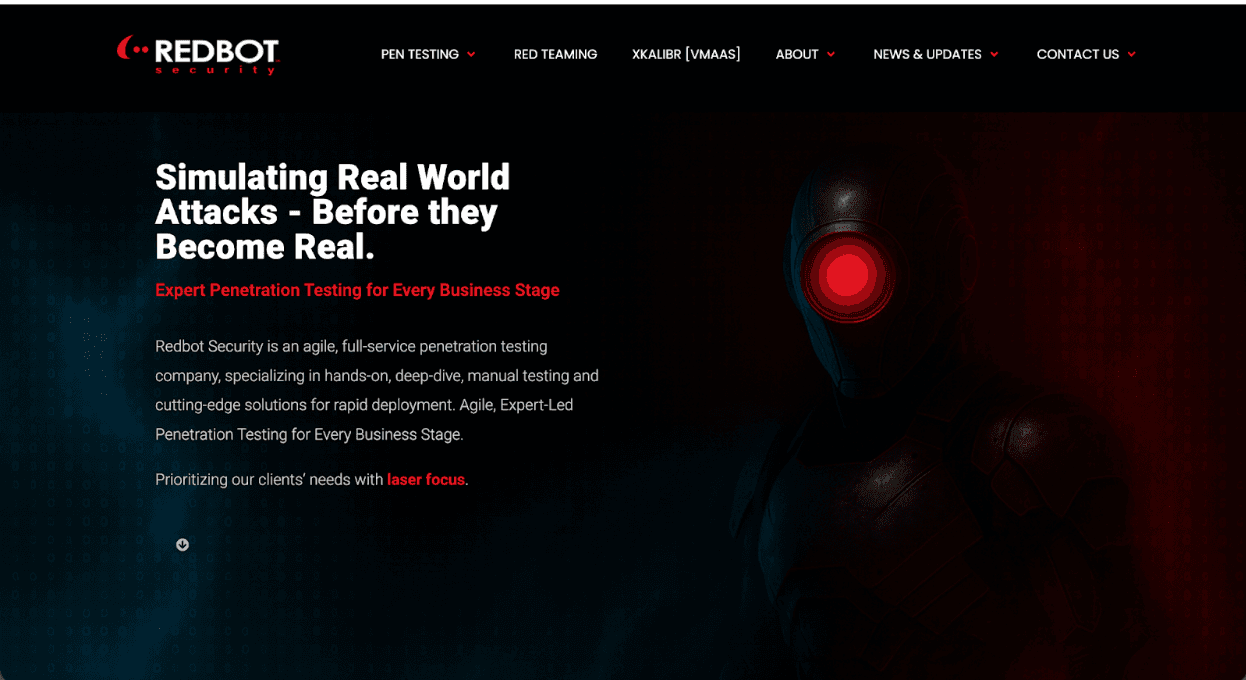
Best for OT and industrial control environments, where specialist safety-aware testing is required.
13. Rhino Security Labs
Best for deep cloud, identity, and platform exploitation, with strong research capability backing every engagement.
14. BreachLock
Best for cost-conscious teams looking for frequent, well-documented checks with developer-friendly outputs and rapid retesting.
These picks balance specialist vendors and platform-led providers so you can choose by need: pure research, compliance evidence, continuous coverage, or crowd-sourced breadth.
How to Pick the Right Penetration Testing Partner
Selecting the right provider depends on your organization's goals, maturity, and security requirements. Different environments demand different testing models and levels of assurance.
For audit evidence and board-ready proof: Prioritize vendors that issue verifiable remediation certificates and clearly map findings to compliance frameworks such as ISO 27001, SOC 2, and PCI-DSS. These vendors make it easier for security leaders to demonstrate assurance during audits and board reviews.
For products with constant releases: Choose subscription-style or continuous testing models that deliver live findings, real-time dashboards, and rapid retest validation. Continuous validation ensures vulnerabilities are tracked and resolved in step with the development cycle.
For critical infrastructure and operational technology (OT): Engage providers with proven expertise in safety-critical and industrial environments. These specialists understand the operational implications of testing and minimize business disruption.
For wide, creative discovery: Combine crowd-sourced testing with a professional validation layer. This hybrid model leverages the creativity of the community while ensuring every finding is verified and prioritized - reducing noise, false positives, and remediation delays.
What to Ask During RFPs or Discovery Calls
Before signing any statement of work, validate a provider's approach and capabilities. Include these pragmatic questions in RFPs or vendor evaluations:
- Can the provider share a sample report, including one executive-level summary page and one technical developer page?
- Does the service include retesting until closure for high-severity findings, and what is the defined SLA for validation?
- Which certifications and accreditations do the testers hold, and can these be independently verified (e.g., CREST, OSCP, or equivalent)?
- How does the provider deliver audit evidence and documentation for procurement or compliance reviews?
- How quickly can testers validate a patch and issue formal closure evidence?
Typical Costs and What Influences Pricing
Pricing varies widely across engagement types. A small web application test may start in the low thousands, while large-scale cloud, API, or red team engagements can cost significantly more. Key pricing factors include:
- Scope size and system complexity
- Depth of manual versus automated testing
- Regulatory and compliance requirements
- Tester experience and seniority
Organizations should view pentesting as an investment in assurance, not just a cost line. Continuous or subscription-based models often provide stronger ROI over time - reducing retest friction, maintaining ongoing compliance, and streamlining audit preparation.
Final Guidance for Founders and CISOs
Vendor selection should always align with the business question being answered.
- If the goal is to demonstrate security maturity to enterprise clients or auditors, select a provider that delivers audit-ready evidence, structured closure paths, and verifiable credentials.
- If the goal is to uncover complex, chained logic flaws, engage research-driven testers with a focus on deep manual analysis.
- For fast-growing technology organizations that need both speed and assurance, continuous validation through PTaaS offers the most practical balance.
FAQ
What should a penetration test report include?
An effective report should contain an executive summary, reproducible exploit narratives, prioritized remediation steps, verified retest evidence, and control mappings for compliance frameworks.
How often should testing be performed?
Frequent deployments benefit from continuous or recurring testing. For slower-moving environments, annual and event-driven tests may suffice. Continuous models significantly reduce exposure windows.
Is a low-cost pentest reliable?
Lower prices often reflect limited manual testing. Always verify the proportion of human validation and whether proof of exploit and retesting are included. Shallow testing may overlook chained or business-impact vulnerabilities.