The Ultimate Pentest Guide for 2026
A practical roadmap for business and security leaders to understand how penetration testing has evolved in 2026 and how to keep their organization secure, compliant, and confident.
Introduction: Why Pentesting Looks Different in 2026
There was a time when penetration testing meant an annual engagement, a few weeks of waiting, and a long PDF report that no one revisited. That approach made sense when technology changed slowly. In 2026, everything moves faster.
Teams release updates daily. Cloud environments grow by the hour. Attackers move even faster. Security testing cannot afford to pause. The real shift is not in the tools but in the way companies think about testing. It is no longer a one-time exercise. It is an ongoing commitment to visibility, collaboration, and trust.
This guide helps leaders understand how penetration testing works now, which methods matter, and what a strong, future-ready program looks like.

1. Pentesting Redefined
Penetration testing has moved from being a compliance checkbox to becoming a continuous assurance practice. Instead of testing once a year, organizations now keep visibility all year round.
The goal is simple: identify weaknesses before attackers do, explain them clearly, and help teams fix them quickly. The modern approach is not just about discovery. It is about clarity.
In 2026, the best security programs measure success not by how many issues they find but by how quickly they fix them.
2. Goodbye Static Reports, Hello Real-Time Clarity
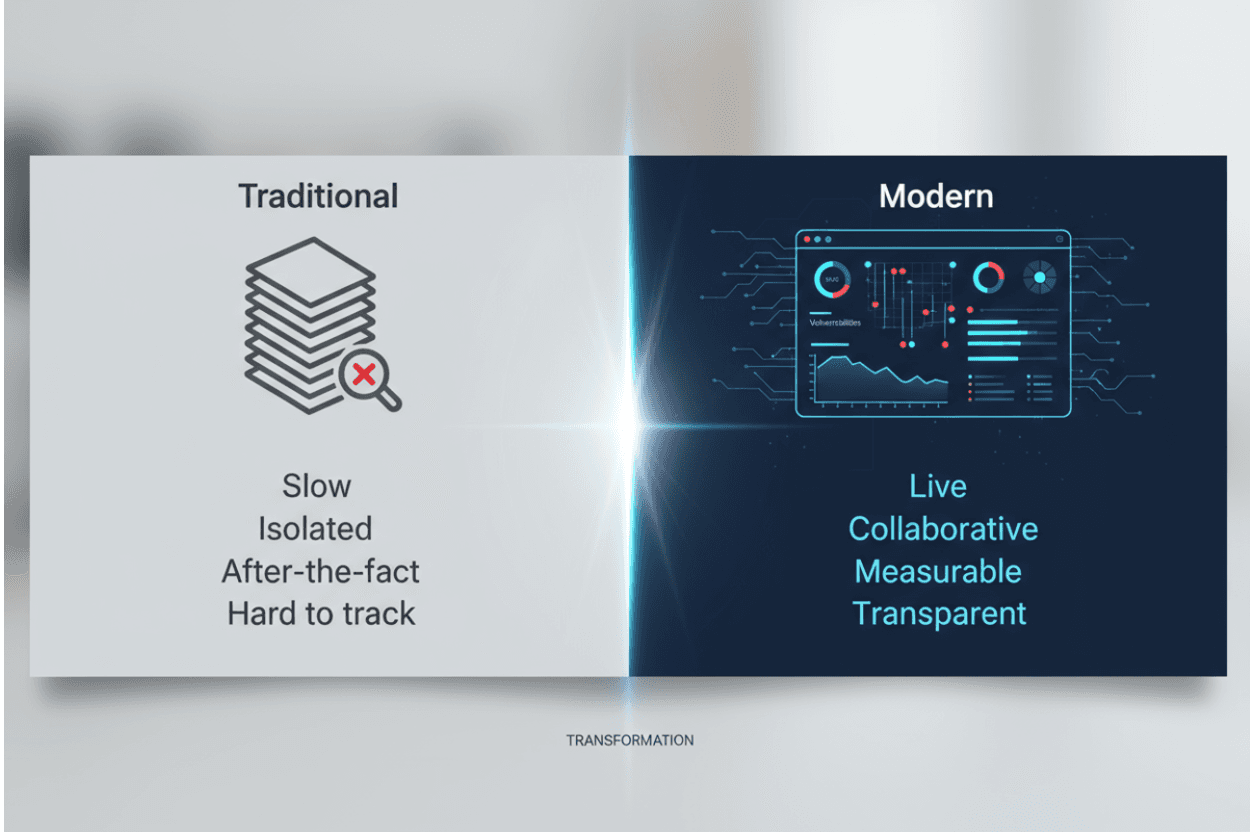
Traditional reports are static snapshots. By the time they arrive, systems may have already changed. That delay creates blind spots and frustration.
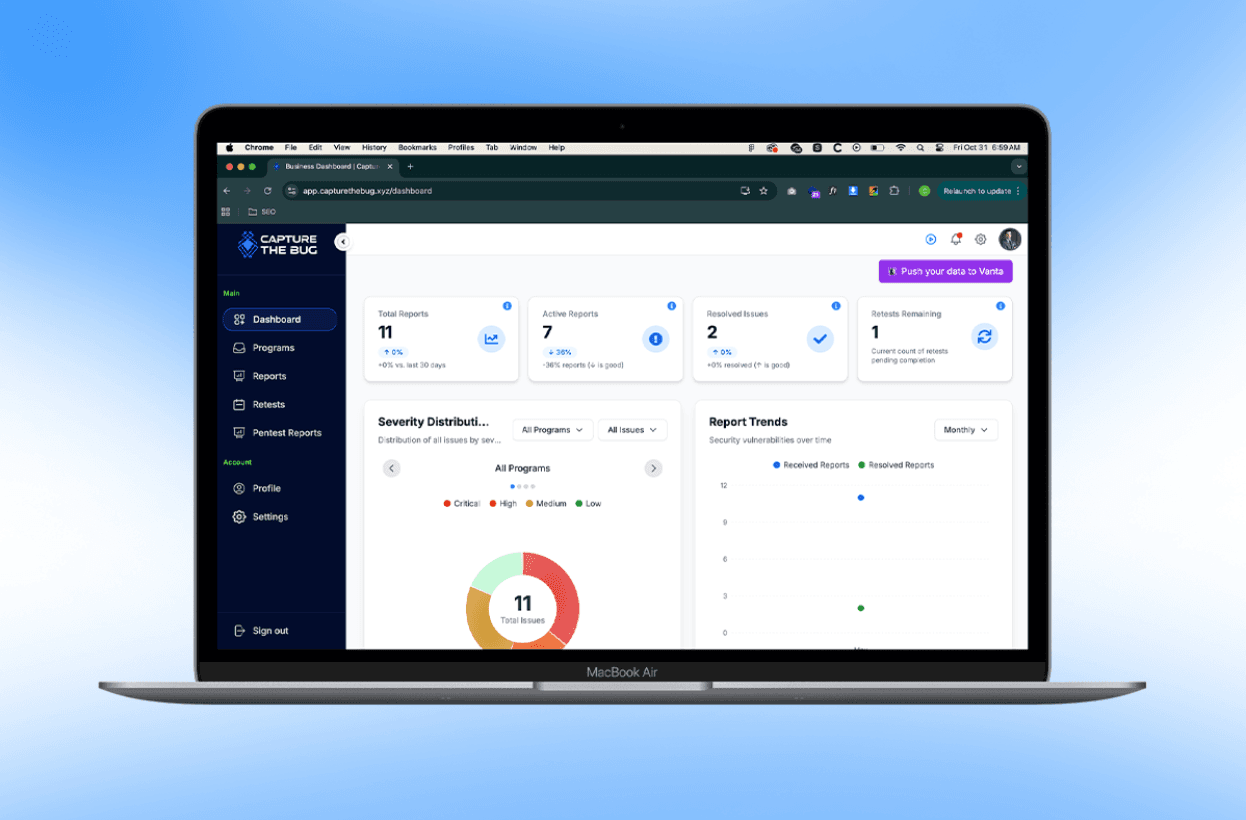
Modern testing platforms now offer live dashboards where vulnerabilities appear as soon as they are found. Security managers can track progress instantly. Developers can start remediation right away. Leadership can see improvement in real time instead of waiting for quarterly summaries.
This visibility shortens the distance between discovery and resolution. It replaces uncertainty with control and confidence.
3. Collaboration Is the Core of Modern Testing
Good pentesting is not just about finding issues. It is about communicating them effectively. In 2026, organizations expect testing teams to collaborate directly with their in-house engineers.
Instead of long email chains, everything happens in a shared workspace. Testers explain findings, developers respond with fixes, and validation happens immediately.
This real-time collaboration builds trust. It turns testing into an active partnership rather than a disconnected transaction.
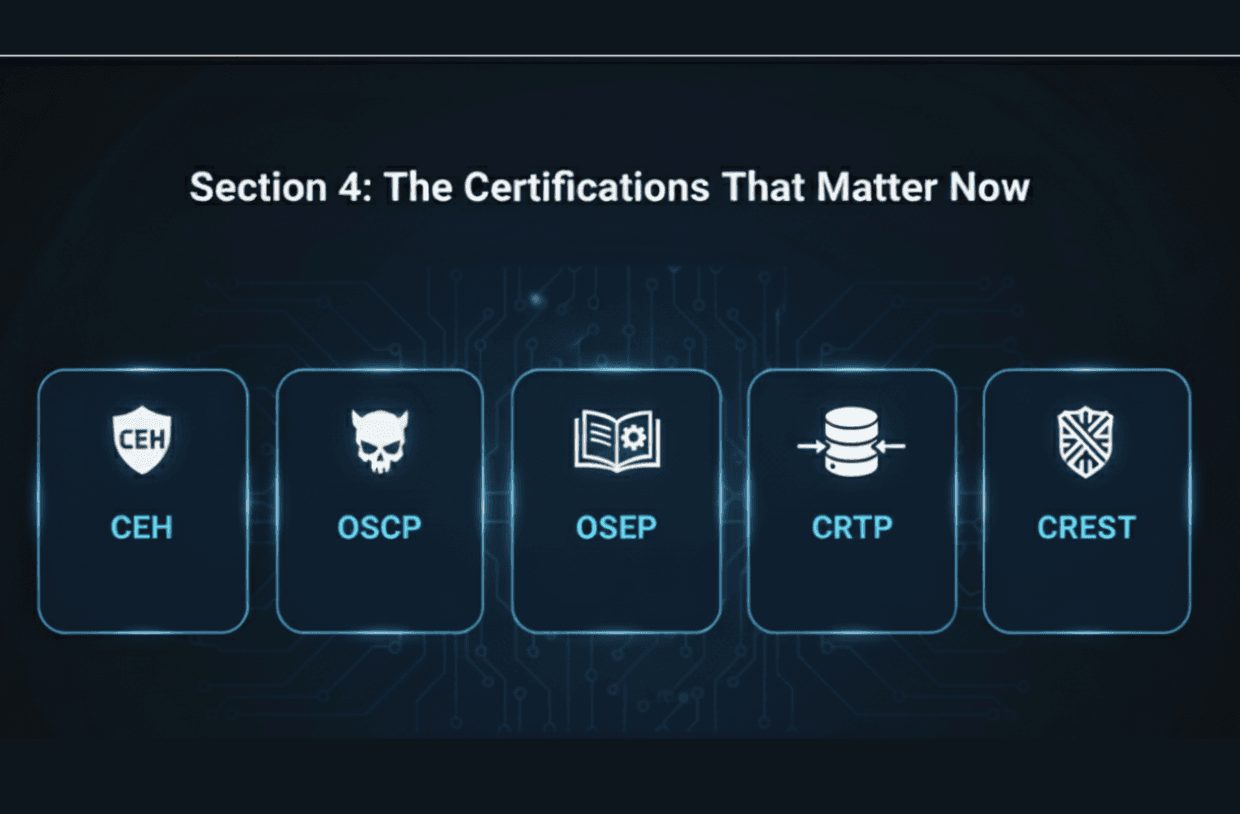
4. The Certifications That Matter Now
Certifications remain an important benchmark for credibility and skill. The most respected in 2026 include:
- CEH (Certified Ethical Hacker) - A strong foundation for professionals entering the field, now with updated cloud and system modules.
- OSCP (Offensive Security Certified Professional) - Recognized globally for deep technical testing and real-world methodology.
- OSEP (Offensive Security Experienced Penetration Tester) - Focuses on advanced evasion, lateral movement, and realistic adversary simulation.
- CRTP (Certified Red Team Professional) - Specializes in Active Directory privilege escalation and post-exploitation in enterprise environments.
- CREST (Registered Penetration Tester) - Demonstrates adherence to rigorous global standards for methodology, reporting, and professional conduct.
For companies evaluating providers, certifications confirm that testing follows proven standards and ethical practices.
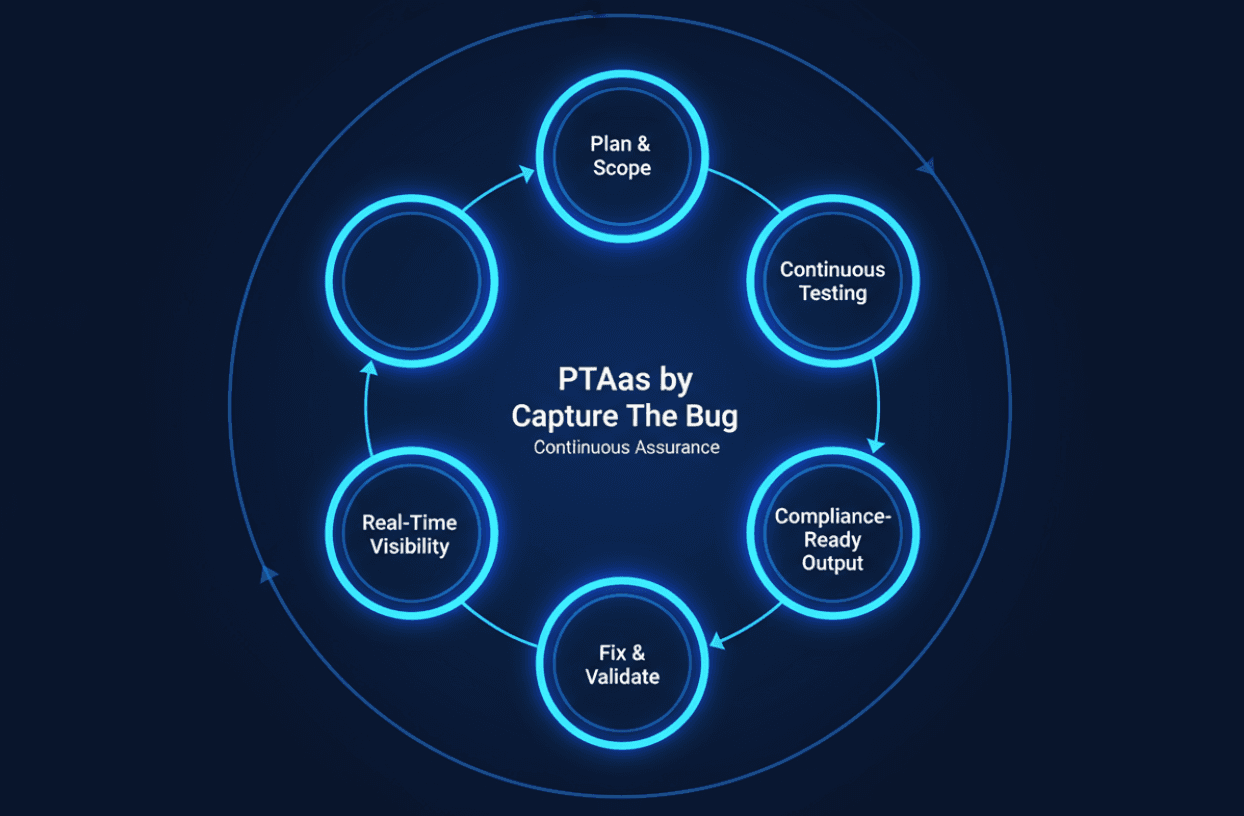
5. The PTaaS Model: Testing That Matches Business Speed
Businesses now demand faster, ongoing validation without compromising depth or accuracy. Pentesting as a Service, or PTaaS, delivers exactly that.
PTaaS connects experienced testers and clients through a cloud-based platform. Instead of scheduling one-time tests, organizations get continuous coverage, on-demand reporting, and compliance-ready evidence anytime they need it.
At Capture The Bug, this model is built around transparency. Every vulnerability, every fix, every progress update is visible through a simple dashboard. Clients know what is happening, when it happens, and why it matters.
This approach replaces uncertainty with partnership. It gives organizations confidence that their systems are being watched, validated, and improved in real time.
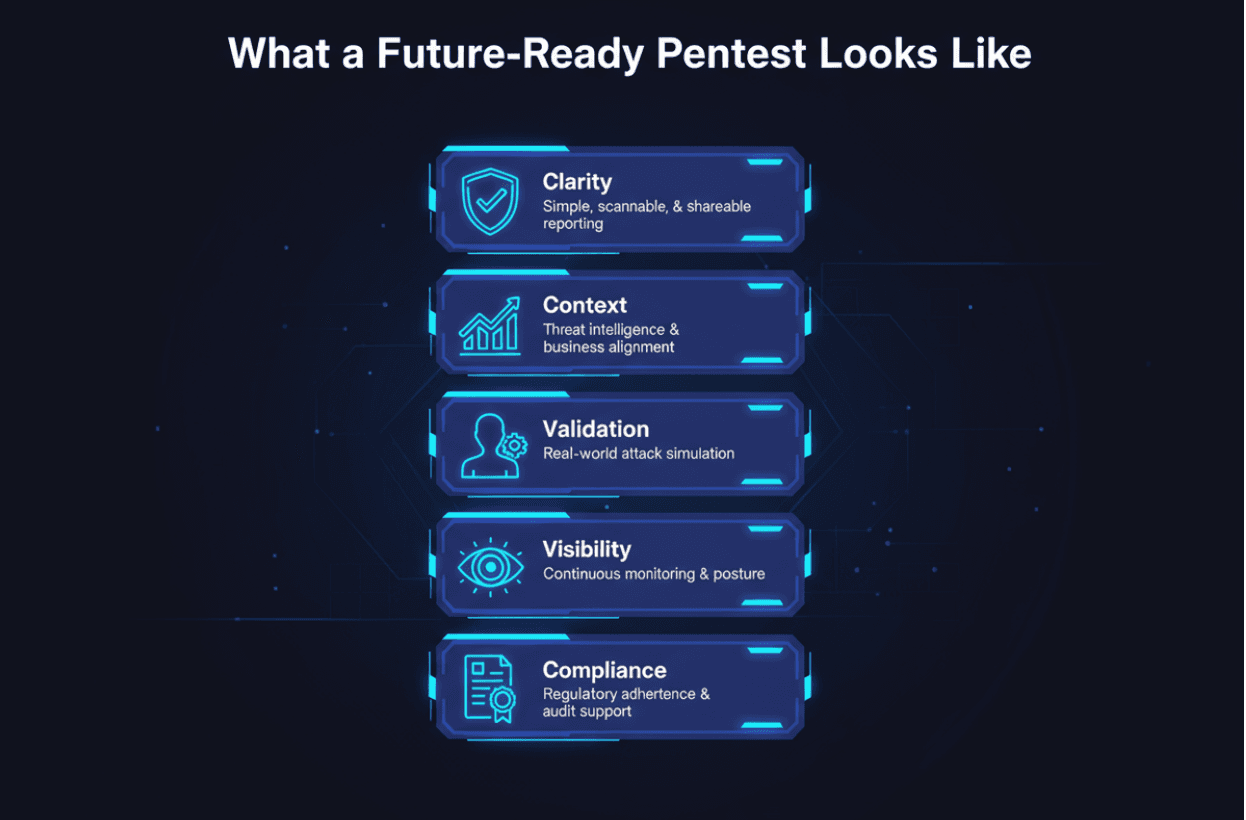
6. What a Future-Ready Pentest Looks Like
A 2026-ready pentest follows five essential principles:
- Clarity - Findings are written in plain language, without technical clutter.
- Context - Each issue is explained by business impact, not just a number.
- Human Validation - Results are reviewed and verified before delivery.
- Ongoing Visibility - Updates appear continuously, not just at the end.
- Compliance Alignment - Reports match audit frameworks like ISO 27001, SOC 2, and PCI-DSS.
When these five pillars are met, testing becomes a living process rather than a single event.
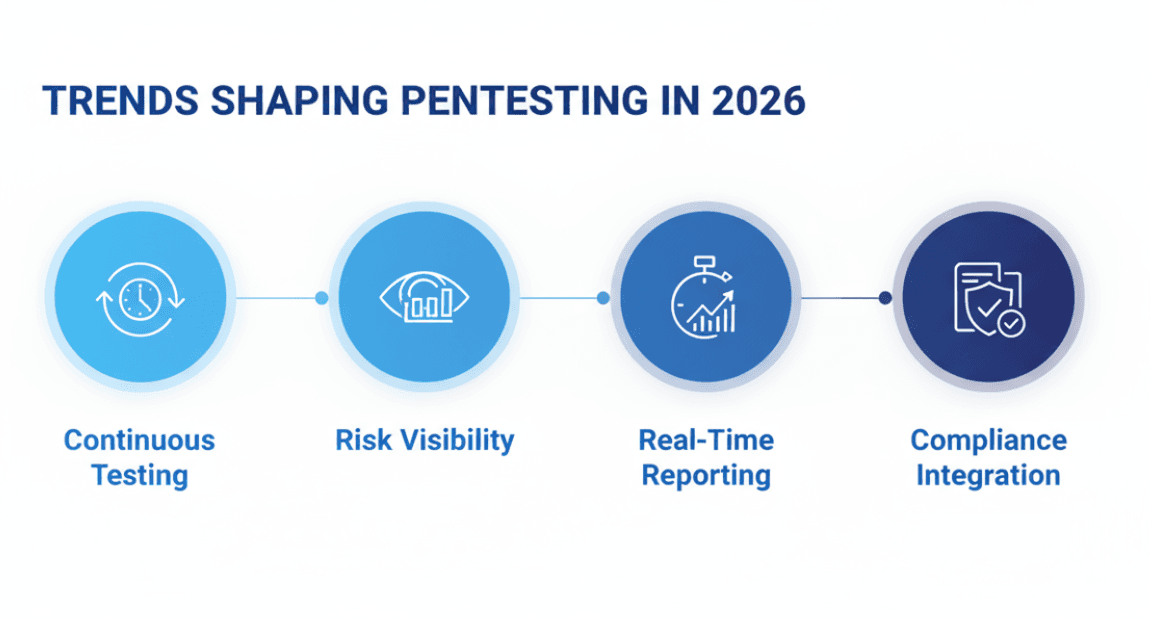
7. Trends Shaping Pentesting in 2026
- Continuous Testing Becomes Standard Practice - Organizations no longer wait for yearly audits. They test, validate, and track continuously to stay ahead of risk.
- Risk Visibility Over Raw Data - Boards and security leaders now want clear answers. Which systems are exposed? Which issues pose real business impact? Modern testing delivers those insights directly.
- Real-Time Reporting Is the Norm - Static reports are fading. Dashboards now combine findings, remediation status, and compliance visibility in one place.
- Global Compliance Pressure - Regulators expect proof of ongoing testing. Continuous validation is now part of audit readiness, not a luxury.
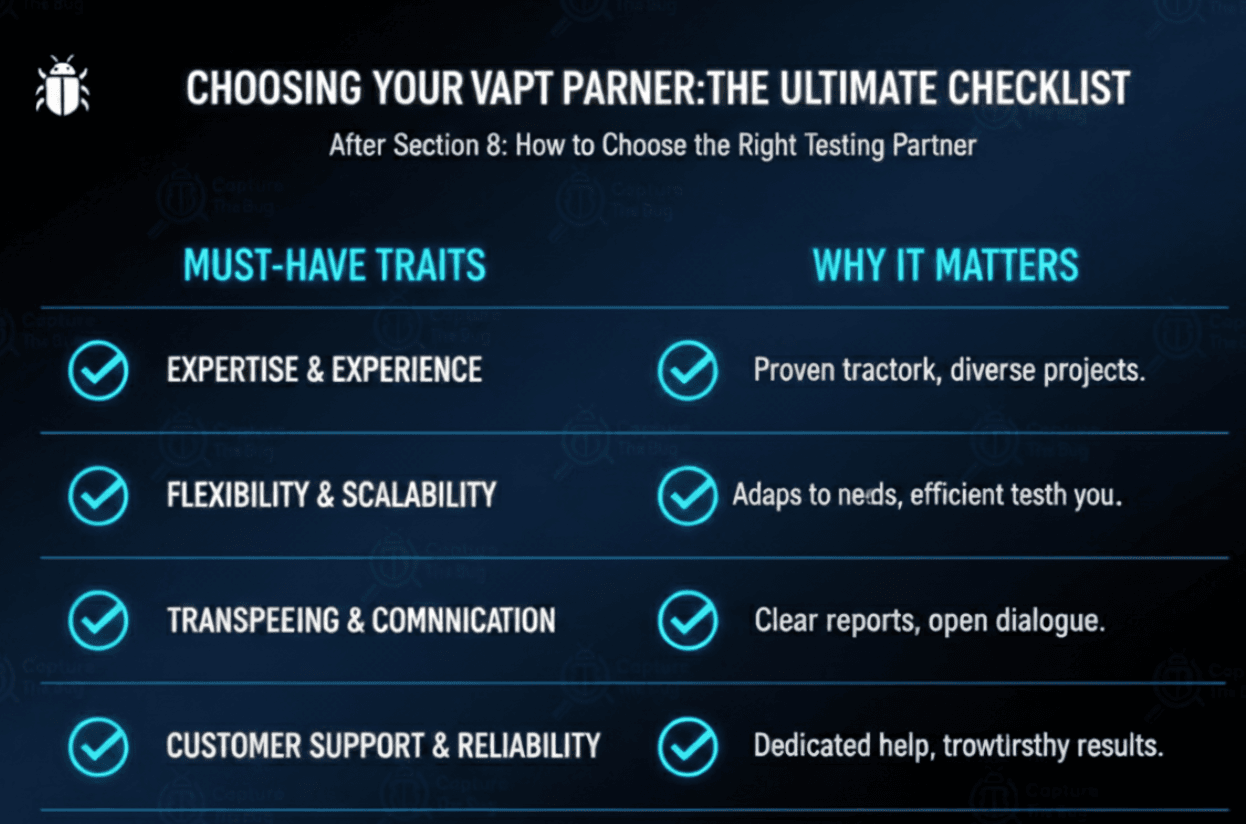
8. How to Choose the Right Pentesting Partner
Choosing a pentesting partner is no longer about price alone. It is about trust, transparency, and alignment with your pace of business. Use this checklist when evaluating providers:
- Certified and experienced testing professionals.
- Real-time visibility and clear communication channels.
- Transparent pricing with no hidden retest costs.
- Compliance-ready documentation for audits.
- Ability to scale across cloud, SaaS, and enterprise systems.
A good partner should feel like an extension of your team - someone who understands your environment and supports your goals.
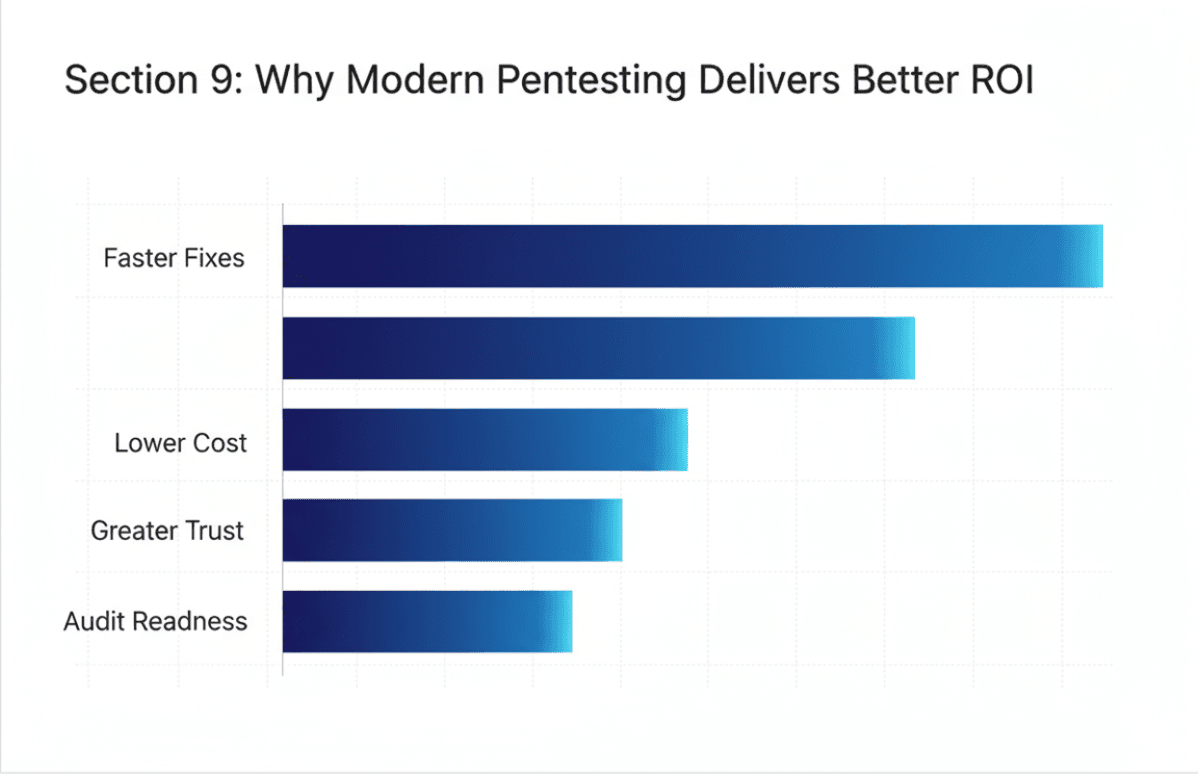
9. Why Modern Pentesting Delivers Better ROI
Security is not just about risk avoidance. It is about measurable business value. Companies that adopt modern pentesting approaches report:
- Faster remediation cycles and fewer repeated issues.
- Reduced costs from unnecessary retesting.
- Greater trust from clients and auditors.
- Clear visibility into performance and compliance.
Every improvement is trackable. Every fix contributes to stronger reputation and resilience. That is the real return on investment: peace of mind backed by measurable progress.

10. Closing Thoughts: Security That Keeps Up With You
Penetration testing in 2026 is no longer about checking boxes or producing long reports. It is about helping teams stay informed, act quickly, and move forward with confidence.
The strongest organizations are not those that test once a year but those that stay continuously aware of their exposure. They view testing as a living process that supports innovation rather than slowing it down.
If your business still treats testing as a one-time audit, now is the time to evolve. The future belongs to companies that treat security as an ongoing conversation, not an annual appointment.

FAQ
1. What is modern penetration testing?
It is the process of continuously identifying and validating security weaknesses with clear, real-time visibility instead of relying on static yearly reports.
2. How often should a business conduct pentests?
Quarterly testing is a minimum benchmark, but continuous programs offer the best protection and compliance readiness.
3. What is PTaaS?
Pentesting as a Service provides ongoing testing and reporting through a live dashboard, giving teams continuous visibility and faster remediation.
4. How can testing improve business trust?
Real-time visibility and verified results build confidence with clients, partners, and regulators by proving that systems are secure and monitored.
5. What sets Capture The Bug apart?
CREST-certified expertise, transparent communication, and continuous visibility make Capture The Bug a trusted choice for global teams.