When Nations Go Digital: The Surge of State Sponsored Cyber Attacks
As governments race to digitize, cyber warfare has gone mainstream. From espionage to infrastructure takedowns, discover how state backed hackers are reshaping global power and what it means for businesses caught in the crossfire.
Introduction: The New Face of Conflict
In 2025, wars are no longer fought only on battlefields. They are waged in code.
From power grids and banks to satellites and water systems, national infrastructure is now a prime target. As nations digitize their economies and defense systems, cyber attacks have become the silent weapon of choice for state actors looking to disrupt, spy, or destabilize rivals.
We have entered an era where a keyboard can cause more damage than a missile, and every organization, public or private, is a potential casualty.

The Digital Cold War: How We Got Here
State sponsored cyber activity is not new, but it is escalating. What began as quiet espionage has evolved into bold, public attacks that blur the line between digital sabotage and open warfare.
Timeline of escalation:
- Early 2000s: Attacks focused on intelligence gathering.
- 2010s: Stuxnet proved code could cause physical destruction.
- 2020–2025: Nation states began outsourcing operations to private contractors and proxy groups for deniability and global reach.
Today, we are witnessing a Digital Cold War where every connected system, from power grids to ports, is part of a contested digital battlefield.
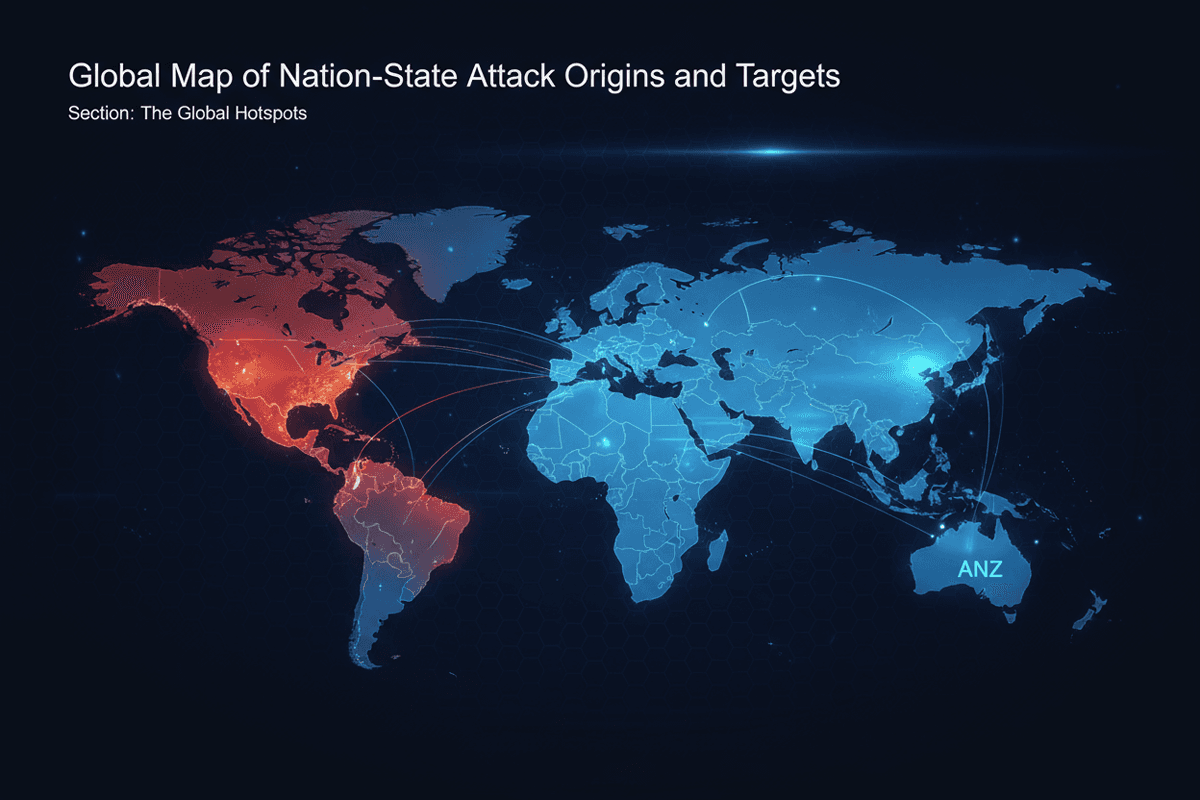
The Global Hotspots
1. China and Industrial Espionage
China backed groups such as APT41 have shifted focus from stealing intellectual property to targeting supply chains. They infiltrate software updates and cloud platforms that serve global enterprises.
2. Russia and Critical Infrastructure
Russian state groups have perfected hybrid warfare that blends cyber operations with real world conflict. From Ukraine's power grid attacks to ransomware operations that cripple global logistics, Moscow's cyber playbook is a blueprint for digital disruption.
3. North Korea and Financial Cybercrime
With limited economic avenues, North Korea uses cyber attacks as a revenue engine. Groups such as Lazarus have stolen billions from banks, crypto exchanges, and payment platforms.
4. Iran and Regional Influence
Iranian hackers increasingly target energy infrastructure and government portals in the Middle East to assert regional dominance and retaliate against sanctions.
5. The West's Cyber Counteroffensive
The United States, United Kingdom, and allies are no longer only defending. Offensive cyber units now launch preemptive operations to neutralize threats before they strike.
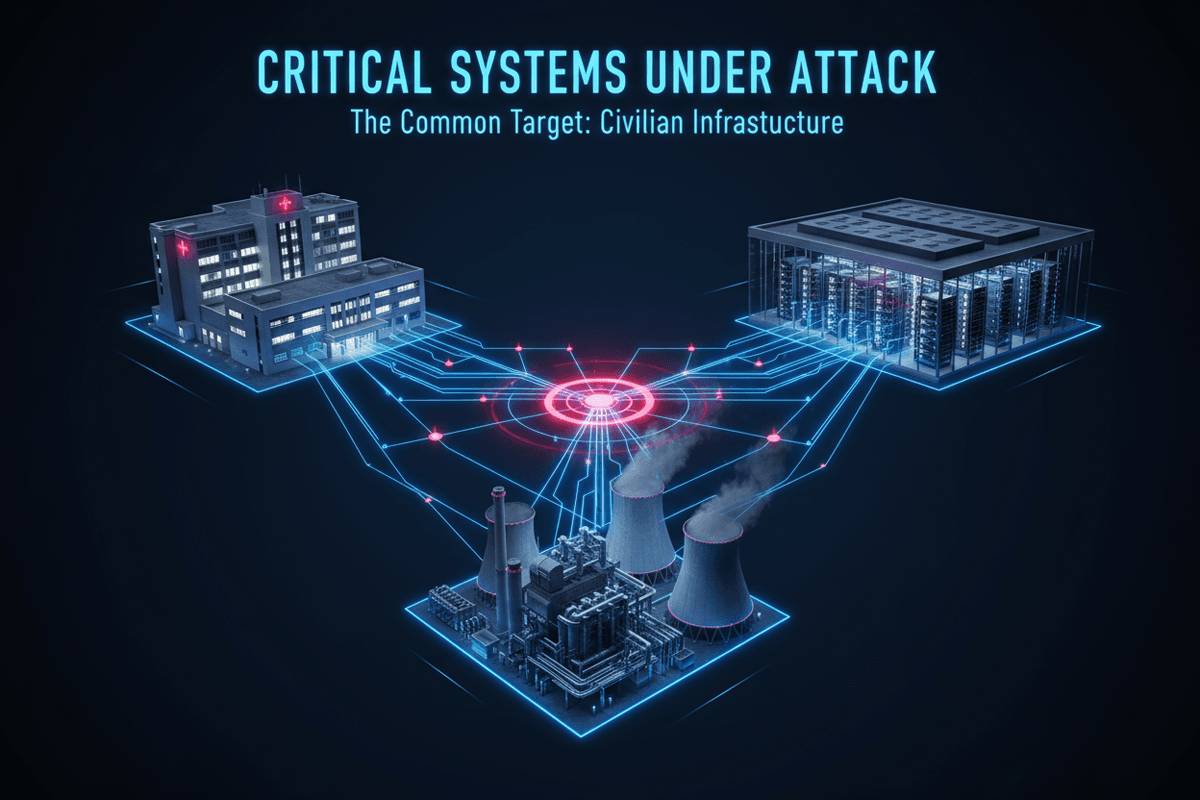
The Common Target: Civilian Infrastructure
Unlike traditional warfare, today's cyber conflicts often hit civilian systems first.
Hospitals, logistics companies, and financial networks have all been caught in the crossfire, not because they are military assets but because disrupting them causes chaos.
In 2024, a coordinated ransomware wave hit European shipping and utilities providers, halting trade routes and disrupting fuel supplies. Intelligence agencies later traced it to a state sponsored affiliate network using commercial ransomware tools.
The message was clear: your infrastructure is their battlefield.
The Economic Fallout
Cyber warfare is no longer an abstract geopolitical issue. It is a financial one.
The global cost of state sponsored cyber incidents is expected to exceed 10 trillion dollars annually by 2026, driven by ransom payments, downtime, and lost investor confidence.
Even organizations with no government contracts are at risk. Supply chain breaches, where attackers compromise one vendor to reach hundreds of downstream targets, have become the preferred method of infiltration.
That is why cybersecurity is now treated as part of national economic policy, not just IT hygiene.
The Next Wave: Cyber Mercenaries and Proxy States
In this new era, governments do not need to launch attacks themselves.
They hire cyber mercenaries, independent hacking groups offering services for hire to states that want plausible deniability.
This outsourced warfare blurs accountability, making it nearly impossible to attribute attacks conclusively. Even global law enforcement agencies struggle to differentiate between patriotic hackers, cybercriminals, and covert military operatives.
The result is a global web of alliances and shadow conflicts where data replaces ammunition.

The Business Risk: Collateral Damage in Nation State Conflict
For private companies, especially in SaaS, fintech, and infrastructure sectors, state sponsored threats represent the highest level of cyber risk, and they are getting harder to predict.
Attackers do not always target your business directly. They exploit you as a means to reach governments, partners, or critical systems.
A supply chain vendor, a cloud dependency, or an unpatched API can all become the weakest link. That is why continuous testing and visibility are no longer optional. They are essential for survival.
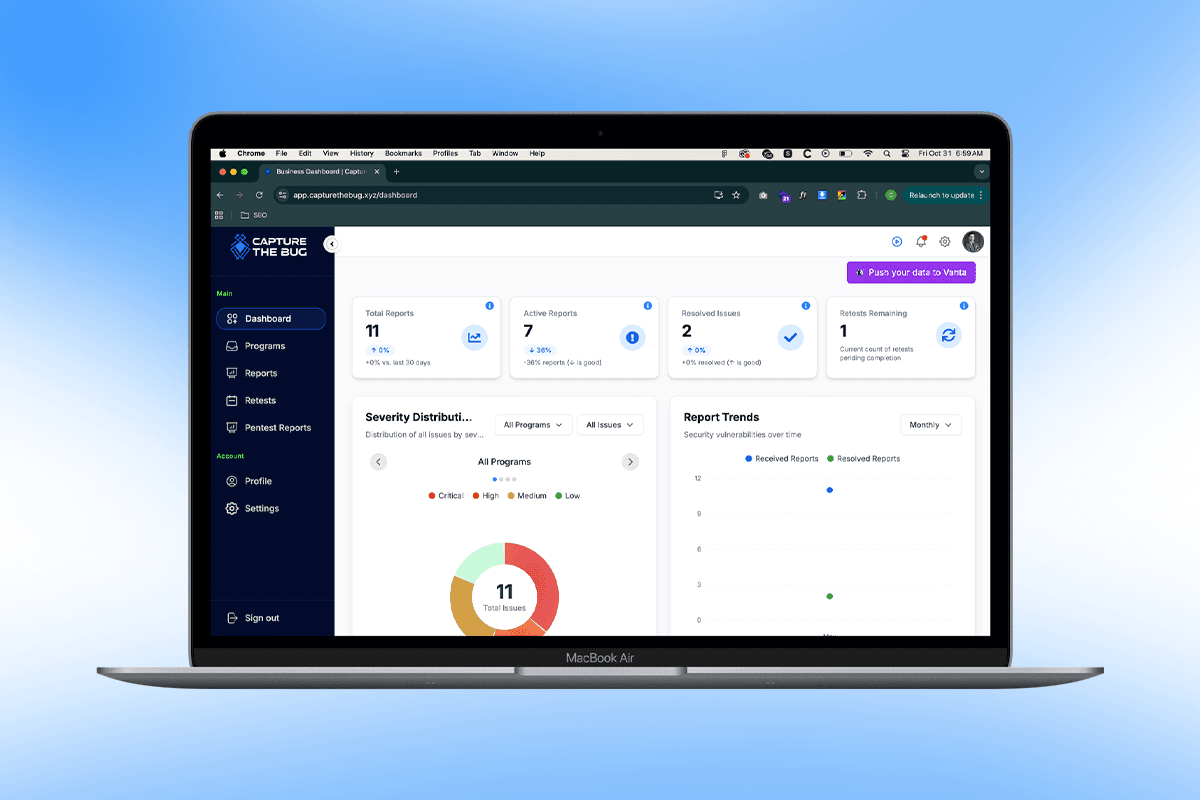
How Capture The Bug's PTaaS Model Helps Organizations Stay Resilient
Traditional security assessments cannot keep up with the speed and persistence of nation state attackers.
Pentesting as a Service (PTaaS) offers a modern alternative — a live, continuous model built for a world of constant threats.
With Capture The Bug's CREST certified PTaaS platform, organizations gain:
- Continuous testing of infrastructure, APIs, and critical apps
- Human validation from real experts who remove false positives
- Real time dashboards for vulnerabilities, remediation, and metrics
- Compliance ready reports for ISO 27001, SOC 2, and PCI DSS
- Scalable global coverage across NZ, AU, and the US
Continuous testing keeps your organization one step ahead and proves that security is not an event but a living system.
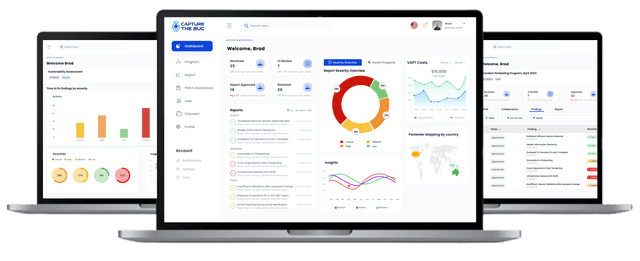
Experience Capture The Bug Platform
Streamline your security testing with our PTaaS platform. Collaborate with expert testers, track vulnerabilities, and secure your applications effortlessly.
What Comes Next: The Militarization of the Internet
Experts predict that by 2030, cyber operations will be embedded into every form of conflict.
Nations will invest in digital deterrence — the ability to respond instantly to cyber aggression with counterattacks or sanctions.
This militarization of the internet will also pressure private companies to align with national cybersecurity frameworks. Even small SaaS providers will need defense grade readiness.
The takeaway: if your business connects to the internet, you are already part of the battlefield.
Final Thoughts
When nations go digital, conflict follows.
With the right visibility, testing, and collaboration between public and private sectors, organizations can turn defense into resilience.
The question is not if your systems will be tested by state grade threats. It is whether you will see them before they strike. That is exactly where continuous pentesting changes the outcome.
Frequently Asked Questions
1. What are state sponsored cyber attacks?
They are cyber operations launched or supported by national governments to steal data, disrupt rivals, or influence outcomes under the cover of criminal groups.
2. Why are these attacks increasing?
Because digitization has expanded every nation's attack surface, and cyber tools are cheaper, faster, and more deniable than traditional warfare.
3. Which sectors are most at risk?
Energy, finance, telecommunications, logistics, and SaaS providers are prime targets due to their critical infrastructure roles.
4. How can businesses protect themselves?
Shift from static security audits to continuous validation models like PTaaS that monitor, test, and adapt in real time.
5. What role does Capture The Bug play in national cyber resilience?
Capture The Bug's PTaaS platform provides CREST certified continuous pentesting that helps organizations detect, fix, and prevent vulnerabilities that could be exploited by advanced threat actors.
One platform to manage, track, and secure all your penetration tests.
Simplify your vulnerability management with Capture The Bug’s PTaaS platform where businesses and security experts collaborate seamlessly.