Why Modern CISOs Are Replacing Annual Pentests with Continuous PTaaS
The Shift No One Can Ignore
A few years ago, a typical CISO calendar had one fixed line item: annual penetration testing. It was predictable, structured, and easy to explain to auditors.
But something changed.
Software started shipping faster. Infrastructure became dynamic. APIs multiplied. And suddenly, a once-a-year test stopped answering the most important question: Are we secure today?
That question is why modern CISOs are moving away from annual pentests and adopting continuous PTaaS (Penetration Testing as a Service). This is not a trend. It is a response to how technology actually works now.
The Problem with Annual Pentests
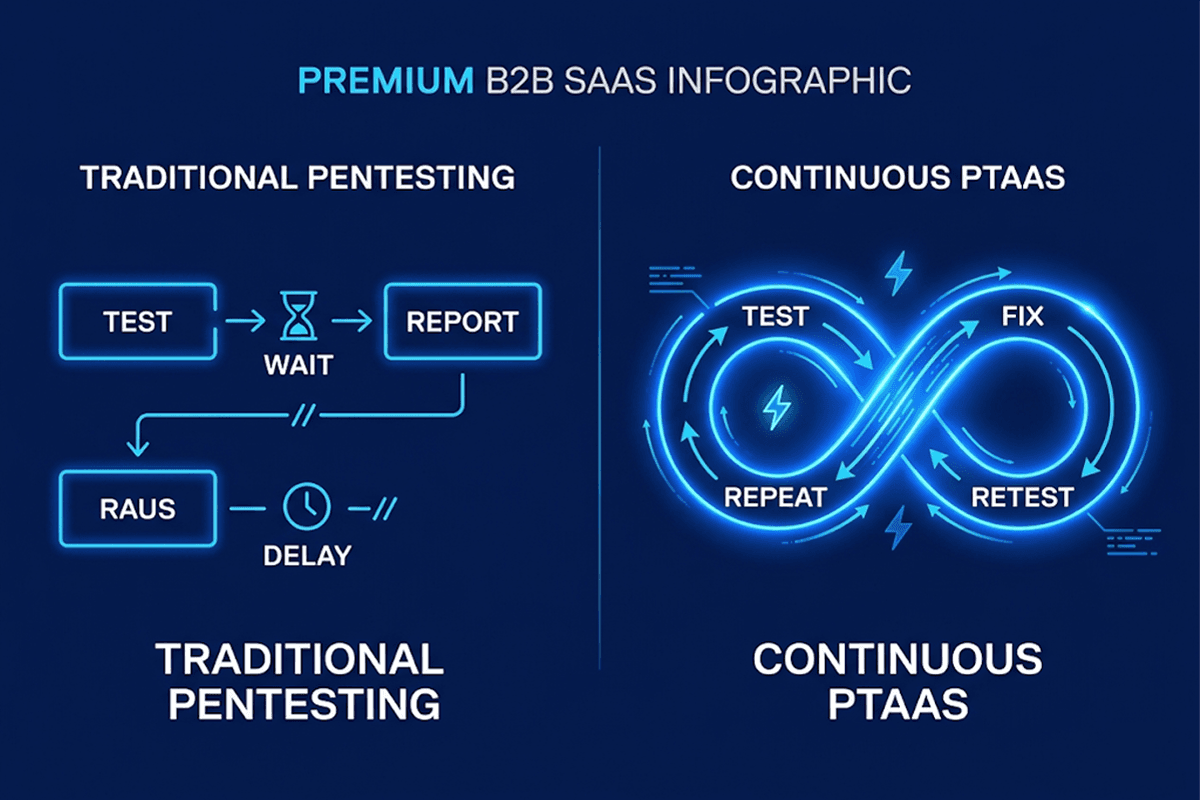
Annual pentesting was built for a slower world. You scope. You test. You wait. You receive a report. Then you fix what you can and move on.
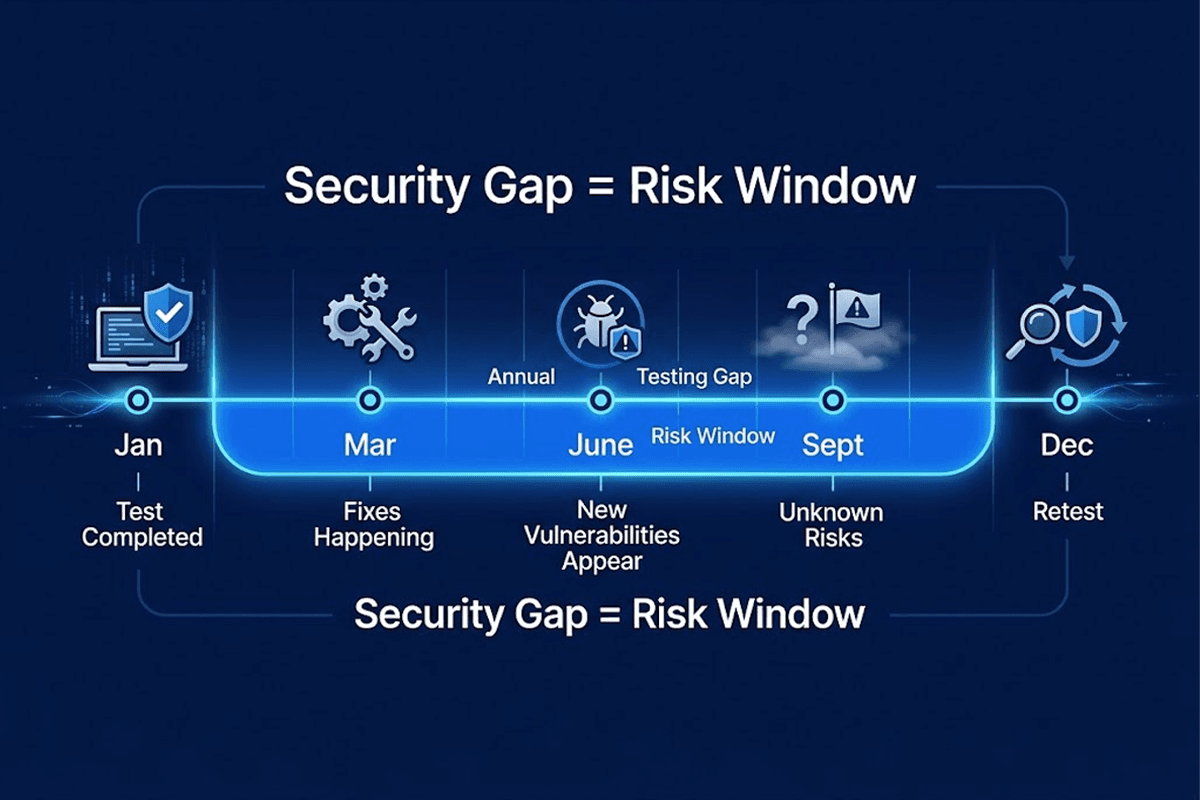
On paper, it works. In reality, it creates blind spots. Traditional pentesting behaves like a health check done once a year. It may be thorough, but it misses everything that happens in between.
And today, a lot happens in between.
- New features are released weekly.
- Third-party integrations change constantly.
- Configurations evolve without notice.
By the time a report is delivered, parts of it are already outdated. CISOs are not replacing annual pentests because they are ineffective. They are replacing them because they are incomplete.
What CISOs Actually Need in 2026
Modern security leadership is not about ticking compliance boxes. It is about continuous visibility. CISOs today are expected to answer questions like:
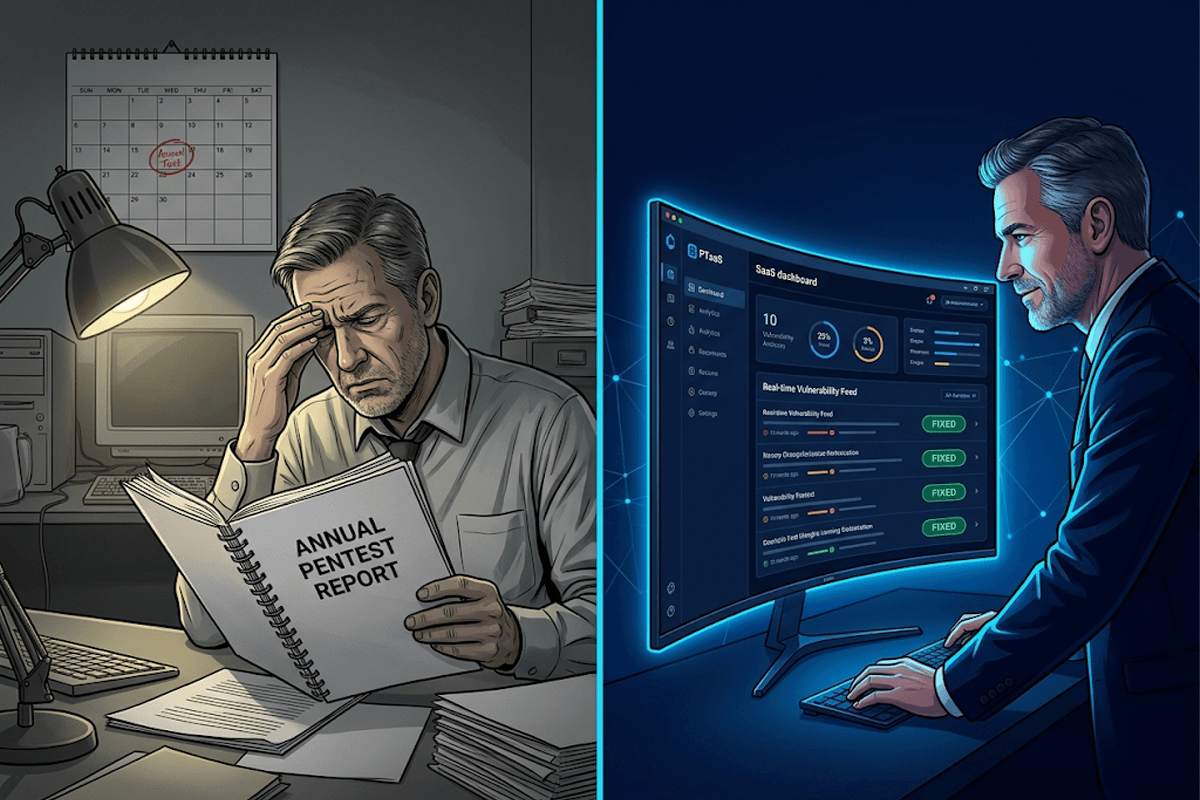
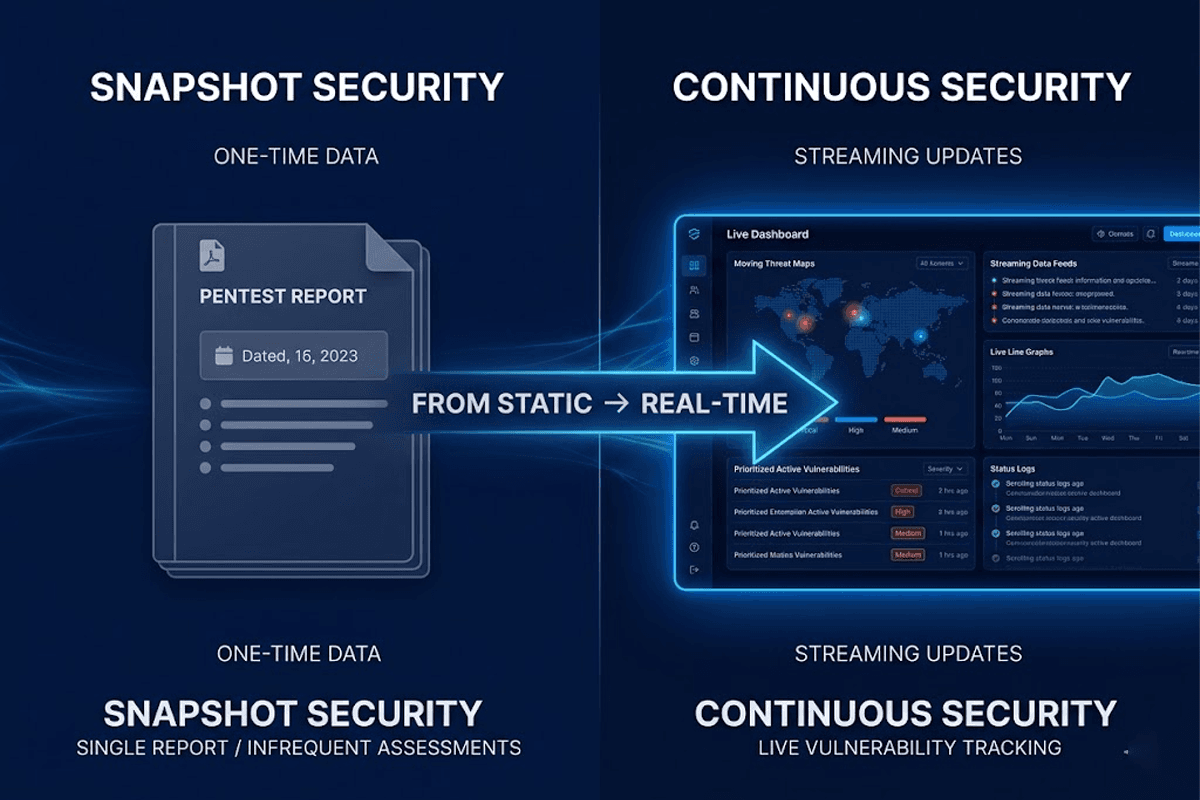
Annual pentests cannot answer these questions. They provide a snapshot. CISOs need a live feed.
From Snapshot to Stream: The Rise of Continuous PTaaS
Pentesting as a Service changes the model entirely. Instead of treating testing as an event, it turns it into an ongoing process. Continuous PTaaS means:
- Testing happens throughout the year
- Vulnerabilities appear as they are discovered
- Fixes are validated immediately
- Progress is tracked in real time
As highlighted in modern PTaaS frameworks, security is no longer scheduled. It is continuous, on-demand, and aligned with how teams actually build and deploy software. This is the core reason CISOs are making the switch.
The Real Reason CISOs Are Replacing Annual Pentests
1. The Risk Window Is Too Large
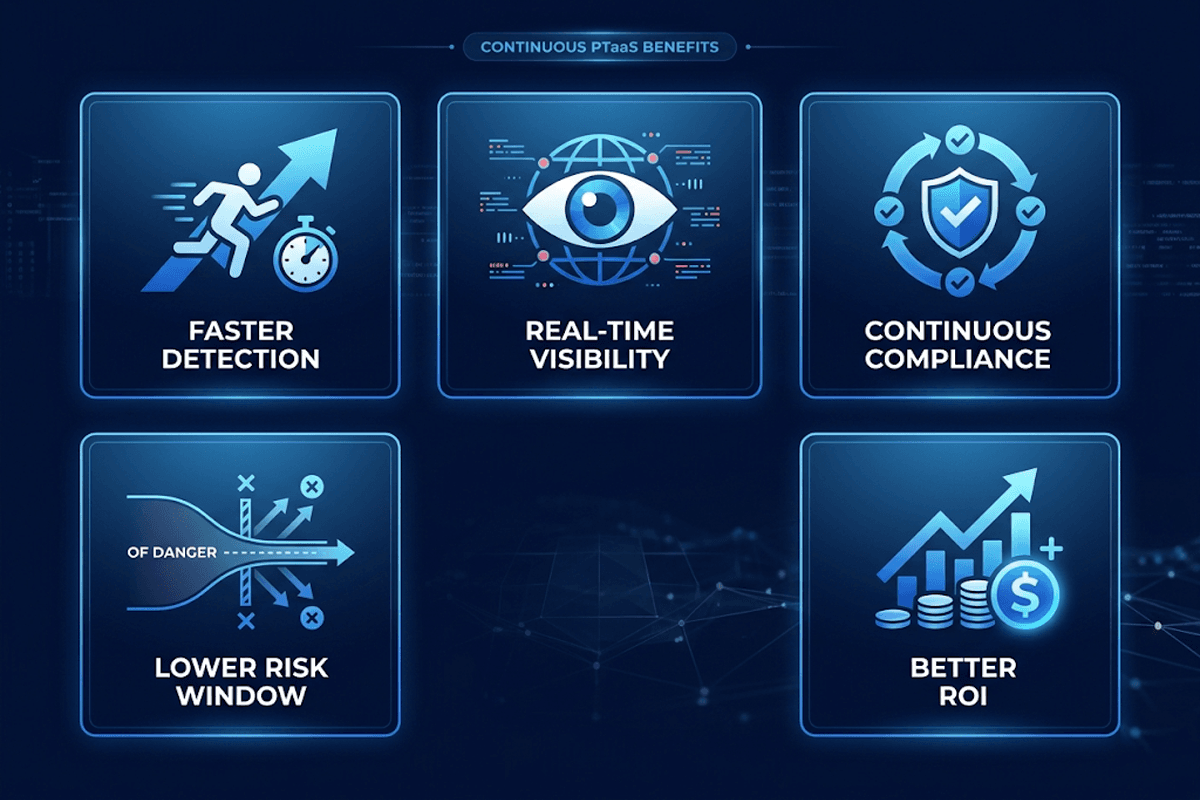
With annual testing, the gap between detection and discovery can be months. That gap is where breaches happen. Continuous PTaaS closes that window. Vulnerabilities are identified early, often within hours, not weeks. That alone changes the risk equation.
2. Security Must Match Development Speed
Modern teams release updates constantly. If testing happens once a year, security becomes disconnected from reality. Continuous PTaaS ensures every major change is tested as it happens. Security stops chasing development. It starts moving with it.
3. CISOs Need Visibility, Not Reports
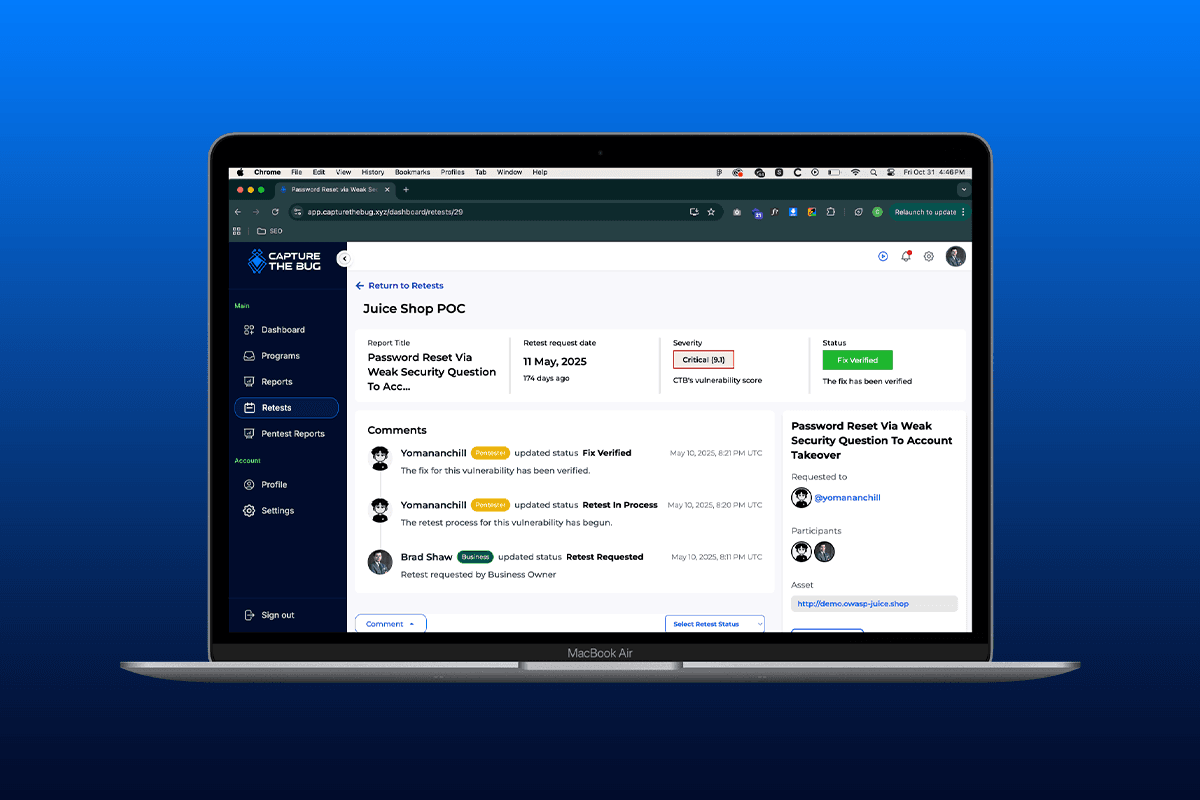
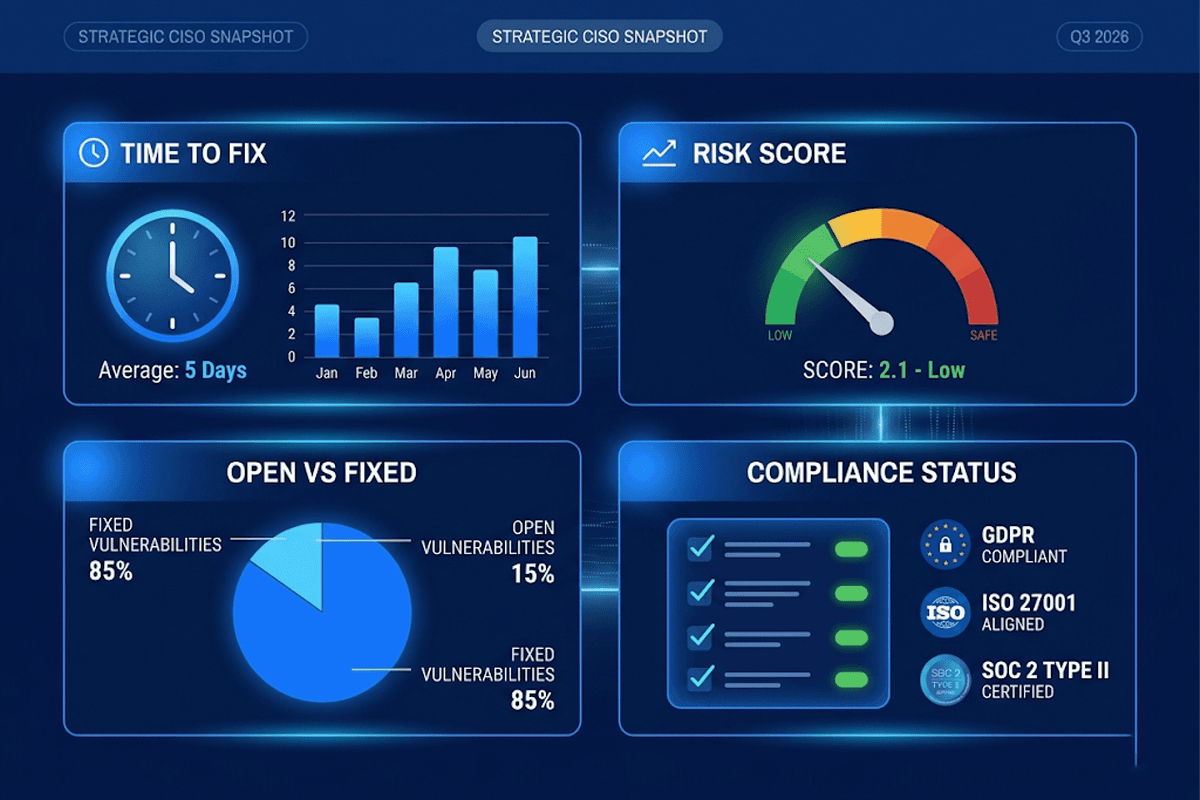
A PDF report answers one question: what was wrong at a specific time. CISOs need answers to: what is still open, what is already fixed, and what is getting worse. Continuous PTaaS provides that clarity through live dashboards and ongoing tracking.
4. Compliance Is No Longer Periodic
Frameworks like ISO 27001 and SOC 2 still rely on structured audits. Но businesses operate continuously. Continuous PTaaS makes compliance a byproduct of daily operations, not a last-minute effort.
5. Cost Is No Longer About One Test
Annual pentests look simple but hidden costs (retesting fees, delayed fixes, engineering time) add up. Continuous PTaaS spreads cost across the year while reducing inefficiencies. CISOs are increasing return on security investment.
How Capture The Bug Aligns with This Shift
Capture The Bug was built around one idea: Security should be continuous, transparent, and collaborative. Instead of delivering static reports, the platform provides:
A Day in the Life: Old Model vs New Model
Traditional Approach
- • Complete annual pentest in January.
- • Findings delivered in February.
- • Fixes happen across March and April.
- • By June, new features introduce new risks.
- • By September, no one is sure what is secure.
- • Cycle repeats.
Continuous PTaaS Approach
- • Launch testing in January.
- • Findings appear immediately.
- • Fixes validated in real time.
- • New features tested continuously.
- • By June, complete awareness of posture.
- • By December, compliance is already in place.
The Strategic Impact for CISOs
Replacing annual pentests is not just an operational decision. It is a strategic one. Continuous PTaaS allows CISOs to report real metrics, reduce uncertainty, and align security with business growth.
When the Shift Becomes Necessary
That point usually comes when releases happen frequently, multiple integrations are in use, and compliance requirements increase. At that stage, the question is no longer whether to switch. It is how soon.
Final Thoughts
"Modern CISOs are not replacing annual pentests because they failed. They are replacing them because the world changed. Continuous PTaaS reflects that change."
It brings speed, visibility, and accountability into security. And in a landscape where risks evolve daily, that is not optional anymore. It is the new baseline.
FAQ
1. Why are CISOs moving away from annual pentests?
Because annual pentests provide limited, point-in-time visibility and cannot keep up with modern, fast-changing environments.
2. What is continuous PTaaS?
It is a model where penetration testing happens continuously throughout the year with real-time visibility and ongoing validation.
3. Does PTaaS replace traditional pentesting?
It extends it. Organizations still benefit from structured testing but gain continuous visibility and faster remediation.
4. How does continuous PTaaS improve security?
It reduces the gap between vulnerability discovery and remediation, lowering overall risk exposure.
5. Is continuous PTaaS suitable for compliance?
Yes. It keeps organizations audit-ready at all times by maintaining up-to-date testing and remediation records.