Kubernetes Annotation Security Risks in AWS
Discover how a single misconfigured annotation can expose your AWS Load Balancer and what security leaders can do to prevent it.
The Hidden Risk in One Line of YAML
Kubernetes gives you control and scalability, but it also demands precision. A single miswritten annotation in your YAML file can turn a private service into a public one without anyone noticing.
For cloud teams using AWS Elastic Kubernetes Service (EKS), annotations define how services connect to Load Balancers, Security Groups, and network policies. The problem is that one small misunderstanding can override your intentions and leave your environment wide open.
This isn't a rare error. It happens in real-world production systems every week.
A Simple Annotation, A Big Exposure
Imagine a developer trying to make an internal service accessible through an AWS Load Balancer. They write a service configuration that looks completely fine:
apiVersion: v1
kind: Service
metadata:
  name: my-loadbalancer-service
  annotations:
    service.beta.kubernetes.io/aws-load-balancer-extra-security-groups: "sg-0123456789abcdef0"
spec:
  selector:
    app: my-app
  ports:
  - protocol: TCP
    port: 80
    targetPort: 80
  type: LoadBalancer
At a glance, this seems harmless. The developer assumes this annotation restricts access to a specific Security Group, allowing traffic only from trusted IPs.
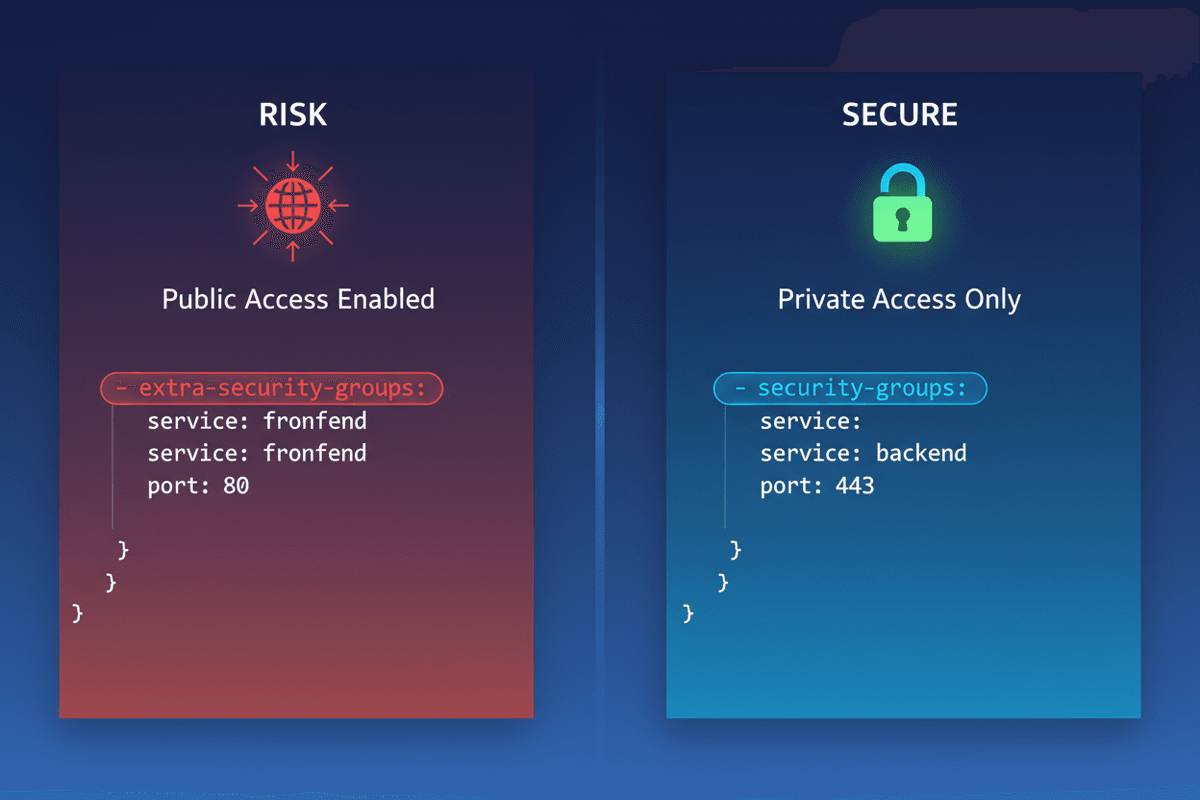
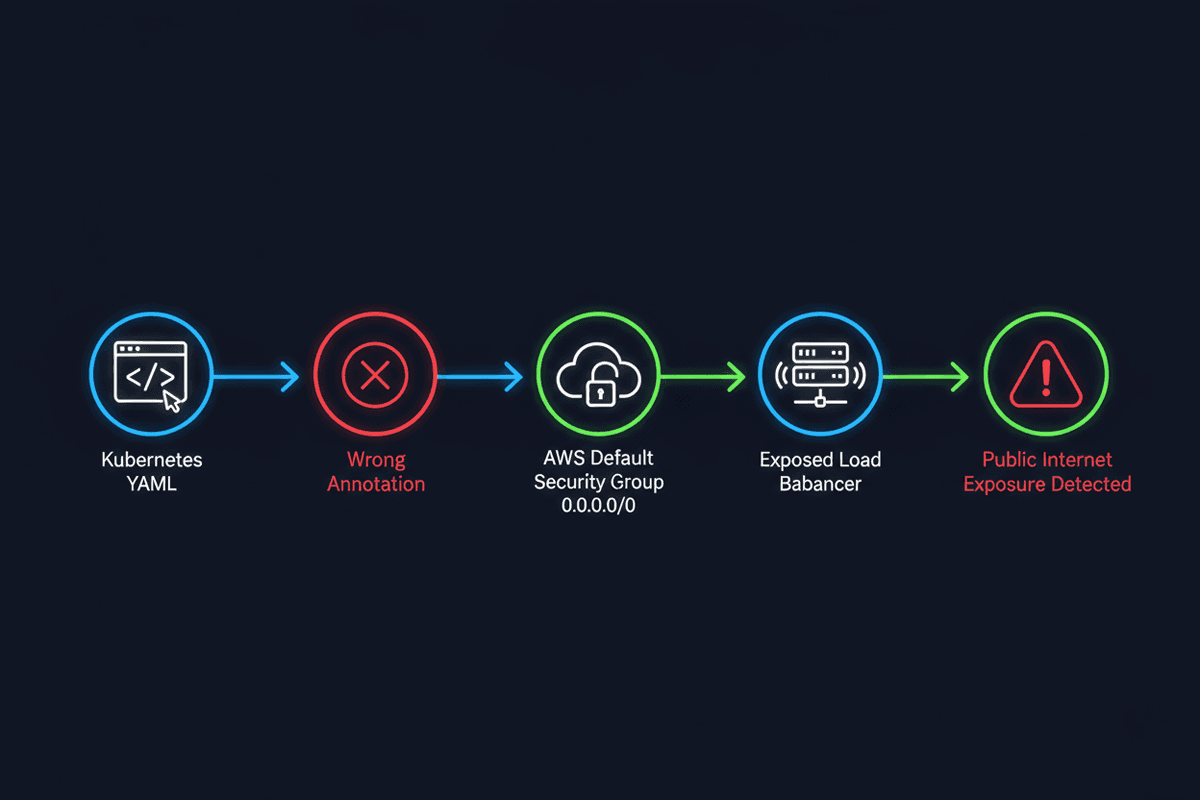
In reality, the extra-security-groups annotation adds permissions on top of the default AWS Security Group that allows inbound access from anywhere (0.0.0.0/0). That means this single annotation exposes the Load Balancer — and everything behind it — to the internet.
How Kubernetes and AWS Misunderstand Each Other
Kubernetes annotations are instructions that tell AWS what kind of resources to create. But the subtle difference between two nearly identical annotations is where most teams get caught.
| Annotation | Function | Default Security Group Behavior |
|---|---|---|
service.beta.kubernetes.io/aws-load-balancer-security-groups | Replaces AWS default Security Groups | Default group not used |
service.beta.kubernetes.io/aws-load-balancer-extra-security-groups | Adds new groups in addition to AWS defaults | Default group still active |
That small word "extra" decides whether your service stays private or becomes public. If you use the wrong one, you end up stacking rules instead of replacing them. The result is full public exposure on your configured port, often without any alert.
Why It Matters
These mistakes are easy to make and hard to detect. They don't trigger alarms or cause downtime, but they quietly break one of the most important principles in cloud security — least privilege.
Security teams often find out months later when AWS Config or an external audit flags open ports or public access violations. In industries like finance, health, or SaaS, this small oversight can lead to compliance issues and potential data exposure.
The Root Cause: Shared Responsibility Confusion
Kubernetes assumes AWS will enforce tight security defaults. AWS assumes Kubernetes users will configure their access properly. Both sides meet in the middle — and that's where vulnerabilities appear.
Kubernetes manages orchestration and scaling, but not network-level controls. AWS provides the firewalls and Security Groups but doesn't enforce them unless you configure them correctly.
When these two systems overlap without clear policies, small YAML errors become real security risks.
How to Avoid Annotation-Driven Security Gaps
1. Choose the Correct Annotation
Always use aws-load-balancer-security-groups if you want to replace AWS's default group. Reserve extra-security-groups only when you need to add rules, not restrict them.
2. Review Default Security Groups Regularly
Every Load Balancer created in EKS comes with a default group that often allows inbound access from 0.0.0.0/0. Audit these configurations and ensure only required ports and IP ranges remain open.
3. Enforce Policy-as-Code
Set up tools like Kyverno or Open Policy Agent (OPA) to automatically reject services using non-approved annotations. This ensures risky configurations are blocked before they're deployed.
4. Isolate Environments
Keep your development, staging, and production Security Groups separate. Avoid reusing open rules from test environments.
5. Continuously Validate Your Setup
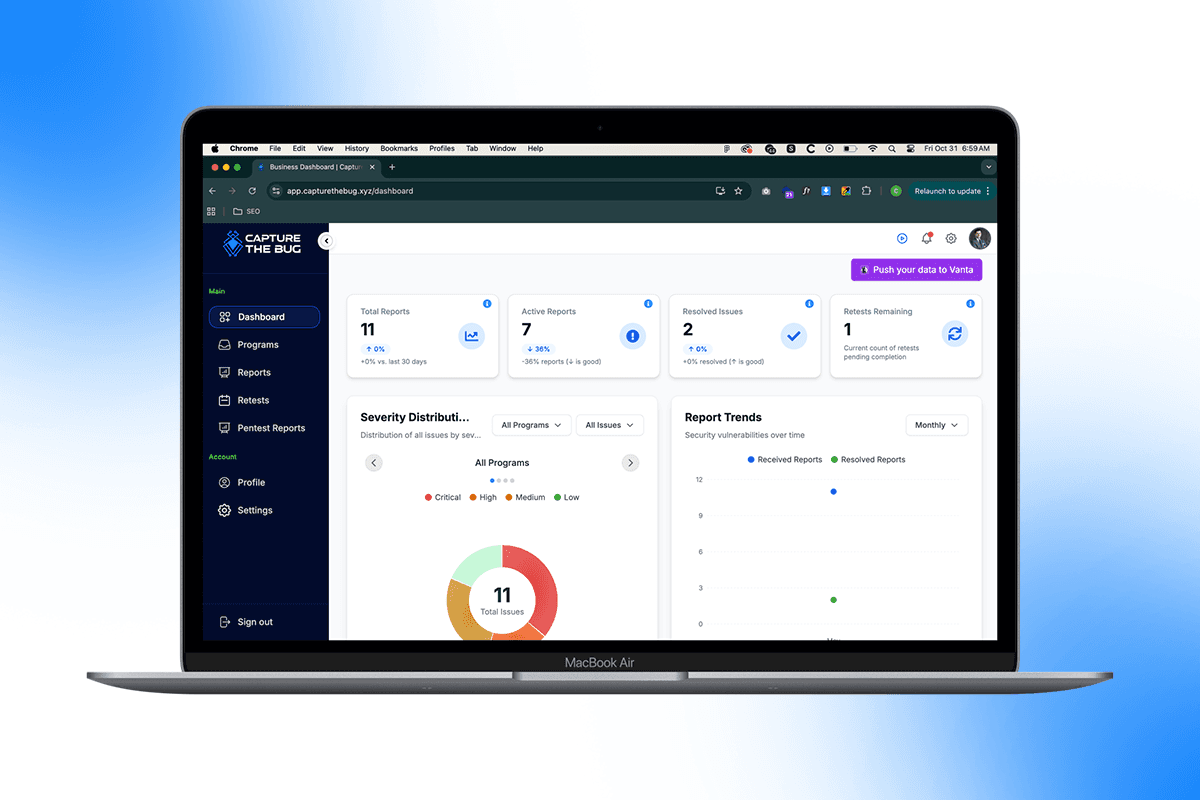
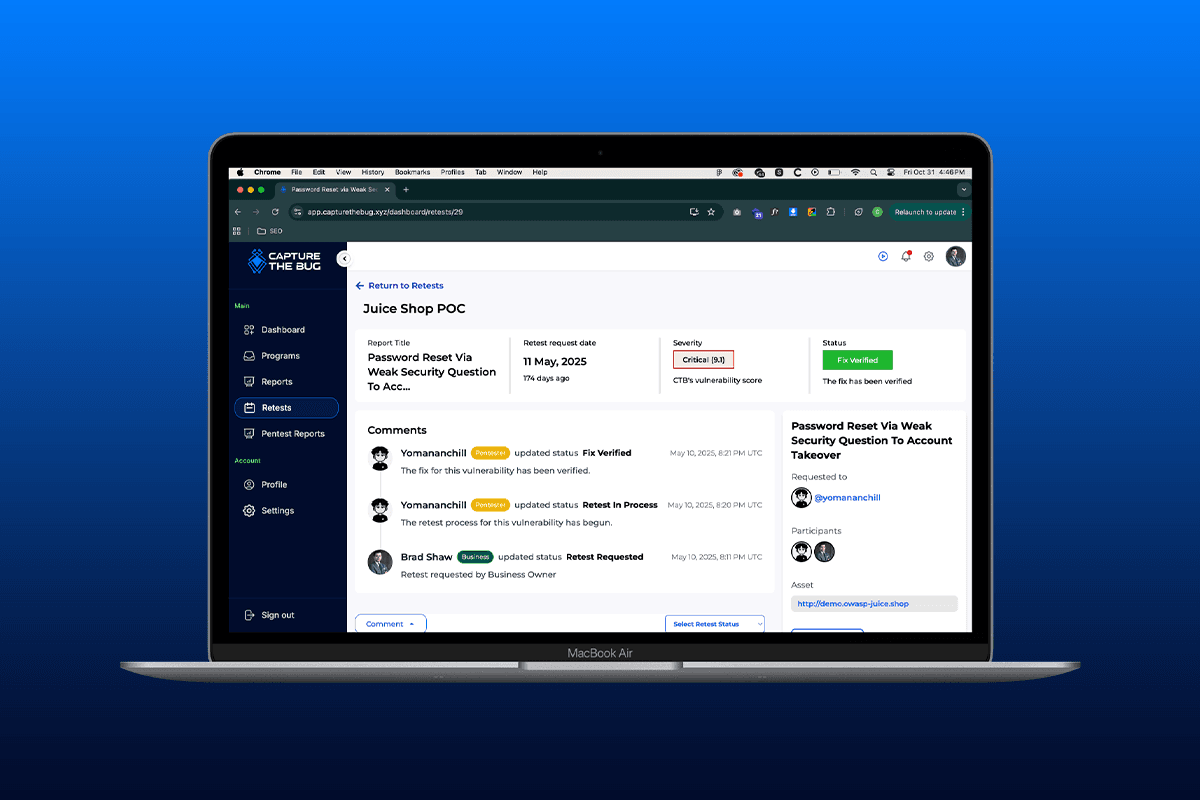
Manual reviews are not enough. Continuous validation through a platform like Capture The Bug helps you detect misconfigurations early. Our PTaaS model tests your cloud setup in real time, providing continuous insight into configuration drift and potential exposure.
Common Mistakes That Cause Exposure
- Copy-paste from online examples: Most tutorials use open annotations for simplicity. Developers copy them without realizing they're unsafe.
- Over-reliance on chat-generated code: Generic YAML suggestions often mix up annotations between Classic, Network, and Application Load Balancers.
- Stack drift during iterations: Temporary open rules for testing often get forgotten and pushed into production.
- Assuming default security equals safe security: AWS defaults prioritize availability, not restriction. You need to enforce security intentionally.
Why This Risk Concerns CISOs and CTOs
Annotation misconfigurations don't show up in typical vulnerability scans. They're configuration-level blind spots — quiet, invisible, and often outside traditional security tooling.
For CISOs, this is a growing risk because:
- It bypasses existing monitoring layers.
- It introduces data exposure without code changes.
- It often goes unnoticed until compliance checks fail.
The solution is not another audit but continuous validation. Platforms like Capture The Bug continuously test your Kubernetes and cloud configurations, identifying weak annotations and misaligned permissions as soon as they appear.
That's how you turn configuration risk into continuous confidence.

Final Thoughts
Cloud-native does not mean secure by default. In Kubernetes, your smallest configuration detail defines your biggest risk.
A single annotation can decide whether your AWS Load Balancer is private or public. By understanding these differences, enforcing clear policies, and using continuous validation, you prevent silent exposures before they happen.
At Capture The Bug, we help you uncover and fix these hidden risks with continuous penetration testing designed for modern, cloud-first teams. Because secure infrastructure is not about reacting fast - it's about knowing first.
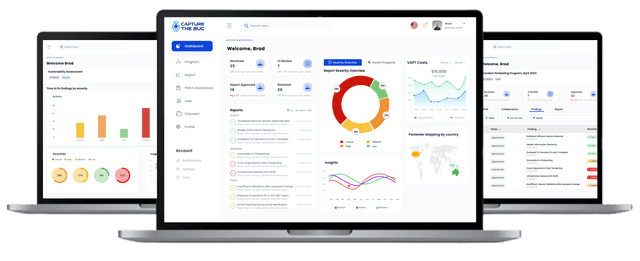
Experience Capture The Bug Platform
Streamline your security testing with our PTaaS platform. Collaborate with expert testers, track vulnerabilities, and secure your applications effortlessly.
FAQ
1. What causes Kubernetes annotation security risks in AWS?
Incorrect use of annotations like aws-load-balancer-extra-security-groups adds permissions instead of replacing defaults, leaving services publicly accessible.
2. How can teams detect these misconfigurations?
Regular audits of Security Groups and Load Balancer settings, paired with continuous testing, help identify exposures before they reach production.
3. Do AWS tools catch these issues automatically?
AWS Config can flag open Security Groups, but it won't tell you which annotation caused them. Manual review and policy checks are still required.
4. Why use continuous pentesting for Kubernetes?
Because it validates real-world exposure continuously, not just once a year. PTaaS keeps pace with your cloud changes and deployment cycles.
5. What's the safest annotation for restricted access?
Always use aws-load-balancer-security-groups when defining custom Security Groups. It replaces the default instead of adding to it.
One platform to manage, track, and secure all your penetration tests.
Simplify your vulnerability management with Capture The Bug’s PTaaS platform where businesses and security experts collaborate seamlessly.