What Is Continuous Compliance and Why Do You Need It?
Continuous compliance keeps your organisation ready every day, not just during audits, giving leaders real visibility and teams more control.
The Modern Reality: Compliance Moves Faster Than Ever
If you talk to any technology leader today, you'll hear the same story. They are not stressed about passing audits. They are stressed about staying ready for them.
Cloud systems evolve daily. Teams ship updates constantly. Regulations demand faster disclosures. By the time an annual compliance audit arrives, the environment looks nothing like it did during the previous review.
As Capture The Bug sees in organisations across New Zealand, Australia, and the United States, the real challenge is not about meeting a standard. It is about staying aligned with that standard every single day.
This is the shift continuous compliance solves.
It replaces the old habit of scrambling before audit season with a steady rhythm of monitoring, evidence collection, and real-time visibility. Instead of searching through scattered folders and spreadsheets, teams already have the answers ready.
Continuous compliance does not slow organisations down. It prevents the slowdowns that occur when teams are forced into late-stage corrections, emergency fixes, and last-minute documentation.
It turns compliance from a stressful event into a quiet habit.
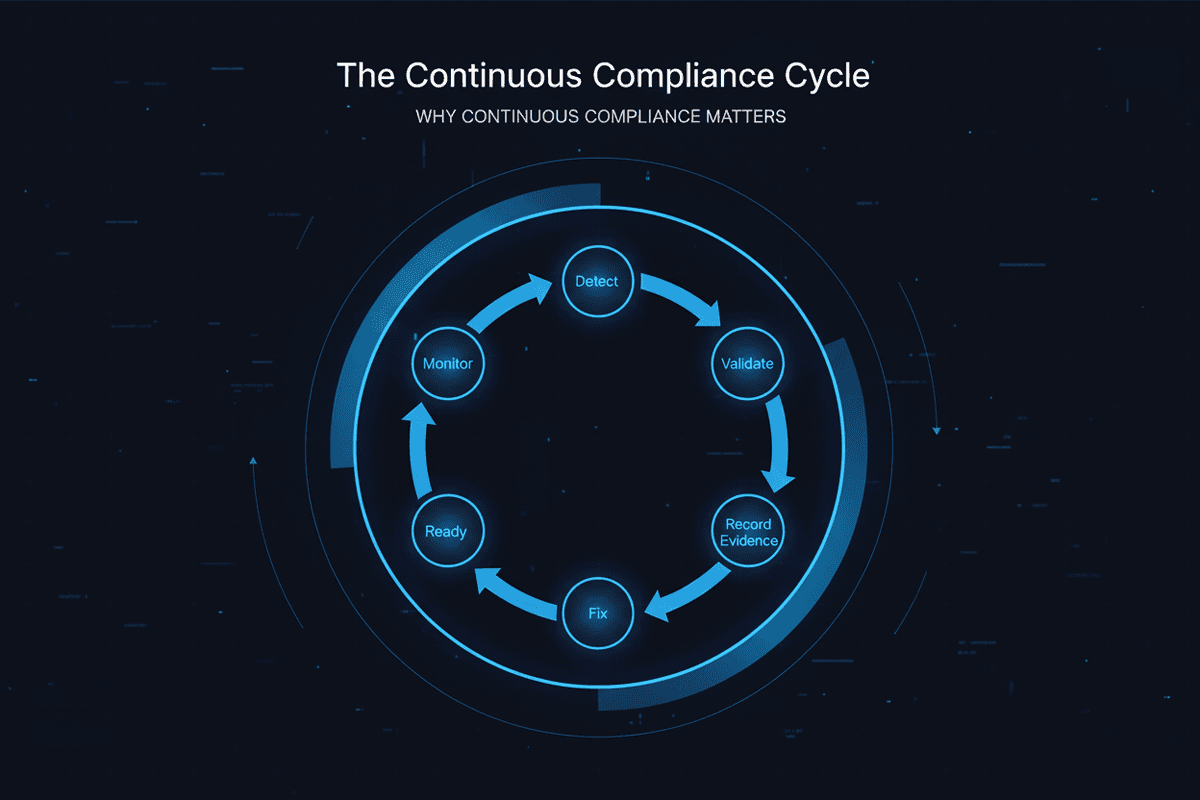
What Continuous Compliance Really Means
Continuous compliance is the ongoing process of ensuring your systems, processes, and controls stay aligned with the standards you follow. That includes security frameworks like ISO 27001, SOC 2, PCI-DSS, HIPAA, regional laws, and internal governance rules.
It does three things exceptionally well:
- Keeps controls monitored in real time
- Captures evidence automatically as work happens
- Surfaces gaps before they impact audits or customers
This is what makes continuous compliance different from traditional compliance.
Traditional compliance: A point-in-time exercise. Months of preparation. Manual checks. Stressful reviews.
Continuous compliance: A living system. Always monitored. Always validated. Always ready.
This shift matters because modern companies no longer run quarterly change cycles. They operate in constant motion. And compliance must keep pace.
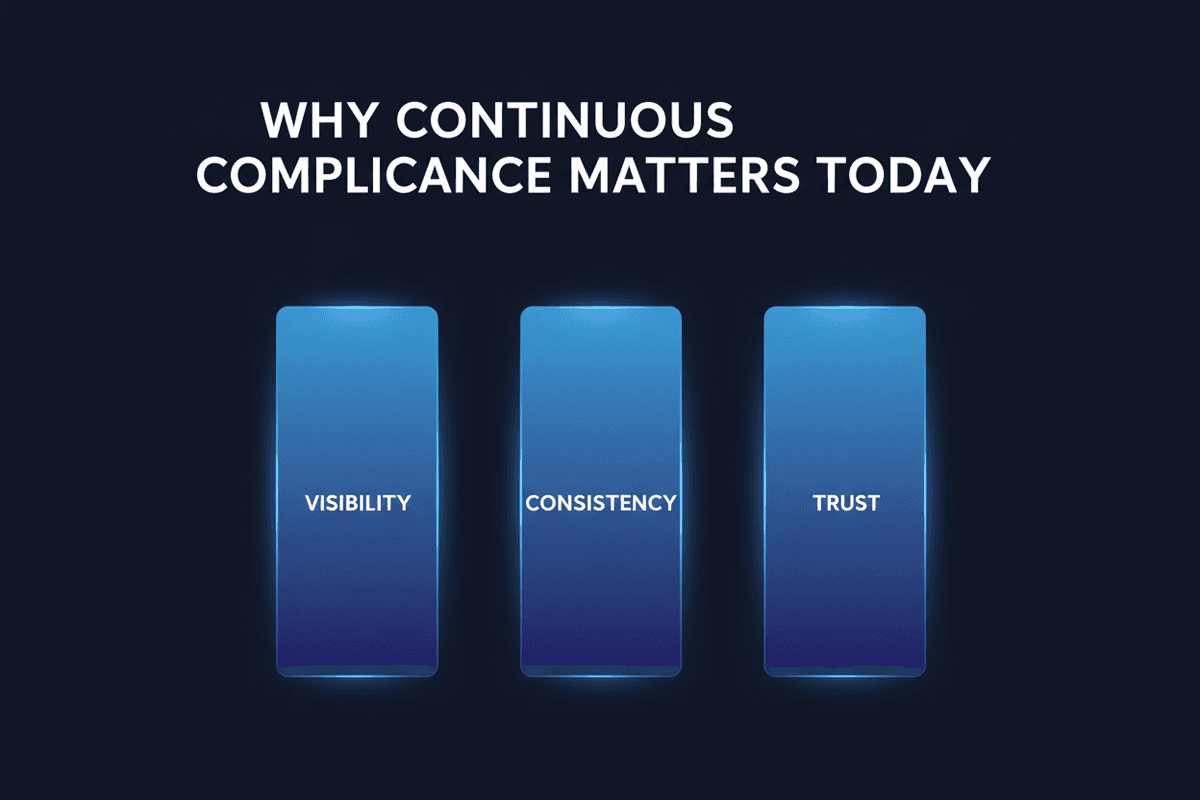
Why Continuous Compliance Matters Right Now
1. You Reduce Friction During Audits
Most organisations fail audits not because they lack security, but because they lack proof.
Continuous compliance removes that problem. Evidence is collected as teams work, not during a frantic audit season. Controls are monitored continuously. Reports stay updated in a central place.
By the time your auditor asks for proof, it is already available.
This eliminates the classic bottlenecks that slow audits down, such as searching for screenshots, recreating tickets, or rewriting policy updates under pressure.
Teams save time. Auditors see clarity. Leadership sees maturity.
2. It Protects Your Organisation Between Audits
Cyber incidents do not care about your certification timeline. A misconfiguration introduced today can become tomorrow's security risk.
The gap between annual or quarterly checks is where most issues slip through.
Continuous compliance fills that gap by watching for drift, recording changes, and raising concerns as soon as something deviates from your baseline.
Whether it is permission changes, forgotten settings, new third-party integrations, or infrastructure shifts, you get visibility before it becomes a serious issue.
3. It Strengthens Trust With Customers and Partners
In business-to-business environments, trust is currency.
Customers want to know their data is protected. Regulators want confidence. Boards want assurance. Partners want proof that risk is under control.
Continuous compliance gives organisations something powerful: verifiable evidence. Not claims. Not promises. Proof.
This accelerates sales processes, improves renewal rates, and positions your organisation as reliable during procurement evaluations.
The message becomes simple. You don't prepare for compliance. You live it.
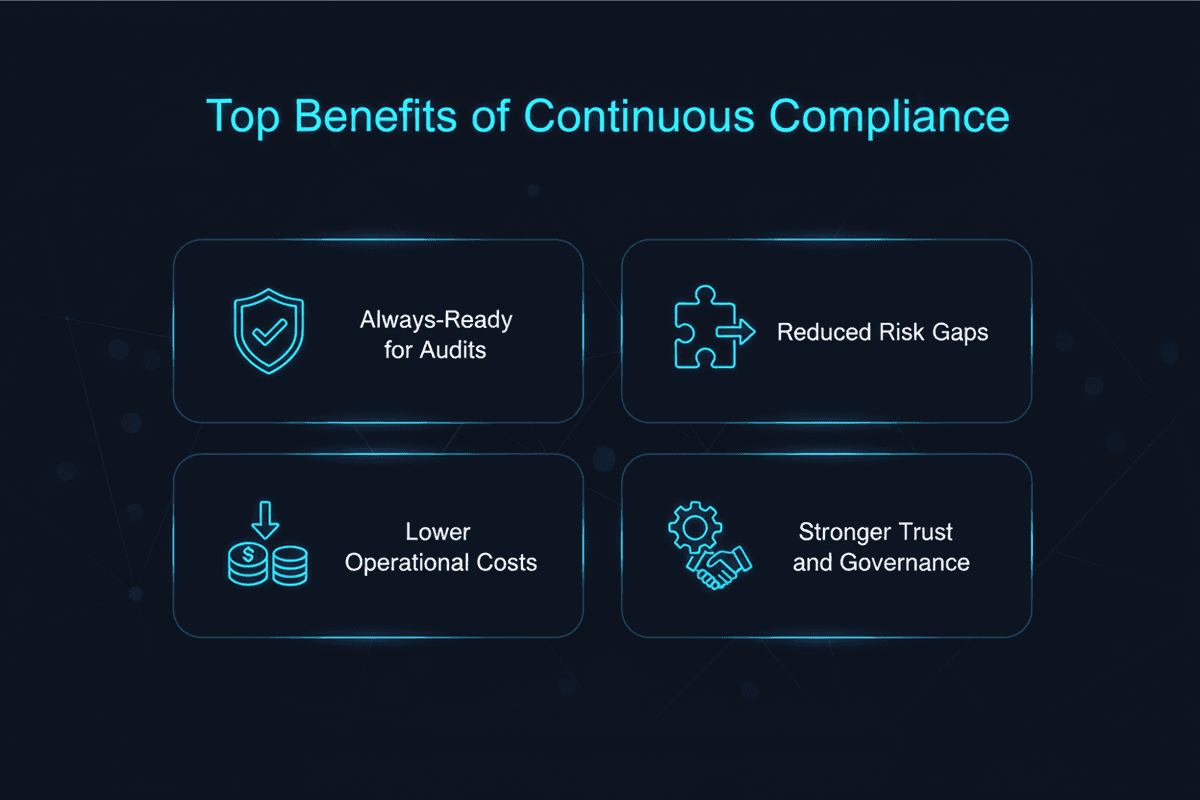
The Business Benefits Leaders Actually Care About
Continuous compliance is more than a technical upgrade. It becomes an operational strategy.
Here is how it impacts leadership teams:
- Predictable costs: Instead of large audit projects once a year, the workload is distributed. Teams avoid expensive last-minute fixes and rework.
- Shorter remediation cycles: Issues identified early cost far less to fix than issues discovered during audits or incidents.
- Higher cross-team accountability: Compliance no longer lives only with security or governance teams. It becomes shared across engineering, operations, HR, legal, and leadership.
- Better decision-making: When leaders have real-time status dashboards, they understand risk without guesswork.
In the long run, continuous compliance is not just a security improvement. It is a business advantage.
Key Components of an Effective Continuous Compliance Program
Capture The Bug works with organisations that want a practical, real-world path to continuous compliance. The most successful programs share five components.
1. Clear Control Baselines
Before anything becomes continuous, organisations must define the foundations:
- Which controls apply
- Where they apply
- Who owns them
- How success is measured
A clear baseline is the difference between structure and chaos.
2. Real-Time Monitoring of Controls
This includes:
- Configuration checks
- Permission reviews
- Change tracking
- Cloud asset visibility
- Evidence timestamps
The goal is simple. You always know the state of your environment.
3. Automated Evidence Collection
When teams rely on manual evidence collection, audits become painful.
In continuous compliance programs:
- Changes generate logs automatically
- Tickets link to controls
- Activity is tagged with user and timestamp
- Reports are created on demand
Evidence becomes a byproduct of how you work.
4. Prioritized Alerts When Something Drifts
Not every deviation is equally important.
Continuous compliance requires a way to highlight the issues that matter. That includes:
- Critical control failures
- Data-sensitive configuration changes
- Access-related drift
- Unusual behaviour patterns
When teams get the right alerts, they act faster.
5. Stakeholder Reporting That Everyone Understands
Compliance dashboards must be readable by more than auditors. They must serve:
- CTOs
- CISOs
- Founders
- Product leaders
- Engineering managers
- Legal and HR
A shared view transforms compliance from a siloed operation to a company-wide standard.
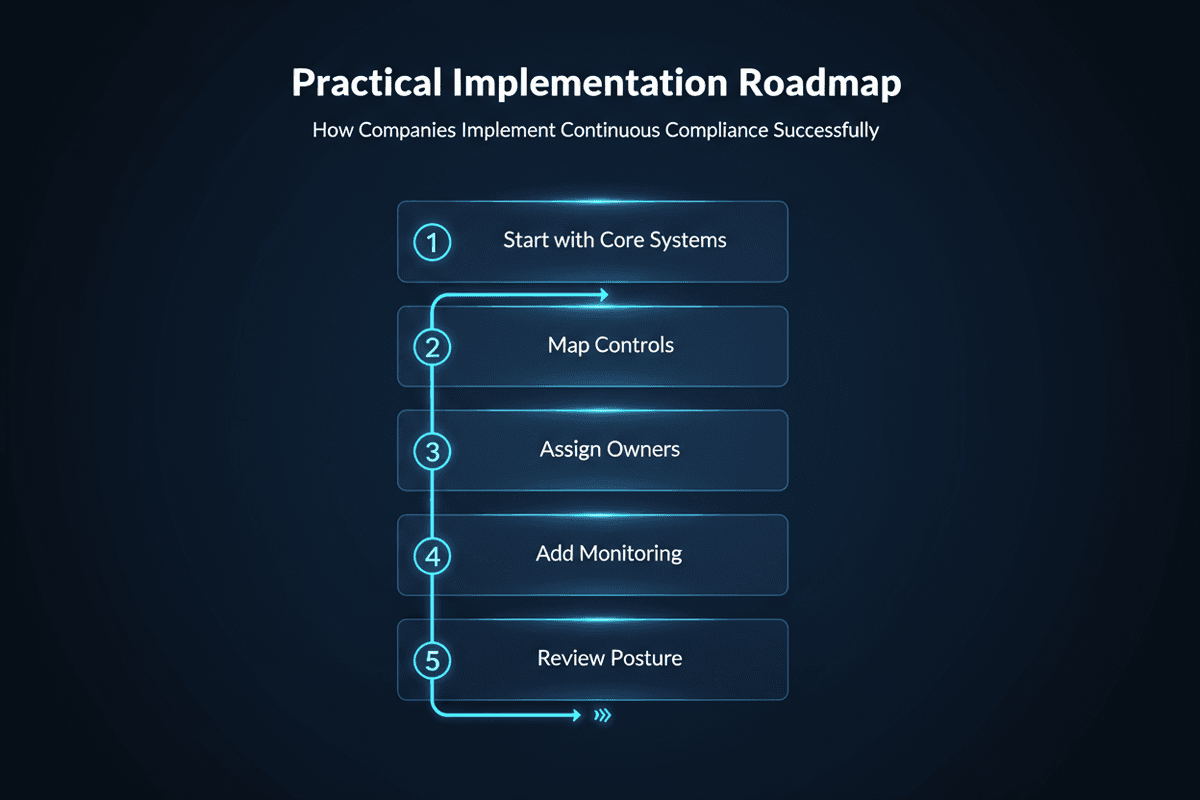
How Companies Implement Continuous Compliance Successfully
Organisations often overthink this process. The most effective approach is to start small and expand.
Capture The Bug has seen this method work consistently:
Step 1: Start with your most sensitive systems
Identify your core applications, data flows, and cloud environments. Focus there first.
Step 2: Map your existing controls
You likely already have strong practices. Bring them into a structured baseline.
Step 3: Assign control owners
Give every control a person responsible. When ownership is shared, outcomes improve.
Step 4: Introduce monitoring and evidence workflows
Build visibility and proof into the daily workflow, not as a separate project.
Step 5: Review posture quarterly
Every three months, evaluate metrics, tune alerts, and update your baseline.
The goal is not perfection. The goal is visibility that improves over time.
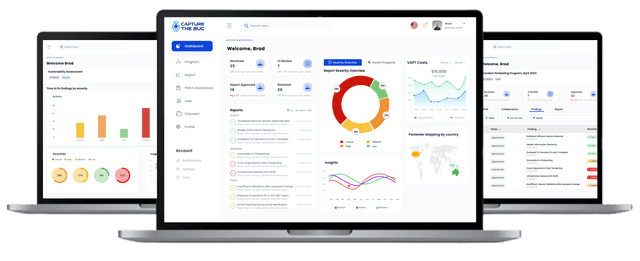
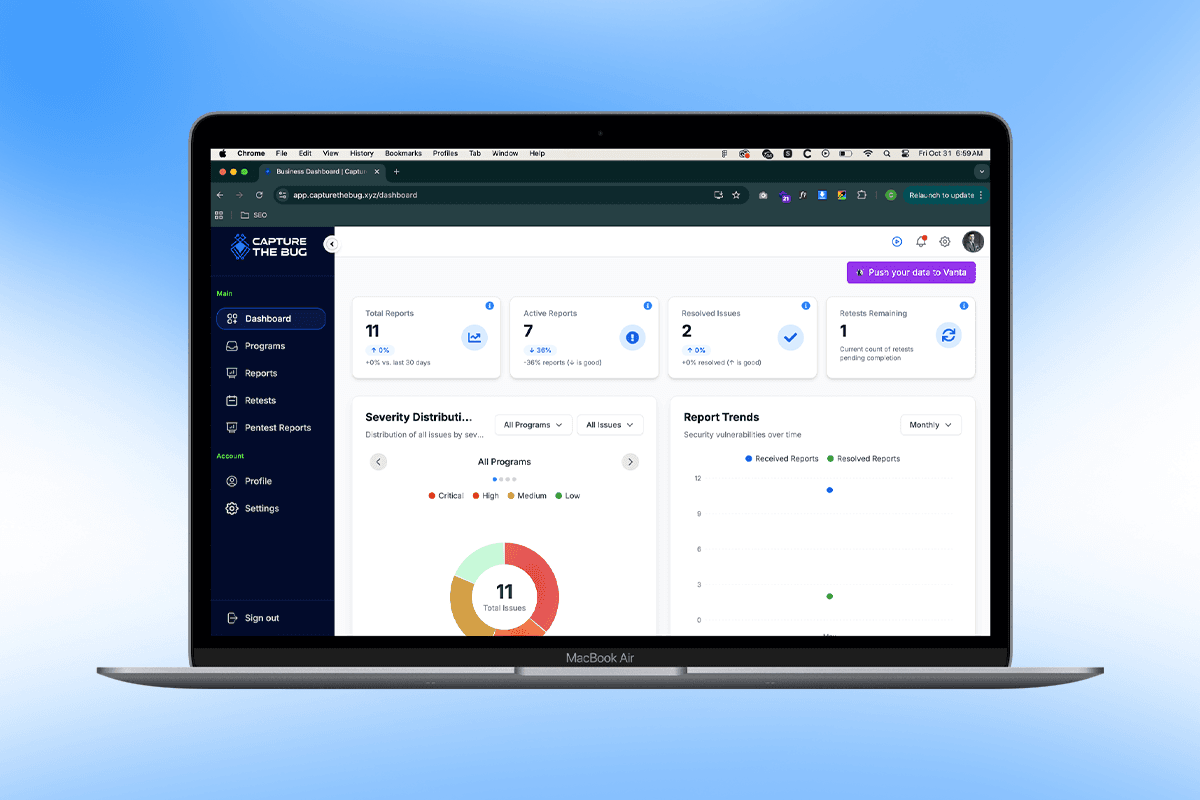
Experience Capture The Bug Platform
Streamline your security testing with our PTaaS platform. Collaborate with expert testers, track vulnerabilities, and secure your applications effortlessly.
The Role of Security Testing in Continuous Compliance
Security testing plays a central role in proving controls actually work. Compliance frameworks require evidence that systems are tested regularly and vulnerabilities are fixed.
This is where continuous security testing becomes essential. It offers organisations:
- Regular validation
- Continuous visibility
- Faster remediation cycles
- Proof for audits
- Confidence for leadership
Testing is no longer a once-a-year checkpoint. It becomes part of the compliance rhythm.
Final Thoughts
Continuous compliance is not about adding pressure. It is about removing it. It replaces last-minute panic with steady operational confidence.
When companies adopt this approach, audits become smoother and teams become more aligned. Leaders gain clarity. Customers gain trust. And security becomes something built into the way the organisation works.
In a world where environments change daily, continuous compliance is not optional. It is the only realistic way to stay secure, accountable, and audit-ready.
Frequently Asked Questions
What is continuous compliance?
Continuous compliance is the ongoing practice of monitoring controls, collecting evidence, and keeping systems aligned with standards every day, not just during audits.
Why is continuous compliance important?
It reduces audit friction, improves security visibility, prevents configuration drift, and keeps organisations ready at all times.
How does continuous compliance help with audits?
Evidence is collected automatically, controls are monitored continuously, and issues are resolved before the auditor ever arrives.
What systems benefit most from continuous compliance?
Cloud applications, SaaS platforms, data-sensitive systems, and fast-moving technology teams.
Is continuous compliance expensive?
No. It reduces overall costs by lowering last-minute rework, shortening remediation cycles, and simplifying audits.
One platform to manage, track, and secure all your penetration tests.
Simplify your vulnerability management with Capture The Bug’s PTaaS platform where businesses and security experts collaborate seamlessly.