Penetration Testing for Startups and Small Businesses – A Guide for Founders
Every startup founder obsesses over product, growth, and customers. That is how it should be. But there is a quiet risk running alongside that momentum. The faster you build, the easier it becomes to ship something that works but is fragile underneath.
Most breaches do not happen because founders do not care about security. They happen because security is postponed until later. Later usually arrives as a failed deal, a customer questionnaire you cannot answer, or an incident that forces uncomfortable conversations with investors.
Penetration testing exists to prevent those moments. For startups and small businesses, it is not a luxury or a compliance checkbox. It is a practical way to understand how exposed your business really is before someone else shows you the hard way. This guide is written for founders, not security teams. No noise. No hype. Just clarity.
What penetration testing actually means for a startup
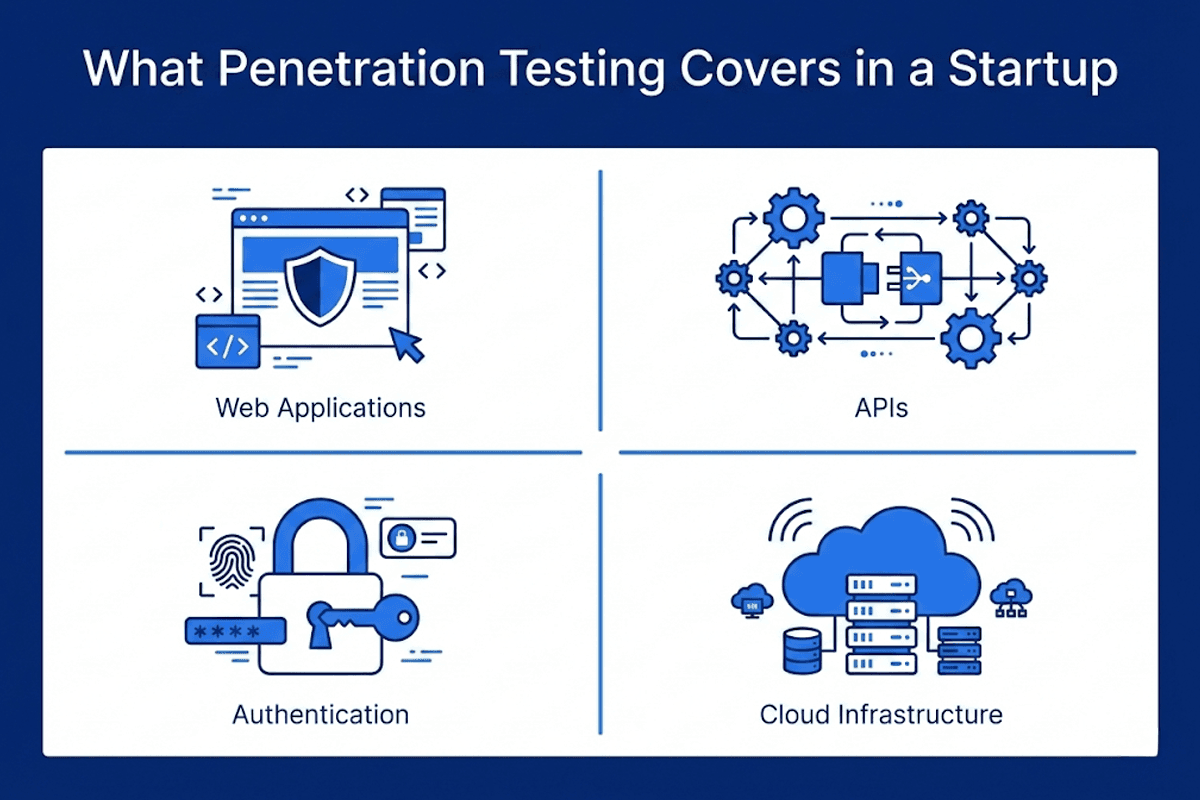
Penetration testing is a controlled attempt to break into your systems the same way a real attacker would. The goal is simple: find weaknesses before they are exploited. For startups, this usually covers web applications, dashboards, APIs, authentication flows, and critical cloud services.
The outcome is not just a list of issues. A good test explains what can realistically go wrong, how serious it is, and what to fix first. Think of it as a stress test for trust. If your product handles customer data, payments, or business-critical workflows, penetration testing tells you whether that trust is justified.
Why startups and small businesses need penetration testing early
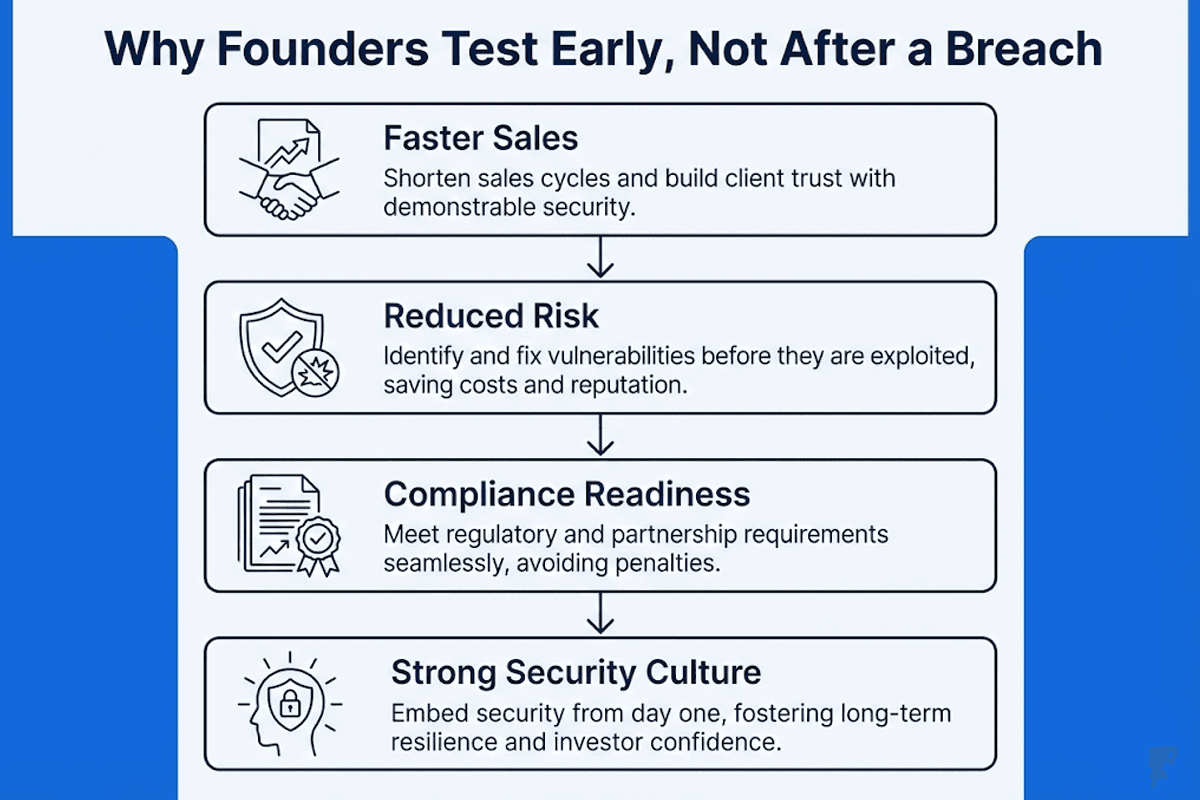
Early-stage companies often feel they are "too small" to be targeted or "too early" for formal security. In reality, this is when security decisions are cheapest and most effective. Four reasons stand out.
1. Security reports help you close deals
Enterprise customers and regulated buyers ask for proof of security long before contracts are signed. A verified penetration testing report shows you take risk seriously, reduces procurement friction, and shortens sales cycles. Waiting until a deal is blocked is the most expensive time to test.
2. Delaying testing multiplies future problems
Every release adds new logic, integrations, and assumptions. Without regular testing, small weaknesses stack up quietly. When you eventually test, you are fixing many issues at once, under pressure. Early testing keeps problems small and lets your team build with awareness instead of backtracking.
3. Compliance pressure arrives sooner than expected
As soon as you handle sensitive data, you inherit expectations from frameworks like SOC 2, ISO 27001, HIPAA, or PCI-DSS. These standards expect evidence of real testing, not promises. Penetration testing turns compliance from a future scramble into a steady, manageable process.
4. It shapes how your team thinks
The biggest long-term value is cultural. When engineers see real attack paths instead of abstract advice, behaviour changes. Safer patterns become habits. Risk becomes something the team understands, not something security "owns". That mindset compounds as the company grows.
Which type of penetration test makes sense for startups
Not all penetration tests are equal, and startups do not need everything at once. The goal is to pick an approach that reflects how attackers really operate while respecting your constraints.
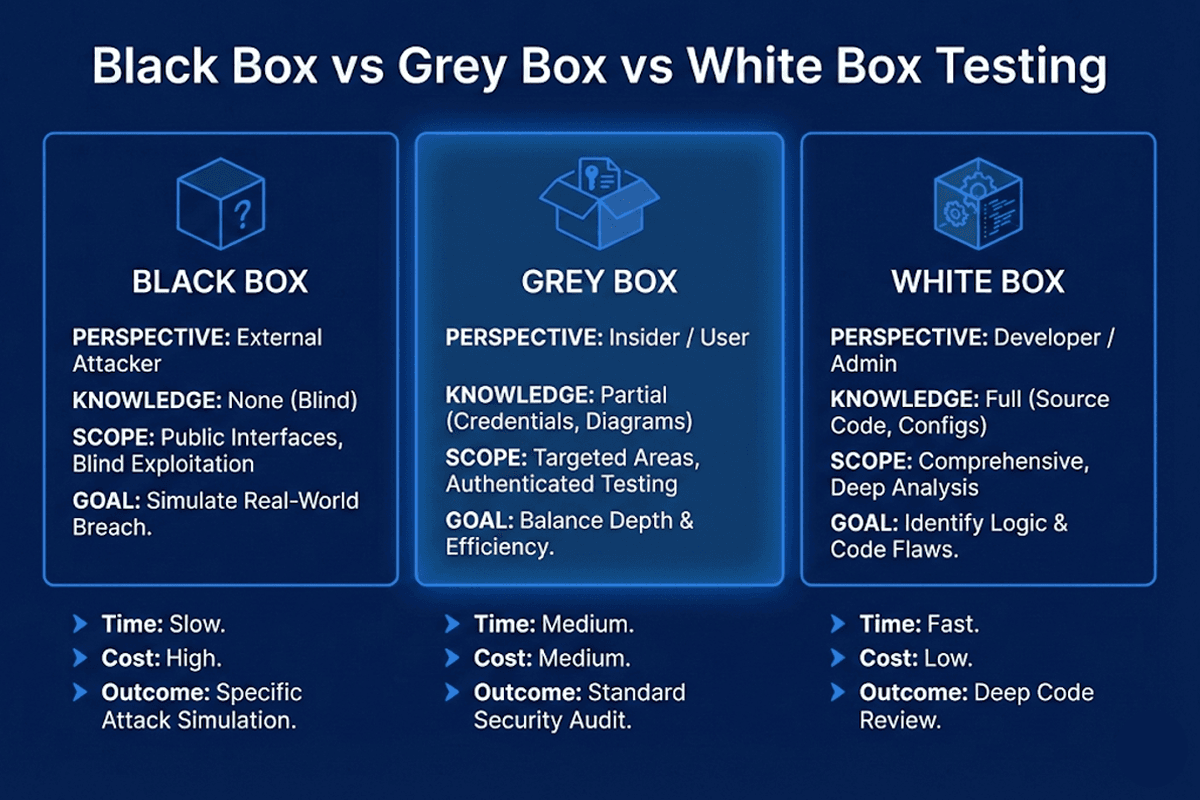
Black box testing
Black box testing simulates an outsider with no inside knowledge. It answers a simple question: what can someone do if they find your product on the internet? This is useful for understanding external exposure and first impressions from an attacker’s perspective.
White box testing
White box testing assumes full visibility into architecture, logic, and configurations. It goes deep and is best suited for mature teams or highly regulated environments. For early-stage startups, this can be more than you need initially.
Grey box testing (often the best starting point)
Grey box testing sits in the middle. Testers have limited guidance and access, enough to focus on realistic risks without boiling the ocean. For most startups, this approach provides the best balance of depth, cost, and relevance.
How penetration testing typically works for startups
While every provider has their own method, most effective startup tests follow a similar structure.
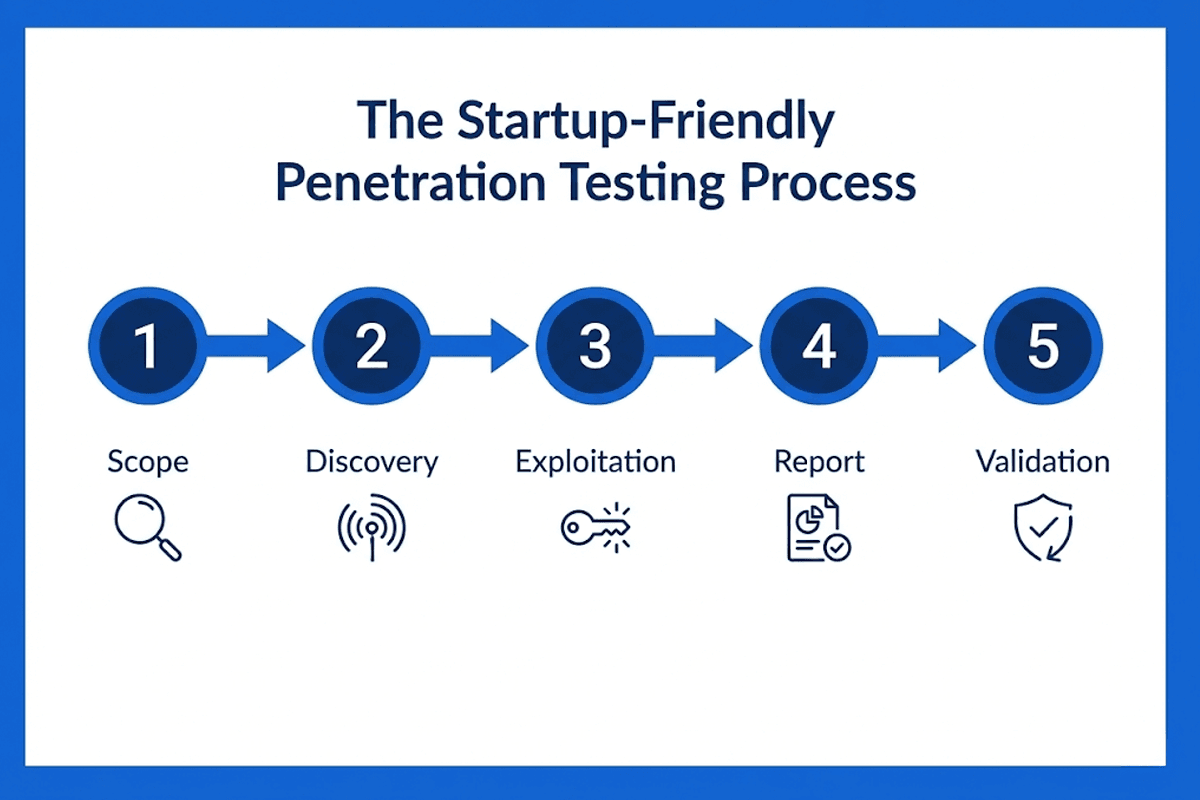
Step 1: Scoping and alignment
Clear scope is where many projects succeed or fail. Founders should be able to answer what assets matter most right now, what data would hurt most if exposed, and which timelines and budgets are realistic. Good partners help you narrow focus instead of expanding it.
Step 2: Discovery and analysis
Testers explore how your systems are structured, what is exposed, and where trust boundaries exist. This phase is about understanding before exploiting. The better this step, the more relevant the findings.
Step 3: Exploitation
Here, weaknesses are validated. Not everything theoretical matters. What matters is what can actually be abused. This step separates noise from real risk and is where meaningful, actionable evidence is generated.
Step 4: Reporting
A strong report is readable by founders, not just engineers. It should clearly explain what was found, why it matters, what to fix first, and what can wait. Good reporting turns technical work into business decisions.
Step 5: Validation and follow-up
Fixes should be confirmed, not assumed. For startups, this step is critical. You want to know problems are truly gone, not just patched on paper. Retesting builds confidence and prevents regressions.
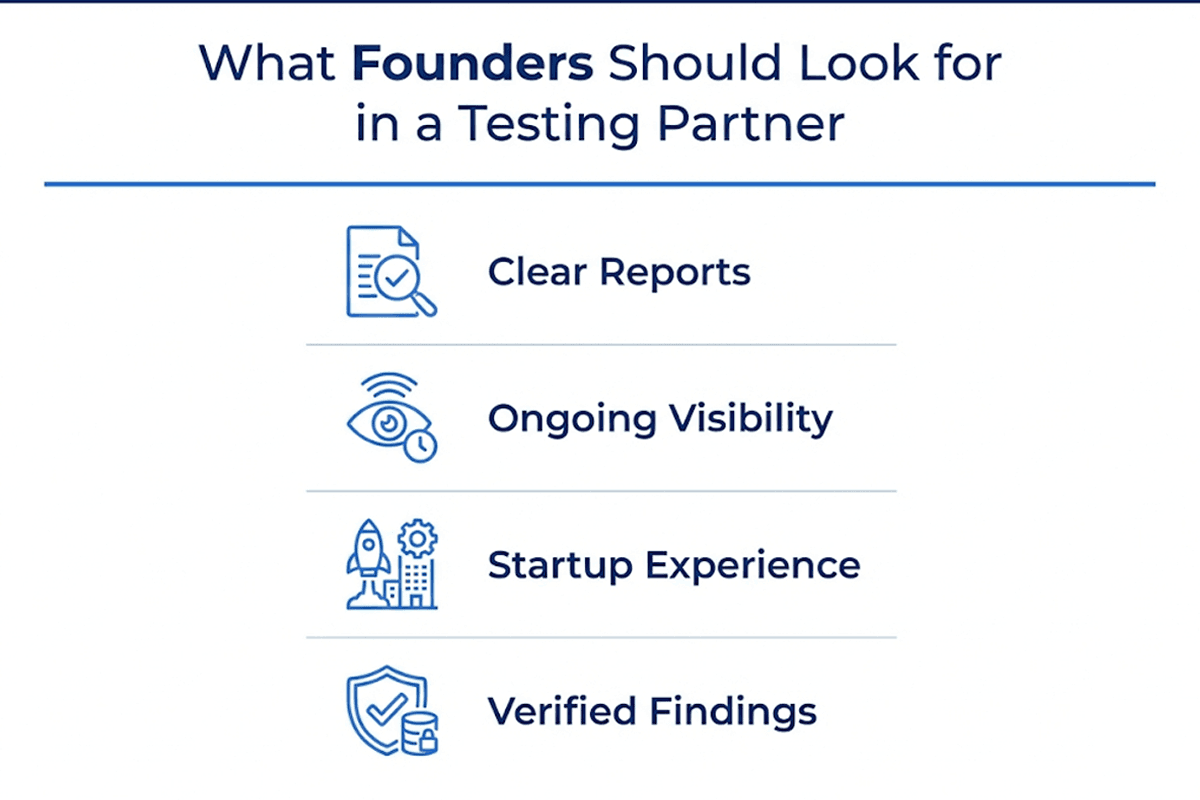
How founders should choose a penetration testing partner
Before comparing vendors, write down why you are testing now, what success looks like, and which customers or standards you need to satisfy. This keeps conversations grounded and prevents scope creep.
Founders should look for partners that provide ongoing visibility, not just one-off reports. Startups change too fast for snapshots to stay useful. Favour approaches that allow retesting, progress tracking, and clear ownership of fixes over time.
Demand plain-language explanations. If you cannot explain the findings to your board or customers, the test has failed its purpose. Security that only experts understand does not scale in a startup.
Common challenges startups face with penetration testing
Budget constraints
Testing can feel expensive when compared with growth initiatives. But breaches, failed deals, or compliance delays cost more. The practical approach is to start small and expand coverage as the business grows.
Limited internal security expertise
Many startups do not have dedicated security roles. The right partner explains, prioritises, and guides instead of handing over dense documents. They help your team understand issues without needing a full-time security hire on day one.
Rapid release cycles
Fast development is not the enemy. Unchecked assumptions are. Testing aligned with releases prevents surprises instead of slowing teams down. Integrating testing into your release cadence keeps risk visible without blocking innovation.
Scope creep
Trying to fix everything at once leads to burnout. Good penetration testing helps you focus on what actually puts the business at risk today, with a clear plan for what comes next.

How Capture The Bug supports founders and small teams
Capture The Bug works with startups and small businesses across ANZ, the USA, and globally. The focus is practical security that fits how founders operate. The approach emphasises clear, founder-readable findings, verified issues instead of noise, and ongoing visibility into risk and remediation.
Testing is aligned with CREST standards without the friction and overhead of a traditional enterprise engagement. For early-stage teams, this means security becomes manageable instead of intimidating and supports, rather than slows, growth.
Final thoughts for founders
Penetration testing is not about fear. It is about control. Founders who test early make better decisions later. They avoid surprises, build trust faster, and scale with confidence. The question is not whether your startup will face security scrutiny. It is whether you are prepared when it happens.
Start small. Stay consistent. Treat security as part of building a serious business. Over time, the habits you build now will determine how resilient your company is when real pressure arrives.
FAQ
How long does penetration testing take for startups?
Most startup-focused tests take one to two weeks depending on scope and complexity.
Is penetration testing expensive for small businesses?
Costs vary, but targeted testing focused on critical assets is often affordable and far less costly than post-incident recovery.
How often should startups run penetration tests?
At minimum, annually or before major releases. Faster-moving teams benefit from more frequent validation.
Does penetration testing slow down development?
When done correctly, it aligns with development rather than blocking it. Issues are identified early, not after launch.
Is penetration testing only for compliance?
No. Compliance is a side benefit. The real value is understanding and reducing business risk.