Choosing the Right Regulatory Compliance Software: A Practical Buyer's Guide for Growing Companies
Regulatory compliance used to be something you dealt with once or twice a year. Today, it touches product decisions, customer trust, sales cycles, and board conversations. Regulations change more often. Auditors ask deeper questions. Customers want proof, not promises.
For many companies, especially SaaS, fintech, healthcare, and regulated service providers, spreadsheets and shared folders no longer scale. That is where regulatory compliance software enters the conversation.
But not all compliance software is built the same. Some tools look good in demos and fall apart during audits. Others add overhead instead of removing it.
This guide is written from a practitioner's perspective. No buzzwords. No theory. Just practical guidance on how to choose regulatory compliance software that supports real teams doing real work.
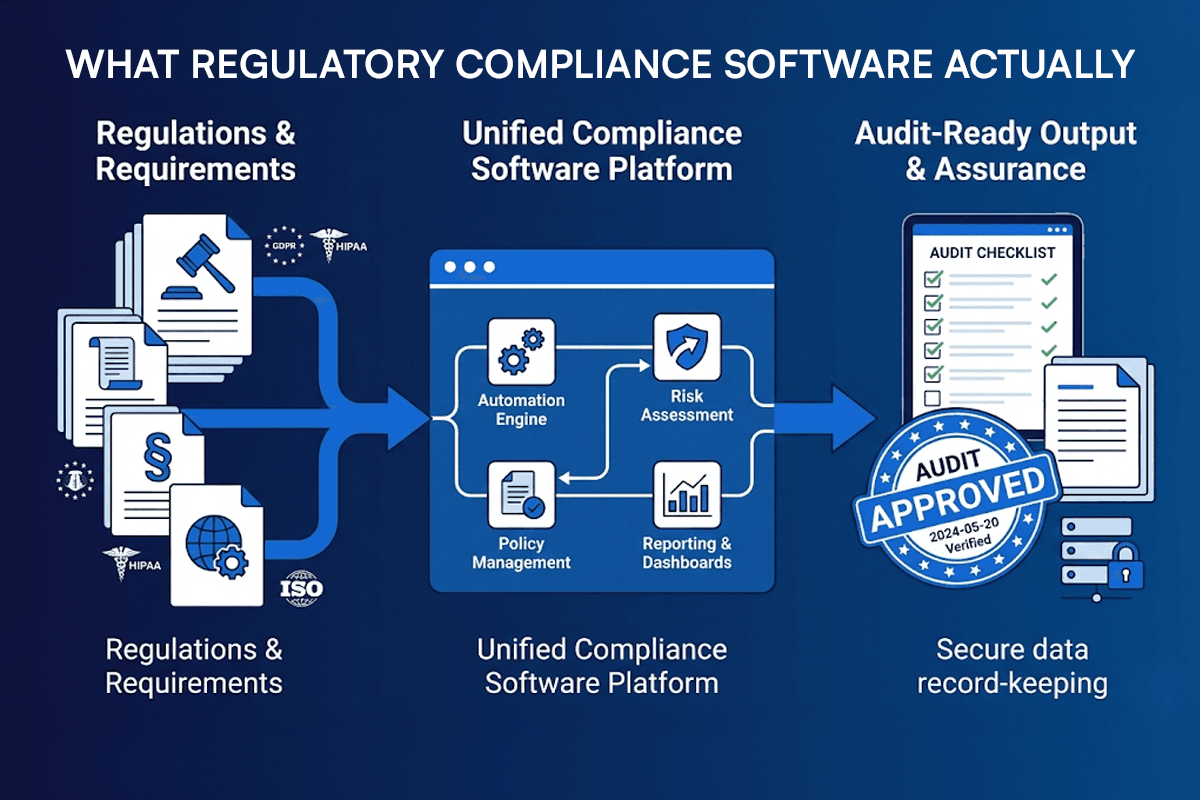
What regulatory compliance software actually does
At its core, regulatory compliance software helps organizations manage their obligations under laws, regulations, and standards such as ISO 27001, SOC 2, HIPAA, PCI DSS, and regional privacy laws.
A good platform does three things well:
First, it translates requirements into clear actions. Regulations are written by lawyers, not engineers. Software should break them into understandable controls and tasks that teams can follow.
Second, it creates a single source of truth. Policies, evidence, controls, and audit history should live in one place, not across emails and shared drives.
Third, it reduces friction during audits. When auditors ask for proof, you should be able to show it quickly, confidently, and consistently.
If a tool does not meaningfully reduce audit stress, it is not doing its job.
Why companies invest in compliance software
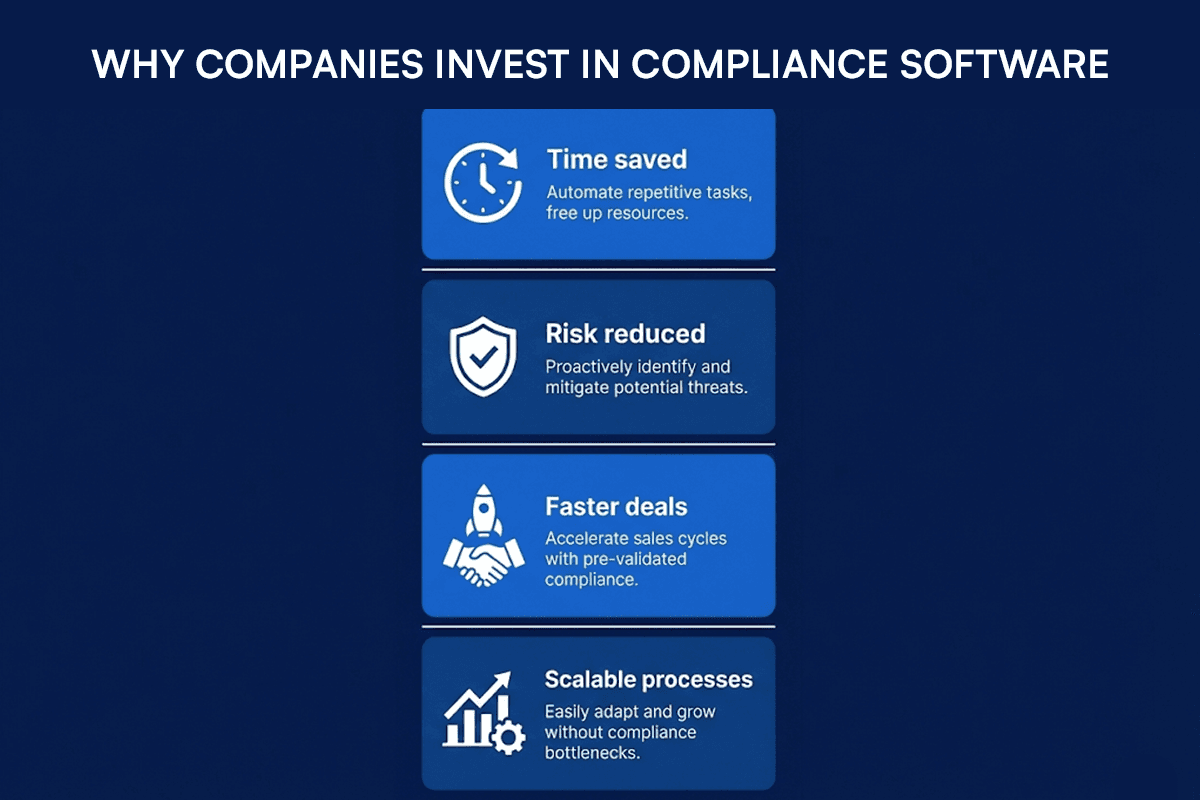
Most organizations do not buy compliance software to save money in the short term. They invest to reduce risk, speed up processes, and build trust.
The return usually shows up in four areas:
- Time saved. Teams spend fewer hours chasing documents, updating trackers, and preparing for audits.
- Lower risk. Gaps are identified earlier, before they turn into audit findings or customer issues.
- Faster deals. Enterprise buyers often ask detailed security and compliance questions. Being able to answer with confidence shortens sales cycles.
- Consistency at scale. As companies grow, manual compliance breaks down. Software creates repeatable processes that scale with the business.
When chosen correctly, compliance software becomes infrastructure, not overhead.
Core capabilities to look for
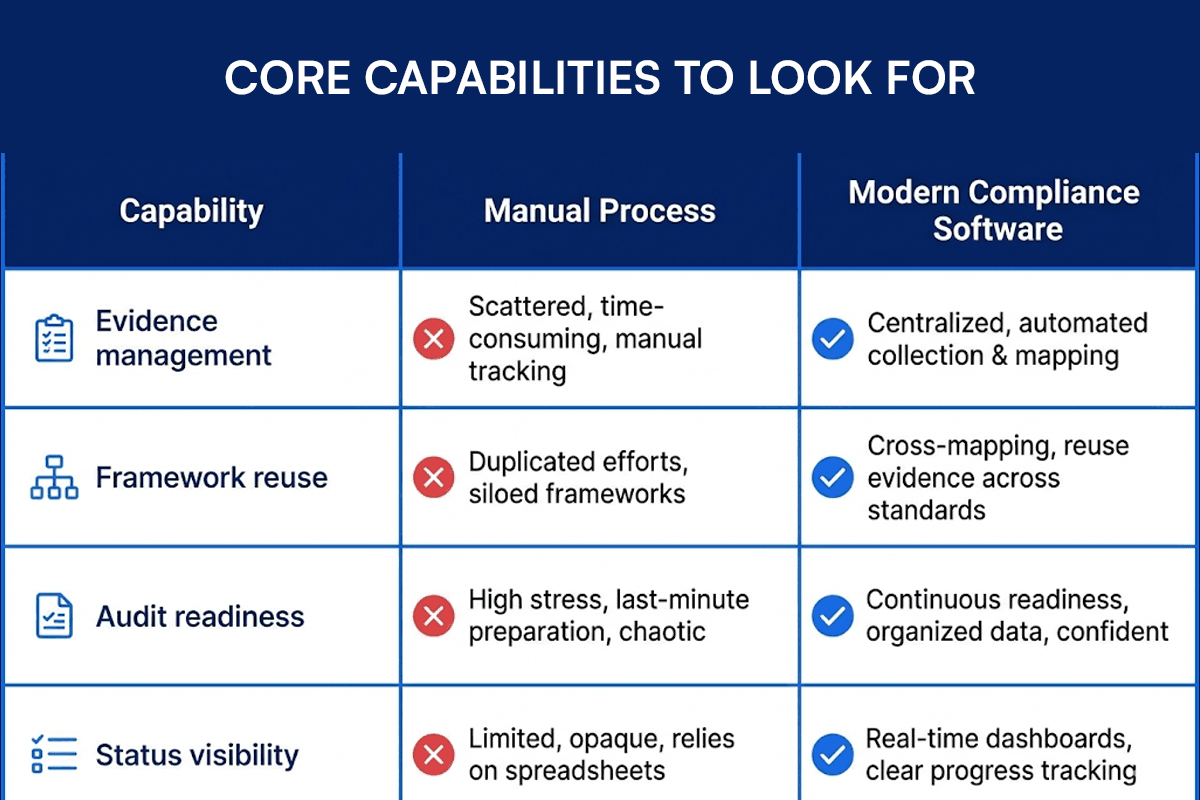
Before comparing vendors, it helps to understand which features are non-negotiable.
Support for relevant frameworks
The software should support the frameworks you already need and the ones you are likely to need next. Look for clear coverage, not vague promises. If your organization operates across regions, multi-framework support becomes essential.
Cross-framework mapping
Many regulations overlap. A strong platform allows you to reuse controls and evidence across frameworks instead of starting from scratch each time. This reduces workload and improves consistency.
Evidence and documentation management
Audits live and die on evidence. The software should make it easy to store, organize, and retrieve proof such as policies, logs, screenshots, and approvals. Version history matters.
Clear status visibility
You should be able to see, at any moment, where you stand. What is complete. What is in progress. What is overdue. You should not need a week to prepare a leadership report.
Practical policy management
Policies should be living documents, not forgotten files. The platform should support updates, reviews, approvals, and clear ownership.
Five practical steps to choosing the right tool
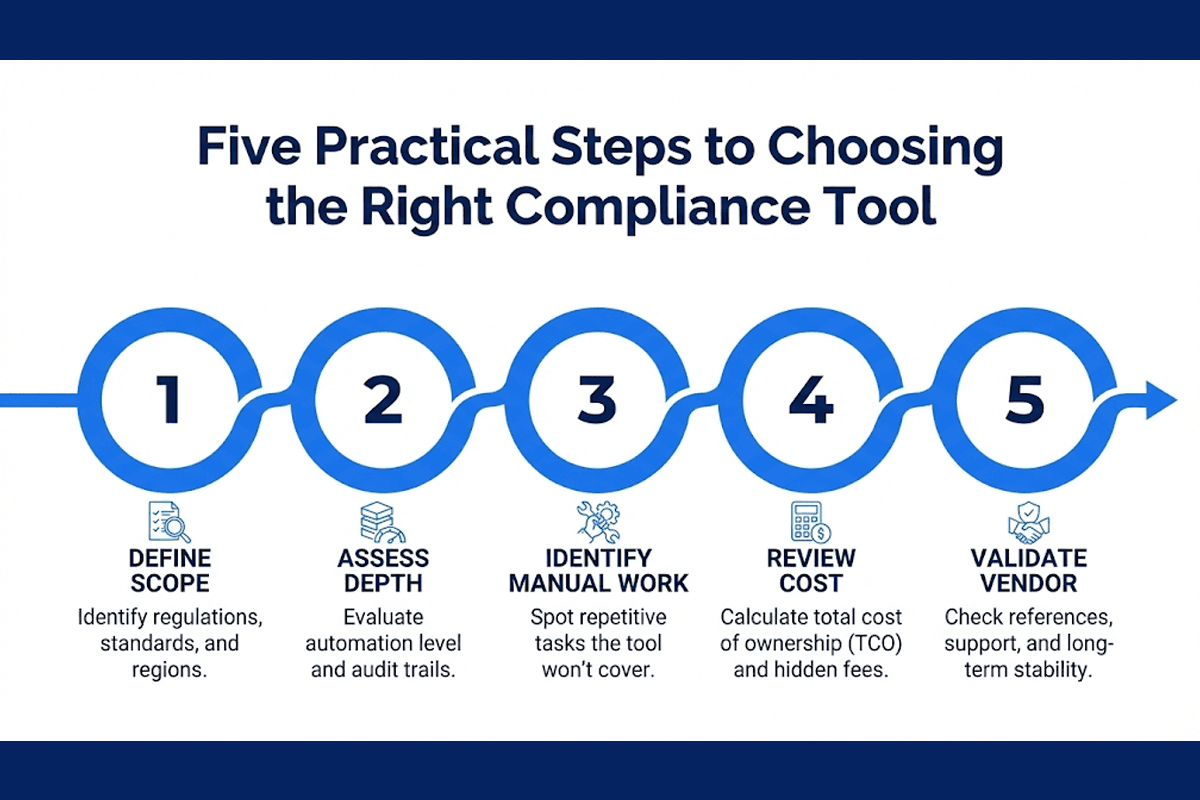
1. Start with your real compliance scope: List the regulations you must meet today and the ones your customers are already asking about. Involve security, legal, and leadership early.
2. Evaluate depth, not just coverage: Ask to see how a single control is managed from start to audit. Don't fall for platforms that claim to support dozens of frameworks but leave the hard work to you.
3. Understand what remains manual: No platform removes all manual work. Ask vendors what your team will still need to handle—evidence validation, risk decisions, final sign-offs.
4. Review pricing with future growth in mind: Check for user limits, framework add-ons, and costs that increase as you scale. Avoid friction later.
5. Assess vendor credibility and support: Choose a vendor that understands audits and real security practices. Support quality matters when an auditor asks an unexpected question.
Questions to ask before you sign
Before committing, ask direct questions:
- What evidence will we still need to collect ourselves?
- How do updates to regulations get reflected in the platform?
- How does the software support external audits?
- What happens to our data if we stop using the platform?
- Who supports us during an audit if issues arise?
Common mistakes to avoid
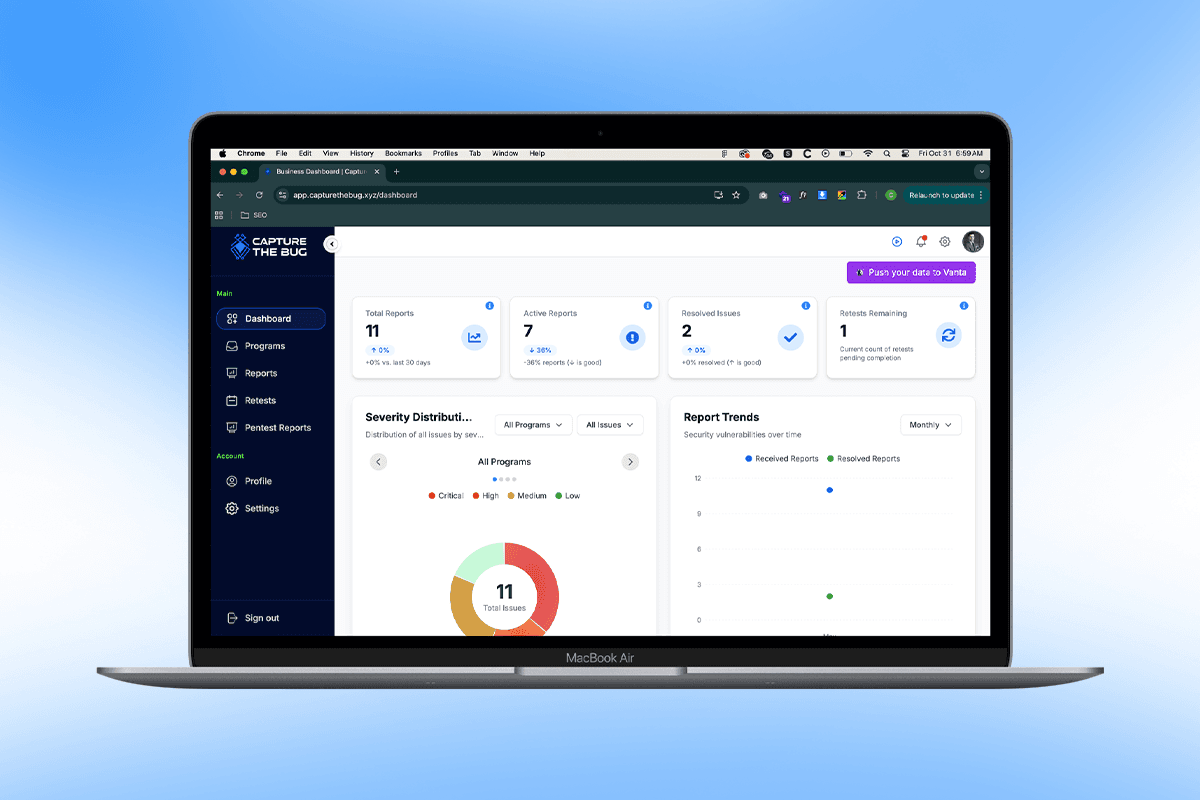
- Buying for appearances instead of outcomes: A polished dashboard means nothing if audits remain painful.
- Over-customizing early: Start simple. Mature your process before adding complexity.
- Ignoring internal adoption: If the tool is too complex, teams will avoid it.
- Treating compliance as a checkbox: Software supports compliance, but leadership commitment sustains it.
How Capture The Bug approaches compliance software
Capture The Bug approaches regulatory compliance from a practitioner's mindset. As a CREST-certified security testing company working with regulated clients globally, we see firsthand where compliance breaks down.
The focus is simple: make compliance usable, defensible, and aligned with how teams actually operate. This means:
- Clear alignment with common regulatory frameworks
- Evidence that stands up during real audits
- Visibility that security leaders can trust
- Processes that scale as organizations grow
Compliance is not treated as paperwork. It is treated as part of operational risk management. This perspective shapes how Capture The Bug supports clients who need both strong security assurance and credible compliance outcomes.
Conclusion
Choosing regulatory compliance software is not about buying features. It is about choosing a system that supports trust. The right platform reduces noise, improves clarity, and helps teams focus on what matters. The wrong one adds friction and false confidence.
Take your time. Ask hard questions. Choose based on how the software performs when audits arrive, not how it looks in a demo. Compliance is not getting easier. Your tools should make it manageable.
FAQ
What is regulatory compliance software?
It is software that helps organizations manage, track, and demonstrate adherence to laws, regulations, and standards relevant to their industry.
Who needs regulatory compliance software?
Any organization operating in regulated industries or selling to enterprise customers can benefit, especially SaaS, fintech, healthcare, and technology providers.
Does compliance software replace audits?
No. It supports audit preparation and execution by organizing evidence and controls, but external audits are still required.
How long does it take to implement compliance software?
Most teams can begin using core features within weeks, with maturity improving over time as processes stabilize.
Is compliance software only for large companies?
No. Many growing companies adopt it early to avoid scaling problems later and to meet customer expectations.