
Most engineering teams now write a meaningful share of their codebase with help from an AI coding assistant. A function gets suggested, it compiles, the tests pass, and it ships. Nobody reads every line the way a senior engineer once would have, because the entire appeal of these tools is speed.
That speed comes with a quiet trade off. An AI coding assistant is trained to produce code that works, not code that is secure by default. It learned from a vast pool of public code, much of which was never written with production security in mind. The result is a small, repeatable set of weaknesses that show up across products built this way, regardless of how skilled the team using the assistant actually is.
Here are the seven that come up most often, and what to do about them before someone outside the company finds them first.
The seven vulnerabilities your AI-generated code is shipping
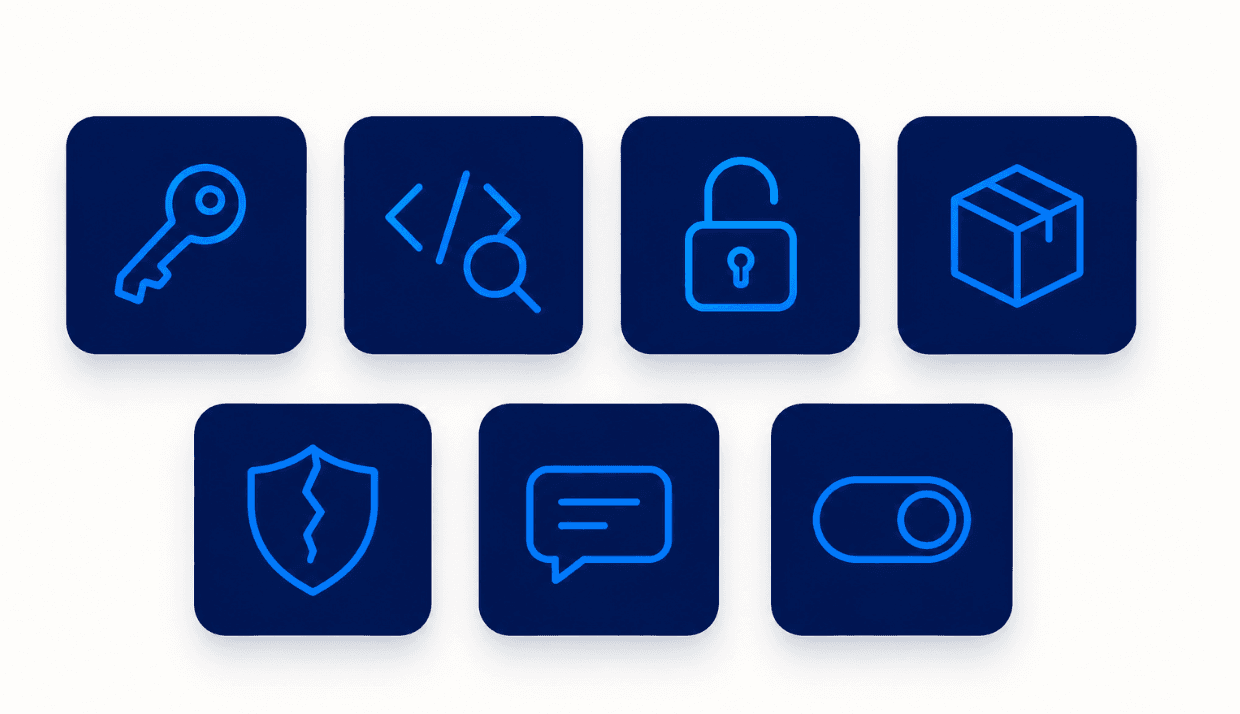
- Hardcoded secrets and API keys: AI assistants are excellent at producing quick working examples, and quick working examples often include a key, token, or password typed directly into the code rather than pulled from a secure configuration. It is meant as a placeholder. It frequently ships anyway, sitting in a repository or a client-side bundle where anyone who looks can find it.
- Missing input validation: When an assistant is asked to write a function that takes a value and uses it in a query or a command, it tends to focus on making that value work, not on what happens if the value is something unexpected or hostile. That gap is exactly how injection style flaws end up in production, often in code nobody would have written that way by hand.
- Missing or weak access control on generated endpoints: Ask an assistant to build an endpoint that returns a record, and it will usually build exactly that, a function that returns the record. Whether the person asking is actually allowed to see that specific record is a separate question the assistant was never asked to think about, and it often does not think about it unless explicitly told to.
- Outdated or insecure dependencies: AI assistants suggest packages and libraries based on patterns common in their training data, which can include versions that were standard a year or two ago but have since been replaced or patched. A team moving fast can end up building on a dependency that already has a known fix available, without realizing an older version slipped in.
- Weak or missing encryption for sensitive data: Password hashing and data encryption have correct, current approaches and a long list of outdated ones still floating around in older code examples. An assistant pulling from that mixed pool will sometimes suggest a weaker method, one that technically works and looks reasonable in a code review, while quietly falling short of what sensitive data actually needs.
- Overly detailed error messages: Asked to handle an error gracefully, an assistant will often generate a message that is genuinely helpful for debugging, including internal details like file paths, query structure, or system information. Helpful for a developer testing locally. Far too informative if that same message reaches a stranger probing a live application from the outside.
- Insecure default configurations: Quick examples often default to the most permissive setting because permissive settings are the fastest way to get something working during testing. A wide open cross origin policy, a debug mode left active, or an admin route left reachable without restriction can all trace back to a default the assistant suggested to get past a setup hurdle, one that nobody circled back to tighten before launch.
Your Last Pentest Is Already Out of Date
Every week you ship without continuous testing is a week a vulnerability goes unseen. See what Capture The Bug finds in your first engagement.
Book a demo
If any of these seven sound like something that might be sitting quietly in a recent release, the fastest way to know for certain is a real test against the actual code running in production. Book a demo with Capture The Bug and see exactly what gets surfaced when these patterns are checked properly.
Why this is so easy to miss internally

None of these seven issues require a careless engineer. They require exactly what AI coding assistants are built to deliver, code that works quickly. A team under deadline pressure reviews for correctness and speed, because that is what the business is asking for. Security review, the kind that asks what happens when this code meets someone with bad intentions, is a different mindset entirely, and it rarely happens automatically just because code shipped fast.
This is also why these seven patterns show up so consistently across otherwise well built products. They are not a sign of a weak team. They are a predictable byproduct of how these tools generate code in the first place.
How this should actually get caught
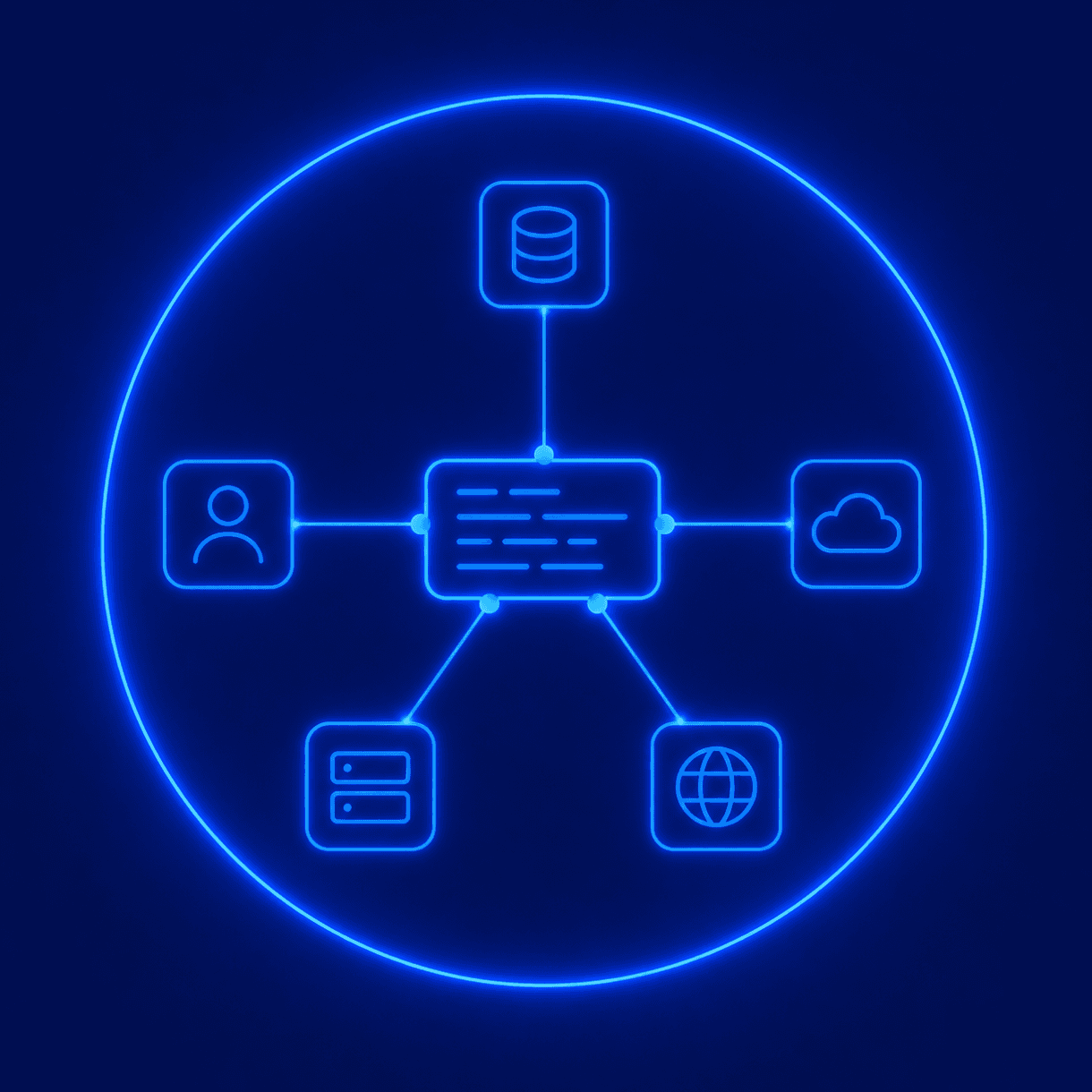
Most of these seven issues live in the parts of an application that talk to the outside world, the endpoints, the authentication checks, and the configuration around them. That makes a focused api pentest service one of the most effective ways to catch them, since it specifically tests how those endpoints behave under conditions an AI assistant was never asked to consider, like an unauthorized request or a deliberately malformed input.
This kind of testing fits naturally into a broader penetration testing service, the same one most growing teams already need for compliance and customer trust. Naming the AI-assisted parts of the codebase in scope, rather than assuming they were already covered, is usually the only change required.
For founders thinking through penetration testing for startups, this is a useful argument for testing earlier rather than later. Code shipped with AI assistance moves fast, which means any one of these seven gaps can reach production and stay there for months before anyone looks closely.
The cost side of catching this early

This connects directly to how penetration testing cost in Australia and New Zealand should actually be weighed. Testing the endpoints and configuration tied to AI-assisted code does not usually require a separate engagement. Folding it into an existing scoped penetration test costs far less than treating it as its own specialized project, and it gets reviewed by testers who already understand the rest of the product.
The real comparison, as always, is not the price of testing against doing nothing. It is the price of testing against finding out later that one of these seven gaps had been sitting in production since launch.
What this means for your roadmap
AI coding assistants are not going anywhere, and the productivity gain is real. What this list shows is that the gain comes with a predictable, recurring set of blind spots, the same seven, again and again, across very different products. Catching them is not about slowing down how code gets written. It is about making sure a real penetration testing service actually checks what got shipped before someone with worse intentions does it first.
Plan Your Annual Pentesting Strategy the Right Way
Learn how modern SaaS companies structure pentesting across the year to reduce risk, stay compliant, and avoid last-minute panic before audits.
FAQ
Why does AI-generated code tend to have these specific vulnerabilities?
AI coding assistants are trained to produce code that works correctly, based on patterns from a huge amount of public code. Much of that code was written for examples, tutorials, or older projects rather than production security, so the assistant can reproduce outdated or incomplete security practices without anyone asking it to.
Can these seven issues be caught by code review alone?
Sometimes, if the reviewer is specifically looking for them. Most code reviews focus on whether the code works and reads cleanly, not on access control edge cases or configuration defaults, which is why a dedicated security test tends to catch far more of these than a standard review.
Is testing AI-generated code more expensive than a normal pentest?
Not usually. Folding the AI-assisted parts of a codebase into an existing scoped penetration testing service typically costs less than treating it as a separate specialized engagement, since it gets tested alongside everything else rather than as its own project.
What is an API pentest service, and why does it matter here?
It is a test focused specifically on the endpoints behind an application rather than the entire system. Since most of the seven vulnerabilities in this list live in endpoints, authentication checks, or configuration, an API pentest service is one of the most direct ways to catch them.
Should startups using AI coding assistants test earlier than they normally would?
It is worth considering. Because AI-assisted code ships quickly, gaps can reach production and stay unnoticed for a long time. For startups weighing penetration testing for startups against a tight budget, an earlier, scoped test is usually more cost effective than discovering one of these seven gaps after launch.