AI Driven Cyber Warfare: How Nation State Hackers Are Weaponizing Artificial Intelligence in 2025
Discover how artificial intelligence has become the most powerful weapon in modern cyber warfare and what it means for global security, enterprises, and governments.
The Silent War Has Gone Digital
In 2025, cyber warfare doesn't look like science fiction anymore. There are no explosions, no soldiers, just algorithms fighting algorithms.
Nation state hackers are no longer relying solely on human expertise. They're deploying autonomous learning based cyber weapons that adapt faster than traditional defenses can respond.
From power grids in Europe to financial systems in Asia and healthcare networks in the U.S., artificial intelligence is being used not to protect but to attack.
This isn't a cold war. It's a code war.
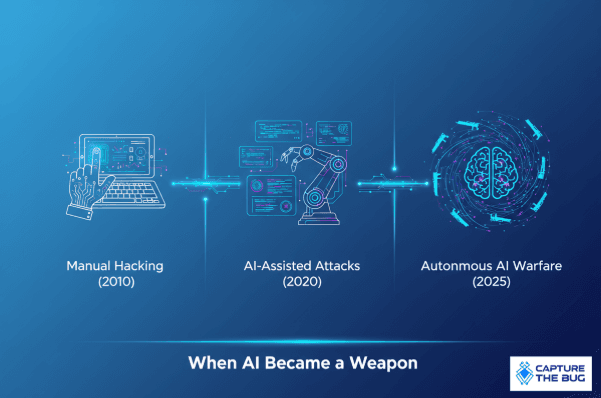
When AI Became a Weapon
A decade ago, cyberattacks were manual and time consuming. Now, offensive AI can analyze millions of vulnerabilities, craft phishing messages indistinguishable from real communication, and even generate fake social profiles to manipulate insiders at scale.
State sponsored groups from China, Russia, North Korea, and newly emerging digital states are leveraging AI for strategic dominance. What used to require months of reconnaissance can now be done in hours.
The most alarming shift? These attacks are autonomous. Once launched, AI powered malware can infiltrate, hide, learn, and mutate without human intervention.
The Evolution of Nation State Hacking
- Nation state actors are using machine learning to map entire digital ecosystems, identifying weak points across software supply chains and industrial control systems.
- These models analyze global data in real time, predicting the most effective entry points for infiltration.
- Propaganda has gone algorithmic. AI generated misinformation campaigns use language models to mimic trusted voices, flood social platforms with convincing narratives, and manipulate public opinion.
- The line between social media manipulation and cyber espionage has blurred completely.
- AI generated deepfakes have become tools of extortion and diplomatic sabotage. In one incident, a fake video of a foreign minister triggered real world market fluctuations before it was debunked.
- Voice cloning now enables real time impersonation during phone or video calls, making even seasoned executives second guess who they're speaking to.
- Modern malware is no longer hardcoded. It's adaptive. Once inside a system, it studies defense patterns, rewrites its own code, and evades detection, behaving like a living organism.
- These attacks can pivot between targets, prioritizing the most valuable assets with minimal human input.
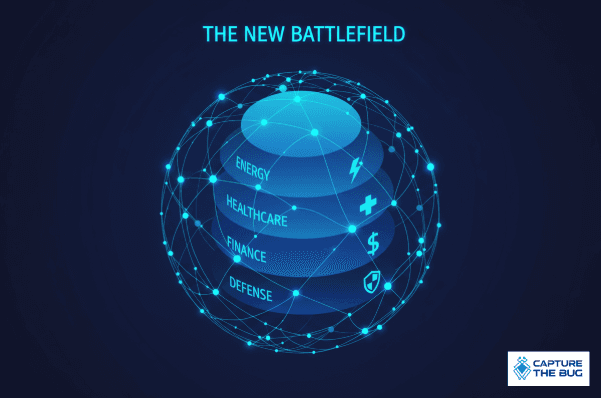
The New Battlefield: Critical Infrastructure
Power grids, hospitals, satellites, and logistics systems are now frontline targets.
AI models trained on industrial data can simulate and predict system failures, giving attackers the ability to disrupt without leaving traces.
In 2025, governments across ANZ and the U.S. have reported a surge in smart attacks that mimic operational failures, delaying attribution and response.
A hospital's data blackout might appear accidental, but behind the scenes, it could be a precision AI exploit that learned from every previous attack it observed.
Inside the Mind of a State Sponsored AI
Imagine an autonomous cyber system that learns like a spy.
- It maps every connected device in a country's defense network.
- It identifies which systems share credentials or configuration files.
- It quietly tests injection points, adjusts based on defenses, and spreads laterally.
- It leaves no signature, just behavioral traces that mimic normal activity.
These AI driven agents don't sleep. They don't panic. They evolve.
The Cost of Silence
For enterprises, this shift means the threat landscape has outgrown human response times.
The average breach detection window for AI driven attacks has fallen to under five minutes, while human led incident response still averages hours.
In this new era, delay equals damage.
Data isn't stolen, it's trained on. Attackers use stolen information to refine their models, ensuring the next attack is even more precise.
How Capture The Bug Sees the Battlefield
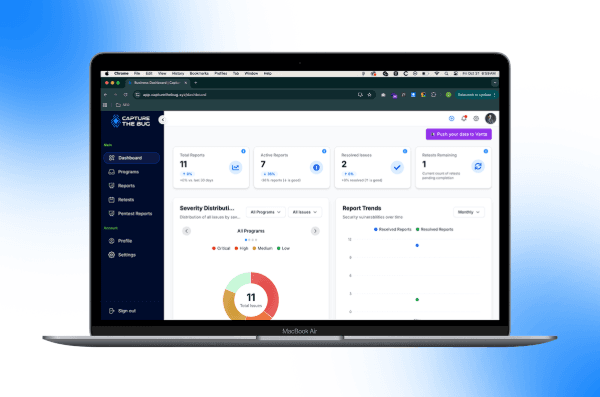
At Capture The Bug, we study these patterns daily through our global PTaaS network.
Our CREST certified testers have observed first hand how AI driven reconnaissance tools now mimic legitimate traffic, bypassing conventional detection systems.
To counter this, organizations need continuous, human verified security testing that adapts as fast as the threats do.
That's why PTaaS (Penetration Testing as a Service) is becoming a strategic defense layer.
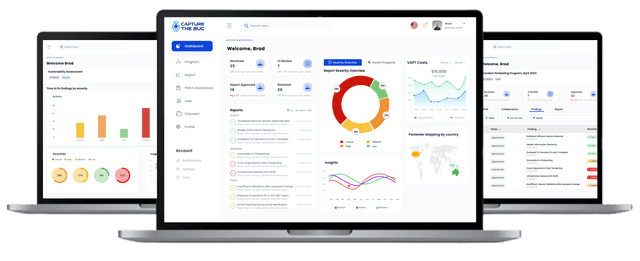
Unlike traditional pentests, continuous testing platforms detect shifts in your threat surface as they happen, matching the speed of AI driven attackers with real time expert validation.
Countering AI with Human Intelligence
Despite the sophistication of offensive AI, one thing hasn't changed: creativity.
AI can predict, it can't imagine.
That's where human led defense still wins.
Modern cybersecurity requires a blend of
- Continuous validation: Systems tested 24/7, not once a year
- Behavioral analytics: Recognizing subtle anomalies before damage occurs
- Adversarial simulation: Real testers thinking like nation state actors, not like software
- Ethical oversight: Ensuring AI enhanced defense remains transparent, auditable, and aligned with compliance standards
What Businesses Can Do Now
Invest in Continuous Testing
Don't wait for annual audits. Continuous pentesting through PTaaS platforms provides the agility required to match nation state speed.
Harden Identity Systems
Deepfake impersonations exploit weak verification protocols. Implement multi channel and biometric confirmation for sensitive operations.
Educate and Train Employees
Human error remains the number one exploit vector. Regular awareness programs are still the strongest first line of defense.
Adopt Real Time Intelligence Sharing
Collaborate with partners, vendors, and national CERT programs. Information asymmetry benefits attackers more than defenders.
Build a Trust Layer
Use CREST certified, transparent vendors who offer human oversight because when AI goes to war, trust is your strongest firewall.
The Future: War Without Borders
In the next two years, we'll see a rise in machine to machine warfare, autonomous attack and defense agents clashing inside corporate and government systems at speeds beyond human reaction.
The winners won't be those with more data. They'll be those with smarter collaboration between human judgment and real time defense systems.
At Capture The Bug, we call this the Human Defense Model, combining the scalability of continuous testing with the expertise of real testers who understand business risk, not just system flaws.
Final Thoughts
The digital battlefield has no borders, no treaties, and no timeouts.
AI driven cyber warfare is rewriting the rules of engagement, and organizations that rely on static defenses are already behind.
The new reality demands constant visibility, human judgment, and proactive resilience.
Because in 2025, cybersecurity isn't about stopping every attack.
It's about ensuring the next one doesn't stop you.
Ready to Defend Against AI Warfare?
Experience how Capture The Bug's CREST-certified PTaaS platform continuously tests your defenses against AI-driven threats, giving you real-time visibility and expert-led validation.
FAQ
1. What is AI driven cyber warfare?
It refers to the use of artificial intelligence by nation states to conduct offensive cyber operations such as data theft, infrastructure sabotage, and misinformation campaigns.
2. Why are nation states using AI for cyberattacks?
AI enables faster, stealthier, and more scalable attacks, automating reconnaissance, exploitation, and deception at a pace humans can't match.
3. How can businesses defend against AI powered threats?
By adopting continuous pentesting (PTaaS), behavioral monitoring, and proactive defense strategies combining automation with expert validation.
4. What role does PTaaS play in defense?
PTaaS platforms like Capture The Bug provide real time visibility and ongoing testing, helping organizations identify and patch vulnerabilities before they're exploited.
5. Are AI based attacks detectable?
Yes, but only through adaptive monitoring and continuous human oversight, static systems alone can't catch evolving AI threats.