Top AWS security tools by category 2025
A practical founder-to-founder guide that maps the best AWS-native and third-party tools across seven security categories so you can pick the right combination for your risk, budget, and scale.
Cloud security is about layers, not silver bullets. Capture The Bug recommends tooling that covers posture, application logic, identity, data, network, and detection so teams can protect the parts that matter most. Below is a concise, practical guide to the top tools by category for AWS environments in 2025, why each category matters, and what to evaluate when you choose.
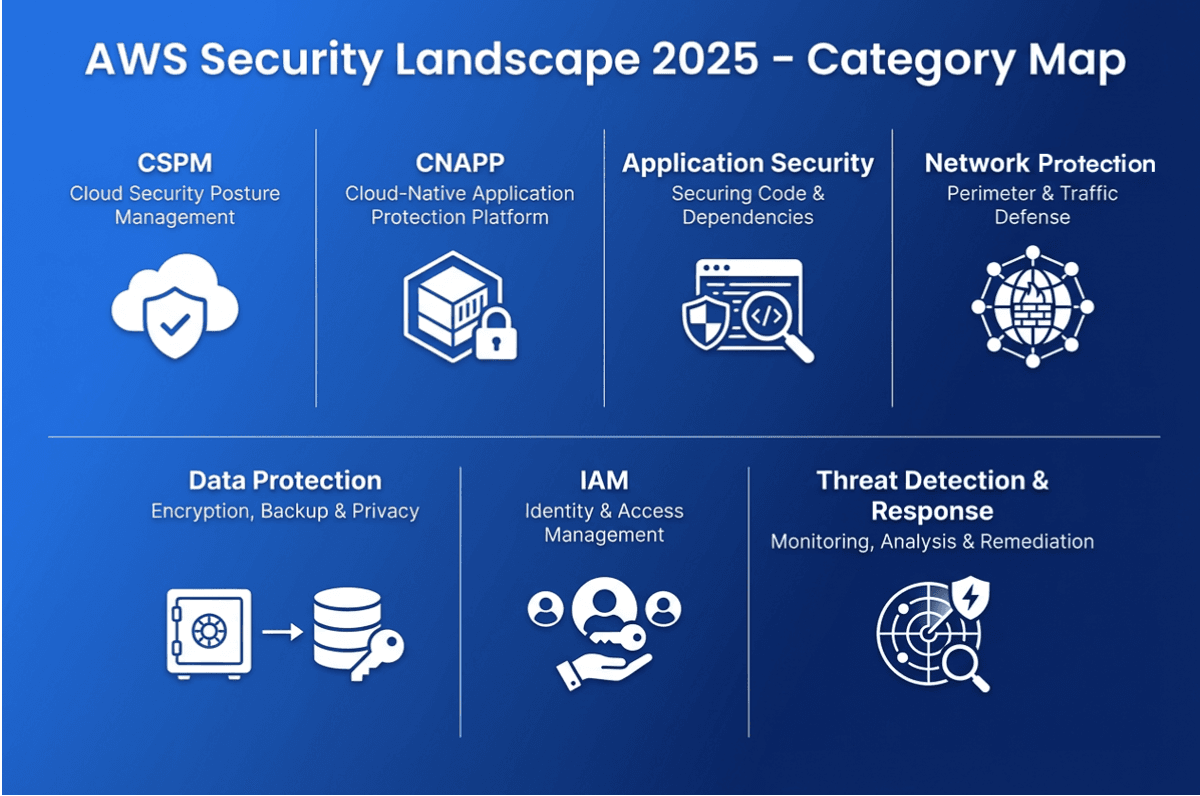
Pick AWS-native services for instant integration and predictable billing, and pick specialist vendors for deeper, validated coverage where your business carries risk. Use native tools for baseline hygiene and third-party solutions for runtime, app-level, and high-risk discovery.
1. Cloud security posture management (CSPM)
Why it matters
Misconfigurations and drift are the single largest cause of cloud incidents. CSPM continuously checks accounts, resources, and policies against benchmarks such as CIS and AWS best practices.
Top picks
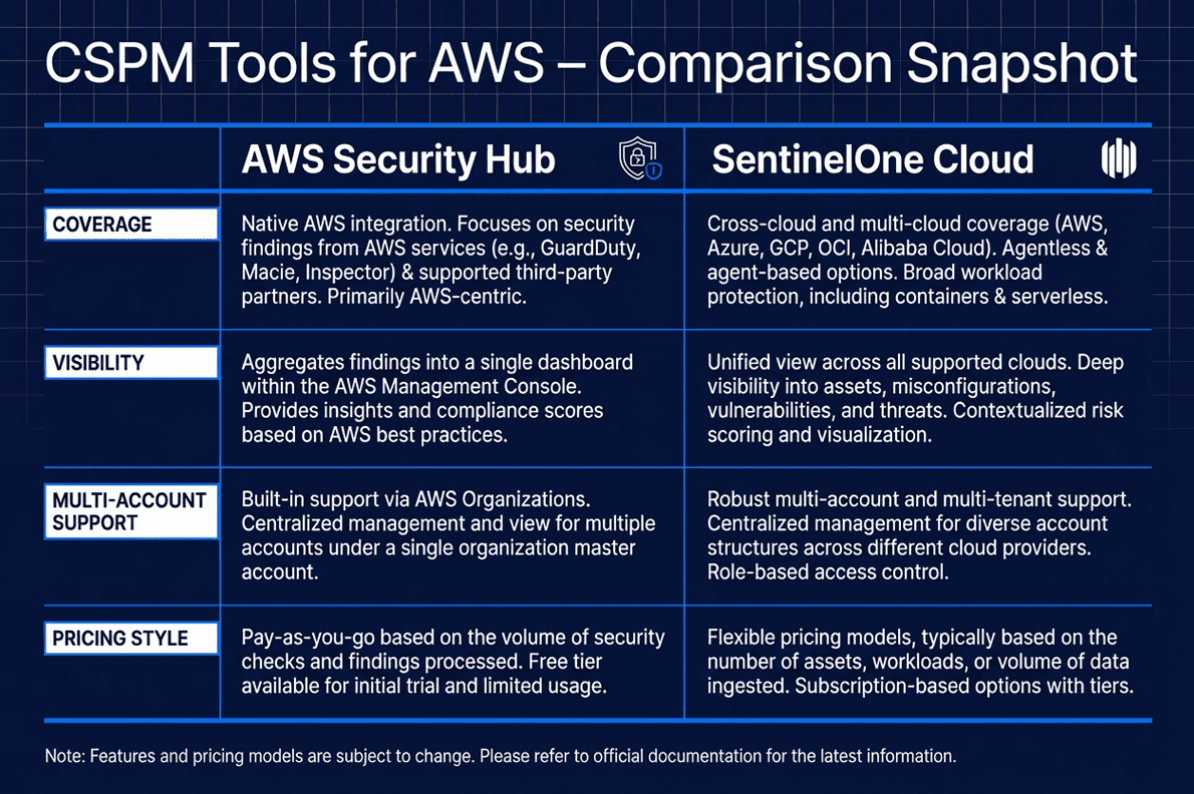
AWS Security Hub for centralized findings across AWS services and partner integrations.
SentinelOne Singularity Cloud when you need multi-account inventory and stronger runtime context for containers and serverless.
What to evaluate
Multi-account support, policy coverage (CIS, PCI, ISO), remediation workflows, and how findings are surfaced to your ticketing system.

2. CNAPP (cloud native application protection platform)
Why it matters
CNAPPs combine posture, workload inventory, IaC scanning, and some runtime visibility. For modern apps that mix VMs, containers, and serverless, CNAPPs reduce tool fragmentation.
Top picks
Wiz for broad, agentless discovery across EC2, ECS/EKS, Lambda and IaC templates.
Prisma Cloud / Palo Alto if you need tight policy controls across multi-cloud estates.
What to evaluate
Coverage across compute types, IaC scan depth, alert tuning needs, and pricing that scales by workloads rather than by named users.
3. Application security (DAST / runtime app testing)
Why it matters
Business logic and API flaws are what attackers monetize. Tools that test running applications find issues that static checks and posture tools miss.
Top picks
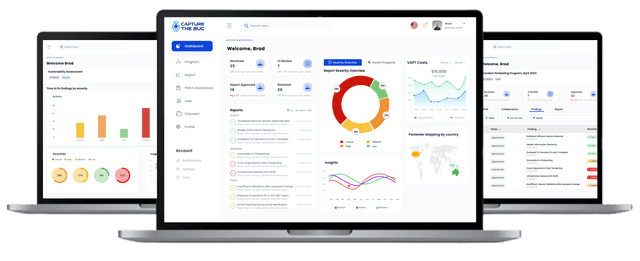
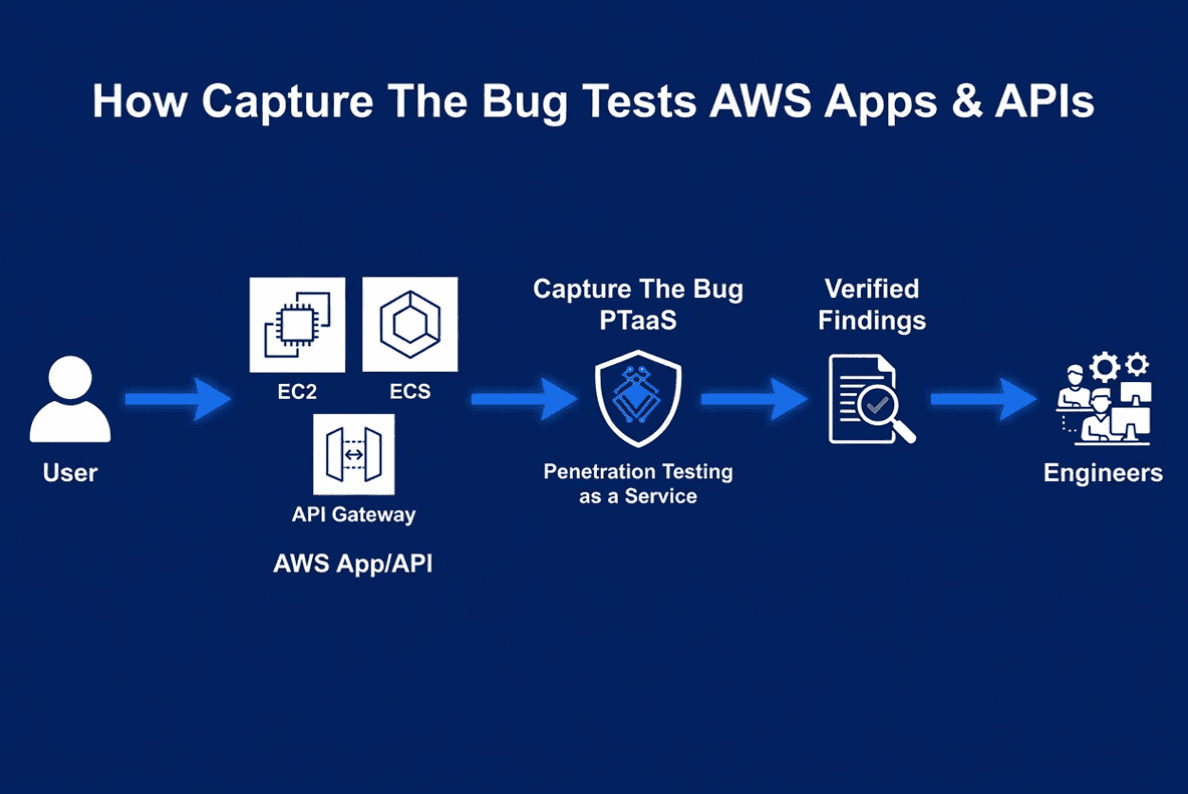
Capture The Bug PTaaS for continuous, human-validated testing of web apps and APIs hosted in AWS, with live collaboration and retest workflows.
Snyk (dynamic modules + SAST pairing) or Acunetix / Burp for teams that need integrated scanning plus analyst validation.
What to evaluate
Ability to test APIs behind API Gateway, authenticated flows, repeatable retests, and quality of remediation guidance delivered to engineers.
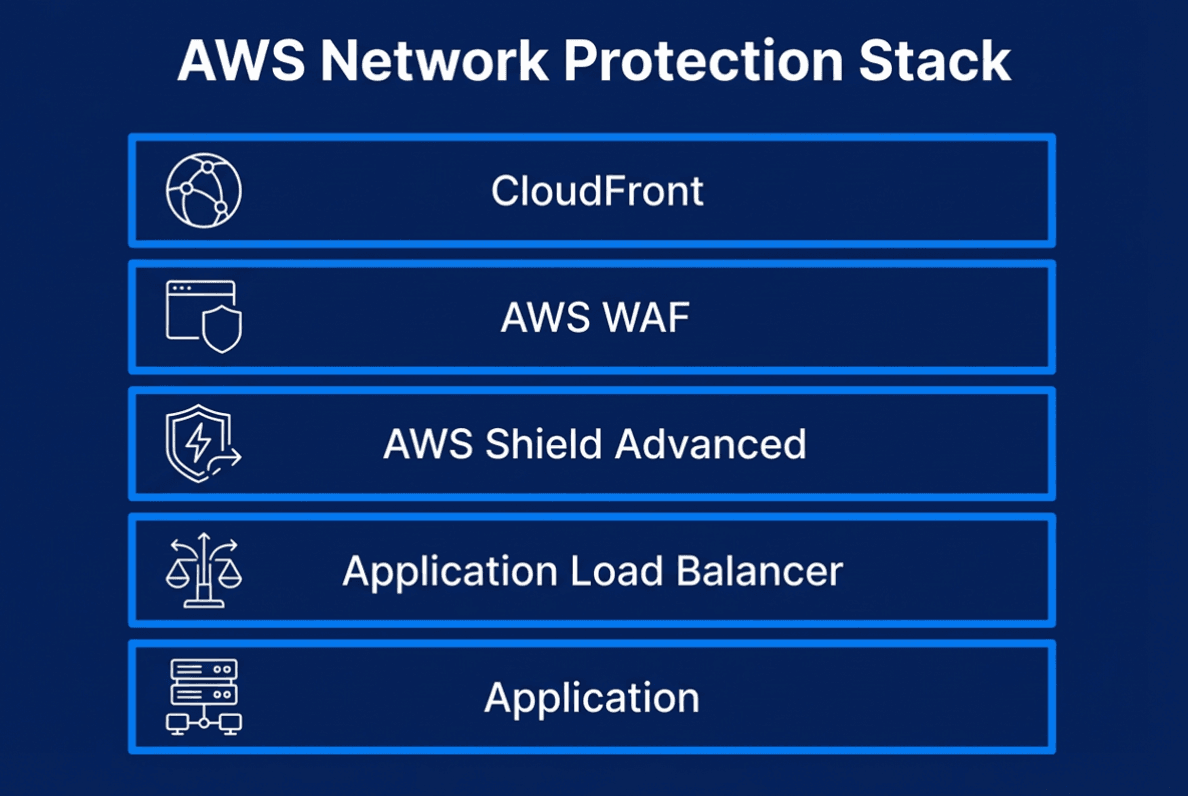
4. Network and edge protection
Why it matters
DDoS and edge-layer attacks can cause immediate downtime and cost spikes. Protecting DNS, CDN, and load-balancer layers is essential for public-facing apps.
Top picks
Amazon Shield for built-in DDoS protection and Shield Advanced for large-scale traffic engineering and cost-protection.
AWS WAF combined with CloudFront for edge rule enforcement and application-layer controls.
What to evaluate
Attack telemetry, automated mitigation options, cost-protection features, and integration with your incident response playbooks.
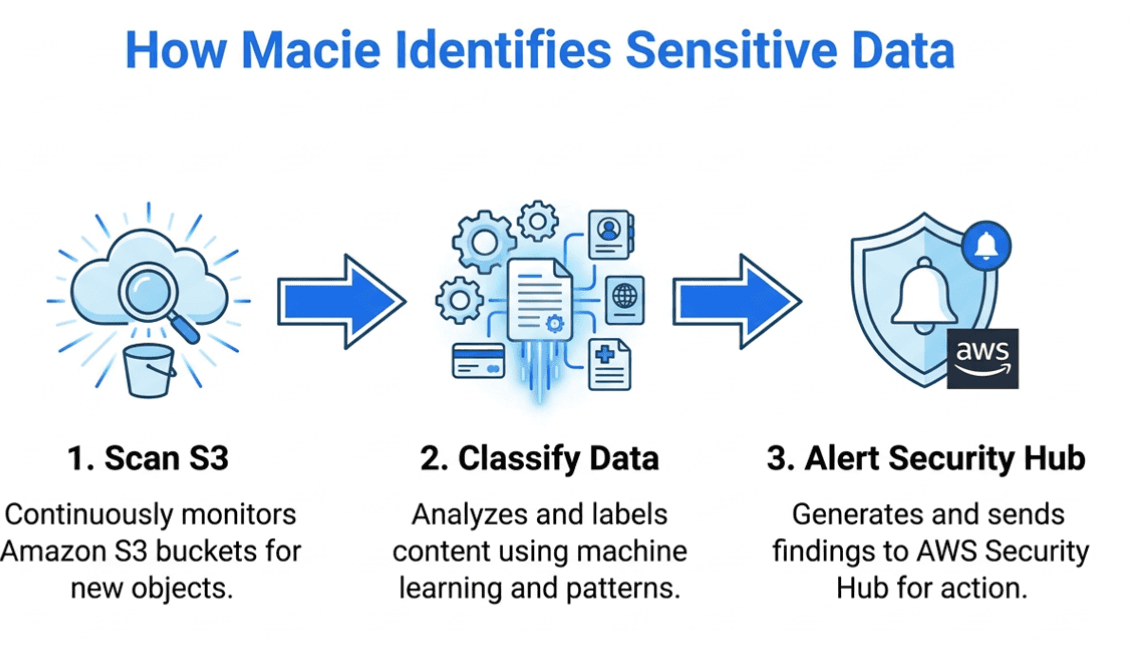
5. Data protection and DSPM
Why it matters
S3 buckets, data lakes, and managed stores often contain sensitive material. Data security posture management reduces exposure and helps with privacy compliance.
Top picks
Amazon Macie for continuous sensitive-data discovery in S3 and contextual alerts.
Third-party DSPM tools where you need file-level classification, cross-account correlation, or more granular data lineage.
What to evaluate
Per-GB scanning costs, custom classification capability, coverage beyond S3 (databases, data lakes), and false-positive management.
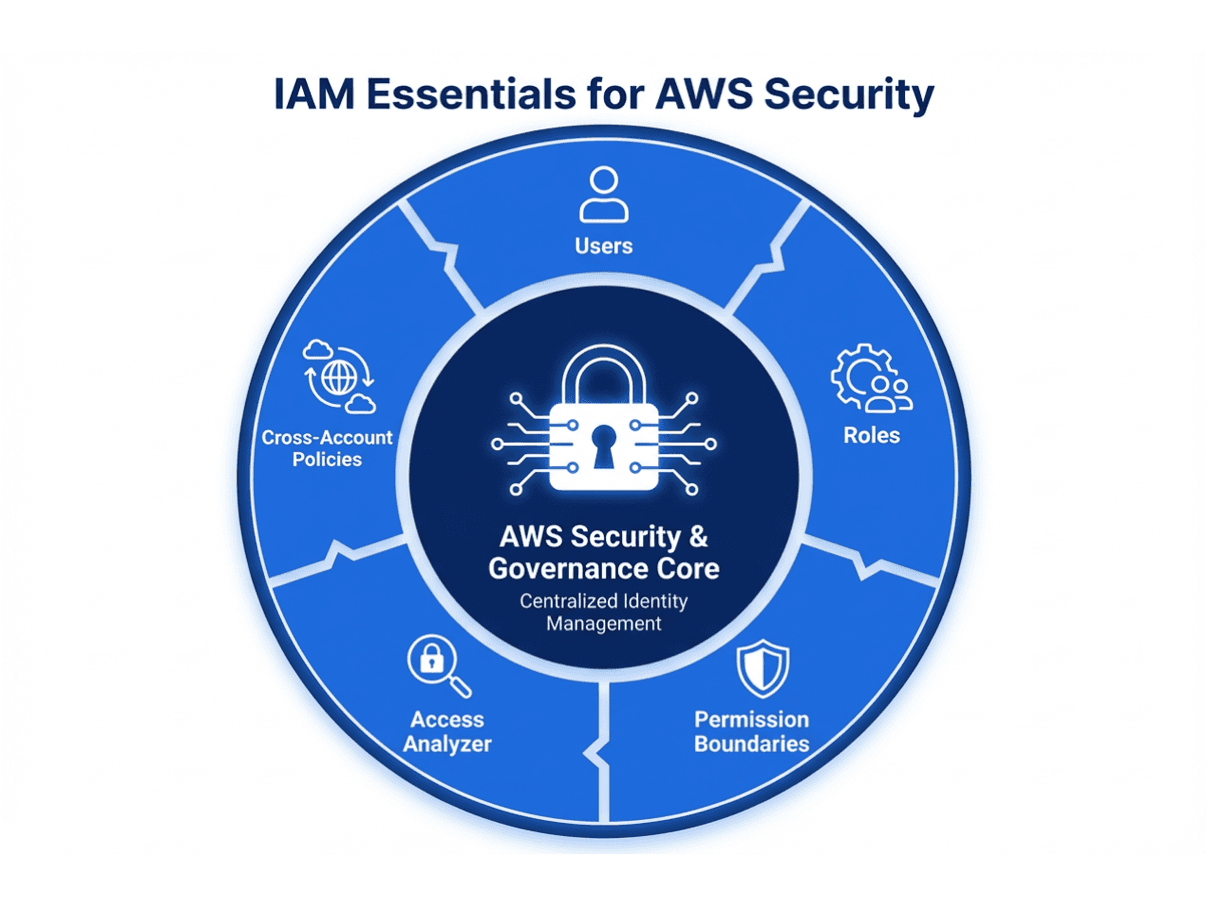
6. Identity and access management (IAM)
Why it matters
Poorly scoped permissions are a root cause of escalations. Identity is the control plane for everything in AWS.
Top picks
AWS Identity and Access Management (IAM) and IAM Access Analyzer for policy validation and cross-account access discovery.
Solutions that add privilege management and just-in-time access workflows when your org needs tighter controls.
What to evaluate
Policy complexity handling, change detection, ease of least-privilege enforcement, and integration with single sign-on or identity providers.
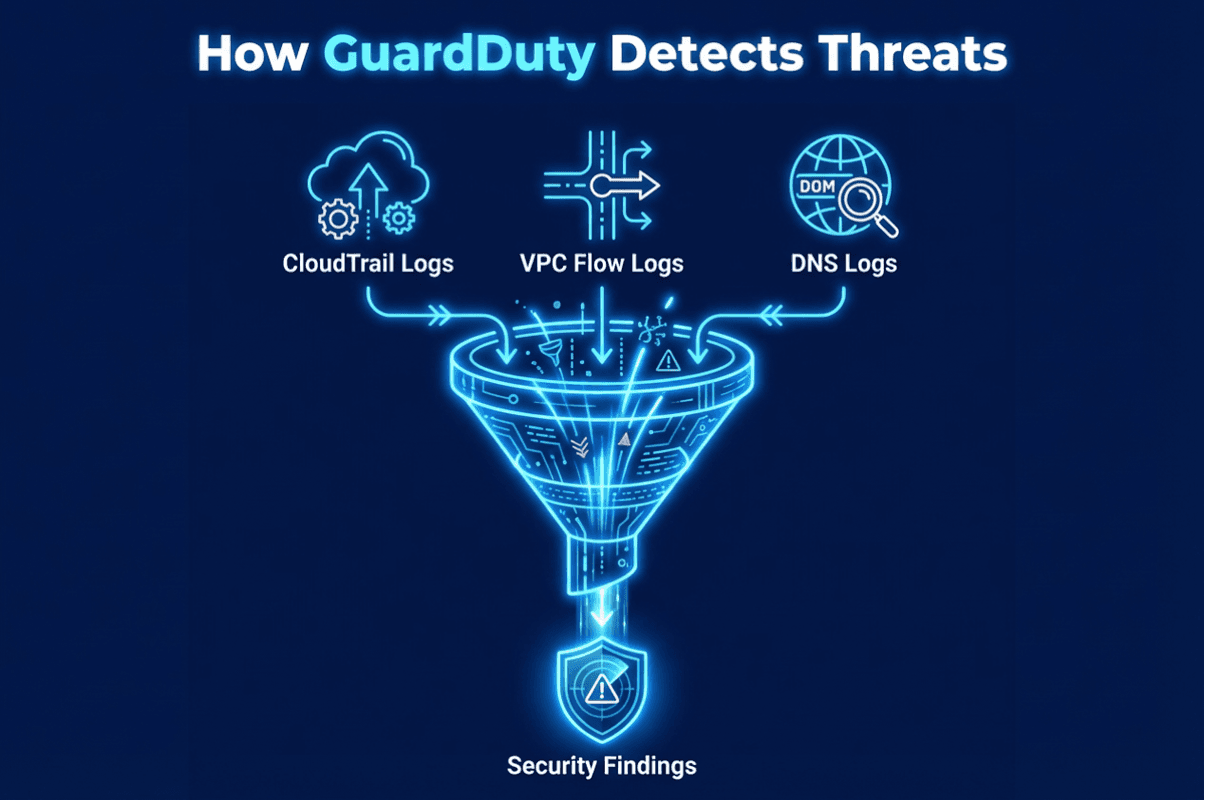
7. Threat detection and response (TDR)
Why it matters
Detection closes the loop. You need continuous monitoring that understands AWS logs, VPC flows, CloudTrail, and DNS activity.
Top picks
Amazon GuardDuty for native threat detection using CloudTrail, VPC Flow Logs and DNS logs.
Extended detection platforms (XDR) when you need correlation across endpoints, cloud telemetry, and third-party feeds.
What to evaluate
Signal fidelity, alert noise after tuning, integration with response automation and ticketing, and the ability to enrich findings with contextual risk.
How Capture The Bug recommends combining tools
- Baseline with AWS-native services for account-level hygiene and predictable consumption billing. These provide immediate coverage with minimal setup.
- Add focused third-party tools where business risk demands deeper validation: runtime protection for containers and serverless, application testing for public APIs, and DSPM when data volumes and variety outstrip native capabilities.
- Validate high-risk findings with human expertise so your team spends time fixing verified, exploitable issues rather than chasing noise. Capture The Bug's PTaaS model partners human validation with continuous delivery of findings to engineering teams.
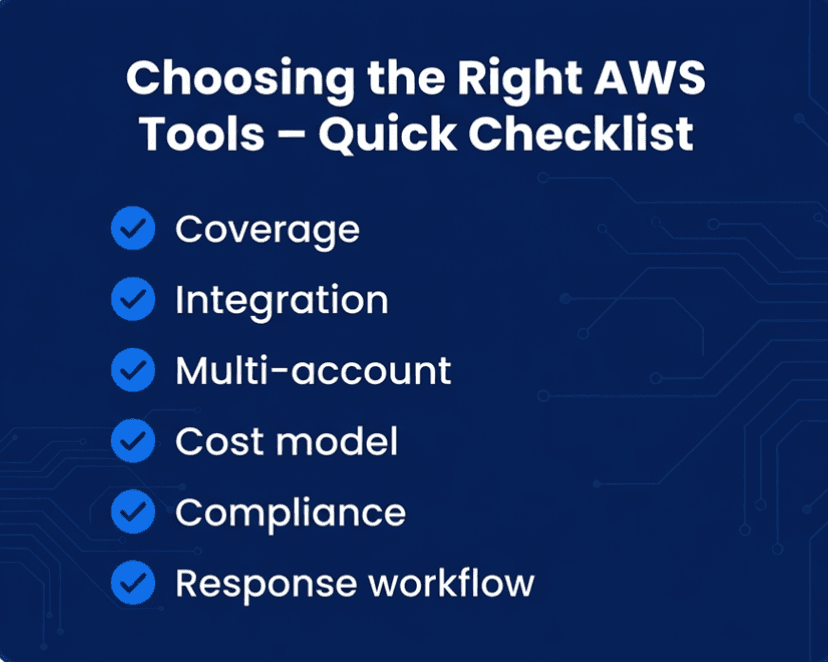
Top considerations when choosing tools
- Coverage vs complexity: more features mean more tuning. Start with what protects your crown jewels.
- Multi-account support: if you use AWS Organizations, ensure the tool scales across accounts and regions.
- Cost model: consumption pricing (native) vs asset- or workload-based pricing (third-party) behaves differently at scale.
- Integration into workflows: choose tools that feed prioritized, actionable findings into the team systems you already use.
- Compliance mapping: look for tools that map findings to CIS, PCI, ISO, GDPR so audits are less painful.
Final thoughts
There is no single “best” tool for AWS security. The right stack is pragmatic: start with native controls to get immediate visibility, then add third-party solutions where you need validated depth and operational velocity. Focus your effort on the assets that matter most to your customers and business. Capture The Bug’s approach is to help teams select and operate that blend so security is both effective and repeatable.
FAQ
Q1. Which tool should I choose first for AWS security?
Start with IAM hygiene and enable GuardDuty, Security Hub, and AWS Config to get account-level visibility.
Q2. Do I need a CNAPP if I already use AWS native services?
If you run many containers, serverless functions, or complex IaC, a CNAPP adds unified discovery and risk prioritization that native services may not fully surface.
Q3. How do I control costs with continuous security tools?
Understand the pricing metric—per-GB, per-workload, or per-account—and run a pilot on the riskiest environment to model annual cost before wide rollout.
Q4. Can a single vendor replace all AWS security categories?
Some vendors try, but specialized threats still benefit from best-in-class tools for application testing, DSPM, and multi-cloud runtime visibility.
Q5. When should I bring in human validation?
Bring human validation for high-severity findings, complex business logic issues, and when remediation guidance needs context that automated checks cannot provide.