IT Compliance Audit Playbook: A Practical Guide to Web Application Penetration Testing
In 2026, most founders and security leaders are not asking whether they need web application penetration testing. They are asking whether their current approach would survive a real audit.
Too many companies treat pentesting as a checkbox. A PDF report is generated, shared with auditors, and archived. Six months later, the application has changed completely. New APIs. New integrations. New attack surface. The report is outdated, but the risk is current.
At Capture The Bug, we see this pattern often across ANZ and US clients. Compliance driven testing is necessary. But compliance alone does not equal security.
This guide breaks down a practical, compliance ready approach to web application penetration testing that aligns with real audit requirements while strengthening your security posture.
What Is Web Application Penetration Testing in a Compliance Context?
Web application penetration testing is a structured security assessment where certified professionals simulate real world attacks against your web app to identify exploitable weaknesses.
From a compliance standpoint, it serves three key purposes:
- Demonstrates due diligence to auditors
- Validates that security controls are working
- Provides documented evidence of remediation
Frameworks like PCI Security Standards Council PCI DSS, International Organization for Standardization ISO 27001, and AICPA SOC 2 require organizations to test security controls regularly. Penetration testing is one of the clearest ways to prove those controls are effective under pressure.
But passing an audit should be the baseline. The real goal is resilience.
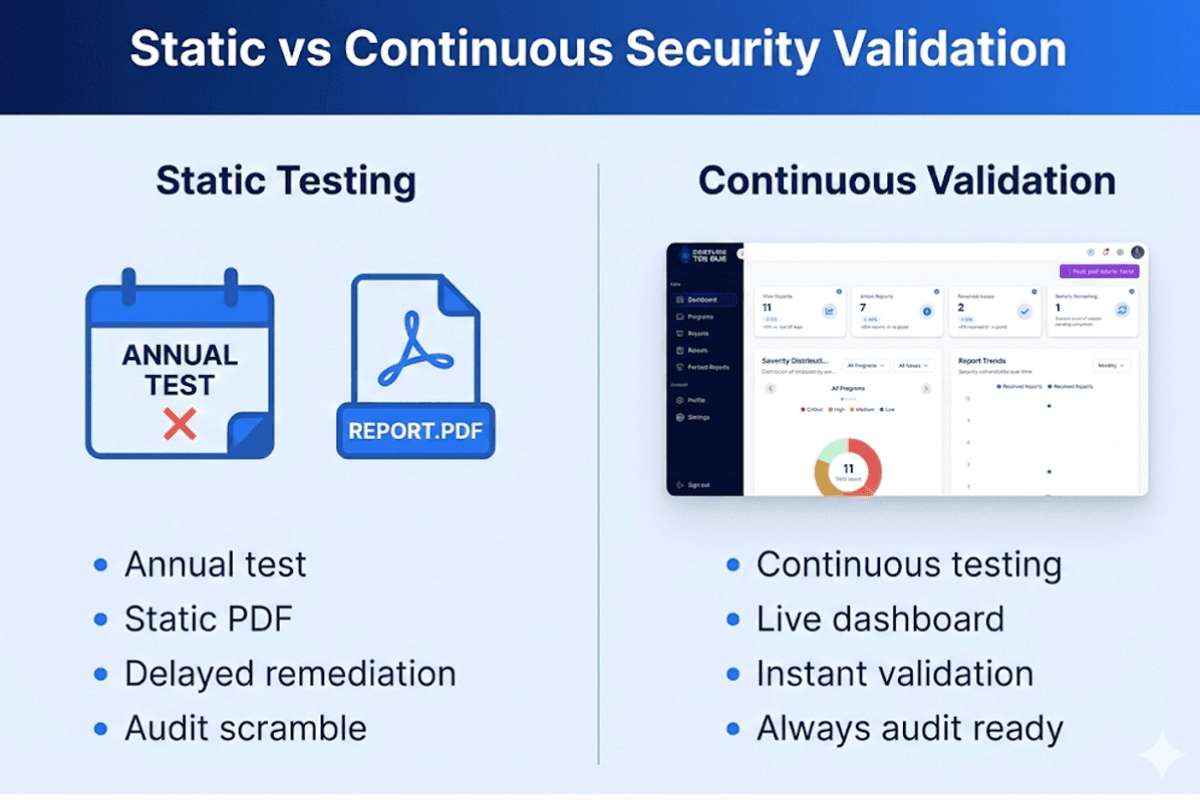
Why Annual Testing Is No Longer Enough
Modern web applications evolve weekly. Microservices get added. Third party integrations expand. Authentication logic changes.
If you only test once a year, you are effectively leaving long windows of unvalidated risk.
We have worked with SaaS companies in New Zealand that deploy multiple times per week. By the time their annual test report is finalized, the codebase has already shifted.
That is where continuous testing models become critical. But even if you run annual or biannual tests, the methodology must be structured, documented, and audit defensible.
Let’s walk through a compliance ready checklist.
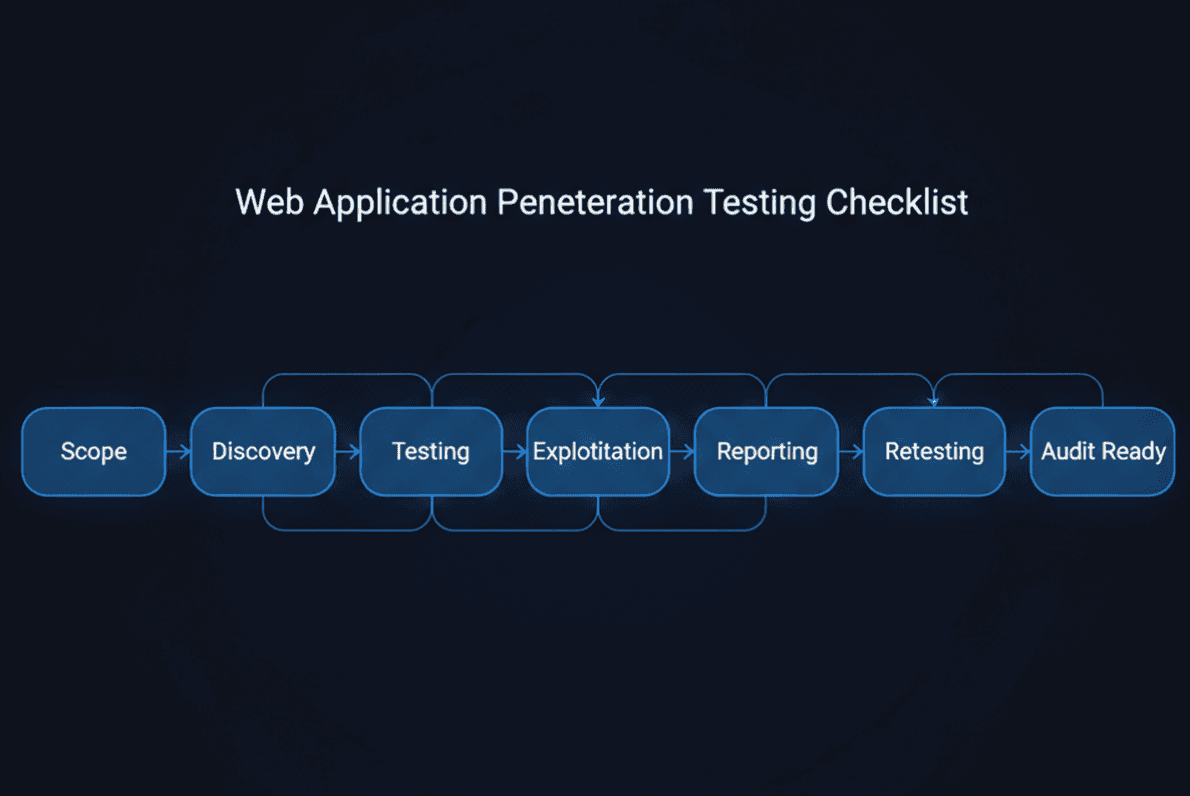
Web Application Penetration Testing Checklist for IT Compliance
1. Define Scope and Rules of Engagement
Before testing begins, document:
- In scope domains, subdomains, APIs, and environments
- Authentication requirements
- Testing windows
- Data handling and confidentiality agreements
- Contact and escalation process
Auditors often request written scope documentation. A vague statement like “we tested the website” will not hold up.
Be precise. List assets. List IP ranges. Define whether internal and external perspectives are included.
2. Asset Discovery and Attack Surface Mapping
You cannot protect what you do not know exists.
This phase identifies:
- Exposed subdomains
- Public facing APIs
- Forgotten admin panels
- Legacy endpoints
- Cloud storage misconfigurations
In compliance audits, this shows that your organization understands its own attack surface.
Many real breaches originate from overlooked subdomains or staging environments that were never meant to be public.
3. Authentication and Access Control Testing
Broken access control remains one of the most common high risk findings.
Testing should validate:
- Role based access enforcement
- Direct object reference manipulation
- Session management robustness
- Multi factor authentication bypass attempts
Auditors frequently ask how access control effectiveness is validated. A structured pentest provides that evidence.
4. Input Validation and Injection Testing
Injection flaws remain critical in modern applications.
Testing should cover:
- SQL injection
- Command injection
- Cross site scripting
- Template injection
The focus is not just detection. It is proving exploitability and documenting impact.
For example, demonstrating that a search field could expose sensitive user data is far more powerful than simply flagging “potential injection risk.”
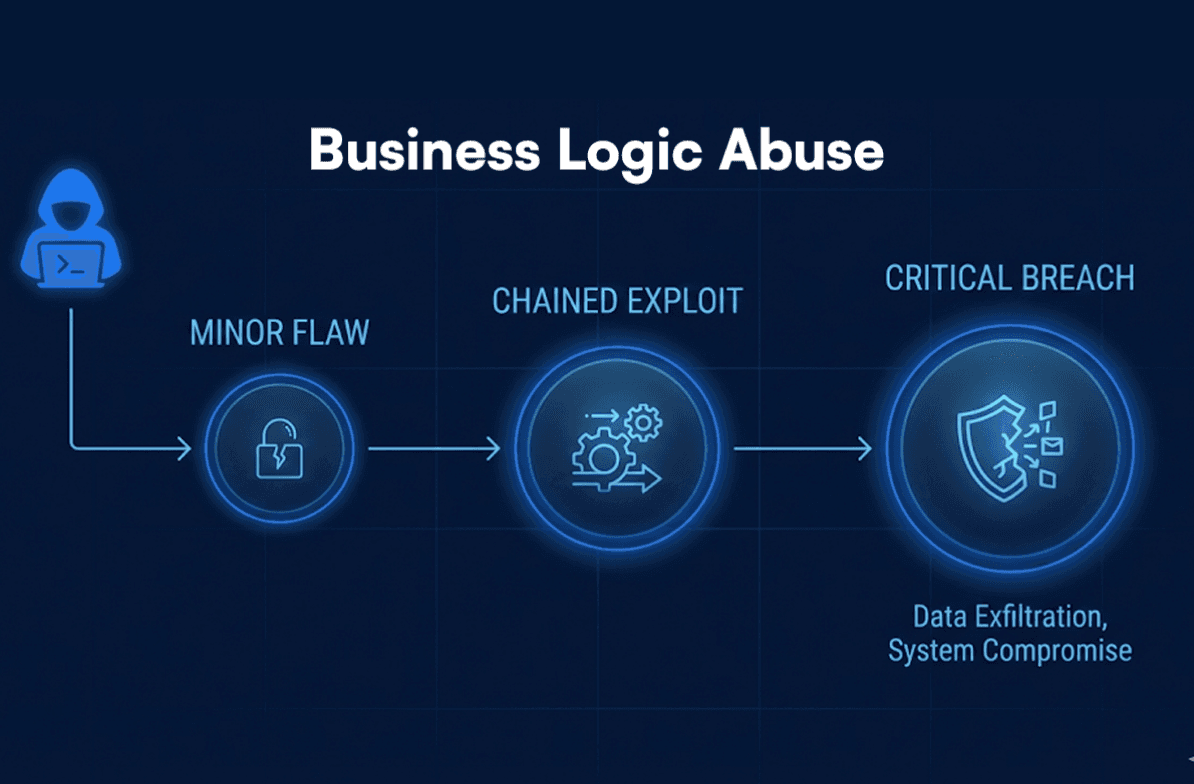
5. Business Logic Abuse
This is where real pentesting differs from basic scanning.
Business logic flaws may include:
- Discount abuse
- Payment flow manipulation
- Account upgrade bypass
- Rate limit evasion
These issues rarely appear in automated outputs. They require human reasoning.
For compliance, documenting this testing demonstrates that your organization evaluates real world abuse scenarios, not just technical misconfigurations.
6. API Security Validation
Modern SaaS platforms rely heavily on APIs.
Testing should include:
- Authorization token manipulation
- Excessive data exposure
- Rate limiting checks
- ID enumeration
APIs often represent the most sensitive data flows in your environment. Auditors increasingly focus on API governance and validation.
7. Secure Configuration Review
Security misconfiguration remains a major source of breaches.
Validation areas include:
- Debug modes left enabled
- Default credentials
- Public cloud bucket exposure
- Missing security headers
These findings often map directly to ISO 27001 Annex A controls and SOC 2 security criteria.
8. Exploitation and Impact Demonstration
This is critical.
A proper penetration test does not stop at identification. It demonstrates impact in a controlled and documented way.
For example:
- Proving data extraction capability
- Demonstrating privilege escalation
- Showing full account takeover
Impact driven reporting helps leadership prioritize remediation and provides clear evidence during audits.
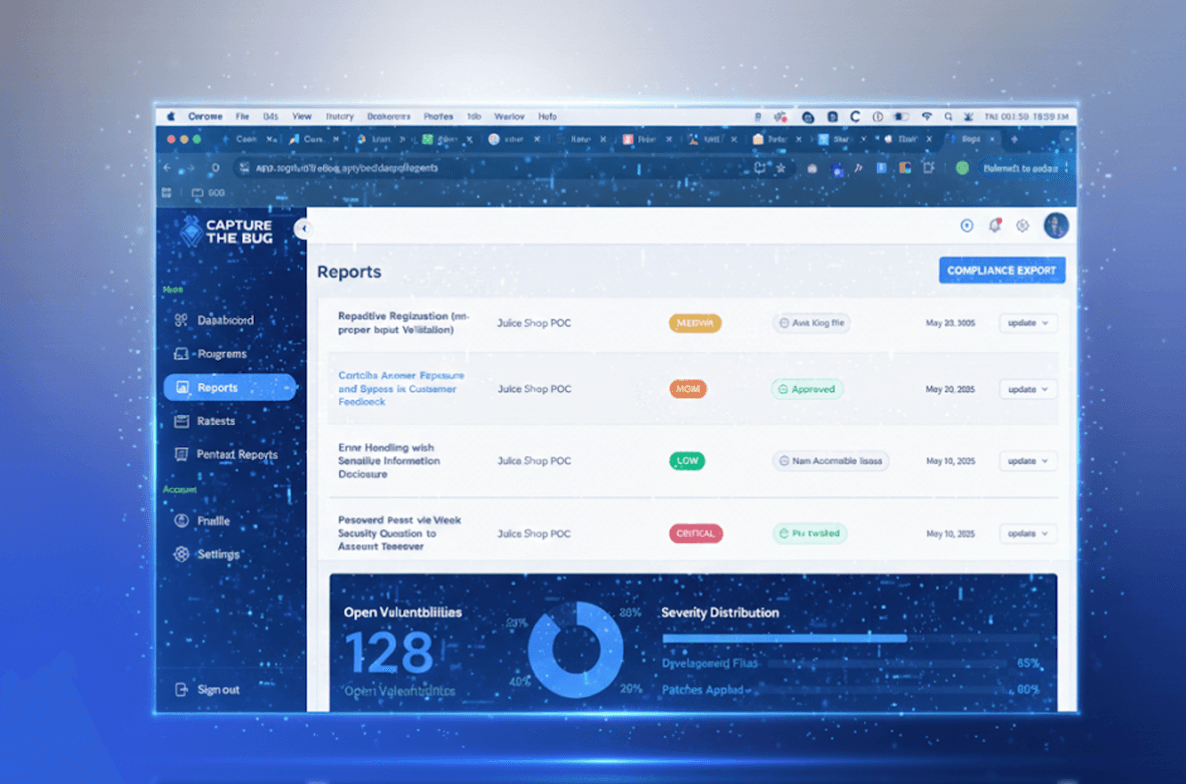
9. Reporting That Auditors Actually Accept
A compliance ready report should include:
- Executive summary in plain language
- Technical findings with severity ratings
- Reproduction steps
- Business impact explanation
- Clear remediation guidance
- Retest verification section
At Capture The Bug, we structure reports so that auditors can clearly see:
- What was tested
- What was found
- What was fixed
- What remains
That traceability is what turns a pentest into compliance evidence.
10. Retesting and Closure Validation
Fixing vulnerabilities is only half the story.
Compliance requires verification.
After remediation:
- Retest each fixed finding
- Confirm exploitability is removed
- Update severity if required
- Document closure evidence
Without retesting, you are relying on assumption. Auditors will ask for proof.
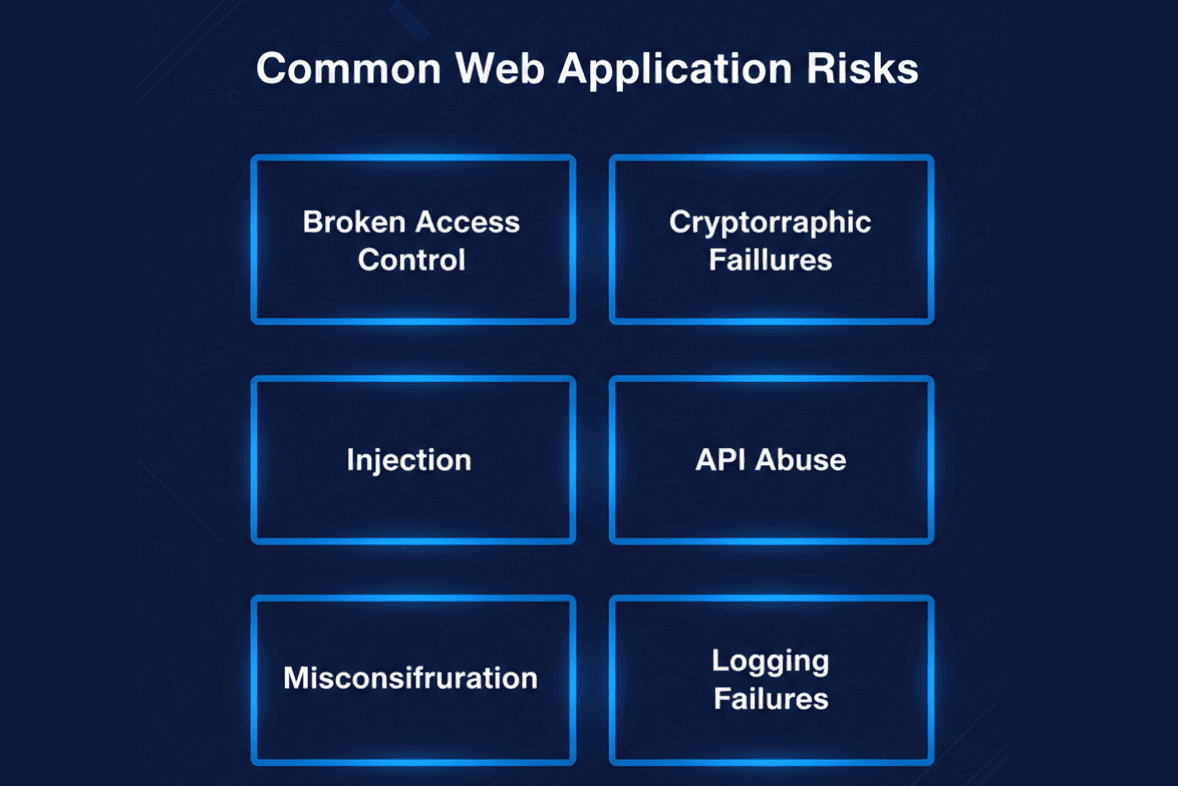
Common Web Application Risks to Validate
Across engagements, the most frequent categories include:
- Broken access control
- Injection vulnerabilities
- Cryptographic misconfigurations
- Insecure design patterns
- Vulnerable third party components
- Logging and monitoring gaps
These align closely with the OWASP Foundation guidance and industry best practices.
Using a structured methodology such as OWASP Web Security Testing Guide or National Institute of Standards and Technology NIST SP 800 115 strengthens audit defensibility.
How Often Should You Conduct Web Application Penetration Testing?
Minimum best practice:
- Annually
- After major feature releases
- After significant infrastructure changes
High growth SaaS or regulated industries should consider quarterly or continuous testing.
Compliance frameworks set minimums. Real security requires consistency.
A Founder Level Perspective
As a founder, you are not buying a report. You are buying risk clarity.
A web application pentest should answer:
- If someone targeted us tomorrow, where would they start?
- What would cause regulatory exposure?
- What could damage customer trust?
- Are we truly audit ready?
When penetration testing is treated as a strategic security validation exercise rather than a checkbox, it changes internal culture.
Developers learn. Security matures. Compliance becomes easier.
That is the shift we help companies make.
Final Thoughts
IT compliance audit readiness is not about documentation alone. It is about proving your controls work under realistic attack conditions.
Web application penetration testing, done correctly, provides:
- Clear evidence for auditors
- Measurable risk reduction
- Continuous security improvement
In a world where applications change weekly and attackers move daily, testing must evolve with equal speed.
If your current approach relies on static annual reports, it may be time to rethink the model.
Security should not be reactive. It should be validated, measurable, and continuous.
FAQ
1. What is web application penetration testing for compliance?
It is a structured security assessment that validates whether your web application controls meet regulatory and security framework requirements.
2. Which compliance standards require penetration testing?
Standards such as PCI DSS, ISO 27001, and SOC 2 require regular testing to validate control effectiveness.
3. How often should web applications be tested?
At minimum annually and after major changes. High growth SaaS environments benefit from more frequent testing.
4. Does penetration testing guarantee no breaches?
No. It significantly reduces risk by identifying exploitable weaknesses before attackers do.
5. What should a compliance ready pentest report include?
Scope definition, methodology, findings, impact, remediation guidance, and retest validation.