When Should Companies Run Security Testing to Stay Truly Protected?
The Real Question Is Not "How Often" - It Is "What Triggers a Test?"
Most companies still ask, "How often should we do penetration testing?"
Once a year. Twice a year. Quarterly.
That thinking comes from an older model of security where systems barely changed.
But today, applications evolve constantly. New features go live. APIs expand. Integrations grow. And every change introduces new risk.
So the better question is this: When should a company test, based on real-world change and risk?
Because security gaps do not wait for your calendar.
Why Fixed Testing Schedules No Longer Work
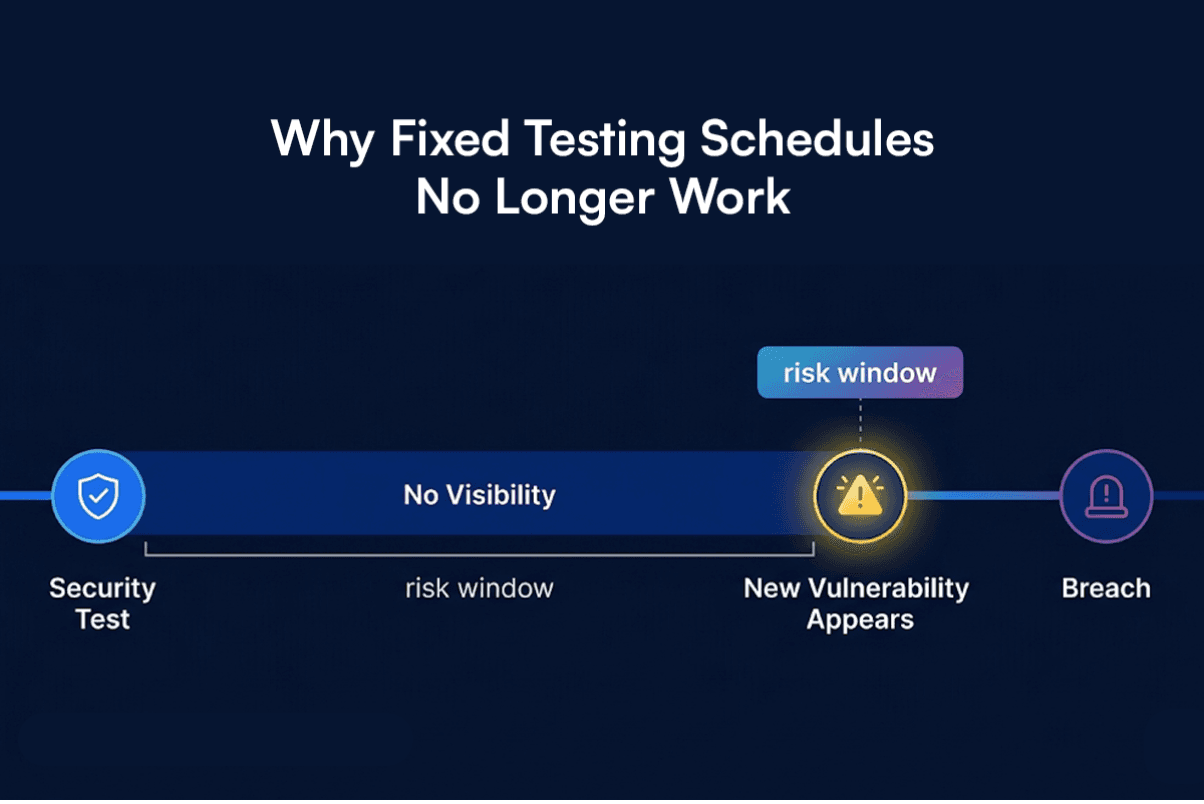
Traditional testing worked like a yearly health check. It gave a detailed report, but only for that moment in time.
The problem is what happens after.
Between two tests, your system may change dozens or even hundreds of times. New vulnerabilities can appear within days, sometimes hours.
This creates a dangerous gap.
As highlighted in modern PTaaS models, businesses need continuous visibility instead of static snapshots, because risks evolve daily and cannot be managed through occasional assessments.
A once-a-year test does not reflect a system that changes every week.
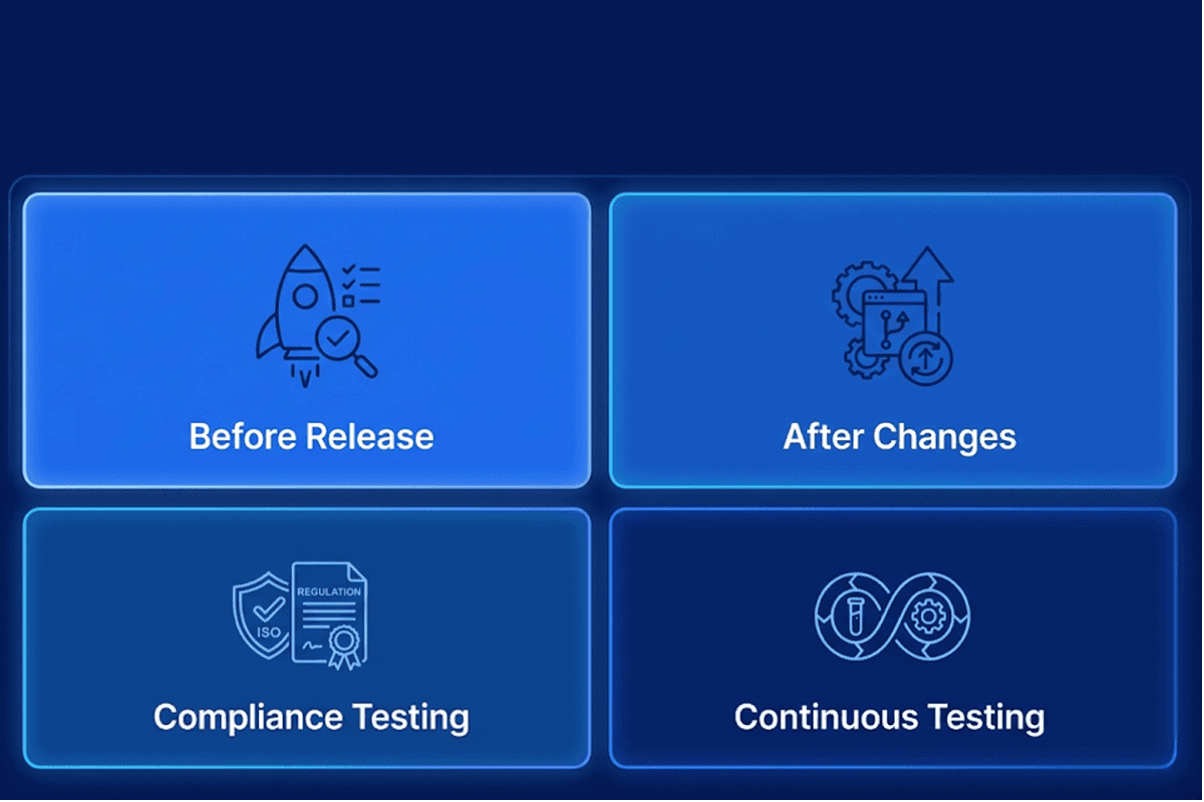
The Four Moments Every Company Must Test
Instead of thinking in timelines, smart companies test based on triggers.
1. Before Major Releases
Every new feature, product update, or infrastructure change introduces new logic, new access points, and new dependencies. Testing before release ensures vulnerabilities do not reach production.
This is especially critical for SaaS platforms, where updates are frequent and customer-facing.
2. After Significant Changes
Changes are not always obvious. A new integration, a cloud configuration update, or even a small backend tweak can create exposure. Security testing after change is what closes this gap.
Companies that skip this step often assume they are still secure based on outdated results.
3. For Compliance and Audits
Regulatory frameworks still require periodic validation. ISO 27001, SOC 2, PCI-DSS all expect proof that systems are tested and vulnerabilities are addressed.
But here is the mistake many companies make: They test only for compliance.
Strong companies treat compliance as a checkpoint, not the strategy.
4. Continuously for High-Risk Environments
If your business handles sensitive data, financial transactions, or large user bases, periodic testing is not enough. You need continuous validation.
Because attackers are not waiting for your next scheduled test.
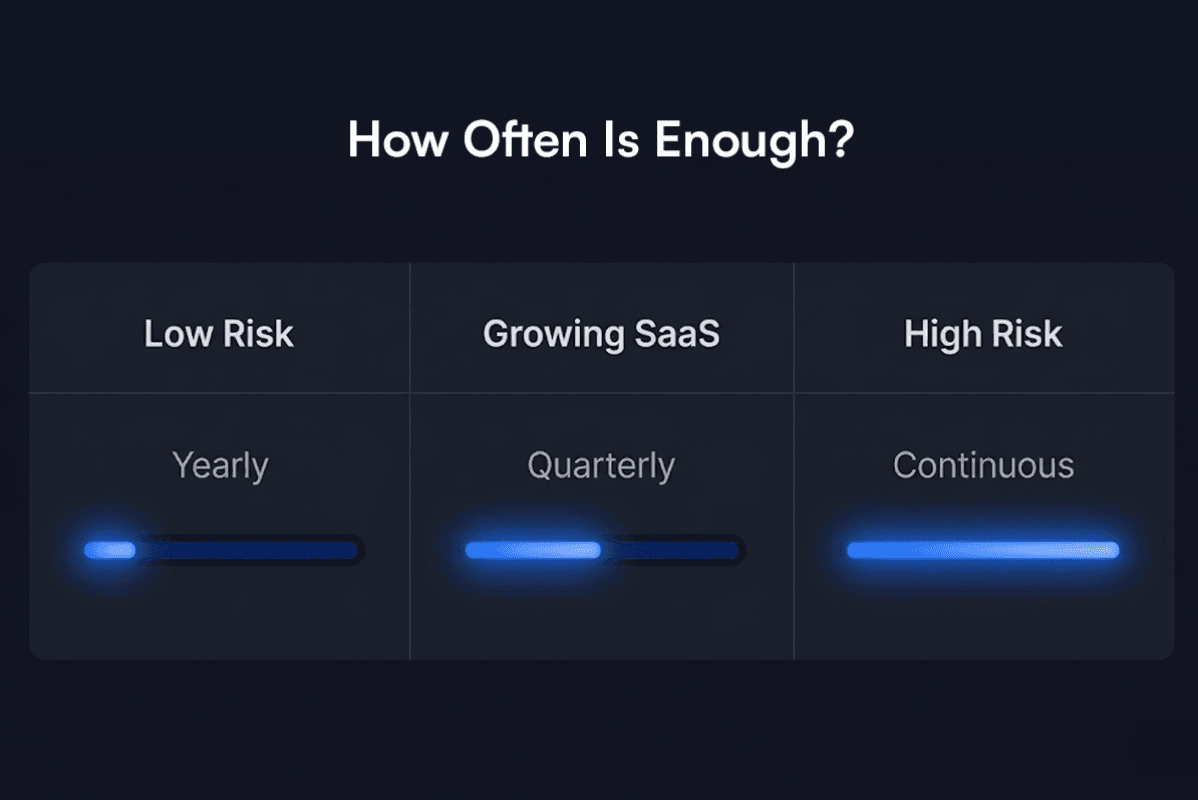
How Often Is "Enough"? A Practical Breakdown
Here is how modern companies typically approach testing:
- Low-risk environments: Once or twice per year
- Growing SaaS or tech platforms: Quarterly or after major releases
- High-growth or regulated businesses: Monthly or continuous testing
But even this breakdown has limitations. Because frequency alone does not guarantee coverage.
A company testing quarterly but deploying weekly still has exposure between tests.
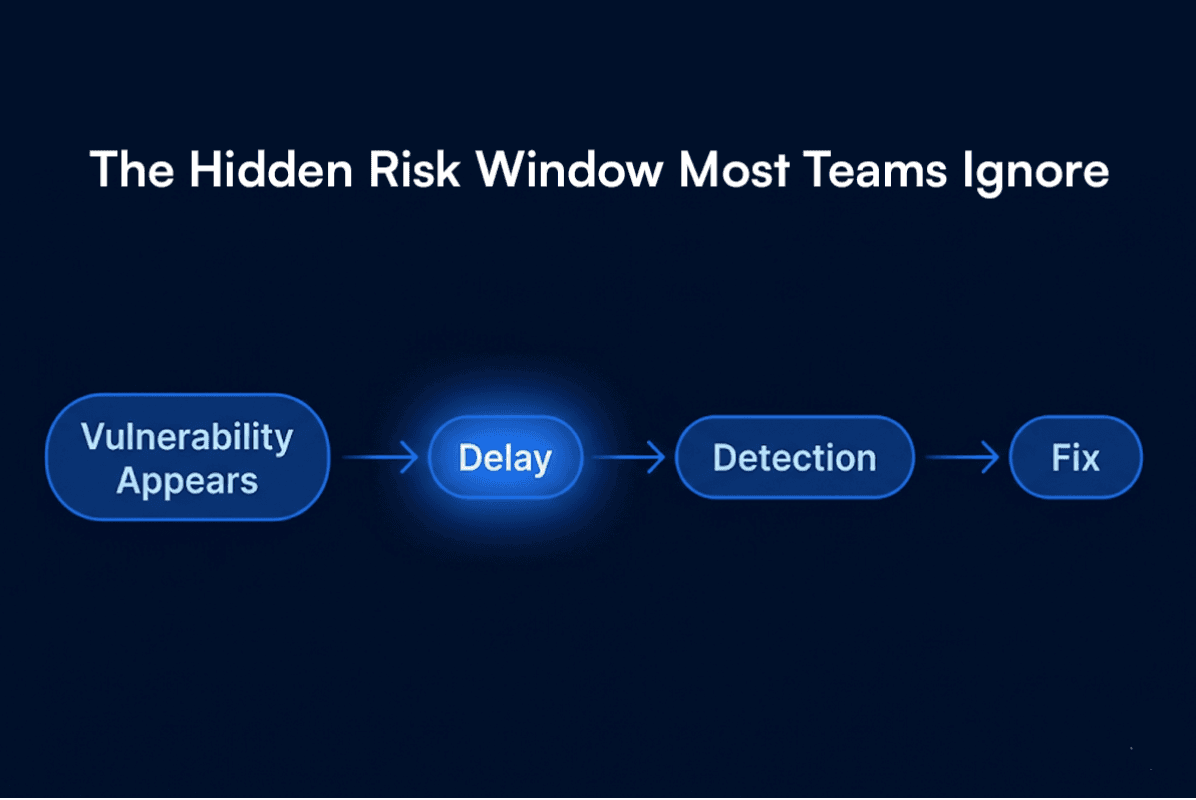
The Hidden Risk Window Most Teams Ignore
One of the biggest blind spots in traditional testing is the delay between:
- When a vulnerability appears
- When it is discovered
- When it is fixed
This gap is where most breaches happen. And the longer the gap, the higher the risk.
Continuous testing reduces this window significantly by identifying vulnerabilities early and enabling faster remediation. Instead of discovering issues weeks later, teams can act within hours.
What Modern Security Leaders Are Doing Differently
Companies across ANZ and the US are shifting away from fixed schedules. They are adopting a model that aligns with how their business actually operates.
That means:
- Testing aligned with releases, not dates
- Real-time visibility into vulnerabilities
- Immediate validation after fixes
- Ongoing collaboration between testers and developers
This approach turns testing from an event into a process.
From Scheduled Testing to Continuous Assurance
This is where the shift becomes clear. Traditional testing answers one question: "Were we secure at that moment?"
Modern testing answers a better one: "Are we secure right now?"
That difference matters. Because security is not static anymore.
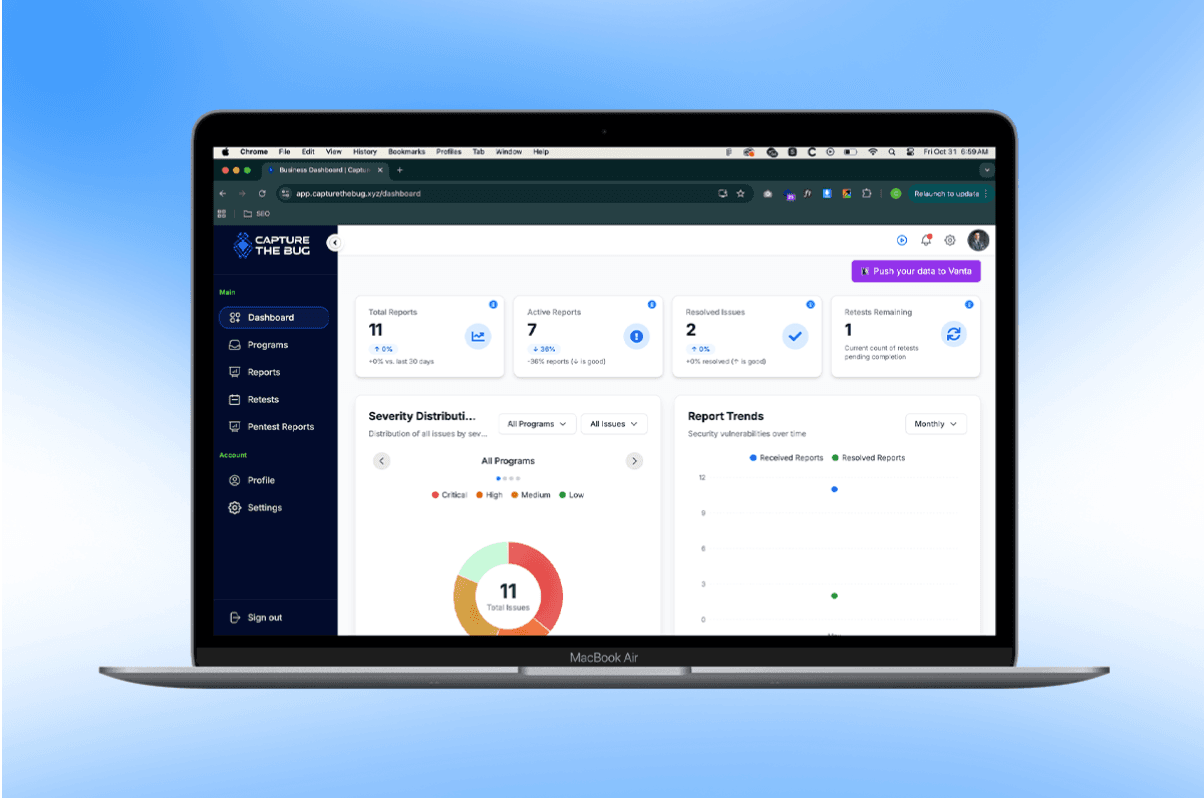
How Capture The Bug Approaches Testing Frequency
Capture The Bug does not treat penetration testing as a one-time activity. It treats it as an ongoing system.
With its PTaaS model, companies can:
- Launch tests whenever changes happen
- View vulnerabilities as they are discovered
- Validate fixes immediately
- Maintain audit-ready security at all times
This removes the need to guess "how often" to test. Because testing becomes continuous and on-demand. Instead of scheduling security, you operate with it.
A Real-World Scenario
Consider a fast-growing SaaS company. They release updates every two weeks.
If they rely on quarterly testing:
- 6 to 8 releases happen between tests
- Each release introduces potential vulnerabilities
- Issues may remain undetected for months
Now compare that with a continuous model:
- Every release is tested
- Vulnerabilities are identified immediately
- Fixes are validated in the same cycle
The difference is not just security. It is speed, confidence, and control.
The Cost of Testing Less Often Than You Should
Companies often delay testing to save cost. But the reality is: The cost of delayed testing is higher.
Because:
- Vulnerabilities stay open longer
- Fixes become more complex
- Incidents become more likely
- Compliance becomes stressful
Continuous testing spreads cost over time while reducing risk significantly. It also avoids the "big audit panic" many teams experience.
So, what should companies actually do? Instead of asking how often, companies should follow three simple rules:
- Test when you change something: Because change introduces risk.
- Test before someone else does: Because attackers do not wait.
- Test continuously if your business depends on trust: Because trust is built on visibility, not assumptions.
Final Thoughts
Security is no longer a calendar activity. It is a continuous responsibility.
Companies that test once a year are protecting the past. Companies that test continuously are protecting the present.
That is the difference between reacting to risk and staying ahead of it.
Capture The Bug helps organizations move from scheduled testing to continuous assurance, giving them the clarity and confidence to grow securely every day.
FAQ
1. How often should a company perform penetration testing?
It depends on risk and change frequency. Most modern companies test after every major update or use continuous testing for ongoing protection.
2. Is annual penetration testing enough?
No. Annual testing creates long gaps where vulnerabilities can go undetected.
3. What triggers a penetration test?
Major releases, system changes, compliance requirements, and high-risk environments should all trigger testing.
4. What is continuous penetration testing?
It is an ongoing approach where systems are tested regularly or in real time instead of at fixed intervals.
5. Why are companies moving away from scheduled testing?
Because modern systems change too quickly, making periodic testing outdated and less effective.