“We Got Hacked in 10 Minutes” Real Attack Simulation Breakdown
Introduction: It Started Like a Normal Day
Capture The Bug recently conducted a live attack simulation for a fast-growing SaaS company operating across ANZ and the US. The goal was simple: test how quickly an attacker could move from zero access to meaningful impact.
No prior credentials. No insider knowledge. Just an external perspective. What happened next surprised even the leadership team.
Within 10 minutes, access was gained. Sensitive data exposure followed shortly after.
This was not a theoretical exercise. It was a controlled simulation that mirrored how real attackers operate today. And the most important takeaway was this: The issue was not one big failure. It was a chain of small, overlooked gaps.
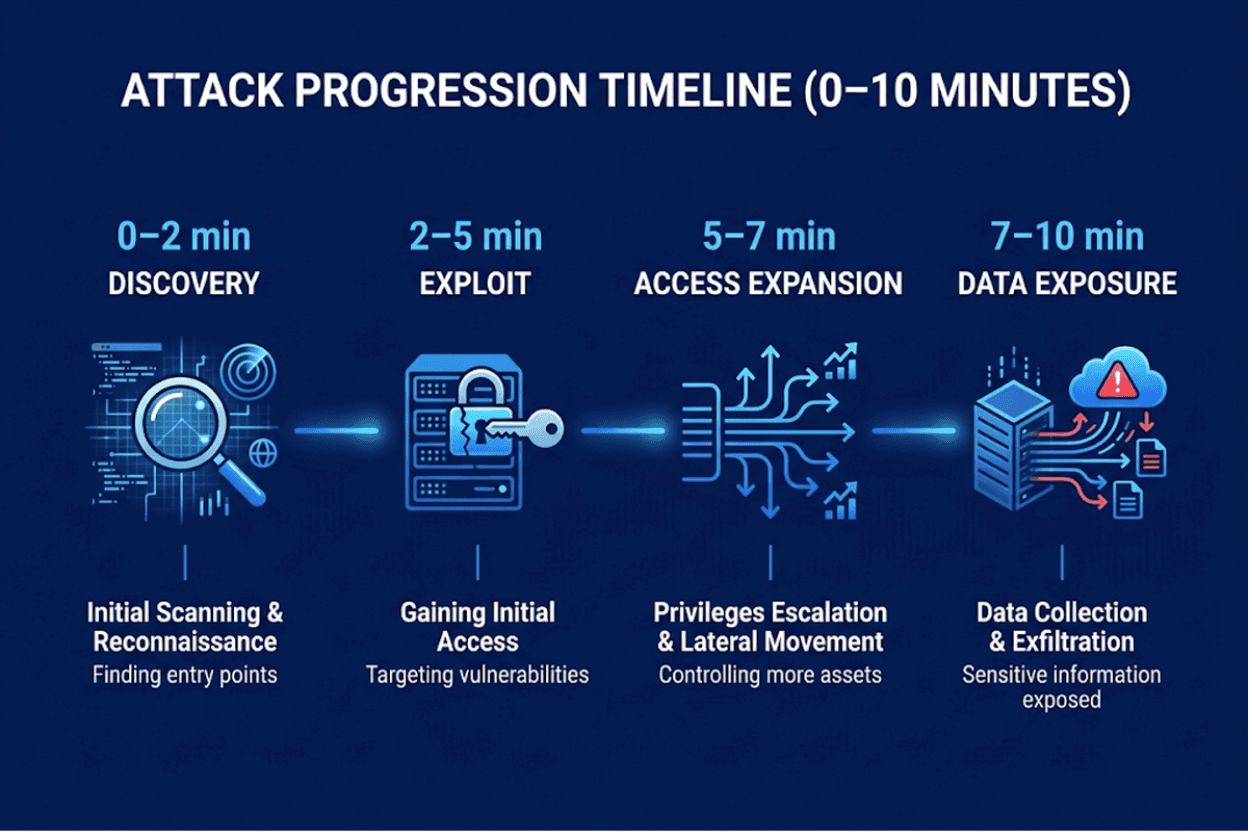
Minute 0 to 2: Finding the Entry Point
Every attack starts with discovery. In this simulation, the testers mapped publicly exposed assets. These included APIs, login panels, and third-party integrations that were never meant to be fully exposed.
One endpoint stood out. It was a staging API still accessible from the internet. This environment had weaker controls compared to production. That made it the perfect entry point.
This is a common pattern. Teams secure production but forget that staging and test environments often mirror real data and logic. Within minutes, the testers identified a way to interact with this endpoint without strong validation.
Minute 2 to 5: Exploiting a Simple Weakness
The next step was not complex. A small input validation issue allowed deeper access into the system. On its own, it looked harmless.
But combined with the exposed staging environment, it created a path forward. The testers were able to retrieve internal responses that revealed how the system handled authentication and requests.
This is where most companies underestimate risk. Single issues rarely cause breaches. It is the combination that creates impact.
Minute 5 to 7: Moving Beyond the First Layer
With initial access established, the focus shifted to privilege expansion. The testers identified a misconfiguration in how tokens were handled between services.
This allowed them to reuse a token in a way it was not intended. That one step changed everything. They were no longer limited to a single endpoint. They now had visibility across connected services.
At this stage, the system still showed no alerts. No visible signs of unusual activity. From the outside, everything looked normal.
Minute 7 to 10: Accessing Sensitive Data
With expanded access, the testers reached internal APIs connected to user data. Within seconds, they were able to query and retrieve sensitive information.
Not massive dumps. Just enough to prove impact. That is how real attackers operate. Quiet, targeted, and efficient. In under 10 minutes, the simulation moved from zero access to confirmed data exposure.
What Actually Went Wrong
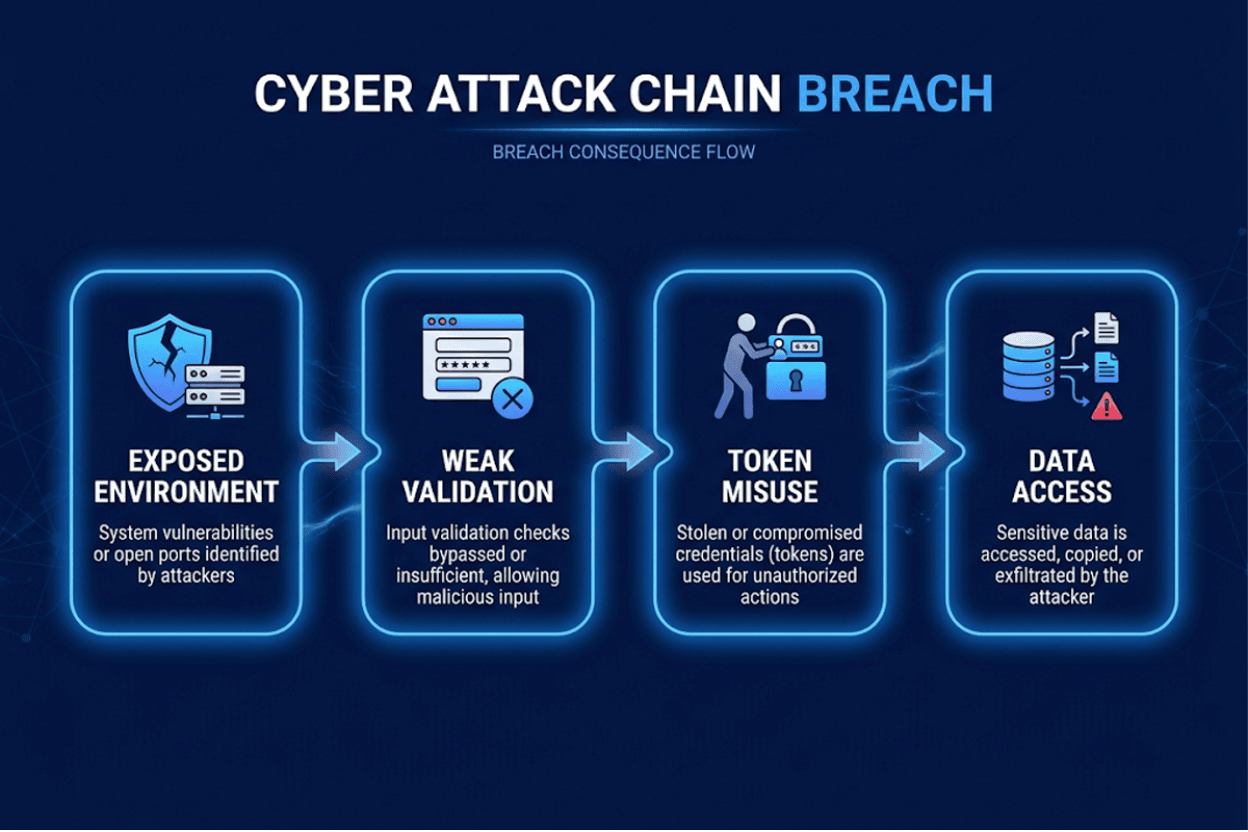
After the simulation, Capture The Bug broke down the root causes with the client team. There was no single critical failure. Instead, it was a chain of four common issues:
- An exposed non-production environment
- Weak input validation in one endpoint
- Token handling misconfiguration
- Lack of real-time visibility into internal activity
Individually, none of these seemed urgent. Together, they created a clear attack path. This is exactly why traditional testing models often miss real risk. They identify issues, but not always how they connect.
Why Most Companies Miss This
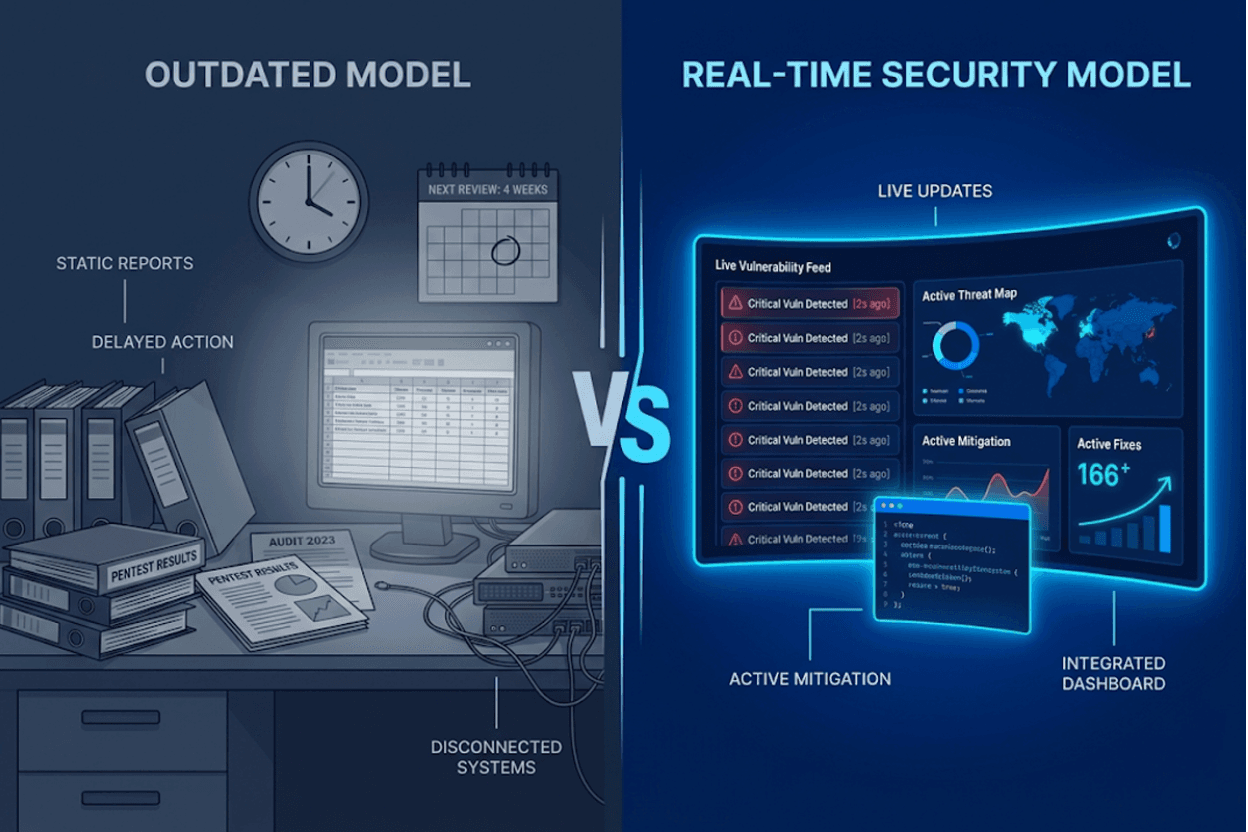
Many teams rely on periodic testing. They run an assessment, receive a report, and fix what is listed. The problem is timing.
By the time results are reviewed, systems have already changed. New features are deployed. New endpoints are exposed. Security becomes a snapshot, not a continuous view.
That gap is where attackers operate. As highlighted in modern PTaaS models, continuous testing helps reduce this gap by providing ongoing visibility instead of point-in-time results.
The Mid-Point Reality: Speed Changes Everything
Attackers do not need weeks. They need minutes. This simulation proved that once an entry point is found, movement happens fast. That is why security strategies built around slow feedback cycles struggle to keep up.
Capture The Bug approaches this differently. Instead of waiting for a final report, vulnerabilities are surfaced as they are discovered, validated by experts, and fixed in real time. This shortens the gap between detection and remediation significantly.
Understand the Difference That Impacts Your Risk
Compare traditional penetration testing vs continuous testing and see which model actually protects your business in real time.
What Would Have Stopped This Attack
After reviewing the simulation, a few key changes would have completely broken the attack chain:
- 1. Restricting external access: Closing staging environments to the public internet.
- 2. Strengthening validation: Fixing input points at the API level.
- 3. Token isolation: Preventing reuse of tokens across different service layers.
- 4. Continuous visibility: Monitoring internal API behavior for anomalies.
None of these require massive architectural changes. They require awareness and ongoing testing. That is the difference between reactive security and proactive security.
How Capture The Bug Helps Prevent This
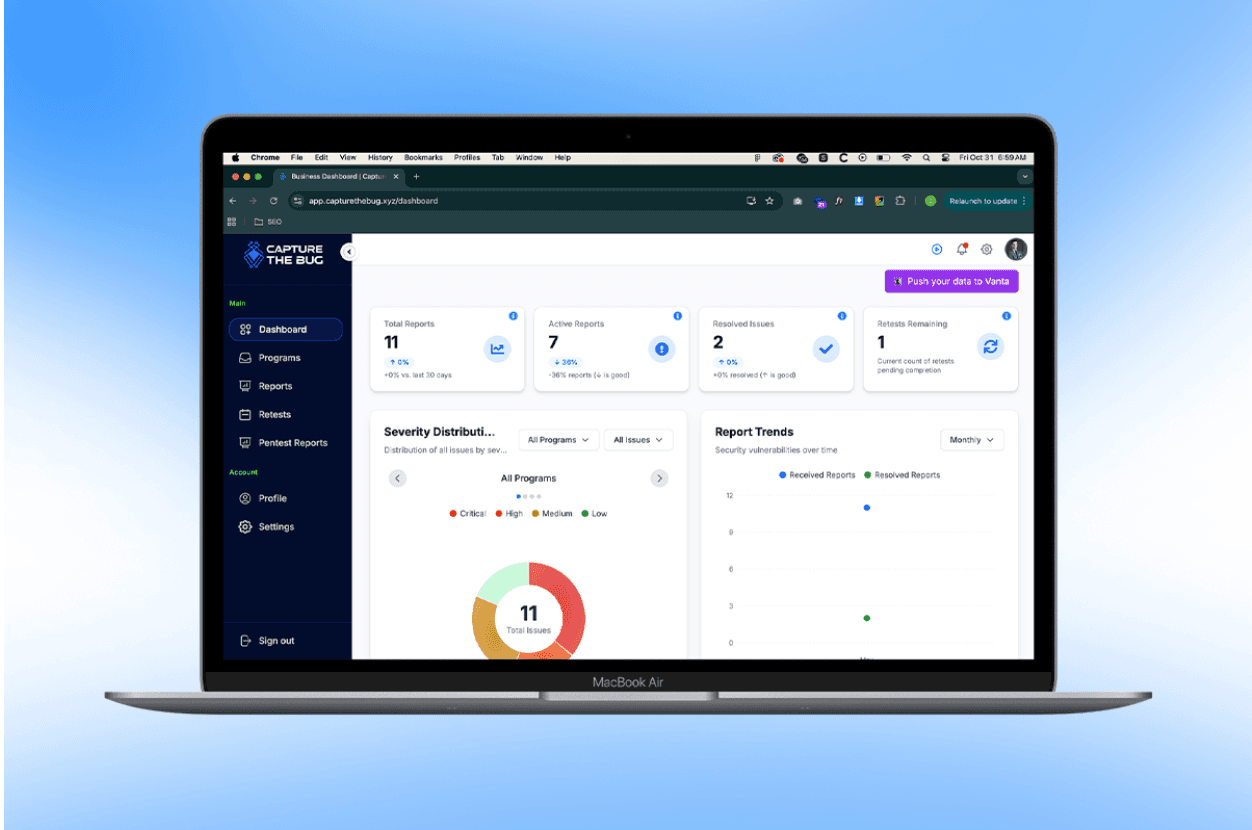
Capture The Bug delivers penetration testing as an ongoing process, not a one-time event. Through its PTaaS model, companies gain:
- On-demand testing when systems change
- Real-time visibility into vulnerabilities
- Direct collaboration with testers
- Faster validation of fixes
- Compliance-ready reporting when needed
This approach aligns with how modern systems evolve. Constantly. For teams handling sensitive data, APIs, and integrations, this model reduces the time attackers have to exploit gaps.
To understand how this works in practice, teams often explore services like capturethebug.xyz/services/penetration-testing. This helps them move from delayed detection to immediate action.
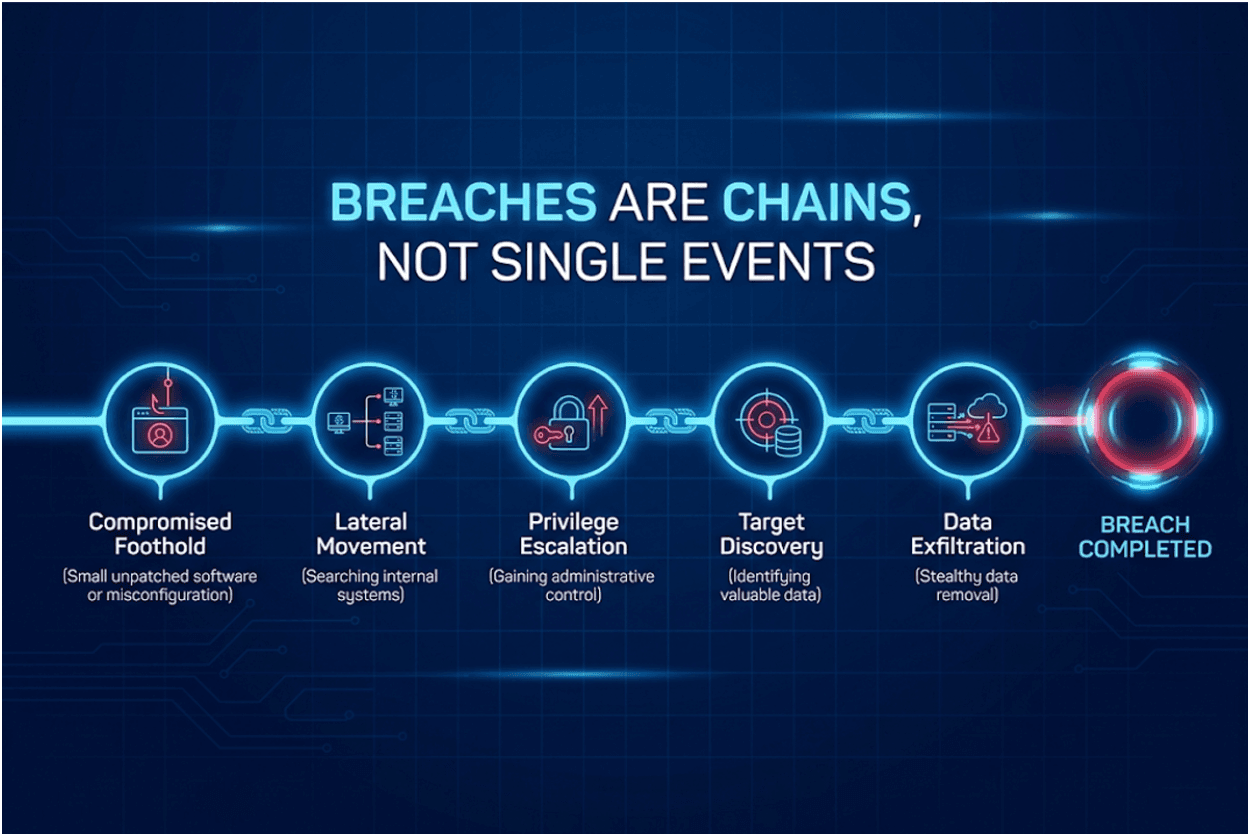
The Bigger Lesson: Breaches Are Chains, Not Events
One of the biggest misconceptions in cybersecurity is this idea of a single failure. In reality, breaches are sequences. A small exposure leads to a small exploit. That leads to expanded access. That leads to impact.
Break any one link, and the attack stops. Miss them all, and it succeeds faster than expected. This is why simulation-based testing is powerful. It shows how issues connect, not just where they exist.
Final Thoughts
This was not an advanced, highly sophisticated attack. It was realistic. And that is exactly why it matters. Most real-world breaches do not rely on complex zero-day vulnerabilities. They rely on overlooked gaps, misconfigurations, and timing.
The 10-minute breach is not an outlier. It is becoming the standard. For modern SaaS and enterprise teams, the question is no longer whether vulnerabilities exist. It is how quickly they can be found and fixed.
FAQ
1. How can a system be hacked in 10 minutes?
Because attackers chain multiple small vulnerabilities together, gaining access quickly once an entry point is found.
2. What is an attack simulation in cybersecurity?
It is a controlled test that mimics real-world attack scenarios to identify how vulnerabilities can be exploited.
3. Why do traditional penetration tests miss real attacks?
Because they provide a snapshot in time and often fail to show how vulnerabilities connect in real scenarios.
4. What is PTaaS and how does it help?
PTaaS delivers ongoing testing with real-time insights, helping teams detect and fix vulnerabilities faster.
5. How can companies prevent fast breaches like this?
By securing all environments, validating inputs, monitoring access continuously, and testing systems regularly.