The average time to remediate a vulnerability in 2026 is 43 days. That is the median from Verizon's 2026 breach study. The Cyentia Institute puts the same number at 67 days across pentest findings specifically, even though most organisations set a two-week target. The gap between target and reality has one root cause that most security teams know well: findings sit in a queue somewhere between the security platform and the developer's sprint.
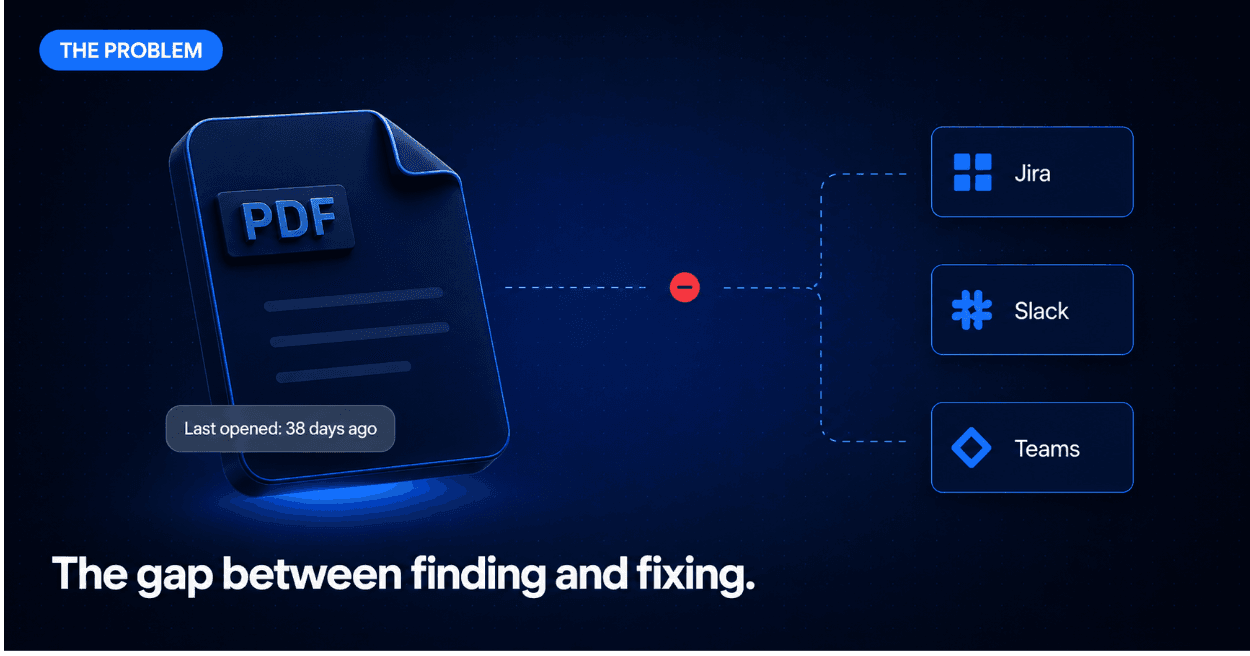
Nobody is ignoring the problem. The problem is that most vulnerability management workflows require someone to manually move information from a security tool into an engineering tool. That handoff is where time goes.
Capture The Bug's integrations with Slack, GitHub, Jira, and Microsoft Teams are built to close that gap. Here is exactly what that looks like in practice.
The Problem the Integrations Solve
A penetration test produces findings with severity ratings, reproduction steps, affected components, and recommended fixes. In a traditional workflow, all of that information lives in a PDF or a web portal only the security team checks.
Developers work in Jira. They track progress in GitHub. They communicate in Slack or Microsoft Teams. Asking them to monitor a separate security platform adds a tool to a workflow they have already optimised. Most do not check it. Findings that need a developer sit unread for days. The two-week target becomes a 43-day reality.
The integration approach inverts this. Findings are pushed into the tools developers already have open. No copy and paste. No separate login. The finding arrives where the fix will be made.
How Each Integration Works
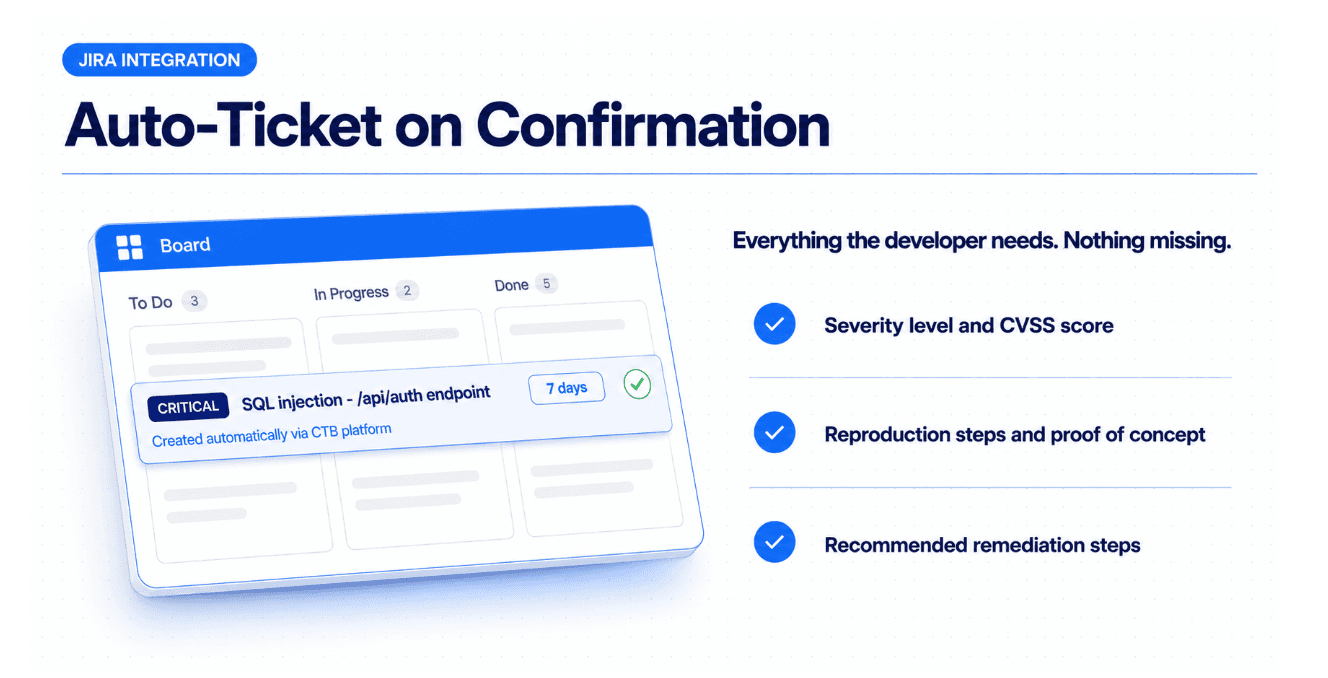
Jira is the most direct path from confirmed finding to assigned remediation. When a vulnerability is validated in the CTB platform, a Jira ticket is created automatically with the full context: severity level, CVSS score, affected asset, reproduction steps, and recommended remediation. It lands in the right project, assigned to the right team, sprint-ready.
SLA timers are embedded. A critical finding carries a 7-day target. A high-severity finding carries 30 days. The security team can see remediation status directly from CTB without logging into Jira. When the developer closes the ticket, the finding status updates in CTB automatically.
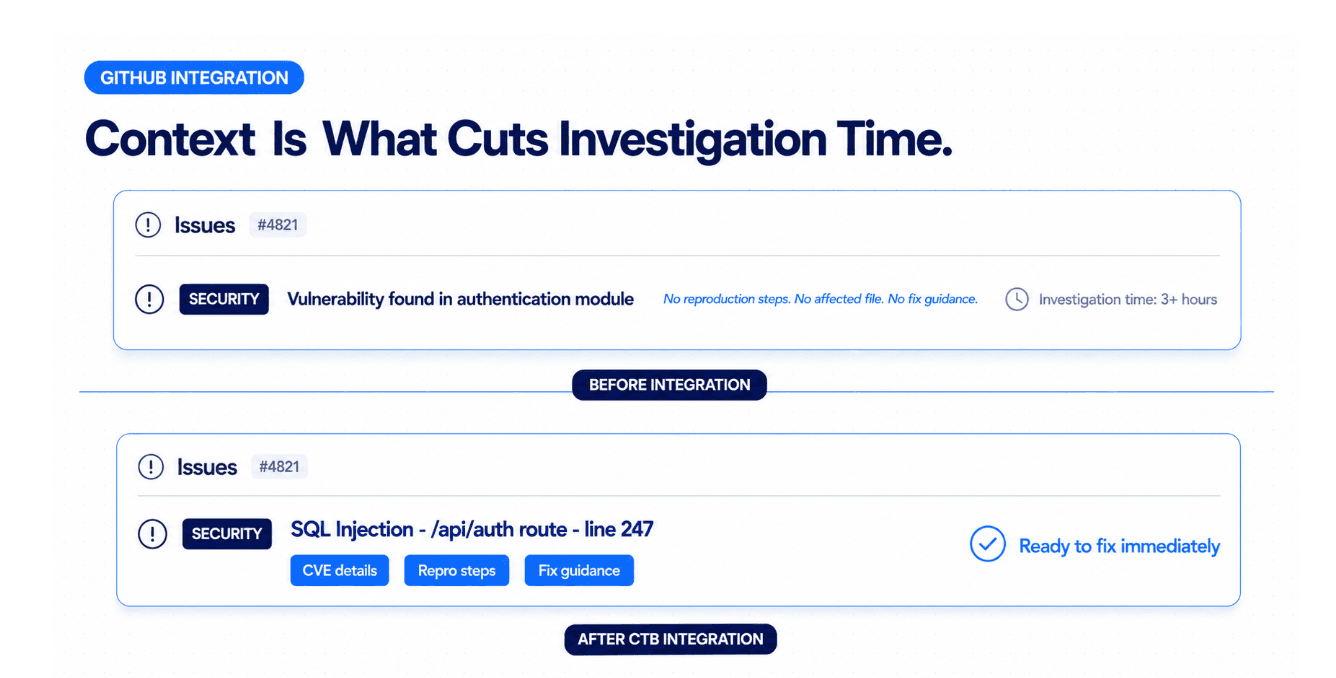
GitHub Issues works the same way for teams whose project tracking lives in a repository. A confirmed finding creates a GitHub Issue with full context attached. For pull request workflows, security findings become part of the same workflow as code reviews and bug fixes. When developers receive a security alert without context about which service or code is affected, they spend hours investigating before fixing. A GitHub Issue from CTB carries everything to start the fix immediately, not the investigation.
For organisations running continuous testing programmes, where findings emerge throughout the sprint cycle rather than in a single end-of-engagement report, GitHub and Jira integration is what makes continuous testing operationally sustainable. As outlined in the guide to continuous penetration testing for SOC 2 and ISO 27001 compliance, a finding confirmed on a Tuesday morning becomes a Jira ticket before lunch. The fix can be in the same sprint. Without integration, that same finding would need to clear a manual handoff process before any developer even knew it existed.
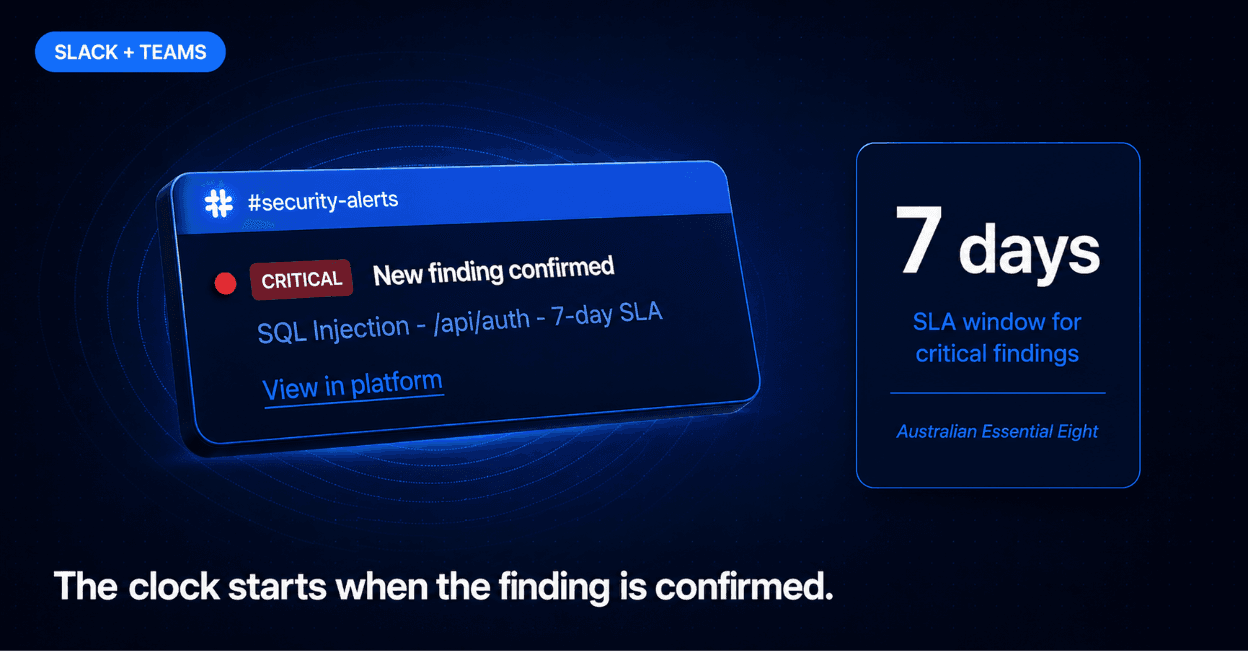
Slack and Microsoft Teams handle the notification layer. When a high or critical finding is confirmed, the relevant channel receives an alert with key details and a direct link to the platform. The alert goes to engineering, security, or both, depending on configuration.
This matters most for critical findings. A critical vulnerability requires remediation within seven days under the Australian Essential Eight and CISA's Binding Operational Directive timelines. If the only path from confirmed finding to developer is a PDF or inbox email, the seven-day clock runs while no one is moving. A Slack alert changes the starting point to the moment the finding is confirmed.
What This Changes for Your MTTR
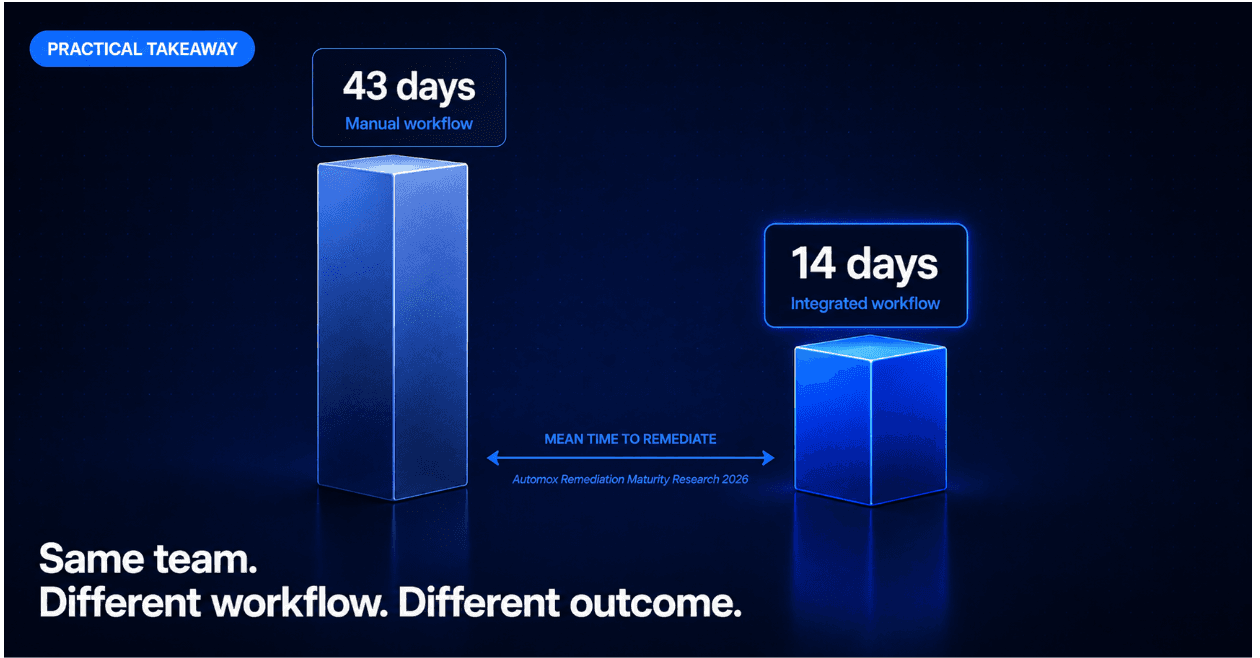
The gap between a confirmed finding and a developer starting remediation is the largest single controllable variable in MTTR. Automated ticketing in Jira or GitHub Issues, combined with Slack or Teams notification, removes the manual steps that create that gap.
Stage-one organisations managing findings manually typically run 60 to 120 days. Stage-two organisations with integrated workflows average 14 to 30 days, per Automox's 2026 remediation maturity research. The difference is not effort. It is workflow.
For SaaS companies shipping multiple times a week, a finding from Tuesday's deployment needs to be in a developer's sprint by Wednesday. The integration layer is what makes that timeline possible.
For organisations evaluating testing models, our comparison of PTaaS versus traditional pentesting covers the operational differences. Annual testing produces a report. Continuous testing with native integrations produces a live workflow.
Your Last Pentest Is Already Out of Date
Every week you ship without continuous testing is a week a vulnerability goes unseen. See what Capture The Bug finds in your first engagement.
Re-Testing Closes the Loop
The part most pentest programmes miss is the last step: verification that the fix actually worked.
When a developer marks a finding as remediated in Jira, a re-test can be triggered from the CTB platform. The result feeds back as a verified close, not an assumed close. The audit trail is complete: finding confirmed, ticket created, fix deployed, re-test passed, finding closed. For teams evidencing compliance under SOC 2, ISO 27001, or the Australian Essential Eight, that trail is what auditors look for. The guide to what happens after a penetration test covers the re-testing and verification steps in full detail.
The integrations do not change what gets found. They change what happens to it after it is found. That is where MTTR lives, and it is where most vulnerability management programmes either close the gap or do not.
Book a platform walkthrough to see how CTB's integrations fit into your existing engineering workflow at our Request Demo page.
Plan Your Annual Pentesting Strategy the Right Way
Learn how modern SaaS companies structure pentesting across the year to reduce risk, stay compliant, and avoid last-minute panic before audits.

FAQ
How does Capture The Bug integrate with Jira?
When a vulnerability is validated in the CTB platform, a Jira ticket is created automatically with full context: severity level, CVSS score, affected asset, reproduction steps, and recommended remediation. SLA timers are built into the ticket based on severity. When the developer closes the Jira ticket, the finding status updates in CTB automatically. No manual status update or separate notification is required.
Can Capture The Bug send vulnerability alerts to Slack or Microsoft Teams?
Yes. When a high or critical finding is confirmed, CTB can send a Slack or Microsoft Teams alert to the relevant team channel with the key finding details and a direct link to the platform. This ensures the engineering and security teams are aware of critical findings immediately, without waiting for a report or a separate email notification.
How does the GitHub integration work for security findings?
CTB creates a GitHub Issue in the relevant repository when a finding is confirmed, including full context about the vulnerability, the affected component, and recommended remediation. For teams whose project tracking lives in GitHub, security findings become part of the same workflow as code reviews and bug fixes, reducing the investigation time developers need before starting a fix.
What is the average time to remediate a vulnerability and how do integrations reduce it?
The median time to remediate a vulnerability rose to 43 days in Verizon's 2026 breach study. Cyentia Institute found a 67-day median for pentest findings specifically. Organisations with integrated workflows average 14 to 30 days, compared to 60 to 120 days for manual processes. The primary driver of the difference is removing the manual handoff between the security tool and the engineering tools developers already work in.
Does Capture The Bug support re-testing after a developer fixes a finding?
Yes. When a finding is marked as remediated, a re-test can be triggered from the CTB platform. The result feeds back into the platform as a verified close, creating a complete audit trail from confirmed finding through to verified remediation. This trail is the evidence that compliance frameworks including SOC 2, ISO 27001, and the Australian Essential Eight look for when auditing security programmes.