Understanding Signal-to-Noise for Vulnerability Management Success
Most security leaders do not suffer from a lack of data. They suffer from too much of it.
Every week, security teams receive long lists of issues. Some are serious. Many are not. A few look important but lead nowhere. Over time, this creates a dangerous pattern. Critical risks get buried. Teams lose confidence in the findings. Remediation slows. Leadership starts questioning the value of security testing altogether.
At Capture The Bug, this problem shows up in nearly every first conversation. The challenge is rarely volume. It is noise.
Signal-to-noise is the difference between vulnerability management that actually reduces risk and vulnerability management that exhausts teams without results.
This article explains what signal-to-noise really means, why it breaks down, and how mature organizations restore clarity and momentum without burning out their people.
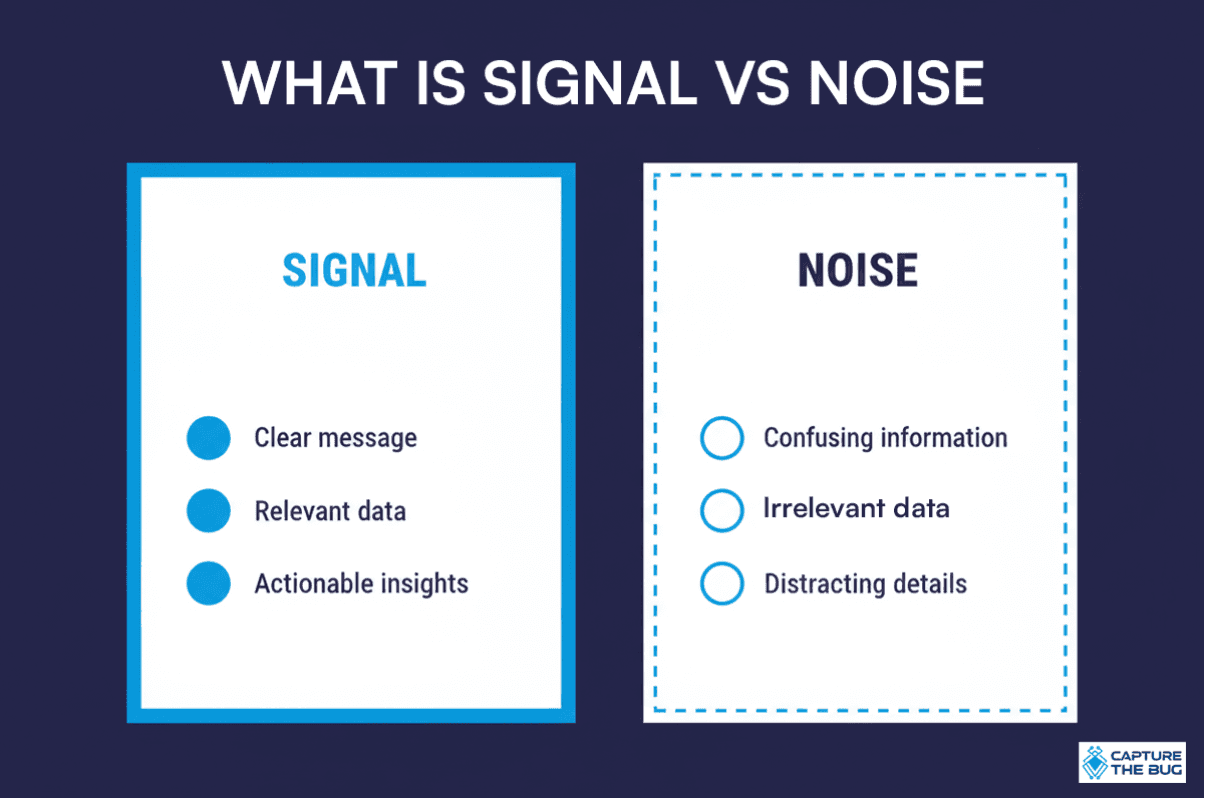
What Signal-to-Noise Really Means in Vulnerability Management
Signal is simple. It is the set of findings that genuinely matter to the business.
A high-signal issue is one that:
- Is real and reproducible
- Has clear security impact
- Can be acted on by engineering teams
- Reduces measurable risk when fixed
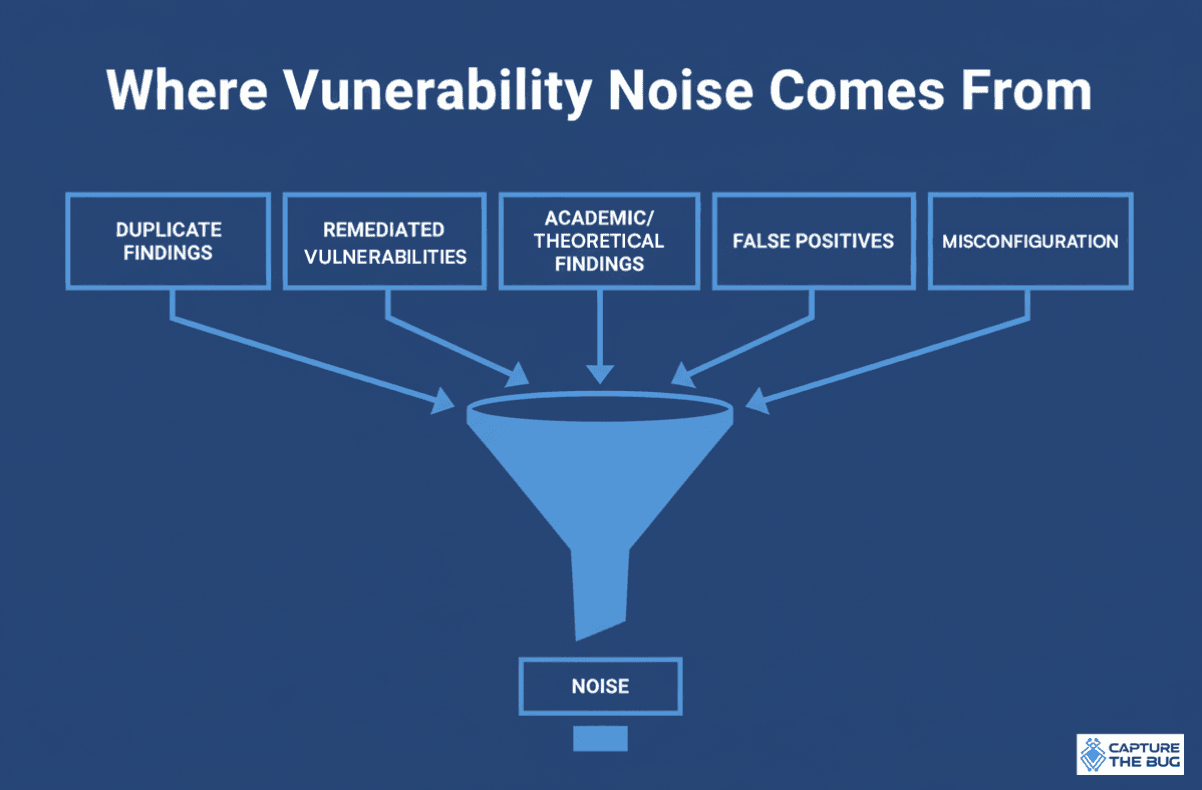
Noise is everything else.
Noise includes:
- Invalid or misleading findings
- Issues with no realistic exploit path
- Poorly documented reports
- Duplicates that add no new insight
- Items outside agreed scope or ownership
Signal-to-noise is not a theoretical metric. It is a practical measure of whether security work is moving the organization forward or just consuming attention.
High signal means each hour spent reviewing findings improves posture.
High noise means each hour drains energy and delays real fixes.
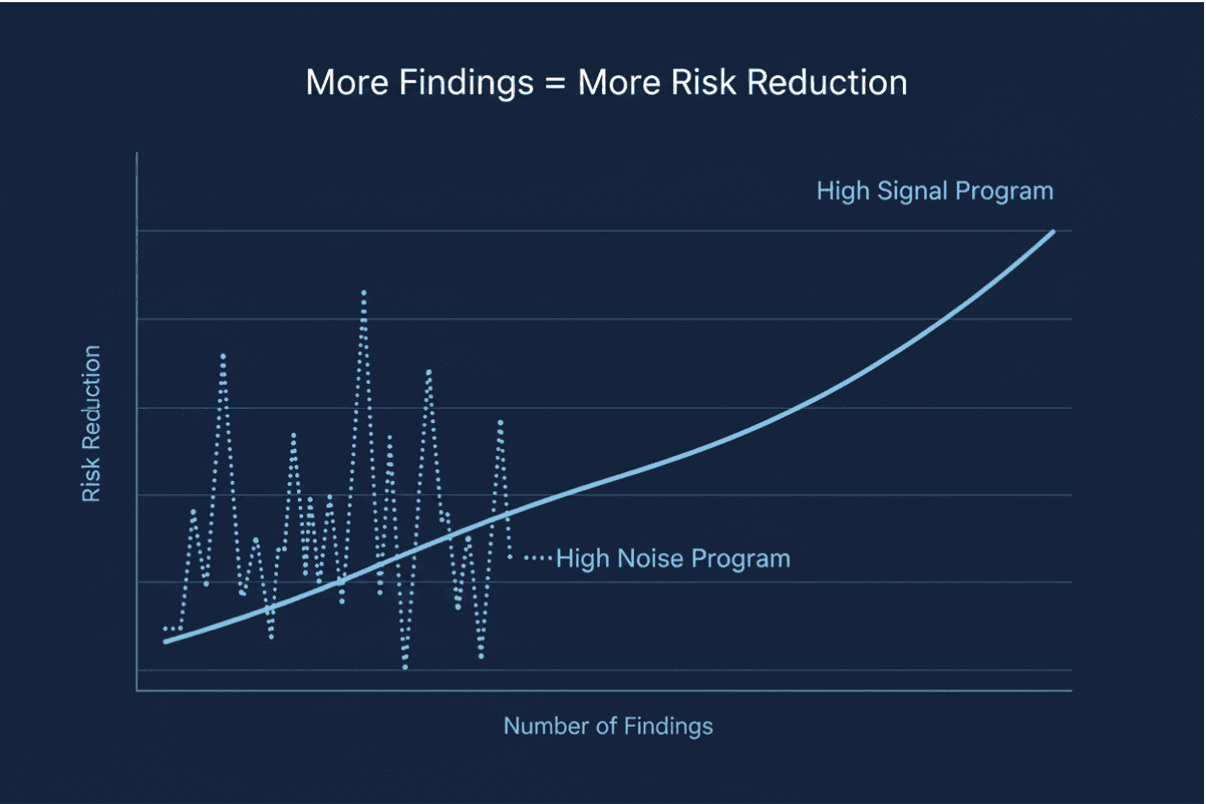
Why Volume is Not the Real Problem
Many organizations assume that fewer findings equal better security. That assumption is wrong.
Strong security programs often generate more findings over time, not fewer. As visibility improves, blind spots disappear. The difference is that mature programs increase signal while controlling noise.
Noise creates three hidden costs:
Decision Fatigue
Engineers and security teams spend more time debating findings than fixing them.
Delayed Remediation
Critical issues wait in queues behind low-impact items.
Cultural Erosion
Teams stop trusting security output and treat it as background noise.
When this happens, even accurate findings lose credibility.
How Capture The Bug Defines Signal in Practice
At Capture The Bug, signal is defined by business impact, not by technical novelty.
A finding is high signal when:
- It is validated by experienced testers
- The exploit path is clear and relevant
- The asset and ownership are unambiguous
- The fix can be verified and closed confidently
Some issues may never be fixed by design. Accepted risks, known limitations, or duplicate discoveries can still be valuable signals because they confirm awareness and intent. What matters is clarity.
Noise is anything that forces teams to ask, "Why are we looking at this?"
The Most Common Causes of Low Signal
Low signal is rarely caused by one mistake. It usually emerges from small misalignments across scope, process, and communication.
1. Unclear or Unstable Scope
When scope is too narrow, testers waste time probing irrelevant areas.
When scope is too broad, focus disappears.
The worst case is broad scope with many hidden exclusions. This creates confusion and frustration on both sides. Time is spent testing areas that will never be addressed.
Clear scope does not mean restrictive scope. It means intentional scope.
2. Inconsistent Asset Definitions
If assets are named differently across teams, reports become harder to interpret and harder to act on.
Security may understand an issue, but engineering does not recognize the system. This turns valid findings into operational noise.
Consistency in asset structure is one of the fastest ways to raise signal without changing tooling.
3. Findings Without Context
A vulnerability without context is just a fact. Context turns it into a decision.
Low-signal reports often miss:
- Business impact
- Realistic attack scenarios
- Environmental assumptions
- Clear reproduction steps
Without these, teams spend time translating instead of fixing.
4. Slow or Impersonal Communication
Security is still a human process.
When findings are delivered without explanation, empathy, or responsiveness, friction increases. Engineers disengage. Testers feel ignored. Noise increases because misunderstandings multiply.
Direct, respectful interaction dramatically improves signal quality.
Why Signal-to-Noise is a Leadership Issue, Not Just a Technical One
Signal-to-noise reflects how decisions are made inside the organization.
High-signal programs share common leadership traits:
- Clear priorities are communicated
- Risk ownership is defined
- Fixing security issues is rewarded, not punished
- Teams are allowed to ask "why" without friction
Low-signal programs often suffer from:
- Conflicting incentives
- Unclear accountability
- Fear-driven reporting
- Overreliance on raw output instead of judgment
This is why tooling alone never fixes noise. Governance and trust matter more.
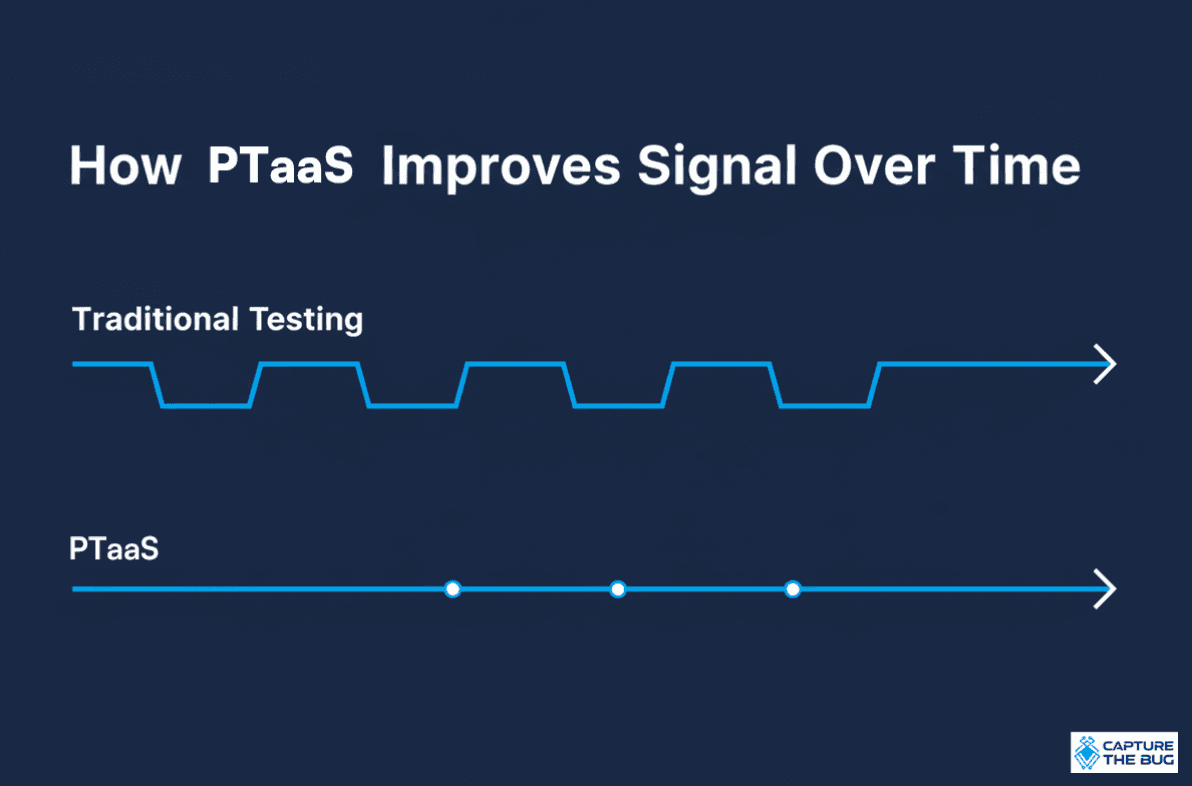
How PTaaS Improves Signal-to-Noise When Done Correctly
Pentesting as a Service is not valuable because it produces more findings. It is valuable because it improves clarity over time.
When PTaaS is implemented properly:
- Findings are validated continuously, not dumped at the end
- Retesting confirms fixes quickly, reducing backlog confusion
- Patterns emerge across releases instead of isolated snapshots
- Teams learn which issues matter in their environment
At Capture The Bug, the goal is not to flood dashboards. The goal is to make each finding worth attention.
High signal is achieved when security output feels aligned with engineering reality.
Measuring Signal Without Overcomplicating It
You do not need complex formulas to understand your signal-to-noise health.
Ask three simple questions:
- How many findings lead to real fixes?
- How often do teams challenge the relevance of reports?
- How long do critical issues sit before action?
If most findings drive action and trust remains high, signal is healthy.
If findings are debated more than resolved, noise is winning.
The Long-term Payoff of High Signal
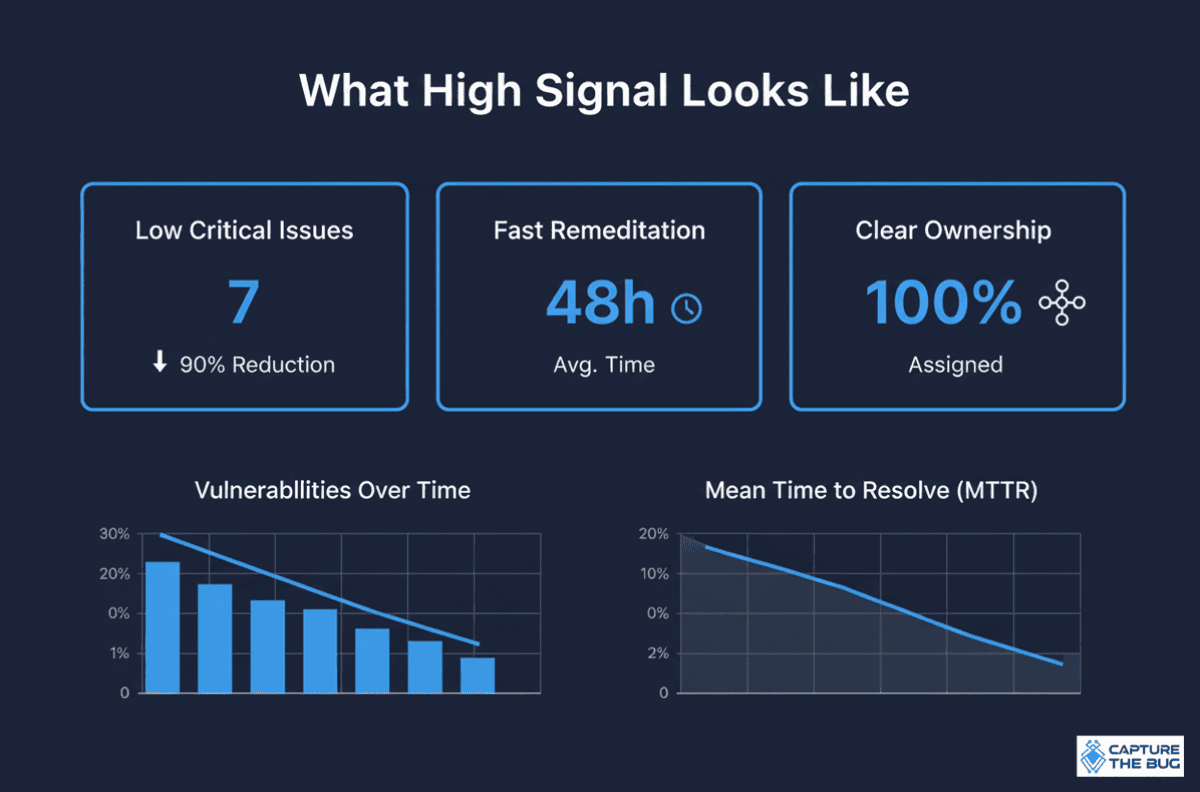
Organizations with strong signal-to-noise ratios see measurable outcomes:
- Faster remediation of high-risk issues
- Less burnout across security and engineering
- Stronger audit and compliance confidence
- Better alignment between leadership and technical teams
Most importantly, security becomes a force multiplier instead of a blocker.
Final Thoughts
Vulnerability management is not about finding everything. It is about finding what matters.
Signal-to-noise is the quiet metric behind every effective security program. When signal is strong, teams move with confidence. When noise dominates, even good security becomes ineffective.
Capture The Bug works with organizations across ANZ, the US, and globally to restore that clarity. Not by generating more output, but by improving judgment, validation, and collaboration.
Because the goal is not more findings.
The goal is fewer surprises.
FAQ
What does signal-to-noise mean in vulnerability management?
It measures how many reported vulnerabilities are meaningful and actionable compared to those that create distraction or confusion.
Why is high noise dangerous for security teams?
Noise delays critical fixes, drains engineering time, and reduces trust in security findings.
How can organizations reduce vulnerability noise?
By clarifying scope, validating findings, improving context, and strengthening communication between testers and engineers.
Does PTaaS reduce signal-to-noise?
Yes, when focused on continuous validation, clear reporting, and real collaboration rather than raw volume.
How does Capture The Bug approach signal quality?
Through CREST-certified testing, real-time validation, and business-focused reporting that prioritizes clarity over quantity.