What Is Penetration Testing in Cyber Security: Definition, Purpose and How to Perform It
A clear, founder friendly explanation of what penetration testing really is, why it matters, and how modern teams perform it without slowing innovation.
Penetration testing is often described as a highly technical security exercise. In reality, it is a business safeguard. When systems, products, and integrations evolve quickly, new risks appear just as fast. Penetration testing gives you a controlled way to see how attackers would actually try to break in—before they get the chance.
For most leadership teams, the challenge is not knowing that penetration testing is important. It is understanding what good penetration testing looks like today, how often it should happen, and how to do it without slowing product delivery or overwhelming engineering teams.
1. Understanding penetration testing in simple words
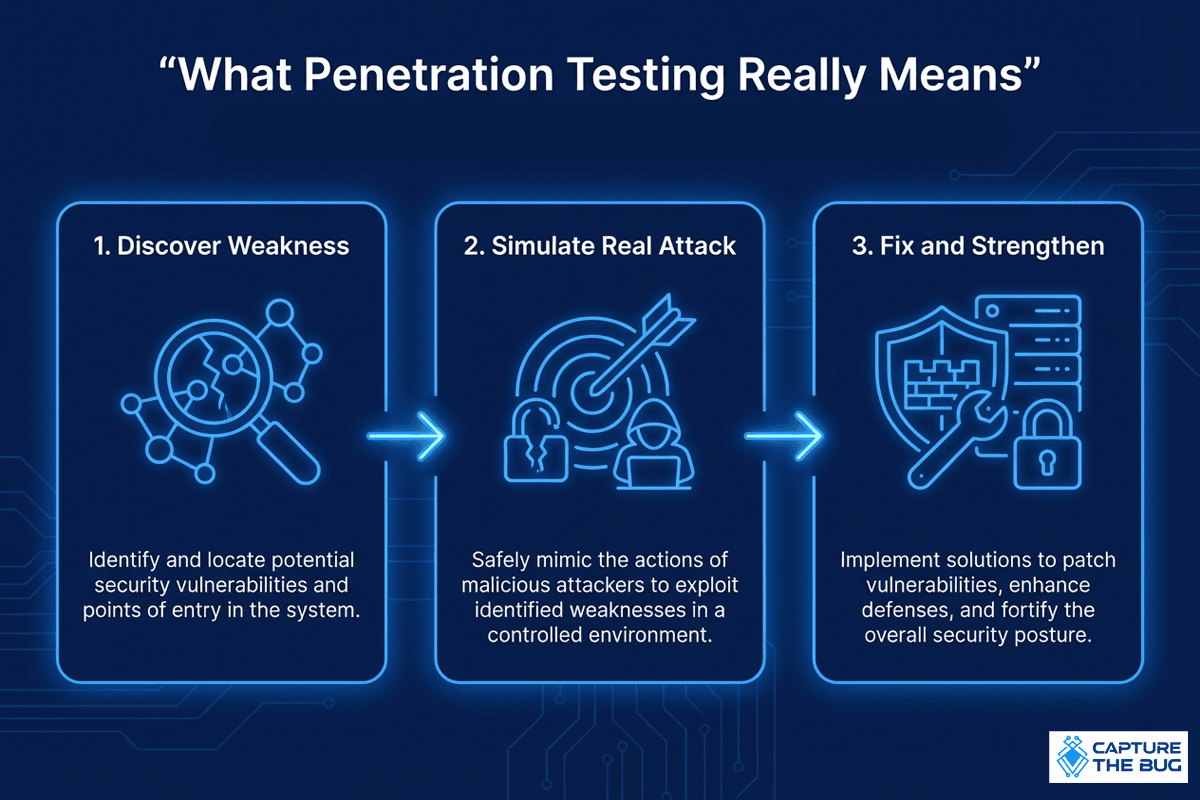
In simple terms, penetration testing (often shortened to pen testing) is a safe, structured attempt to break into your systems before real attackers do. Instead of waiting for a breach, you invite trusted security experts to behave like attackers and report everything they can do and how they did it.
A good way to think about it: if vulnerability scanning tells you where the open windows are, penetration testing tells you whether someone can actually climb through, reach the safe, and walk out the door without being noticed.
- Goal: simulate real-world attacks to uncover weaknesses that matter.
- Scope: applications, APIs, infrastructure, identities, and business logic.
- Outcome: a prioritized list of vulnerabilities, proof-of-impact, and clear remediation guidance.
This is why queries like "what is penetration testing"and "penetration testing in cyber security" are not just academic. They are about answering a deeper question: how do we prove that our security actually works under pressure?
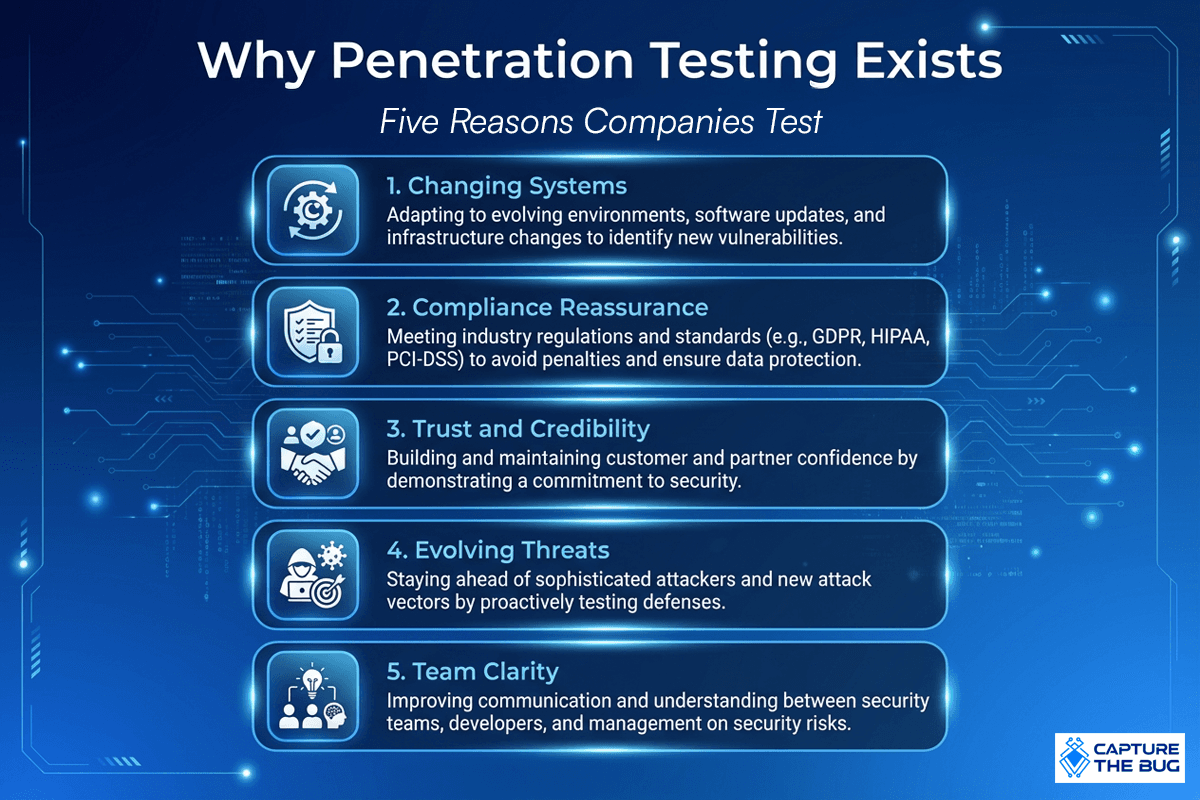
2. Why penetration testing exists: the business purpose
The real purpose of penetration testing is not to produce a thick PDF. It is to protect revenue, reputation, and customer trust by finding the exact paths an attacker would take to hurt your business.
From a business perspective, penetration testing helps you:
- Reduce breach risk: by closing real-world attack paths before they are abused.
- Win and retain customers: many SaaS buyers now ask for recent pentest reports during procurement.
- Meet compliance requirements: frameworks like SOC 2, ISO 27001, PCI DSS, and HIPAA expect regular, independent testing.
- Prioritize security spend: evidence from penetration testing shows which weaknesses create the most risk, not just the most tickets.
For founders and security leaders, penetration testing is a way to validate whether the investments you have already made—in tooling, controls, and process—are actually working together to stop realistic attacks.
3. Types of penetration testing (and when to use each)
When teams search for "how to perform penetration testing", what they often discover is that there is no single type. Different tests answer different questions. The most common types include:
- Web application penetration testing: focuses on web front-ends, core flows, and session management. Ideal when your primary attack surface is a customer-facing app.
- API penetration testing: evaluates the machine-to-machine interfaces that power modern SaaS products, mobile apps, and integrations.
- Network and infrastructure penetration testing:looks at internal and external networks, VPNs, firewalls, and cloud configurations.
- Mobile application penetration testing: targets iOS and Android apps, their APIs, and how they handle data on the device.
- Social engineering and phishing simulations:assess how people respond to realistic attacks and whether processes catch mistakes early.
- Red teaming: a broader, goal-driven exercise where testers behave like a determined attacker over weeks or months, combining techniques to test detection and response.
For penetration testing for SaaS businesses, web, API, and cloud configuration testing are usually the highest value starting points, because that is where customer data and critical workflows live.

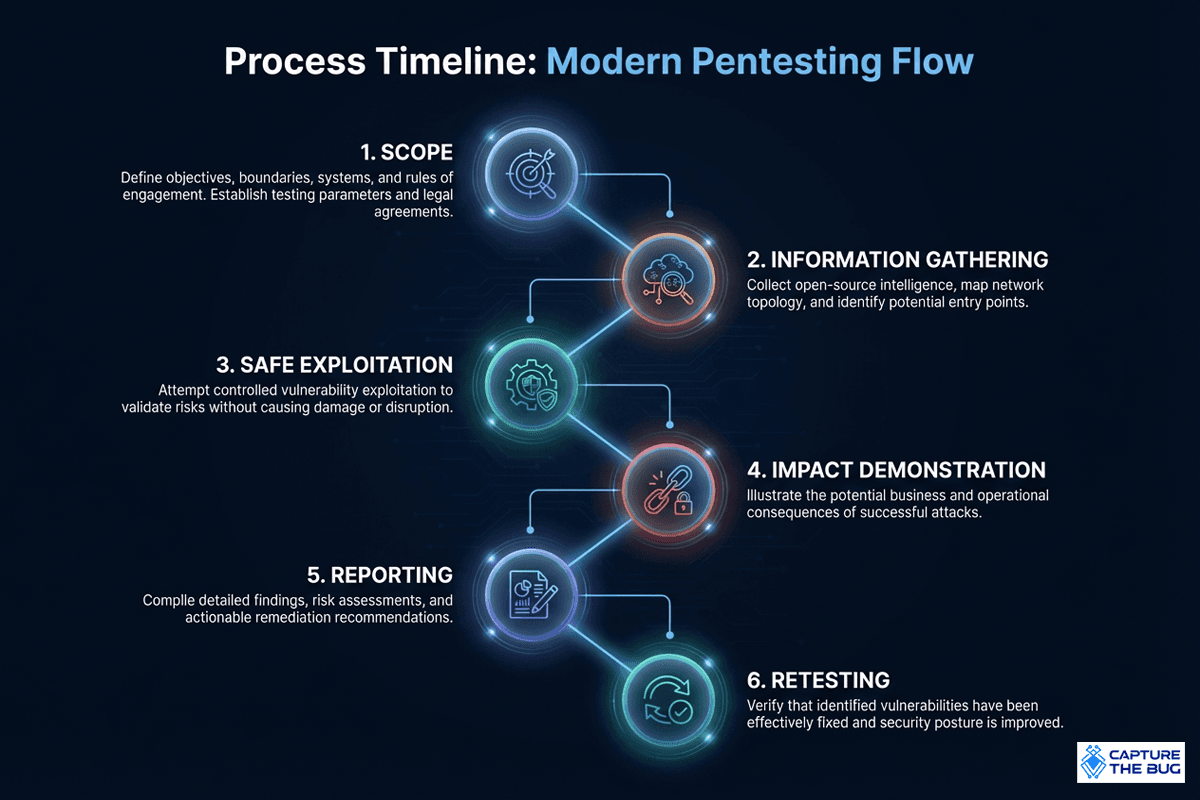
4. How modern penetration testing works in practice
The old model of penetration testing was simple: once a year, a consultancy arrived, disappeared for a few weeks, and came back with a static report. Modern teams need something different—especially those shipping weekly or daily.
A modern, continuous approach to penetration testing in cyber securityusually looks like this:
- Scoping and alignment: defining which apps, environments, and compliance goals are in scope, plus test windows that respect release cycles.
- Threat modelling: mapping how an attacker would move through your architecture, from exposed entry points to data stores and admin functions.
- Discovery and exploitation: combining automated discovery with deep, manual testing to find and safely exploit vulnerabilities.
- Collaborative remediation: vulnerabilities appear in a live dashboard rather than a one-off PDF, and engineers can talk directly with testers.
- Retesting and evidence: once fixes are in place, testers verify them and issue updated evidence for customers, audits, and regulators.
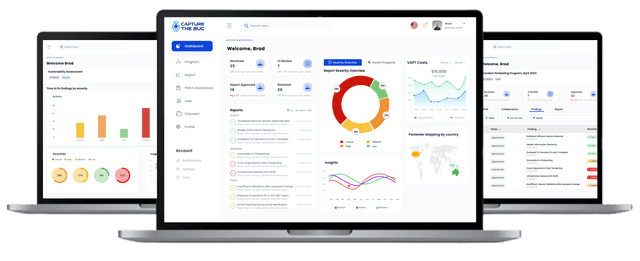
This is the model behind PTaaS (Penetration Testing as a Service). Platforms like Capture The Bug combine expert, human-led testing with a continuous, dashboard-driven experience that fits modern software teams.
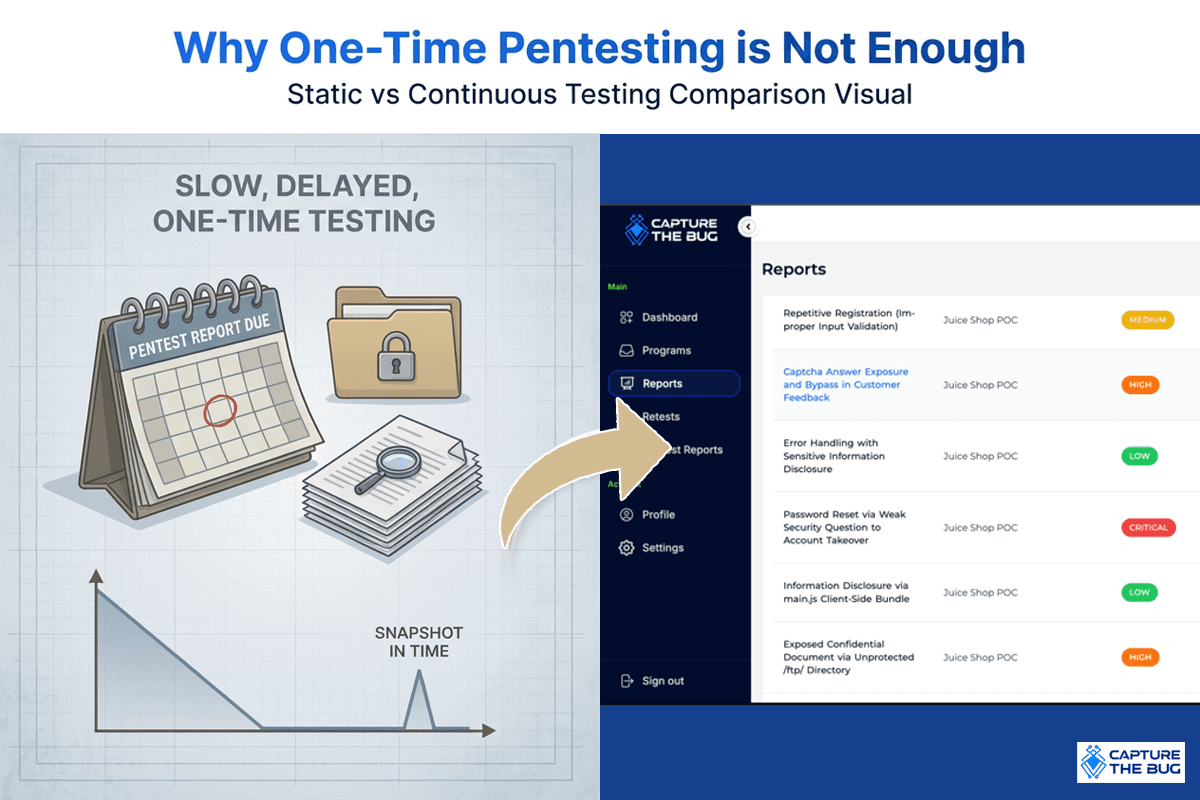
5. Why penetration testing should not be a once-a-year activity
Many organisations still run a single penetration test each year to tick a compliance box. The problem is that their software changes weekly, their architecture changes quarterly, and their threat landscape changes daily.
Relying on annual testing creates blind spots:
- New features ship without ever being tested under attacker conditions.
- Vulnerabilities may exist for months before anyone notices.
- Developers see security feedback long after they have moved on to new work.
In contrast, continuous penetration testing spreads testing throughout the year. High-risk releases and major changes get targeted attention, while an always-on PTaaS program ensures your crown-jewel systems are never far from a recent test.
6. How to perform penetration testing effectively
If you are responsible for how to perform penetration testinginside your organisation, here is a practical, founder-friendly checklist to get it right:
- Start with clear objectives: are you focused on protecting customer data, passing an upcoming audit, testing a new product launch, or all three?
- Choose the right scope: prioritise internet-facing assets, critical APIs, admin panels, and any systems that process payments or sensitive records.
- Pick an experienced partner: look for CREST or equivalent certifications, proven experience in your industry, and a collaborative working style.
- Integrate with delivery: agree test windows, communication channels, and how vulnerabilities will be tracked in your existing tools (Jira, Linear, Azure DevOps, etc.).
- Plan for retesting: the job is not finished when a vulnerability is patched—it is finished when an independent retest confirms the fix.
- Capture evidence: make sure you get clear reports, remediation guidance, and certificates you can share with customers, regulators, and auditors.
Done well, penetration testing becomes a reliable signal for where to focus scarce engineering time. Done poorly, it becomes an expensive annual ritual that nobody reads.
7. Penetration testing as a growth advantage
For modern SaaS and digital businesses, penetration testing is no longer just a defensive measure. When combined with continuous testing and clear communication, it becomes a growth driver.
- Sales enablement: sharing a recent, independent pentest report shortens security reviews and builds trust with enterprise buyers.
- Investor confidence: security posture is now part of due diligence. Demonstrating a mature penetration testing program signals operational discipline.
- Brand protection: reducing the likelihood and impact of breaches preserves the trust you have worked hard to build.
- Talent attraction: strong engineers prefer to work in environments where security is taken seriously and integrated into how products are built.
Capture The Bug's PTaaS platform is built around this idea: that security testing should help you move faster, close bigger deals, and stay ahead of both attackers and auditors—not slow you down.
Ready to see how penetration testing fits your roadmap?
Discover how Capture The Bug's CREST-certified PTaaS platform delivers continuous penetration testing with real-time collaboration, evidence-based reporting, and on-demand retesting.
FAQ: penetration testing in cyber security
1. What is penetration testing in cyber security?
Penetration testing is a controlled security assessment where ethical hackers simulate real-world attacks against your systems, applications, and networks. The goal is to identify and safely exploit vulnerabilities so they can be fixed before malicious attackers find them.
2. What is the main purpose of penetration testing?
The main purpose of penetration testing is to measure how well your defences hold up against realistic attacks and to provide a clear, prioritized plan for remediation. It turns theoretical risks into concrete, fixable findings with business context.
3. How do you perform penetration testing effectively?
Effective penetration testing starts with clear objectives and a well-defined scope, uses certified experts who understand your technology stack, and integrates findings into your normal development workflow. Continuous models like PTaaS keep this cycle running throughout the year.
4. How often should penetration testing be done?
At minimum, most organisations run penetration testing once a year or after major changes. However, fast-moving SaaS and cloud-native teams increasingly adopt continuous penetration testing, where critical assets are tested multiple times per year through a PTaaS platform.
5. How is penetration testing different from vulnerability scanning?
Vulnerability scanning is automated and looks for known issues based on signatures. Penetration testing is human-led, focuses on real-world attack paths, and validates what can actually be exploited end-to-end—including business logic, chained issues, and data impact.