Why Smart Companies Rethink Outsourcing Penetration Testing in 2026
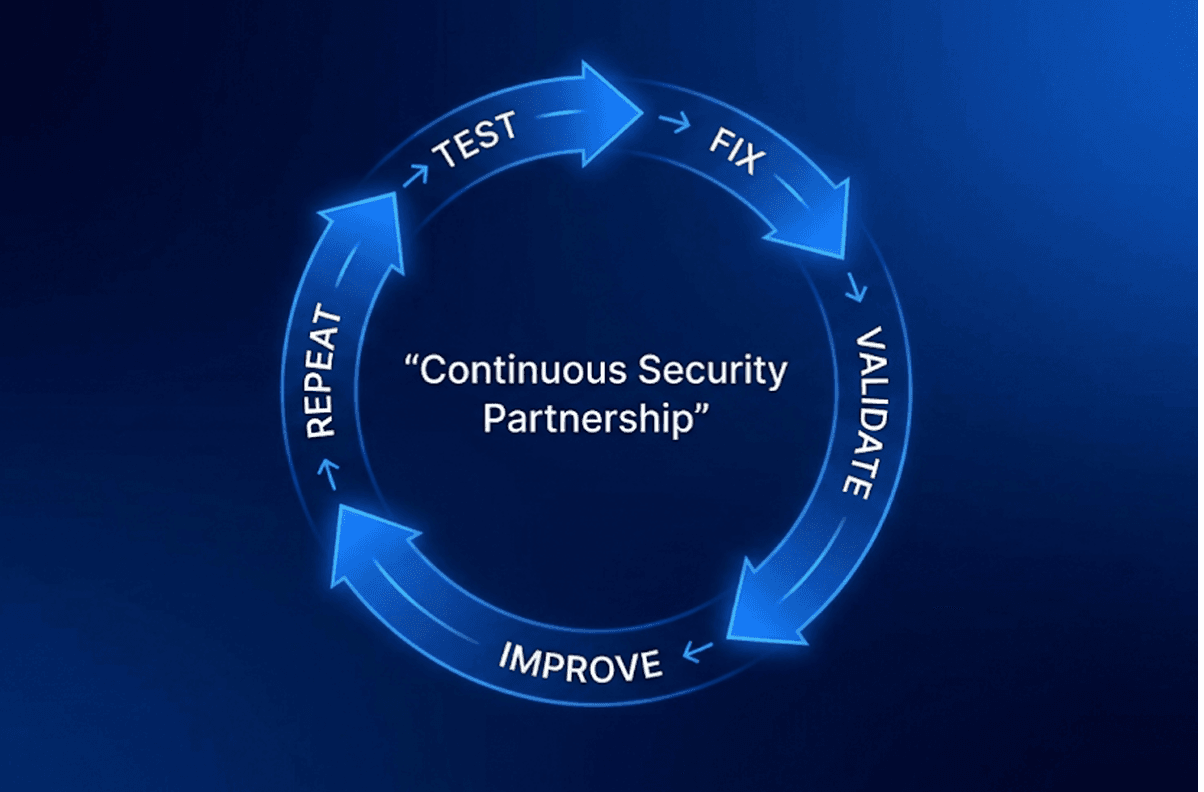
Outsourcing penetration testing in 2026 is no longer about buying a report. It is about building a continuous security partnership that keeps pace with how modern software is built and shipped.
There was a time when outsourcing penetration testing meant one thing: hire a vendor, wait a few weeks, receive a thick PDF, fix what you can, and repeat next year.
That model is fading fast.
In 2026, high-growth SaaS companies, fintech platforms, and regulated enterprises across ANZ and the USA are approaching outsourced testing very differently. They are not looking for a one-off audit. They are looking for continuous visibility, measurable remediation, and a partner that understands how their product evolves.
At Capture The Bug, we see this shift every day. The conversation has changed from "How much does a pentest cost?" to "How quickly can we validate every release and prove it to our customers?"
Let’s break down what actually works now.
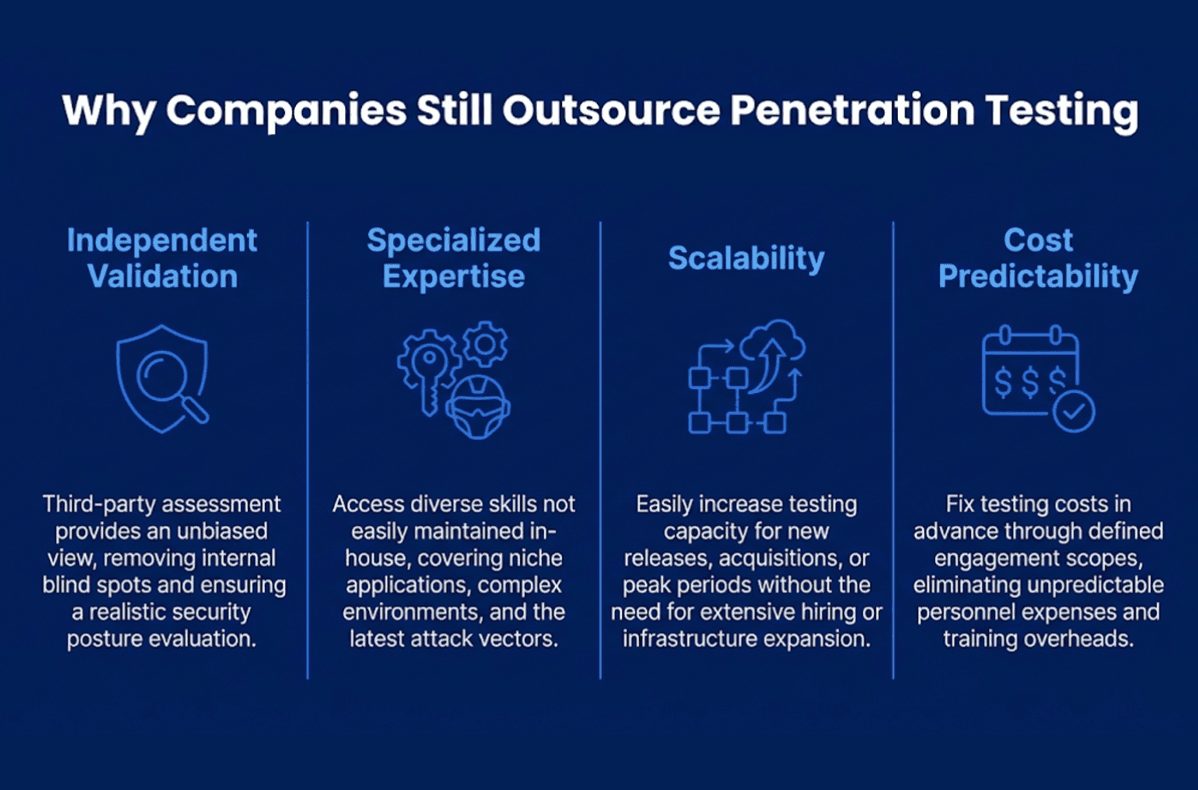
Why Companies Still Outsource Penetration Testing
Outsourcing remains essential. Not because internal teams lack talent, but because independence and specialization matter.
Here is why serious security teams continue to outsource:
1. Independent Validation
An internal team knows the architecture too well. Familiarity creates blind spots. A third-party provider approaches your systems the way an attacker would, without assumptions.
For compliance frameworks such as ISO 27001, SOC 2, and PCI-DSS, independent validation is often mandatory. External assessment strengthens credibility with auditors, customers, and investors.
2. Specialized Expertise
Modern attack surfaces are fragmented. Cloud infrastructure, APIs, mobile apps, third-party integrations, identity layers. It is rare for one in-house team to deeply specialize in all of it.
Outsourced providers bring focused expertise across environments and industries. That depth is difficult and expensive to build internally.
3. Scalability Without Headcount
Security demand is not linear. It spikes before product launches, fundraising rounds, acquisitions, and audits. Outsourcing gives you surge capacity without long-term hiring commitments.
4. Cost Predictability
Building a full internal offensive security function is expensive. Salaries, training, tooling, retention. For many companies, especially startups and mid-sized SaaS platforms, outsourcing delivers stronger ROI.
But here is the key: outsourcing only works if it evolves beyond the old model.
When Outsourcing Makes More Sense Than In-House Testing
Not every organization needs a permanent internal red team. Outsourcing makes strategic sense when:
- You need third-party reports for compliance.
- You are preparing for M&A or due diligence.
- Your product changes frequently.
- Your internal team is focused on detection and response, not offensive testing.
- You operate in multiple regions such as NZ, AU, and the US and need global credibility.
In fast-moving SaaS environments, outsourcing is often not a replacement for internal security. It is an extension of it.
The most effective security programs today are hybrid. Internal teams handle architecture and monitoring. External partners validate real-world exploitability.
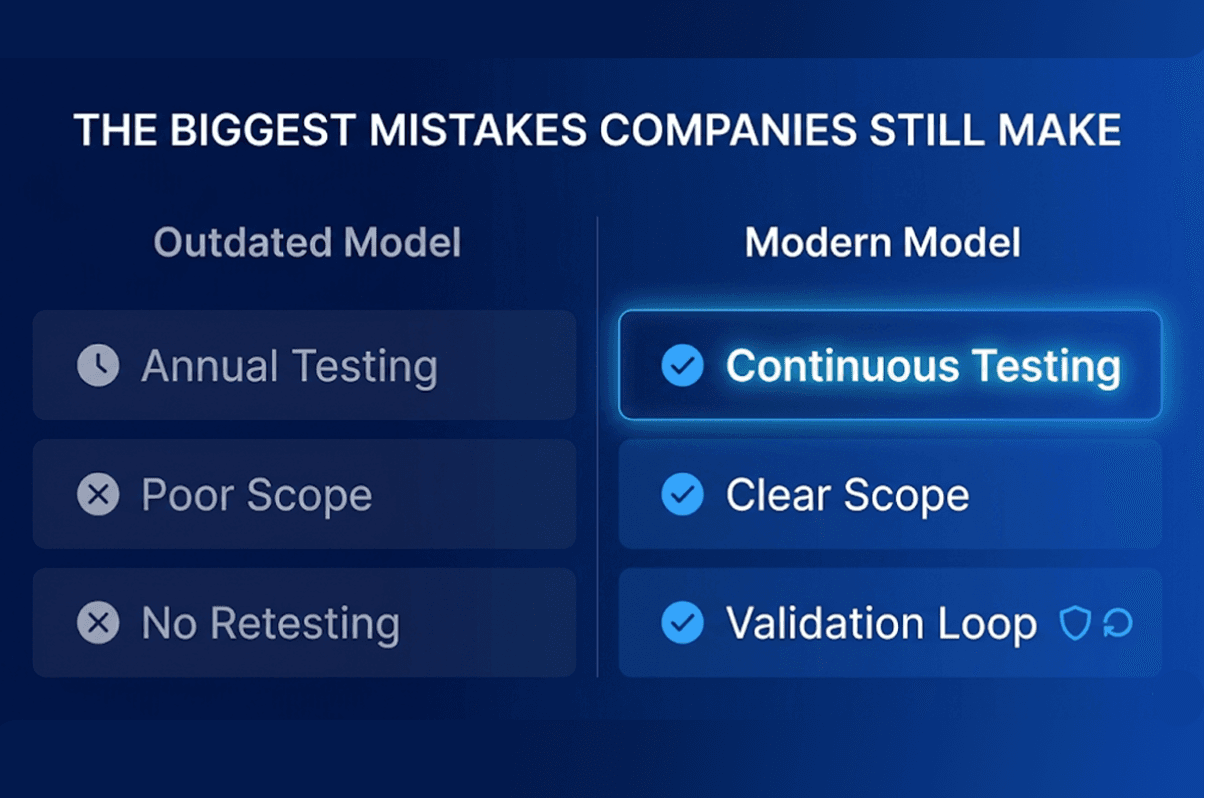
The Biggest Mistakes Companies Still Make
Even in 2026, we see avoidable mistakes.
Treating Testing as a Once-a-Year Event
Software does not stand still. Neither do attackers.
An annual test creates a false sense of security. By the time the next engagement arrives, the application may be unrecognizable from what was originally tested.
Security needs rhythm. Not a calendar reminder.
Poorly Defined Scope
If the scope is vague, the output is vague.
Testing must align with business risk. What assets matter most? What would cause customer impact? What integrations create exposure?
Clear scoping is not procurement admin. It is risk strategy.
Ignoring Remediation Validation
A report without retesting is incomplete.
If vulnerabilities are fixed but never revalidated, leadership has no measurable assurance. Closed-loop testing, where fixes are verified, is what turns a pentest into a security improvement engine.
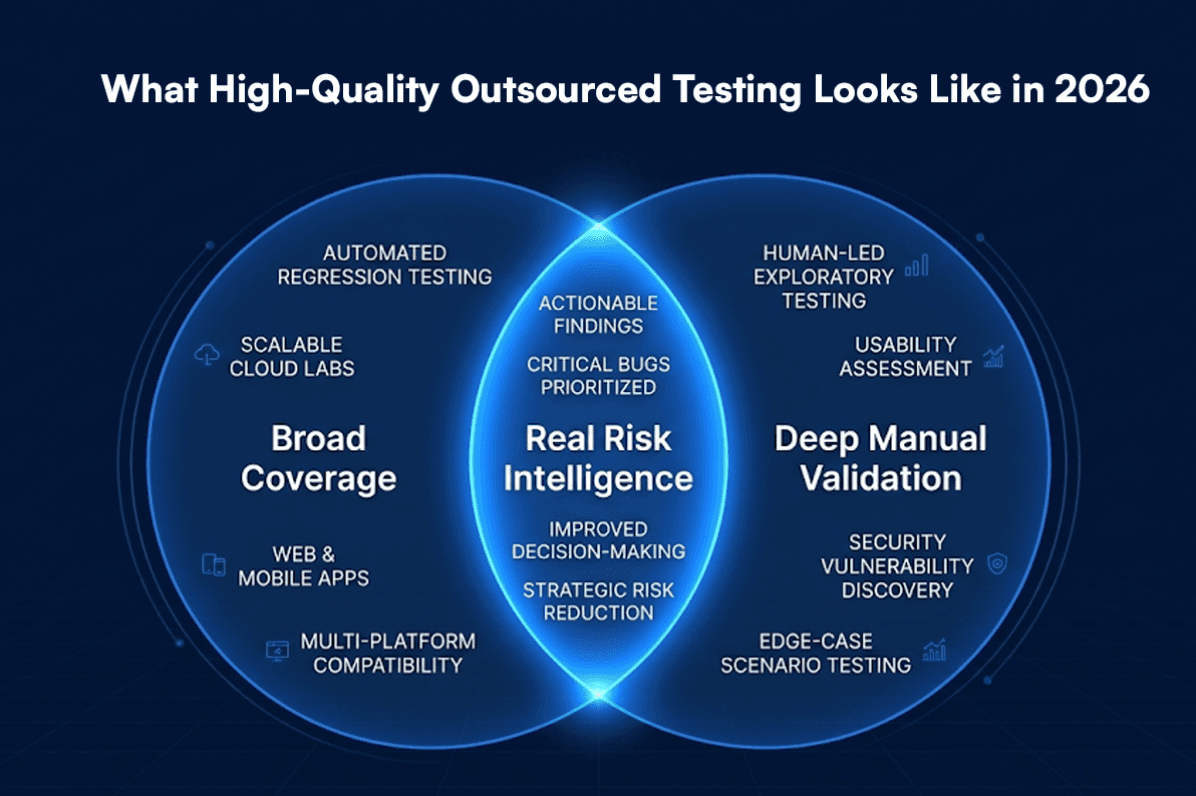
What High-Quality Outsourced Testing Looks Like in 2026
There is a clear difference between commodity testing and strategic testing.
Blended Methodology
Purely tool-driven approaches miss logic flaws and chained vulnerabilities. Purely manual approaches struggle with scale.
The right model blends breadth and depth. Broad coverage to identify exposure. Deep manual validation to confirm real risk.
Clear Reporting for Two Audiences
A strong report speaks to both engineers and executives.
Engineers need proof of concept, technical detail, and prioritized remediation guidance.
Executives need business impact clarity. What does this mean for revenue, reputation, compliance, and customer trust?
If a report cannot be understood by leadership, it cannot influence budget or roadmap decisions.
Retesting Built In
Retesting should not be an afterthought or an extra invoice line item. It should be standard.
Verification is what transforms findings into measurable risk reduction.
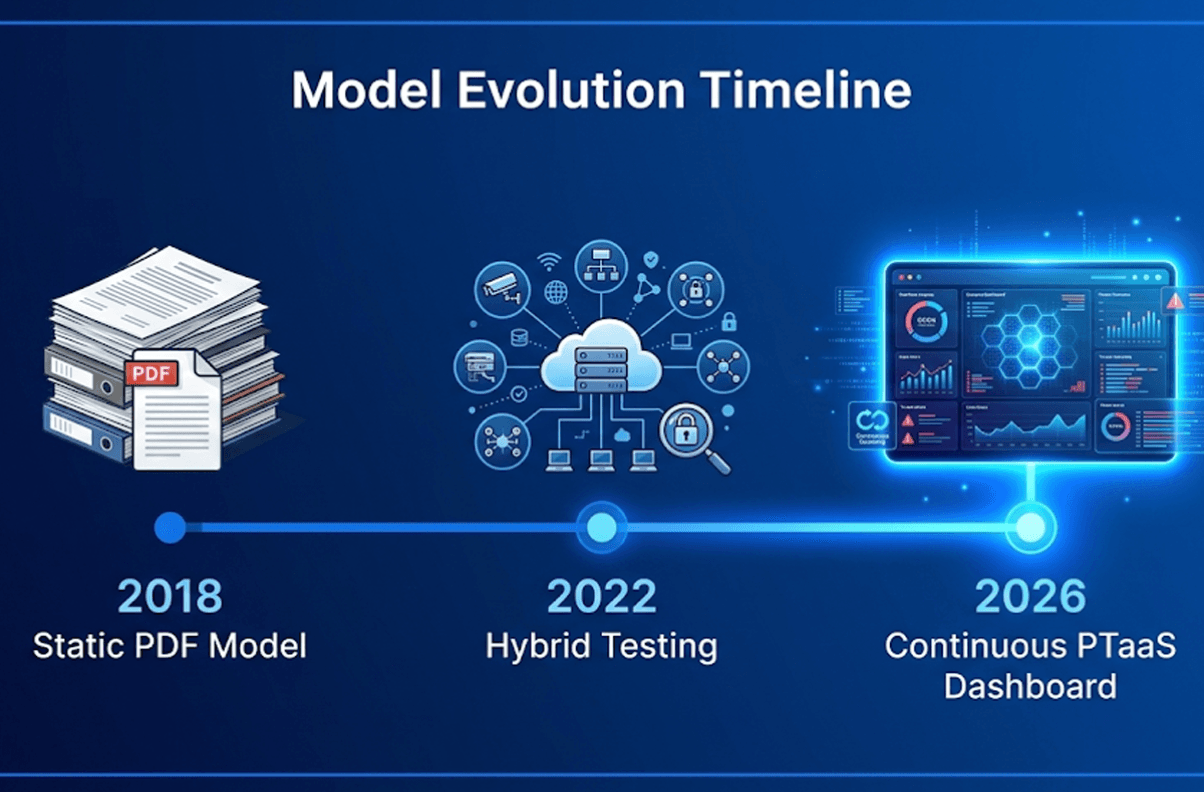
Traditional Pentest vs Continuous PTaaS
The outsourced testing landscape now includes multiple delivery models.
Traditional project-based pentests still serve a purpose. They are useful for compliance snapshots or major product milestones.
But fast-moving teams are increasingly choosing Penetration Testing as a Service, or PTaaS.
With PTaaS:
- Testing can be launched on demand.
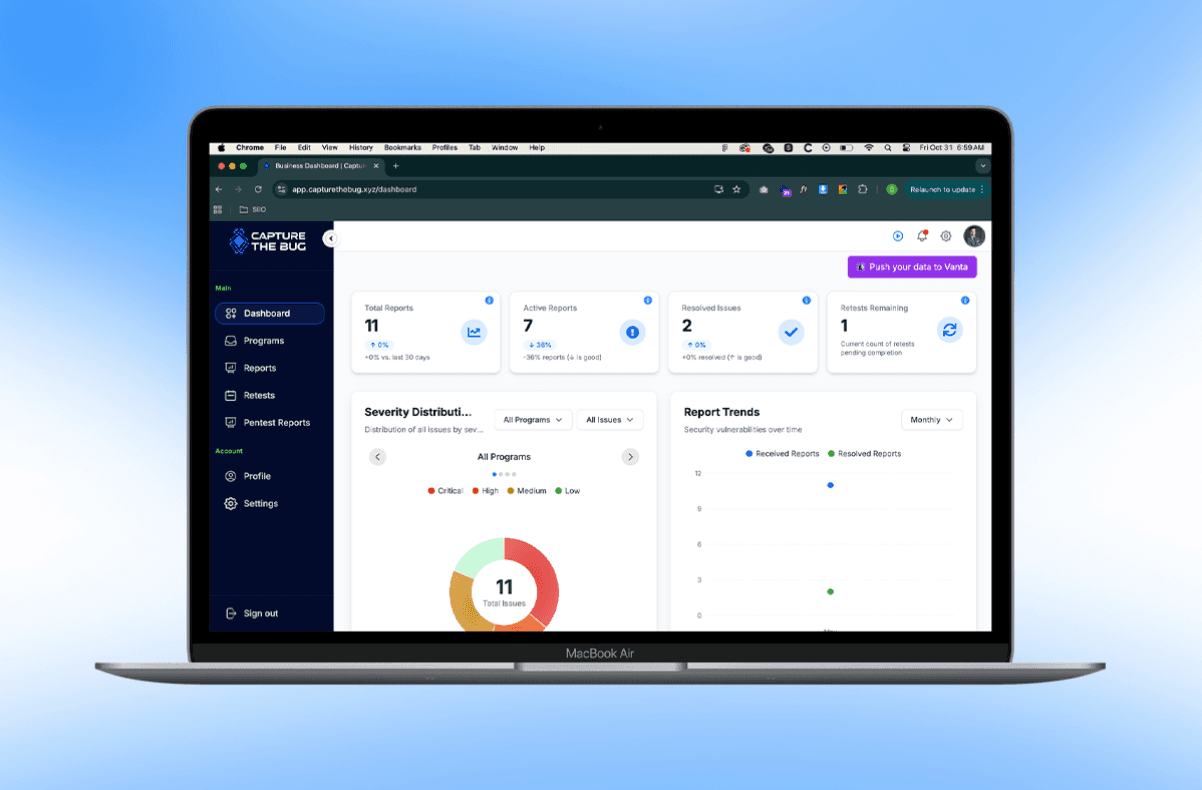
- Findings appear in a live dashboard, not just a final document.
- Developers can collaborate directly with testers.
- Retesting happens quickly after remediation.
- Compliance-ready reports can be exported anytime.
For growing SaaS and fintech platforms, this model aligns better with continuous release cycles.
The question is no longer "Should we outsource?" It is "Which delivery model matches how we build?"
How to Evaluate an Outsourced Testing Partner
Choosing the wrong provider wastes time and budget. Here is what to look for.
Credentials and Stability
Certifications matter. So does team continuity.
You want consistent testers who understand your environment over time. Rotation erodes context and depth.
Methodology Transparency
A strong partner can clearly explain how they test, how they validate, and how they prioritize findings.
Vagueness around process is a red flag.
Reporting Quality
Ask for a sample report before signing anything.
Look for:
- Clear risk ratings.
- Business impact summaries.
- Step-by-step remediation guidance.
- Mapping to frameworks such as OWASP and NIST.
Communication Style
How a provider communicates before the contract is often how they will communicate during a critical vulnerability.
Responsiveness is not a luxury. It is a risk factor.
Turning Outsourced Testing Into Real Security Improvement
Outsourcing does not improve security on its own.
The organizations that get the most value treat testing as a program, not a project.
They:
- Track vulnerability trends over time.
- Assign ownership for remediation.
- Measure time to fix.
- Use findings to guide secure coding training.
- Align testing cadence with release cycles.
This approach turns outsourced testing into a feedback loop that strengthens architecture, not just compliance posture.
Final Thoughts
Outsourcing penetration testing in 2026 is not about checking a compliance box. It is about building a strategic partnership that keeps pace with modern software delivery.
The companies that succeed are those that:
- Choose partners carefully.
- Demand transparency.
- Integrate testing into their development rhythm.
- Close the loop with verified remediation.
Outsourced testing done right does not just identify vulnerabilities. It builds trust with customers, investors, and regulators.
And in today’s market, trust is a competitive advantage.
FAQ
1. Is outsourced penetration testing still relevant in 2026?
Yes. Independent validation, specialized expertise, and compliance requirements make outsourcing essential for many SaaS and enterprise teams.
2. What is the difference between traditional pentesting and PTaaS?
Traditional pentesting is project-based and time-bound. PTaaS delivers ongoing, on-demand testing with real-time visibility and continuous validation.
3. How often should companies run penetration tests?
At minimum, annually for compliance. For fast-moving SaaS teams, continuous or quarterly testing aligned with release cycles is recommended.
4. Does outsourcing replace internal security teams?
No. It complements them by providing independent offensive validation while internal teams focus on monitoring, architecture, and response.
5. How do you measure ROI from outsourced pentesting?
Track metrics such as time-to-fix, reduction in repeat vulnerabilities, compliance readiness, and incident prevention trends over time.