
Picture this. A SaaS company in Auckland is three weeks from its SOC 2 audit. The engineering team has been building new features all year. A consultant was brought in six months ago to run a penetration test. The report arrived, sat in a shared drive, and most findings were only partially addressed.
Now, audit week is here. The team is scrambling to pull evidence, chase documentation, and explain why certain vulnerabilities were flagged but never closed.
This is not an unusual story. It plays out across Australia and New Zealand every year, across fintech companies, SaaS platforms, and cloud-native businesses trying to earn or renew their SOC 2 certification.
The problem is not effort. It is the model.
Why the Traditional Pentesting Approach Fails Compliance Teams
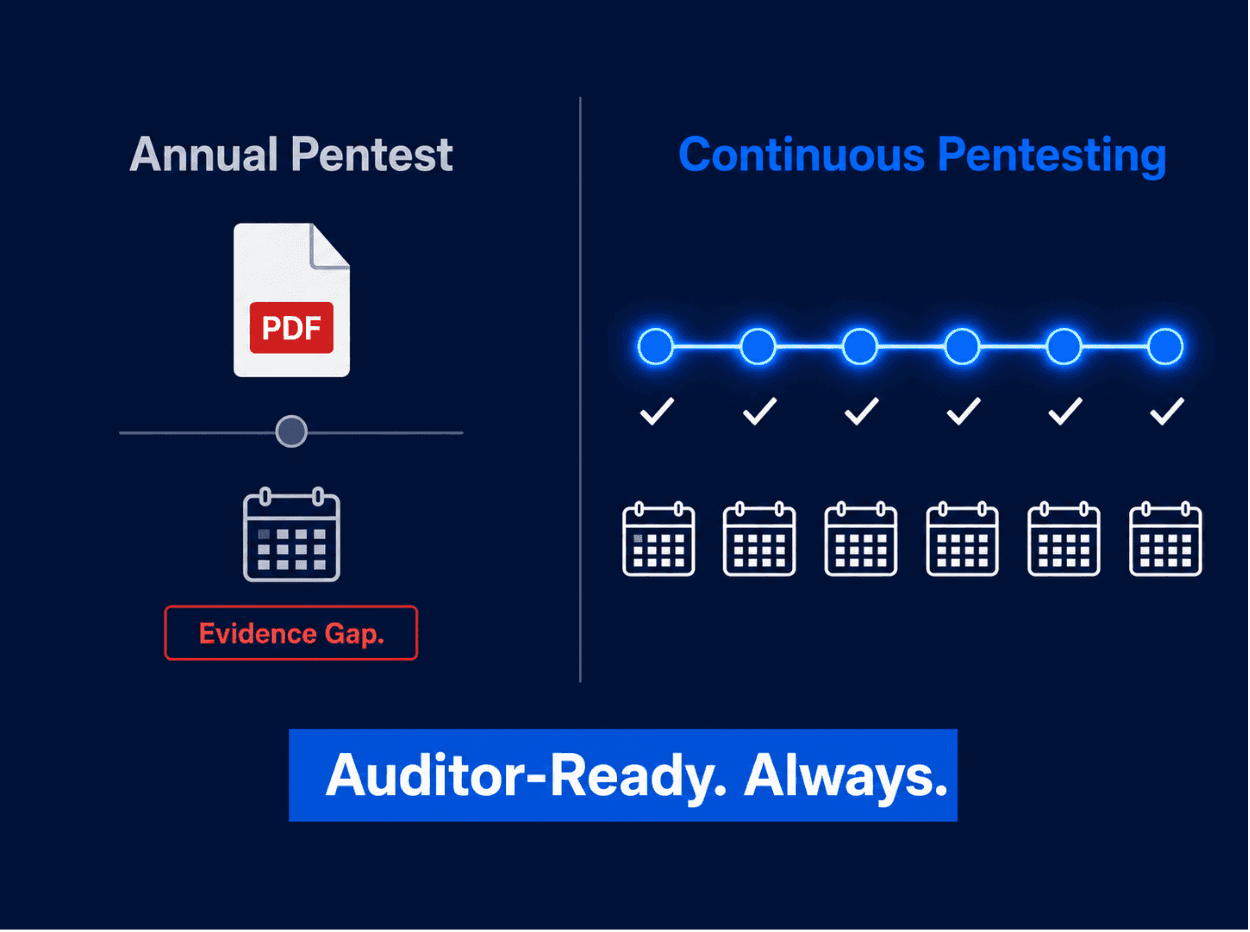
A point-in-time penetration test tells you what your systems looked like on the day the test was run. That snapshot has a shelf life of weeks, sometimes days, depending on how fast your team ships.
SOC 2 auditors are not just asking whether you ran a pentest. They are asking whether your controls are effective over time. They want to see evidence that vulnerabilities were found, addressed, and verified. They want a repeatable process, not a report that is already outdated by the time the audit starts.
When a business relies on a single annual pentest for SOC 2 evidence, it is presenting a best-case snapshot instead of a real security posture. Auditors know the difference.
In both Australia and New Zealand, where demand for SOC 2 certification has grown sharply among companies selling into the United States or regulated industries, this gap between what businesses submit and what auditors need is becoming a real risk.
What SOC 2 Actually Requires From a Security Testing Perspective
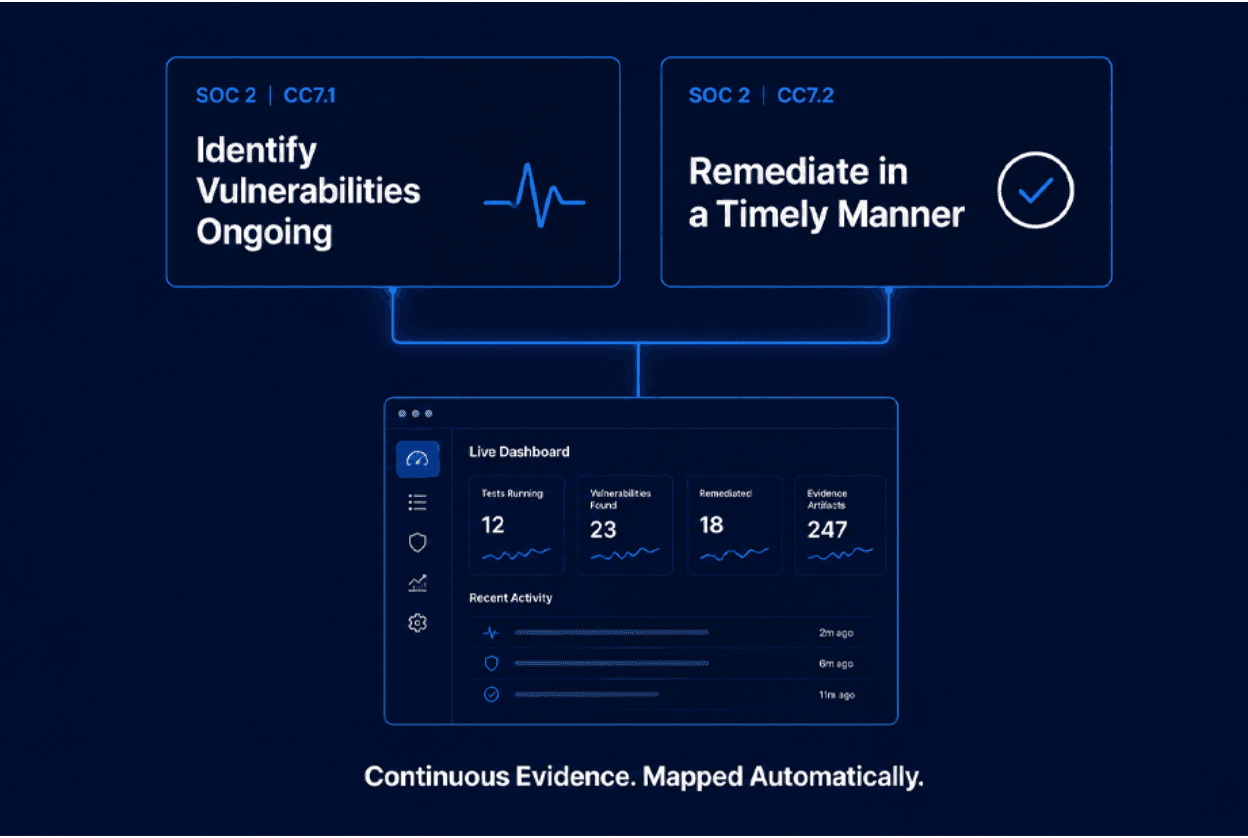
SOC 2 is built around Trust Services Criteria. The Security criterion, CC7.1, requires organizations to identify and assess vulnerabilities on an ongoing basis. CC7.2 requires that identified vulnerabilities are addressed in a timely manner.
The word ongoing is important. It does not mean once a year. It means your organization has a continuous process for finding and fixing security gaps, and that process is documented and verifiable.
This is where continuous penetration testing fits naturally. Instead of a single engagement, testing is conducted across your environment on a regular basis. Every finding is timestamped. Every fix is validated. The full history is available for auditors to review.
Capture The Bug's penetration testing service is built around this model. The platform produces compliance-ready evidence as a natural output of the testing process, not as a last-minute document exercise before an audit.
How Continuous Pentesting Changes the Audit Experience
When testing is continuous, the audit experience is completely different.
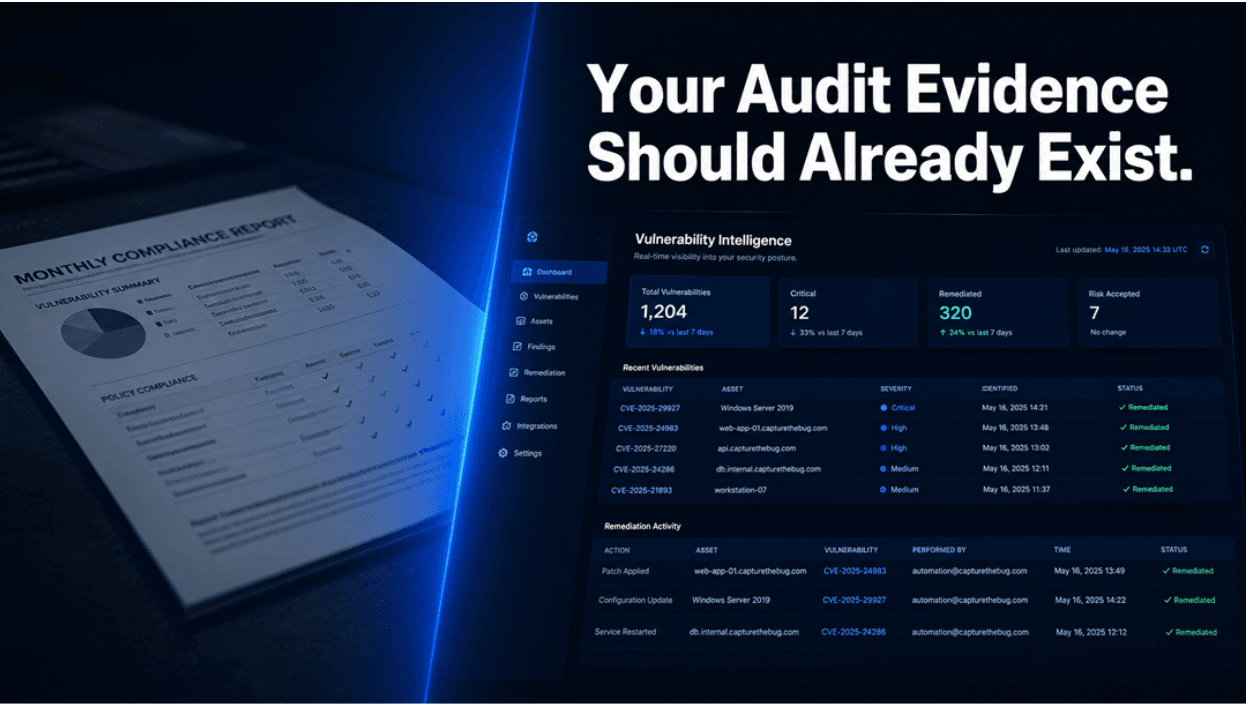
Instead of scrambling to gather evidence, the team already has a live dashboard showing every test conducted, every vulnerability discovered, and every remediation verified. Auditors can see the history clearly. There is no need to reconstruct timelines or explain gaps.
Evidence is mapped directly to SOC 2 control criteria. Access management, network segmentation, application vulnerabilities, cloud configurations, and incident response testing are all documented against the specific controls auditors are checking.
Retesting is part of the workflow. When a vulnerability is fixed, the testing team validates the fix and records it. That validation trail is exactly what auditors need to confirm that CC7.2 is being met.
Capture The Bug's platform handles this automatically. Compliance exports are available at any time, formatted for auditors, and traceable back to the original findings. Teams that use this model consistently report significantly reduced time spent on audit preparation.
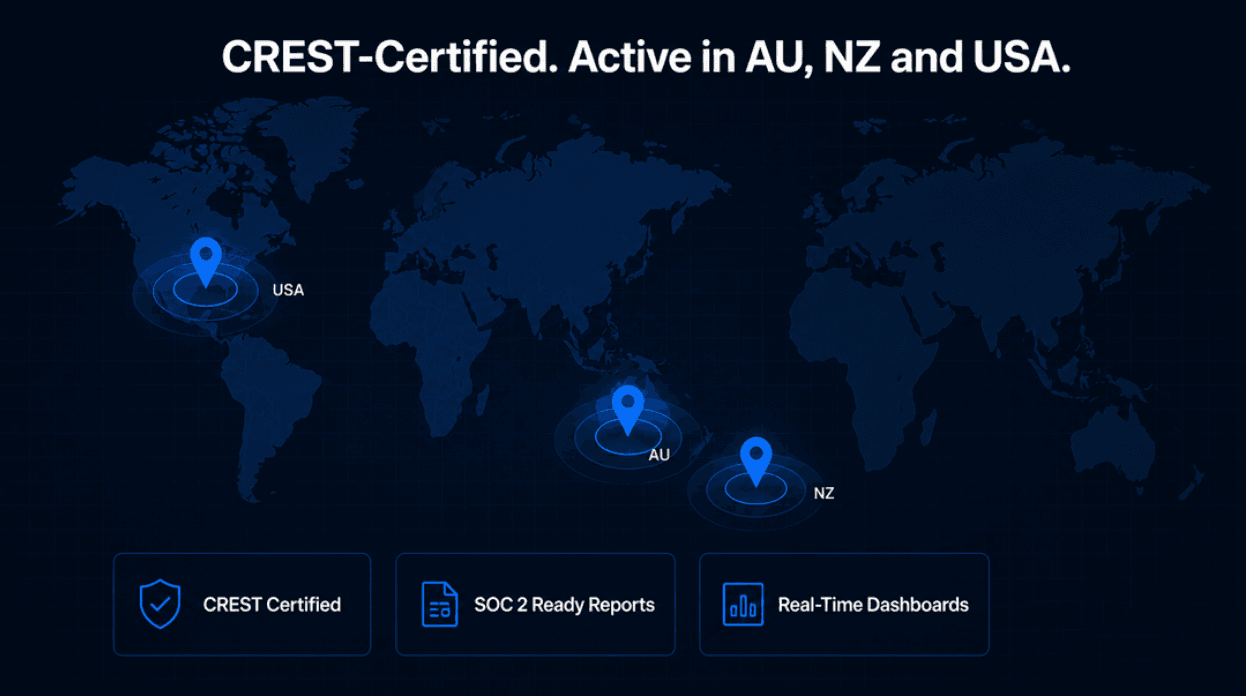
500+ Companies Stopped Guessing. You Can Too.
SaaS teams across Australia and New Zealand use Capture The Bug to stay ahead of risk. CREST-certified. No lock-in contracts.
The ANZ Context: Why This Matters in Australia and New Zealand
Australian and New Zealand companies are increasingly pursuing SOC 2 to access enterprise and international customers. The standard is now a common requirement in sales cycles with US-based buyers, and it is becoming more common in government and financial services procurement across both countries.
At the same time, many local businesses still rely on annual penetration tests from traditional providers. The reports are thorough, but they are static. They do not provide the continuous evidence trail that a growing number of auditors and enterprise buyers now expect.
SOC 2 penetration testing in Australia is evolving. The combination of more frequent audits, stricter auditor expectations, and increased scrutiny from enterprise customers means that the annual snapshot model is no longer sufficient for companies that want to scale.
Penetration testing in New Zealand faces similar dynamics. Local businesses operating in fintech, health tech, SaaS, and cloud infrastructure are being asked to demonstrate continuous security posture, not just certification status.
Capture The Bug works with businesses across both markets and understands the compliance requirements specific to this region. The platform is built to generate evidence that meets the expectations of both SOC 2 auditors and enterprise security questionnaires. Learn more about the penetration testing services available for AU and NZ businesses at capturethebug.xyz/Services/penetration-testing.
What the Process Looks Like in Practice
A company preparing for SOC 2 using Capture The Bug does not treat the audit as a deadline. It treats security testing as an ongoing part of operations.
At the start of an engagement, the scope is defined to align with the systems covered by the SOC 2 boundary. Testing begins and runs continuously across that scope. As vulnerabilities are identified, the security team receives real-time notifications and can engage directly with testers through the platform to clarify findings and confirm remediation steps.
Every interaction is logged. Every retest is documented. The compliance dashboard builds a live audit trail without any additional effort from the internal team.
When the audit arrives, the company does not prepare a report. It shares a dashboard. Auditors see the full picture, not a snapshot. This approach has helped fintech and SaaS companies in both Australia and New Zealand move through SOC 2 audits faster, with fewer findings and more confidence from their auditors.
The Difference Between Passing and Being Ready
Passing a SOC 2 audit once is a milestone. Being genuinely ready for any audit at any time is a competitive advantage.
Enterprise buyers in the United States and across Asia Pacific are not just asking for SOC 2 certification. They are asking for evidence that the certification reflects current security posture. That requires continuous testing, continuous evidence, and a process that does not stop when the audit is over.
Businesses that build this foundation early find that subsequent audits become routine. The evidence is already there. The controls are already validated. The conversation with auditors shifts from defense to demonstration.
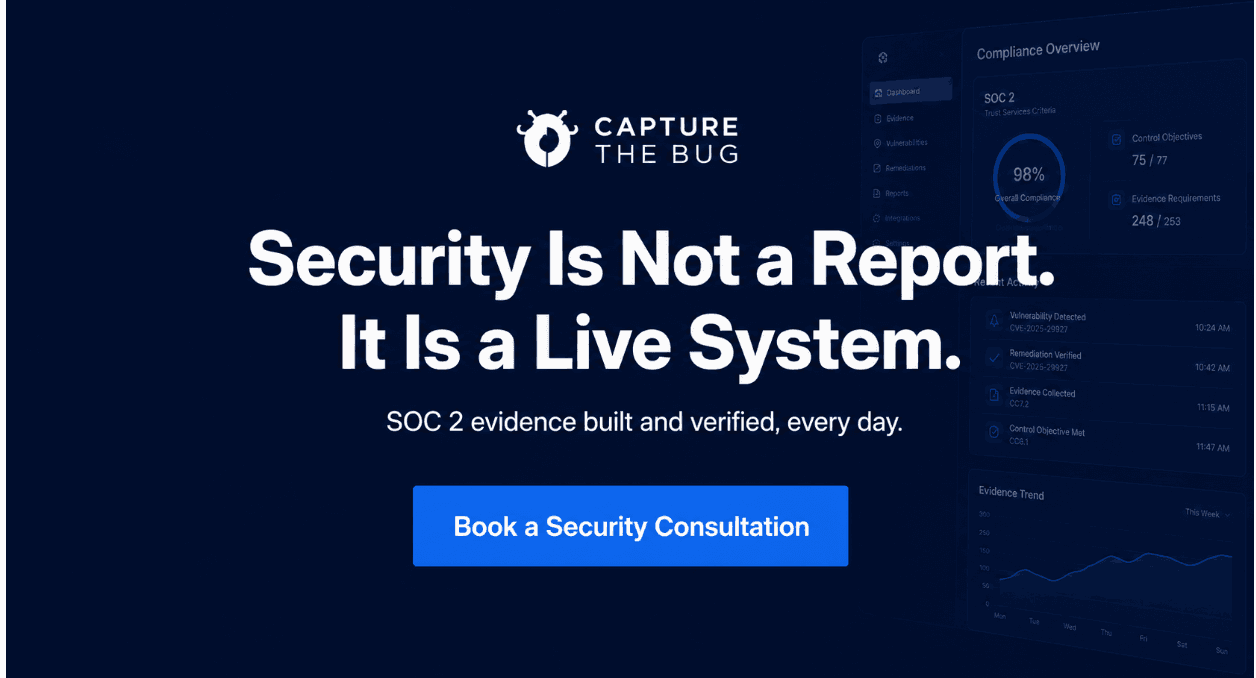
Capture The Bug was built to make that shift possible for growing businesses in Australia, New Zealand, and beyond. Talk to the Capture The Bug team to understand how continuous pentesting fits into your SOC 2 roadmap. Book a Security Consultation today.
Plan Your Annual Pentesting Strategy the Right Way
Learn how modern SaaS companies structure pentesting across the year to reduce risk, stay compliant, and avoid last-minute panic before audits.
Frequently Asked Questions
Is penetration testing required for SOC 2 in Australia?
SOC 2 does not prescribe specific tools, but auditors expect evidence that vulnerability identification and remediation are ongoing processes. Penetration testing is the most common method used to satisfy this requirement, particularly for the CC7.1 and CC7.2 criteria.
How often should penetration testing be conducted for SOC 2 compliance?
Most SOC 2 auditors expect evidence of testing conducted throughout the audit period, not just once. Continuous or quarterly pentesting is becoming the standard for organizations that want to demonstrate consistent control effectiveness.
What is the difference between a traditional pentest and continuous pentesting for SOC 2?
A traditional pentest produces a single report at a point in time. Continuous pentesting generates an ongoing evidence trail that maps directly to SOC 2 control criteria, makes remediation validation visible, and prepares organizations for audits without any last-minute effort.
Can a company in New Zealand use Capture The Bug for SOC 2 evidence?
Yes. Capture The Bug works with businesses across New Zealand and Australia and provides compliance-ready reports and dashboards that meet SOC 2 auditor expectations. The platform supports the full evidence trail from testing through to remediation verification.
How does continuous pentesting reduce audit preparation time?
Because findings, remediation steps, and retest validations are logged in real time, there is no need to reconstruct evidence before an audit. The audit trail is built continuously, which significantly reduces the internal effort required when audit season arrives.