Beyond the RFP Checklist: Why Enterprise Pentest Buying Needs a Rethink
In boardrooms across the US, Australia, and New Zealand, the pentest buying process often starts the same way.
A security leader says, “We need a pentest.”
Procurement replies, “Send an RFP.”
Vendors respond with polished PDFs, rate cards, and compliance statements.
Three months later, a vendor is selected.
Six weeks after that, a report lands in someone’s inbox.
Everyone feels reassured.
And yet, very little has actually changed.
At Capture The Bug, we have seen this pattern repeatedly. The process feels structured and responsible. It ticks governance boxes. It satisfies auditors. But it rarely optimizes for what truly matters: reducing real-world risk in a fast-moving environment.
The problem is not pentesting itself. The problem is how organizations buy it.
The RFP Illusion of Control
RFPs were designed for predictable services. Construction projects. Hardware procurement. Long-term outsourcing contracts.
Security testing is none of those things.
Modern SaaS platforms deploy weekly. Cloud infrastructure shifts daily. APIs evolve constantly. Yet the buying model assumes a static environment that can be scoped once, tested once, and documented once.
Most pentest RFPs ask the same questions:
- Are you certified
- Can you provide references
- What is your methodology
- What is the fixed price for X days of testing
All important questions. But none of them ask the critical one:
How will this engagement reduce our risk over the next twelve months?
When procurement focuses on day rates and report format, the buying process becomes about comparison, not capability.
It selects vendors based on familiarity and formatting, not speed, visibility, or measurable impact.
The Static Report Problem
Traditional buying processes are optimized around deliverables.
Specifically, the PDF report.
That single document becomes the centerpiece of the RFP evaluation. Sample reports are reviewed. Formatting is judged. Executive summaries are compared.
But in real operations, that PDF is often outdated the moment it arrives.
By the time findings are reviewed:
- New code has shipped
- Infrastructure has changed
- Integrations have been updated
- Some vulnerabilities are already fixed
- Others have quietly appeared
The RFP model assumes security is periodic. Modern engineering proves it is continuous.
When you buy pentesting as a static event, you inherit a static security mindset.
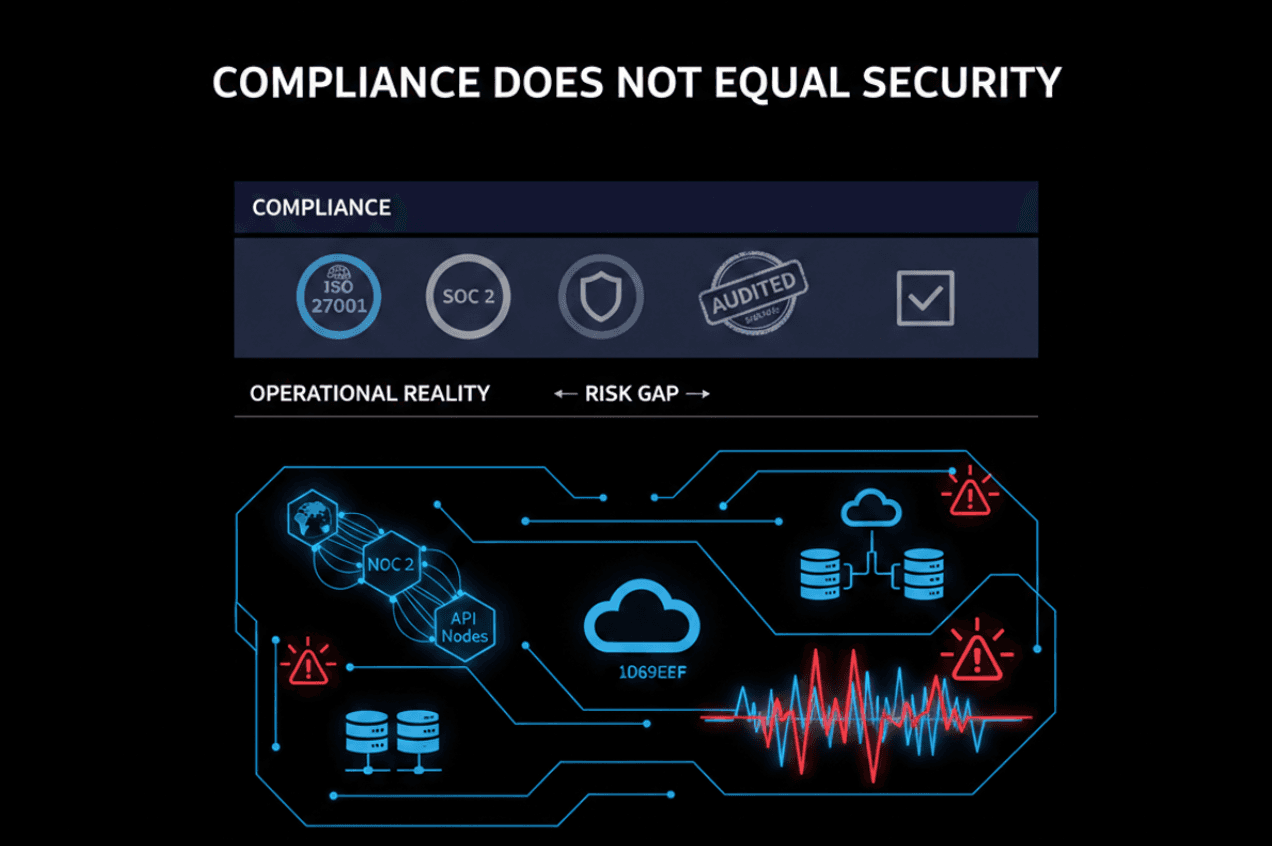
Compliance Comfort vs Operational Reality
Many RFPs are written to satisfy compliance requirements.
ISO 27001 requires testing.
SOC 2 expects evidence.
PCI DSS mandates assessment.
So the RFP is structured to ensure the vendor can generate compliant documentation.
But compliance and security are not the same thing.
Compliance answers, “Did you test?”
Security answers, “Are you safe right now?”
The gap between those two questions is where most breaches happen.
We have worked with organizations that ran a successful audit, passed every requirement, and still experienced avoidable exposure weeks later because their systems changed after the test.
The RFP did its job.
The report met the framework.
The risk remained.
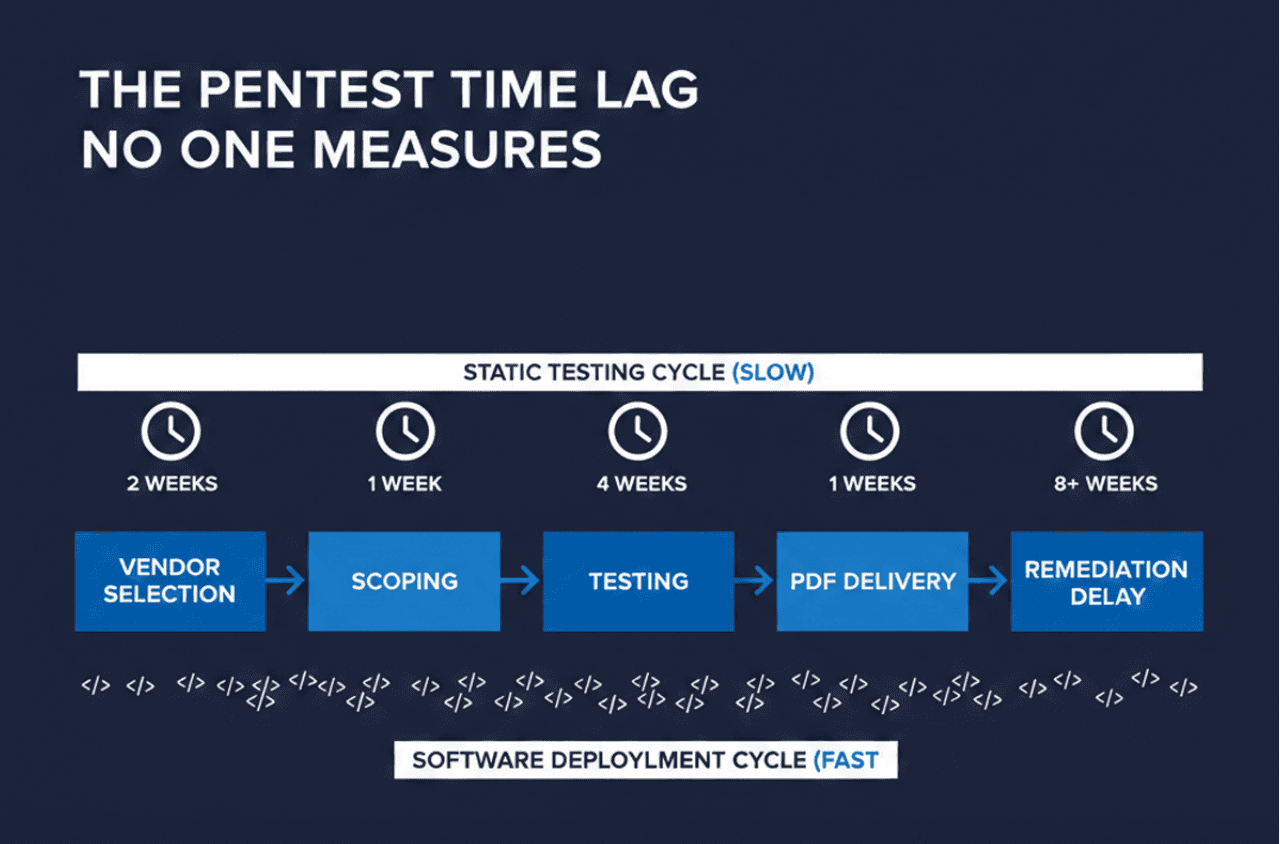
The Time Lag That No One Talks About
Here is what rarely appears in RFP scoring matrices: time.
- How long from kickoff to first finding?
- How long from finding to validation?
- How long from fix to retest?
In traditional procurement-led pentests, the timeline often looks like this:
- Two to four weeks for vendor selection
- Two to three weeks for scoping and scheduling
- One to two weeks for testing
- One to two weeks for report delivery
- Additional weeks for remediation and retesting
In fast-moving SaaS environments, that timeline is misaligned with reality.
Security leaders do not need a perfect report in six weeks.
They need actionable visibility today.
Yet most RFPs are not structured to evaluate responsiveness, real-time collaboration, or remediation velocity.
They measure completeness, not speed.
The Hidden Cost of Lowest-Bid Thinking
Procurement frameworks often prioritize competitive pricing.
On paper, that sounds responsible.
In practice, it often results in:
- Over-scoped engagements to justify higher fees
- Under-scoped engagements to win on price
- Rigid testing windows
- Additional charges for retests
When pentesting is purchased as a line-item expense rather than an operational capability, it becomes something to minimize rather than optimize.
But security ROI is not about spending less on testing.
It is about reducing exposure faster.
A cheaper engagement that produces slow remediation is more expensive in the long run than a responsive, collaborative model that reduces risk continuously.
The RFP rarely captures that nuance.
What Modern Security Leaders Actually Need
The buying conversation needs to shift from:
“Who can deliver the best report?”
to:
“Who can help us reduce risk continuously?”
Modern security teams need:
- Real-time visibility into findings
- Direct access to testers for clarification
- Faster retest cycles
- Ongoing validation as systems evolve
- Compliance-ready exports on demand
This is exactly why Pentesting as a Service has gained traction in ANZ and the US.
Not because it sounds modern.
Because it aligns with how software is actually built.
Capture The Bug was designed around this shift. The platform combines CREST-certified expertise with continuous delivery, not static engagements. The goal is not to produce a better PDF. The goal is to provide ongoing, measurable assurance.
That difference matters.
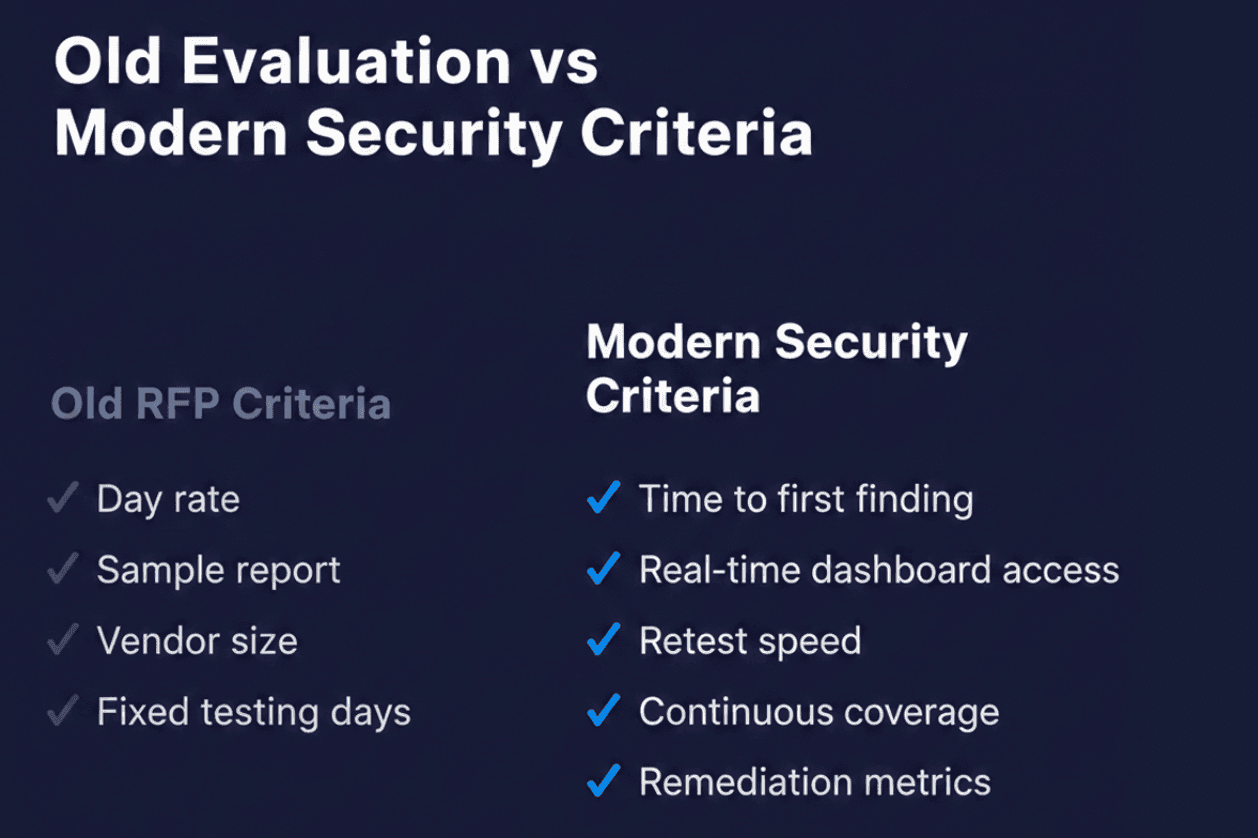
Rewriting the Pentest Buying Criteria
If the industry is honest, most RFP templates for pentesting are outdated.
Here is what a modern buying framework should evaluate instead:
- Time to first validated finding
- Real-time reporting capabilities
- Direct collaboration between testers and developers
- Retest turnaround time
- Continuous testing options
- Clear metrics for remediation speed
- Audit-ready documentation without manual effort
Notice what is missing.
There is no focus on page count.
No scoring for glossy executive summaries.
No emphasis on who has the longest methodology document.
Because none of those reduce risk.
The Founder to Founder Reality
If you speak privately with CTOs and CISOs, many will admit something uncomfortable.
They know the RFP process is slow.
They know static reports do not match agile workflows.
They know compliance does not equal security.
But the process persists because it feels safe.
Structured. Documented. Defensible.
Yet the real defensibility today comes from transparency and speed.
When leadership can open a live dashboard and see what is open, what is fixed, and what is verified, security becomes measurable. It becomes continuous. It becomes strategic.
That is far more defensible than a quarterly PDF.
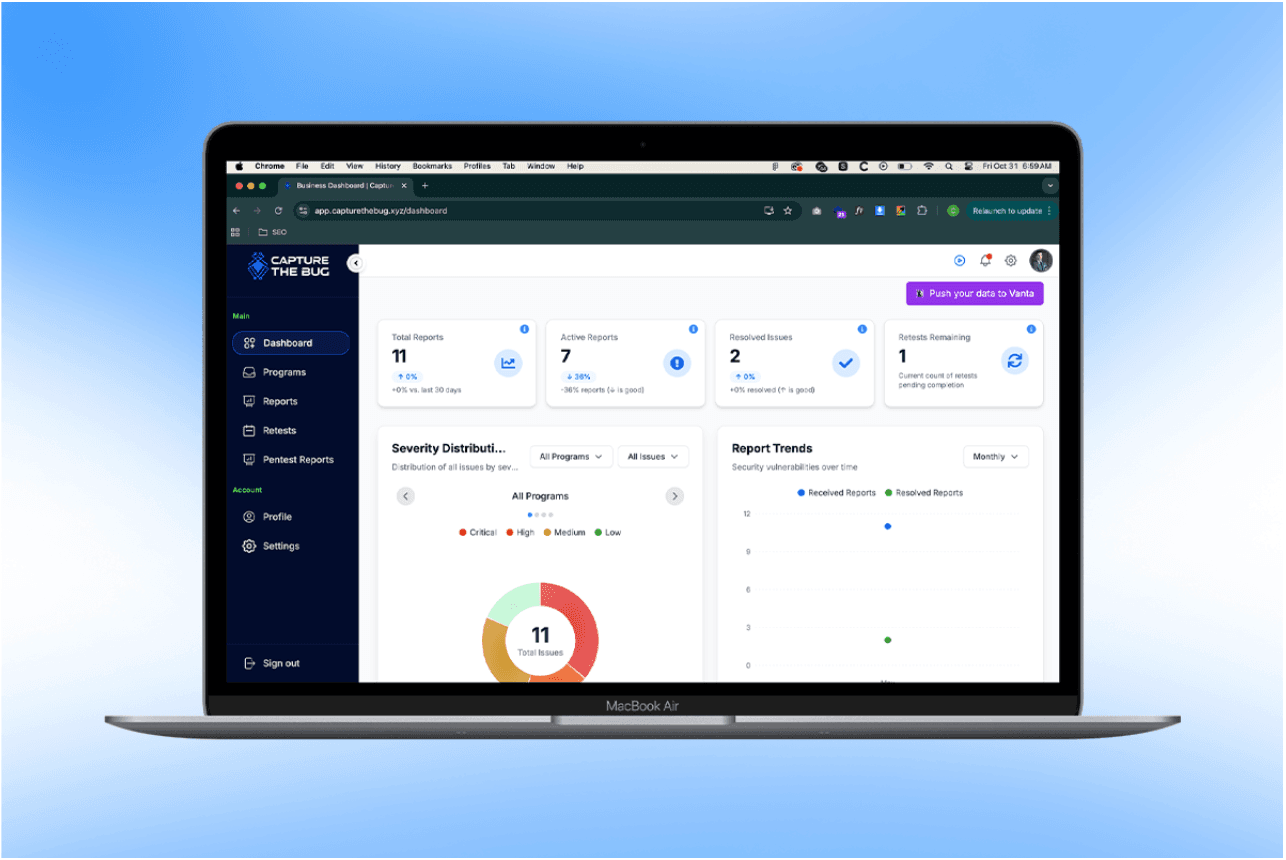
From Procurement Exercise to Security Partnership
The future of pentesting is not about replacing governance. It is about modernizing it.
Organizations still need structure.
They still need vendor evaluation.
They still need certification and due diligence.
But they also need:
- Ongoing collaboration
- Faster feedback loops
- Continuous validation
- Data-driven reporting
When pentesting shifts from an annual purchase to an embedded capability, the relationship changes.
It becomes less about vendor management and more about shared outcomes.
That is the model Capture The Bug advocates and delivers.
Not because it is trendy.
Because it reflects how modern software operates.
Final Thoughts
Most pentest RFPs are not broken because they are careless. They are broken because they were built for a different era.
An era of slower releases.
An era of static infrastructure.
An era when annual snapshots felt sufficient.
That era is over.
Security today is not about selecting the lowest bidder with the best-looking report. It is about selecting the partner who can help you see risk in real time and reduce it continuously.
If your buying process optimizes for paperwork, you will get paperwork.
If it optimizes for outcomes, you will get resilience.
The difference starts with how you ask the question.
FAQ
1. Why are traditional pentest RFP processes outdated?
Because they focus on static deliverables and fixed scopes, which do not align with continuously changing SaaS and cloud environments.
2. What is wrong with buying pentesting through lowest-bid procurement?
Lowest-bid models often prioritize price over remediation speed and collaboration, increasing long-term risk exposure.
3. How can organizations modernize pentest buying?
By evaluating real-time reporting, retest speed, continuous testing models, and measurable risk reduction instead of just report quality.
4. Does compliance-driven testing guarantee security?
No. Compliance confirms that testing occurred. Continuous testing ensures risks are actively managed as systems evolve.
5. How does Capture The Bug approach pentesting differently?
Capture The Bug provides CREST-certified continuous testing with real-time dashboards, direct collaboration, and compliance-ready documentation designed for modern SaaS and enterprise teams.