Security Testing for E-Commerce Websites Explained with Vulnerabilities
E-commerce has removed borders from business. A customer can place an order from anywhere, at any hour, on any device. That reach is powerful, but it also creates a larger attack surface. Every product page, checkout flow, coupon code, and order API becomes part of your security responsibility.
For e-commerce brands, security is not a technical nice-to-have. It is tightly connected to customer trust, payment reliability, and brand reputation. One breach can undo years of growth.
This article explains security testing for e-commerce websites in plain terms, highlights common vulnerabilities that actually get exploited, and outlines what mature e-commerce companies do to reduce risk. This is written from a company perspective, based on real testing experience, not theory.

What security testing means for e-commerce websites
Security testing is the process of examining an e-commerce website to identify weaknesses that could be misused to steal data, manipulate transactions, or disrupt operations. Unlike functional testing, which checks whether features work as intended, security testing focuses on how those features can be abused.
For an e-commerce platform, this includes testing areas such as:
- Product listings and pricing logic
- Shopping cart behavior
- Checkout and payment flows
- User accounts and order history
- Coupons, discounts, and store credits
- Admin and staff access
The goal is not to break the site, but to understand how a real attacker would try to profit from it. That perspective is what separates meaningful security testing from checkbox exercises.
Why security testing is critical for e-commerce businesses
E-commerce websites are financially motivated targets. Attackers are not guessing. They are looking for specific weaknesses that lead to money, data, or both. An e-commerce breach rarely stays technical. It quickly becomes a business problem.
When security testing is skipped or delayed, the consequences usually fall into four categories:
First, customer trust erodes. Payment details, addresses, and order history are deeply personal. Once customers feel unsafe, they do not come back.
Second, revenue is directly impacted. Payment abuse, coupon exploitation, and refund manipulation quietly drain margins long before anyone notices.
Third, compliance and legal exposure increases. Many regions enforce strict rules around payment data and personal information. Breaches often trigger audits, fines, and reporting obligations.
Finally, recovery costs escalate. Fixing issues under pressure, responding to customers, and repairing brand damage is always more expensive than prevention.
Security testing exists to reduce these outcomes before they happen.
Why attackers focus on e-commerce platforms
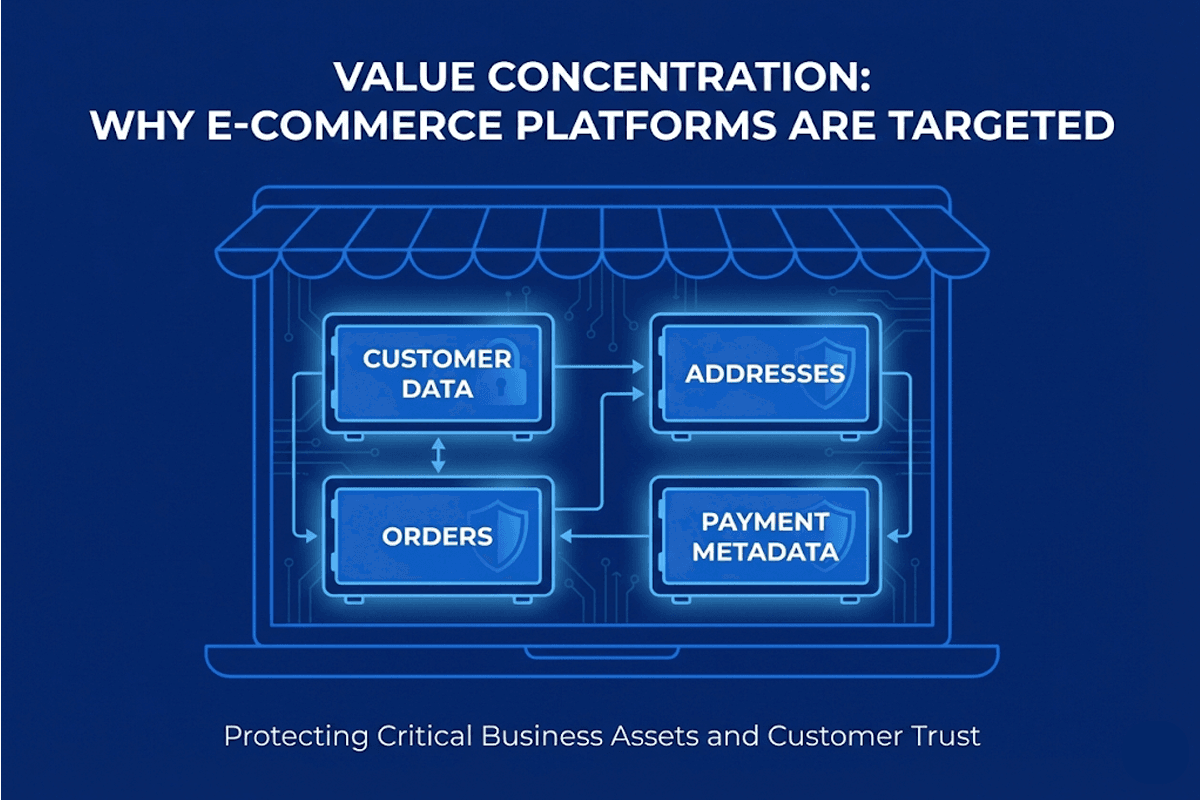
Attackers target e-commerce websites because of the data and the logic they expose. Most online stores store or process customer names, shipping addresses, order history, and account credentials. This information can be resold, reused for fraud, or combined for identity theft.
Beyond data, e-commerce platforms are rich in business logic. Pricing rules, discount systems, and order flows are complex. Complexity creates opportunity. Many successful attacks are not advanced hacks. They are simple logic abuses that go unnoticed for months.
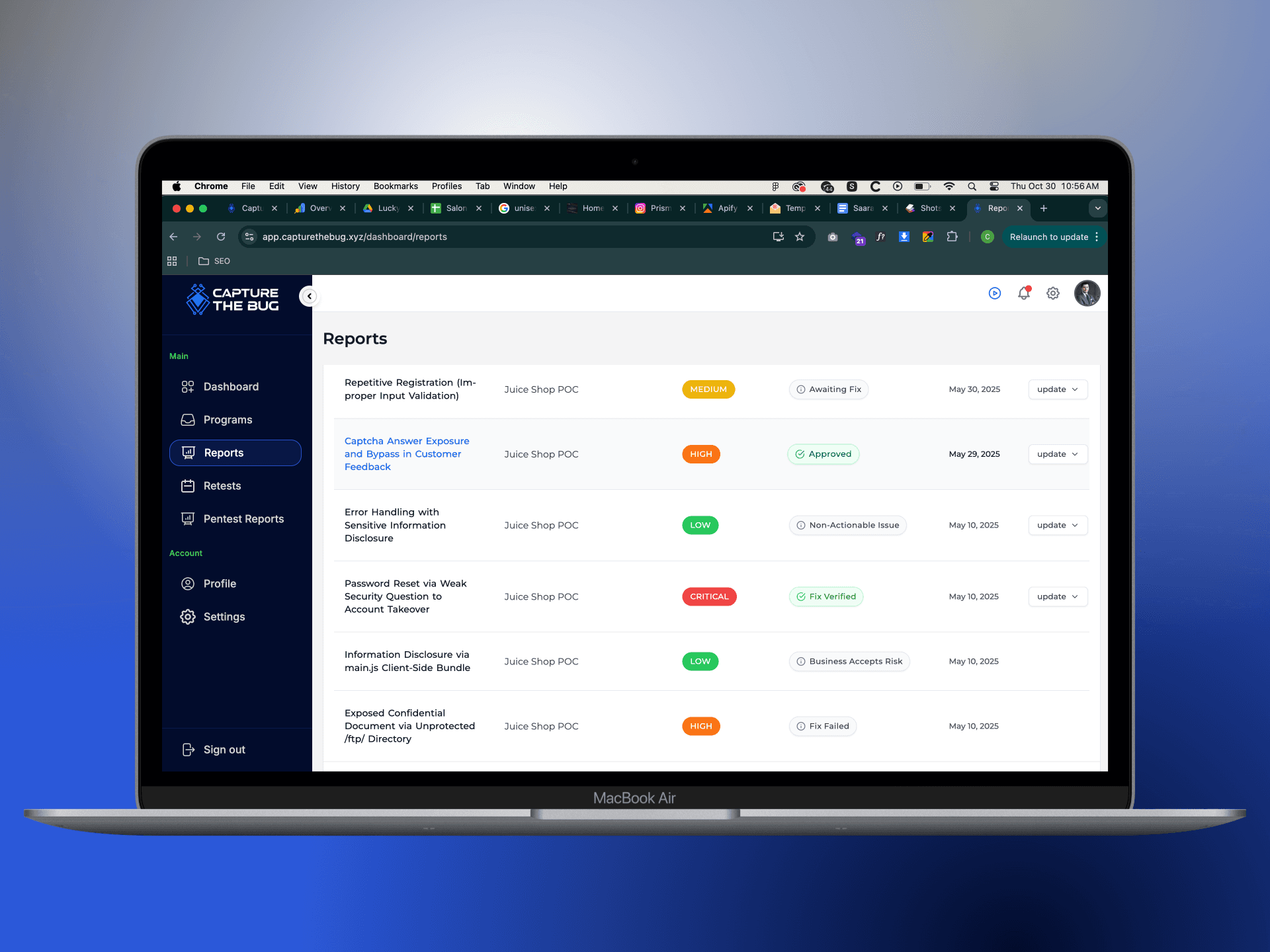
Common security vulnerabilities in e-commerce websites
Certain vulnerability patterns appear again and again during real-world testing.
Payment-related manipulation
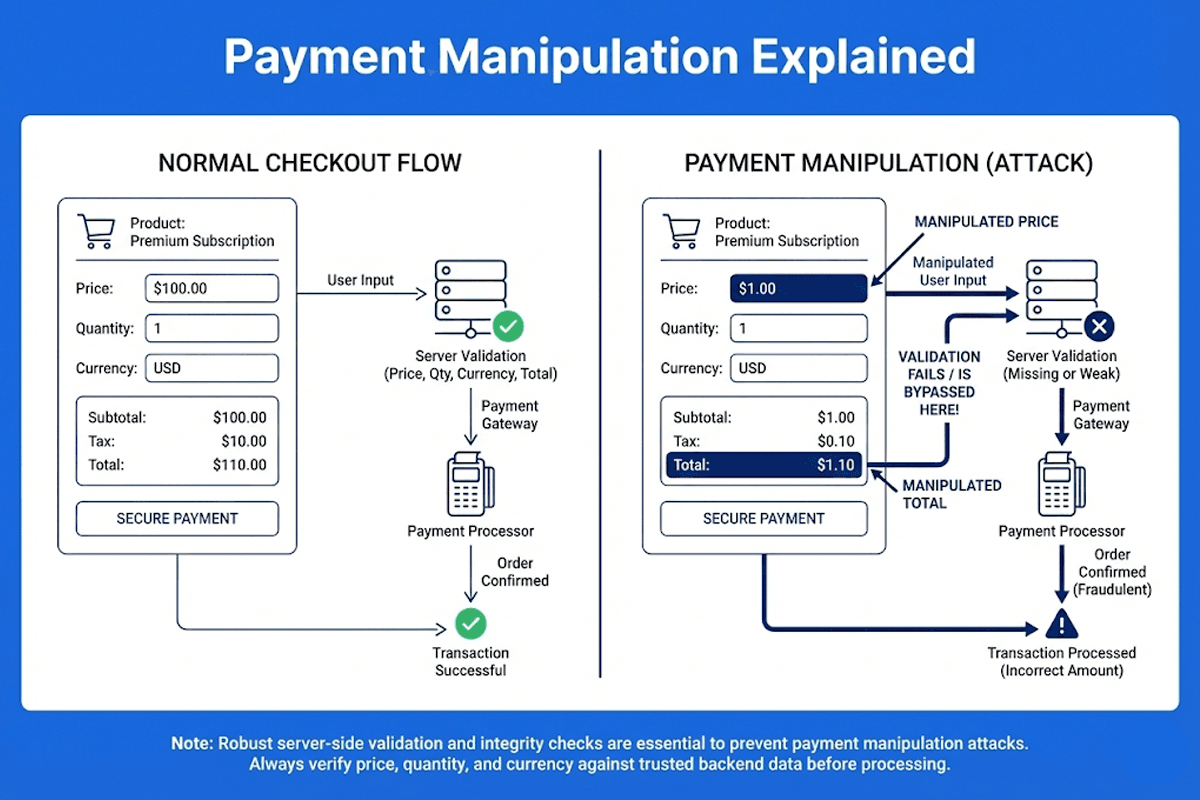
Common issues include price manipulation, where attackers change values such as product price or quantity before payment is finalized. Another issue is checksum or signature bypass during checkout, allowing attackers to tamper with transaction details.
Cart and order management flaws
Attackers may unauthorizedly manage carts, fetch other users’ order details, or exploit refund and cancellation logic to receive refunds for completed orders.
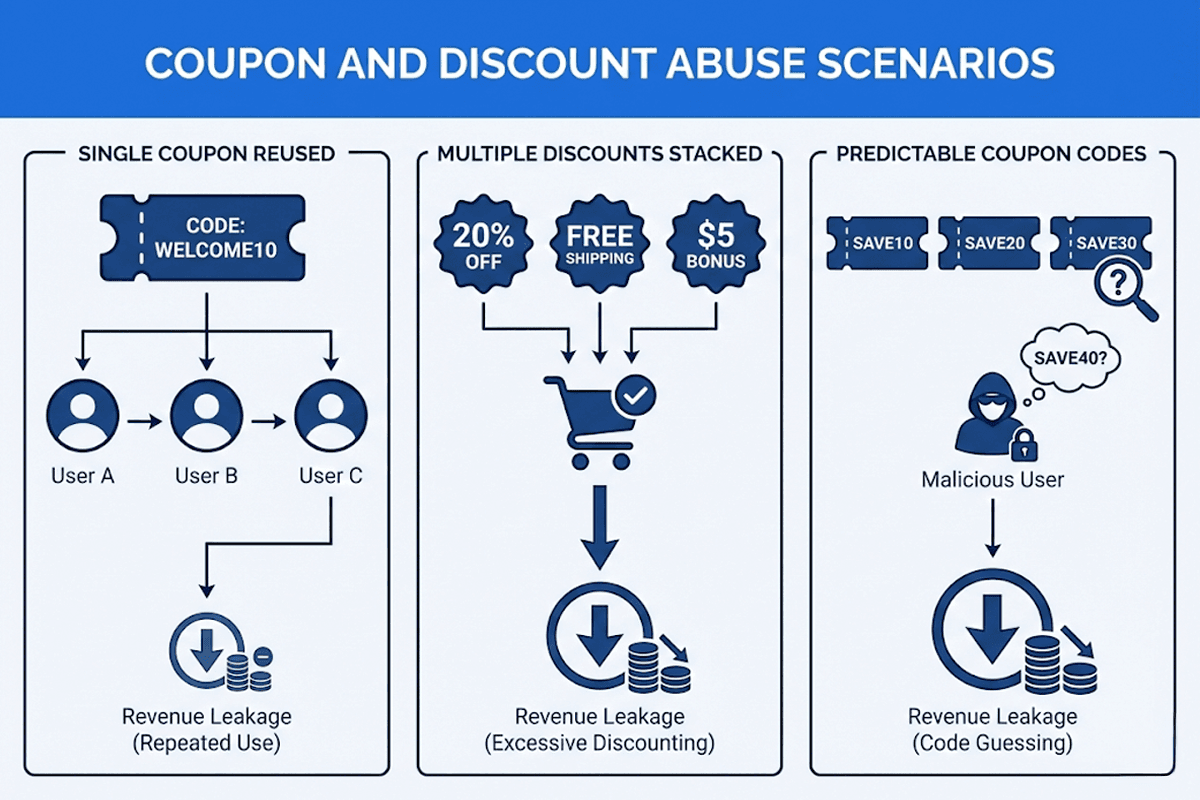
Coupon and reward abuse
Security testing frequently uncovers issues like reusing single-use coupons, applying multiple discounts, guessable codes, or coupons remaining valid after cancellation.
Why these vulnerabilities persist
Most e-commerce vulnerabilities persist because teams focus on features first and assume existing logic is safe. Fast releases and third-party plugins introduce changes that are rarely re-tested from a security perspective. Security testing provides an external view that internal teams cannot realistically maintain alone.
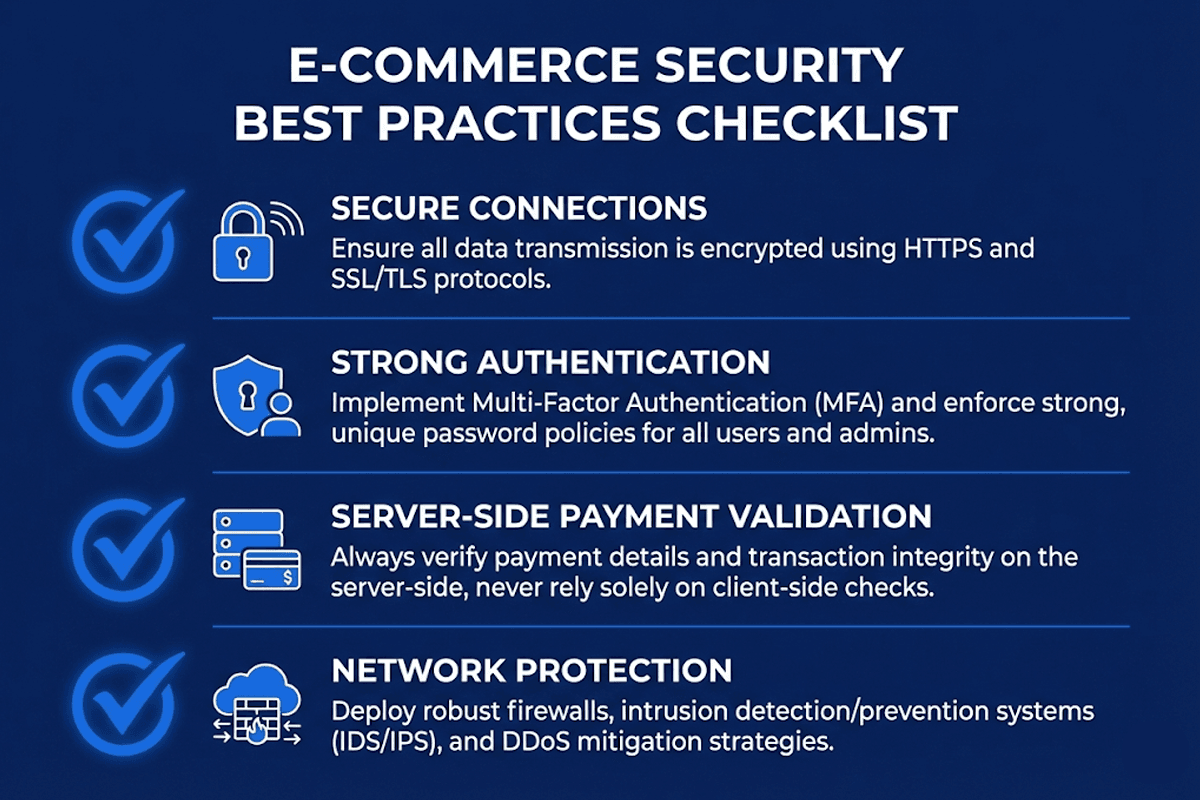
Practical practices that reduce e-commerce security risk
Encryption: Using encrypted connections across the entire site is non-negotiable.
Authentication: Strong authentication handling reduces account takeover risks.
Server-side Validation: Validation must always happen on the server, and transaction data should never be trusted from the browser alone.
Filtering: Network and application-level filtering adds another layer of defense.

How Capture The Bug approaches e-commerce security testing
Capture The Bug works with e-commerce businesses globally who need clarity, not noise. Security testing focuses on how real attackers think, testing business logic, payment flows, and abuse scenarios alongside technical weaknesses.
- Clear validation of real issues, not inflated lists
- Context around how vulnerabilities affect revenue and trust
- Practical guidance that development and product teams can act on
Security testing as a business investment
For e-commerce leaders, security testing should be viewed the same way as performance testing. It protects revenue flows and customer relationships. Regular testing creates confidence that growth is not silently increasing risk. Well-tested platforms move faster because teams are not constantly reacting to incidents.
Conclusion
E-commerce security failures start as small logic gaps or overlooked validations. Security testing exists to challenge those assumptions. For online businesses that handle payments and personal data, testing is about protecting the systems that keep the business running.
Capture The Bug helps e-commerce companies identify real vulnerabilities, reduce exposure, and build trust at scale through structured, expert-led security testing.
FAQ
What is security testing for e-commerce websites?
Security testing examines an online store to identify vulnerabilities in payments, carts, accounts, and business logic that attackers could exploit.
Why is security testing important for e-commerce?
Because e-commerce platforms handle payments and personal data, even small weaknesses can lead to financial loss, fraud, and reputational damage.
Do small e-commerce stores need security testing?
Yes. Attackers often target smaller stores because they expect weaker controls and less monitoring.
How often should an e-commerce website be security tested?
At least annually, and after major updates such as new payment flows, plugins, or checkout changes.
Who should perform e-commerce security testing?
Experienced, certified security professionals who understand both technical vulnerabilities and business logic risks.