Understanding TISAX Compliance: A practical beginner's guide for automotive suppliers and partners
The automotive industry has changed faster in the last decade than in the fifty years before it. Vehicles are no longer just mechanical products. They are software-heavy systems connected to suppliers, cloud services, testing environments, and global partners. Design files, prototype data, testing results, and supplier communications now move across borders daily.
That level of data sharing creates opportunity. It also creates risk.
Automotive manufacturers needed a shared way to trust the security practices of everyone in their supply chain. Not marketing claims. Not one-off questionnaires. A consistent, industry-owned standard.
That is where TISAX comes in.
This guide explains what TISAX is, who it applies to, and how organizations should think about it in practice.
What TISAX actually is
TISAX stands for Trusted Information Security Assessment Exchange. At its core, TISAX is a security assessment framework built specifically for the automotive industry. It defines how organizations should protect sensitive automotive information and how that protection is assessed in a consistent way.
TISAX was introduced in 2017 by the German Association of the Automotive Industry, known as VDA. It is governed by the ENX Association, which manages assessors, rules, and quality standards.
Unlike general security standards, TISAX focuses on real automotive risks such as:
- Protection of vehicle design data
- Safeguarding prototype and test results
- Secure collaboration between manufacturers and suppliers
- Controlled handling of intellectual property
The goal is simple. If an automotive partner meets TISAX expectations, manufacturers can trust them without running separate audits every time.
Why TISAX was created
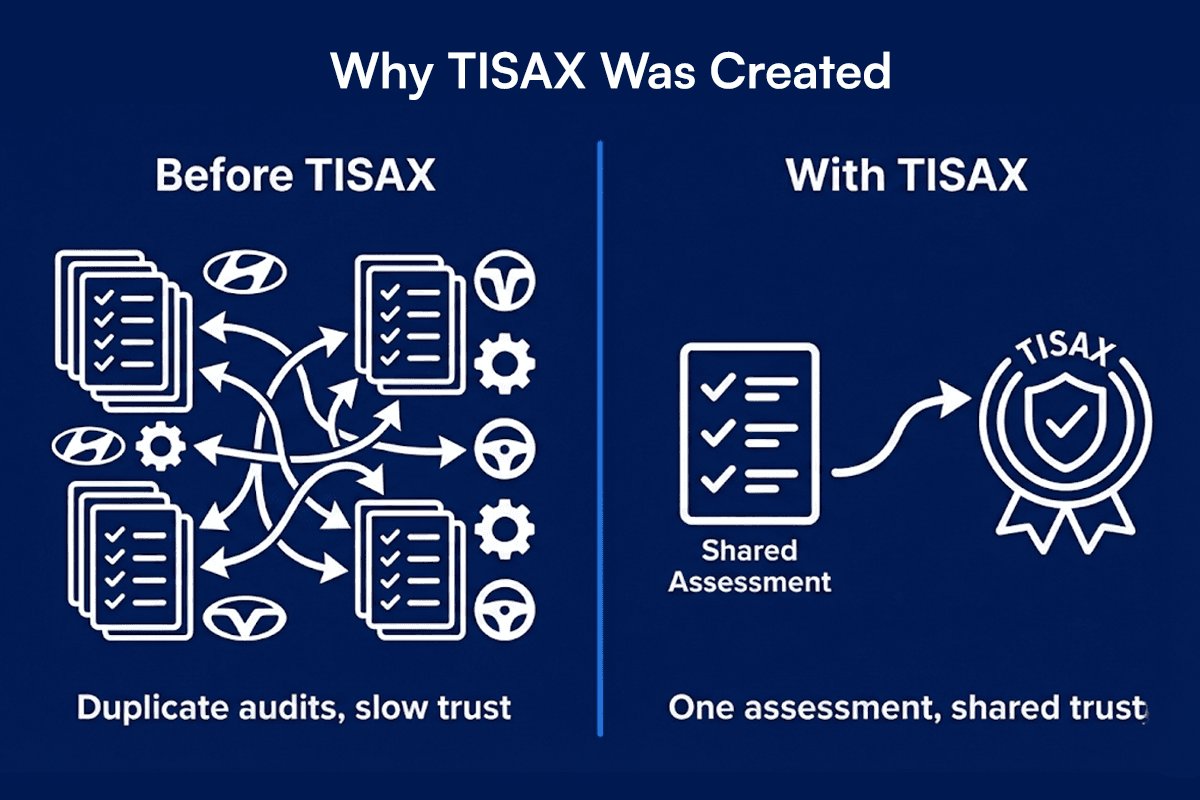
Before TISAX, the situation was messy. Each automotive manufacturer used its own security questionnaires, audits, and expectations. A single supplier working with five OEMs might face five different security assessments covering the same ground.
That caused three problems:
- Suppliers spent huge time and money repeating similar audits
- Manufacturers still lacked consistent visibility
- Security quality varied widely across the supply chain
TISAX solved this by creating a shared assessment model. One assessment. One recognized result. Many trusting partners. It did not replace security. It simplified trust.
Is TISAX a certification?
This is where many teams get confused. TISAX is not a traditional certificate like ISO 27001. There is no framed certificate that says “TISAX Certified”.
Instead, organizations that complete higher assessment levels receive a TISAX label. This label confirms that an independent assessor has validated the organization against TISAX requirements. The label is shared through the ENX platform and is typically valid for three years.
For automotive partners, that label often functions like a gate pass. Without it, many OEM conversations do not move forward.
Who needs TISAX compliance
TISAX is not a legal requirement. But in practice, it has become unavoidable in the automotive ecosystem.
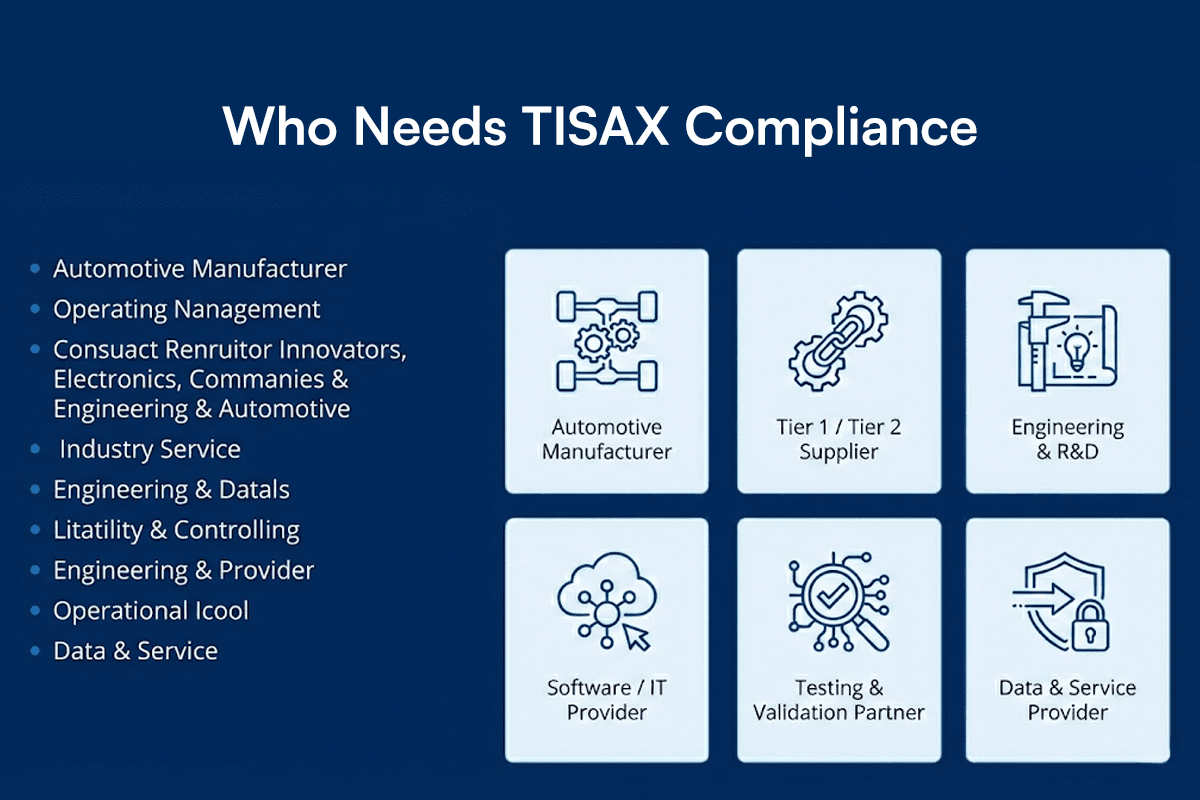
Organizations commonly expected to meet TISAX include:
- Automotive manufacturers
- Tier 1 and Tier 2 suppliers
- Engineering and design firms
- Research and testing partners
- Software and IT service providers
- Logistics and data processing vendors
If you touch sensitive automotive information, chances are you will be asked about TISAX. In many supplier onboarding processes, TISAX is now a baseline expectation, not a differentiator.
Understanding the TISAX assessment levels
TISAX uses three assessment levels. Each level increases the depth of validation.
Assessment Level 1
This is a self-assessment using the Information Security Assessment questionnaire. Organizations answer questions internally and can share the results with partners. There is no external validation at this level.
Assessment Level 2
At this level, an approved assessor reviews your self-assessment and supporting evidence remotely. Key stakeholders are interviewed, usually through structured calls. This level is common for suppliers handling sensitive data but not high-risk prototypes.
Assessment Level 3
This is the most rigorous level. An assessor performs an on-site evaluation, reviews processes in depth, and conducts interviews across teams. Assessment Level 3 is typically required for organizations handling highly sensitive development or prototype information.
What TISAX expects from organizations
TISAX requirements are based on the VDA Information Security Assessment. They closely align with ISO 27001 concepts but are more specific to automotive realities.
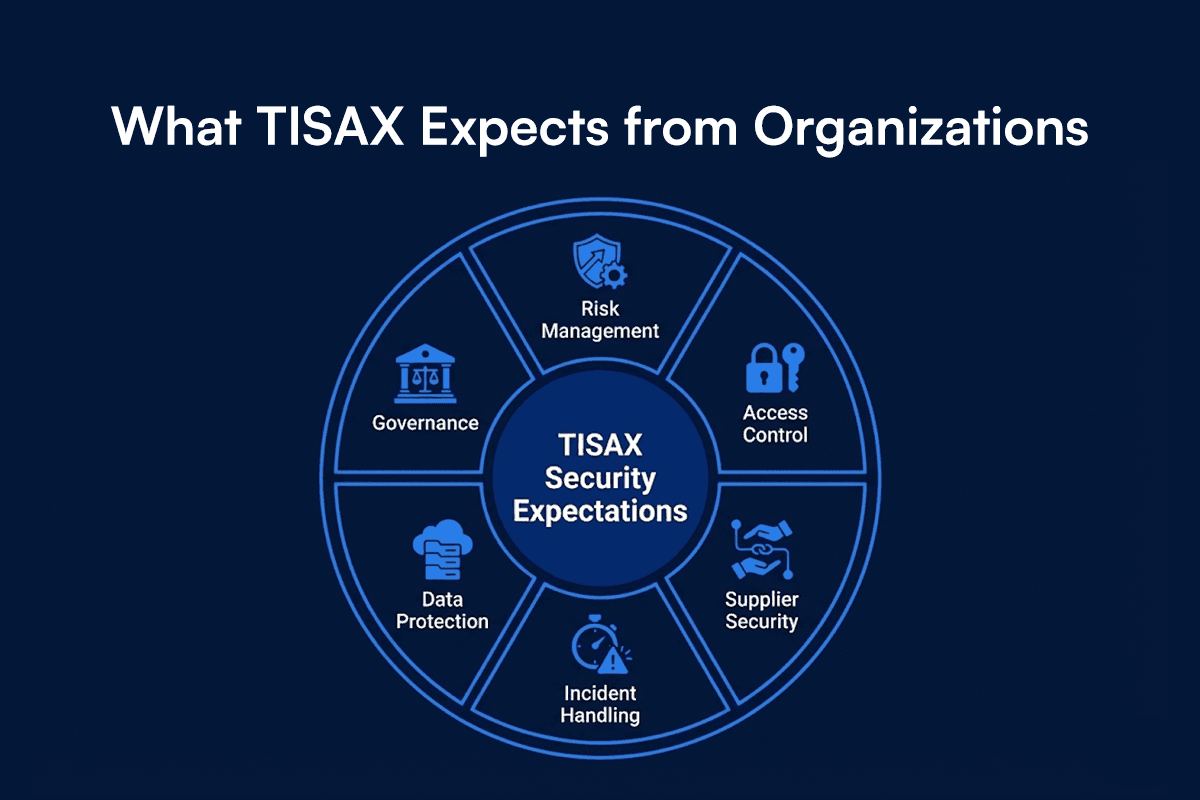
Key expectation areas include:
- Defined information security responsibilities
- Risk assessment and risk treatment processes
- Secure handling of confidential information
- Controlled access to systems and data
- Supplier and third-party risk management
- Incident response and recovery planning
TISAX places strong emphasis on how partners manage security across their supply chain, not just internally. Documentation matters. So does evidence of real practice.
The practical path to TISAX readiness
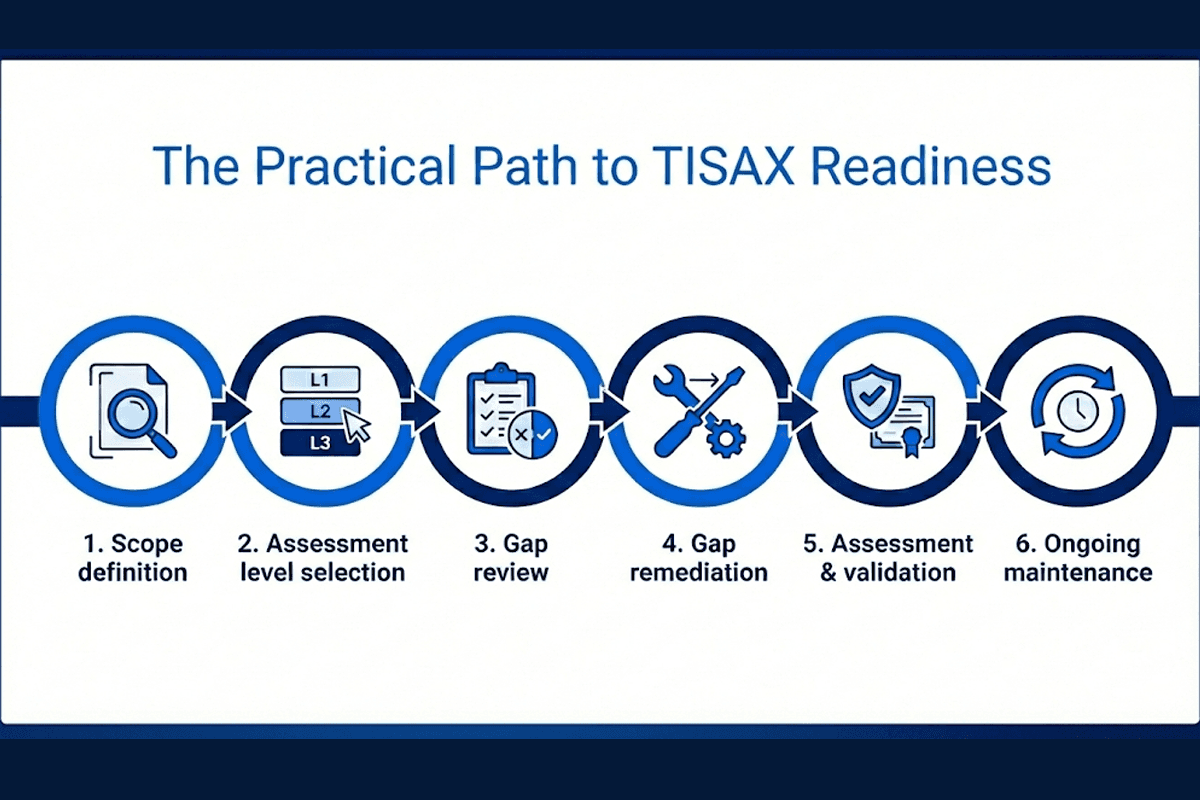
Organizations that succeed with TISAX usually follow a clear sequence:
Step 1: Define scope carefully - Decide which locations, systems, and processes are in scope. Over-scoping creates unnecessary work. Under-scoping causes assessment delays.
Step 2: Identify your target assessment level - Your customers usually drive this decision. Confirm expectations early.
Step 3: Perform a structured gap review - Compare current practices against TISAX requirements. Document gaps clearly.
Step 4: Close gaps with evidence in mind - Policies alone are not enough. Assessors look for implementation, not intent.
Step 5: Register and undergo assessment - Use the ENX platform to register, select an assessor, and schedule the assessment.
Step 6: Maintain readiness - TISAX is not a one-time event. Controls must remain effective throughout the label period.
Common challenges teams face
TISAX is thorough. That creates challenges, especially for organizations new to formal security frameworks.
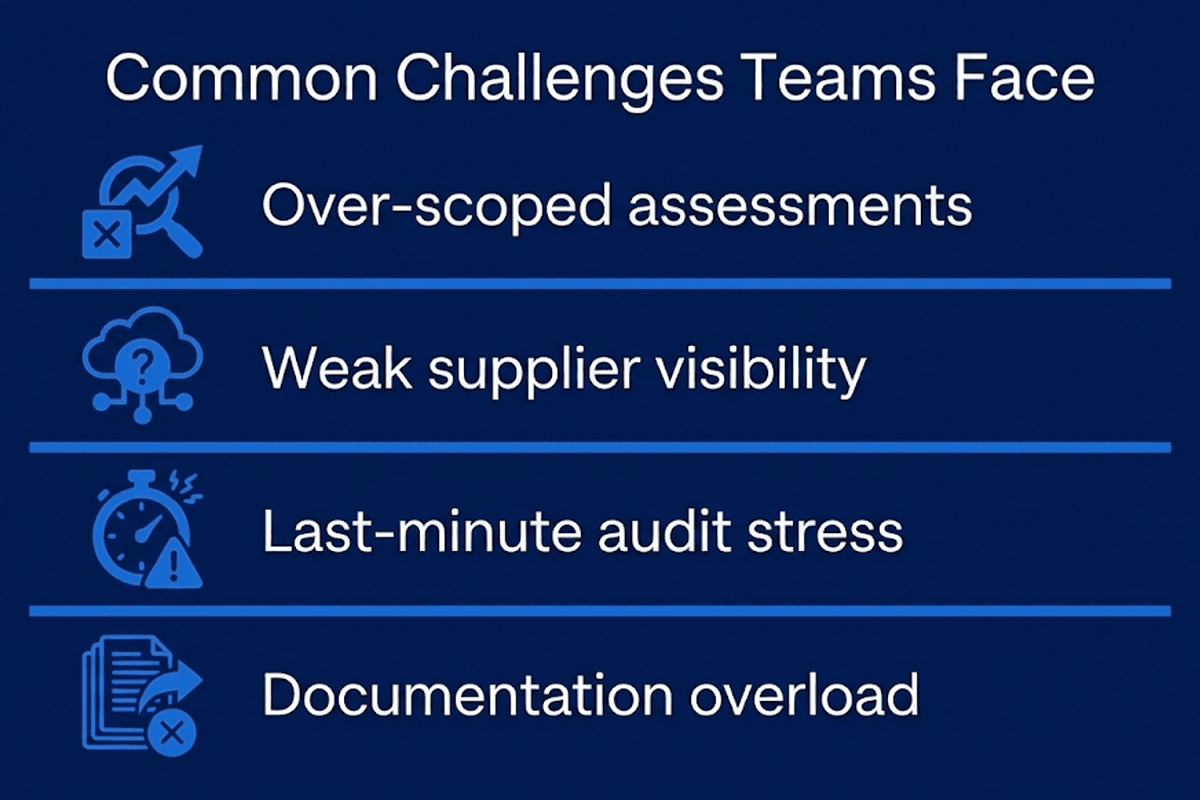
Common pain points include:
- Underestimating documentation effort
- Weak supplier risk processes
- Inconsistent security ownership
- Last-minute audit preparation
- Treating TISAX as a checkbox
Teams that rush TISAX often end up repeating work. Teams that approach it as a security maturity step usually move faster.
How Capture The Bug supports TISAX journeys
Capture The Bug works with automotive suppliers and technology partners across ANZ, the US, and global markets who face TISAX requirements as part of customer onboarding.
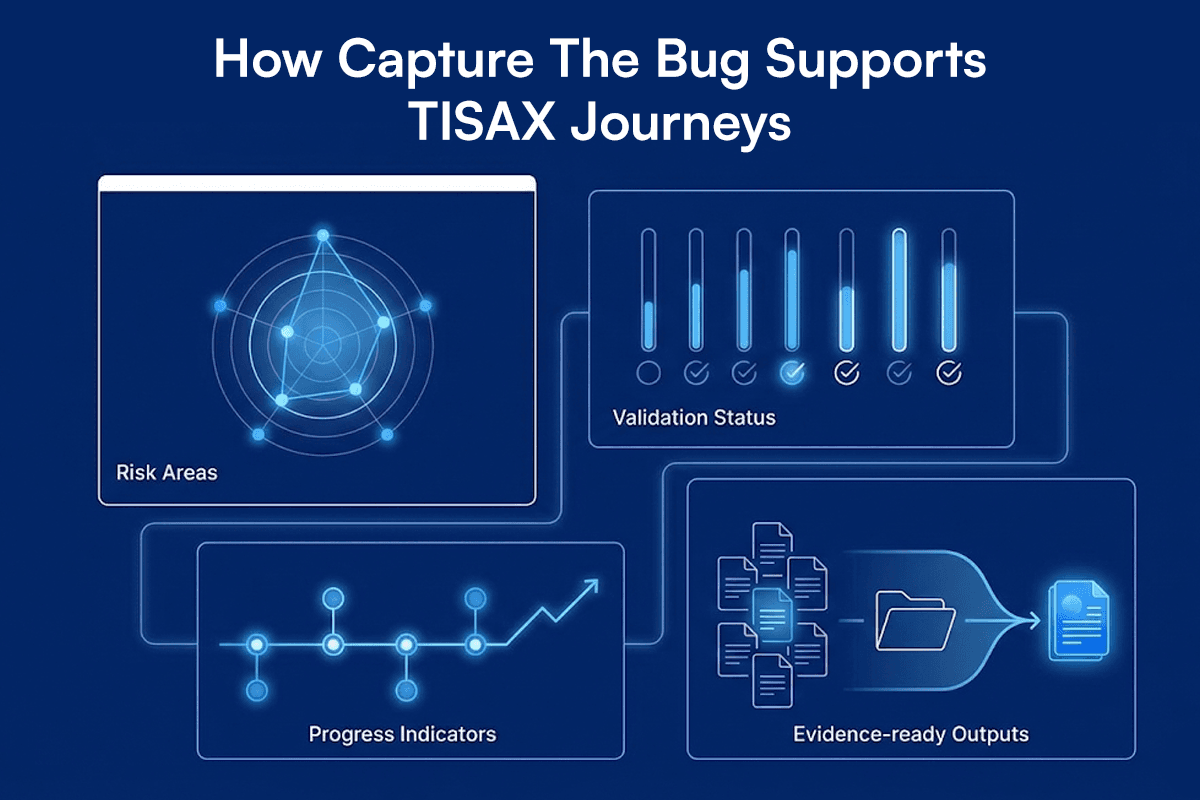
Rather than treating TISAX as paperwork, the focus is on real-world risk validation. Through structured security testing, evidence-ready reporting, and continuous visibility into weaknesses, Capture The Bug helps organizations:
- Validate security controls in practice
- Identify real exposure before assessments
- Support evidence requirements with clarity
- Reduce surprises during formal reviews
The result is a calmer assessment process and stronger confidence when sharing results with automotive partners.
Why TISAX matters beyond compliance
Organizations often see TISAX as something they must do. The stronger perspective is to see it as something that protects business relationships.
TISAX:
- Speeds up supplier onboarding
- Reduces repeated security audits
- Builds trust with manufacturers
- Signals maturity to global partners
- Supports future regulatory alignment
In a supply chain built on trust, TISAX is the language everyone understands.
Conclusion
TISAX exists because the automotive industry needed a shared foundation of trust. It is not about perfection. It is about consistency, accountability, and confidence.
Organizations that approach TISAX early, with a clear scope and practical mindset, find that it becomes less of a burden and more of a business enabler.
In an industry where data drives innovation, protecting that data is no longer optional. TISAX simply makes that expectation visible and verifiable.
FAQ
What does TISAX stand for?
TISAX stands for Trusted Information Security Assessment Exchange. It is an automotive industry security assessment framework.
Is TISAX mandatory?
TISAX is not legally mandatory, but most automotive manufacturers require it from suppliers.
How long is a TISAX label valid?
A TISAX label is typically valid for three years.
Is TISAX the same as ISO 27001?
No. TISAX is based on ISO principles but is tailored specifically to automotive industry risks.
Who performs TISAX assessments?
Assessments are conducted by ENX-approved independent assessors.