ManageMyHealth Data Breach Exposes 126,000 Patients Health Records
When a platform sits at the center of a country's healthcare system, trust is not optional. It is the foundation.
That trust took a serious hit when ManageMyHealth, New Zealand's largest patient portal, confirmed a data breach affecting between 108,000 and 126,000 patients. For many, this was not just another headline. It was personal. Diagnoses, prescriptions, and private health documents were suddenly part of a criminal conversation.
From a security leadership perspective, this incident deserves careful attention. Not because it is unique, but because it is increasingly typical of how healthcare platforms are being targeted and compromised.
This article breaks down what happened, why it matters beyond New Zealand, and what healthcare and SaaS leaders should take away from it.
What Happened
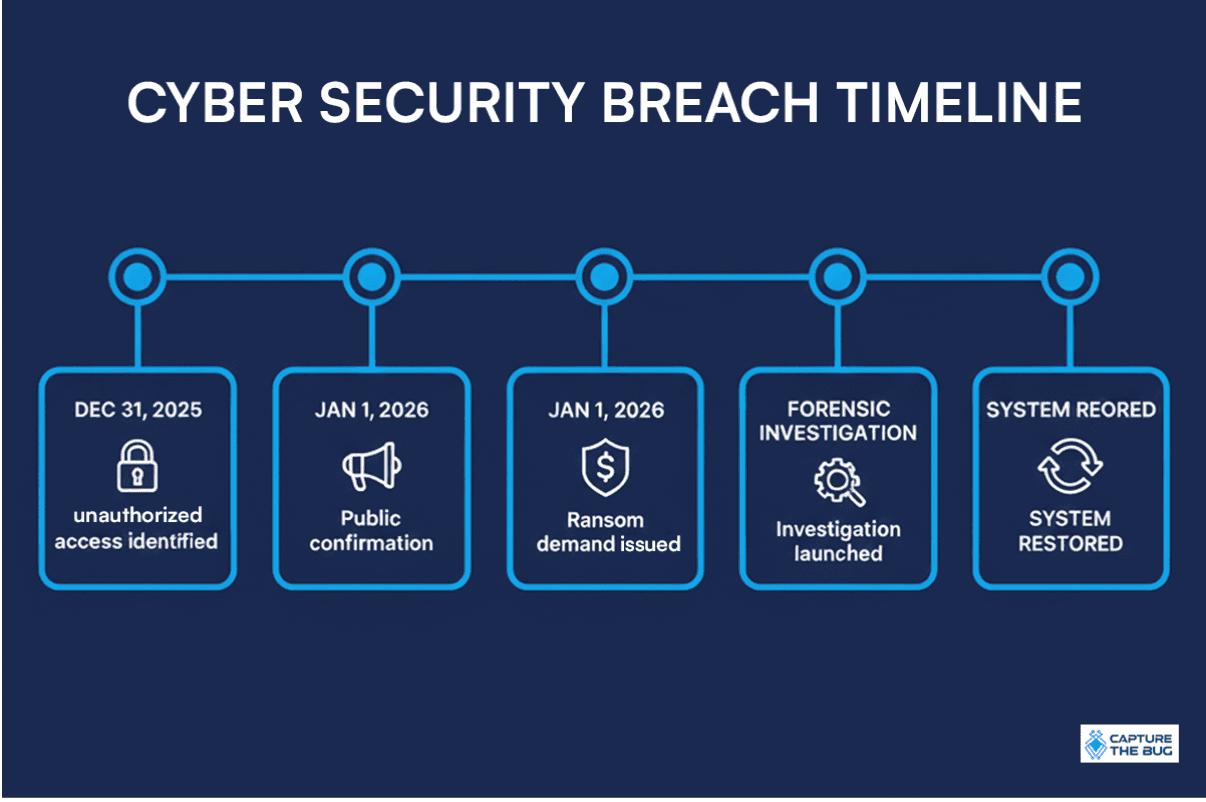
On December 31, 2025, ManageMyHealth identified unauthorised access within its systems. By January 1, the company publicly confirmed a security incident and began containment and investigation efforts.
Shortly after, a cybercrime group calling itself Kazu claimed responsibility. The group alleged it had extracted around 108 gigabytes of data, representing more than 400,000 files, and issued a ransom demand of $60,000 NZD, with a deadline set for mid-January.
ManageMyHealth later clarified that the breach was limited to the Health Documents module, not the entire platform. Independent international forensic specialists were engaged to validate the claim and assess the full impact.
Authorities were notified, including the Office of the Privacy Commissioner and New Zealand Police, in line with legal obligations.
From a response standpoint, this followed expected regulatory steps. From a prevention standpoint, the damage was already done.
What Data Was Exposed
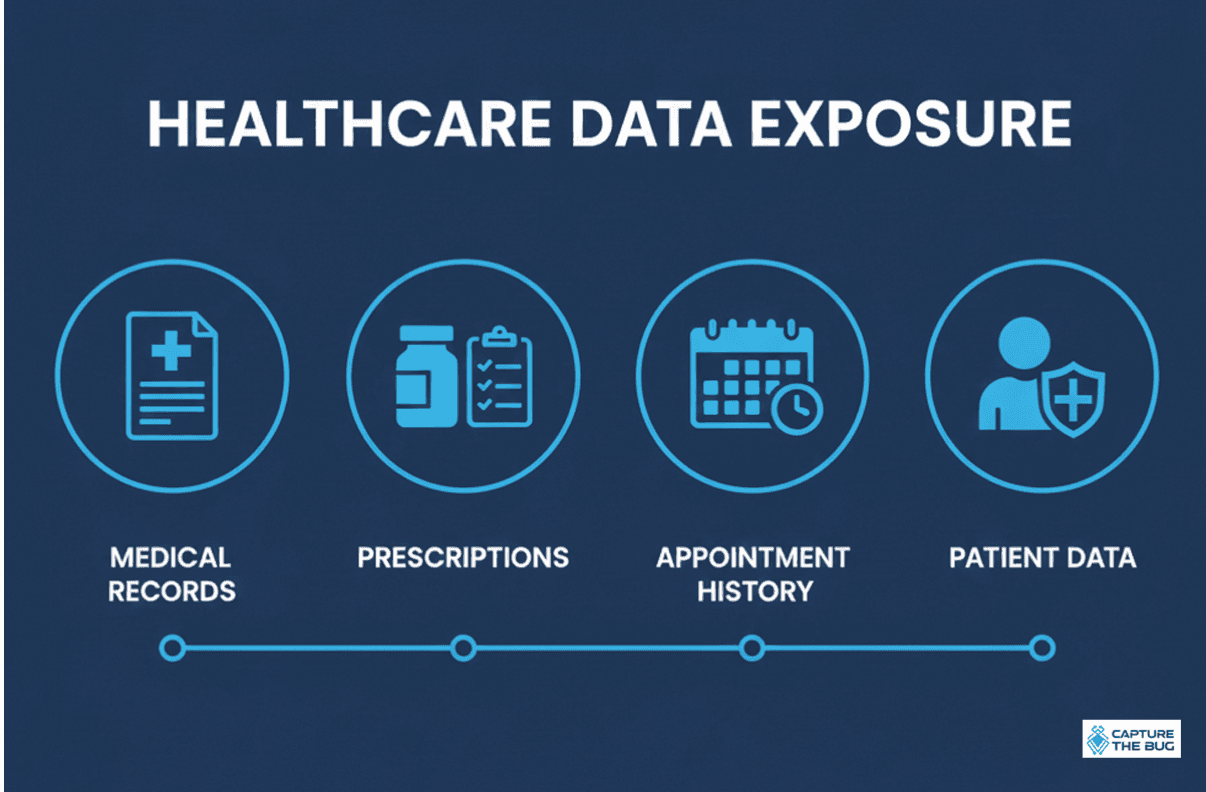
While investigations are ongoing, the affected data reportedly includes:
- Medical diagnoses
- Prescriptions and treatment records
- Appointment histories
- Uploaded clinical documents
- Personally identifiable patient details
This type of data sits in the highest risk category. Unlike passwords or credit cards, medical records cannot be rotated or cancelled. Once exposed, the risk follows patients indefinitely.
For attackers, healthcare data has become more valuable than financial data. It enables identity fraud, targeted extortion, insurance abuse, and long-term profiling.
Why This Breach Matters Beyond New Zealand
ManageMyHealth services approximately 1.8 million registered users, making this incident one of the most significant healthcare data breaches in New Zealand's history. But the implications extend far beyond local borders.
Healthcare platforms globally share similar characteristics:
- Deep integration with clinics and providers
- Long-lived patient accounts
- High volumes of sensitive documents
- Complex access controls across users and staff
- Legacy modules coexisting with newer systems
This combination creates a wide and often uneven attack surface.
The fact that the breach was reportedly confined to a specific module is important. It reinforces a pattern Capture The Bug sees repeatedly: attackers do not need full platform compromise. They only need one weak entry point that holds high-value data.
The Real Risk Is Not the Ransom
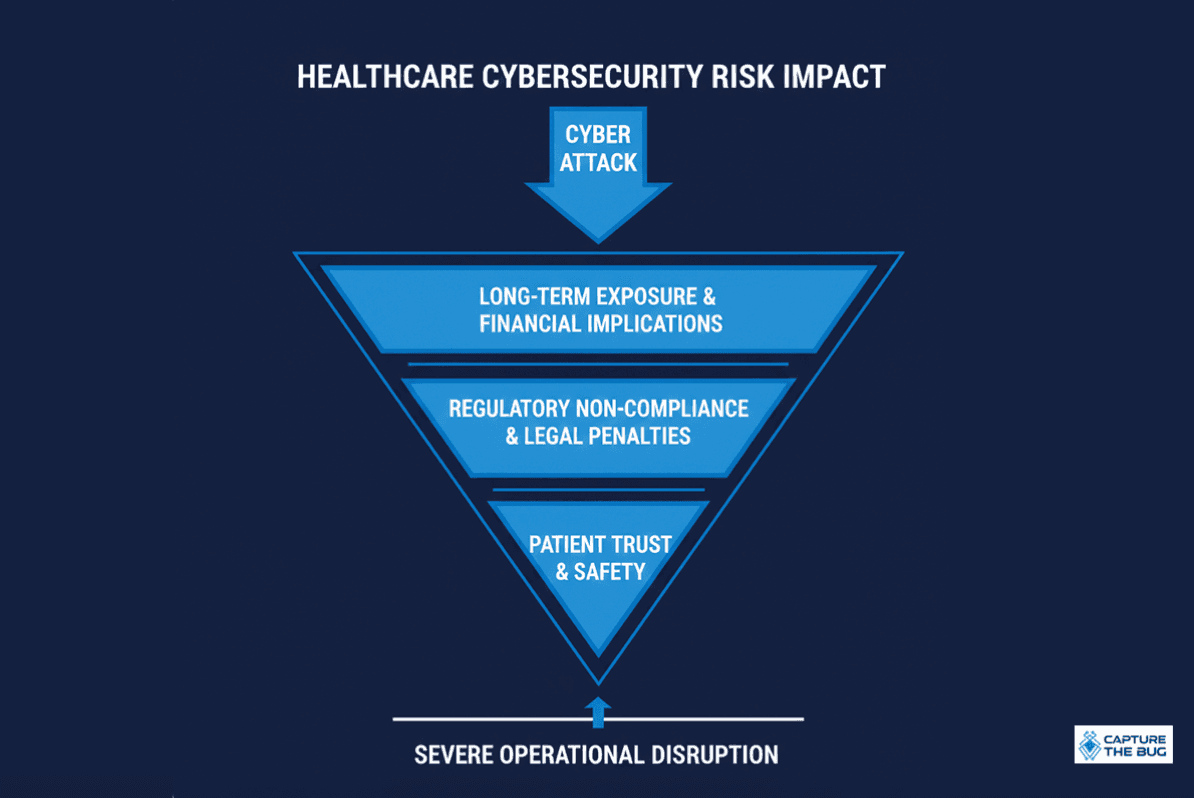
Ransom figures make headlines, but they are rarely the real cost.
The larger risk comes from data exposure, not system downtime. Even if a ransom is paid, there is no guarantee that data has not already been copied, resold, or retained for future use.
Healthcare breaches also trigger:
- Long-term reputational damage
- Loss of patient trust
- Regulatory scrutiny
- Legal claims and class actions
- Increased insurance premiums
- Forced architectural changes under pressure
In healthcare, trust is not a marketing asset. It is a safety requirement. Once lost, it is extremely difficult to restore.
A Familiar Pattern in Healthcare Breaches
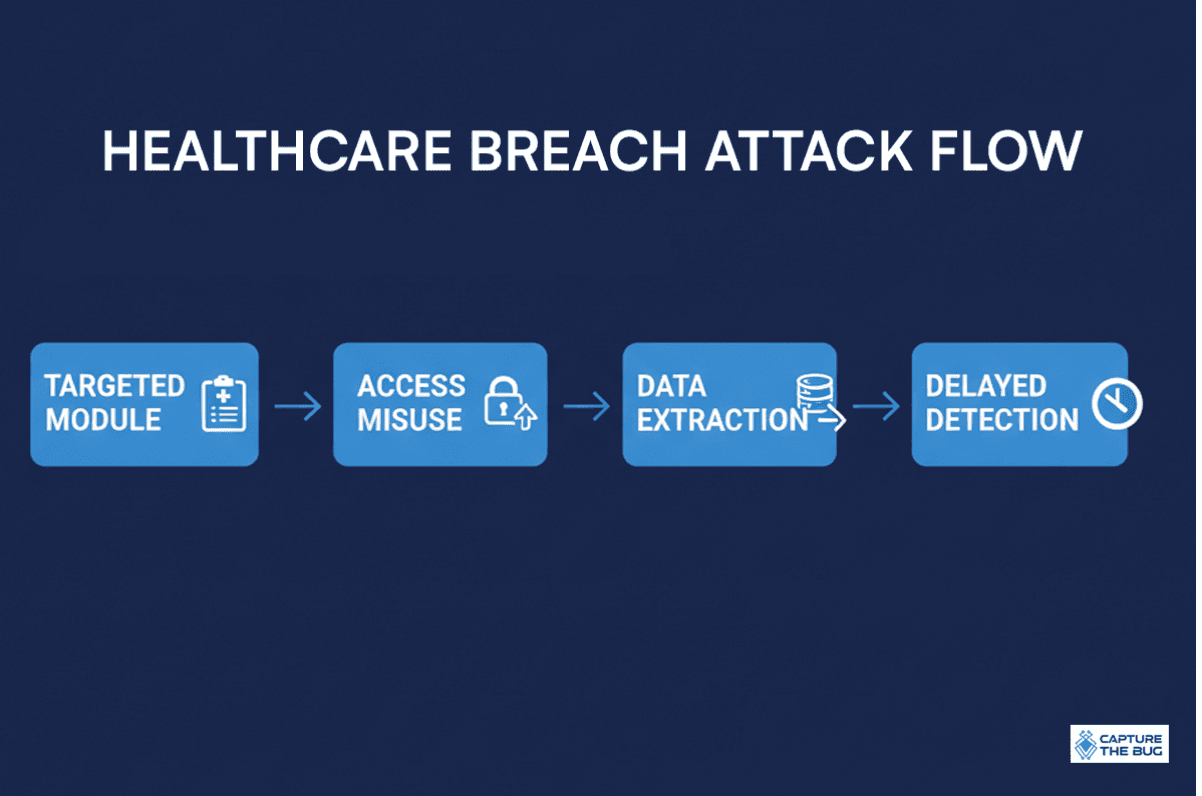
This incident follows a pattern seen across healthcare breaches globally.
- A specialised module or document repository is targeted
- Access controls are bypassed or misused
- Data is quietly extracted rather than immediately disrupted
- Public disclosure follows once attackers feel confident in leverage
This is not about flashy attacks. It is about patience, understanding platform structure, and knowing where the most sensitive data lives.
From a defensive standpoint, this is harder to catch because the activity can look normal until it is not.
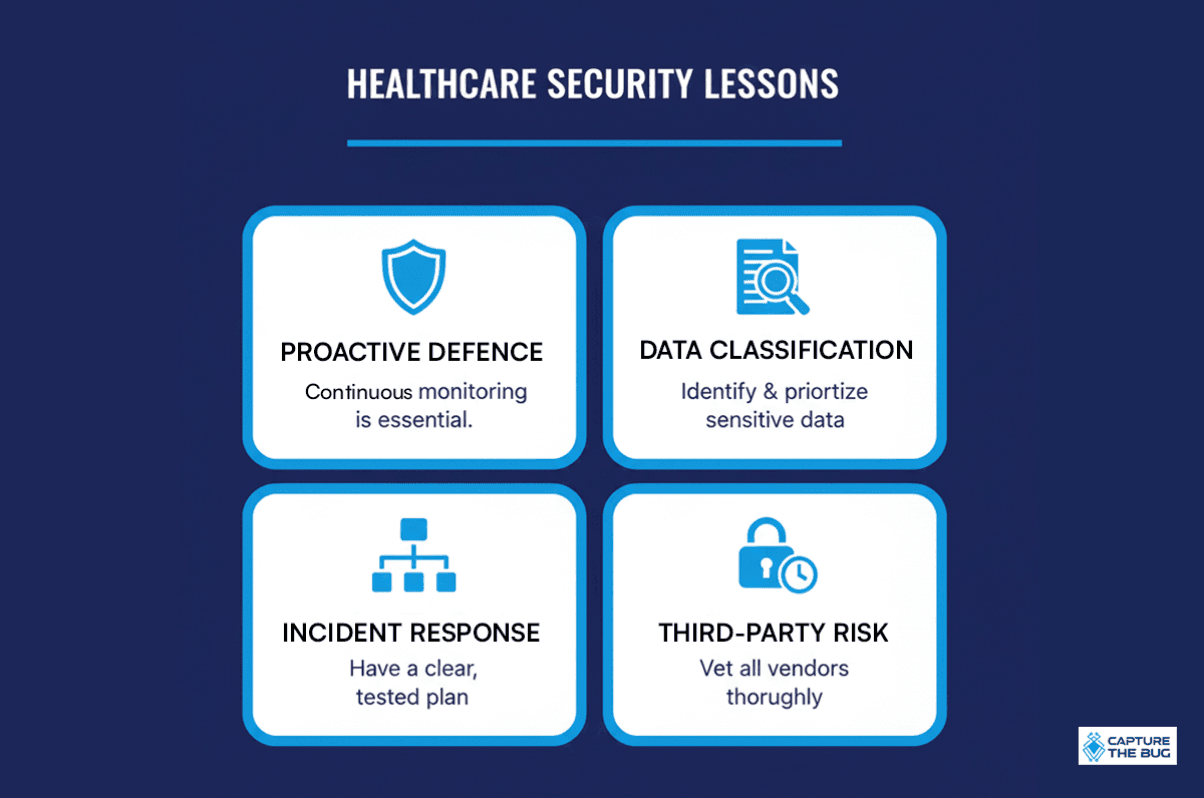
What Healthcare Platforms Should Learn From This
1. Sensitive modules need separate threat models
It is not enough to secure the platform as a whole. Document storage, upload features, and patient records need individual security assessments.
These components often evolve over time and quietly become the most valuable assets attackers can reach.
2. Assumptions around "limited scope" are dangerous
Even if access is restricted to one module, the impact can still be catastrophic. Security decisions must be based on data sensitivity, not architectural boundaries.
3. Healthcare data demands continuous validation
Annual or point-in-time security reviews are not aligned with how healthcare platforms operate today. Systems change, integrations grow, and access patterns evolve.
Without continuous validation, gaps persist long enough to be exploited.
Where Proactive Security Fits In
At Capture The Bug, healthcare breaches consistently highlight one truth: most incidents are not caused by unknown technologies. They are caused by known weaknesses that were not tested often enough.
Effective healthcare security focuses on:
- Regular testing of patient-facing features
- Ongoing review of document access pathways
- Validation of privilege boundaries across roles
- Early detection of abnormal access patterns
- Clear remediation workflows once issues are found
This is not about fear-driven security. It is about respecting the responsibility that comes with holding people's health data.
A Moment of Reckoning for Digital Health
Digital health platforms are now critical infrastructure. Patients depend on them not just for convenience, but for continuity of care.
Breaches like this force an uncomfortable question:
Are platforms being secured at the same pace they are being adopted?
The answer, too often, is no.
Healthcare leaders, boards, and technology teams need to treat patient data protection as a core operational priority, not a compliance checkbox.
Final Thoughts
The ManageMyHealth breach is not just a New Zealand story. It is a global warning.
Healthcare platforms hold some of the most sensitive data in existence. Attackers know this. Patients assume it is protected. The gap between those two realities is where breaches occur.
Security does not fail in dramatic moments. It fails quietly, in overlooked modules, outdated assumptions, and infrequent testing cycles.
The lesson here is clear: when patient trust is the asset, security has to be continuous, deliberate, and proven, not assumed.
FAQ
What happened in the ManageMyHealth data breach?
ManageMyHealth confirmed unauthorised access to its systems in late December 2025, exposing health records for an estimated 108,000 to 126,000 patients.
What type of data was exposed?
The breach may have exposed medical documents, diagnoses, prescriptions, appointment histories, and personal patient information.
Why are healthcare data breaches so serious?
Medical data cannot be changed or cancelled and can be used for long-term identity fraud, extortion, and privacy violations.
Was the entire ManageMyHealth platform compromised?
The company stated the breach was limited to the Health Documents module, not the full application.
What should healthcare platforms do to prevent similar breaches?
They should continuously test high-risk modules, validate access controls regularly, and treat patient data protection as an ongoing operational responsibility.