


DEFINITION: What CREST actually is
CREST is an international not-for-profit accreditation body that sets and verifies standards for penetration testing organizations and the individual testers who work within them. The name stands for Council of Registered Security Testers. CREST membership is not self-declared. To become CREST-accredited, a penetration testing organization must demonstrate that its internal processes, data handling policies, quality assurance procedures, and governance structures meet independently audited standards. Individual testers working under a CREST-accredited firm must pass rigorous practical examinations that assess real-world testing competence, not just theoretical knowledge.
When an Australian company receives a penetration test report from a CREST-certified provider, that report carries an implicit guarantee: the methodology used to produce it met a verified global standard, and the tester who ran the engagement had their competence independently confirmed before they started.
Why certification matters specifically in the Australian market
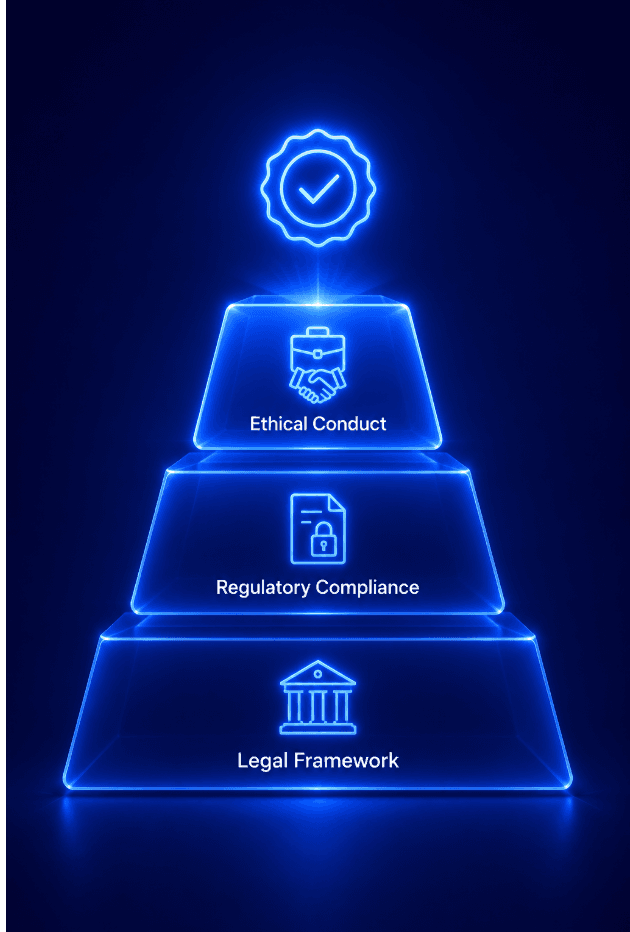
Australia's regulatory and compliance landscape has several distinct features that make CREST certification particularly relevant for companies operating here.
The Australian Prudential Regulation Authority, known as APRA, publishes Prudential Standard CPS 234, which governs information security for APRA-regulated entities including banks, insurers, and superannuation funds. CPS 234 requires these entities to test the effectiveness of their information security controls, and regulators expect that testing to be conducted by competent, verified professionals. A CREST-certified provider's report satisfies this expectation in a way that an uncertified provider's report often does not.
The Privacy Act 1988, as amended by subsequent legislation, places an obligation on Australian organisations to take reasonable steps to protect personal information. A penetration test conducted by a CREST-certified provider is one of the clearest forms of evidence that those reasonable steps are being taken, since the testing methodology itself has been externally validated rather than just claimed.
For Australian SaaS companies selling to enterprise customers, especially those in finance, healthcare, or government supply chains, a CREST-certified penetration test report is increasingly a non-negotiable requirement rather than a differentiator.
CREST certification versus no certification: the practical difference
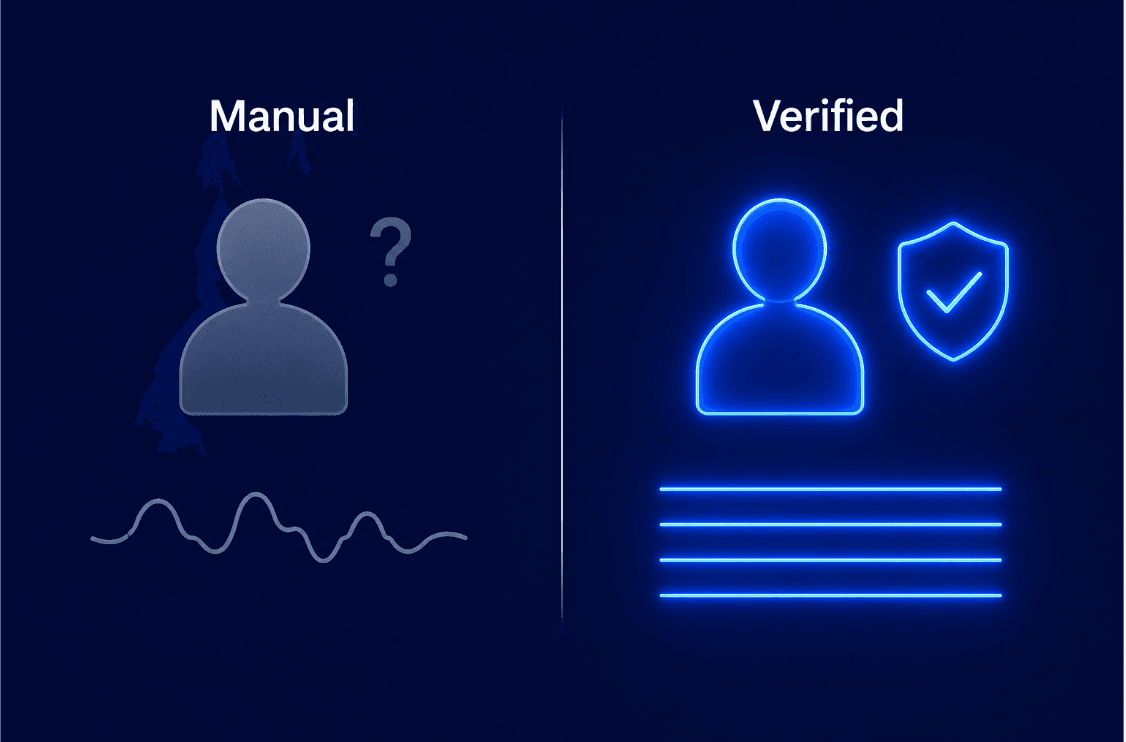
The quality of a penetration test from a non-certified provider depends entirely on the individual tester. There is no external check on methodology, no verified standard for how findings are confirmed, and no independent guarantee that the report reflects a thorough, competent engagement rather than a partial one.
CREST certification changes that structure. When a penetration test is conducted by a CREST-accredited firm, two things have been independently verified before testing begins. First, the organization has demonstrated that it maintains proper processes for handling client data securely, managing testing scope responsibly, and producing findings that meet a documented quality standard. Second, the individual testers have passed practical examinations assessed against real-world attack scenarios, not just answered multiple-choice questions about theory.
The result is that findings from a CREST-certified provider carry a different evidentiary weight. An auditor, a regulator, or an enterprise customer reviewing the report knows the testing methodology met a known standard. That matters when the report is being used as compliance evidence, not just as an internal engineering document.
Your Last Pentest Is Already Out of Date
Every week you ship without continuous testing is a week a vulnerability goes unseen. See what Capture The Bug finds in your first engagement.
What CREST certification does not mean

CREST certification does not guarantee that every possible vulnerability will be found. No testing methodology can make that guarantee, because new vulnerabilities appear as products change and as attack patterns evolve. What certification does guarantee is that the testing process followed a verified methodology, that the tester's competence was independently assessed, and that the findings presented were confirmed rather than speculative.
CREST certification also does not mean that testing only needs to happen once. The CREST standard addresses the quality of a testing engagement, not its frequency. A single CREST-certified test produces a report that reflects the product as it existed on the date testing ran. For Australian SaaS companies that ship product changes regularly, that report begins to age as soon as it is filed. A continuous penetration testing service, where CREST-certified testers run ongoing coverage as the product evolves, maintains both the quality guarantee and the currency of findings across the year rather than concentrating both into a single window.
Book a demo
For any Australian company that needs to understand exactly what a CREST-certified engagement covers, how it maps to the compliance frameworks that matter for their business, and what continuous testing looks like alongside an annual report, a direct conversation is more useful than another vendor comparison. Book a demo with Capture The Bug and get a specific answer for a specific product and compliance situation.
What CREST-certified penetration testing covers in practice
A CREST-certified penetration test can cover several different scopes depending on what a company needs. Web application testing examines the application layer, including authentication, session handling, access controls, and how the application handles unexpected or malicious input. API testing examines the endpoints behind a product, the permissions governing who can access what data, and whether those endpoints can be manipulated in ways that expose customer information or trigger unintended actions. Infrastructure testing examines the network, servers, and cloud configuration that the application runs on.
A CREST-certified penetration testing service covering all three layers produces the most comprehensive compliance evidence, particularly for Australian companies facing APRA, Privacy Act, Essential 8, SOC 2, or ISO 27001 requirements at the same time. The finding from each layer can be mapped to the relevant control requirement for each framework, so the same engagement produces usable evidence across multiple compliance obligations rather than requiring three separate engagements.
How Australian companies should evaluate a provider's CREST credentials
CREST accreditation is verifiable. An Australian company evaluating a penetration testing provider can check the CREST website directly to confirm whether a firm holds current accreditation, since CREST publishes its member directory publicly. A provider claiming CREST certification that does not appear in that directory should be treated with caution.
The questions worth asking beyond verifying accreditation are about how findings are delivered and what happens after testing ends. Does the provider deliver findings as they are confirmed, or only in a single final report? Is retesting a confirmed fix included in the engagement or billed as a separate project? Is there a clear record of when each finding was raised and when it was closed? These process questions determine whether a CREST-certified test produces ongoing, actionable value or just a certified piece of paper.
Capture The Bug holds CREST accreditation and operates a continuous penetration testing service for Australian companies that need both the quality guarantee of CREST certification and the ongoing coverage that a product which keeps shipping actually requires.
Plan Your Annual Pentesting Strategy the Right Way
Learn how modern SaaS companies structure pentesting across the year to reduce risk, stay compliant, and avoid last-minute panic before audits.

What this means in plain terms
CREST-certified penetration testing in Australia is the difference between a verified, legally weightier, compliance-ready report and an unchecked claim from a vendor with no external standard backing it. For Australian companies operating under APRA, the Privacy Act, Essential 8, or enterprise customer requirements, the certification is not optional. For any company that wants its security testing to hold up under auditor scrutiny, investor due diligence, or regulatory review, CREST-certified testing from a provider that can be independently verified is the baseline worth starting from.
FAQ
What does CREST stand for in cybersecurity?
CREST stands for Council of Registered Security Testers. It is an international not-for-profit accreditation body that independently certifies penetration testing organizations and their individual testers against verified standards of methodology, competence, and ethical conduct.
Why is CREST certification specifically relevant for Australian companies?
Australia's regulatory landscape includes APRA's CPS 234 standard for financial institutions, the Privacy Act 1988's obligation to protect personal information through reasonable steps, and enterprise procurement requirements from government and regulated industry buyers. CREST-certified reports satisfy all of these requirements in a way that uncertified reports generally do not.
How can an Australian company verify whether a provider is genuinely CREST-accredited?
CREST publishes its full member directory on the CREST website. Any provider claiming CREST accreditation can be verified against that directory. Accreditation that cannot be confirmed through the directory should not be relied upon as genuine.
Does CREST certification mean the penetration testing provider will find every vulnerability?
No. CREST certification guarantees that the methodology used met a verified global standard and that the tester's competence was independently assessed. It does not guarantee complete coverage of every possible vulnerability, since new vulnerabilities emerge as products change and testing always reflects the product as it exists at a specific point in time.
How often does a CREST-certified penetration test need to be conducted?
The CREST standard governs the quality of each engagement, not the required frequency. For Australian companies that ship product changes regularly, a continuous testing model where CREST-certified testers provide ongoing coverage produces more current and comprehensive security evidence than a single annual engagement.