Security teams often talk about coverage. Engineering teams talk about speed. The real challenge is operating both at the same time. This is where the balance between scan depth and scan speed becomes one of the most important decisions inside any modern technology organisation.
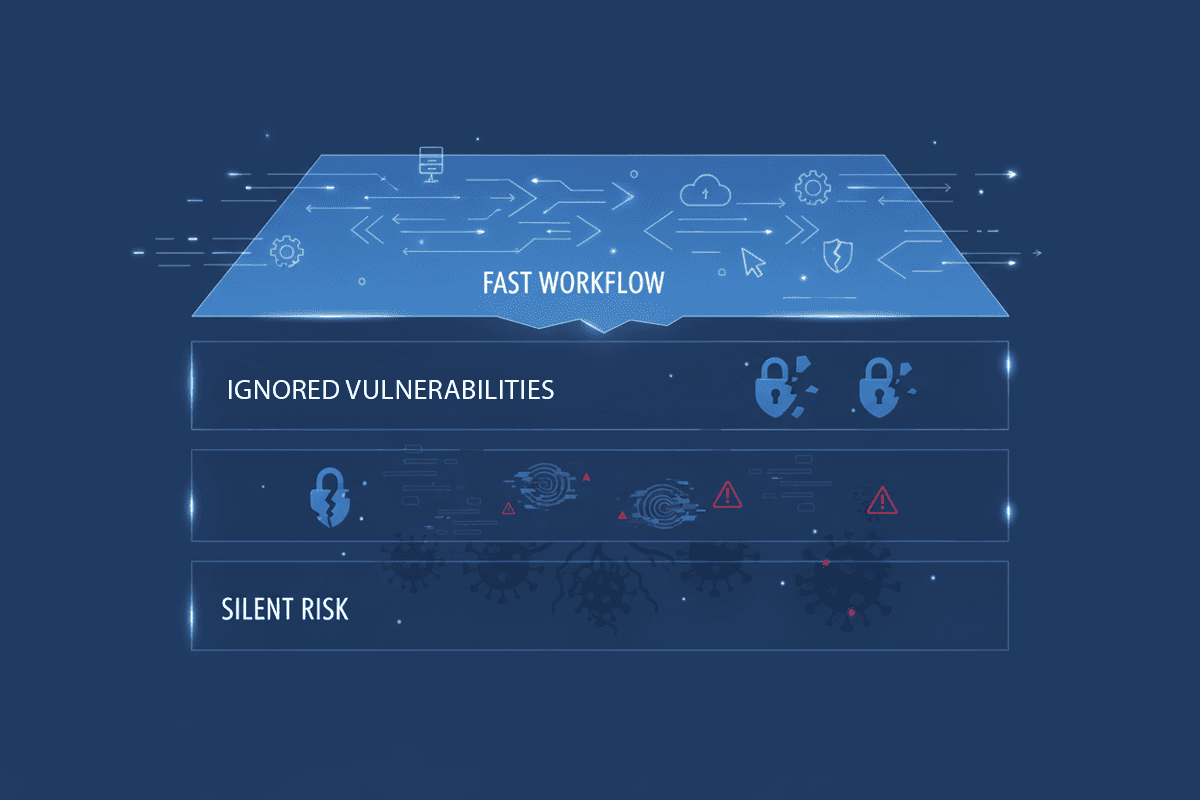
Why This Balance Matters More Than Ever
When Capture The Bug works with engineering and product teams across ANZ and the USA, there is one pattern that repeats without fail. Every team wants to move quickly. Every team also knows they cannot afford blind spots. Yet the moment release pressure rises, security becomes a negotiation.
That negotiation usually sounds like this:
“Can we run something lighter this sprint so we don't delay the release?”
or
“Can we push a deeper review to next week and ship now?”
Neither side is wrong. Speed keeps the roadmap moving. Depth finds what shallow reviews miss. But when one outweighs the other, risk accumulates quietly in the background.
The strongest teams don't choose between them. They tune both intentionally.
How This Tension Shows Up Inside Real Teams
Picture a typical release week.
A product manager is 48 hours from sign-off. The update is tested, approved, and ready. Security reviews the same build and requests a deeper round of checks. The manager now has two options, neither ideal:
- Run a deep review and slow the release.
- Run a shallow review and hope nothing serious slips through.
This scenario repeats itself inside dozens of organisations. Not because teams disagree, but because the structure around security is mismatched with how software is delivered today. When reviews are either too shallow or too slow, both confidence and momentum suffer. Over months, this mismatch becomes security debt that impacts every future release.
Understanding Scan Depth
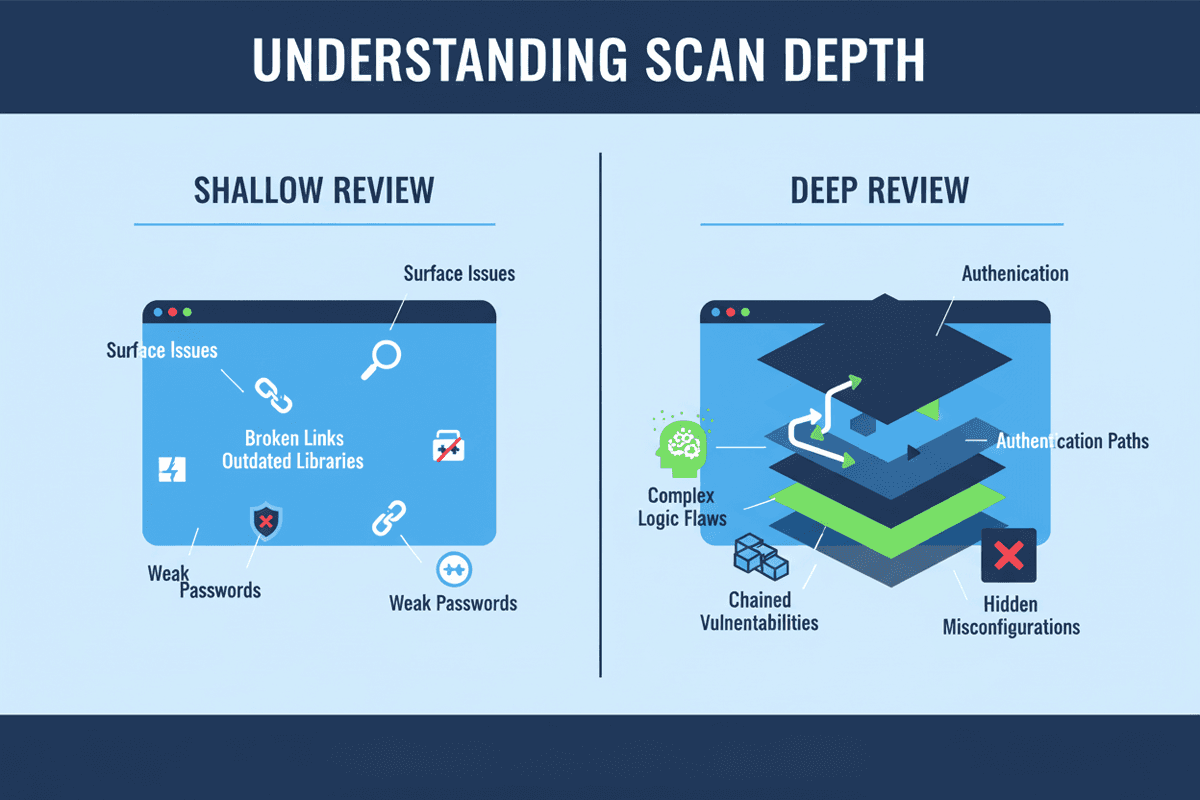
Scan depth represents how thoroughly an environment, feature, or application is examined. It influences the types of weaknesses teams can catch before release.
Low-depth reviews catch surface-level issues. They are quick, lightweight, and designed for repetitive checkpoints.
High-depth reviews explore authenticated areas, complex logic, chained paths, misconfigurations, and scenarios that sit beneath the surface. They take longer, but they reveal the weaknesses that cause real incidents.
Shallow depth helps teams move. Deep depth helps teams sleep.
You need both, just not at the same time.
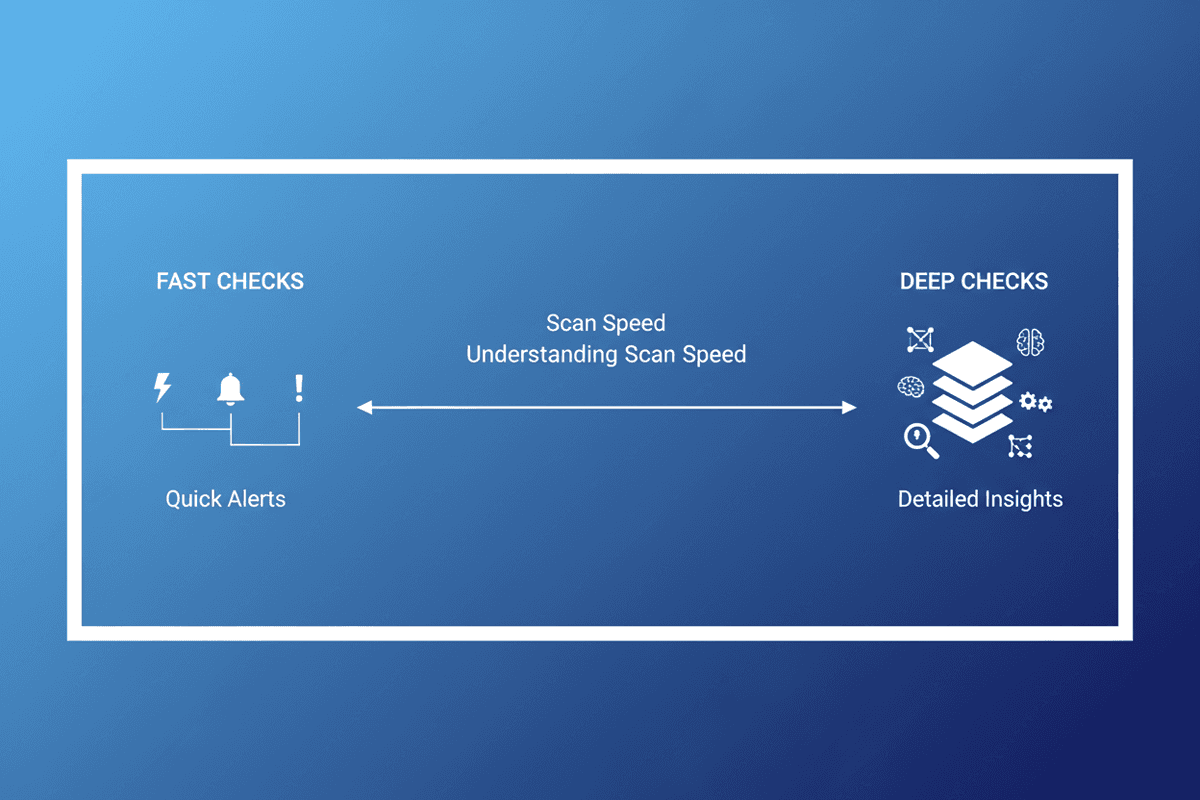
Understanding Scan Speed
Scan speed is the time-to-insight. It affects how fast teams receive feedback and how quickly they can make decisions.
Fast reviews support rapid development cycles. They provide early warnings without disrupting momentum.
Slower, more comprehensive reviews provide stronger assurance. They show what truly matters, but they demand breathing room.
When teams chase speed at the cost of depth, they leave openings for more serious issues to reach production. When they chase depth without strategy, release stalls and frustration grows. Both extremes cost the business in different ways.
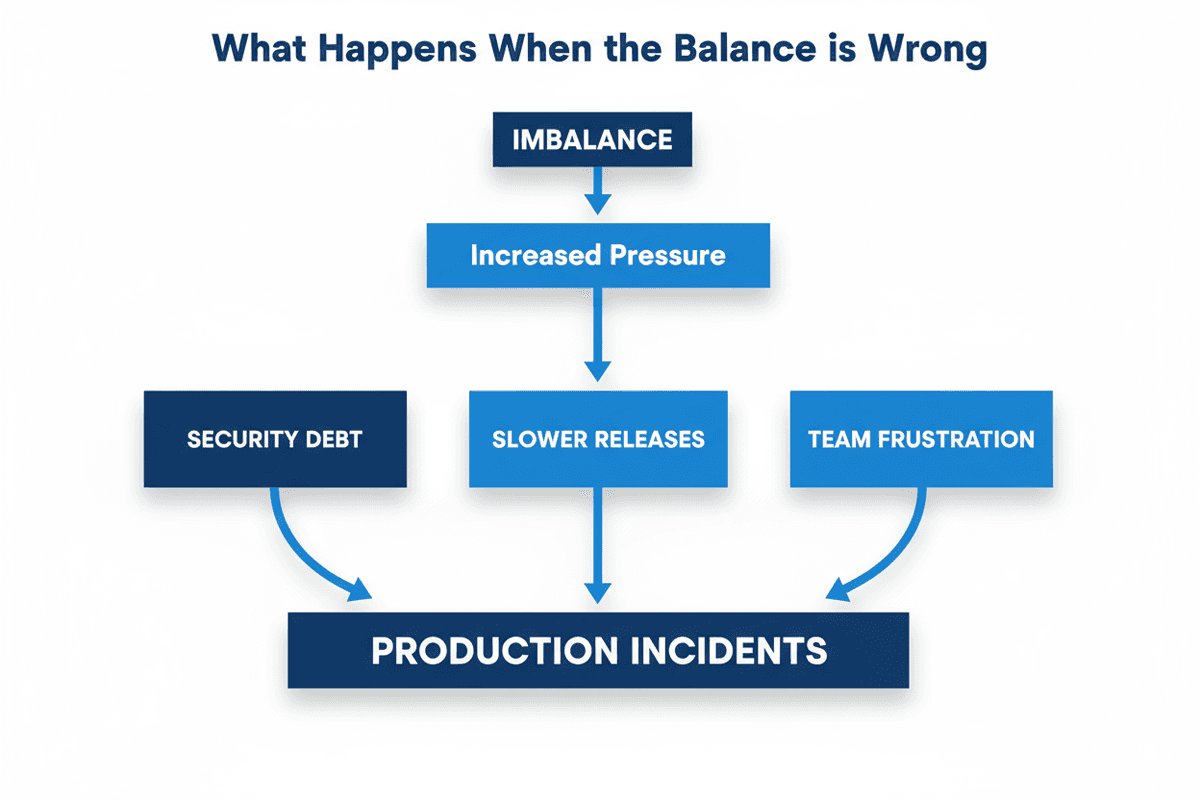
What Happens When the Balance is Wrong
Capture The Bug sees the same consequences across nearly every organisation that struggles with this balance:
1. Security Debt Grows Quietly
Missed weaknesses from quicker reviews accumulate until a future release becomes a firefight.
2. Delivery Slows Down
Deep reviews triggered at the wrong time cause bottlenecks that ripple through entire roadmaps.
3. Teams Lose Confidence
Engineering begins to see security as a blocker. Security begins to feel ignored.
4. Incidents Become More Likely
Shallow reviews allow weaknesses to mature in production where they are harder, slower, and more expensive to fix.
The cost rarely appears immediately. It shows up months later in backup plans, emergency sprints, and late-night patch cycles.
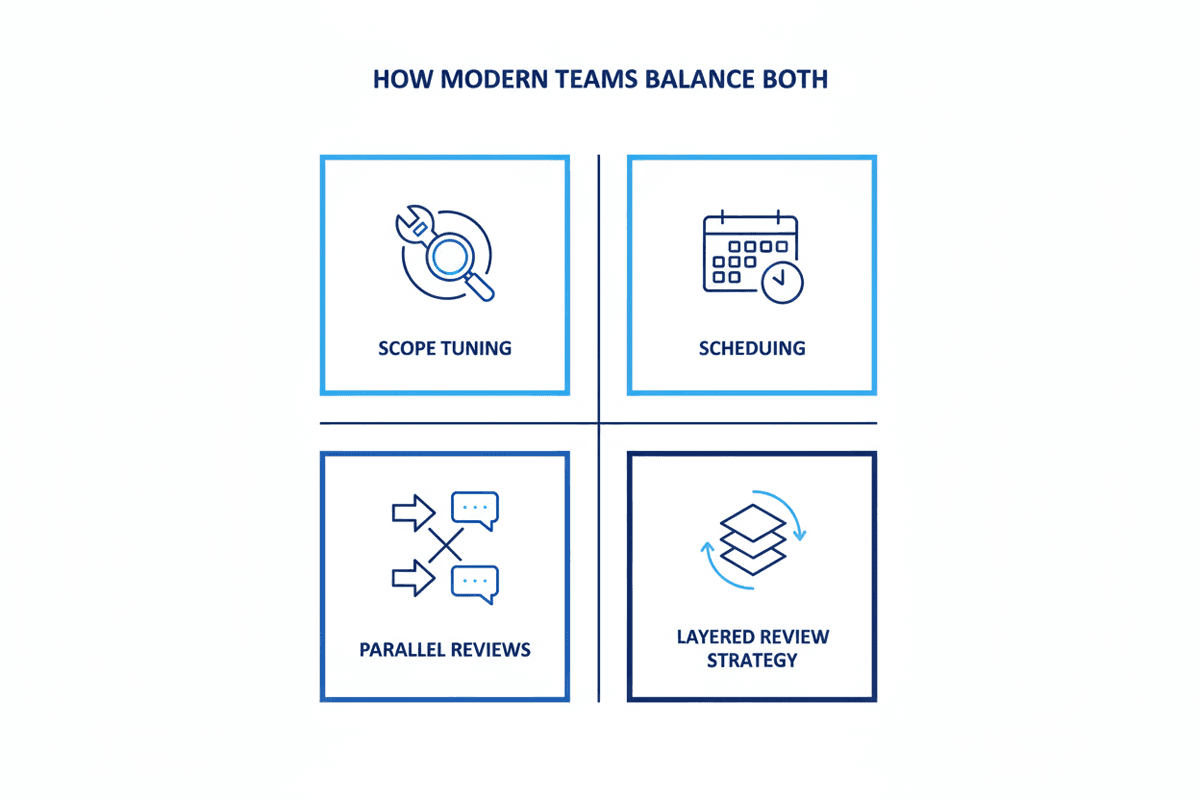
How Modern Teams Balance Both Without Slowing Down
Organisations that get this right don't rely on a single type of review. They build a layered rhythm that protects their velocity and reduces risk.
Here is what that rhythm looks like.
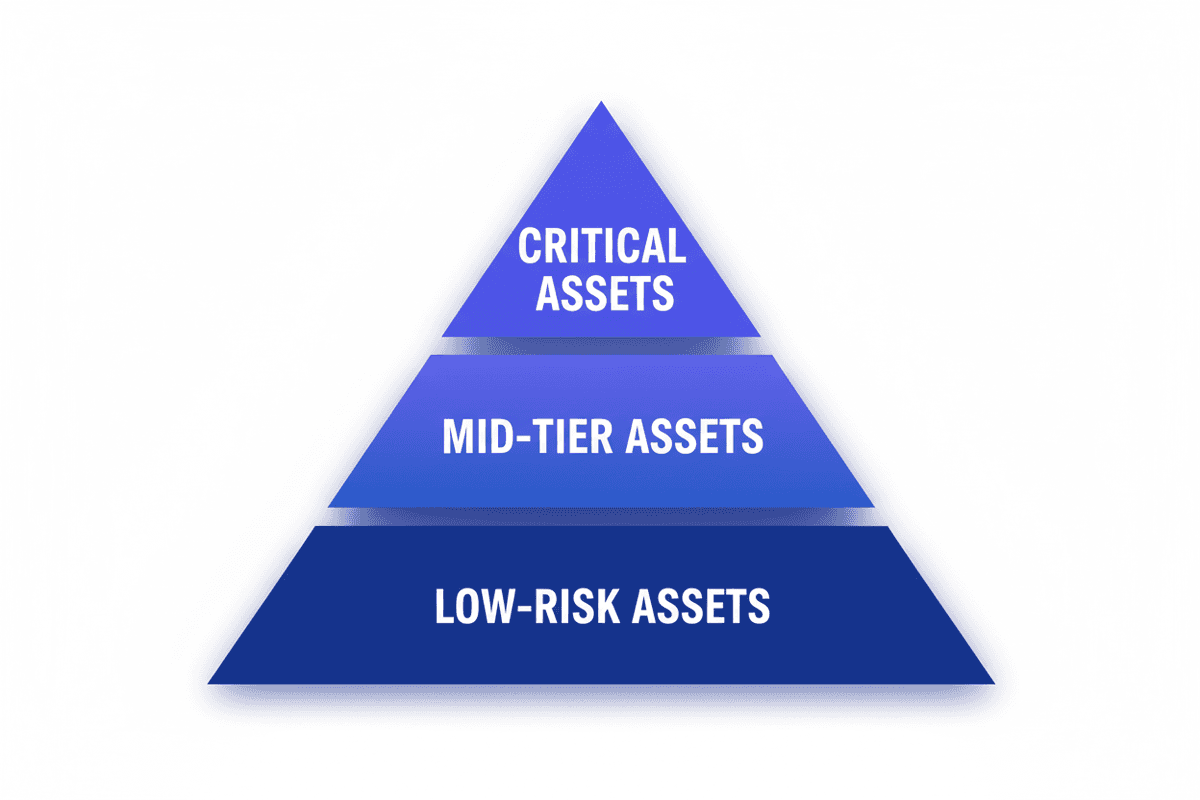
1. Match Depth to Asset Criticality
Not everything needs the same level of attention.
Critical systems, customer-facing features, payment flows, and sensitive data paths deserve deeper reviews. Lower-risk internal tools don't.
This approach ensures effort is spent where risk matters most. It also removes unnecessary delays from assets that require only fast feedback.
2. Schedule Deep Reviews Outside Pressure Windows
Running heavy reviews during peak release hours frustrates everyone involved.
Smart teams schedule them:
- Overnight
- During low-traffic periods
- On non-critical branches
- After major structural changes rather than every sprint
This allows depth and delivery to live together rather than collide.
3. Break Large Reviews Into Parallel Work
Organisations often treat large environments as single blocks. This is what slows reviews down.
Splitting systems into logical sections allows several reviewers to work simultaneously.
This shortens turnaround time while maintaining thoroughness.
It's one of the quickest ways to reduce friction between engineering and security teams.
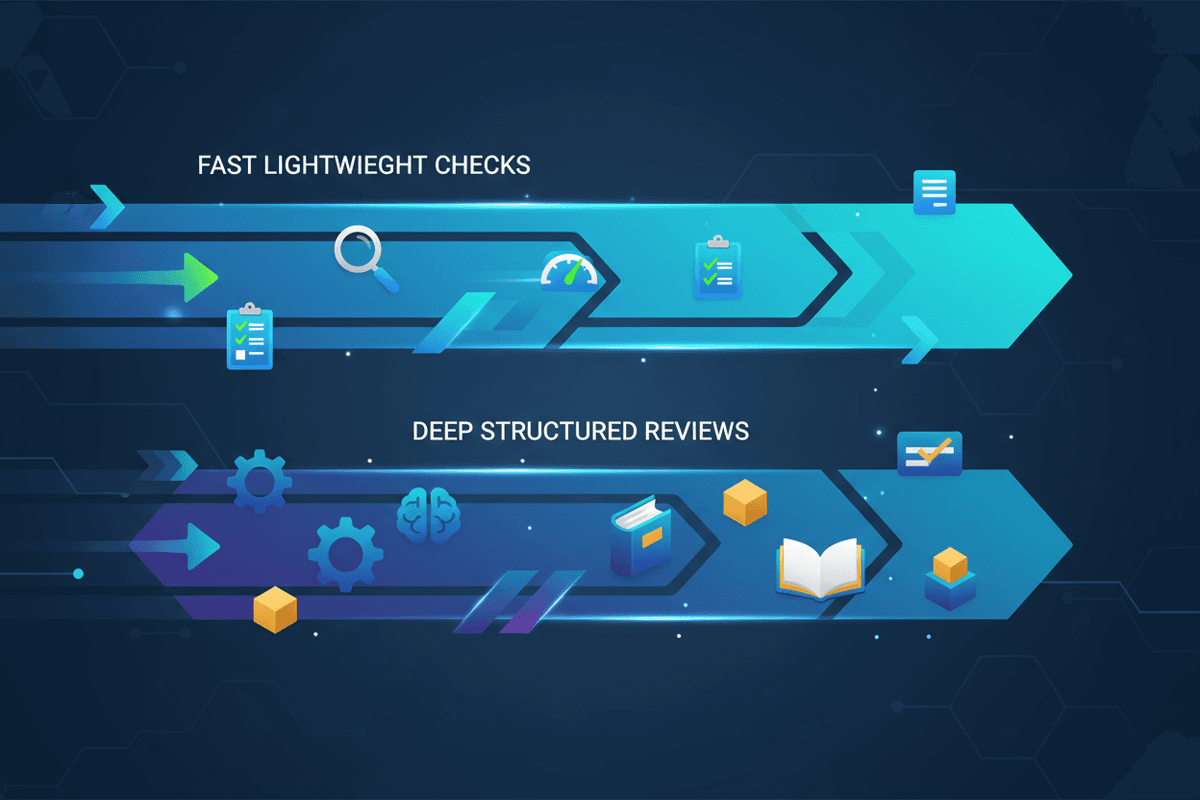
4. Build a Two-Layer Review System
High-performing organisations don't force every release through the same process.
They use:
Fast, surface-level reviews for every new change
paired with
Deep, scheduled reviews for major updates, critical systems, and periodic assurance.
This gives teams quick signals during development and high confidence when it matters most.
5. Let Each Role See What Matters to Them
Developers need clear, contextual feedback they can fix within the same sprint.
Security teams need visibility into deeper patterns and systemic weaknesses.
Leadership needs a simple view of risk posture and progress.
When these views are separated but connected, collaboration becomes easier and decisions become faster.
Where Capture The Bug Fits Into This Balance
Capture The Bug helps organisations build a balanced security rhythm across the year without slowing delivery.
The platform gives teams:
Continuous High-Level Coverage
Quick insight across assets so smaller changes never go unreviewed.
Targeted Deep Reviews When They Matter
CREST-certified depth for complex systems and high-impact features.
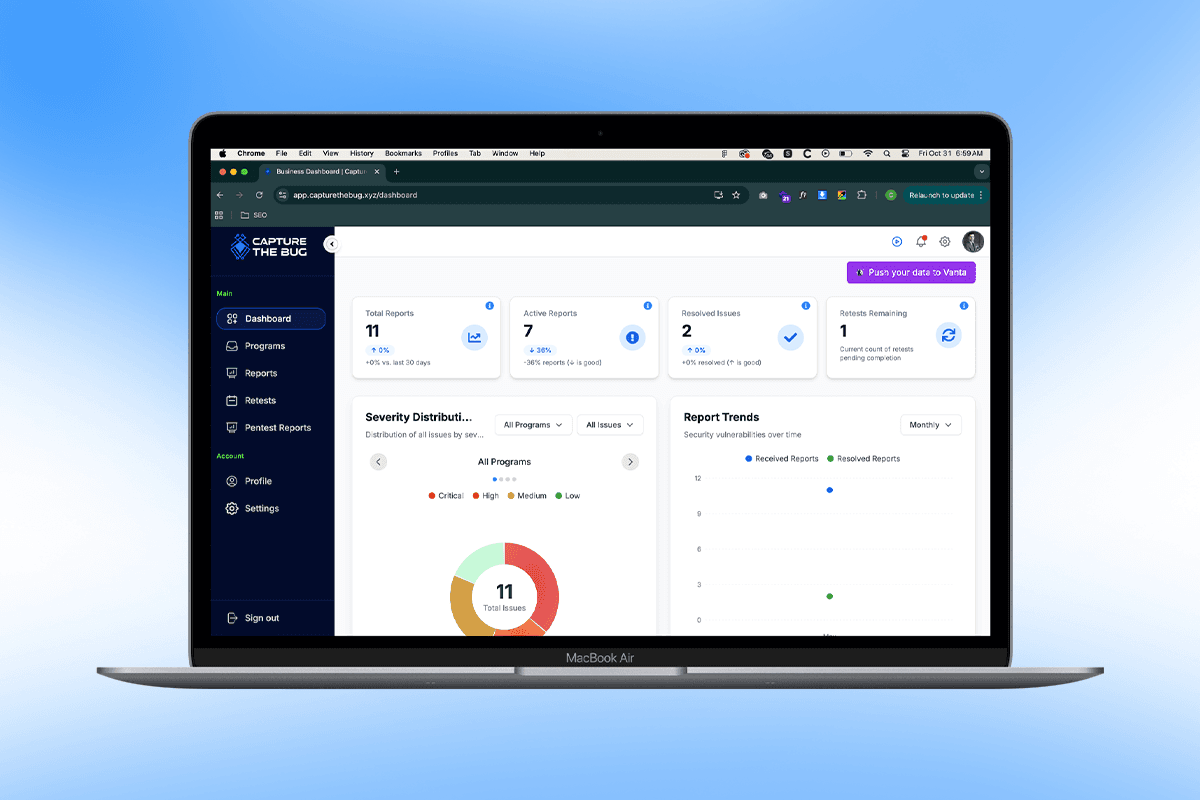
Real-Time Reporting Instead of Waiting for a Document
Teams see issues as soon as they are discovered and can act immediately.
Human Validation for Every Finding
No noise. No chasing false alarms. Developers get clarity, not clutter.
Testing That Matches Real Delivery Patterns
Reviews align to release timing rather than disrupting it.
Teams don't need to choose between speed and depth. They simply need a structure that respects both.
Final Thoughts
Balancing scan depth and speed isn't a technical choice. It's a delivery decision.
Get it wrong and you slow the business.
Get it right and security becomes part of the engine that helps you ship with confidence.
Organisations that consistently maintain this balance don't run deeper reviews more often. They run them more deliberately. They design their cadence around the realities of modern delivery, not around outdated security playbooks.
This mindset turns security from a checkpoint into a competitive advantage.
One platform to manage, track, and secure all your penetration tests.
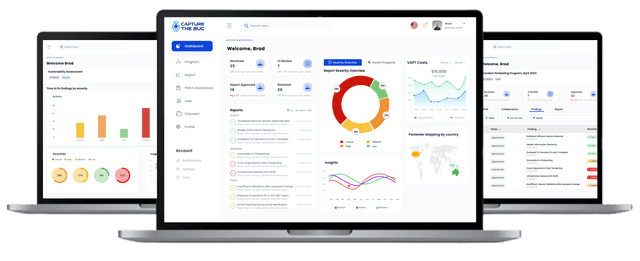
Simplify your vulnerability management with Capture The Bug’s PTaaS platform where businesses and security experts collaborate seamlessly.
FAQ
Why does balancing scan depth and speed matter?
Because relying only on fast checks creates blind spots, while pushing deep reviews too frequently slows delivery. A balanced rhythm avoids both extremes and reduces long-term security debt.
What is the difference between shallow and deep reviews?
Shallow reviews provide quick signals on surface-level exposures. Deep reviews examine authenticated areas, logic flows, and hidden weaknesses that require more time and expertise.
How can organisations avoid slowing down releases?
By matching review depth to asset criticality, scheduling deep reviews outside pressure windows, and running fast, lightweight checks during active development.
How does Capture The Bug support this balance?
It provides continuous insight, deep human-led reviews when required, and real-time reporting so teams can act immediately without waiting for final documents.
Experience Capture The Bug Platform
Streamline your security testing with our PTaaS platform. Collaborate with expert testers, track vulnerabilities, and secure your applications effortlessly.