Most security teams treat a penetration test like a finish line. The testers wrap up, the report arrives, and there is a quiet sense of relief that the job is done. But the test itself is only ever the starting point. What happens in the weeks after the report is what actually determines whether the company becomes more secure or just more aware of how exposed it is.
Capture The Bug works with companies across Australia, New Zealand, and the United States, and one pattern shows up again and again. Organisations invest in quality penetration testing services, receive a detailed report full of findings, and then struggle to turn those findings into real fixes. The remediation phase gets treated as a developer task list rather than a security process. Timelines drift. Critical vulnerabilities stay open longer than they should. And when the next test cycle comes around, some of the same issues are still there.
This guide walks through what good remediation and re-testing actually looks like, step by step, for any security or technical team trying to get real value out of a pentest.
The Report Is a Starting Point, Not a Verdict
When a penetration test concludes, the deliverable is a report. That report contains findings categorised by severity, descriptions of how each issue was found, and guidance on how to address it. For teams that have not been through this before, the volume of findings can feel overwhelming.
The first thing to understand is that not every finding carries the same weight. A critical vulnerability in an authentication system is not the same as a low-severity information disclosure issue that requires a specific chain of conditions to exploit. Reading the report means understanding the risk context behind each finding, not just reacting to the number of items on the list.
Capture The Bug structures its reports so that each finding is clearly mapped to a severity level and includes enough context for a developer or security lead to understand what was actually found, not just a label. That context is what makes the difference between a report that gets actioned and one that sits in a folder.
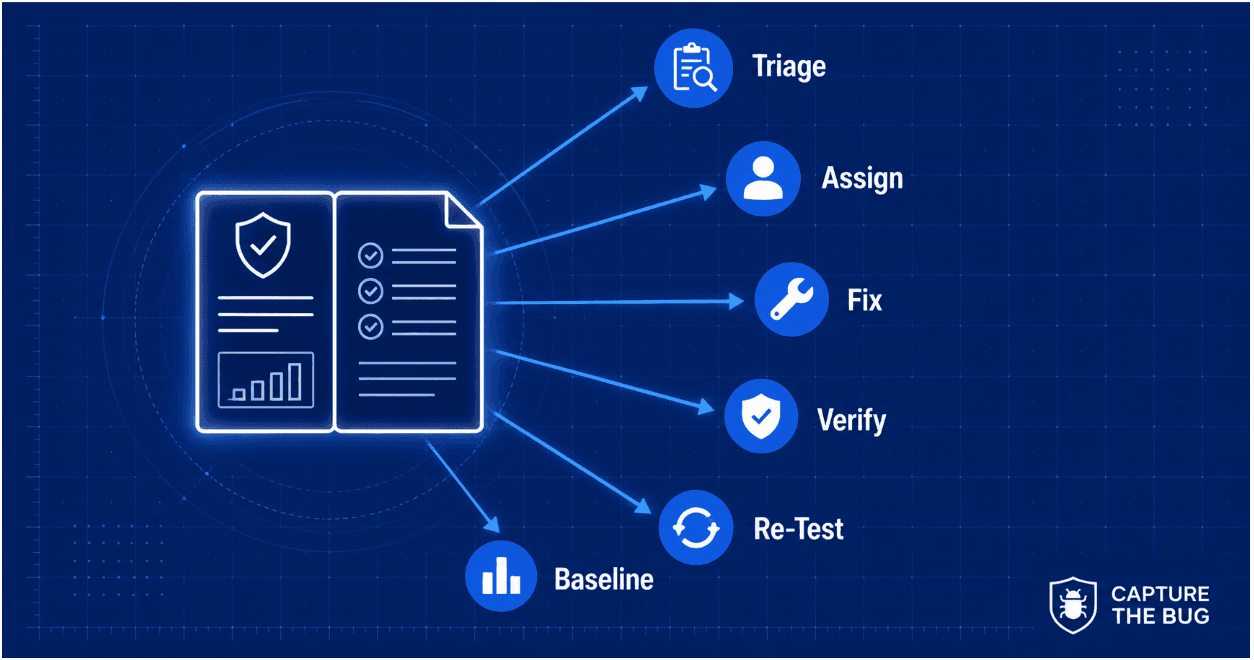
Step One: Triage Before You Touch Anything
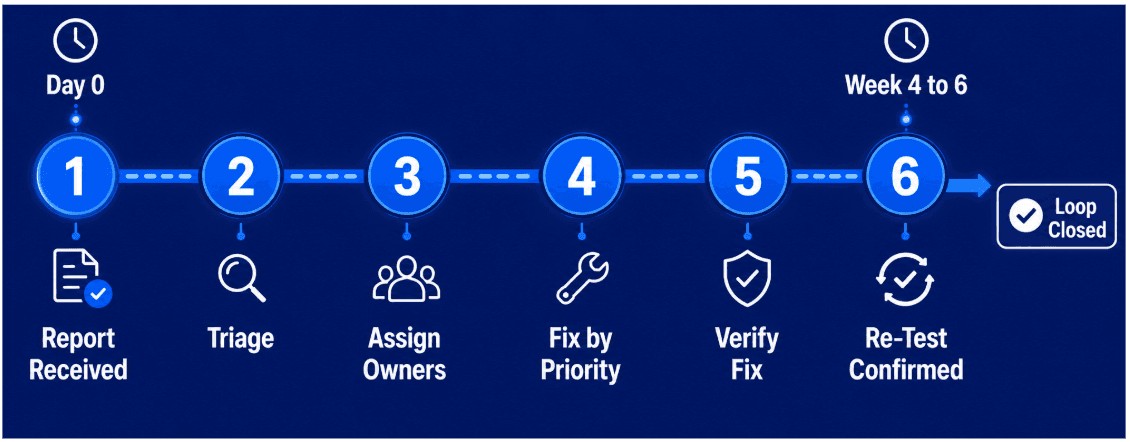
Before any fixes are written, the team needs to triage. This means going through every finding and making a judgment call on three things: how serious it is in the context of that specific system, how difficult it is to exploit in practice, and how quickly it can realistically be fixed.
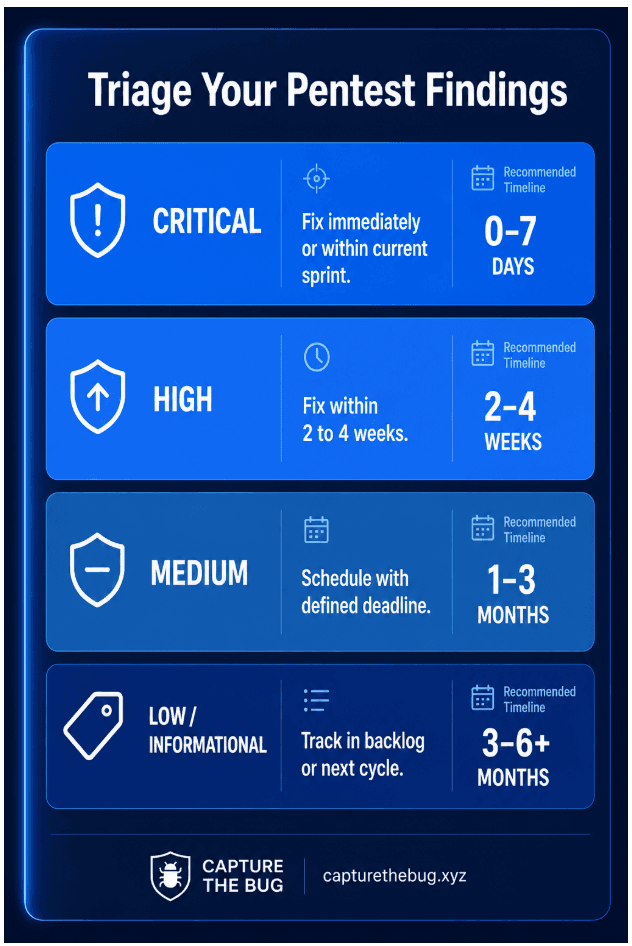
Most findings fall into one of three groups after triage. Critical and high-severity issues need to go into the next development sprint or be addressed immediately if they represent an active risk. Medium-severity findings need a plan and a reasonable timeline. Low-severity and informational findings can be scheduled into a future sprint or tracked as backlog items.
Triage does not mean deprioritising. It means making deliberate decisions rather than reacting to everything at once or doing nothing because the list feels too long. A good triage session usually involves the security lead, a developer familiar with the affected systems, and someone who can assess business impact.
Step Two: Assign Ownership and Set Real Deadlines
One of the most common reasons remediation stalls is that no one owns it. The report arrives, everyone agrees the issues are serious, and then it sits waiting for someone to pick it up. Teams that fix things quickly do so because every finding has a named owner and a concrete deadline.
This does not mean creating a spreadsheet and hoping for the best. It means connecting findings to the people who actually build and maintain the systems involved, giving them the report context they need, and making sure there is a single person responsible for tracking progress. That person does not have to fix everything personally. They just need to make sure nothing gets lost.
Capture The Bug's platform is built to support this kind of structured follow-through, because continuous penetration testing is only useful if the findings get resolved and verified in a closed loop. You can explore how that works at capturethebug.xyz/Services/penetration-testing.
Step Three: Fix in Order of Risk, Not Convenience
There is a natural tendency to fix the easy things first. A developer picks up a low-hanging issue, closes it in an afternoon, and the ticket count drops. That feels like progress. But if the critical authentication bypass from page three of the report is still open, the company is not meaningfully safer.
Good remediation starts at the top of the severity list and works down. Critical findings should be addressed within days if possible, and within a defined sprint cycle at the absolute latest. High-severity findings should follow within two to four weeks depending on complexity. Medium and low findings can be scheduled more flexibly.
For complex vulnerabilities, the fix itself may require architecture changes or significant development time. In those cases, the right move is to document what interim mitigations are in place while the proper fix is built. A compensating control that reduces the attack surface is far better than waiting three months for a perfect solution.
What Would a Live Test Find in Your Platform Right Now?
Not a generic proposal. A real conversation about your stack, your risk, and what continuous testing would cost you versus what a breach would.
Step Four: Verify the Fix Before Closing the Finding
This is where many teams cut corners, and it is where the process breaks down. A developer marks a vulnerability as fixed. The ticket gets closed. The report item gets checked off. But no one has actually confirmed that the fix works.
Verification does not have to be a full pentest. It can be a targeted review of the specific change, a code review by someone familiar with the vulnerability class, or a quick technical check against the exploit path described in the original finding. What matters is that someone independent of the person who wrote the fix confirms that the issue is genuinely resolved.
Some vulnerability classes are deceptively easy to misfix. An injection vulnerability might be addressed in one endpoint while the same pattern remains in three others. An access control issue might be patched in the production environment but left open in a staging system that shares the same data. Verification catches these gaps before they become the entry point for something worse.
Step Five: Schedule Re-Testing
Re-testing is not optional. It is the confirmation that what was found has been fixed and that nothing new has been introduced in the process of fixing it. Most penetration testing agreements include re-testing as part of the engagement scope. If the engagement does not include it, it should be requested.
A re-test is different from a new penetration test. It is a targeted exercise focused specifically on the findings from the original report, checking each one against the remediated system. The goal is to close the loop: to get formal confirmation that the vulnerabilities are gone, and to produce evidence that can be provided to auditors, insurers, compliance reviewers, or customers who ask about the organisation's security posture.
Capture The Bug conducts re-testing as part of its ongoing security assessment model, so teams are not left relying on their own judgment about whether a fix was sufficient. That external confirmation matters, especially for companies operating under frameworks like ISO 27001, SOC 2, or the Australian Signals Directorate's Essential Eight.
Step Six: Update Your Security Baseline
Every resolved finding is an opportunity to learn something about where the gaps in your development process are. If SQL injection was found in a new feature, that is a signal about code review practices. If misconfigured access controls appeared across multiple systems, that is a signal about how infrastructure is provisioned.
Capture The Bug recommends that teams use the post-remediation period to review patterns in the findings and update their internal standards accordingly. Not every vulnerability is a one-off. Many of them are symptoms of repeatable processes that will keep producing the same class of issue unless something upstream changes.
This is also a good time to revisit how frequently testing happens. Annual penetration testing made sense when software changed slowly. For most organisations today, the time between a major code change and the next test is too long. Continuous or more frequent assessments through a structured PTaaS model means vulnerabilities are found and addressed before they can be exploited, rather than after. Learn more about how Capture The Bug approaches this at capturethebug.xyz/Services/penetration-testing.
The Remediation Process Is Where Security Gets Real
A penetration test is only worth what the organisation does with it. The report is information. The re-test confirmation is evidence. The real security work happens in the weeks in between, in the decisions made about what to fix, when to fix it, and how to confirm it is actually done.
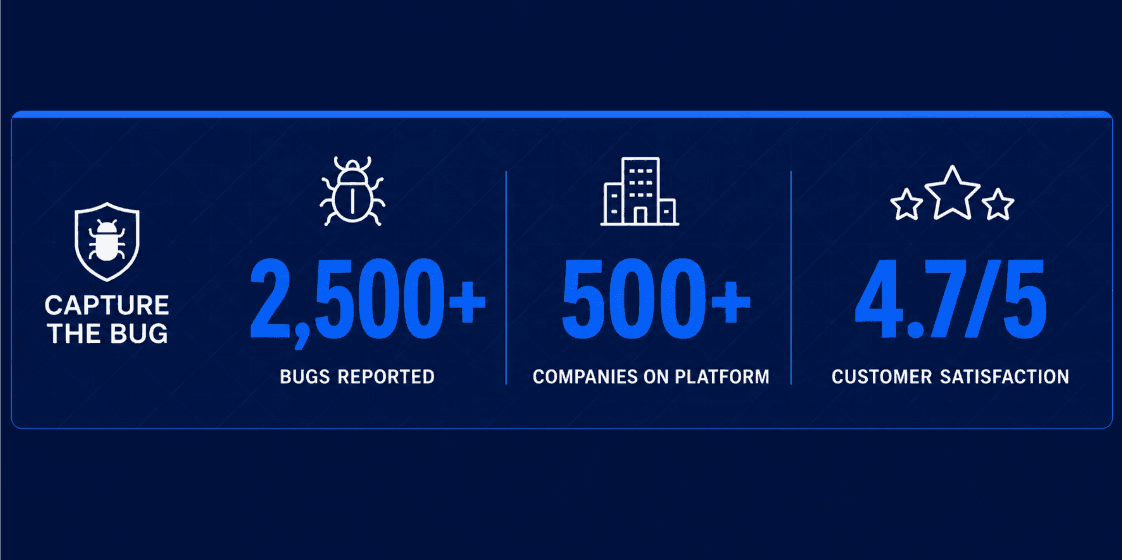
Capture The Bug supports organisations through that full cycle, not just the testing phase. With more than 2,500 bugs reported, 500 companies already on the platform, and a CREST-certified marketplace listing, the process has been built to produce findings that get resolved, not just documented.
If the last pentest report is still sitting in a folder with most of the findings open, that is the right place to start.

Plan Your Annual Pentesting Strategy the Right Way
Learn how modern SaaS companies structure pentesting across the year to reduce risk, stay compliant, and avoid last-minute panic before audits.

Frequently Asked Questions
How long should remediation take after a penetration test?
Critical and high-severity findings should be addressed within one to two weeks if possible. Medium findings typically follow within four to six weeks. The timeline depends on the complexity of the fix and the systems involved, but having defined deadlines for each severity tier is what keeps the process moving.
What is the difference between remediation and re-testing?
Remediation is the process of fixing the vulnerabilities found during a pentest. Re-testing is the process of confirming those fixes worked, conducted by the security team or testers who found the original issues. Both are necessary to close the loop on a security engagement.
Does every finding in a pentest report need to be fixed?
Every finding needs a decision made about it. Most critical and high-severity issues should be fixed. Some medium and low-severity findings may be accepted as risks based on business context, but that decision should be documented and reviewed regularly rather than ignored.
How often should re-testing happen after the initial fixes?
Re-testing should happen once the primary fixes are in place, typically within two to four weeks of the original report. For organisations with continuous testing programs, findings are re-tested on a rolling basis rather than in a single batch.
What if new vulnerabilities appear during re-testing?
New vulnerabilities found during re-testing follow the same process as the original findings. They get triaged, assigned, fixed, and verified. This is one reason why re-testing is valuable beyond just confirming fixes. It also checks whether the remediation work itself introduced anything new.