Trust at Scale: How Modern Teams Answer Security Questionnaires in 2026
In 2026, security questionnaires sit at the center of almost every enterprise deal. Procurement teams ask for them early. Customers expect fast, consistent answers. And security leaders are under pressure to respond without pulling engineers away from real work.
The problem is not a lack of information. Most companies already know their controls, policies, and processes. The real challenge is answering the same questions again and again, across different formats, regions, and buyer expectations, without losing accuracy or momentum.
This is where modern security questionnaire platforms come in. Done right, they help teams respond faster, stay consistent, and show maturity without turning security into a bottleneck.
This guide looks at the leading security questionnaire software shaping 2026, and how Capture The Bug approaches this space differently as a CREST-certified PTaaS company working with global clients across ANZ and the USA.
The reality of security questionnaires in 2026
Security questionnaires used to be an occasional hurdle. Today, they are constant. High-growth SaaS companies may receive dozens each quarter. Enterprises face hundreds across vendors, customers, and partners. Each one asks similar questions but in slightly different ways, formats, and depth.
What changed is buyer behavior. Trust is now a buying signal. Companies that can clearly explain how they test, monitor, and fix security issues move faster in sales cycles. Those that struggle to respond lose deals before technical evaluations even begin.
In 2026, teams are moving away from manual copy-paste workflows toward systems that centralize approved answers, track ownership, and keep responses current. The goal is not speed alone. It is confidence and consistency.

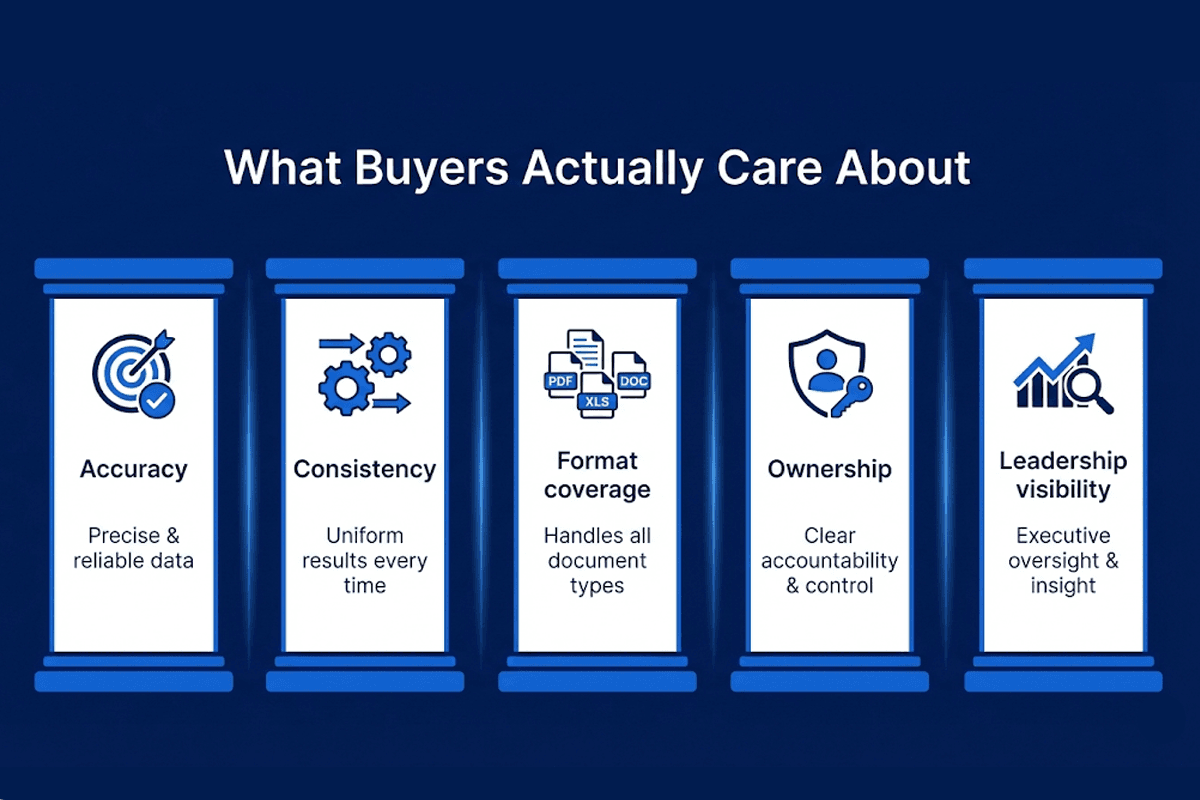
What actually matters when choosing a questionnaire platform
Not all tools solve the same problem. Before looking at vendors, it helps to be clear on what separates a useful platform from another piece of admin software.
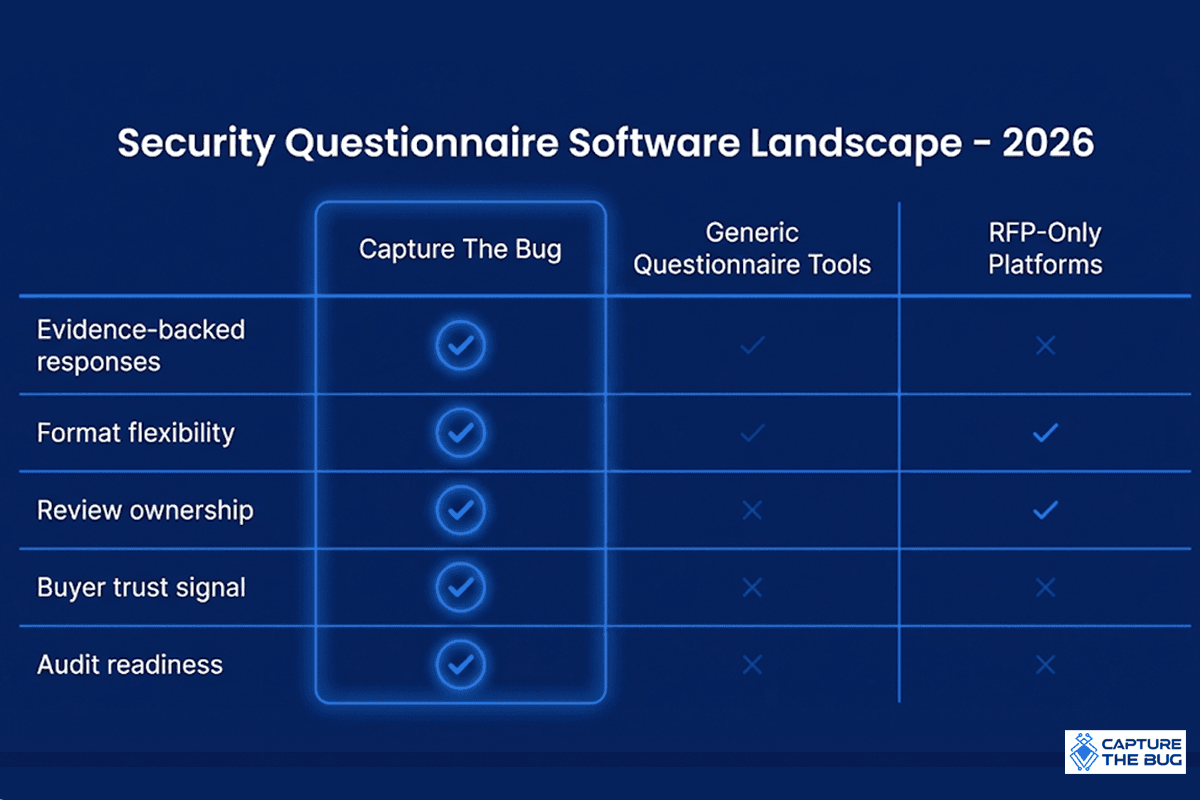
Accuracy over volume: Fast answers are meaningless if they are outdated or wrong. Strong platforms link responses to real evidence and make it obvious when content needs review.
Consistency across audiences: A startup selling to healthcare will answer differently than one selling to fintech, even if the control is the same. The ability to tailor responses by product, region, or customer type matters.
Format flexibility: Questionnaires arrive as spreadsheets, documents, portals, and emails. Any solution that still requires heavy reformatting creates friction.
Clear ownership and accountability: Security questionnaires stall when no one knows who should review a question. Tools that route questions clearly save time and frustration.
Proof for leadership: Good platforms show impact. Time saved, turnaround speed, and response quality are metrics boards and executives now expect.
Leading security questionnaire platforms to know in 2026
Below is a practical look at the most visible platforms teams compare today, written from a third-party perspective.
1. Capture The Bug
Capture The Bug approaches questionnaires from a security-first angle rather than treating them as generic paperwork. Because the platform is built around Penetration Testing as a Service, questionnaire responses are grounded in real testing activity, not static statements.
Best for: Companies that want questionnaire answers to reflect real security work, especially SaaS, fintech, and regulated organizations.
Strengths: Strong alignment between testing evidence and responses, clear audit readiness, and credibility with security-savvy buyers.
2. Vanta
Vanta is widely known for compliance management, and its questionnaire features build on that foundation. It centralizes approved answers and helps teams reuse them across reviews.
Best for: Teams already using Vanta for compliance who want questionnaires handled in the same ecosystem.
Strengths: Strong structure, good consistency, and familiarity with enterprise buyers.
3. Conveyor
Conveyor focuses heavily on reducing turnaround time. It emphasizes drafting responses quickly and pushing them into buyer formats with minimal effort.
Best for: Sales-led teams prioritizing response speed and CRM visibility.
Strengths: Good handling of different questionnaire formats and portal workflows.
4. Loopio
Loopio comes from the RFP and proposal world. Security questionnaires are one part of a broader response management platform. It excels at organizing content and tracking deadlines.
Best for: Enterprises managing RFPs, DDQs, and security questionnaires together.
Strengths: Strong project tracking and collaboration features.
5. Responsive
Responsive focus on governance, approvals, and content control. For large organizations with strict review processes, this structure can be useful.
Best for: Large teams with formal approval workflows.
Strengths: Clear permissions, version history, and accountability.
6. SafeBase
SafeBase emphasizes deflecting questionnaires through proactive trust sharing. Buyers are encouraged to self-serve information before sending custom questions.
Best for: Companies wanting to reduce inbound questionnaires through transparency.
Strengths: Strong trust center experience and buyer self-service.
How Capture The Bug thinks about questionnaires differently
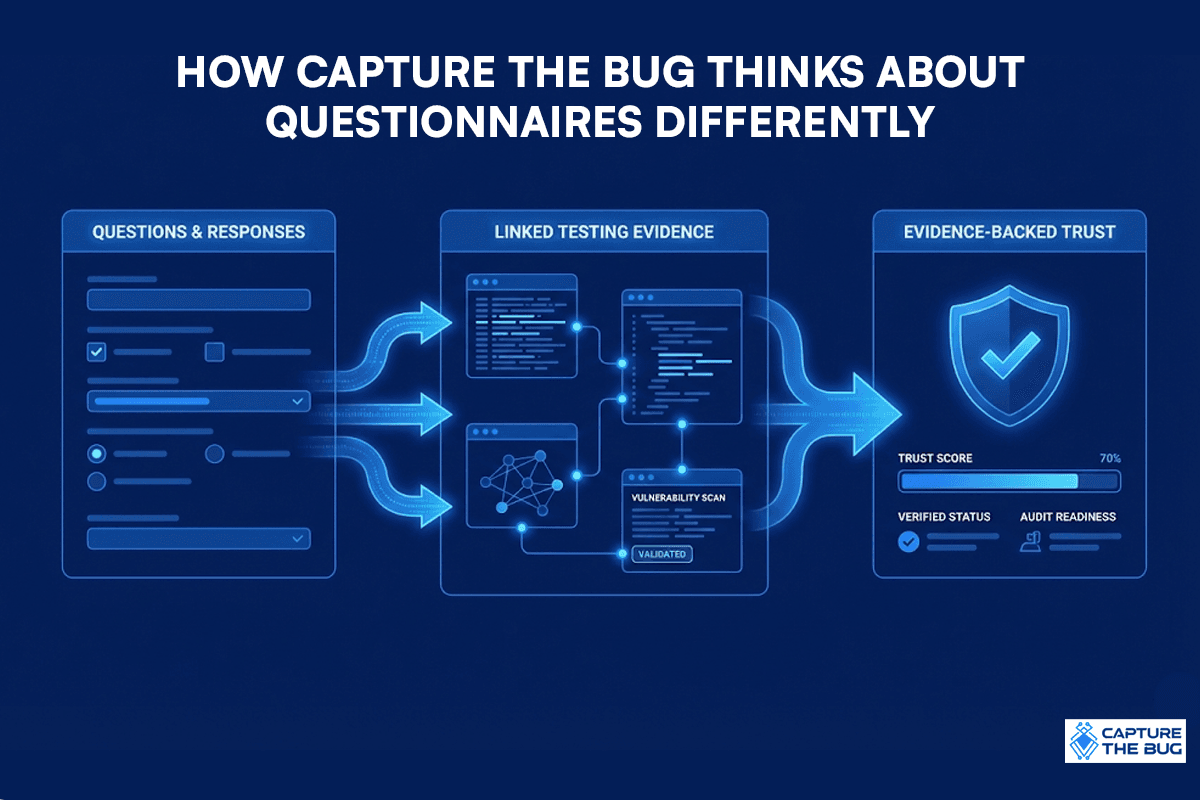
From Capture The Bug's perspective, security questionnaires are not a documentation problem. They are a trust problem. Buyers are not asking questions to collect paperwork. They are trying to understand how seriously a company tests, fixes, and learns from security issues.
That is why Capture The Bug ties questionnaire responses to continuous testing, human validation, and real remediation outcomes. Instead of saying "we perform regular testing," teams can explain what was tested, how issues were handled, and how fixes were confirmed.
This approach resonates with modern buyers, especially CISOs and security leads who can spot vague answers instantly.
Choosing the right platform for your team
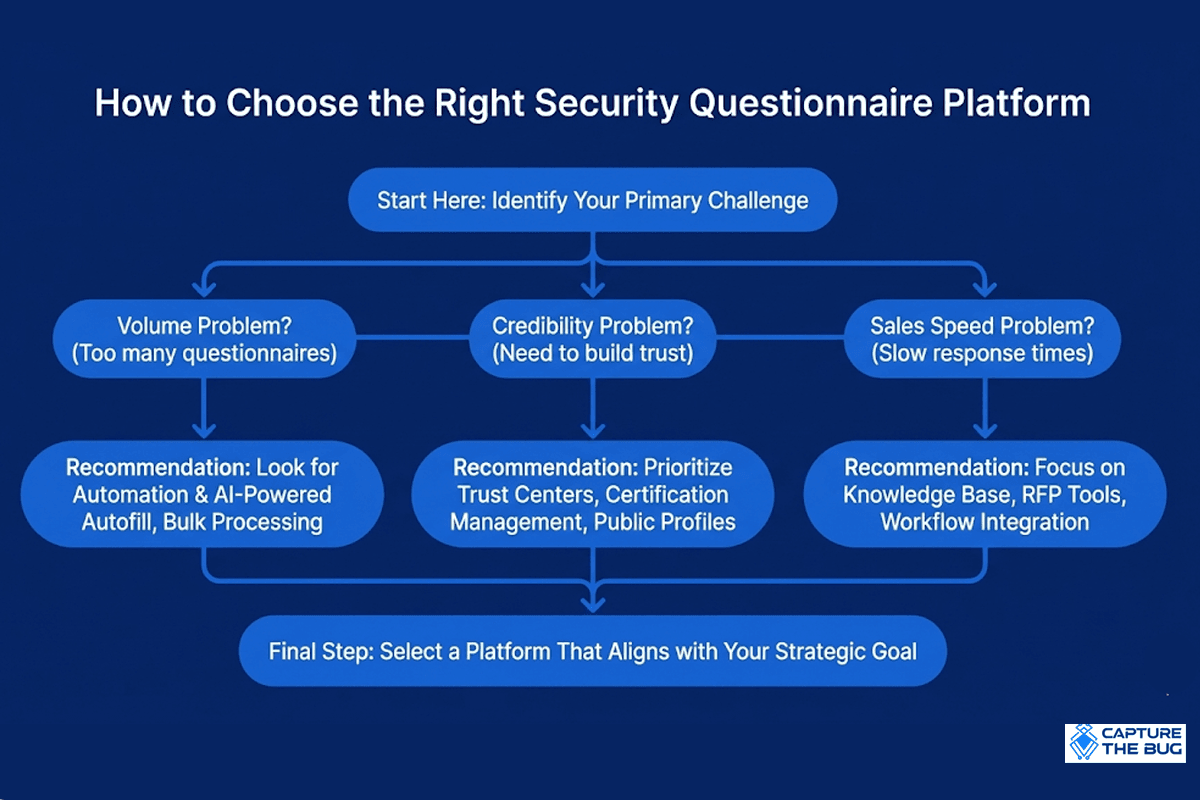
There is no universal best tool. The right choice depends on where your friction lives today.
- If your problem is volume, look for strong reuse and routing.
- If your problem is credibility, look for tight links between answers and evidence.
- If your problem is sales speed, look for format flexibility and fast turnaround.
The key is to demo with a real questionnaire, not a polished example. That is where gaps appear.
The bigger picture for 2026
Security questionnaires are not going away. If anything, they are becoming more detailed as buyers grow more informed.
The winners in 2026 will not be the teams that answer the fastest, but the teams that answer clearly, honestly, and consistently, backed by real security work.
That is where platforms like Capture The Bug see the future heading: fewer generic claims, more provable trust.
Conclusion
Trust at scale is about more than just managing a library of answers. It's about ensuring that those answers are derived from actual security practices. As we move through 2026, the demand for transparency and evidence-backed trust will only increase. Choosing the right platform is the first step in turning a painful administrative task into a powerful competitive advantage.
FAQ
What is security questionnaire software?
It helps organizations manage, reuse, and respond to security and compliance questions from customers and partners in a consistent way.
Why are security questionnaires important in 2026?
They are often the first trust signal in enterprise sales and vendor risk assessments.
How is Capture The Bug different from generic tools?
Responses are grounded in real penetration testing activity and remediation evidence, not just stored text.
Can these tools replace security teams?
No. They support communication and consistency, but real security work still matters.
What should leaders track to measure value?
Response time, accuracy, acceptance rates, and reduced effort across teams.