Introduction: Why Security Transparency Is Now a Business Advantage
In 2025, trust has become the new currency of cybersecurity. Whether you are a SaaS startup, enterprise, or fintech platform, your customers no longer take “we are secure” at face value. They want proof. That is where a Trust Center comes in.
A Trust Center is a live, central hub that showcases your company’s security, privacy, and compliance posture including ISO certifications, penetration testing results, and data-handling policies.
It replaces endless questionnaires with a single, credible source of truth your stakeholders can visit anytime. Done right, it is not just a compliance checklist. It is a trust-building engine that wins deals, shortens security reviews, and strengthens your brand reputation.
What Is a Trust Center
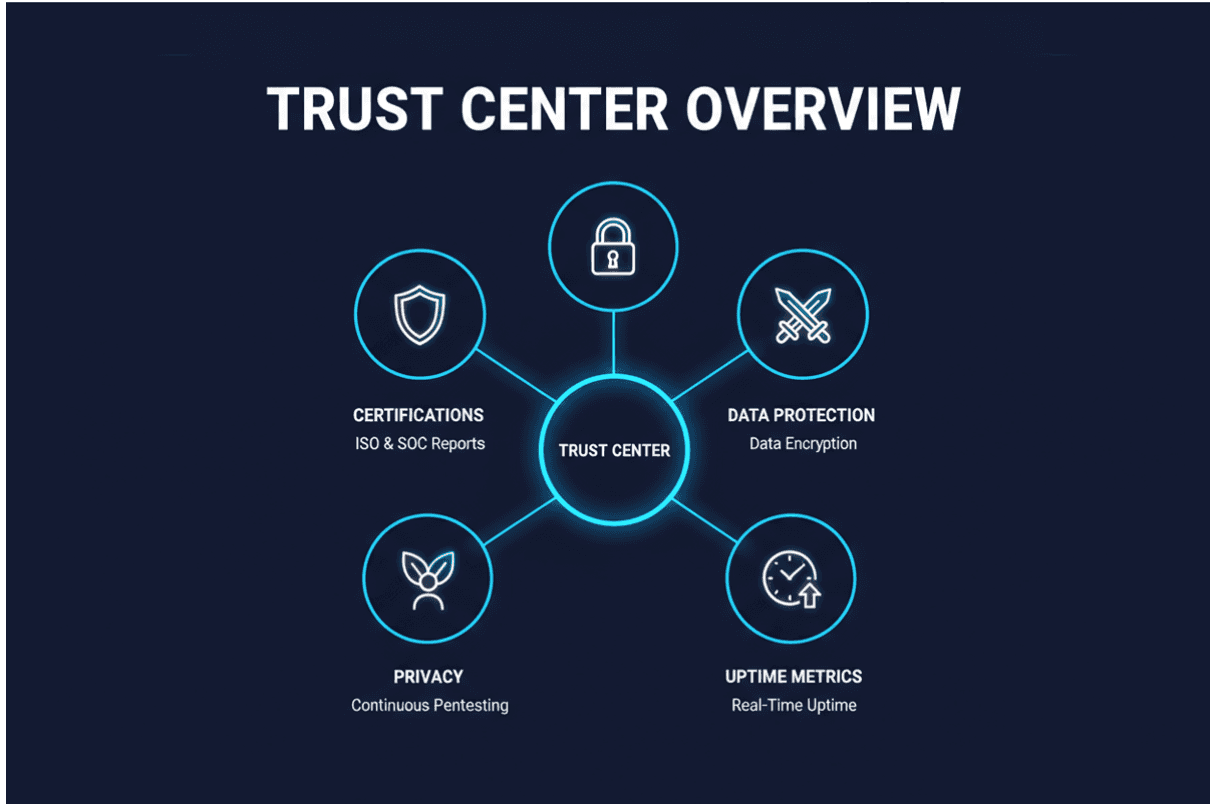
A Trust Center is your organization’s public window into its security practices. Think of it as a digital transparency dashboard that consolidates all your key security and compliance information including:
- Certifications such as ISO 27001, SOC 2, PCI DSS
- Security and privacy policies
- Penetration testing and vulnerability management summaries
- Data protection and encryption practices
- Incident response and uptime metrics
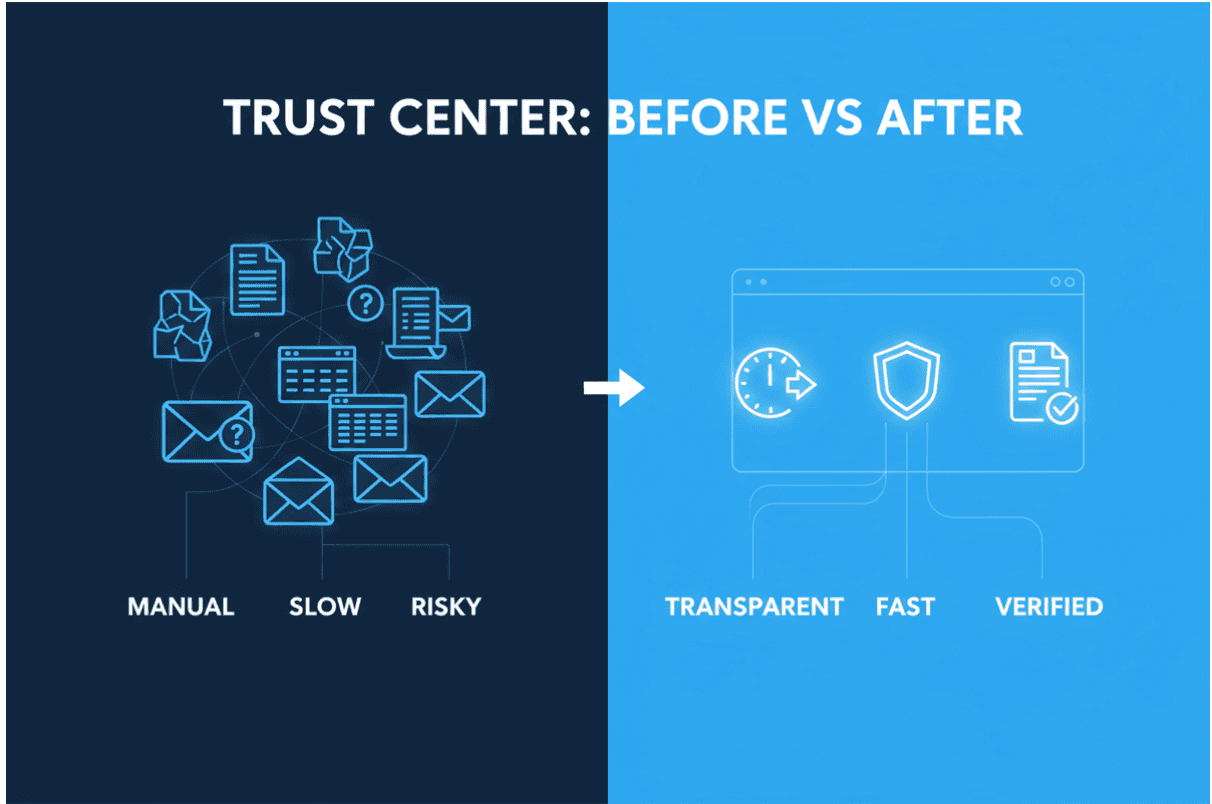
Instead of sending long PDF reports during vendor reviews, you provide a self-serve experience where customers and auditors can verify your security posture instantly.
It is not about oversharing. It is about showing that you have nothing to hide.
Why Building a Trust Center Matters in 2025
Security transparency has evolved from a nice-to-have into a market expectation. Here is why it matters today.
Customers Expect Proof, Not Promises
In B2B sales, especially for SaaS and fintech companies, buyers demand visibility into vendor security. A well-designed Trust Center eliminates long security questionnaires and builds confidence early in the buying process.
Compliance Complexity Is Growing
With frameworks such as ISO 27001:2022, SOC 2, GDPR, and PCI DSS 4.0, companies face overlapping audit demands. A centralized Trust Center streamlines evidence management and keeps your organization audit-ready at all times.
It Reduces Operational Friction
Security teams spend hundreds of hours responding to the same compliance questions. By making documentation self-serve, you reclaim time and empower customers to verify your security on their own.
It Builds a Brand of Confidence
Transparency shows maturity. In a world where data breaches dominate headlines, companies that communicate security openly stand apart. Your Trust Center becomes a credibility asset, not just a compliance feature.
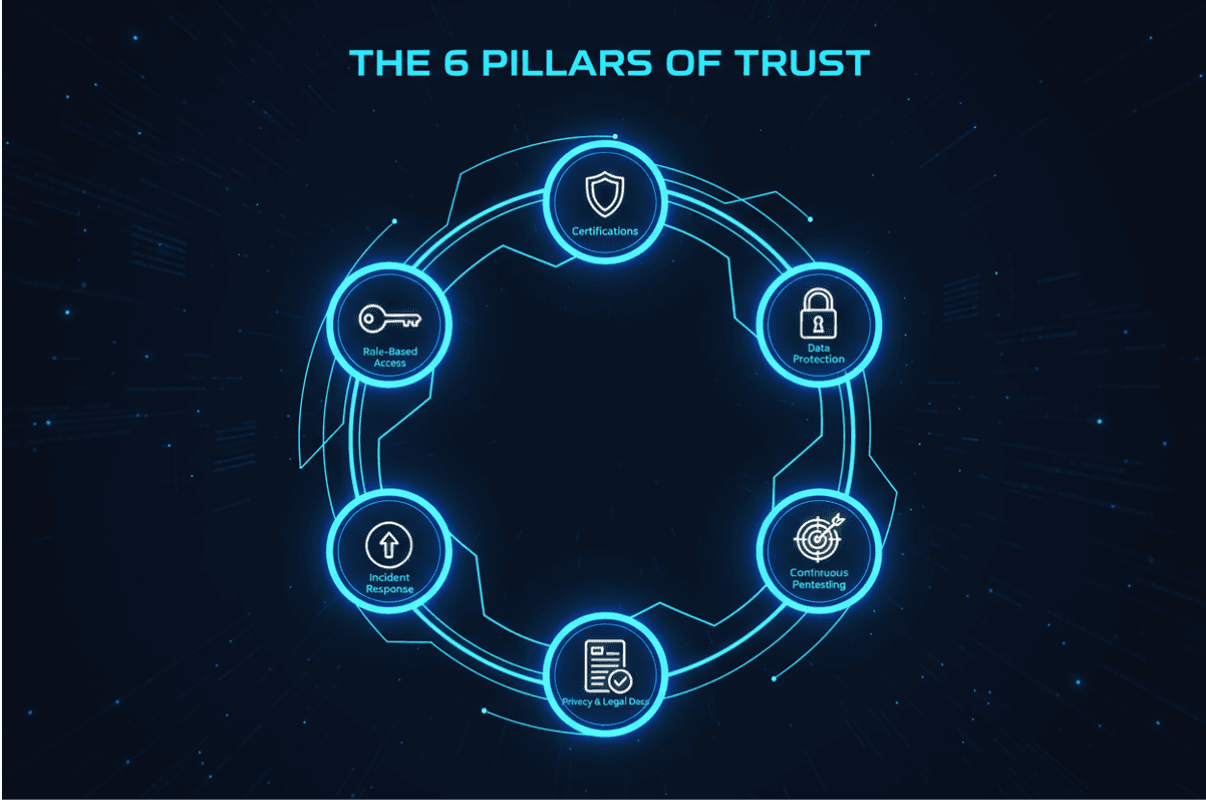
Key Elements of an Effective Security Trust Center
A Trust Center is more than a document repository. It is a designed experience that makes trust visible.
1. Certifications and Frameworks
Start with your foundational compliance milestones:
- ISO 27001 certification
- SOC 2 Type II report
- PCI DSS Attestation of Compliance
Show certification badges with validation dates and short summaries of what each represents.
2. Data Protection Overview
Explain how your company protects user data through:
- Encryption for data at rest and in transit
- Key management policies
- Role-based access control
- Secure backup and disaster recovery processes
Keep explanations simple and easy to understand for non-technical readers.
3. Penetration Testing Summary
Here is where Capture The Bug’s PTaaS (Pentesting as a Service) approach stands out. Instead of listing a last test date, show that you run continuous pentesting verified by a CREST-certified provider. Include a small line: “Continuous pentesting in partnership with Capture The Bug — real-time dashboard validation across web, API, and cloud.”
4. Privacy and Legal Documentation
Include direct access to:
- Data Processing Agreement (DPA)
- Subprocessor List
- Privacy Policy
- Responsible Disclosure Program
This makes compliance transparent and verifiable.
5. Incident Management and Uptime Metrics
Be transparent about reliability. Display uptime charts, mean time to resolution, and your incident response procedure. Transparency builds trust even in difficult moments.
6. Role-Based Access and Gated Content
Some sensitive reports such as SOC 2 or PCI DSS should require access requests. Gate them behind simple verification forms while keeping general security details public.
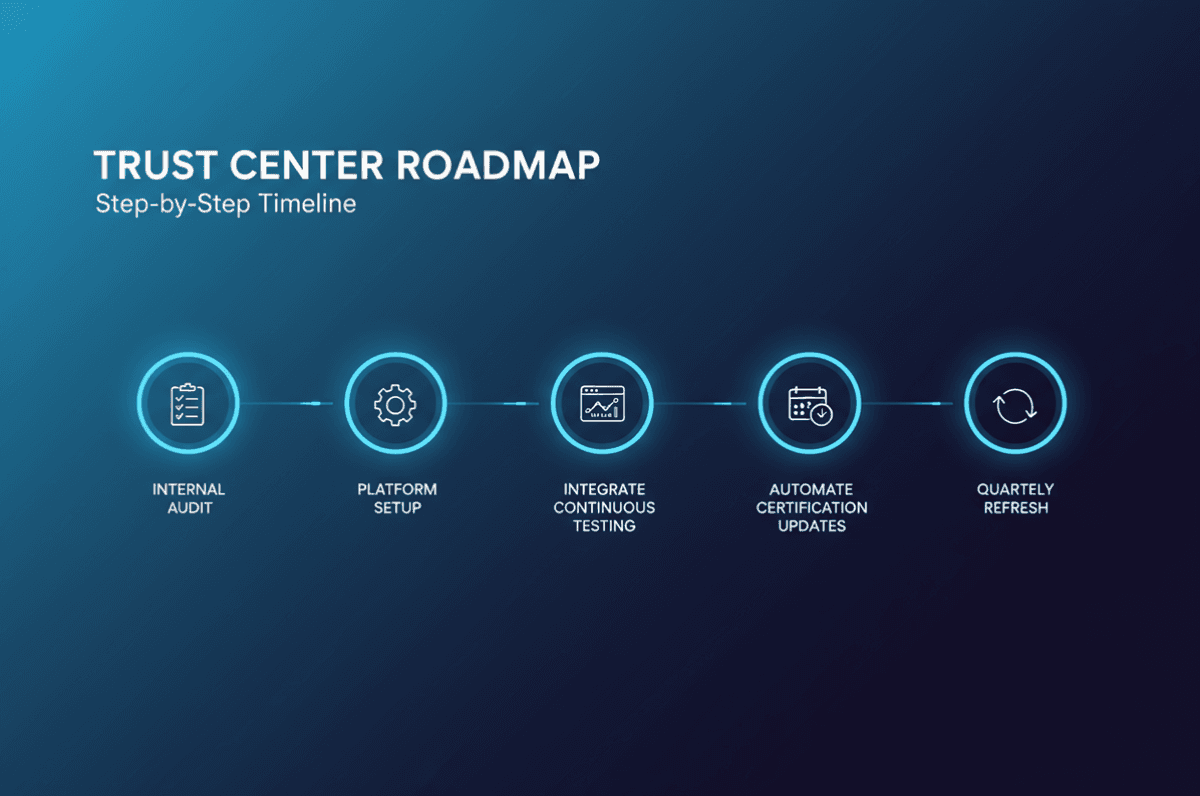
How to Build and Maintain Your Trust Center
A Trust Center is built once but maintained continuously. Here is a simple process to do it right.
Start with an Internal Audit
Collect all your certifications, policies, and testing summaries. Classify what can be public and what requires access control.
Choose the Right Platform
You can use Trust Center solutions like SafeBase, Drata, or integrate one into your website. Focus on clean design, fast load speed, and a responsive layout for mobile and Google Discover optimization.
Integrate Continuous Testing Data
Static compliance is outdated. Integrate PTaaS dashboards such as Capture The Bug to show live testing metrics: “All critical vulnerabilities resolved within SLA” and “Continuous pentesting across production APIs.”
Automate Certification Updates
Set reminders or automated feeds to refresh certificates, attestations, and audit records before expiry.
Refresh Quarterly
Add new data, frameworks, and metrics every quarter. Fresh updates show that your Trust Center is active, not forgotten.
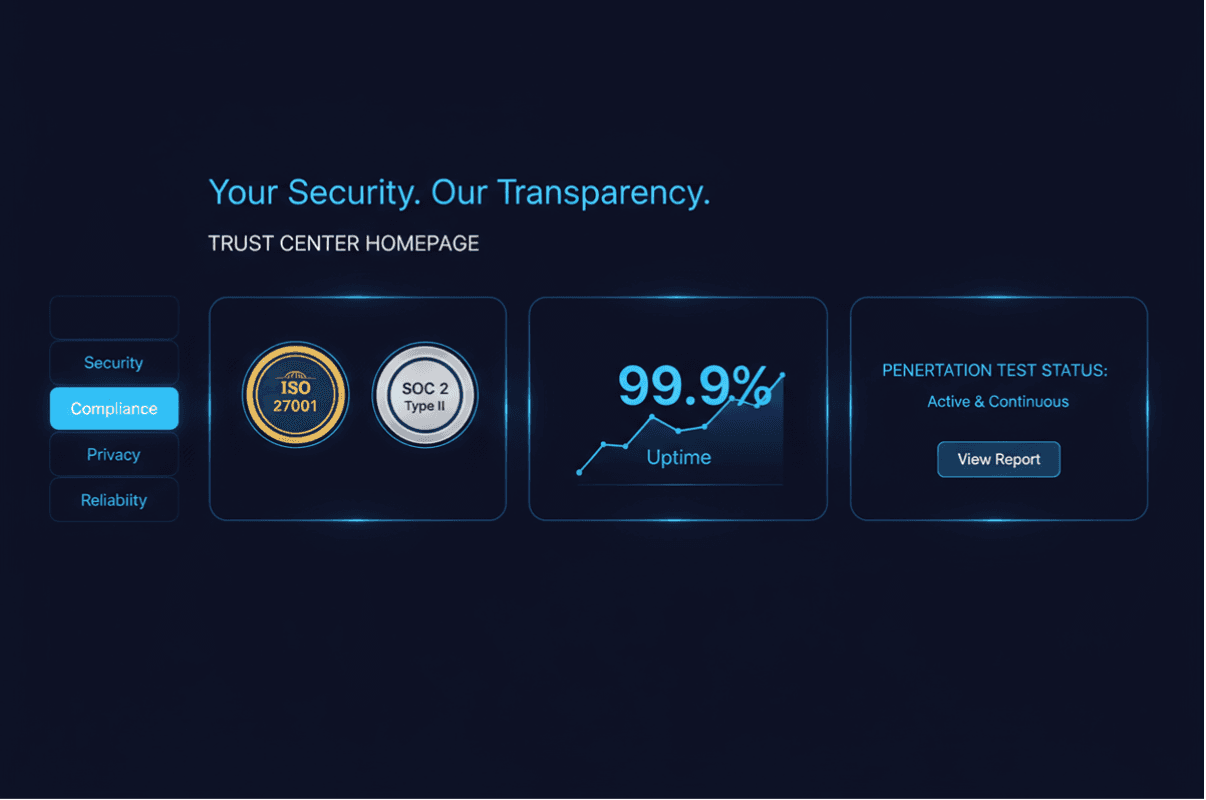
Designing for Trust: How It Should Look and Feel
A Trust Center reflects your brand personality as much as your technical depth.
Follow these design principles:
- Simple Navigation: Divide pages into clear categories — Security, Compliance, Privacy, and Reliability.
- Visual Hierarchy: Use badges, icons, and infographics for clarity.
- Tone of Voice: Confident and clear, without jargon.
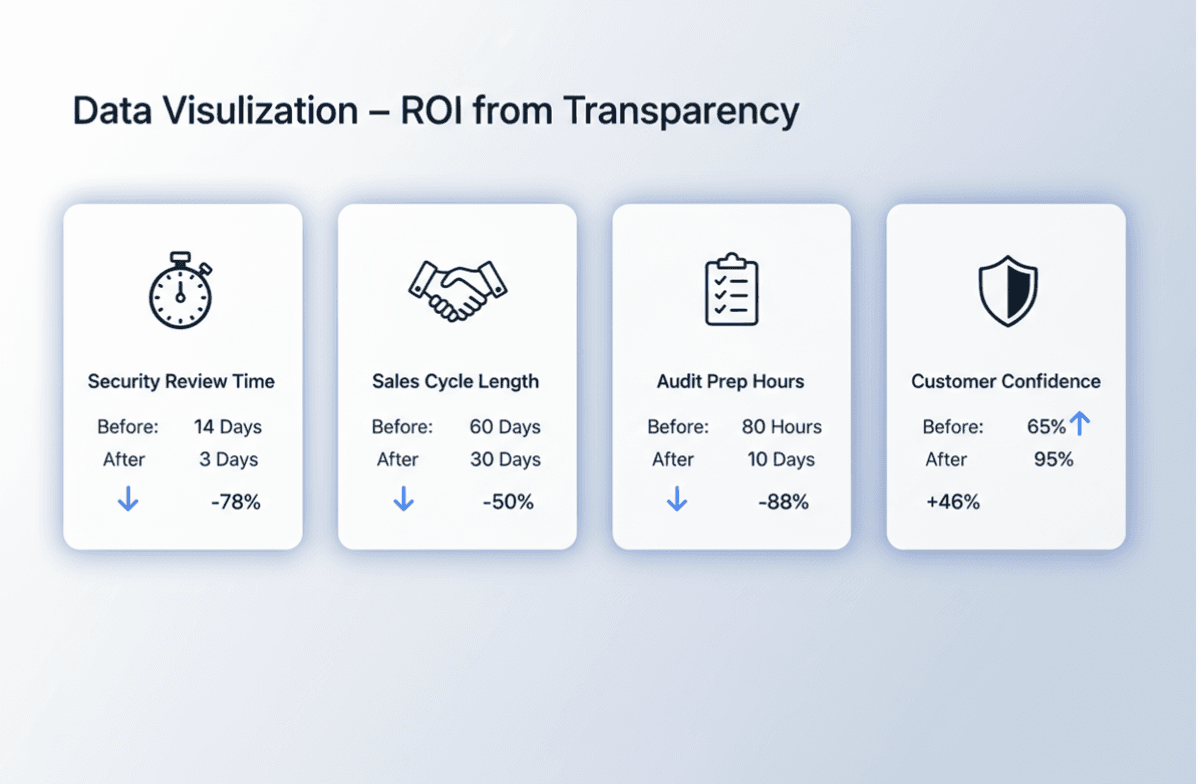
The Business ROI of a Security Trust Center
A well-maintained Trust Center delivers measurable returns.
| Metric | Before | After Launch |
|---|---|---|
| Security Questionnaire Time | 7–10 days | 1–2 hours |
| Sales Cycle Length | 8 weeks | 5 weeks |
| Customer Confidence | Moderate | +12% improvement |
| Compliance Audit Readiness | Manual | Continuous |
It is not only a compliance investment. It is a sales advantage.
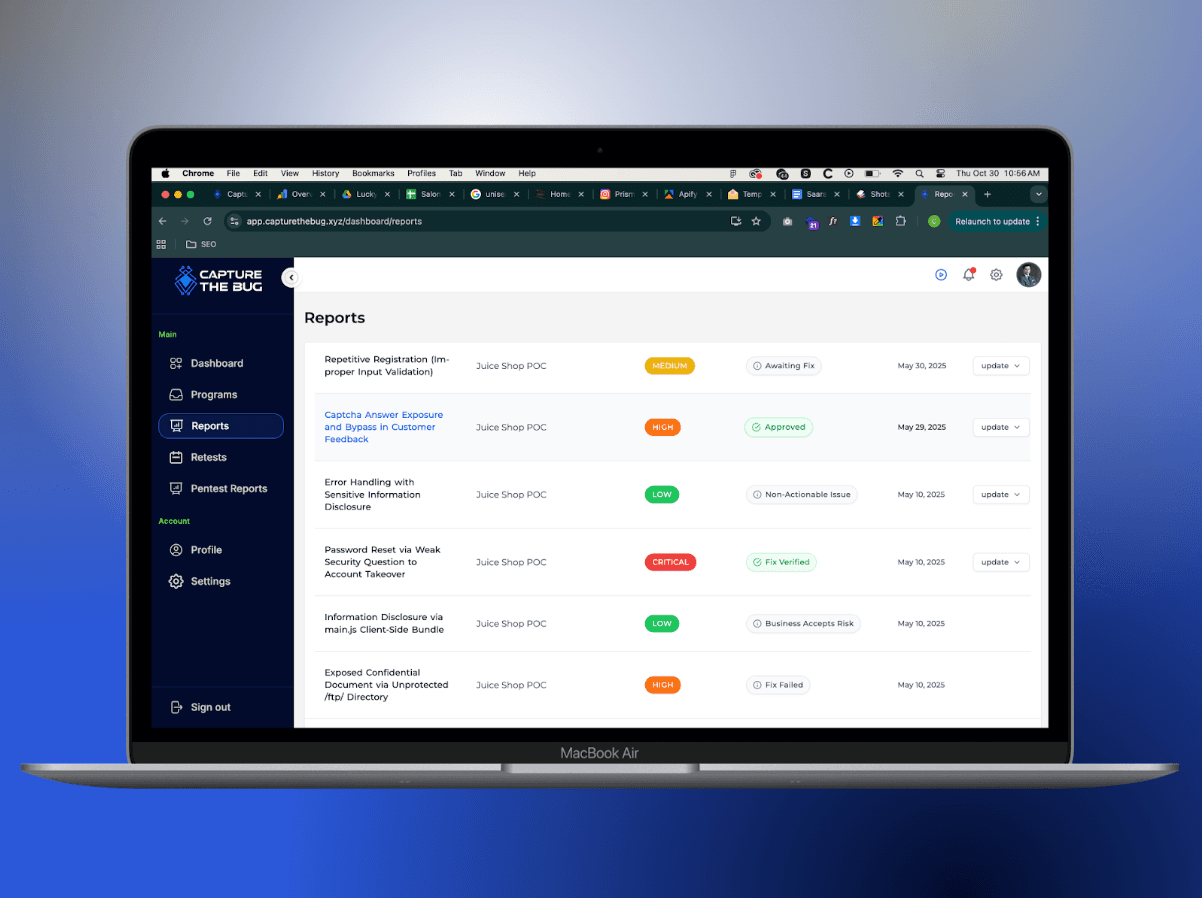
Capture The Bug: Making Trust Measurable
At Capture The Bug, transparency is built into our PTaaS platform.
Our CREST-certified experts deliver continuous pentesting with real-time reporting that you can showcase directly in your Trust Center.
You can highlight metrics such as:
- Active vulnerabilities under SLA
- Verified fixes in real time
- Compliance-ready exports
This turns security from a reactive function into a proactive trust signal.
Final Thoughts: Security You Can See
A Trust Center is not just about compliance. It is about demonstrating reliability through transparency.
It shows your customers that you are accountable, consistent, and prepared.
Start with what you have.
Add proof where possible.
Keep it updated.
Ready to show your security posture instead of just claiming it? → Book a free demo with Capture The Bug and experience how continuous pentesting makes trust visible and measurable.
FAQ
1. What is a Trust Center in cybersecurity?
A Trust Center is a public hub that displays your company’s security, compliance, and privacy posture to build confidence with customers and partners.
2. Why do companies need a Trust Center?
It simplifies compliance communication, reduces repetitive security questionnaires, and improves buyer confidence during procurement cycles.
3. What should a Trust Center include?
Certifications, pentesting summaries, data protection details, privacy documentation, uptime metrics, and gated access to sensitive reports.
4. How does Capture The Bug support Trust Centers?
Capture The Bug provides continuous pentesting and real-time reporting that can be embedded inside your Trust Center for live validation.
5. How often should a Trust Center be updated?
Update it at least every quarter or after any major audit, certification, or system change so stakeholders always see current evidence.